

Oncology Nutrition Market Size and Forecast — 2026-2033
The Global Oncology Nutrition Market size is estimated to be valued at USD 4.66 billion in 2026 and is expected to reach USD 8.14 billion by 2033, exhibiting a compound annual growth rate (CAGR) of 8.3% from 2026 to 2033.
Overview
Oncology nutrition products are specialized dietary formulations designed to meet the metabolic and nutritional needs of cancer patients during and after therapy. These include oral supplements, enteral feeds, and parenteral nutrition solutions fortified with proteins, omega-3 fatty acids, vitamins, and antioxidants. The formulations help maintain body weight, muscle mass, and immune strength, which are often compromised by chemotherapy or radiation treatment.
Oncology nutrition products are available in disease-specific variants such as immune-modulating or calorie-dense formulas for different cancer stages. The market has seen increasing innovation in flavor optimization, lactose-free and plant-based options, and personalized nutrition solutions guided by metabolic profiling. Rising awareness of nutrition’s role in recovery and improved survival rates has positioned oncology nutrition as an integral part of cancer care protocols worldwide.
Key Takeaways
The Malnutrition Prevention subsegment under the Application segment commands substantial oncology nutrition market share, driven by its pivotal role in minimizing treatment-related complications.
Hospitals remain the dominant end user, accounting for nearly half of market revenue, attributable to higher patient throughput and integrated care systems emphasizing nutrition.
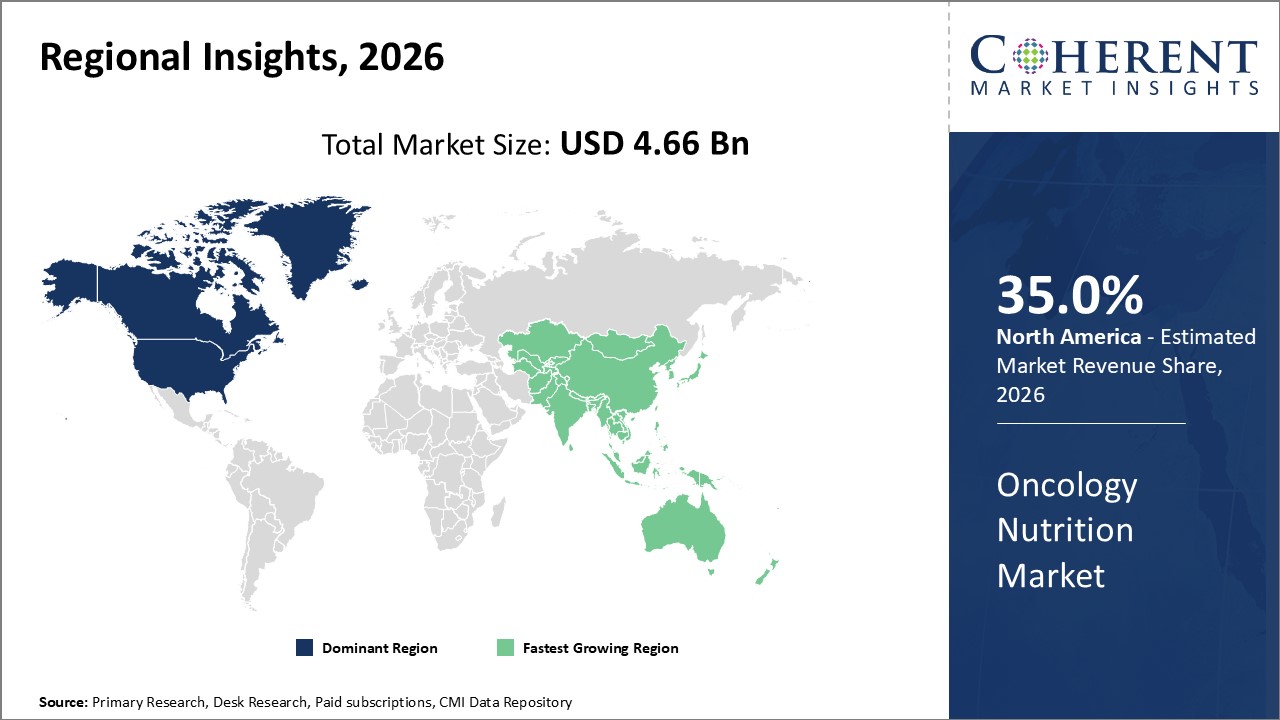
Regionally, North America retains leadership with over 35% industry share, supported by robust healthcare infrastructure and oncology research investment.
Meanwhile, Asia Pacific emerges as the fastest-growing region, with a CAGR of 9.5%, propelled by increasing cancer incidence, improved healthcare access, and growing awareness regarding nutritional support for oncology patients.
Oncology Nutrition Market Segmentation Analysis
Oncology Nutrition Market Insights, By Product Type
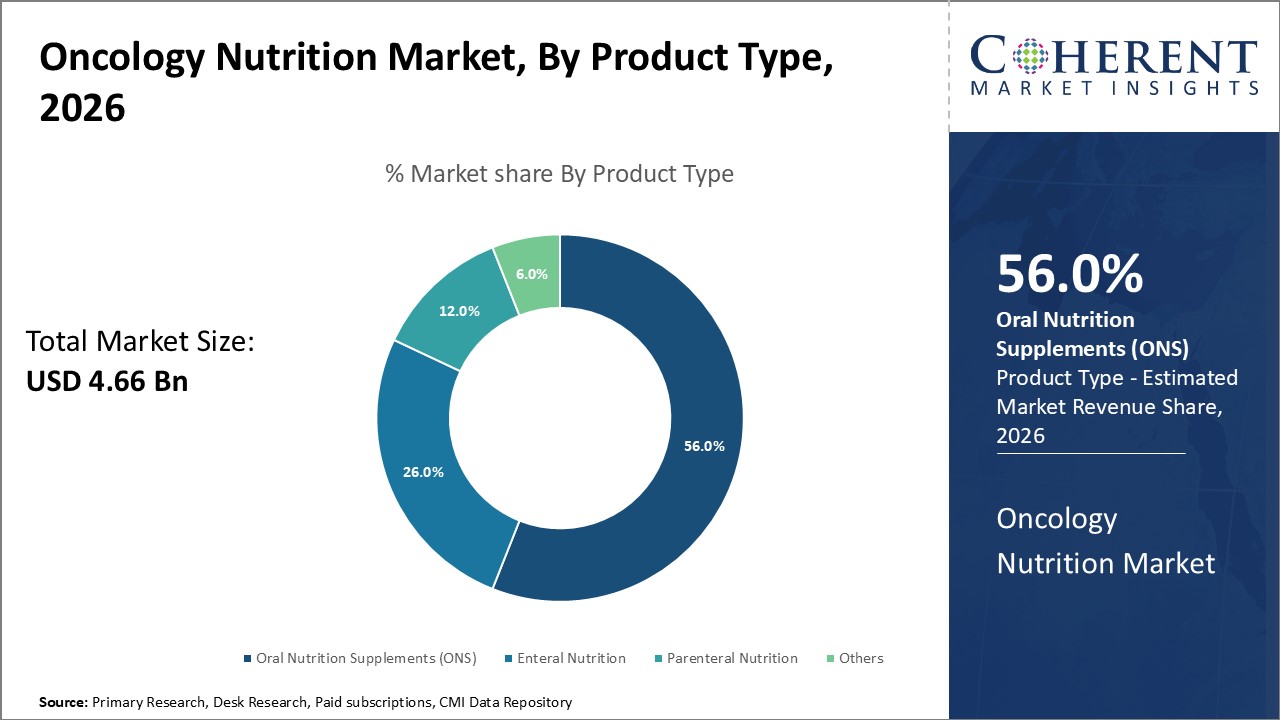
In terms of Product Type, Oral Nutrition Supplements dominate the market share with 55%. ONS leads owing to its convenience, broad applicability, and patient compliance rates across diverse oncology subtypes. It offers precise nutrient administration addressing malnutrition risks effectively. Enteral Nutrition is the fastest-growing subsegment, propelled by increasing preference for tube feeding interventions for patients with swallowing or digestion challenges. Parenteral Nutrition caters to patients unable to tolerate gastrointestinal feeds, maintaining a steady role in intensive care oncology units.
Oncology Nutrition Market Insights, By Application
Malnutrition Prevention dominates the segment due to proactive clinical focus on preventing treatment-associated weight loss, contributing the largest market share. Cachexia Management is the fastest-growing subsegment, driven by its critical role in targeting muscle wasting and systemic inflammation in late-stage cancer patients. Immune System Support nutrition products gain traction with increasing immunotherapy adoption. Digestive Health formulations address chemotherapy-induced gastrointestinal distress, while Others cover emerging niche uses such as metabolic modulation nutrition.
Oncology Nutrition Market Insights, By End-User
In terms of End User, the market segments include Hospitals, Homecare Settings, Specialty Clinics, and Others, with Hospitals dominating the market share at 48%. The dominance is linked to institutionalized cancer treatment, where integrated nutrition protocols are standard practice. Homecare Settings are the fastest-growing subsegment, spurred by rising outpatient care models and telehealth-based nutritional support services. Specialty Clinics focus on tailored oncology nutrition therapies for specific cancer types, while Others include hospices and long-term care facilities catering to palliative oncology nutrition needs.
Oncology Nutrition Market Trends
Emerging Oncology Nutrition market trends underscore the integration of digital technologies with nutrition therapy.
In 2025, AI-driven assessment tools transformed patient care by enabling personalized nutrition plans, improving adherence rates by approximately 21%.
The rise of plant-based oncology nutrition products demonstrates alignment with global sustainability priorities; for instance, a major nutraceutical company reported a 31% revenue increase from plant-based oncology supplements in 2023.
Additionally, outpatient and home care nutrition support is expanding rapidly due to shifting healthcare paradigms emphasizing cost-effectiveness and patient convenience.
Oncology Nutrition Market Insights, By Geography
North America Oncology Nutrition Market Analysis and Trends
In North America, the dominance in the Oncology Nutrition market is attributed to advanced healthcare infrastructure, regulatory support encouraging clinical nutrition integration, and high cancer prevalence. The U.S. leads within this region, driven by extensive research institutions and significant investment in oncology nutrition protocols, accounting for over 30% market share. Companies like Abbott Laboratories and Nestlé Health Science have a strong presence here, leveraging strategic collaborations with oncology centers.
Asia Pacific Oncology Nutrition Market Analysis and Trends
Meanwhile, Asia Pacific exhibits the fastest growth with a CAGR of approximately 9.5%, fueled by rising cancer incidence, expanding healthcare access, and increasing government initiatives promoting nutritional support. Countries such as China and India are witnessing augmented investments in oncology nutrition production and awareness campaigns. Strategic market entry and scalability efforts by global players have accelerated market revenue growth in this region.
Oncology Nutrition Market Outlook for Key Countries
USA Oncology Nutrition Market Analysis and Trends
The U.S. Oncology Nutrition market remains the most mature, supported by progressive clinical guidelines emphasizing malnutrition management in cancer care. In 2025, oncology nutrition products witnessed over 18% growth in hospital procurement, reflecting increasing integration into multidisciplinary cancer treatment protocols. Majors like Fresenius Kabi and Abbott Laboratories lead by innovating immune-boosting nutrition supplements tailored for hematologic malignancies. Additionally, government funding for cancer nutrition research catalyzes innovation and market growth, making the U.S. a critical hub in market revenue and business growth.
China Oncology Nutrition Market Analysis and Trends
China’s Oncology Nutrition market is rapidly evolving with expanding healthcare infrastructure and rising cancer prevalence. In 2025, government health policies prioritized nutritional interventions in cancer care, resulting in a 22% surge in hospital adoption of specialized nutrition products. Local and multinational companies are engaging in joint ventures to scale production capabilities and distribution networks. Notably, Nestlé Health Science enhanced its market footprint through tailored oncology nutrition formulas catering to the Chinese population’s dietary preferences.
Analyst Opinion
Enhanced Demand from Targeted Cancer Therapeutics: The rising adoption of targeted therapies and immunotherapies has increased the need for complementary oncology nutrition products that minimize side effects such as nausea and weight loss. In 2025, over 41% of oncology patients undergoing targeted therapy reported the use of specialized nutrition supplements, contributing to the sector’s revenue growth. This demand-side factor is a significant driver of market expansion.
Supply Chain Optimization Impacting Market Share: Production capacity enhancements in oncology nutrition ingredients, particularly protein hydrolysates and amino acid supplements, have enabled leading manufacturers to reduce costs and expand product portfolios. In 2026, production output for oncology-specific formulations in Asia-Pacific increased by 25%, signaling supply-side robustness supporting market growth.
Micro-Market Dynamics: Healthcare institutions in developed economies are integrating oncology nutrition into standard cancer care protocols, leveraging clinical nutrition insights to reduce hospital stays and readmission rates. For instance, a study conducted by a U.S. cancer institute in early 2026 reported a 16% decrease in patient recovery time through structured oncology nutrition support.
Regional Import-Export Trends: Countries like the U.K. and Germany are major importers of specialized oncology nutrition products due to stringent quality norms and patient safety considerations. Between 2023 and 2025, oncology nutrition imports in Europe grew by 12%, enhancing availability and enticing market penetration.
- Current Industry Events of 2026
- Market Size Estimation
- Regional Breakdown
- Competitive Landscape
- Customer Intelligence
- Segmental Analysis
- Pricing Analysis
- Key Market Drivers, Challenges & Future Trends
- Customized Insights Section
Market Scope
| Report Coverage | Details | ||
|---|---|---|---|
| Base Year: | 2025 | Market Size in 2026: | USD 4.66 billion |
| Historical Data for: | 2020 To 2024 | Forecast Period: | 2026 To 2033 |
| Forecast Period 2026 to 2033 CAGR: | 8.3% | 2033 Value Projection: | USD 8.14 billion |
| Geographies covered: |
| ||
| Segments covered: |
| ||
| Companies covered: | Nutricia Advanced Medical Nutrition, Abbott Laboratories, Nestlé Health Science, Fresenius Kabi, Danone Nutricia, Mead Johnson & Company, B. Braun Melsungen AG, Baxter International Inc., Pfizer Inc., Reckitt Benckiser. | ||
| Growth Drivers: |
| ||
Oncology Nutrition Market Growth Factors
Key market drivers include increasing cancer incidence worldwide, which naturally augments demand for supportive nutrition therapies that improve patient quality of life. Furthermore, growing awareness among oncologists about nutritional interventions’ impact on treatment efficacy enhances adoption rates. Technological advancements, including the development of peptide-based and immune-enhancing nutrition formulas, have broadened market scope, catering to specific cancer types and patient conditions. Regulatory support, such as FDA guidance encouraging clinical nutrition integration into oncology care pathways, has also acted as a catalyst. For instance, the rising geriatric population prone to cancer-related malnutrition increased demand for elderly-specific oncology nutrition products by 18% in 2025.
Oncology Nutrition Market Development
In April 2025, Carilion Clinic, Blue Ridge Cancer Care, and Feeding Southwest Virginia jointly opened the first clinic-based food pantry dedicated to supporting cancer patients’ nutritional needs. Located within the Carilion Cancer Center, the pantry offers shelf-stable, dietitian-selected foods—such as peanut butter, beans, soups, pasta, and canned vegetables—specifically curated to meet the dietary challenges encountered during surgery, chemotherapy, and other cancer treatments. This initiative represents a holistic approach to patient care, addressing not only medical treatment but also critical nutritional support and food-security issues for patients undergoing cancer care.
In January 2025, Danone Group announced a strategic partnership with digital oncology company Resilience to develop a nutrition-and-oncology module integrated into Resilience’s digital care platform. The module is designed to support patients with cancer by offering personalized nutritional guidance, malnutrition screening tools, and digital content that address treatment-related nutrition issues such as appetite loss, nausea, and weight loss. Through combining Danone’s medical nutrition expertise with Resilience’s remote-care technology, the collaboration aims to make nutrition an integral part of oncology care and improve treatment outcomes across healthcare systems.
Key Players
Leading Companies of the Market
Nutricia Advanced Medical Nutrition
Abbott Laboratories
Nestlé Health Science
Fresenius Kabi
Danone Nutricia
Mead Johnson & Company
B. Braun Melsungen AG
Baxter International Inc.
Pfizer Inc.
Reckitt Benckiser
Competitive strategies revolve around product innovation, mergers and acquisitions, and geographic expansion. For example, Abbott Laboratories’ acquisition of GI supply chains in Asia-Pacific in 2025 bolstered its product distribution scalability, increasing its market share by 4%. Nestlé Health Science strategically partnered with oncology centers in Europe to develop tailored nutrition protocols, resulting in exclusive contracts that enhanced customer retention.
Oncology Nutrition Market Future Outlook
Future growth in the oncology nutrition market will be driven by the rise in global cancer incidence, increasing patient survival rates, and growing emphasis on holistic, personalized care. Nutrigenomic research and AI-driven nutrition modeling are expected to usher in personalized meal formulations tailored to genetic and metabolic profiles. Companies are also focusing on clean-label, organic, and functional ingredients to meet consumer demand for natural and therapeutic products. The development of condition-specific products, such as for cachexia and mucositis, will further broaden the clinical scope. Additionally, the expansion of e-commerce and direct-to-patient delivery channels will make oncology nutrition products more accessible. The market is likely to witness strong collaboration between medical device manufacturers, oncology centers, and nutrition companies for integrated patient support programs.
Oncology Nutrition Market Historical Analysis
The oncology nutrition market originated from the need to address cancer-related malnutrition, a condition recognized decades ago as a major factor influencing treatment outcomes. In the early 2000s, the market was dominated by general enteral formulas used off-label for cancer patients. However, as clinical research clarified the metabolic changes associated with malignancy, nutrition became an integral component of oncology care. Manufacturers introduced cancer-specific formulations fortified with immune-modulating nutrients, omega-3 fatty acids, and high-quality proteins to preserve lean body mass during chemotherapy or radiotherapy. The 2010s marked a period of diversification with the introduction of plant-based, lactose-free, and taste-optimized products that improved patient compliance. Integration into hospital treatment protocols and growing awareness among oncologists and dietitians helped the market gain medical credibility.
Sources
Primary Research Interviews:
Oncologists
Clinical Nutritionists
Dietitians
Hospital Pharmacy Directors
Databases:
WHO Cancer Registry
ClinicalTrials.gov
Nutrition Business Journal
Magazines:
Oncology Times
Nutrition Insight
Cancer Therapy Advisor
MedTech Dive
Journals:
Clinical Nutrition
Journal of Oncology Nutrition
Cancer Medicine
Nutrition
Cancer
Associations:
American Society for Clinical Oncology (ASCO)
Academy of Nutrition and Dietetics (AND)
World Cancer Research Fund (WCRF)
European Society for Clinical Nutrition
Metabolism (ESPEN)
Get access to 250+ pages report
Every segment, forecast, competitor profile and data table behind the analysis above — available for instant download.
- ESOMAR Member
- ISO 9001:2015 Certified
- D-U-N-S Registered
- GDPR & CCPA Compliant
Missing comfort of reading report in your local language? Find your preferred language:
Transform your Strategy with Exclusive Trending Reports
Frequently Asked Questions
Leading market companies include Nutricia Advanced Medical Nutrition, Abbott Laboratories, Nestlé Health Science, Fresenius Kabi, and Danone Nutricia, which hold major market shares through product innovation and strategic partnerships.
The Oncology Nutrition market size is projected to reach USD 8.14 billion by 2033, growing at a CAGR of 8.3% from 2026, reflecting increasing cancer prevalence and nutrition's role in supportive care.
Hospitals currently dominate the end-user segment; however, home care settings present emerging growth opportunities, driven by outpatient care trends and telehealth-enabled nutrition monitoring.
The industry will see a pivot toward personalized nutrition solutions, AI integration for regimen customization, and growth in plant-based formulations aligned with sustainability and patient preferences.
The competitive landscape is dynamic, with companies focusing on R&D innovation and regional expansion. Key challenges include regulatory compliance, supply chain complexities, and educating healthcare providers on nutrition’s impact.
Major players utilize strategies including partnerships with oncology centers, geographic expansion, product diversification into immune-enhancing nutrition, and direct-to-patient digital engagement channels.