

Global Exosomes Diagnostic and Therapeutic Market Size and Forecast – 2026-2033
The Global Exosomes Diagnostic and Therapeutic Market is estimated to be valued at USD 110.3 Mn in 2026 and is expected to reach USD 370.7 Mn by 2033, exhibiting a compound annual growth rate (CAGR) of 18.9% from 2026 to 2033.
Key Takeaways:
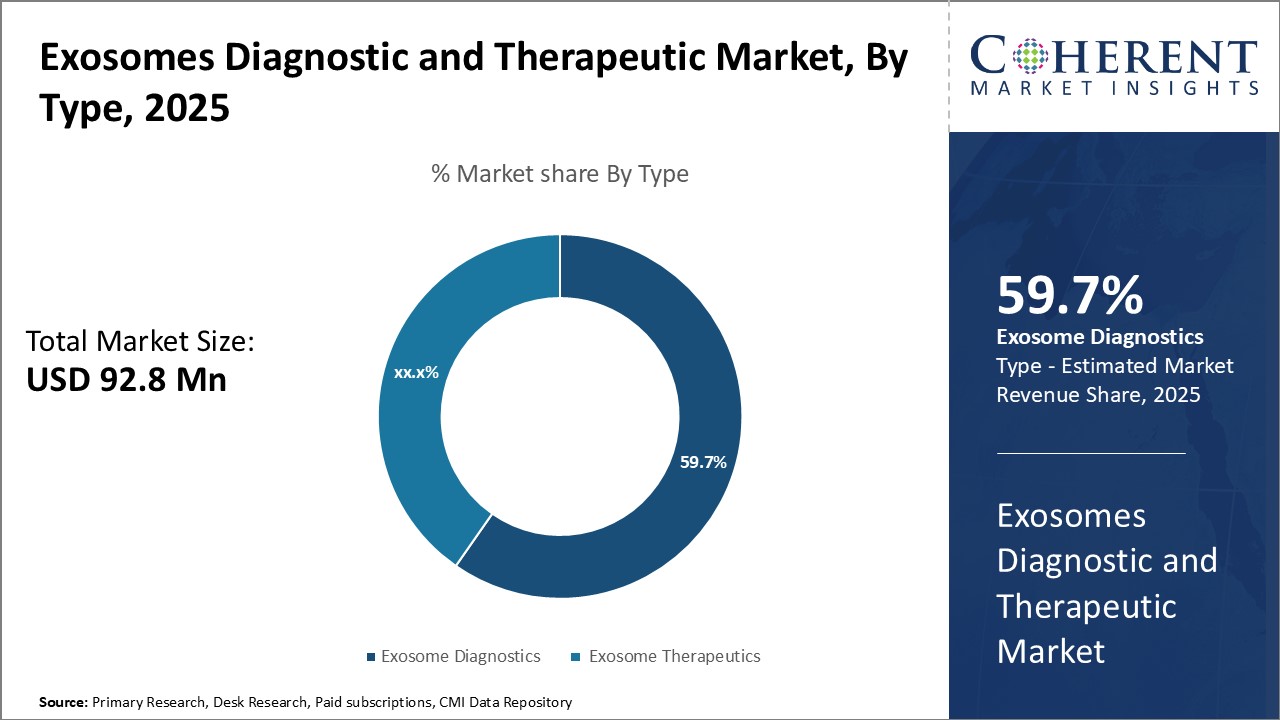
- By Type, The Exosome Diagnostics segment is projected to dominate the exosome diagnostic and therapeutic market with 60.7% share in 2026.
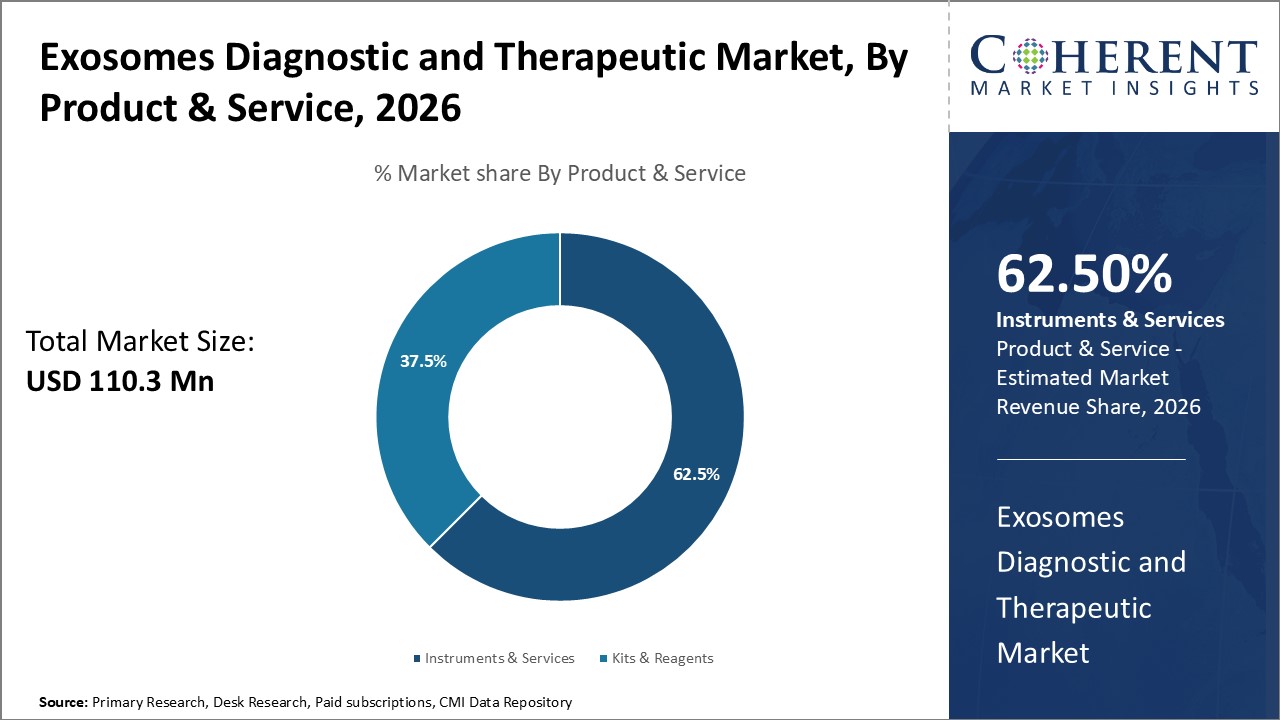
- By Product & Service, The Instruments & Services segment is expected to lead the market with a 62.5% share in 2026.
- By Source Insight, Stem cell-derived exosomes are estimated to hold the largest share, capturing 44.6% of the market in 2026.
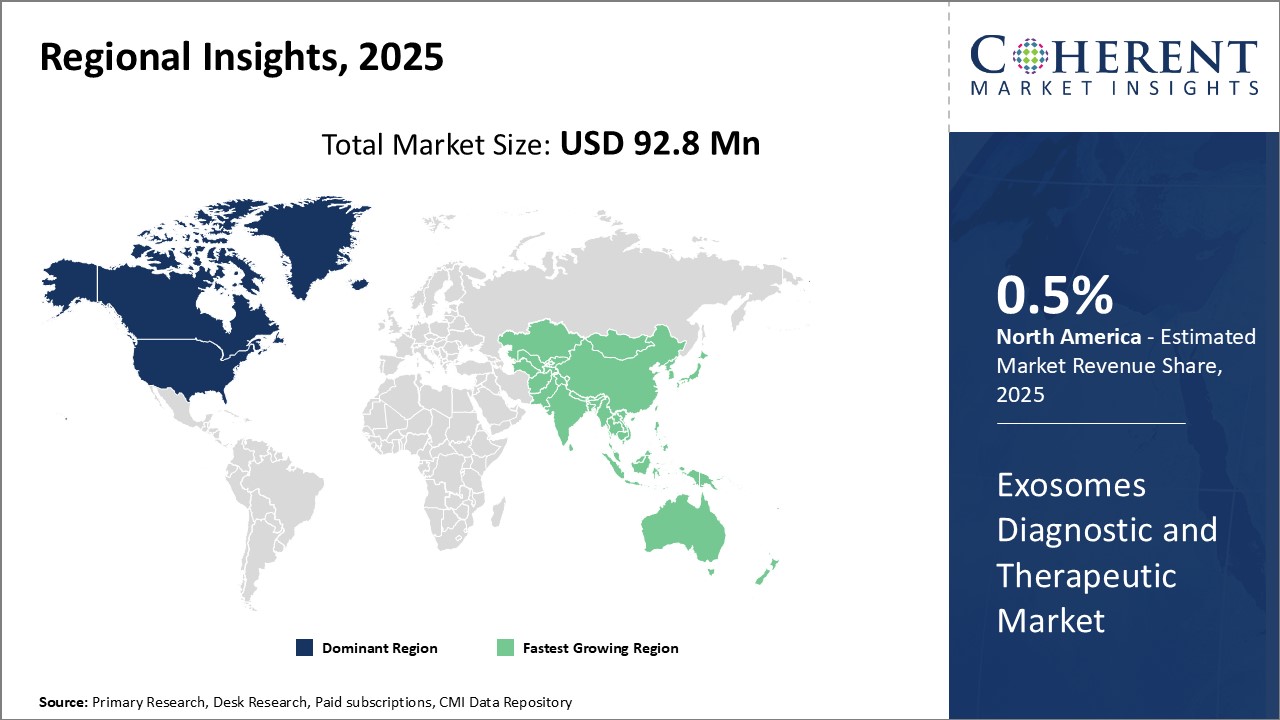
- By Region, North America is expected to lead the global exosome diagnostic and therapeutic market, accounting for approximately 0.5% share in 2026.
Market Overview:
The global exosomes diagnostic and therapeutic market is experiencing robust growth, propelled by rising interest in precision medicine and non-invasive diagnostic tools. Increasing prevalence of chronic and neurodegenerative diseases, coupled with the demand for early detection technologies, is significantly boosting market adoption. The market is further supported by expanding investments in biotech R&D, growing collaborations between academic institutions and industry players, and the emergence of exosome-based therapeutics in clinical trials.
Current Events and its Impact on the Exosomes Diagnostic and Therapeutic Market
Current Event | Description and its impact |
Growing Investment in Exosome-Based Clinical Trials |
|
Technological Advancements in Exosome Isolation and Characterization |
|
Regulatory Support for Non-Invasive Diagnostic Tools |
|
Pipeline Analysis: Exosomes Diagnostic and Therapeutic Market
The exosomes diagnostic and therapeutic market is witnessing significant pipeline activity, with numerous candidates in preclinical and clinical development. In diagnostics, liquid biopsy platforms utilizing exosome-derived biomarkers are advancing for early detection of cancers, neurodegenerative disorders, and infectious diseases.
Several oncology-focused assays are in Phase I/II trials, aiming to improve diagnostic accuracy through non-invasive sampling. On the therapeutic side, stem cell-derived exosome therapies are in clinical trials for conditions such as osteoarthritis, myocardial infarction, and chronic inflammation, leveraging their regenerative and immunomodulatory properties. Exosome-based drug delivery systems are also being developed for targeted cancer therapies and gene editing, with promising preclinical results.
Increasing collaborations between biotech firms and pharmaceutical companies, along with growing venture capital investment, are accelerating innovation. As regulatory clarity improves and key candidates progress through the pipeline, the market is expected to see initial product approvals and commercialization beginning in the 2025–2028 timeframe, marking a pivotal growth phase.
- Current Industry Events of 2026
- Market Size Estimation
- Regional Breakdown
- Competitive Landscape
- Customer Intelligence
- Segmental Analysis
- Pricing Analysis
- Key Market Drivers, Challenges & Future Trends
- Customized Insights Section
Patent Landscape: Exosomes Diagnostic and Therapeutic Market
The patent landscape of the exosomes diagnostic and therapeutic market is rapidly evolving, driven by advancements in isolation techniques, biomarker discovery, and therapeutic applications. A surge in global patent filings reflects the growing interest in exosome-based innovations, particularly in early disease diagnostics and regenerative medicine. Major patents focus on novel methods for exosome purification, targeted drug delivery, and engineered exosomes for precision therapy.
Key contributors include biotech companies and research institutions in the United States, Japan, South Korea, and China. Prominent players such as Exosome Diagnostics (Bio-Techne), Evox Therapeutics, and Codiak BioSciences are actively securing intellectual property to strengthen their market positions. Patent activity is especially high in the areas of liquid biopsy development and stem cell-derived exosome therapies.
The competitive nature of this landscape highlights the importance of IP protection, though overlapping claims and evolving regulatory frameworks may lead to future legal and commercialization challenges.
Reimbursement Scenario: Exosomes Diagnostic and Therapeutic Market
The reimbursement environment for exosome-based diagnostics and therapeutics is gradually developing, primarily driven by advancements in exosome diagnostic tests. In the U.S., certain exosome diagnostic tests, such as the ExoDx® Prostate (IntelliScore) test, have gained Medicare coverage, reflecting increasing acceptance of exosome technology in clinical practice. This reimbursement facilitates broader patient access and encourages adoption by healthcare providers.
Private insurers are also beginning to provide coverage for select exosome diagnostic tests, though reimbursement policies vary by region and payer. However, reimbursement for exosome-based therapeutics remains limited, as most products are still in clinical development stages. Payers typically require robust clinical evidence demonstrating safety, efficacy, and cost-effectiveness before granting coverage.
Overall, the reimbursement scenario highlights the need for ongoing clinical validation and payer engagement to ensure exosome diagnostics and therapies become financially accessible, which will be critical for market growth and widespread clinical adoption in the coming years.
Prescribers’ Preference: Exosomes Diagnostic and Therapeutic Market
Prescribers are increasingly recognizing the potential of exosome-based diagnostics and therapeutics due to their minimally invasive nature and high specificity. In diagnostics, clinicians prefer exosome tests for early disease detection, especially in oncology and neurodegenerative disorders, as these tests provide real-time molecular insights with greater accuracy compared to traditional biopsy methods. The ability to detect biomarkers from easily accessible biofluids like blood and urine enhances patient compliance and facilitates timely treatment decisions.
In therapeutics, prescribers show growing interest in exosome-based treatments for regenerative medicine and targeted drug delivery, driven by promising clinical trial outcomes and reduced immunogenicity compared to cell therapies. However, widespread adoption depends on further clinical validation and clear guidelines. Ease of use, demonstrated efficacy, and safety profiles remain key factors influencing prescriber preference. Overall, healthcare providers favor exosome technologies that improve diagnostic precision and offer innovative treatment options, aligning with personalized medicine trends.
Exosomes Diagnostic and Therapeutic Market Trends
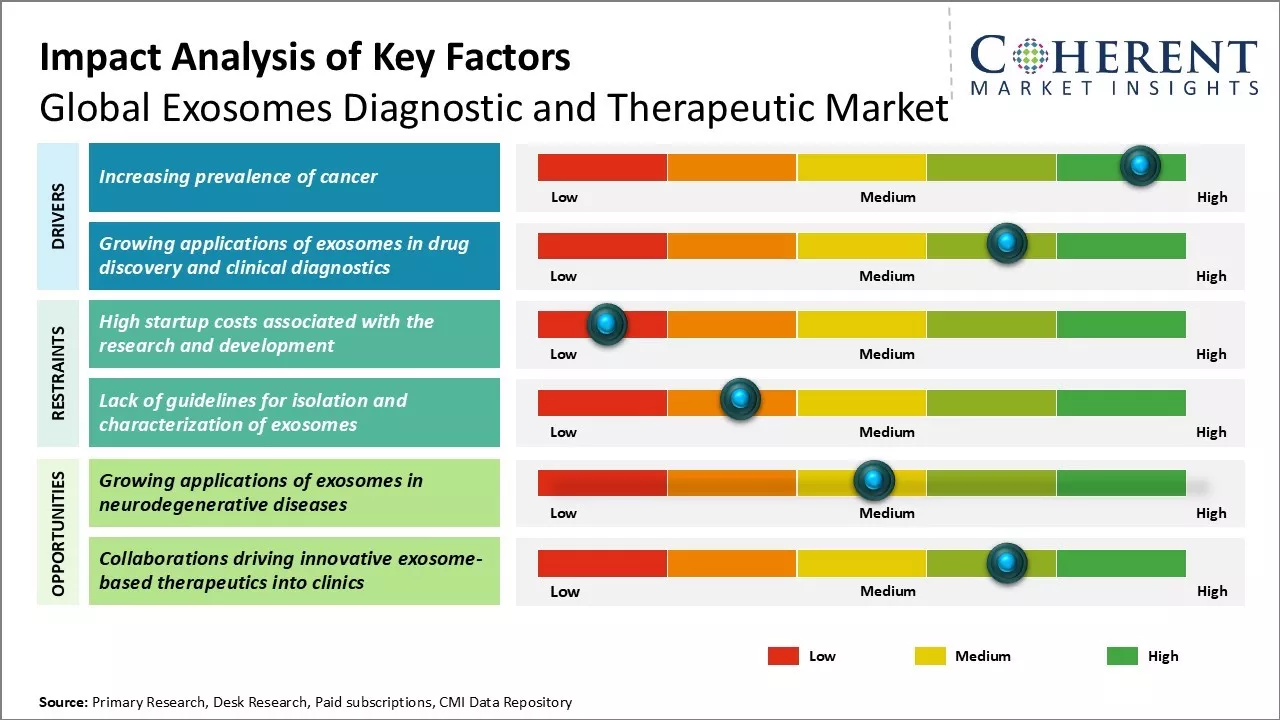
- Increasing prevalence of cancer
The global burden of cancer continues to grow at an alarming rate. As per the estimates of World Health Organization, the worldwide incidence of cancer rose to 18.1 million new cases in 2018 with 9.6 million cancer deaths. If urgent actions are not taken, the global cancer burden is expected to rise to over 29 million new cancer cases and 16 million cancer deaths by 2040.
The rising prevalence of cancer can be attributed to various factors like rapidly aging population across the world, increasing adoption of unhealthy lifestyle involving smoking, excessive alcohol consumption, and physical inactivity, environmental pollution, and prolonged exposure to carcinogens. Some of the most commonly occurring cancers globally are lung cancer, breast cancer, colorectal cancer, prostate cancer, and stomach cancer.
In March 2025, several beauty clinics in the United Kingdom were found to be offering exosome-based skincare treatments derived from human cells, including umbilical cord blood. These treatments are banned under UK and EU regulations due to potential health risks, such as disease transmission and contamination with viruses.
- Growing applications of exosomes in drug discovery and clinical diagnostics
Research on extracellular vesicles called exosomes has opened up new avenues for investigation in various areas of healthcare. Initially considered as cellular waste handlers, scientists are now exploring the immense potential of exosomes in non-invasive disease diagnosis, therapeutic monitoring and drug development. Several proof-of-concept studies have validated exosomes applications as biomarkers for conditions like cancer, neurodegenerative diseases, cardiovascular disorders, and infectious diseases.
In the area of drug discovery, exosomes enable encapsulation and delivery of therapeutic payloads to target sites with lower toxicity. Their membrane properties and molecular recognition capacities make them well suited for development as innovative drug delivery systems. Several biotechnology companies are conducting R&D on modifying exosomes as nanocarriers and loading them with drugs, antibodies, RNA molecules or other agents for enhanced efficacy.
In January 2025, NurExone Biologic announced the establishment of its Master Cell Bank (MCB), a critical step in scaling up the production of exosome-based therapeutics. The MCB will serve as a consistent and reliable source for manufacturing high-quality exosomes intended for clinical and commercial use. This development is pivotal for advancing NurExone's proprietary ExoPTEN technology, which focuses on non-invasive delivery methods targeting central nervous system injuries.
Opportunities in the Exosomes Diagnostic and Therapeutic Market
- Growing Applications of Exosomes in Neurodegenerative Diseases
There lies a huge opportunity in the applications of exosomes in neurodegenerative diseases for the global exosomes diagnostic and therapeutic vaccine market. Various neurological conditions such as Alzheimer's, Parkinson's, Huntington's disease have emerged as major health burden. Exosomes hold potential as minimally invasive biomarkers for non-invasive diagnosis and prognosis of such conditions. They can also be engineered as targeted drug delivery vehicles to cross blood brain barrier.
Ongoing research exploring roles of exosomes in intercellular communication in the brain and their protein signatures in neurological diseases have demonstrated their diagnostic and therapeutic relevance. This provides scope for development of novel exosome-based diagnostic kits and therapies for neurology. Companies exploring such applications can tap into the large patient pool and healthcare spending on treating neurodegeneration.
Segmental Analysis
Exosomes Diagnostic and Therapeutic Market Insights, by Type
The Exosome Diagnostics segment is projected to dominate the exosome diagnostic and therapeutic market with a 60.7% market share in 2026. This substantial lead is driven by continuous advancements in exosome isolation, profiling, and biomarker discovery technologies. Increasing utilization of exosomes for non-invasive liquid biopsies, especially in cancer and neurodegenerative disease detection, is fueling demand.
Exosomes Diagnostic and Therapeutic Market Insights, By Product & Service
The Instruments & Services segment is expected to lead the exosome diagnostic and therapeutic market with a projected 62.5% share in 2026. This dominance is attributed to rising demand for advanced tools that enable high-throughput and precise exosome analysis, including next-gen sequencing platforms, flow cytometry, and ultracentrifugation systems. Additionally, the growing trend of outsourcing diagnostic services to specialized laboratories is enhancing segment growth. Investment in automated and AI-integrated systems is also accelerating the accessibility and efficiency of exosome-based workflows.
Exosomes Diagnostic and Therapeutic Market Insights, By Source Insight
Stem cell-derived exosomes are anticipated to capture the largest share of the market at 44.6% in 2026. Their unique regenerative and anti-inflammatory properties make them highly valuable in therapeutic applications, including wound healing, tissue regeneration, and immune modulation. The ongoing expansion of stem cell research, combined with successful preclinical and clinical evaluations, is driving adoption. These exosomes are increasingly being developed as novel biologics, offering a promising avenue for targeted drug delivery and personalized therapies.
Exosomes Diagnostic and Therapeutic Market: Regional Insight
North America Exosomes Diagnostic and Therapeutic Market Trends and Analysis
North America is expected to lead the global exosome diagnostic and therapeutic market, accounting for approximately 0.5% share in 2025. This regional dominance is fueled by robust research and development activities, the presence of established biotechnology firms, and strong government funding toward precision medicine and biomarker discovery.
Europe Exosomes Diagnostic and Therapeutic Market Trends and Analysis
Europe is projected to maintain a strong position in the exosome diagnostic and therapeutic market through 2025. The region’s performance is supported by increasing research collaborations, growing clinical trials, and a rising emphasis on non-invasive diagnostics.
Exosomes Diagnostic and Therapeutic Market Dominating Countries:
United States and Canada
The United States and Canada dominate the North America exosome diagnostic and therapeutic market in 2025. The U.S. is at the forefront of technological innovation, with significant investments in biomarker discovery, oncology diagnostics, and regenerative medicine. Major biotech firms, advanced healthcare infrastructure, and strong academic-industry collaborations drive continuous research and commercialization. Canada complements this leadership with supportive government funding, a growing biotech sector, and strategic focus on personalized medicine. Together, these countries ensure North America’s commanding position in the global market.
Market Report Scope
Exosomes Diagnostic and Therapeutic Market Report Coverage
| Report Coverage | Details | ||
|---|---|---|---|
| Base Year: | 2025 | Market Size in 2026: | USD 110.3 Mn |
| Historical Data for: | 2020 To 2024 | Forecast Period: | 2026 To 2033 |
| Forecast Period 2026 to 2033 CAGR: | 18.9% | 2033 Value Projection: | USD 370.7 Mn |
| Geographies covered: |
| ||
| Segments covered: |
| ||
| Companies covered: | Thermo Fisher Scientific, NanoSomix, NX Pharmagen, Malvern Instruments, Capricor Therapeutic, Exosome Diagnostics, Exiqon A/S, System Biosciences, Exosome Sciences, Aegle Therapeutic, AMS Biotechnology, Miltenyi Biotec, Codiak BioSciences Inc., Lonza Group (HansaBioMed Life Sciences Ltd.), AcouSort AB, Aethlon Medical, Inc., AGC Biologics, Anjarium Biosciences AG, Aruna Bio, Brexogen, Capricor Therapeutics, Cells for Cells, Ciloa, and ConvEyXO | ||
| Growth Drivers: |
| ||
| Restraints & Challenges: |
| ||
Analyst Viewpoint – Exosomes Diagnostic and Therapeutic Market
- The exosomes diagnostic and therapeutic market is witnessing strong growth, driven by advancements in precision medicine and rising demand for non-invasive diagnostic tools. Analysts emphasize the critical role of exosome technologies in enabling early disease detection, especially in oncology and neurodegenerative disorders, which is significantly fueling market expansion. The ongoing innovation in isolation and analysis techniques is enhancing the accuracy and reliability of exosome-based diagnostics, supporting broader clinical adoption.
- Technological progress in exosome engineering and therapeutic applications, particularly in regenerative medicine and targeted drug delivery, is opening new avenues for personalized treatment. Increasing investments in research and development, along with collaborations between biotech firms and academic institutions, are accelerating pipeline advancements.
- Regionally, North America leads the market due to strong R&D infrastructure, government funding, and the presence of key industry players. Meanwhile, Asia Pacific is emerging as a fast-growing market, supported by expanding healthcare infrastructure and growing awareness. Experts highlight that sustained innovation, regulatory clarity, and reimbursement developments will be vital for maintaining market momentum.
Exosomes Diagnostic and Therapeutic Market: Key Development
- In September 2023, INOVIQ came into a license and supply agreement with ResearchDx for INOVIQ’s EXO-NET exosome capture technology. With the help of this agreement, ResearchDx incorporated EXO-NET technology in its portfolio of exosomes diagnostic services.
- In February 2023, the National Government Services expanded its range for ExoDx prostate cancer test of Bio-Thechne.
- In May 2023, Exosome Diagnostics announces the interim results from a clinical study of prostate cancer risk tests.
Market Segmentation
- By Type Insights (Revenue, USD Mn, 2021 - 2033)
- Exosome Diagnostics
- Exosome Therapeutics
- By Product & Service Insights (Revenue, USD Mn, 2021 - 2033)
- Instruments & Services
- Kits & Reagents
- By Source Insights (Revenue, USD Mn, 2021 - 2033)
- Stem Cells
- Blood & Blood Plasma
- Urine
- Other Sources
- By Application Insights (Revenue, USD Mn, 2021 - 2033)
- Cancer
- Dermatological Diseases
- Musculoskeletal Disorders
- Cardiovascular Diseases
- Others
- By End User Insights (Revenue, USD Mn, 2021 - 2033)
- Hospitals & Diagnostic Centers
- Clinics and Physician Settings
- Academic and Research Institutions
- Contract Research Organizations
- Others
- By Regional Insights (Revenue, USD Mn, 2021 - 2033)
- North America
- U.S.
- Canada
- Latin America
- Brazil
- Argentina
- Mexico
- Rest of Latin America
- Europe
- Germany
- U.K.
- Spain
- France
- Italy
- Russia
- Rest of Europe
- Asia Pacific
- China
- India
- Japan
- Australia
- South Korea
- ASEAN
- Rest of Asia Pacific
- Middle East
- GCC Countries
- Israel
- Rest of Middle East
- Africa
- South Africa
- North Africa
- Central Africa
- North America
- Key Players Insights
- Thermo Fisher Scientific
- NanoSomix
- NX Pharmagen
- Malvern Instruments
- Capricor Therapeutic
- Exosome Diagnostics
- Exiqon A/S
- System Biosciences
- Exosome Sciences
- Aegle Therapeutic
- AMS Biotechnology
- Miltenyi Biotec
- Codiak BioSciences Inc.
- Lonza Group (HansaBioMed Life Sciences Ltd.)
- AcouSort AB
- Aethlon Medical, Inc.
- AGC Biologics
- Anjarium Biosciences AG
- Aruna Bio
- Brexogen
- Capricor Therapeutics
- Cells for Cells
- Ciloa
- ConvEyXO
Sources
The Stakeholders Consulted:
- Clinical researchers and biomedical scientists specializing in exosome biology
- Diagnostic and therapeutic product developers in biotechnology and pharma sectors
- Healthcare providers and prescribers using exosome-based diagnostics and therapies
- Regulatory authorities overseeing molecular diagnostics and regenerative medicine
- Research institutions and academic experts focused on extracellular vesicles and precision medicine
- Biotech industry consultants and market analysts
- Patient advocacy groups involved in oncology, neurodegenerative diseases, and other relevant fields
Databases Accessed:
- U.S. Food and Drug Administration (FDA) – Device and Therapeutic Approvals Database
- ClinicalTrials.gov – Registry of ongoing exosome diagnostic and therapeutic trials
- World Health Organization (WHO) – Medical Device and Therapeutic Reports
- European Medicines Agency (EMA) – Regulatory Approvals and Guidelines
- PubMed and MEDLINE – Scientific Literature on Exosome Research and Applications
Magazines & Trade Publications:
- Genetic Engineering & Biotechnology News (GEN)
- Clinical OMICs Magazine
- The Scientist – Life Sciences Industry News
- BioPharm International
- Precision Medicine Magazine
Scientific and Industry Journals:
- Journal of Extracellular Vesicles
- Nature Biotechnology
- Molecular Therapy – Methods & Clinical Development
- Trends in Molecular Medicine
- Clinical Chemistry and Laboratory Medicine
Newspapers & Media Outlets:
- Reuters Health News
- Bloomberg Healthcare
- The Wall Street Journal – Health & Biotech Section
- Fierce Biotech
- Financial Times – Life Sciences Coverage
Associations and Regulatory Bodies:
- International Society for Extracellular Vesicles (ISEV)
- U.S. Food and Drug Administration (FDA)
- European Medicines Agency (EMA)
- International Council for Harmonisation of Technical Requirements for Pharmaceuticals for Human Use (ICH)
- American Society of Clinical Oncology (ASCO)
Public Domain Sources:
- World Health Organization (WHO) – Diagnostics and Therapeutics Reports
- Centers for Disease Control and Prevention (CDC) – Molecular Diagnostic Updates
- National Institutes of Health (NIH) – Extracellular Vesicle Research Resources
- European Commission – Health and Biotechnology Research Initiatives
Proprietary Research Elements:
- In-house database of clinical trial outcomes and market penetration metrics
- Expert interviews with key opinion leaders in diagnostics and therapeutics
- Primary survey data from healthcare professionals and biotech R&D teams
- Advanced analytics on patent filings and regulatory submissions related to exosome technologies
Get access to 250+ pages report
Every segment, forecast, competitor profile and data table behind the analysis above — available for instant download.
- ESOMAR Member
- ISO 9001:2015 Certified
- D-U-N-S Registered
- GDPR & CCPA Compliant
Missing comfort of reading report in your local language? Find your preferred language:
Transform your Strategy with Exclusive Trending Reports
Frequently Asked Questions
The Exosomes Diagnostic and Therapeutic Market size is estimated to be valued at USD 110.3 Mn in 2026, and is expected to reach USD 370.7 Mn by 2033.
The CAGR of the global Market is projected to be 18.9% from 2026 to 2033.
Increasing prevalence of cancer and growing applications of exosomes in drug discovery and clinical diagnostics are the major factors driving the growth of the global market.
High startup costs associated with the research and development and lack of guidelines for isolation and characterization of exosomes are the major factor hampering the growth of the global exosomes diagnostic and therapeutic industry.
In terms of Type, the Exosome Diagnostics segment is estimated to dominate the market revenue share in 2026.
Thermo Fisher Scientific, NanoSomix, NX Pharmagen, Malvern Instruments, Capricor Therapeutic, Exosome Diagnostics, Exiqon A/S, System Biosciences, Exosome Sciences, Aegle Therapeutic, AMS Biotechnology, Miltenyi Biotec, Codiak BioSciences Inc., Lonza Group (HansaBioMed Life Sciences Ltd.), AcouSort AB, Aethlon Medical, Inc., AGC Biologics, Anjarium Biosciences AG, Aruna Bio, Brexogen, Capricor Therapeutics, Cells for Cells, Ciloa, and ConvEyXO are the major players.
North America is expected to lead the global market.