

Clinical Nutrition Market Analysis & Forecast: 2026-2033
The global clinical nutrition market size was valued at USD 13.97 Bn in 2026 and is expected to reach USD 21.28 Bn by 2033, growing at a Compound Annual Growth Rate (CAGR) of 6.2% from 2026 to 2033.
Key Takeaways
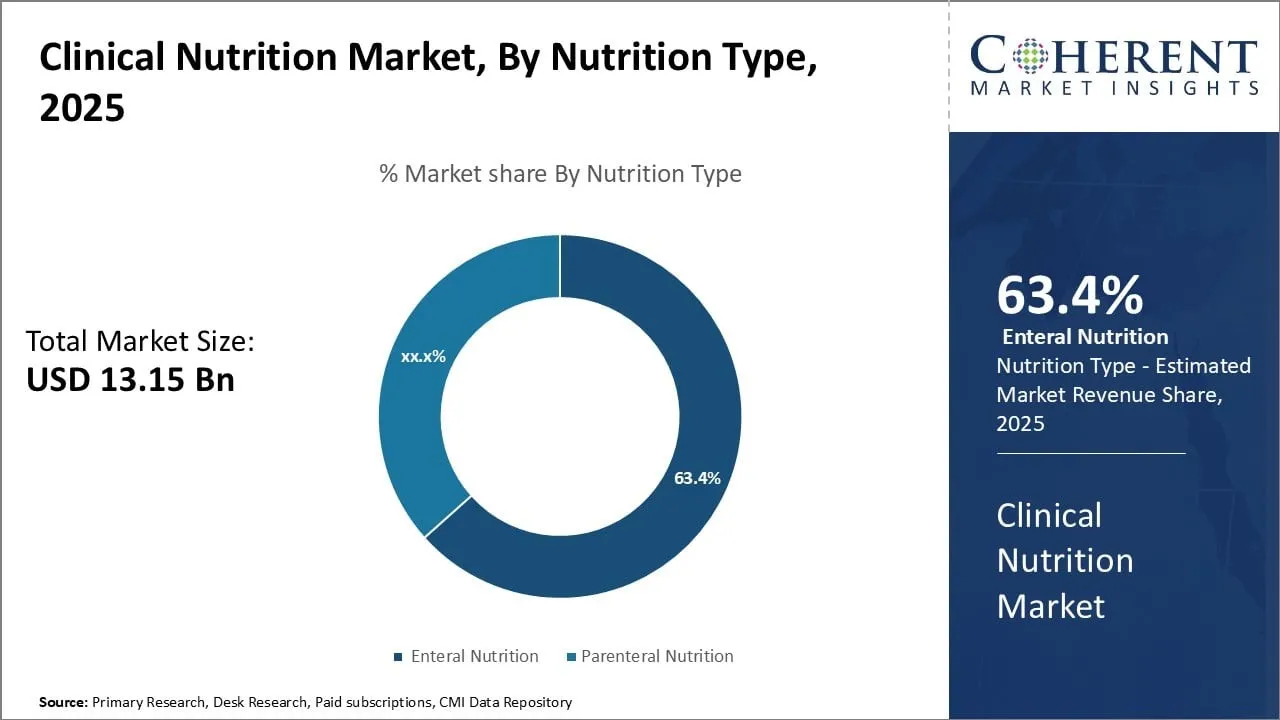
- By Nutrition Type, enteral nutrition is projected to dominate the global clinical nutrition market, capturing approximately 64.4% of the market share in 2026. This segment’s leadership is attributed to its critical role in supporting patients with compromised gastrointestinal function, chronic diseases, and surgical recovery needs.
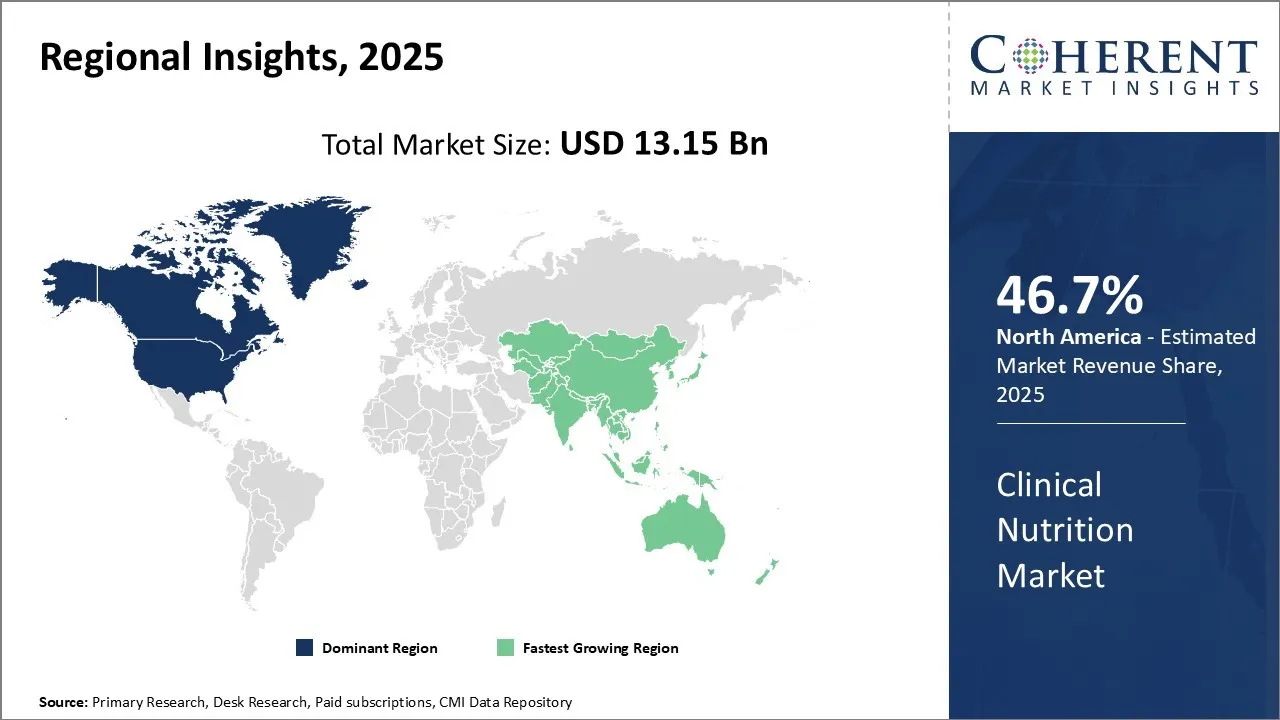
- North America is anticipated to lead the global clinical nutrition market with an estimated 46.7% market share in 2026, owing to well-established healthcare infrastructure.
Market Overview
The global Clinical Nutrition Market is experiencing steady growth, driven by increasing incidences of chronic illnesses, malnutrition, and rising healthcare awareness. Enteral nutrition leads the market due to its effectiveness in delivering essential nutrients to patients with functional gastrointestinal systems. Technological advancements in formulation and delivery methods are enhancing treatment outcomes and patient compliance.
Current Events and its Impact on the Clinical Nutrition Market
Current Event | Description and its impact |
Recent Product Launches and Regulatory Milestones |
|
Strategic Partnerships and Market Expansion |
|
Regulatory Updates and Compliance Shifts |
|
Pipeline Analysis: Clinical Nutrition Market
The clinical nutrition market is witnessing a robust pipeline of innovative products aimed at improving patient outcomes through personalized and condition-specific nutritional solutions. Leading players such as Abbott, Nestlé Health Science, Fresenius Kabi, and Danone Nutricia are investing heavily in R&D to develop advanced enteral and parenteral formulations targeting oncology, gastrointestinal disorders, and critical care.
Recent developments include plant-based and allergen-free formulas, high-protein blends for sarcopenia, and peptide-based products for inflammatory bowel disease (IBD). Additionally, research is underway to incorporate bioactive compounds like omega-3s, probiotics, and HMB (beta-hydroxy-beta-methylbutyrate) to enhance immune response and muscle preservation.
Digital integration in clinical nutrition, such as AI-based tools for nutrition assessment and real-time monitoring, is also being explored. With a growing focus on personalized medicine, sustainability, and home-based care, the clinical nutrition pipeline reflects a shift toward holistic, targeted, and patient-centric therapeutic nutrition solutions.
- Current Industry Events of 2026
- Market Size Estimation
- Regional Breakdown
- Competitive Landscape
- Customer Intelligence
- Segmental Analysis
- Pricing Analysis
- Key Market Drivers, Challenges & Future Trends
- Customized Insights Section
Patent Landscape: Clinical Nutrition Market
The patent landscape in the clinical nutrition market is evolving rapidly, reflecting increasing innovation in formulation, delivery systems, and condition-specific applications. Major players such as Nestlé Health Science, Abbott, Danone Nutricia, and Fresenius Kabi are actively securing patents for specialized enteral and parenteral nutrition products aimed at chronic disease management, paediatric nutrition, and geriatric care.
Recent patents focus on nutrient-dense compositions, peptide-based formulas for inflammatory bowel diseases, and novel lipid emulsions for critically ill patients. There is also a surge in patents related to plant-based, hypoallergenic, and immunonutrition solutions designed for cancer and ICU patients.
In addition, patents involving smart delivery technologies such as sustained-release capsules and tube feeding innovations are gaining traction. The integration of digital health tools for personalized nutrition planning is also emerging as a new patenting frontier. This dynamic landscape highlights a strong emphasis on therapeutic efficacy, patient compliance, and innovation-driven market differentiation.
Reimbursement Scenario: Clinical Nutrition Market
Reimbursement for clinical nutrition especially enteral and oral nutritional supplements—varies widely across markets and remains a complex landscape:
United States: Coverage is inconsistent. Medicare often classifies enteral formulas as Durable Medical Equipment (DME), requiring stringent medical documentation and prior authorization. Competitive bidding programs have reduced reimbursement rates by up to 35–41%, compressing margins for home nutrition providers and limiting availability of support services. Coverage typically depends on strict criteria like medical necessity and diagnosis, while annual caps and plan-specific exclusions pose additional barriers. Patients may still face high out-of-pocket expenses.
Europe: Reimbursement policies are fragmented. While countries like Germany, France, UK, and Spain generally cover enteral nutrition and FSMPs via national or statutory health insurance, others have partial or no funding. HTA-based formal evaluations exist only in France and Brazil, further limiting reimbursement scope in most EU nations.
Asia-Pacific: Only about 40% of surveyed countries offer financial support for home enteral nutrition, with coverage strongly correlated with overall health expenditures. In many lower‑income nations, patients pay out-of-pocket, significantly affecting accessibility.
Prescribers’ Preference: Clinical Nutrition Market
Prescribers increasingly recognize clinical nutrition as a critical component of patient care, particularly in hospitals, intensive care units, oncology, and geriatrics. Among available options, enteral nutrition is often preferred over parenteral due to its physiological benefits, lower infection risk, and cost-effectiveness.
Physicians, dietitians, and clinical pharmacists tend to favor disease-specific formulations tailored for conditions like cancer, chronic kidney disease, and gastrointestinal disorders, allowing for better therapeutic outcomes and nutritional efficiency.
There is also growing interest in immunonutrition, especially for surgical and ICU patients, due to its role in enhancing recovery and reducing post-operative complications. Prescribers value evidence-based formulations that align with clinical guidelines and demonstrate measurable patient improvements. Additionally, the ease of administration, patient compliance, and availability of home-based nutrition support have influenced a shift toward long-term enteral care models.
Overall, prescribers are prioritizing personalized, condition-specific, and guideline-supported nutrition solutions to optimize patient recovery and quality of life.
Clinical Nutrition Market Trends
- Rising Chronic Disease Burden
The growing prevalence of chronic diseases, such as diabetes, cancer, gastrointestinal disorders, etc., is expected to be a major driver for the clinical nutrition market. The number of people affected by these conditions is increasing each year primarily due to aging populations and lifestyle changes such as poor diet, lack of exercise, increased stress levels etc. Chronic diseases require long term medical treatment and management.
Many patients suffering from chronic illnesses are recommended specialized clinical nutrition solutions by healthcare professionals to aid their treatment and recovery. For example, people with diabetes are prescribed meal replacement products to manage their blood sugar levels. Cancer patients undergoing chemotherapy often need liquid nutrition support due to side effects that reduce appetite and ability to eat regular food.
Similarly, formulas enriched with probiotics, prebiotics, and amino acids are seeing increased demand for managing gastrointestinal disorders. For instance, according to the World Health Organization (WHO), in April 2023, about 422 million people worldwide had diabetes, the majority living in low-and middle-income countries, and 1.5 million deaths are directly attributed to diabetes each year.
- Rising Awareness Regarding Disease-specific Nutrition
Rising awareness among consumers regarding the importance of nutrition specific to diseases and conditions is a key factor fueling the growth of the clinical nutrition market. With increasing prevalence of chronic ailments, such as diabetes, obesity, malnutrition, etc., people are better informed today about the role played by dietary modifications in the management and treatment of illnesses.
Customized nutrition plans focusing on individual requirements are being prescribed by doctors and dieticians for improved health outcomes. This growing health-centric approach among the population has boosted the demand for tailored nutritional products that provide fortification tailored to medical requirement.
The market is witnessing a surge in the demand for formulas enriched with vitamins, proteins, minerals, prebiotics, and probiotics as supplements for disease treatment. For instance, diabetes patients closely monitor their carbohydrate and sugar intake through nutrition schemes designed specifically for their condition by healthcare providers and manufacturers.
In April 2025, Business Insider revealed that clinical nutrition start up Nourish achieved unicorn status with a $70 million Series B round, and emphasized that it’s virtual, insurance-covered dietitian platform supports GLP‑1 drug users seeking nutritional guidance and sustained weight management outcomes.
Opportunities in the Light Therapy Market
- New Product Innovations with Enhanced Formulations
New product innovations with enhanced formulations present a great opportunity in the clinical nutrition market space. With advancements in nutrition science and developments in areas like functional foods, the needs and requirements of consumers are evolving rapidly. Manufacturers now have a chance to develop customized and targeted products that offer superior health and wellness benefits to patient.
For instance, in September 2022, NextEvo Naturals, a supplement brand that has found a new way to revolutionize the delivery of cannabidiol (CBD) and other nutritional compounds by creating formulations that increase the compound’s potential benefits and consumer value, announced the launch of Revive CBD Complex Curcumin and Hemp Extract.
Revive CBD Complex Curcumin and Hemp Extract features the company’s proprietary SmartSorb delivery technology that turns oil-soluble, premium hemp-derived CBD into a water soluble-like (water-dispersible) emulsion.
Curcumin, like CBD, is lipophilic and poorly absorbed into the bloodstream, therefore a different technology is utilized to enhance the bioavailability of curcumin. Piperine, a compound that is found in black pepper, has also been clinically shown to be a natural bioavailability enhancer for curcumin. Revive CBD Complex Curcumin and Hemp Extract promotes a healthy response to inflammation and is made with Curcumin C3 Complex with BioPerine, allowing for 20 times more absorption.
- Increasing Focus of Consumers on Health and Wellness
The increasing focus of consumers on health and wellness is driving the adoption of organic and sustainable ingredients in clinical nutrition. Patients and health practitioners are showing heightened interest in nutritional solutions that are natural, clean-label and produced in an environmentally-responsible way.
This presents a major opportunity for clinical nutrition product manufacturers to develop formulations with organic and sustainably-sourced ingredients. Clinical nutrition products with organic and sustainable ingredients appeal to consumers' evolving values of environmental protection and personal health.
As people become more informed about the detrimental health impacts of pesticides, preservatives, and artificial ingredients, they are increasingly trusting of nutritional therapies derived from organic agriculture.
Segmental Insights
Global Clinical Nutrition Market Insights, By Nutrition Type
Enteral nutrition is projected to lead the global clinical nutrition market, capturing approximately 64.4% of the total market share in 2026. This dominance is primarily attributed to its vital role in providing nutritional support to patients with functional gastrointestinal systems who are unable to meet their nutritional needs orally due to illness, injury, or surgery.
Enteral nutrition offers several advantages, including cost-efficiency, a lower risk of infection compared to parenteral nutrition, and improved clinical outcomes. These benefits make it a preferred choice across hospitals, nursing homes, and homecare settings.
Its ability to deliver precise nutrient formulations tailored to patient-specific conditions—such as cancer, neurological disorders, and gastrointestinal diseases has significantly enhanced its clinical relevance, especially in oncology care.
In the context of the clinical nutrition market in oncology care, enteral nutrition plays a crucial role in supporting cancer patients who often experience severe nutritional deficiencies due to chemotherapy, radiation, or tumour-related complications. Specialized feeding formulas are increasingly being adopted to meet the unique metabolic demands of oncology patients, contributing to better treatment tolerance and quality of life.
Ongoing advancements in tube-feeding technologies, such as peptide-based and disease-specific formulas, have further expanded its applications. Additionally, the growing recognition of early nutritional intervention as a critical component of patient recovery has fuelled demand among healthcare providers and caregivers.
As healthcare systems globally continue to prioritize value-based care and personalized medicine, enteral nutrition particularly within oncology care is expected to maintain its leadership, driving long-term growth and innovation in the clinical nutrition landscape.
Clinical Nutrition Market – Regional Insights
North America Clinical Nutrition Market Trends and Analysis
North America is anticipated to lead the global clinical nutrition market, accounting for an estimated 46.7% share in 2026, reinforcing its position as the most advanced and healthcare-integrated region in this sector. This regional dominance is driven by a robust healthcare infrastructure, widespread access to medical services, and a rapidly aging population that increasingly requires long-term nutritional support.
North America is home to leading clinical nutrition companies such as Abbott, Nestlé Health Science, and Baxter, whose innovation pipelines and extensive distribution networks contribute to product availability and rapid adoption. Favourable reimbursement policies, alongside continued investments in nutrition science and professional training for clinicians, have created an ecosystem that prioritizes early nutritional intervention and evidence-based therapeutic support.
Emerging trends include personalized nutrition approaches and plant-based medical nutrition formulas tailored for dietary restrictions and sustainability goals. With continued focus on preventive healthcare, aging population care, and chronic disease management, North America is expected to maintain its leadership in clinical nutrition innovation and market expansion.
Clinical Nutrition Market Dominating Countries
United States
The United States dominates the global clinical nutrition market within the North America region, accounting for a significant portion of its projected 46.7% market share in 2026. This leadership is attributed to a highly advanced healthcare system, increasing prevalence of chronic diseases such as cancer, diabetes, and gastrointestinal disorders, and a growing elderly population requiring long-term nutritional support.
The U.S. is home to leading clinical nutrition companies like Abbott, Nestlé Health Science, and Baxter, which consistently drive innovation and market penetration. The widespread adoption of enteral and parenteral nutrition solutions is supported by favourable reimbursement policies, strong clinical research networks, and integration of nutritional therapy into standard patient care protocols.
Canada
Canada plays a key supporting role in the clinical nutrition market, benefiting from its universal healthcare system and increasing efforts to combat malnutrition and chronic illness among aging populations. Canadian hospitals and long-term care facilities have integrated enteral and parenteral nutrition into standard protocols, especially for cancer, stroke, and surgical patients.
The country’s emphasis on preventive healthcare, professional training in clinical nutrition, and growing public awareness of the importance of medical nutrition therapy has led to rising adoption. Canada also supports home-based nutritional care, aligning with its broader healthcare goals to reduce hospital readmissions and improve patient quality of life.
Market Report Scope
Clinical Nutrition Market Report Coverage
| Report Coverage | Details | ||
|---|---|---|---|
| Base Year: | 2025 | Market Size in 2026: | USD 13.97 Bn |
| Historical Data for: | 2020 To 2024 | Forecast Period: | 2026 To 2033 |
| Forecast Period 2026 to 2033 CAGR: | 6.2% | 2033 Value Projection: | USD 21.28 Bn |
| Geographies covered: |
| ||
| Segments covered: |
| ||
| Companies covered: | Abbott, Baxter, Fresenius SE & Co. KGaA, Persanfarma, Lonza, B. Braun SE, Nestlé, Danone S.A., Perrigo Company plc, BASF SE, Reckitt Benckiser Group PLC., and Otsuka Pharmaceutical Co., Ltd. | ||
| Growth Drivers: |
| ||
| Restraints & Challenges: |
| ||
Analyst Viewpoint – Clinical Nutrition Market
- The global clinical nutrition market is on a steady growth path, fueled by the rising prevalence of chronic diseases, malnutrition, and aging populations. Analysts highlight North America as the leading region, supported by robust healthcare infrastructure, a high rate of hospital admissions, and expanding home healthcare services.
- Innovations in personalized nutrition, condition-specific formulations, and plant-based alternatives are redefining therapeutic nutrition strategies. Experts emphasize that manufacturers focusing on patient-centric, easy-to-administer, and evidence-backed solutions are gaining traction, particularly in segments like oncology, gastrointestinal care, and elder nutrition.
- While market challenges such as reimbursement disparities, regulatory variability, and affordability in low-income regions remain, the long-term outlook is optimistic. Growing clinical validation, supportive medical guidelines, and increased prescriber awareness are expected to drive adoption. Analysts foresee that strategic collaborations, AI-driven assessment tools, and investments in R&D will continue to shape innovation and expand access across both developed and emerging markets.
Clinical Nutrition Market: Key Development
- In May 2025, Omada Health introduced “OmadaSpark” an AI-powered nutrition coaching tool within its chronic care platform for diabetes, obesity, and hypertension.
- In March 2025, The Indian Institute of Science and Tufts University, US, have announced an international partnership to promote joint research and academic collaboration in nutrition science and medicine, culminating in the creation of a new centre of excellence in Bengaluru.
- In January 2025, the FDA expanded use of RELIZORB a digestive enzyme cartridge for enteral nutrition to children aged 1 year and above, enhancing fat absorption for paediatric patients with exocrine pancreatic insufficiency.
- In December 2024, the U.S. Food and Drug Administration declined approval for Zealand Pharma’s drug glepaglutide, intended for adults with short bowel syndrome reliant on parenteral nutrition. While the twice-weekly dosing regimen significantly reduced patients’ dependence on intravenous nutritional support in late-stage trials, the once-weekly dose did not meet statistical efficacy benchmarks. This setback underscores ongoing challenges in developing pharmacological adjuncts to reduce the burden of long-term parenteral nutrition.
- In September 2024, Danone’s Nutricia introduced a reformulated Nutrison core tube‑feeding range which Enhances sustainability and immune support, meeting evolving clinical nutrition standards while reducing environmental footprint.
Market Segmentation
- By Nutrition Type (Revenue, USD Bn, 2021 - 2033)
- Enteral Nutrition
- Parenteral Nutrition
- By Application (Revenue, USD Bn, 2021 - 2033)
- Cancer
- Metabolic Disorders
- Gastrointestinal Disorders
- Neurological Disorders
- Others
- By Age Group (Revenue, USD Bn, 2021 - 2033)
- Adult
- Pediatric
- Geriatric
- By Distribution Channel (Revenue, USD Bn, 2021 - 2033)
- Hospital Pharmacies
- Retail Pharmacies
- Online Pharmacies
Regional Insights (Revenue, USD Bn, 2021 - 2033)
- North America
- U.S.
- Canada
- Latin America
- Brazil
- Argentina
- Mexico
- Rest of Latin America
- Europe
- Germany
- U.K.
- Spain
- France
- Italy
- Russia
- Rest of Europe
- Asia Pacific
- China
- India
- Japan
- Australia
- South Korea
- ASEAN
- Rest of Asia Pacific
- Middle East
- GCC Countries
- Israel
- Rest of Middle East
- Africa
- South Africa
- North Africa
- Central Africa
- North America
- Company Profiles
- Abbott
- Baxter
- Fresenius SE & Co. KGaA
- Persanfarma
- Lonza
- B.Braun SE
- Nestlé
- Danone S.A.
- Perrigo Company plc
- BASF SE
- Reckitt Benckiser Group PLC.
- Otsuka Pharmaceutical Co., Ltd.
Sources
The Stakeholders Consulted
- Clinical nutritionists, dietitians, and metabolic specialists
- Hospital procurement officers and administrators
- Manufacturers and suppliers of enteral and parenteral nutrition products
- Regulatory professionals from healthcare product approval agencies
- Research professionals involved in clinical trials and nutrition science
- Healthcare professionals managing chronic illness, ICU, and elderly care
- Representatives from nursing homes, rehabilitation centers, and home healthcare providers
Databases Opened
- U.S. Food & Drug Administration (FDA) – Nutrition & Medical Device Databases
- Centers for Disease Control and Prevention (CDC) – Nutrition Surveillance Systems
- World Health Organization (WHO) – Global Nutrition Monitoring Framework
- National Institutes of Health (NIH) – Clinical Trials & Medical Nutrition Studies
Magazines & Trade Publications
- Nutrition Insight
- NutraIngredients
- Clinical Nutrition ESPEN
- Nutrition Business Journal
- Healthcare Packaging
- PharmaTimes – Medical Nutrition Section
Scientific and Industry Journals
- Clinical Nutrition (Elsevier)
- Journal of Parenteral and Enteral Nutrition (JPEN)
- European Journal of Clinical Nutrition
- Nutrition Reviews
- Journal of Human Nutrition and Dietetics
- The American Journal of Clinical Nutrition
Newspapers & Media Outlets
- The Wall Street Journal – Healthcare & Pharmaceuticals
- Bloomberg – Global Health Business
- Reuters – Nutrition and Life Sciences
- The Economic Times – Healthcare & Pharma
- Business Standard – Nutrition & Wellness Industry
Associations and Regulatory Bodies
- American Society for Parenteral and Enteral Nutrition (ASPEN)
- European Society for Clinical Nutrition and Metabolism (ESPEN)
- U.S. Food & Drug Administration (FDA)
- World Health Organization (WHO)
- Indian Dietetic Association (IDA)
- European Food Safety Authority (EFSA)
Public Domain Sources
- National Health Service (UK) – Clinical Guidelines and Nutrition Policy
- WHO – Global Health Observatory on Nutrition
- OECD – Health Data and Nutrition Spending
- Centers for Medicare & Medicaid Services (CMS) – Reimbursement Policies
- United Nations – Global Nutrition Reports
Proprietary Research Elements
- CMI Data Analytics Tool
- Proprietary CMI Repository of Market Data (covering past 8 years)
- CMI Expert Interviews and Transcripts (focused on clinical nutrition demand, hospital practices, and product innovation)
Get access to 250+ pages report
Every segment, forecast, competitor profile and data table behind the analysis above — available for instant download.
- ESOMAR Member
- ISO 9001:2015 Certified
- D-U-N-S Registered
- GDPR & CCPA Compliant
Missing comfort of reading report in your local language? Find your preferred language:
Transform your Strategy with Exclusive Trending Reports
Frequently Asked Questions
The Clinical Nutrition Market size is estimated to be valued at USD 13.97 Bn in 2026, and is expected to reach USD 21.28 Bn by 2033.
The CAGR of global Market is projected to be 6.2% from 2026 to 2033.
Rising chronic disease burden, rising awareness regarding disease-specific nutrition, and increasing incidence of pre-mature birth are expected to drive the global clinical nutrition market growth.
The clinical nutrition market focuses on medically prescribed nutrition for disease management, unlike the general nutrition or dietary supplement market, which targets overall wellness and preventive health.
Yes, the preference for traditional remedies can hinder the adoption of clinical nutrition in markets with strong cultural reliance on alternative therapies.
Enteral nutrition is the leading nutrition type segment in the global clinical nutrition industry.
High costs associated with clinical nutrition products; product recalls and issues related to product quality is expected to hinder the global market growth over the forecast period.