

Cancer Drugs Market Size and Forecast – 2026 to 2033
Cancer Drugs Market is estimated to be valued at USD 192.70 Bn in 2026 and is expected to reach USD 326.00 Bn in 2033, exhibiting a compound annual growth rate (CAGR) of 7.8% from 2026 to 2033.
Key Takeaways
- By Drug Class Type, Targeted Therapy acquired the prominent market share of 58.8% in 2026 owing to its rising cancer incidence & ageing populations.
- By Indication, Lung Cancer dominates the overall market in 2026 owing to the rising lung cancer incidence.
- By Region, North America hold the largest market share of 45.2% in 2026 as robust healthcare & regulatory ecosystem.
Market Overview
The cancer medications market is growing rapidly as global cancer cases rise, targeted therapies improve, and personalized medicine becomes more widely used. Ongoing advancements in immunotherapies, biologics, and precision oncology are transforming treatment approaches for various cancer types. Strong regulatory support, increased investment in research and development, and enhanced diagnostic tools are actively driving market expansion. Although high treatment costs and drug resistance pose challenges, the industry continues to evolve, offering substantial growth opportunities in both developed and emerging countries.
Current Events and their Impact on the Cancer Drugs Market
Current Events | Description and its impact |
Regulatory Changes in Key Markets |
|
Supply Chain Disruptions |
|
Global Approval Trends |
|
Reimbursement of Cancer Drugs in India and United States
Cancer drug reimbursement systems in India and the United States differ significantly in structure, accessibility, and financial protection. In India, while regulatory bodies like the IRDAI mandate coverage for modern cancer treatments—including oral chemotherapy and immunotherapy—actual reimbursement remains inconsistent. Many insurance policies exclude outpatient treatments or impose sub-limits, leading to high out-of-pocket expenses. Public health schemes such as Ayushman Bharat and various state-level programs offer partial financial support, but often fall short in covering costly targeted or immunotherapy drugs. Despite initiatives like price controls and generic availability through Jan Aushadhi, the financial burden on patients remains substantial, particularly for advanced or prolonged treatments.
In contrast, the U.S. offers broader insurance coverage through Medicare, Medicaid, and private plans, but cost-sharing models (like coinsurance) often leave patients with high bills. Specialty cancer drugs frequently fall under high-cost tiers, with patients sometimes paying 25–50% of the drug cost. Medicare Part D historically lacked an annual out-of-pocket cap, but the 2022 Inflation Reduction Act is changing that—capping annual out-of-pocket costs at $2,000 starting in 2025. Patients often rely on co-pay assistance programs or charitable support to access life-saving drugs.
- Current Industry Events of 2026
- Market Size Estimation
- Regional Breakdown
- Competitive Landscape
- Customer Intelligence
- Segmental Analysis
- Pricing Analysis
- Key Market Drivers, Challenges & Future Trends
- Customized Insights Section
Role of Artificial Intelligence (AI) in Cancer Drugs Market
In June 2025, Insilico Medicine, a clinical-stage biotech company leveraging generative AI, announced the dosing of the first patient in a global Phase 1 clinical trial (NCT06414460) of ISM3412—an AI-designed, novel-structure MAT2A inhibitor—for the treatment of locally advanced and metastatic solid tumors. This milestone highlights the growing role of artificial intelligence in the cancer drug market, where AI is accelerating the discovery and development of innovative therapies by enabling faster target identification, compound design, and clinical decision-making.
End-user Feedback and Unmet Needs in the Cancer Drugs Market
- Demand for More Effective & Safer Therapies: Patients and clinicians seek cancer drugs that improve survival with fewer side effects. Many current treatments cause significant toxicity, leading to poor quality of life and treatment discontinuation, creating a strong need for safer, targeted therapies and better management of adverse effects.
- Accessibility and Affordability Challenges: High drug costs and limited insurance coverage restrict access, especially in low- and middle-income regions. Patients and healthcare providers emphasize the need for affordable options, patient assistance programs, and expanded reimbursement policies to ensure wider availability of life-saving treatments.
- Need for Personalized Treatment Options: Oncologists report gaps in biomarker testing availability and interpretation, which limits personalized therapy use. Patients desire treatments tailored to their genetic profiles for improved outcomes, highlighting the importance of integrating comprehensive diagnostics into standard care.
Segmental Insights
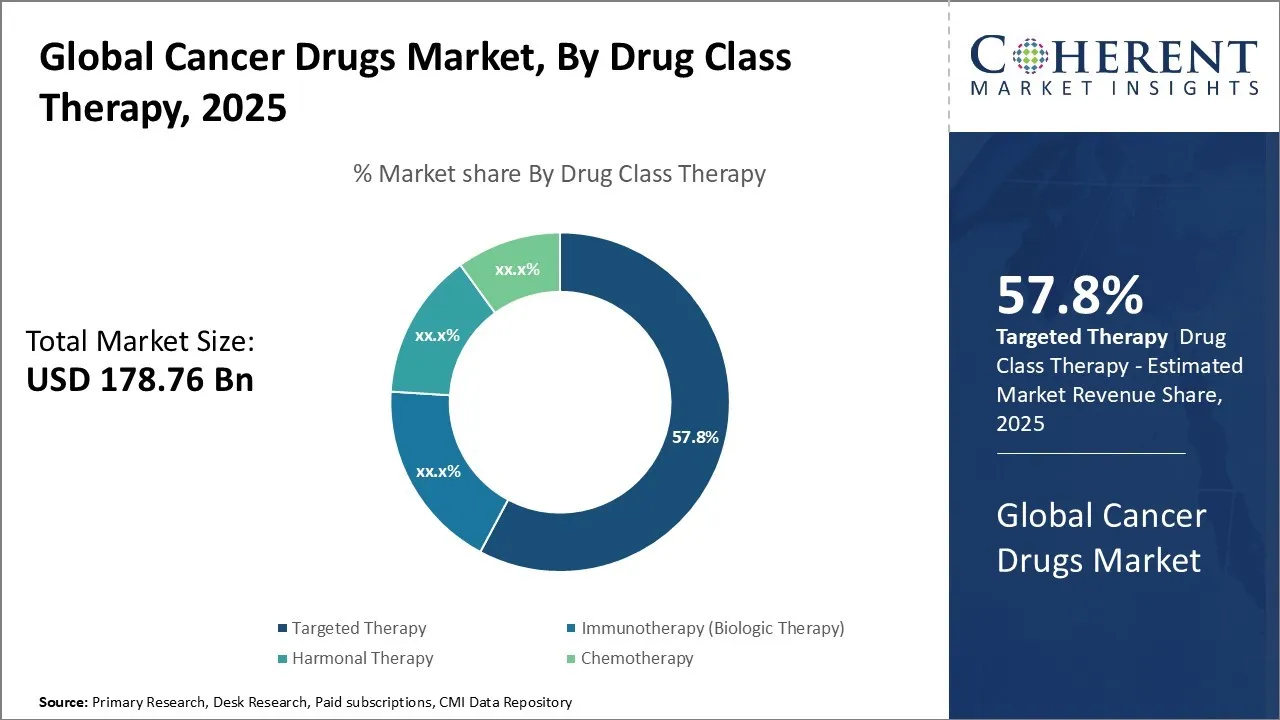
Cancer Drugs Market Insights, By Drug Class Therapy - Targeted Therapy contribute the highest share of the market owing to its increasing adoption of personalized medicine
Targeted Therapy acquired the prominent market share of 58.8% in 2026. Targeted therapy drives growth in the cancer drugs market by directly attacking cancer cells while sparing healthy tissues. Researchers have advanced genomics, molecular diagnostics, and biomarker identification to create more precise and effective treatments. Patients and providers increasingly adopt targeted therapies due to their alignment with personalized medicine, better outcomes, and reduced side effects. Apart from this, pharmaceutical companies and institutions continue to invest in research, while regulatory agencies expedite approvals, reinforcing targeted therapy’s central role in the evolving landscape of cancer treatment. For instance, in June 2025, Servier India launched the first-in-class targeted therapy, Ivosidenib, for rare IDH1-mutated AML and cholangiocarcinoma. This milestone significantly advances access to targeted cancer treatments in India, especially benefiting patients with uncommon and often overlooked cancer types. Such advancements are boosting the cancer drugs market revenue.
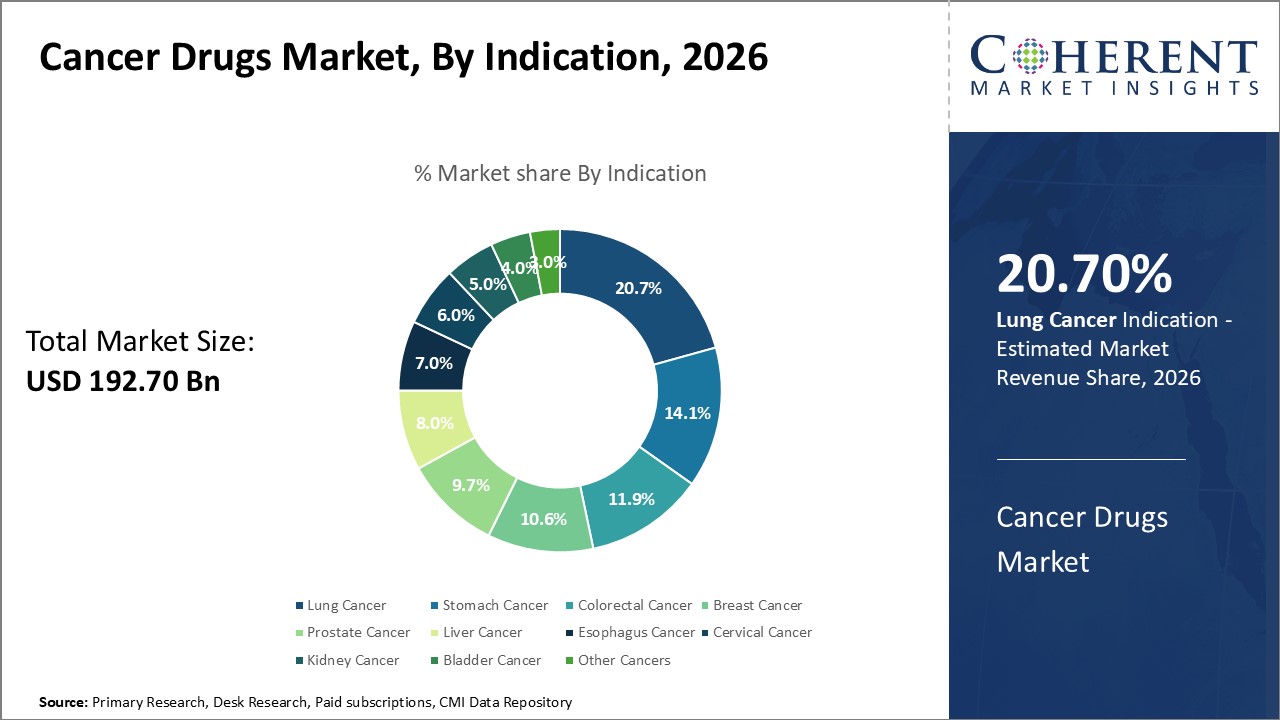
Cancer Drugs Market Insights, By Indication - Lung Cancer contributes the highest share of the market owing to its integration with advanced diagnostics & biomarkers
The rising number of lung cancer cases, fueled by smoking, air pollution, and aging populations, drives the lung cancer drugs market growth. Researchers and pharmaceutical companies continue to develop targeted therapies and immunotherapies that improve treatment outcomes and boost their adoption. Healthcare providers increasingly use molecular diagnostics and biomarker testing to deliver personalized care. Ongoing investment in research and quicker regulatory approvals further accelerate market expansion. As awareness increases and access to advanced treatments improves, global demand for lung cancer therapies grows steadily. For instance, in June 2025, Glenmark Pharmaceuticals Ltd. introduced Tevimbra, a lung cancer therapy, marking its entry into immuno-oncology in India. In a regulatory filing, the company highlighted this move as a major step toward expanding its differentiated oncology portfolio.
Regional Insights
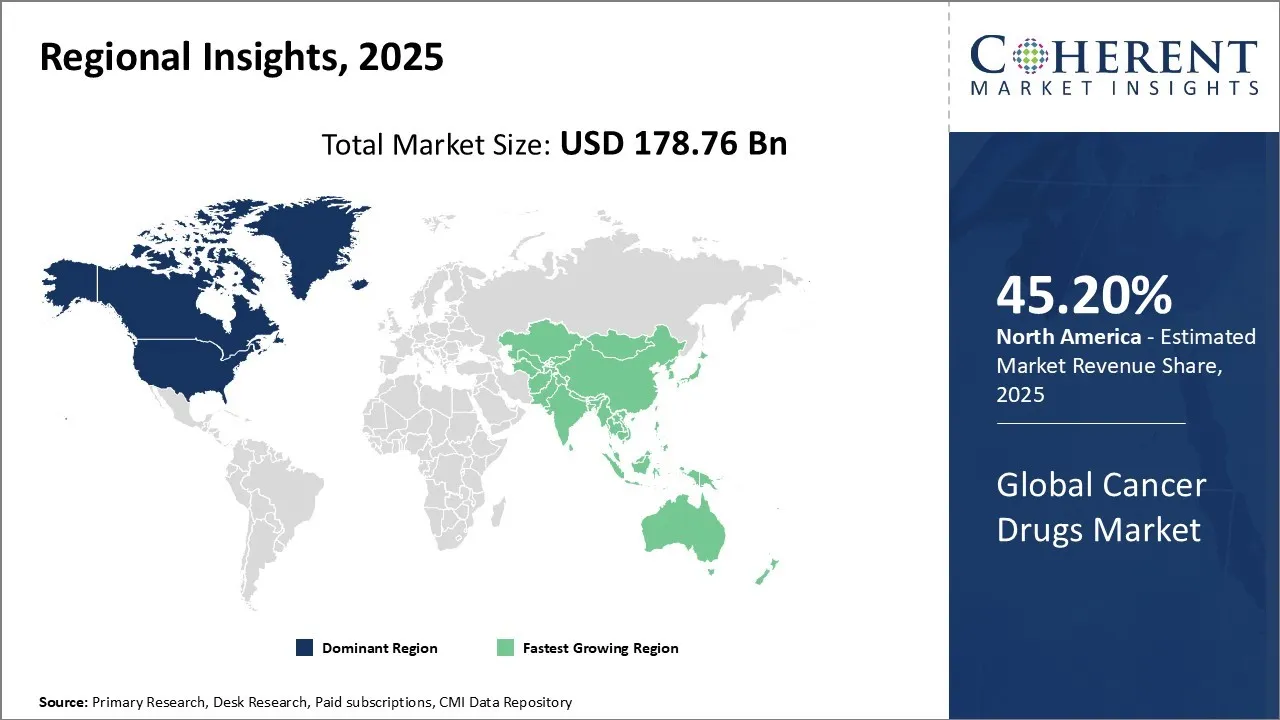
North America Cancer Drugs Market Trends
North America holds the dominant share of 45.20%. A mature healthcare system, strong R&D investment, and early adoption of advanced therapies drive the cancer drugs market demand in North America. Pharmaceutical and biotech companies lead innovation by conducting extensive clinical trials and forming strategic partnerships. Healthcare providers increasingly use molecular diagnostics, personalized medicine, and combination treatments to improve outcomes. Regulatory agencies offer strong support, while reimbursement systems and technological advancements in drug development continue to strengthen the region’s leadership in oncology treatment and research. For instance, in June 2026, The U.S. pharmaceutical market has seen the introduction of the first denosumab biosimilars, Wyost and Jubbonti, representing a major advancement for patients and healthcare systems. These biosimilars are now approved and available for all the indications covered by their reference drugs, Xgeva and Prolia, respectively. Denosumab is a critical therapeutic agent used to manage conditions like cancer.
Asia Pacific Cancer Drugs Market Trends
Immunotherapy, especially monoclonal antibodies, now leads cancer treatment across Asia-Pacific. Healthcare providers widely adopt it for lung and breast cancers, prompting global pharmaceutical companies and local biotech firms to boost innovation and investment in key markets like China, Japan, India, and South Korea. Researchers in China and India actively advance drug development by conducting affordable clinical trials and licensing groundbreaking therapies worldwide. Chinese biotech firms collaborate with Western partners, while Asian sponsors increasingly surpass U.S. companies in initiating early-stage oncology trials. For instance, in November 2024, Australia, in partnership with the International Atomic Energy Agency (IAEA), launched a new international development project to support the ‘Rays of Hope’ initiative in the Asia-Pacific region. The project aims to strengthen cancer care by training radiation oncology health professionals in accurate and consistent data collection using oncology information systems.
United States Cancer Drugs Market Trends
Pharmaceutical companies are actively developing targeted drugs like ADCs, checkpoint inhibitors, and CAR-T therapies to enhance precision and reduce side effects. These treatments are reshaping standard oncology care as proven benefits and patient demand accelerate approvals. Healthcare providers now rely on biomarker-driven care, NGS profiling, and AI-powered diagnostics to deliver personalized therapies. These technologies help identify new targets, optimize clinical trial design, and streamline development, allowing clinicians to match patients with the most effective treatments based on individual molecular profiles. For instance, in June 2026, Avenzo Pharmaceuticals introduced Phase I/II trial for its CDK4-selective breast cancer drug as part of its partnerships with Medical Clinical Research Centers (MCRC). Through these collaborations, the company aims to streamline site activation and accelerate patient recruitment for the trial, thereby propelling the cancer drugs market demand.
India Cancer Drugs Market Trends
Indian pharmaceutical companies like Biocon, Cipla, Dr. Reddy’s, Intas, and Aurobindo are rapidly expanding their production of biosimilar and generic cancer drugs. Government programs such as PMBJP and pooled procurement via the National Cancer Grid actively reduce drug prices and enhance access across various regions. Healthcare providers in India are increasingly adopting immunotherapies, including monoclonal antibodies, CAR-T, and oncolytic therapies. The development of NexCar19, a low-cost CAR-T treatment for blood cancers, highlights the push for affordable, locally developed therapies. For instance, in June 2026, Glenmark Pharmaceuticals unveiled the cancer treatment drug zanubrutinib in India after receiving approval from the Drugs Controller General of India (DCGI).
Market Report Scope
Cancer Drugs Market Report Coverage
| Report Coverage | Details | ||
|---|---|---|---|
| Base Year: | 2025 | Market Size in 2026: | USD 192.70 Bn |
| Historical Data for: | 2020 To 2024 | Forecast Period: | 2026 To 2033 |
| Forecast Period 2026 to 2033 CAGR: | 7.8% | 2033 Value Projection: | USD 326.00 Bn |
| Geographies covered: |
| ||
| Segments covered: |
| ||
| Companies covered: | Pfizer Inc., Novartis AG, Merck & Co., Inc., Celgene Corporation, AstraZeneca PLC, Astellas Pharma Inc., AbbVie Inc., F. Hoffmann-La Roche Ltd., Bristol-Myers Squibb Company, and Johnson & Johnson (Janssen Global Services, LLC), among others | ||
| Growth Drivers: |
| ||
| Restraints & Challenges: |
| ||
Cancer Drugs Market Trend
Expansion of Immunotherapy
Immunotherapy is reshaping cancer care by harnessing the body’s immune system to fight tumors. Treatments like checkpoint inhibitors, CAR-T cell therapies, and cancer vaccines have shown promising results across multiple cancer types. The ability of immunotherapies to provide durable responses and potential cures drives strong interest and investment. Ongoing clinical trials explore combination therapies and novel immunomodulators, broadening their applicability and enhancing effectiveness, thus fueling growth in the cancer drugs share.
In May 2025, the Cancer Prevention and Research Institute of Texas awarded the University of Houston $3 million from a $93 million grant package to establish a Cancer Immunotherapy Biomarker Core.
Cancer Drugs Market News
- In April 2025, Researchers in Melbourne launched a world-first clinical trial, hailed as a ‘game-changer’ for its potential to transform bowel cancer treatment. Based on groundbreaking WEHI research, the trial is the first to investigate whether doctors can accurately predict a patient’s response to specific drugs before starting treatment.
- In February 2025, The World Health Organization (WHO) has launched a new platform to deliver free cancer medicines to thousands of children in low- and middle-income countries. WHO began the initiative by providing the first batch of medicines to Mongolia and Uzbekistan.
- In February 2025, AstraZeneca announced that its experimental breast cancer drug, camizestrant, successfully delayed tumor progression in a Phase 3 trial. The study evaluated its use as a first-line treatment for patients with a specific type of breast cancer.
- In November 2024, Dr. Reddy's Laboratories has launched toripalimab, an immuno-oncology drug, in India for adults with recurrent or metastatic nasopharyngeal carcinoma—a rare form of head and neck cancer. The company will market the drug under the brand name Zytorvi.
Analyst Opinion (Expert Opinion)
- The cancer drugs market is at a transformative juncture, driven by breakthroughs that fundamentally alter treatment paradigms. The surge in targeted therapies and immuno-oncology agents reflects a maturation of precision medicine that is no longer theoretical but clinical reality. For instance, the global approval of drugs like Keytruda (pembrolizumab) has redefined treatment in multiple cancers, achieving remarkable response rates—for example, a 44% objective response rate in advanced non-small cell lung cancer patients with PD-L1 expression above 50%. This is unprecedented compared to traditional chemotherapies.
- However, the market’s complexity also reveals stark disparities. The uptake of these advanced therapies remains uneven; high costs and limited infrastructure impede access in many regions, including parts of Asia and Latin America. Notably, biosimilars have begun to alleviate this gap, with companies like Biocon and Celltrion launching trastuzumab biosimilars that reduce costs by nearly 30%, enabling broader patient reach without sacrificing efficacy.
- Clinical trial innovation is another pivotal force reshaping the landscape. Adaptive trial designs and biomarker-driven enrollment, as seen in the success of AstraZeneca’s Tagrisso, accelerate approval timelines while focusing on patient subgroups that benefit most. This targeted approach, while efficient, raises concerns about smaller patient populations and higher per-patient costs, pressing payers and providers to reconsider reimbursement frameworks.
- Looking ahead, the integration of AI in drug discovery and diagnostics promises to shorten development cycles and enhance personalization. Yet, regulatory systems worldwide must evolve to keep pace, balancing rapid innovation with safety and equitable access. The tension between innovation and affordability is the defining challenge for stakeholders.
Speak to the analyst
Want personalized insights?
Take the findings above to one of our principal consultants, or have the report rebuilt around the segments, geographies and competitors you actually track.
Market Segmentation
- Global Cancer Drugs Market, By Drug Class Type (Revenue, USD Bn, 2021 - 2033)
- Chemotherapy
- Targeted Therapy
- Immunotherapy (Biologic Therapy)
- Hormonal Therapy)
- Global Cancer Drugs Market, By Indication (Revenue, USD Bn, 2021 - 2033)
- Lung Cancer
- Stomach Cancer
- Colorectal Cancer
- Breast Cancer
- Prostate Cancer
- Liver Cancer
- Esophagus Cancer
- Cervical Cancer
- Kidney Cancer
- Bladder Cancer
- Other Cancer
- Global Cancer Drugs Market, By Geography (Revenue, USD Bn, 2021 - 2033)
- North America
- U.S.
- Canada
- Latin America
- Brazil
- Argentina
- Mexico
- Rest of Latin America
- Europe
- Germany
- U.K.
- Spain
- France
- Italy
- Russia
- Rest of Europe
- Asia Pacific
- China
- India
- Japan
- Australia
- South Korea
- ASEAN
- Rest of Asia Pacific
- Middle East & Africa
- GCC Countries
- Israel
- Rest of Middle East & Africa
- North America
- Key Players Insights
- Pfizer Inc.
- Novartis AG
- Merck & Co., Inc.
- Celgene Corporation
- AstraZeneca PLC
- Astellas Pharma Inc.
- AbbVie Inc.
- Hoffmann-La Roche Ltd.
- Bristol-Myers Squibb Company
- Johnson & Johnson (Janssen Global Services, LLC)
Sources
Primary Research Interviews
- Oncologists and hematologists
- Pharmaceutical R&D heads
- Clinical trial investigators
- Healthcare payers and insurance experts
- Hospital procurement managers
Databases
- PubMed
- ClinicalTrials.gov
- FDA and EMA drug approval databases
- WHO Global Health Observatory
- National Cancer Institute (NCI) data portal
Magazines
- Oncology Times
- Cancer Therapy Advisor
- The ASCO Post
- Pharmaceutical Executive
Journals
- Journal of Clinical Oncology
- Cancer Research
- The Lancet Oncology
- Nature Reviews Cancer
- Blood Cancer Journal
Newspapers
- The New York Times (Health Section)
- The Guardian (Science & Health)
- The Wall Street Journal (Health & Medicine)
- The Washington Post (Health)
Associations
- American Society of Clinical Oncology (ASCO)
- European Society for Medical Oncology (ESMO)
- International Association for the Study of Lung Cancer (IASLC)
- American Cancer Society (ACS)
Public Domain Sources
- World Health Organization (WHO) publications
- National Institutes of Health (NIH) reports
- Centers for Disease Control and Prevention (CDC) cancer statistics
- U.S. Food and Drug Administration (FDA) public advisories
Proprietary Elements
- CMI Data Analytics Tool, and Proprietary CMI Existing Repository of information for last 8 years
Get access to 250+ pages report
Every segment, forecast, competitor profile and data table behind the analysis above — available for instant download.
- ESOMAR Member
- ISO 9001:2015 Certified
- D-U-N-S Registered
- GDPR & CCPA Compliant
Missing comfort of reading report in your local language? Find your preferred language:
Transform your Strategy with Exclusive Trending Reports
Frequently Asked Questions
The Cancer Drugs Market is estimated to be valued at USD 192.70 Bn in 2026, and is expected to reach USD 326.00 Bn by 2033.
The CAGR of the Cancer Drugs Market is projected to be 7.8% from 2026 to 2033.
Increasing burden of cancer and increasing demand for safe and effective cancer drugs across the globe is fueling the growth of the market.
The Targeted Therapy segment is the leading component segment in the market.
Adverse effects associated with the use of cancer drugs and high cost of cancer drugs are major factors restraining growth of the market.
Major players operating in the market are Pfizer Inc., Novartis AG, Merck & Co., Inc., Celgene Corporation, AstraZeneca PLC, Astellas Pharma Inc., AbbVie Inc., F. Hoffmann-La Roche Ltd., Bristol-Myers Squibb Company, and Johnson & Johnson (Janssen Global Services, LLC), among others.