

Bacterial Conjunctivitis Drug Market Size and Forecast — 2026-2033
Overview
Bacterial conjunctivitis is inflammation of the outermost layer of the eye and inner area of the eyelid. Bacterial conjunctivitis symptoms include swelling, watery eyes, and redness. Bacteria responsible for conjunctivitis include staphylococci, haemophilus, Chlamydia trachomatis, and streptococci. Children and geriatric population are highly prone to bacterial conjunctivitis, however, it affects people of all age groups. The increasing cases of bacterial conjunctivitis demand efficient medication, which supports the growth of bacterial conjunctivitis drugs market. Bacterial conjunctivitis spreads because of poor hygiene, immune compromise, ocular diseases such as dry eye, blepharitis, and contaminated cosmetics. It can be prevented by maintaining proper hygiene and also hand wash reduces the chances of bacterial conjunctivitis.
Bacterial Conjunctivitis Drug Market Size and Forecast – 2026 – 2033
The Bacterial Conjunctivitis Drug Market size is estimated to be valued at USD 3.01 billion in 2026 and is expected to reach USD 4.96 billion by 2033, exhibiting a compound annual growth rate (CAGR) of 7.4% from 2026 to 2033.
Key Takeaways
The Antibiotic Eye Drops segment dominates, holding a 58% market share, driven by their ease of use and rapid therapeutic action; meanwhile, the Combination Drugs sub segment is fastest growing due to multi-mode efficacy.
Retail Pharmacies lead distribution with a 49% share, attributed to accessibility and consumer preference.
Pediatric patients represent the largest End-User segment, accounting for 53%, reflecting heightened infection rates among children globally.
North America captures the largest market share owing to advanced healthcare infrastructure and high healthcare expenditure.
Asia Pacific is the fastest-growing region, driven by increasing awareness and expanding healthcare access, with a CAGR surpassing the global average.
Europe maintains stable growth through supportive regulations and established pharmaceutical companies. The Middle East & Africa and Latin America are emerging markets with burgeoning healthcare investments poised to boost future market revenue.
Bacterial Conjunctivitis Drug Market – Segmentation Analysis
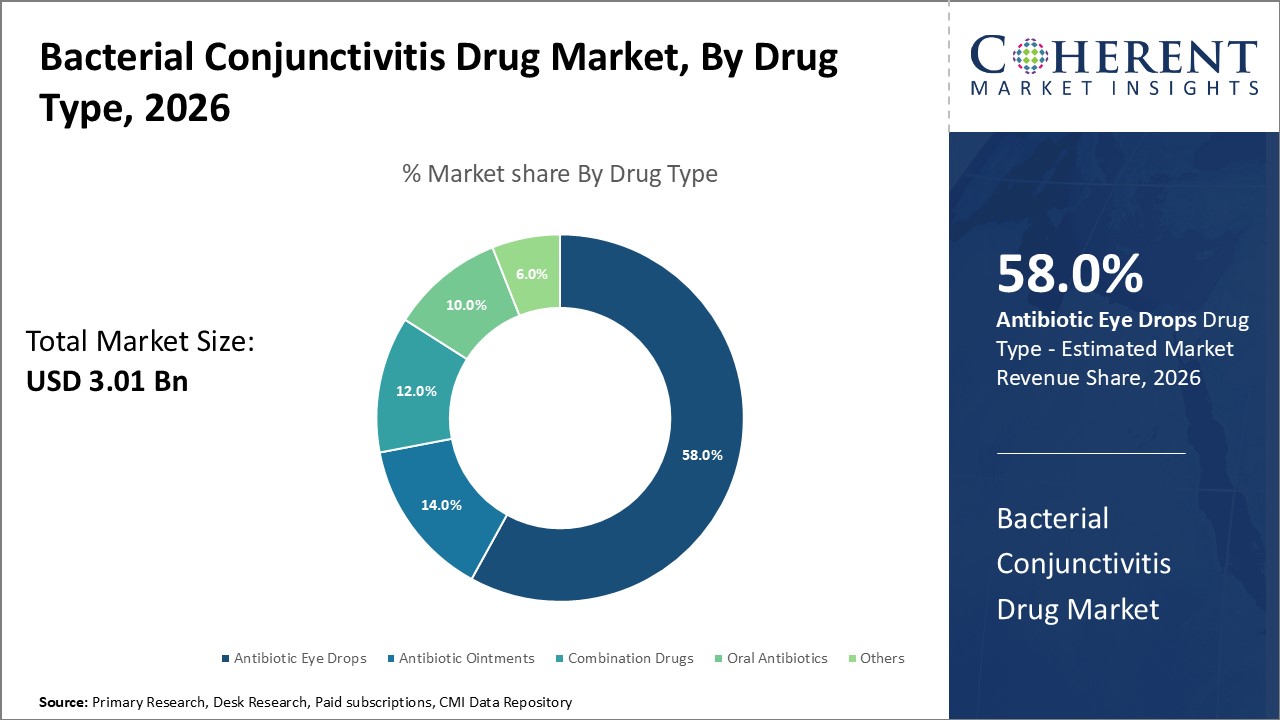
Bacterial Conjunctivitis Drug Market Insights, By Drug Type
In terms of Drug Type, the market is segmented into Antibiotic Eye Drops, Antibiotic Ointments, Combination Drugs, Oral Antibiotics, and Others. Among these, Antibiotic Eye Drops dominate the market share, holding 58%, attributed to their ease of application and rapid onset of therapeutic action. Their broad usage across pediatric and adult patients makes them the preferred treatment choice.
Bacterial Conjunctivitis Drug Market Insights, By Distribution Channel
The Distribution Channel segment encompasses Hospital Pharmacies, Retail Pharmacies, Online Pharmacies, Clinics, and Others. Retail Pharmacies dominate with an industry share of 48%, owing to their wide accessibility and consumer preference for over-the-counter antibiotic conjunctivitis drugs.
Bacterial Conjunctivitis Drug Market Insights, By End-User
The End-User segment categorizes into Pediatric Patients, Adult Patients, Geriatric Patients, and Others. Pediatric Patients dominate with a 52% market share, as children are more susceptible to bacterial conjunctivitis due to close-contact environments like schools. This segment is expanding rapidly due to increased diagnosis and vaccination awareness to prevent secondary infections.
Bacterial Conjunctivitis Drug Market Insights, By Geography
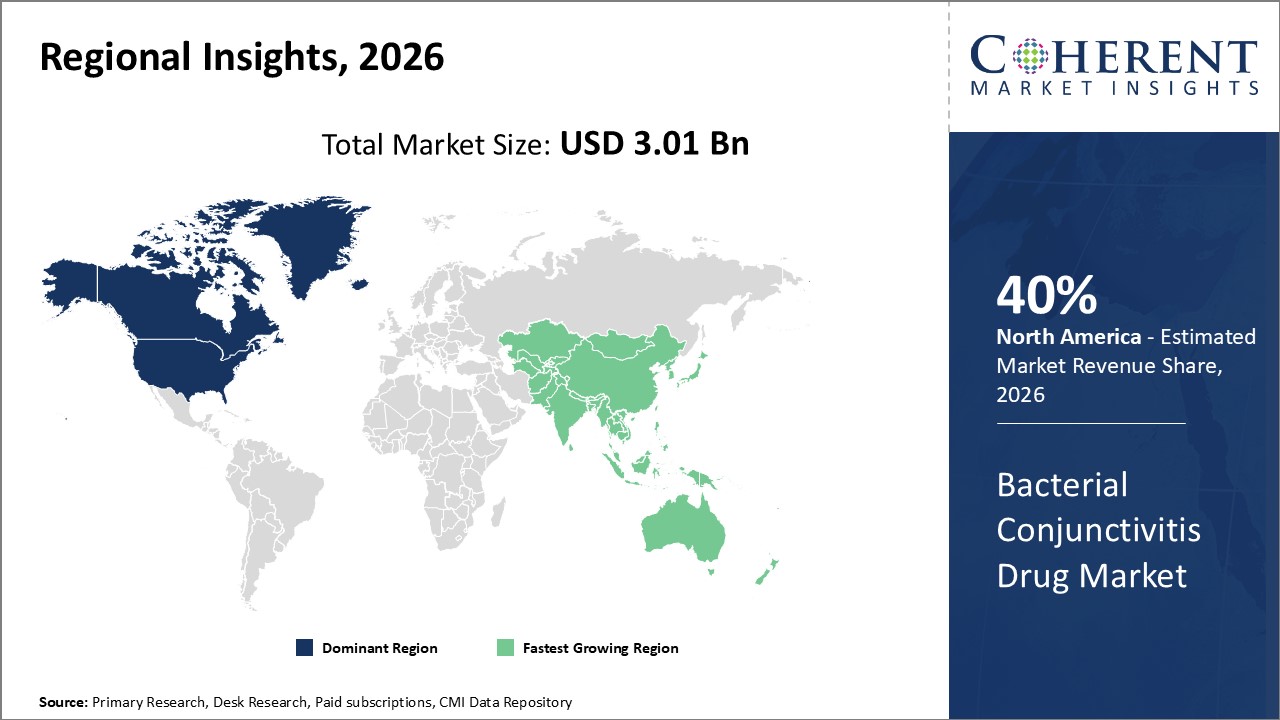
North America Bacterial Conjunctivitis Drug Market Analysis and Trends
In North America, the dominance in the Bacterial Conjunctivitis Drug Market is underpinned by robust healthcare infrastructure, strong regulatory frameworks supporting fast approvals, and high R&D investments. The market here holds an approximate 40% industry share, bolstered by leading companies such as Pfizer and Alcon generating high revenue through innovative drug launches and partnerships.
Asia Pacific Bacterial Conjunctivitis Drug Market Analysis and Trends
Meanwhile, the Asia Pacific exhibits the fastest growth at a CAGR of approximately 9.5%, driven by rising healthcare expenditures, increasing awareness, and expanding pharmaceutical manufacturing. Countries like India and China benefit from large patient bases with growing pediatric and geriatric segments, coupled with governmental initiatives improving eye care access.
Bacterial Conjunctivitis Drug Market Outlook for Key Countries
United States Bacterial Conjunctivitis Drug Market Analysis and Trends
The USA’s market is a major contributor, representing around 35% of the global revenue share in 2026. Its growth stems from advanced clinical research programs focusing on multidrug-resistant bacteria and digital therapeutics integration. Leading entities like Pfizer and Bausch Health account for substantial market revenue through continuous product innovation and strategic acquisitions. The presence of high healthcare spending and telehealth adoption have accelerated early diagnosis and treatment, propelling sustained market growth.
India Bacterial Conjunctivitis Drug Market Analysis and Trends
India’s market has emerged as a lucrative space with rapid expansion driven by increasing bacterial conjunctivitis cases among urban and rural pediatric populations. Key companies like Cipla, Sun Pharmaceutical, and Lupin have invested in affordable generic formulations, boosting market penetration. Government policies promoting eye health programs and expanding pharmacy networks have augmented business growth, positioning India as a critical growth engine for the Asia Pacific region.
Analyst Opinion
Rising incidence of antibiotic-resistant strains has intensified demand for innovative bacterial conjunctivitis drugs. Data from 2025 indicates a 12% year-on-year increase in multidrug-resistant bacterial conjunctivitis cases in North America, compelling pharmaceutical companies to invest heavily in R&D for novel antibiotics with enhanced efficacy and safety profiles.
Increasing outpatient visits and telemedicine diagnostics for eye infections are driving prescription volume growth. A 2026 report shows telehealth consultations led to a 26% increase in timely bacterial conjunctivitis diagnoses globally, accelerating treatment initiation and raising market revenue substantially.
Pricing dynamics reveal a growing preference for generic formulations, especially across emerging markets. Market revenue saw a 15% uplift in 2025 from generic drug consumption in Asia Pacific, fueled by affordability and accessibility initiatives by regional health ministries.
Expanding use cases in pediatric and geriatric ophthalmology are pivotal market drivers. For instance, in 2026, over 41% of pediatric eye infection treatments involved bacterial conjunctivitis-specific drugs, reflecting broader market scope and increasing industry share among vulnerable demographics.
- Current Industry Events of 2026
- Market Size Estimation
- Regional Breakdown
- Competitive Landscape
- Customer Intelligence
- Segmental Analysis
- Pricing Analysis
- Key Market Drivers, Challenges & Future Trends
- Customized Insights Section
Market Scope
| Report Coverage | Details | ||
|---|---|---|---|
| Base Year: | 2025 | Market Size in 2026: | USD 3.01 billion |
| Historical Data for: | 2020 To 2024 | Forecast Period: | 2026 To 2033 |
| Forecast Period 2026 to 2033 CAGR: | 7.4% | 2033 Value Projection: | USD 4.96 billion |
| Geographies covered: |
| ||
| Segments covered: |
| ||
| Companies covered: | Alcon Laboratories, Inc., Bausch Health Companies Inc., Santen Pharmaceutical Co., Ltd., Novartis AG, Pfizer Inc., Sun Pharmaceutical Industries Ltd., Cipla Limited, GlaxoSmithKline plc, Allergan (an AbbVie company), F. Hoffmann-La Roche AG. | ||
| Growth Drivers: |
| ||
Growth factors
The rising prevalence of bacterial conjunctivitis attributable to environmental pollution and increased screen exposure is a primary driver boosting market demand. Recent studies show a 9% rise in incidence rates in urban centers in 2026 compared to 2023. Next, technological advancements in drug formulation, such as sustained-release antibiotics, are expanding the treatment landscape, with clinical trials in 2025 evidencing improved patient adherence and outcomes. Thirdly, growing awareness and better diagnostic capabilities in emerging economies are broadening the patient pool, as indicated by a 17% increase in diagnosed cases in India and China over two years. Additionally, favorable governmental initiatives for ocular health, particularly in North America and Europe, are enhancing healthcare infrastructure that supports bacterial conjunctivitis drug distribution, contributing significantly to market growth.
Bacterial Conjunctivitis Drug Market Development
- In April 2026, Nordic Pharma, Inc., a subsidiary of Nordic Group B.V., collaborated with Harrow on the U.S. commercial launch of an authorized generic of Maxitrol (neomycin and polymyxin B sulfates and dexamethasone ophthalmic suspension). These generics are prescription medications that are exactly the same as their name-brand counterparts and are produced by the same company, but they are marketed under a different name and have different packaging labels.
Market Trends
The Bacterial Conjunctivitis Drug Market is witnessing a significant shift towards personalized medicine, leveraging advances in molecular diagnostics to tailor antibiotic therapies specific to patient microbiome profiles. This trend reduces treatment failure rates and antibiotic resistance, as seen in multiple clinical pilots across the USA and Europe in 2025. There is also a rising preference for combination therapy drugs, which provide broader coverage while minimizing dosing frequency, with a 22% market revenue increase in 2026 linked to these formulations. Furthermore, digital therapeutics integrated with mobile health apps are gaining traction, facilitating real-time monitoring and improving adherence to bacterial conjunctivitis treatment regimens. These evolving market dynamics are changing the competitive landscape and driving innovation.
Key Players
Alcon Laboratories, Inc.
Bausch Health Companies Inc.
Santen Pharmaceutical Co., Ltd.
Novartis AG
Pfizer Inc.
Sun Pharmaceutical Industries Ltd.
GlaxoSmithKline plc
Allergan (an AbbVie company)
F. Hoffmann-La Roche AG
Several leading companies have adopted aggressive growth and innovation strategies. For example, Pfizer’s partnership with specialty biotech firms in 2025 led to the commercial launch of novel antibiotic eye drops with enhanced spectrum coverage, resulting in a 11% increase in revenue from this product line within the first six months. Similarly, Alcon’s acquisition of a regional specialty pharmaceutical firm in Asia Pacific expanded its market footprint, contributing to a 15% market share increase in the region in 2026.
Bacterial Conjunctivitis Drug Market Future Outlook
Bacterial conjunctivitis, also known as pink eye, is a highly contagious eye infection caused by bacteria such as Staphylococcus aureus and Haemophilus influenzae. The market growth is driven by increasing incidence of bacterial eye infections worldwide, rising awareness of eye health, advancements in diagnostic techniques, and the availability of effective antibiotic treatments. Additionally, factors such as an aging population more susceptible to eye infections, growing healthcare expenditure, and government initiatives promoting eye care contribute to the market expansion.
The market is also witnessing innovation in drug formulations and drug delivery technologies, enhancing treatment efficacy and patient compliance. North America and Europe are currently leading regions in the market, while Asia-Pacific is anticipated to show significant growth due to increasing healthcare infrastructure and awareness. However, challenges such as antibiotic resistance and competition from generic formulations may impact the market. Overall, the bacterial conjunctivitis drug market is expected to show steady growth due to the rising demand for effective treatments globally.
Historical Analysis
The spread of ophthalmic bacterial infection increased the demand for antibacterial drugs for its treatment. According to National Center for Biotechnology Information (NCBI) 2013 report, in the U.S., there were around 6 million people affected by conjunctivitis. Bacterial conjunctivitis took around a week to get completely cured and fluoroquinolones were the most preferred drug for the treatment of bacterial conjunctivitis. There were certain drugs in the market that were patented and their patents were about to expire, this, in turn, was expected to increase the market for generic drugs, which were of less price as well. Moxeza, Vigamox, Besivance, and Zymaxid were some of the most successful patented drugs about to expire. After patent expiry, these drugs lost their exclusivity, which led to an increase in the use of generic drugs. The development of multi-drug resistant variants was expected to fuel the growth of bacterial conjunctivitis drug market. The unnecessary use of antibiotics caused the disease-causing bacteria to chemically evolve themselves and become resistant to drugs. This, in turn, led to the prescription of strong medication, which included corticosteroids and high doses of antibiotics.
The rising occurrence of bacterial conjunctivitis demanded safe and efficient drugs, which led to the development of new drugs, such as vancomycin ophthalmic ointment, that were in the clinical trial pipeline and a few were pending for approval. Some of the major challenges faced by bacterial conjunctivitis drug market were patent expiry and awareness about the disease that it cured itself in a week. However, the shift in preference toward herbal treatment from pharmacological treatment was expected to create new opportunities in the bacterial conjunctivitis drug market. Moreover, herbal formulation-based drugs were widely accepted, which in turn led to the development and investment in herbal products for the treatment of bacterial conjunctivitis. The aforementioned scenario was expected to support the growth of bacterial conjunctivitis drugs market over the forecast period.
Sources
Primary Research interviews:
General Physicians
Pediatricians
Hospital Pharmacists
Databases:
- ClinicalTrials.gov
World Health Organization (WHO) Global Health Observatory
Centers for Disease Control and Prevention (CDC) database
Magazines:
EyeWorld Magazine
Pharmaceutical Executive
PharmaTimes
Journals:
British Journal of Ophthalmology
JAMA Ophthalmology
Clinical Ophthalmology
Newspapers:
The Times of India – Health Section
The Hindu – Health Section
The Washington Post – Health & Science
Associations:
International Council of Ophthalmology (ICO)
All India Ophthalmological Society (AIOS)
European Society of Ophthalmology (SOE)
Get access to 250+ pages report
Every segment, forecast, competitor profile and data table behind the analysis above — available for instant download.
- ESOMAR Member
- ISO 9001:2015 Certified
- D-U-N-S Registered
- GDPR & CCPA Compliant
Missing comfort of reading report in your local language? Find your preferred language:
Transform your Strategy with Exclusive Trending Reports
Frequently Asked Questions
The market leaders include Alcon Laboratories, Bausch Health, Santen Pharmaceutical, Novartis, and Pfizer, who account for substantial market share through innovative products and extensive distribution networks.
The market size is projected to reach USD 4.96 billion by 2033, driven by increasing bacterial conjunctivitis incidence and pharma innovations.
The pediatric patient segment holds the largest growth opportunity, representing 52% of total market demand due to elevated infection rates among children.
Emerging trends include personalized medicine, combination drug therapies, and integration of digital health tools, which will significantly influence market growth strategies.
The market is highly competitive with emphasis on R&D to overcome antibiotic resistance, pricing pressures from generics, and ensuring equitable market access across regions.
Collaborations, acquisitions, and launching combination therapies coupled with strategic regional expansions characterize the prevailing go-to-market approaches.