

Generic Drugs Market Size and Forecast — 2026 - 2033
The global generic drugs market is projected to grow steadily from 2026 to 2033, driven by patent expirations and rising healthcare demand. Valued at approximately USD 480 billion in 2026, it is expected to reach nearly USD 720 billion by 2033, registering a compound annual growth rate (CAGR) of around 6.3%.
Overview
Generic drugs are medications designed to be bioequivalent to branded drugs in dosage, strength, safety, quality, performance, and intended use. They are typically introduced after the patent protection of brand-name drugs expires, offering more affordable treatment options. Regulatory authorities such as the U.S. Food and Drug Administration and the European Medicines Agency require generic drugs to meet strict approval standards before commercialization. By reducing healthcare costs and improving accessibility, generic drugs play a crucial role in global healthcare systems. They are widely used in treating chronic conditions, including cardiovascular diseases, diabetes, and infections, driving strong market demand worldwide.
Key Takeaways
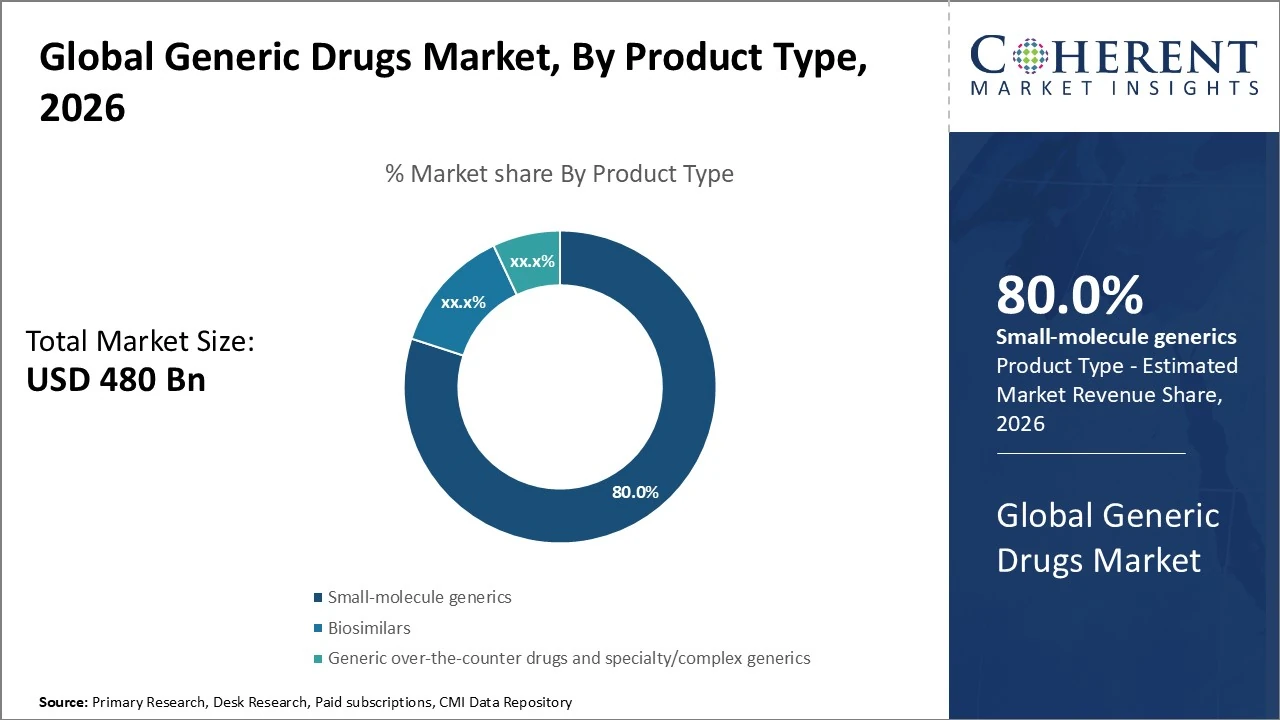
In the global generic drugs market, small-molecule generics remain the largest product segment, holding about 80% share of total revenue.
In the global generic drugs market, retail pharmacies and outpatient channels hold the largest share at about ~50%.
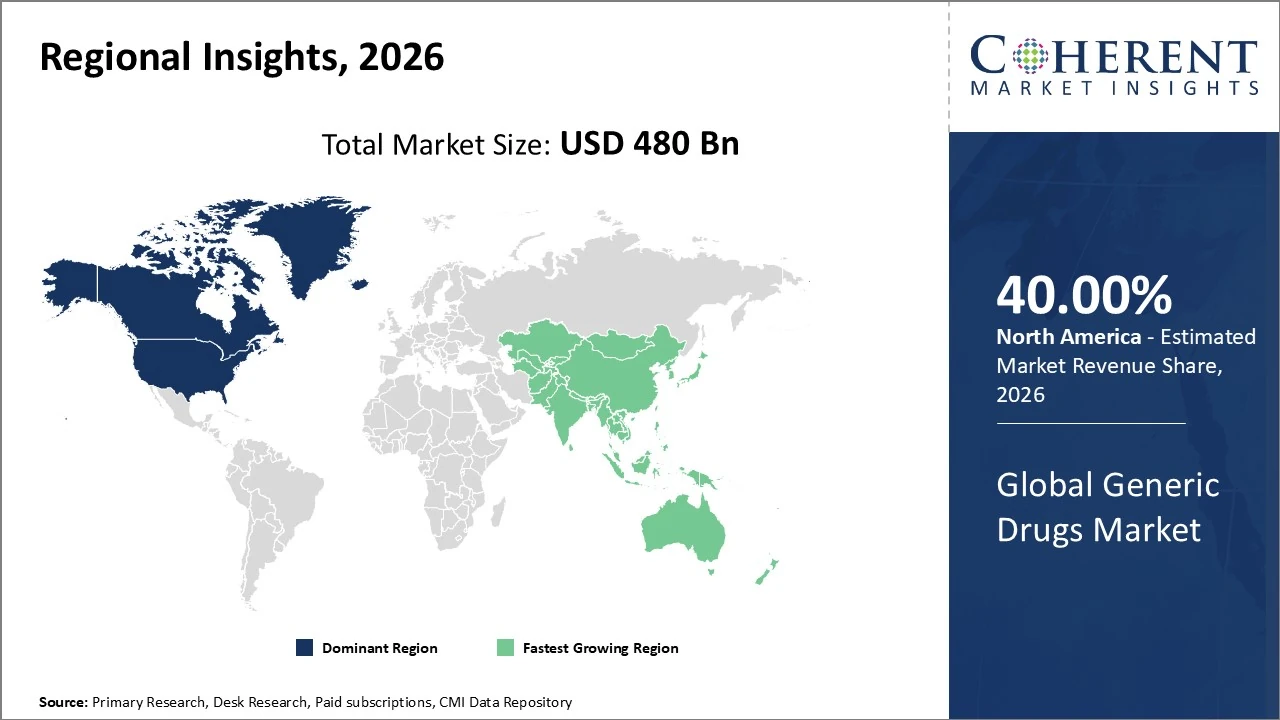
The North America generic drugs market dominates the global landscape, capturing roughly ~40% of global market share.
The Asia Pacific generic drugs market is expanding rapidly, valued at roughly USD 105 billion in 2026.
Generic Drugs Market Segmentation Analysis
Generic Drugs Market Insights, By Product Type
In the global generic drugs market, Small-molecule generics remain the largest product segment, holding about 80% share of total revenue due to their broad therapeutic use and lower development costs. Biosimilars are emerging rapidly, with share estimates rising as biologic patents expire, often cited as ~13% of the market and growing fastest. Generic over-the-counter (OTC) drugs and specialty/complex generics make up the remainder, typically ~7% combined, catering to consumer health and niche therapeutic areas. This product mix highlights the dominance of traditional small molecules but strong future growth in biosimilars.
Generic Drugs Market Insights, By End-User
In the global generic drugs market, Retail pharmacies and outpatient channels hold the largest share at about ~50%, driven by high prescription volumes and wide consumer access. Hospitals and clinics typically account for around 35%, as inpatient and acute care settings rely on affordable generics for broad therapeutic use. Online pharmacies are growing fast, with roughly ~10% share, fueled by rising e-commerce adoption and convenience. Homecare/long-term care facilities and other institutional users make up the remaining ~5%, reflecting expanding personalized and chronic care outside traditional settings.
Generic Drugs Market Trends
Increasing patent expirations of biologic drugs are accelerating demand for biosimilars, expanding cost-effective alternatives in oncology, autoimmune, and chronic disease treatments.
Expanding healthcare access, government support for affordable medicines, and higher chronic disease prevalence in Asia-Pacific and Latin America are boosting generic drug penetration.
Pharmaceutical companies are engaging in mergers, acquisitions, and collaborations to strengthen portfolios, enhance manufacturing capacity, and expand global distribution networks.
Generic Drugs Market Insights, By Geography
North America Generic Drugs Market Analysis and Trends
The North America generic drugs market dominates the global landscape, capturing roughly ~40% of global market share in 2026, with the U.S. accounting for about 89% of the regional market. High generic substitution rates and strong regulatory frameworks by the U.S. Food and Drug Administration drive affordability and adoption. Aging populations and chronic disease prevalence are expanding demand for cost-effective therapies. Robust healthcare infrastructure, accelerated approvals, and increased biosimilar launches are key trends, while supply chain diversification and pricing pressures shape the competitive environment.
Asia Pacific Generic Drugs Market Analysis and Trends
The Asia Pacific generic drugs market is expanding rapidly, is forecasted to grow at ~6.5% CAGR through 2033 as healthcare access, chronic disease prevalence, and affordability demand rise. Simple generics constitute the majority share, while biosimilars are gaining momentum within the region. China and India lead production, with India alone accounting for about ~40% of the regional market by revenue. Retail and hospital pharmacy channels dominate distribution, and supportive government policies and expanding e-pharmacy adoption are key growth trends. The region also benefits from manufacturing cost advantages and export opportunities.
Generic Drugs Market Outlook for Key Countries
USA Generic Drugs Market Analysis and Trends
The U.S. generic drugs market is expanding steadily, driven by rising demand for affordable medications, patent expirations of branded drugs, and chronic disease prevalence. Generics — including simple small‑molecule drugs and biosimilars — enhance cost containment in healthcare and bolster access. Trends include increased FDA approvals, biosimilar uptake, and investment in domestic manufacturing, although pricing pressures and supply chain concentration remain challenges.
Germany Generic Drugs Market Analysis and Trends
The Germany generic drugs market is substantial and growing, valued at around USD 35.1 billion in 2026 and forecast to expand to ~USD 55 billion by 2033, with an estimated CAGR of ~6.3% over the next decade. Generics account for about ~84% of pharmaceutical volume under third‑party payers, though lower expenditure share reflects pricing pressures. High generic prescription penetration, supportive regulatory frameworks, and rising chronic disease prevalence drive demand. Key trends include mandatory generic substitution, cost containment initiatives, and growing biosimilar adoption, while supply‑chain reliability and price erosion remain industry challenges.
Analyst Opinion
Analysts foresee steady market expansion due to patent expirations of branded drugs and rising global demand for affordable medicines.
While small-molecule generics dominate, biosimilars are viewed as the fastest-growing segment with significant long-term revenue potential.
Asia-Pacific, Latin America, and parts of Africa are expected to contribute major growth due to improving healthcare infrastructure and government support.
Approval processes and price control policies heavily influence market dynamics and profitability.
Mergers, acquisitions, and strategic collaborations are likely to shape competitive positioning and production efficiencies globally.
Market Scope
- Current Industry Events of 2026
- Market Size Estimation
- Regional Breakdown
- Competitive Landscape
- Customer Intelligence
- Segmental Analysis
- Pricing Analysis
- Key Market Drivers, Challenges & Future Trends
- Customized Insights Section
| Report Coverage | Details | ||
|---|---|---|---|
| Base Year: | 2025 | Market Size in 2026: | USD 480 Billion |
| Historical Data for: | 2020 To 2024 | Forecast Period: | 2026 To 2033 |
| Forecast Period 2026 to 2033 CAGR: | 6.3% | 2033 Value Projection: | USD 720 Billion |
| Geographies covered: |
| ||
| Segments covered: |
| ||
| Companies covered: | Teva Pharmaceutical Industries, Sandoz (Novartis), Mylan (Viatris), Cipla, Sun Pharmaceutical Industries, Pfizer | ||
| Growth Drivers: |
| ||
Generic Drugs Market Growth Factors
The global generic drugs market is expanding due to multiple growth drivers. Patent expirations of major branded drugs create opportunities for generics and biosimilars, while cost-conscious healthcare systems and rising out-of-pocket expenses boost demand for affordable alternatives. Chronic disease prevalence, especially cardiovascular, diabetes, and respiratory disorders, increases prescription volumes. Government incentives and favorable regulations supporting generic substitution accelerate market adoption. Additionally, emerging markets with expanding healthcare infrastructure and rising middle-class populations drive volume growth. Technological advancements in manufacturing and biosimilar development improve efficiency and quality, while strategic partnerships and mergers enhance global distribution, reinforcing sustained market expansion.
Generic Drugs Market Development
In February 2026, Natco Pharma Ltd. received government approval to produce and sell a generic version of semaglutide injection in India. Semaglutide is a prescription medicine used, alongside diet and exercise, to treat adults with inadequately controlled type 2 diabetes.
Key Players
Leading Companies of the Market
Teva Pharmaceutical Industries
Sandoz (Novartis)
Mylan (Viatris)
Sun Pharmaceutical Industries
Pfizer
Key players in the global generic drugs market include Teva Pharmaceutical Industries, Sandoz (Novartis), Mylan (Viatris), Cipla, Sun Pharmaceutical Industries, Pfizer. These companies lead in generic drug production, biosimilars, and global distribution, driving innovation, competitive pricing, and expanded access to affordable medicines worldwide.
Generic Drugs Market Future Outlook
The global generic drugs market is poised for sustained growth over the next decade, driven by expiring patents of blockbuster drugs, rising chronic disease prevalence, and increasing healthcare cost pressures. Biosimilars are expected to gain substantial market share, complementing traditional small-molecule generics. Expansion in emerging markets like Asia-Pacific and Latin America will accelerate adoption due to improved healthcare infrastructure and supportive government policies. Technological advancements in manufacturing, formulation, and digital supply chains will enhance efficiency and patient access. Analysts predict continued consolidation, strategic partnerships, and competitive pricing as key trends shaping a more accessible, cost-effective, and globally integrated market.
Generic Drugs Market Historical Analysis
Historically, the generic drugs market has grown steadily, driven by patent expirations of major branded drugs and the need for cost-effective healthcare solutions. From the early 2000s, increased regulatory support in North America and Europe, including mandatory generic substitution policies, accelerated market penetration. Small-molecule generics dominated, while biosimilars emerged gradually in the late 2000s as biologic patents expired. Rising chronic disease prevalence and aging populations globally further expanded demand. Strategic mergers and acquisitions among key players strengthened manufacturing capabilities and distribution networks. Overall, the historical trend reflects consistent growth, increasing affordability, and widening access to essential medicines worldwide.
Sources
Primary Research Interviews:
Pharmaceutical company executives
Healthcare professionals
Regulatory Authorities
Industry Experts and Consultants
Databases:
PubMed / MEDLINE
ClinicalTrials.gov
World Health Organization (WHO)
Journals:
Journal of Generic Medicines
International Journal of Pharmaceutics
Pharmaceutical Technology Europe
Drug Development and Industrial Pharmacy
Newspapers:
The Wall Street Journal
Financial Times
The Economic Times
The New York Times
Associations:
Association for Accessible Medicines (AAM)
European Generic and Biosimilar Medicines Association (EGA)
International Generic and Biosimilar Medicines Association (IGBA)
Pharmaceutical Research and Manufacturers of America (PhRMA)
Get access to 250+ pages report
Every segment, forecast, competitor profile and data table behind the analysis above — available for instant download.
- ESOMAR Member
- ISO 9001:2015 Certified
- D-U-N-S Registered
- GDPR & CCPA Compliant
Missing comfort of reading report in your local language? Find your preferred language:
Transform your Strategy with Exclusive Trending Reports
Frequently Asked Questions
Key players in the global generic drugs market include Teva Pharmaceutical Industries, Sandoz (Novartis), Mylan (Viatris), Cipla, Sun Pharmaceutical Industries, Pfizer. These companies lead in generic drug production, biosimilars, and global distribution, driving innovation, competitive pricing, and expanded access to affordable medicines worldwide.
The global generic drugs market is projected to grow steadily from 2026 to 2033, driven by patent expirations and rising healthcare demand. Valued at approximately USD 480 billion in 2026, it is expected to reach nearly USD 720 billion by 2033, registering a compound annual growth rate (CAGR) of around 6.3%.
The Retail pharmacies and outpatient channels segment offers the highest growth potential in the generic drugs market.
Over the next five years, market development trends in generic drugs are expected to evolve through increased biosimilar adoption, expansion in emerging markets, advancements in manufacturing and drug delivery technologies, strategic mergers and partnerships, and strengthened regulatory support, all driving broader accessibility, cost efficiency, and sustainable global growth.
The generic drugs market is highly competitive, dominated by global players like Teva, Sandoz, and Mylan, with ongoing mergers, acquisitions, and biosimilar launches shaping the landscape. Main challenges include pricing pressures, regulatory hurdles, supply chain disruptions, patent litigations, and maintaining quality and bioequivalence across diverse markets.
Companies in the generic drugs market commonly use strategic partnerships, mergers, and acquisitions to expand portfolios and distribution. Other strategies include competitive pricing, rapid regulatory approvals, targeting hospitals and retail pharmacies, leveraging biosimilar launches, and investing in emerging markets to increase accessibility, market share, and long-term growth.