

CHEMOTHERAPY MARKET SIZE AND SHARE ANALYSIS
The chemotherapy market is estimated to be valued at USD 12.70 Bn in 2026 and is expected to reach USD 22.05 Bn by 2033, exhibiting a compound annual growth rate (CAGR) of 8.2% from 2026 to 2033.
Key Takeaways
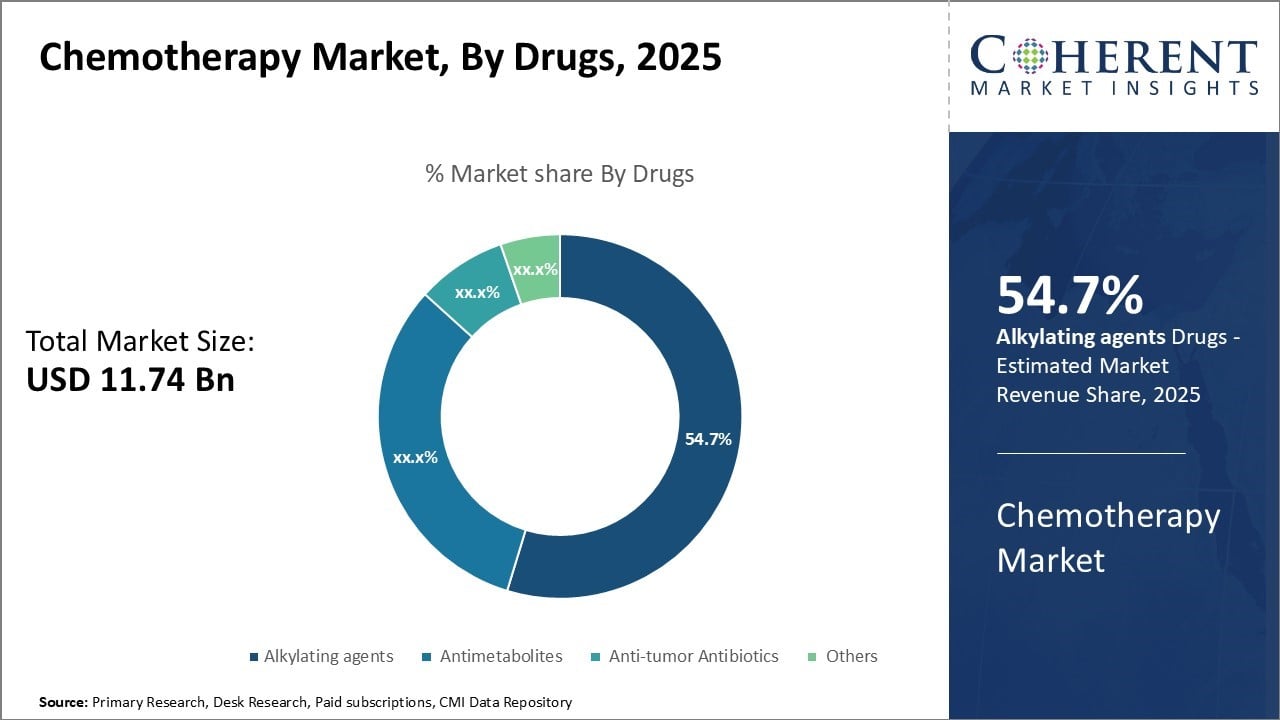
- Based on the Drugs, the alkylating agents segment dominates the market with a market share of 55.7% in 2026 due to increased efficacy and cost advantages.
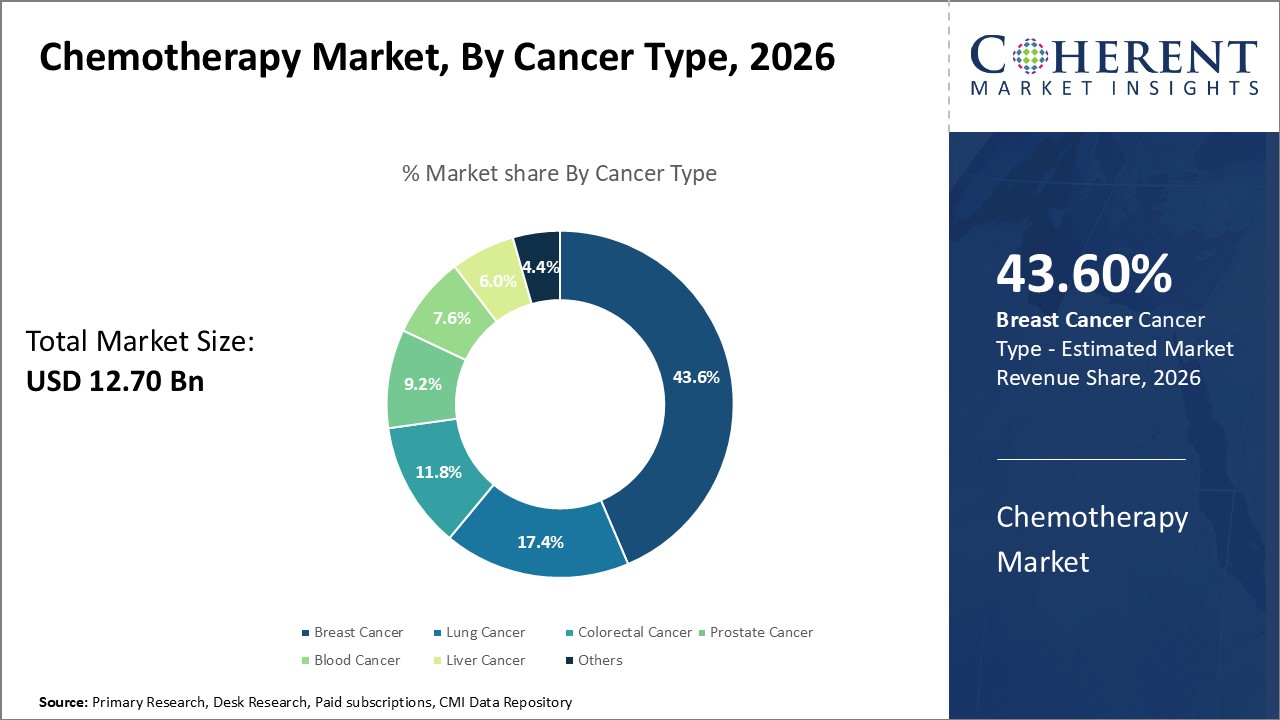
- Based on the Cancer Type, the breast cancer segment dominates the market with a market share of 43.6% in 2026 due to high incidence and mortality rates.
- Based on the Route of Administration, the oral segment dominates the market with a market share of 57.8% in 2026 due to the growing popularity of oral chemotherapy.
- Based on the Distribution Channel, the Hospital Pharmacies segment dominates the market due to the presence of cancer treatment departments.
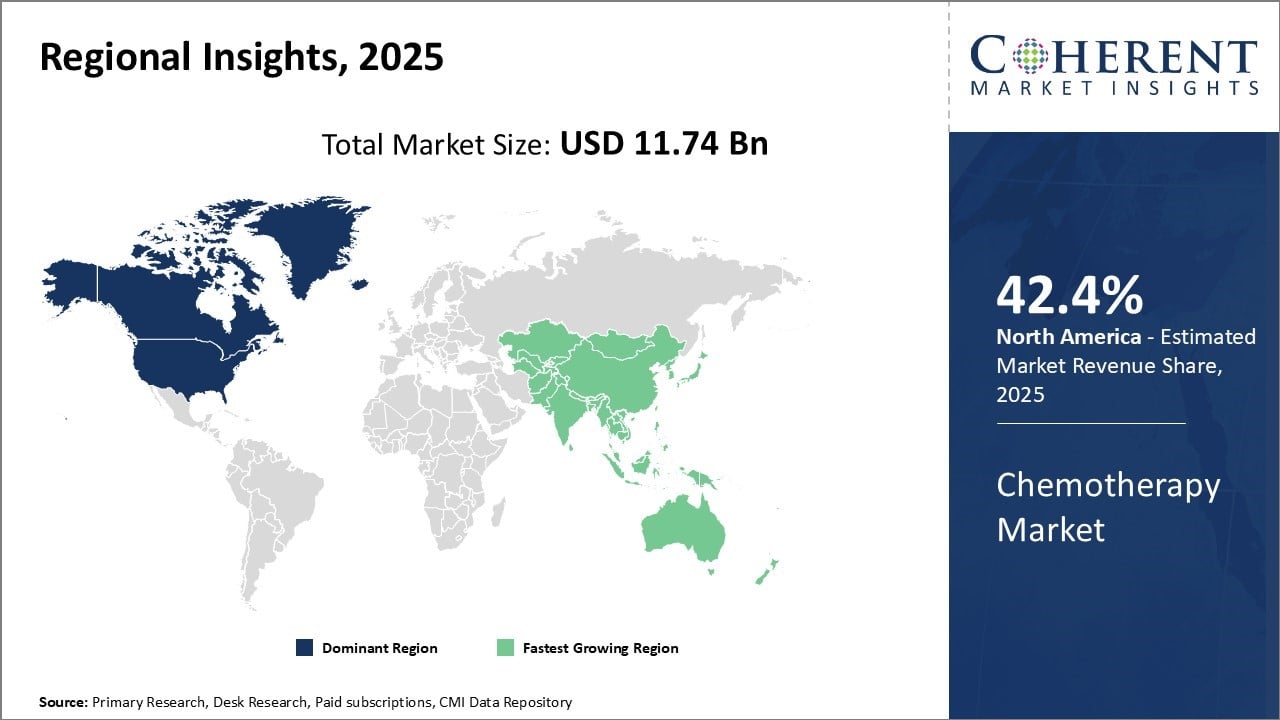
- On the basis of Region, North America dominates the global chemotherapy market with a market share of 42.4% in 2026.
Market Overview
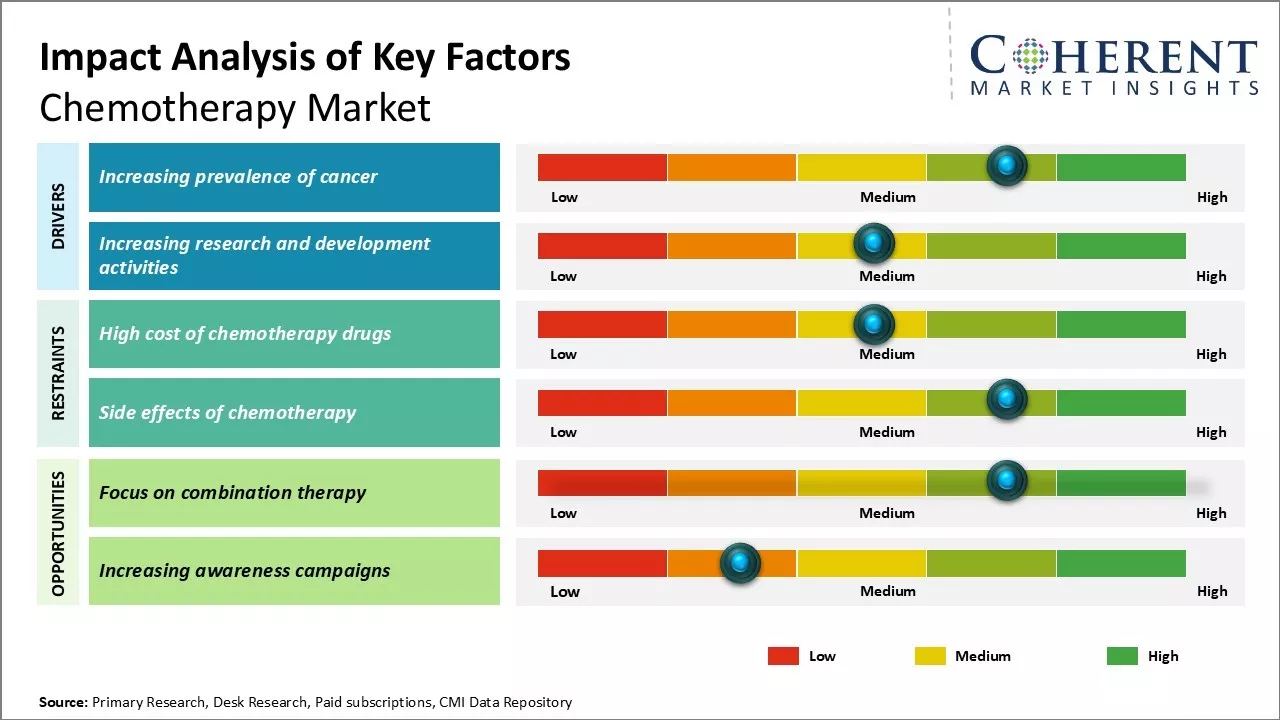
The increasing prevalence of cancer, particularly breast and leukemia cases, is a primary driver, alongside the rising demand for targeted therapies and advancements in drug delivery systems. Additionally, the growing availability of generic medications could moderate growth rates in certain regions. Overall, while the chemotherapy industry is poised for growth, it must navigate these challenges to realize its potential fully.
Current Events and Their Impact on the Chemotherapy Market
Current Events | Description and its impact |
Technological and Innovation Breakthroughs |
|
Economic and Healthcare System Pressures |
|
Regulatory and Pricing Policy Shifts |
|
Supply Chain Resilience Initiatives |
|
End Use Application for Chemotherapy Market
- Hospitals & Clinics: Most chemotherapy treatments happen in hospitals and clinics because they have full cancer treatment setups, including cancer doctors, treatment rooms, and medical equipment. They also get good support from insurance and government health programs. These centers handle all common cancer types like breast, lung, blood (leukemia), lymph node (lymphoma), and colon cancer. Treatments are given by injection, pills, or other methods. Hospitals use both fixed and large machines like infusion pumps, catheters, and safety tools, especially for strong or complex treatments.
- Specialty Oncology Centers: These centers focus only on cancer treatment. They are growing quickly due to better care, support from both public and private sectors, and the rise in long-term cancer cases. They offer the same chemotherapy treatments as hospitals, but often with more personal attention and better service.
- Ambulatory Surgical Centers (ASCs) / Outpatient Facilities: These centers offer chemotherapy without requiring patients to stay overnight. This lowers treatment costs and is helpful for patients who need frequent visits. These centers are best for patients with stable conditions who need low-risk treatment. They help improve comfort and overall patient experience.
- Homecare Settings / Home-based Chemotherapy: More people are choosing to receive chemotherapy at home. This includes drug delivery, online check-ups, pain relief, and emotional support. Portable devices and video consultations make this possible. Services include giving chemotherapy drugs, checking and managing patient health, and helping with pain and mental well-being. Home chemotherapy is widely used in North America due to good insurance coverage. It is also growing fast in Asia–Pacific because of better healthcare and digital services.
- Current Industry Events of 2026
- Market Size Estimation
- Regional Breakdown
- Competitive Landscape
- Customer Intelligence
- Segmental Analysis
- Pricing Analysis
- Key Market Drivers, Challenges & Future Trends
- Customized Insights Section
End-user Feedback and Unmet Needs in the Chemotherapy Market
End-user Feedback
- Side Effects and Toxicity: Patients often report serious side effects such as tiredness, feeling sick, hair loss, nerve pain, and a weaker immune system. These effects lower their quality of life and sometimes cause patients to stop treatment early.
- Lack of Personalization: Many patients feel that chemotherapy is not tailored to their specific needs. There is a growing need for treatment plans that are based on each person’s cancer type and body, which is still not common.
- Accessibility and Cost: The high cost of treatment and uneven access to good medical care—especially in rural or low-income areas—are major concerns. Travelling long distances to hospitals also adds stress for patients.
Unmet Needs
- Targeted Drug Delivery Systems:
There is a strong need for new methods that deliver chemotherapy directly to the cancer, reducing damage to the rest of the body. - Better Side Effect Management:
More effective medicines and support options are needed to help manage side effects like nausea and nerve pain, which are often not available or widely used. - Real-time Monitoring Tools:
Tools that can track how well treatment is working or catch side effects early—such as smart devices or apps—are currently missing in most treatment plans.
Role of Artificial Intelligence (AI) in the Chemotherapy Market
Artificial Intelligence (AI) is playing a transformative role in the chemotherapy market by enabling more precise, personalized, and effective treatment strategies. AI-driven platforms analyze vast datasets—including genomic, proteomic, clinical, and molecular profiles—to identify optimal treatment pathways, predict patient response, and minimize adverse effects. This not only enhances therapeutic outcomes but also reduces trial-and-error in drug selection.
A key example is the launch of Exacta AI by Datar Cancer Genetics (DCG) in February 2025. This next-generation, multi-analyte platform is designed for cancer patients who have exhausted standard therapies. Exacta AI integrates comprehensive tumor profiling with real-time laboratory data and AI-powered analytics to assess drug synergy, toxicity, and interactions. It covers a broad spectrum of treatments—including Antibody Drug Conjugates (ADCs), Checkpoint Inhibitors (CPIs), targeted therapies, endocrine agents, chemotherapy, and repurposed drugs. By offering personalized treatment options with detailed risk-benefit analyses, Exacta AI exemplifies how AI is reshaping chemotherapy planning and delivery.
Segmental Insights
Chemotherapy Market Insights, By Drugs
The alkylating agents segment dominates the market due to increased efficacy and cost advantages
In terms of drugs, the alkylating agents segment is estimated to contribute the highest market share of 55.7% in 2025, owing to their strong efficacy profile against a wide range of cancers and relatively low cost of treatment. Alkylating agents work by alkylating DNA and disrupting its structure, thereby preventing cell division and resulting in cell death. Due to their non-specific mechanism of action, these drugs demonstrate activity against various cancer types, including lung cancer, breast cancer, and multiple myeloma, among others. In April 2025, Shorla Oncology announced FDA approval of a 100 mg/10 mL multi-dose vial of TEPYLUTE, a ready-to-dilute thiotepa formulation for breast and ovarian cancer. The new format eliminates reconstitution, reducing preparation time and potential errors, and improving scheduling flexibility for patients. TEPYLUTE is an alkylating agent used to treat adenocarcinoma of the breast and ovary.
Chemotherapy Market Insights, By Cancer Type
The breast cancer segment dominates the market due to High incidence and mortality rates
In terms of cancer type, the breast cancer segment is estimated to contribute the highest market share of 43.6% in 2026, owing to its high prevalence as well as mortality rates worldwide. In 2022, about 2.3 million women were diagnosed with breast cancer worldwide, and 670,000 died, according to the Breast Cancer Research Foundation. It is also a major cause of cancer-related deaths among women. This is further propelling the breast cancer segment growth.
Chemotherapy Market Insights, By Route of Administration
The oral segment dominates the market due to the Popularity of oral chemotherapy
In terms of route of administration, the oral segment is estimated to contribute the highest market share of 57.8% in 2026, owing to the popularity of oral chemotherapy regimens among patients and physicians alike. Oral therapy provides benefits like ease of self-administration at home without needles or IV ports, flexibility in dosing schedules, and avoidance of potential catheter-related complications. This improves treatment compliance and quality of life for patients. For instance, Tata Memorial Hospital has developed India's first oral chemotherapy drug, PREVALL (6-mercaptopurine), for leukemia, making it available in major hospital pharmacies. This is further proliferating the chemotherapy market growth.
Chemotherapy Market Insights, By Distribution Channel
The Hospital Pharmacies segment dominates the market due to the presence of cancer treatment departments
The growth of hospital pharmacies in the chemotherapy market is due to several reasons, including the rising number of cancer patients, the presence of cancer treatment departments, and the need for safe and controlled use of chemotherapy drugs. Hospitals have better facilities to manage these strong medicines and allow for careful patient observation, which helps ensure safe and effective treatment. Also, insurance support and the availability of skilled medical staff make patients prefer getting chemotherapy in hospitals, increasing hospital pharmacy use. For instance, Organizations like ICICI Bank are partnering with hospitals like HBCHRC to expand cancer care infrastructure and improve access to specialized treatment.
Regional Insights
North America Chemotherapy Market Trends
North America is expected to dominate the chemotherapy industry with the highest market share of 42.4% in 2026, due to factors such as widespread health insurance coverage, government support for cancer research, and the presence of leading pharmaceutical companies. For instance, Merck & Co., Inc., a global pharmaceutical company, announced that the U.S. Food and Drug Administration (U.S. FDA) had approved KEYTRUDA (pembrolizumab) as adjuvant treatment following surgical resection and platinum-based chemotherapy for patients with stage IB (T2a ≥4 Centimeters), II, or IIIA Non-Small Cell Lung Cancer (NSCLC). This is further proliferating the chemotherapy market revenue.
Asia Pacific Chemotherapy Market Trends
The Asia Pacific region exhibits the fastest growth with 22.4% market share in 2026, due to growing medical tourism, rising healthcare spending, and increasing focus of global players to tap into opportunities in developing markets. For instance, an Indian company, Datar Cancer Genetics (DCG), a diagnostic centre based in Maharashtra, has launched Exacta AI, an advanced AI-powered platform that helps improve treatment choices for cancer patients. The platform combines different types of data—such as molecular, protein-related, genetic, biological, and clinical information—and uses AI to create personalized treatment plans. Such innovations are accelerating the chemotherapy market demand.
United States Chemotherapy Market Trends
The U.S. chemotherapy industry continues to grow steadily, backed by new product approvals and the rising demand for affordable biosimilars. For instance, GSK plc., a biopharmaceutical company, announced that it had received approval from the U.S. Food and Drug Administration for Jemperli (dostarlimab-gxly) for the treatment of adult patients with mismatch repair-deficient (dMMR) recurrent or advanced endometrial cancer. This is further proliferating the chemotherapy market share.
India Chemotherapy Market Trends
The increasing research and development activities by key market players in India are poised to drive the chemotherapy market growth in India. For instance, Rakuten Medical, Inc., a biotechnology company, announced that the company had started a Global Phase 3 Trial of Alluminox treatment using ASP-1929 for recurrent head and neck cancer in India.
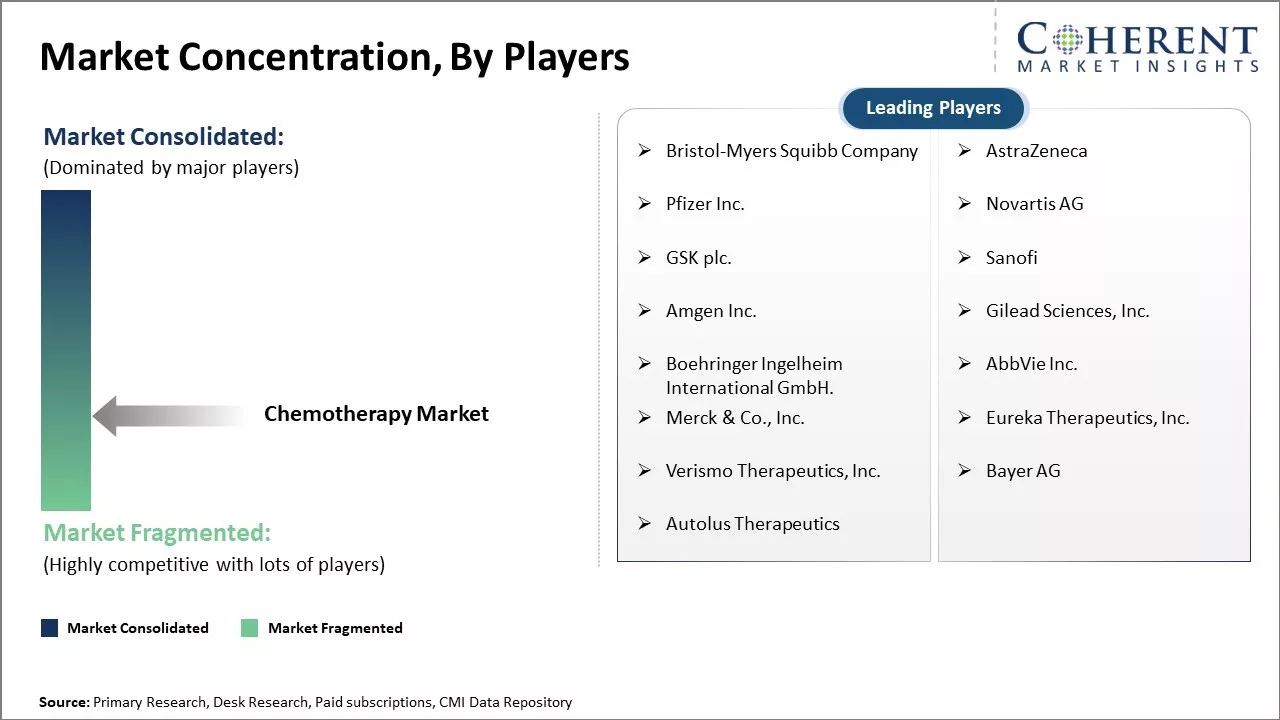
Market Concentration and Competitive Landscape
Chemotherapy Industry News
- In June 2025, HCG Manavata Cancer Centre successfully performed its first PIPAC (Pressurised IntraPeritoneal Aerosol Chemotherapy) procedure, an advanced, minimally invasive technique for abdominal cancers.
- In June 2025, HCG Manavata Cancer Centre (HCGMCC), a leader in oncology care, introduced Scalp Cooling Therapy—a breakthrough technology that helps reduce hair loss during chemotherapy.
- In January 2025, the Advanced Centre for Treatment, Research, and Education in Cancer (ACTREC), a key arm of Tata Memorial Centre (TMC), embarked on a major expansion to revolutionize cancer research, treatment, and patient care.
- In January 2025, Rakuten Medical Announces Initiation of Global Phase 3 Trial of ASP-1929 Photoimmunotherapy in Combination with Pembrolizumab for First-Line Recurrent Head and Neck Cancer.
- In April 2024, India launched NexCAR19, the first indigenously developed CAR-T cell therapy, marking a significant advancement in cancer treatment.
Market Report Scope
Chemotherapy Market Report Coverage
| Report Coverage | Details | ||
|---|---|---|---|
| Base Year: | 2025 | Market Size in 2026: | USD 12.70 Bn |
| Historical Data for: | 2020 To 2024 | Forecast Period: | 2026 To 2033 |
| Forecast Period 2026 to 2033 CAGR: | 8.2% | 2033 Value Projection: | USD 22.05 Bn |
| Geographies covered: |
| ||
| Segments covered: |
| ||
| Companies covered: | Bristol-Myers Squibb Company, AstraZeneca, Pfizer Inc., Novartis AG, GSK plc., Sanofi, Amgen Inc., Gilead Sciences, Inc., Boehringer Ingelheim International GmbH., AbbVie Inc., Merck & Co., Inc., Eureka Therapeutics, Inc., Verismo Therapeutics, Inc., Bayer AG, and Autolus Therapeutics | ||
| Growth Drivers: |
| ||
| Restraints & Challenges: |
| ||
Market Driver - Increasing prevalence of cancer
The global burden of cancer continues to grow at an alarming rate. For instance, in December 2022, according to the report published by the National Center for Biotechnology information, lung cancer or bronchogenic carcinoma refers to tumors originating in the lung parenchyma or within the bronchi and is one of the leading causes of lung cancer deaths in the U.S. Approximately 225,000 new cases of lung cancer in the U.S. is estimated annually, and approximately 160,000 die because of lung cancer. Increasing cancer prevalence, the expanding pool of cancer patients seeking better and targeted treatment options are driving growth in the global chemotherapy market.
Market Opportunity - Focus on Combination Therapy
One significant opportunity in the chemotherapy drugs market is the implementation of combination therapies. The use of multiple chemotherapy agents enhances response rates and survival benefits for cancer patients. This strategy effectively combats drug resistance and synergistically targets cancer cells through various mechanisms. Pharmaceutical companies are investing in innovative drug cocktails tailored to specific cancer types and stages, aiming for improved clinical outcomes and increased demand for chemotherapy globally. By prioritizing customized multi-drug regimens, the market can significantly enhance patient care and treatment efficacy, ultimately driving growth in the chemotherapy sector.
Analyst Opinion (Expert Opinion)
- Even though modern cancer care has advanced with gene-based and targeted treatments, more than 60% of cancer patients worldwide still start with traditional chemotherapy, often without checking whether it suits their tumor type. This “one-size-fits-all” method causes avoidable side effects in patients who may not benefit. For example, a 2023 JAMA Oncology study on early-stage breast cancer found that about 35% of patients could have skipped chemo if better genetic testing had been used. The continued use of outdated chemotherapy methods reflects slow change in clinical practice, not scientific progress.
- Studies show that up to 1 in 4 patients stop chemotherapy early because of severe side effects like low white blood cells, painful mouth sores, or nerve damage. In poorer regions, the number is often higher due to limited access to good care. This leads to poorer outcomes and lower survival rates than seen in clinical trials. Despite this, the industry has made little progress in reducing these side effects. The harmful impact of chemo remains a major weakness that has not been fixed.
- According to a 2024 report by the American Cancer Society, 41% of insured patients in the U.S. went into debt during chemotherapy, and 28% skipped doses to save money. Even older, low-cost drugs can lead to monthly expenses over $2,000 when including extra medicines and hospital visits. The problem is worse in countries where patients must pay out of pocket. Without fair insurance systems, many people delay treatment or receive poor-quality care. The current setup is not just expensive—it’s unfair and outdated.
Speak to the analyst
Want personalized insights?
Take the findings above to one of our principal consultants, or have the report rebuilt around the segments, geographies and competitors you actually track.
Market Segmentation
- By Drugs Insights (Revenue, USD Bn, 2021 - 2033)
- Alkylating agents
- Antimetabolites
- Anti-tumor antibiotics
- Others
- By Cancer Type Insights (Revenue, USD Bn, 2021 - 2033)
- Breast Cancer
- Lung Cancer
- Colorectal Cancer
- Prostate Cancer
- Blood Cancer
- Liver Cancer
- Others
- By Route of Administration Insights (Revenue, USD Bn, 2021 - 2033)
- Oral
- Parenteral
- Others
- By Distribution Channel Insights (Revenue, USD Bn, 2021 - 2033)
- Hospital Pharmacies
- Retail Pharmacies
- Online Pharmacies
- Regional Insights (Revenue, USD Bn, 2021 - 2033)
- North America
- U.S.
- Canada
- Latin America
- Brazil
- Argentina
- Mexico
- Rest of Latin America
- Europe
- Germany
- U.K.
- Spain
- France
- Italy
- Russia
- Rest of Europe
- Asia Pacific
- China
- India
- Japan
- Australia
- South Korea
- ASEAN
- Rest of Asia Pacific
- Middle East
- GCC Countries
- Israel
- Rest of Middle East
- Africa
- South Africa
- North Africa
- Central Africa
- North America
- Key Players Insights
- Bristol-Myers Squibb Company
- AstraZeneca
- Pfizer Inc.
- Novartis AG
- GSK plc.
- Sanofi
- Amgen Inc.
- Gilead Sciences, Inc.
- Boehringer Ingelheim International GmbH.
- AbbVie Inc.
- Merck & Co., Inc.
- Eureka Therapeutics, Inc.
- Verismo Therapeutics, Inc.
- Bayer AG
- Autolus Therapeutics
Interviews from the following stakeholders
Stakeholders
- Interviews with oncology product managers, medical affairs leaders, hospital pharmacists, procurement heads, oncology R&D directors, and business development professionals involved in the manufacturing, formulation, distribution, and clinical deployment of chemotherapy drugs across public and private healthcare systems.
Databases
- World Health Organization (WHO) – Global Cancer Observatory (GLOBOCAN) Statistics
- SEER (Surveillance, Epidemiology, and End Results Program) – U.S. Chemotherapy Treatment and Survival Data
- National Cancer Institute (NCI) – Oncology Drug Utilization and Trial Pipeline
- Centers for Medicare & Medicaid Services (CMS) – Chemotherapy Reimbursement Claims Data
- Health and Family Welfare Statistics (India) – Cancer Care Infrastructure and Drug Procurement
- Eurostat – Pharmaceutical Products and Oncology Drug Trade Data
- UN Comtrade – International Trade Statistics for Antineoplastic Agents
- Global Cancer Drug Spending Database – IQVIA/WHO Collaborating Centers
Magazines
- Oncology Times
- Cancer World
- PharmaVoice – Oncology & Hematology Focus
- The Pharma Letter – Oncology Drug Updates
- Drug Topics – Oncology Pharmacy Section
- Pharmaceutical Technology
- Medscape Oncology
Journals
- Journal of Clinical Oncology (ASCO)
- The Lancet Oncology
- Cancer Chemotherapy and Pharmacology
- Nature Reviews Clinical Oncology
- Annals of Oncology
- JAMA Oncology
- British Journal of Cancer
- Oncotarget
Newspapers
- The Economic Times – Pharma & Healthcare Section
- Business Standard – Oncology Pipeline and Market Access Coverage
- The Hindu BusinessLine – Cancer Drug Procurement & Policy
- Reuters – Oncology Drug Market Trends and Global Cancer Policy
- Financial Times – Biopharma and Oncology Strategy Coverage
Associations
- American Society of Clinical Oncology (ASCO)
- European Society for Medical Oncology (ESMO)
- Union for International Cancer Control (UICC)
- Indian Society of Medical and Pediatric Oncology (ISMPO)
- Pharmaceutical Research and Manufacturers of America (PhRMA) – Oncology Innovation
- International Agency for Research on Cancer (IARC)
- National Comprehensive Cancer Network (NCCN)
Public Domain Sources
- World Health Organization (WHO) – Essential Medicines and Chemotherapy Protocols
- U.S. Food and Drug Administration (FDA) – Oncology Drug Approvals and Guidelines
- European Medicines Agency (EMA) – Anticancer Drug Reviews and Market Authorizations
- National Cancer Grid (India) – Chemotherapy Protocols and Cancer Care Infrastructure
- OECD – Health at a Glance Reports – Cancer Care Metrics
- World Bank – Healthcare Infrastructure and Oncology Program Investments
- Ministry of Health and Family Welfare (India) – Cancer Care Policy Documents
Proprietary Elements
- CMI Data Analytics Tool and proprietary CMI repository of chemotherapy market intelligence, clinical trial mapping, competitive benchmarking, health economics data, and regulatory insights across over 20 oncology indications, built and validated over the past 8+ years.
Get access to 250+ pages report
Every segment, forecast, competitor profile and data table behind the analysis above — available for instant download.
- ESOMAR Member
- ISO 9001:2015 Certified
- D-U-N-S Registered
- GDPR & CCPA Compliant
Missing comfort of reading report in your local language? Find your preferred language:
Transform your Strategy with Exclusive Trending Reports
Frequently Asked Questions
The Chemotherapy Market is estimated to be valued at USD 12.70 Bn in 2026, and is expected to reach USD 22.05 Bn by 2033.
The CAGR of the Chemotherapy Market is projected to be 8.2% from 2026 to 2033.
Increasing prevalence of cancer and increasing research and development activities are the major factors driving the growth of the chemotherapy market.
The high cost of chemotherapy drugs and the side effects of chemotherapy are the major factors hampering the growth of the chemotherapy market.
In terms of drugs, the alkylating agents segment is estimated to dominate the market revenue share in 2026.
Bristol-Myers Squibb Company, AstraZeneca, Pfizer Inc., Novartis AG, GSK plc., Sanofi, Amgen Inc., Gilead Sciences, Inc., Boehringer Ingelheim International GmbH., AbbVie Inc., Merck & Co., Inc., Eureka Therapeutics, Inc., Verismo Therapeutics, Inc., Bayer AG, and Autolus Therapeutics are the major players.
North America is expected to lead the chemotherapy market in 2026.