

Hypoglycemic Drugs Market Size and Share Analysis: 2026 - 2033
The Hypoglycemic Drugs Market is estimated to be valued at USD 905.2 Mn in 2026 and expected to reach USD 1,270.60 Mn by 2033, witnessing a CAGR of 9.6% over the forecast period (2026-2033). This growth is driven by the rising global prevalence of diabetes and the growing adoption of advanced glucose-lowering therapies.
Key Takeaways
- Based on Region, North America region is expected to hold 35% share of the market in 2026.
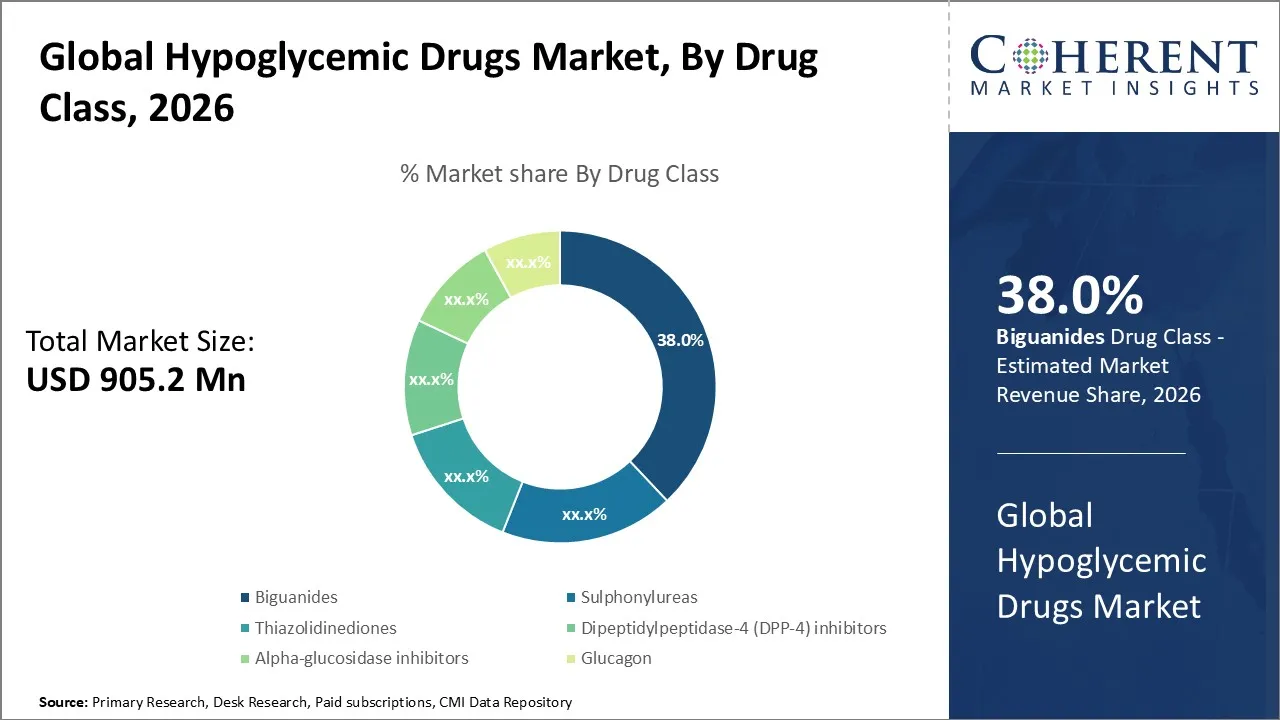
- Based on Drug Class, the biguanide segment is expected to hold approximately 38% share of the market in 2026, due to its first-line treatment status and strong clinical efficacy.
- Based on Route of Administration, the oral segment is expected to lead the market with 40% share in 2026, driven by patient convenience and widespread use in long-term diabetes management.
- Based on Distribution Channel, the hospital pharmacies segment is projected to account for around 45% share of the market in 2026, due to high patient inflow and reliance on prescription-based diabetes treatments.
Market Overview
Hypoglycemic medications treat diabetes mellitus by decreasing glucose levels for patients overcoming hyperglycemia due to diabetes mellitus. These drugs contribute to regulating blood glucose levels and to preventing serious chronic illnesses (e.g. heart disease, renal problems, neuropathy). Hypoglycemic medications achieve glucose lowering through several methods, including stimulation of insulin production, increasing insulin sensitivity, and decreasing the rate at which glucose is absorbed into the gastrointestinal tract.
Current Events and their Impacts on the Hypoglycemic Drugs Market
Current Event | Description and its Impact |
FDA Approval of Weekly Basal Insulin Analogue |
|
Strategic R&D investments by Diabetes drug manufacturers |
|
Growing Global Diabetes Prevalence |
|
Segmental Insights
- Current Industry Events of 2026
- Market Size Estimation
- Regional Breakdown
- Competitive Landscape
- Customer Intelligence
- Segmental Analysis
- Pricing Analysis
- Key Market Drivers, Challenges & Future Trends
- Customized Insights Section
Hypoglycemic Drugs Market Insights, By Drug Class - the Biguanides segment is the dominant segment
Biguanides are projected to account for a share of approximately 38% of the hypoglycemic drug market by 2026. The biguanides segment is the largest market, primarily due to the use of metformin as a first-line treatment for type-2 diabetes. Biguanides work by decreasing liver glucose production and increasing insulin sensitivity without causing significant weight gain. Global uptake of biguanides has been high due their low cost, effectiveness, and safety over the long term.
Hypoglycemic Drugs Market Insights, By Route of Administration - the Oral segment is the dominant segment
Oral hypoglycemic drugs will likely makeup more than 40% of the worldwide hypoglycemic drug market by 2026. Oral hypoglycemic drugs were the most common type of hypoglycemic drug, primarily because many oral diabetes medications are readily available. Many patients prefer oral diabetes medications because they are easier to use than injectable medications and patients typically have better compliance with the oral route than with the injectable route.
A new combination therapy for treating type 2 diabetes was introduced by a pharmaceutical company in April, 2025, this product combines two oral medications to help patients maintain normal blood glucose levels and reduce the number of doses needed to control their blood glucose level.
Hypoglycemic Drugs Market Insights, By Distribution Channel - the Hospital Pharmacies segment is the dominant segment
Its projected that in 2026, about 45% of the hypoglycemic product market will belong to hospital pharmacies, which are usually the predominant source of hypoglycemic drugs for patient with diabetes because they are the primary places people receive their prescriptions and specialized medical care. Hospitals provide reliable access to advanced hypoglycemic products and offer clinical expertise and support for diabetes management and treatment through the use of their pharmacy services.
Regional Insights
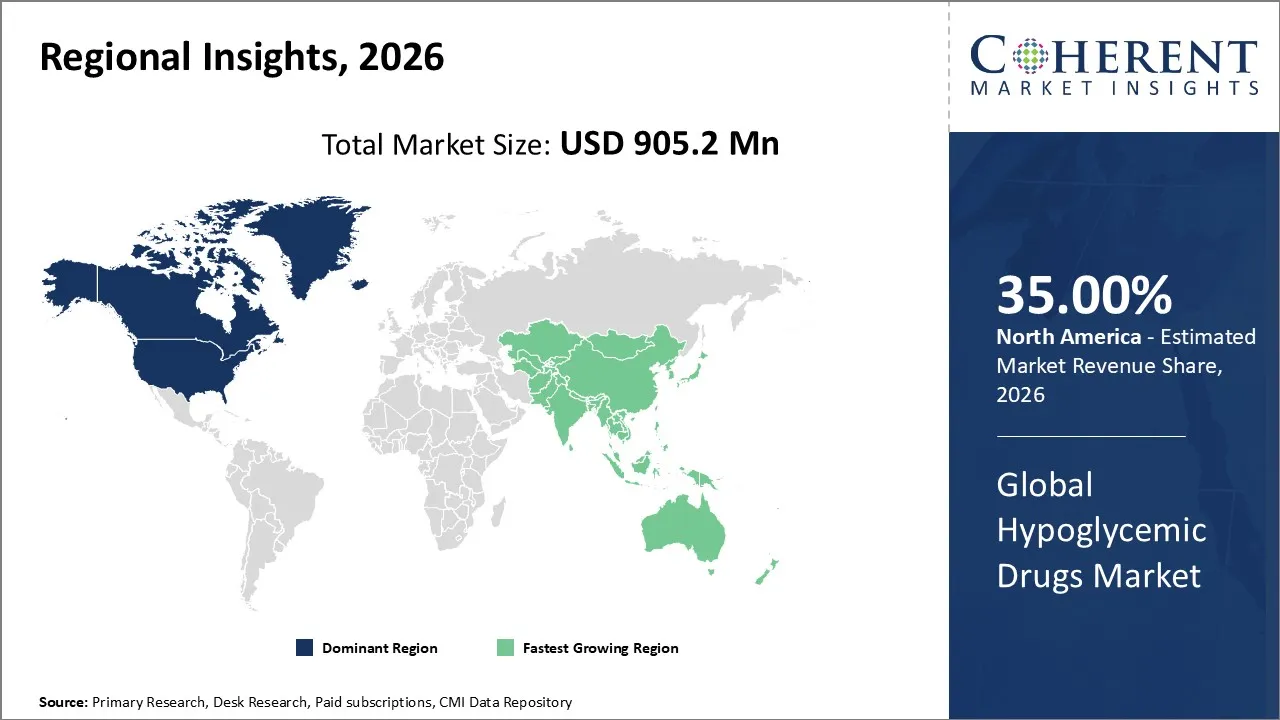
North America Remains at the Epicenter of Market
During the projected timeline, approximately 35% of the worldwide market for hypoglycemic products will be covered by North America. The hypoglycemic drugs market continues to be dominated by North America due to the high prevalence of diabetes, a strong healthcare system, and rapidly increasing use of advanced diabetic therapy.
- United States: The United States leads North America because of its high number of people living with diabetes, extensive use of advanced therapies such as GLP-1 receptor agonists, and continuous product innovation by major pharmaceutical manufacturers. A lot of people are covered by insurance and have access to specialty care for diabetes, which will contribute to market growth in the United States.
- Canada: Canada is an important player in the region because of its well-established public sector healthcare system that supports access to essential anti-diabetic medications as part of long-term disease management programs. The Government of Canada is also taking action to support the use of hypoglycemic medications through funding initiatives and increased national awareness campaigns.
Asia Pacific remains the Fastest-Growing Region of Market
The Asia Pacific region is expected to grow faster than any other area with their market share projected to increase between 27% and 30% in the year 2033. The large number of diabetics, better access to the healthcare and affordability of hypoglycemic drugs is contributing to this growth pattern. Other contributors include an increase in urbanization, sedentary lifestyle and dietary habits that are leading to more people in Asia Pacific area becoming diabetics.
- China: China is rapidly expanding because it has a very large number of people who have diabetes and is making substantial investments in their healthcare system. Through government programs promoting early diagnosis and treatment of diabetes and the development of the domestic pharmaceutical industry, the rate of growth in China is going up significantly.
- India: India is also experience in tremendous growth as more people become aware of their risk of developing diabetes and participating in government sponsored screening. There is an increase in the number of low-cost generic hypoglycemic drugs with more middle-class family being able to afford to treat their diabetes and greater access to healthcare in India.
Market Report Scope
Hypoglycemic Drugs Market Report Coverage
| Report Coverage | Details | ||
|---|---|---|---|
| Base Year: | 2025 | Market Size in 2026: | USD 905.2 Mn |
| Historical Data for: | 2020 To 2024 | Forecast Period: | 2026 To 2033 |
| Forecast Period 2026 to 2033 CAGR: | 9.6% | 2033 Value Projection: | USD 1,270.6 Mn |
| Geographies covered: |
| ||
| Segments covered: |
| ||
| Companies covered: | Eli Lilly & Company, Boehringer Ingelheim GmbH, Vistin Pharma AS, Janssen Pharmaceutica NV, Sanofi, Astellas Pharma Inc., AstraZeneca plc., Merck & Co., Inc., Novartis AG., Novo Nordisk A/S, Teva Pharmaceuticals Pvt Ltd., and Sun Pharmaceutical Industries Ltd | ||
| Growth Drivers: |
| ||
Hypoglycemic Drugs Market Driver
Rising Global Prevalence of Diabetes
The increase in diabetes around the world has been one of the most significant factors influencing the growth of the hypoglycemic drugs market. The rise in diabetes cases globally can be attributes to several factors, including changing lifestyle, an aging population, and the obesity epidemic, especially in developing countries. As more diabetes patients discover that they need assistance controlling blood glucose levels and can benefit from blood-glucose-lowering medications, demand for these types of drugs continue to grow.
Increasing Drug Approvals and Innovation
As more new antidiabetic drug approvals have occurred, there has been marked increase in the number of new treatment options available to diabetes patients. As such, major pharmaceutical companies are dedicating significant resources to the research and development of combination therapies, long-acting formulations, and personalized treatments for diabetes, thus supporting the growth of the global hypoglycemic drugs market.
Hypoglycemic Drugs Market Opportunity
Expansion of Combination Therapies
Combining two or more hypoglycemic agents into combination therapies is becoming more common as the combination therapies improve glycemic control and patient adherence. Combination Therapies can also reduce the frequency of dosing (thereby increasing patient adherence to the drug regimen) and provide synergistic therapeutic effects, creating excellent opportunities for pharmaceutical companies.
Analyst Opinion (Expert Opinion)
- The market for hypoglycemic medications will likely continue to grow at a gradual rate over the next ten years as a result of the growing global epidemic of diabetes and constantly developing advanced treatment options. Analysts expect new developments in the market, including combination therapies, drug discovery with help of artificial intelligence (AI), and long-acting insulin formulations, to change how diabetes is treated in the future. Furthermore, increased access to healthcare in emerging markets will greatly facilitate the use of these treatments globally.
Speak to the analyst
Want personalized insights?
Take the findings above to one of our principal consultants, or have the report rebuilt around the segments, geographies and competitors you actually track.
Hypoglycemic Drugs Market News
- In August 2025, American Regent, Inc. announced the commercial launch of Gvoke VialDx (glucagon injection), an intravenous gastrointestinal motility inhibitor used as a diagnostic aid during radiologic exams to temporarily suppress GI tract movement in adult patients.
Market Segmentation
- Global Hypoglycemic Drugs Market, By Drug Class
- Sulphonylureas
- Biguanides
- Alpha-glucosidase inhibitors
- Thiazolidinediones (Glitazones)
- Dipeptidyl peptidase-4 (DPP-4) inhibitors
- Glucagon
- Global Hypoglycemic Drugs Market, By Route of Administration
- Oral
- Injectable
- Nasal
- Global Hypoglycemic Drugs Market, By Distribution Channel
- Hospital Pharmacies
- Retail Pharmacies
- Online Pharmacies
- Global Hypoglycemic Drugs Market, By Region
- North America
- U.S.
- Canada
- Latin America
- Brazil
- Mexico
- Argentina
- Rest of Latin America
- Europe
- U.K.
- Germany
- Italy
- Spain
- France
- Russia
- Rest of Europe
- Asia Pacific
- Australia
- India
- China
- Japan
- ASEAN
- South Korea
- Rest of Asia Pacific
- Middle East
- GCC
- Israel
- Rest of Middle East
- Africa
- South Africa
- Central Africa
- North Africa
- North America
- Key Players
- Eli Lilly & Company,
- Boehringer Ingelheim GmbH,
- Vistin Pharma AS,
- Janssen Pharmaceutica NV,
- Sanofi, Astellas Pharma Inc.,
- AstraZeneca plc.,
- Merck & Co., Inc.,
- Novartis AG.,
- Novo Nordisk A/S,
- Teva Pharmaceuticals Pvt Ltd.,
- Sun Pharmaceutical Industries Ltd
Sources
Primary Research Interviews
- Endocrinologists
- Diabetologists
- Internal Medicine Physicians
- Hospital Pharmacists
- Retail Pharmacists
- Clinical Research Investigators in Diabetes
- Key Opinion Leaders (KOLs) in Diabetes Management
- Diabetes Educators and Care Specialists
- Regulatory and Market Access Experts
- Procurement Managers from Hospitals and Specialty Clinics
Databases
- PubMed
- ClinicalTrials.gov
- WHO Global Health Observatory (GHO)
- IDF Diabetes Atlas
- U.S. FDA Orange Book / Drugs@FDA
- European Medicines Agency (EMA) Medicine Finder / EPAR Database
- PMDA Approved Products Database
- MHRA Products Database
- CDSCO Database
- PubMed Central (PMC)
Magazines
- Pharmaceutical Executive
- Pharmaceutical Technology (PharmTech)
- Fierce Pharma
- Drug Topics
- Managed Healthcare Executive
- Pharma Manufacturing
Journals
- Diabetes Care
- Diabetologia
- The Lancet Diabetes & Endocrinology
- Diabetes, Obesity and Metabolism
- BMJ Open Diabetes Research & Care
- Diabetes Therapy
- Journal of Diabetes Investigation
- Current Diabetes Reports
Newspapers
- Reuters
- Financial Times
- The Wall Street Journal
- Business Standard
- The Economic Times
Associations
- American Diabetes Association (ADA)
- International Diabetes Federation (IDF)
- European Association for the Study of Diabetes (EASD)
- American Association of Clinical Endocrinology (AACE)
- Endocrine Society
- Research Society for the Study of Diabetes in India (RSSDI)
Public Domain sources
- Company annual reports
- Company investor presentations
- Product brochures and product labels
- SEC filings / stock exchange filings
- U.S. FDA approvals, drug labels, and safety communications
- EMA assessment reports and product information
- PMDA review reports and approved product information
- MHRA drug safety updates and product information
- CDSCO notifications and approvals
- WHO reports and diabetes fact sheets
- IDF Diabetes Atlas reports and country profiles
- Clinical practice guidelines from ADA, EASD, AACE, and Endocrine Society
- Published clinical trial results and peer-reviewed articles
- Government health ministry publications and reimbursement / formulary documents
Proprietary Elements
- CMI Data Analytics Tool
- Proprietary CMI Existing Repository of Information for the Last 8 Years
Get access to 250+ pages report
Every segment, forecast, competitor profile and data table behind the analysis above — available for instant download.
- ESOMAR Member
- ISO 9001:2015 Certified
- D-U-N-S Registered
- GDPR & CCPA Compliant
Missing comfort of reading report in your local language? Find your preferred language:
Transform your Strategy with Exclusive Trending Reports
Frequently Asked Questions
Hypoglycemic drugs are medications used to lower blood glucose levels in patients with diabetes mellitus.
The main growth drivers include the rising prevalence of diabetes, increasing drug approvals, and growing adoption of advanced antidiabetic therapies.
The Biguanides segment, particularly metformin-based drugs, dominates due to its effectiveness and widespread use in type 2 diabetes treatment.
The oral route is the most widely used due to patient convenience and high treatment adherence.
North America leads the market due to strong healthcare infrastructure, high diabetes prevalence, and robust pharmaceutical innovation.