

Congenital Hyperinsulinism Treatment Market Size and Forecast – 2026 to 2033
The Congenital Hyperinsulinism Treatment Market is estimated to be valued at USD 158.4 Mn in 2026 and is expected to reach USD 321.6 Mn by 2033, exhibiting a compound annual growth rate (CAGR) of 8.2% from 2026 to 2033.
Key Takeaways
- By Disease Type, KATP-HI hold the largest market share of 42.2% in 2026 owing to its high disease prevalence within CHI.
- By Drug Type, Diazoxide expected to hold the largest market share of 36.6% in 2026 owing to the first-line & standard-of-care therapy.
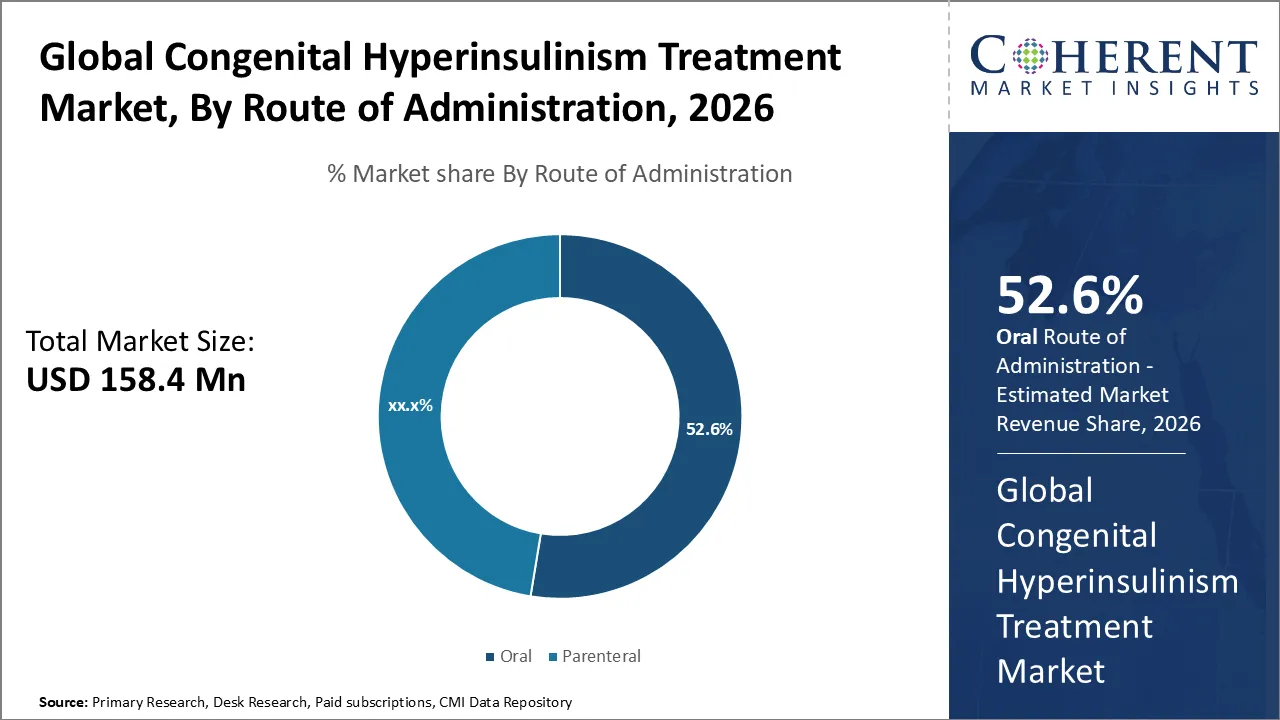
- By Route of Administration, Oral acquired the largest market share of 52.6% in 2026 owing to its strong preference for non-invasive treatment.
- By Distribution Channel, Hospital Pharmacies capture the largest market share of 37.8% in 2026 owing to the centralized management of rare disease drugs.
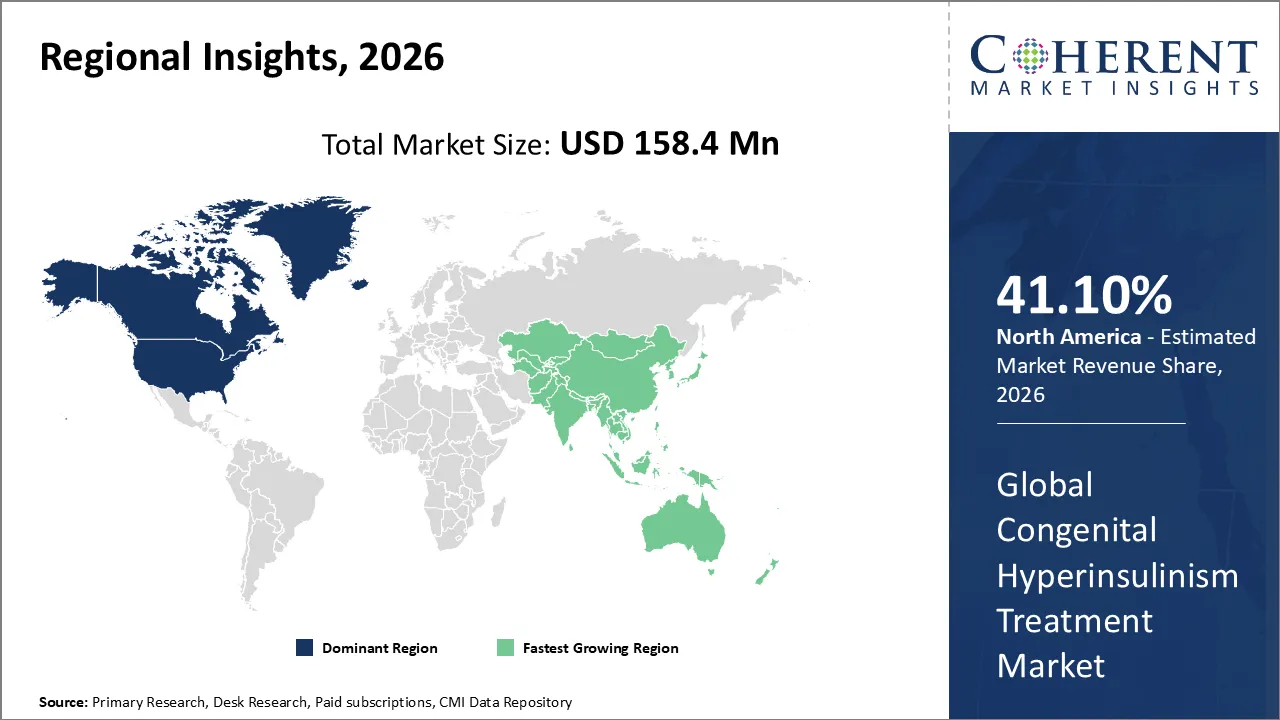
- By Region, North America dominates the overall market with an estimated share of 41.1% in 2026 owing to the advanced healthcare infrastructure.
Market Overview
The congenital hyperinsulinism (CHI) treatment market is evolving rapidly as healthcare providers and caregivers increasingly recognize the disease and implement early diagnosis through advanced genetic testing. Physicians primarily prescribe diazoxide as the first-line therapy, while emerging targeted treatments for KATP-HI and other subtypes expand clinical options. Hospital pharmacies and specialized pediatric centers actively manage drug distribution and patient care. Improved neonatal care, orphan drug incentives, and growing use of oral and personalized therapies continue to drive a dynamic market for both established and innovative CHI treatments.
Current Events and their Impact on the Congenital Hyperinsulinism Treatment Market
Current Events | Description and its impact |
Advances in Precision Medicine and Genetic Research |
|
Regulatory and Reimbursement Landscape Changes |
|
Technological Innovations in Drug Delivery and Monitoring |
|
Segmental Insights
- Current Industry Events of 2026
- Market Size Estimation
- Regional Breakdown
- Competitive Landscape
- Customer Intelligence
- Segmental Analysis
- Pricing Analysis
- Key Market Drivers, Challenges & Future Trends
- Customized Insights Section
Congenital Hyperinsulinism Treatment Market Insights, By Route of Administration: Oral contributes the highest share of the market owing to its improved patient compliance & adherence.
Oral acquired the largest market share of 52.6% in 2026. The oral segment fuels growth in the congenital hyperinsulinism treatment market by providing a convenient, non-invasive option for managing CHI, particularly in neonates and children. Healthcare providers actively prescribe oral therapies like diazoxide for their ease of administration, ability to improve patient adherence, and suitability for long-term home treatment. Hospitals and outpatient pharmacies distribute these medications widely, while caregivers appreciate their simplicity and safety compared to injections. Increasing awareness, early diagnosis, and the need for chronic management drive adoption, making oral therapies a core part of CHI care. For instance, Eiger BioPharmaceuticals, Inc. announced that avexitide met primary and secondary endpoints in a Phase 2b study, significantly reducing hypoglycemia in PBH and HH patients; Marilyn Tan delivered the findings in an oral presentation.
Congenital Hyperinsulinism Treatment Market Insights, By Disease Type: KATP-HI contribute the highest share of the market owing to its advancements in targeted & precision therapies.
KATP-HI hold the largest market share of 42.2% in 2026. The KATP-HI segment fuels growth in the congenital hyperinsulinism treatment market because it represents the most common and severe genetic subtype. Standard therapies often fail in patients with KATP mutations, driving a strong demand for targeted treatments. Clinicians use advances in genetic testing and newborn screening to diagnose cases early, while emerging precision therapies and surgical options improve outcomes. Rising awareness among healthcare providers and caregivers actively boosts adoption, making KATP-HI a central focus for both established and innovative CHI therapies.
Congenital Hyperinsulinism Treatment Market Insights, By Drug Type: Diazoxide contribute the highest share of the market owing to its only widely approved drug for CHI.
Diazoxide expected to hold the largest market share of 36.6% in 2026. Diazoxide fuels growth in the congenital hyperinsulinism treatment market as the preferred first-line therapy for most patients. Physicians actively prescribe it for its proven ability to control hypoglycemia, especially in diazoxide-responsive cases, while its oral formulation allows easy administration and promotes adherence in neonates and children. Hospitals and outpatient pharmacies provide wide access, and increasing awareness of CHI encourages early treatment initiation. Together, these factors drive strong demand, establishing diazoxide as a central therapy in CHI management. For instance, in March 2025, Soleno Therapeutics, Inc. announced that the U.S. Food and Drug Administration approved VYKAT XR (diazoxide choline) for treating hyperphagia in adults and children aged 4 and older with Prader-Willi syndrome.
Congenital Hyperinsulinism Treatment Market Insights, By Distribution Channel: Hospital Pharmacies contribute the highest share of the market owing to its support for injectable and emergency medications.
Hospital Pharmacies capture the largest market share of 37.8% in 2026. Hospital pharmacies fuel growth in the congenital hyperinsulinism treatment market by actively distributing specialized CHI therapies. They provide accurate dosing, safely handle drugs like diazoxide and injectables, and prepare customized formulations for neonates and children. Positioned within NICUs and pediatric endocrinology centers, hospital pharmacies facilitate early diagnosis, emergency interventions, and long-term patient management. By coordinating multidisciplinary care and ensuring drug quality, they strengthen clinician trust and expand patient access, establishing themselves as a vital part of CHI treatment delivery.
Regional Insights
North America Congenital Hyperinsulinism Treatment Market Trends
North America dominates the overall market with an estimated share of 41.10% in 2026. In North America, strong healthcare infrastructure, widespread genetic testing, and increasing clinician awareness actively drive the congenital hyperinsulinism treatment market. Physicians leverage early diagnosis to deliver personalized care in NICUs and specialized pediatric centers. Orphan drug incentives and fast regulatory approvals enable the introduction of new therapies, while hospital and outpatient pharmacies actively provide access to both established and emerging treatments, improving patient outcomes and expanding market adoption. For instance, in March 2026, Amylyx Pharmaceuticals, Inc. announced that it has randomized and dosed the final participant in the Phase 3 LUCIDITY trial of avexitide for post-bariatric hypoglycemia, which holds U.S. Food and Drug Administration Breakthrough Therapy Designation.
Asia Pacific Congenital Hyperinsulinism Treatment Market Trends
In the Asia Pacific congenital hyperinsulinism treatment market, rising CHI awareness and expanding healthcare access in countries like China, India, and Japan actively drive growth, leading to more diagnoses and treatment adoption. Healthcare providers improve neonatal care infrastructure and invest in pediatric endocrinology services to enable earlier interventions. Wider implementation of genetic testing and screening programs allows clinicians to identify cases sooner, while emerging therapies and support initiatives actively strengthen market development across the region.
United States Congenital Hyperinsulinism Treatment Market Trends
In the United States congenital hyperinsulinism treatment market, clinicians actively drive growth through strong awareness and early use of genetic testing, enabling prompt diagnosis and personalized treatment plans. Specialized pediatric centers and NICUs deliver care, while orphan drug designations and supportive regulatory pathways allow hospitals and pharmacies to provide both established and emerging therapies. Improved access through hospital and outpatient pharmacies ensures continuous treatment. Together, these trends enhance patient outcomes and expand the market’s reach nationwide. For instance, Rhythm Pharmaceuticals, Inc. announced that its subsidiary Rhythm Pharmaceuticals Netherlands B.V. acquired Xinvento B.V. to expand into treatments for Congenital Hyperinsulinism, a condition causing excess insulin and severe hypoglycemia.
India Congenital Hyperinsulinism Treatment Market Trends
In India’s congenital hyperinsulinism treatment market, healthcare providers actively drive growth by raising CHI awareness and expanding access to neonatal and pediatric care, leading to more diagnoses and treatment adoption. Hospitals and specialist centers perform early diagnosis and manage cases, while wider availability of genetic testing allows clinicians to intervene sooner. Investments in pediatric endocrinology services and screening programs help identify and treat affected infants efficiently. Despite regional variations in access and resources, these efforts actively boost market growth and enhance patient outcomes.
Congenital Hyperinsulinism Treatment Market Trend
Growing Adoption of Advanced Genetic Diagnostics
Advances in genetic testing and newborn screening are enabling earlier and more accurate diagnosis of congenital hyperinsulinism, helping clinicians distinguish between subtypes like KATP‑HI and tailor treatments accordingly. Broader use of next‑generation sequencing and targeted panels supports faster clinical decisions and improved outcomes. Increased diagnostic clarity drives treatment initiation sooner after birth, reducing risk of neurological damage and expanding the patient population receiving optimized CHI therapies.
Expansion of Targeted and Precision Therapies
The market is moving beyond traditional drugs like diazoxide toward precision treatments that address specific genetic causes of CHI. Emerging therapies and novel mechanisms are in development to better control hypoglycemia, reduce side effects, and offer options for patients unresponsive to standard care. Pharmaceutical research is focusing on targeted modulators, gene‑based therapies, and personalized medicine approaches, elevating the quality of care and expanding therapeutic choices.
Congenital Hyperinsulinism Treatment Market Opportunity
Expansion of Genetic Testing and Screening Programs
Expanding genetic screening and rapid diagnostic tools across healthcare systems can identify CHI earlier, enabling timely intervention and tailored treatment. Companies can partner with hospitals and diagnostic labs to provide affordable, high‑throughput genetic assays. Increased screening also boosts the addressable patient base, enhances data for research, and supports personalized medicine, creating a broader market for CHI diagnostics and therapeutics.
Market Report Scope
Congenital Hyperinsulinism Treatment Market Report Coverage
| Report Coverage | Details | ||
|---|---|---|---|
| Base Year: | 2025 | Market Size in 2026: | USD 158.4 Mn |
| Historical Data for: | 2020 To 2024 | Forecast Period: | 2026 To 2033 |
| Forecast Period 2026 to 2033 CAGR: | 8.2% | 2033 Value Projection: | USD 321.6 Mn |
| Geographies covered: |
| ||
| Segments covered: |
| ||
| Companies covered: | Zealand Pharma A/S, Eli Lilly and Company, Xeris Pharmaceuticals, Inc., Rezolute, Inc., Hanmi Pharm.Co., Ltd., Fresenius Kabi AG, Eiger BioPharmaceuticals., Crinetics Pharmaceuticals, Inc., AmideBio,LLC, Jolly Healthcare, e5 Pharma,LLC, Merck & Co.,Inc., Novo Nordisk A/S, Amphaster Pharmaceuticals,Inc., USV Private Limited, Teva Pharmaceutical Industries Ltd. | ||
| Growth Drivers: |
| ||
| Restraints & Challenges: |
| ||
Congenital Hyperinsulinism Treatment Market News
- In January 2026, Rezolute, Inc. shared Phase 3 sunRIZE study observations in congenital HI patients and reported treatment updates using ersodetug for tumor HI under its expanded access program.
Analyst Opinion (Expert Opinion)
- The current Congenital Hyperinsulinism Treatment landscape is best described as one of clinical imperative intersecting with strategic innovation, where legacy therapies dominate yet meaningful shifts in clinical practice and investment patterns are already observable. First‑line pharmacotherapy remains anchored in KATP channel openers like diazoxide, with real‑world data indicating that this class accounts for a majority share of treated cases in leading markets, owing to decades of clinical familiarity despite its well‑documented tolerability issues and discontinuations in up to one‑fifth of pediatric patients due to adverse effects such as edema and hypertrichosis. This entrenched reliance on older molecules underscores the critical unmet need for therapeutics that can robustly control hypoglycemia across the full spectrum of genotypes (e.g., ABCC8/KCNJ11 mutations) without imposing burdensome side‑effect profiles.
- Second‑line agents and biologics are materially reshaping therapeutic algorithms: somatostatin analogues like octreotide and emerging glucagon receptor modulators are progressively displacing older modalities in refractory cases, driven by superior glycemic control and caregiver preference for predictable subcutaneous dosing. The pipeline momentum — exemplified by biologics targeting novel mechanisms and long‑acting depot formulations under mid‑phase evaluation — reflects a strategic inflection point where efficacy and tolerability gains could meaningfully recalibrate treatment hierarchies and payer engagement.
- Surgical intervention, enabled by advanced imaging such as 18F‑DOPA PET, continues to play a niche yet increasingly decisive role by enabling focal cures in select patients, a development that alters lifetime management considerations and reallocates costs away from chronic pharmacotherapy in those subsets. Meanwhile, geographic trends highlight expanding diagnosis and care pathways in Asia‑Pacific driven by genetic screening roll‑outs and newborn initiatives, even as supply chain fragilities for core APIs illustrate a persistent operational risk that tempers uptake and access.
Speak to the analyst
Want personalized insights?
Take the findings above to one of our principal consultants, or have the report rebuilt around the segments, geographies and competitors you actually track.
Market Segmentation
- By Disease Type
- KATP-HI
- GDH-HI
- GK-HI
- Other (SCHAD HI,HNF4A/HNF1A, etc.)
- By Drug Type
- Diazoxide
- Octreotide
- Glucagon
- Nifedipine
- Other (Sirolimus, Chlorothiazide, etc.)
- By Route of Administration
- Oral
- Parenteral
- By Distribution Channel
- Hospital Pharmacies
- Retail Pharmacies
- Online Pharmacies
- By Regional Insights
- North America
- U.S.
- Canada
- Latin America
- Brazil
- Argentina
- Mexico
- Rest of Latin America
- Europe
- Germany
- U.K.
- Spain
- France
- Italy
- Russia
- Rest of Europe
- Asia Pacific
- China
- India
- Japan
- Australia
- South Korea
- ASEAN
- Rest of Asia Pacific
- Middle East
- GCC Countries
- Israel
- Rest of Middle East
- Africa
- South Africa
- North Africa
- Central Africa
- North America
- Key Players Insights
- Zealand Pharma A/S
- Eli Lilly and Company
- Xeris Pharmaceuticals, Inc.
- Rezolute, Inc.
- Hanmi Pharm.Co., Ltd.
- Fresenius Kabi AG
- Eiger BioPharmaceuticals.
- Crinetics Pharmaceuticals, Inc.
- AmideBio,LLC
- Jolly Healthcare
- e5 Pharma,LLC
- Merck & Co.,Inc.
- Novo Nordisk A/S
- Amphaster Pharmaceuticals,Inc.
- USV Private Limited
- Teva Pharmaceutical Industries Ltd.
Sources
Primary Research interviews
- Pediatric endocrinologists and metabolic disorder specialists
- Hospital pharmacists and clinical dietitians
- Healthcare providers in neonatal intensive care units (NICU)
- Pharmaceutical and biotech company medical affairs teams
Databases
- PubMed
- ClinicalTrials.gov
- Orphanet
- FDA Drug Database
- WHO Global Health Observatory
Magazines
- Pharmaceutical Executive
- MedTech Insight
- BioPharm International
- Endocrinology Today
Journals
- The Journal of Clinical Endocrinology & Metabolism
- Diabetes Care
- Pediatric Diabetes
- Hormone Research in Paediatrics
- Orphanet Journal of Rare Diseases
Newspapers
- The New York Times – Health Section
- The Guardian – Health
- The Washington Post – Health & Science
Associations
- Pediatric Endocrine Society (PES)
- European Society for Paediatric Endocrinology (ESPE)
- Congenital Hyperinsulinism International (CHI)
- American Diabetes Association (ADA)
Public Domain sources
- WHO reports and guidelines
- NIH rare disease resources
- Centers for Disease Control and Prevention (CDC) data
- Government health ministry reports
Proprietary Elements
- CMI Data Analytics Tool
- Proprietary CMI Existing Repository of information for last 8 years
Get access to 250+ pages report
Every segment, forecast, competitor profile and data table behind the analysis above — available for instant download.
- ESOMAR Member
- ISO 9001:2015 Certified
- D-U-N-S Registered
- GDPR & CCPA Compliant
Missing comfort of reading report in your local language? Find your preferred language:
Transform your Strategy with Exclusive Trending Reports
Frequently Asked Questions
The Congenital Hyperinsulinism Treatment Market is estimated to be valued at USD 158.4 Mn in 2026 and is expected to reach USD 321.6 Mn by 2033.
Factors such as growing awareness of congenital hyperinsulinism among the people at global level, and ongoing clinical trial phase 2 and 3 studies of drugs on congenital hyperinsulinism are the major factors which drives the market.
Hospital Pharmacies is the leading distribution channel segment in the market.
The major factors hampering growth of the market include high treatment cost for congenital hyperinsulinism.
Major players operating in the market include Zealand Pharma A/S, Eli Lilly and Company, Xeris Pharmaceuticals, Inc., Rezolute, Inc., Hanmi Pharm.Co., Ltd., Fresenius Kabi AG, Eiger BioPharmaceuticals., Crinetics Pharmaceuticals, Inc., AmideBio,LLC, Jolly Healthcare, e5 Pharma,LLC, Merck & Co.,Inc., Novo Nordisk A/S, Amphaster Pharmaceuticals,Inc., USV Private Limited, Teva Pharmaceutical Industries Ltd.