

Global Diagnostic Services Market Size and Forecast – 2026 to 2033
The global diagnostic services market is estimated to be valued at USD 310.30 Bn in 2026 and is expected to reach USD 616.32 Bn by 2033, exhibiting a compound annual growth rate (CAGR) of 10.3% from 2026 to 2033. This significant growth reflects increasing demand for early and accurate diagnosis, advancements in diagnostic technologies, and expanding healthcare infrastructure worldwide. The market expansion is further fueled by rising prevalence of chronic diseases and growing awareness about preventive healthcare.
Key Takeaways of the Global Diagnostic Services Market
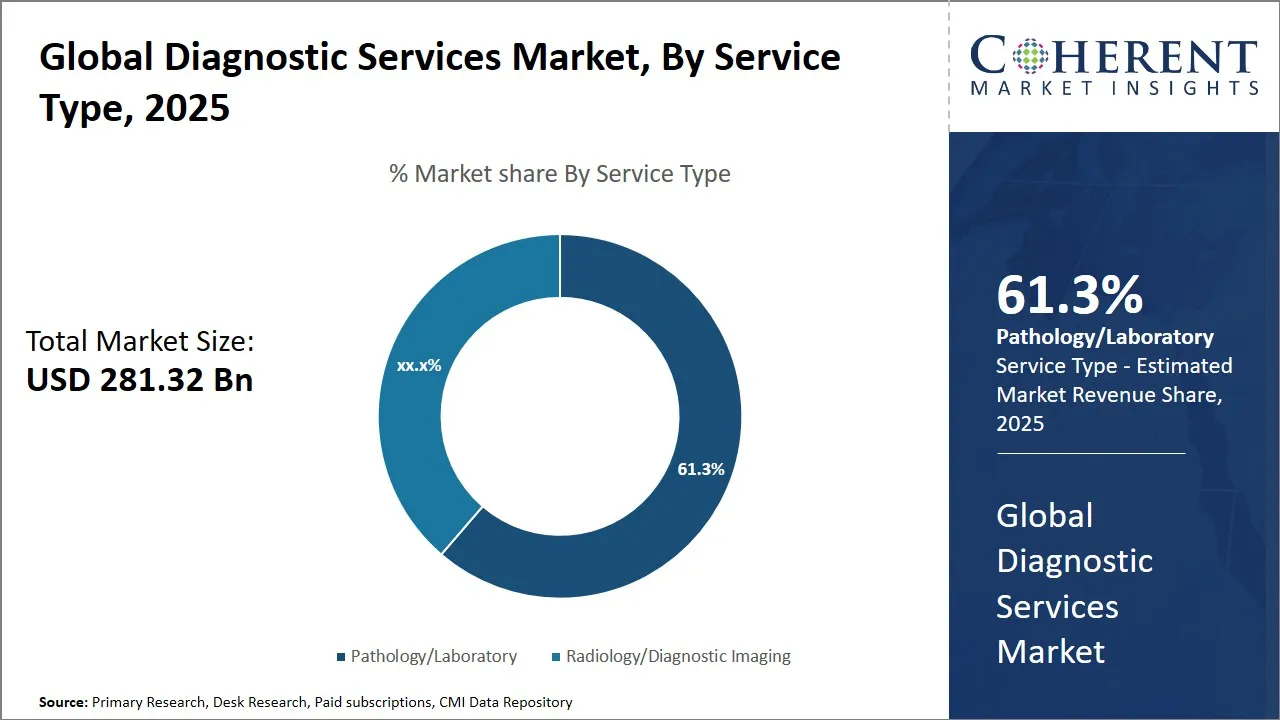
- The pathology/laboratory segment, encompassing a wide range of essential tests from blood work to biochemical analyses, is expected to hold the largest share of the market at 62.3% in 2026.
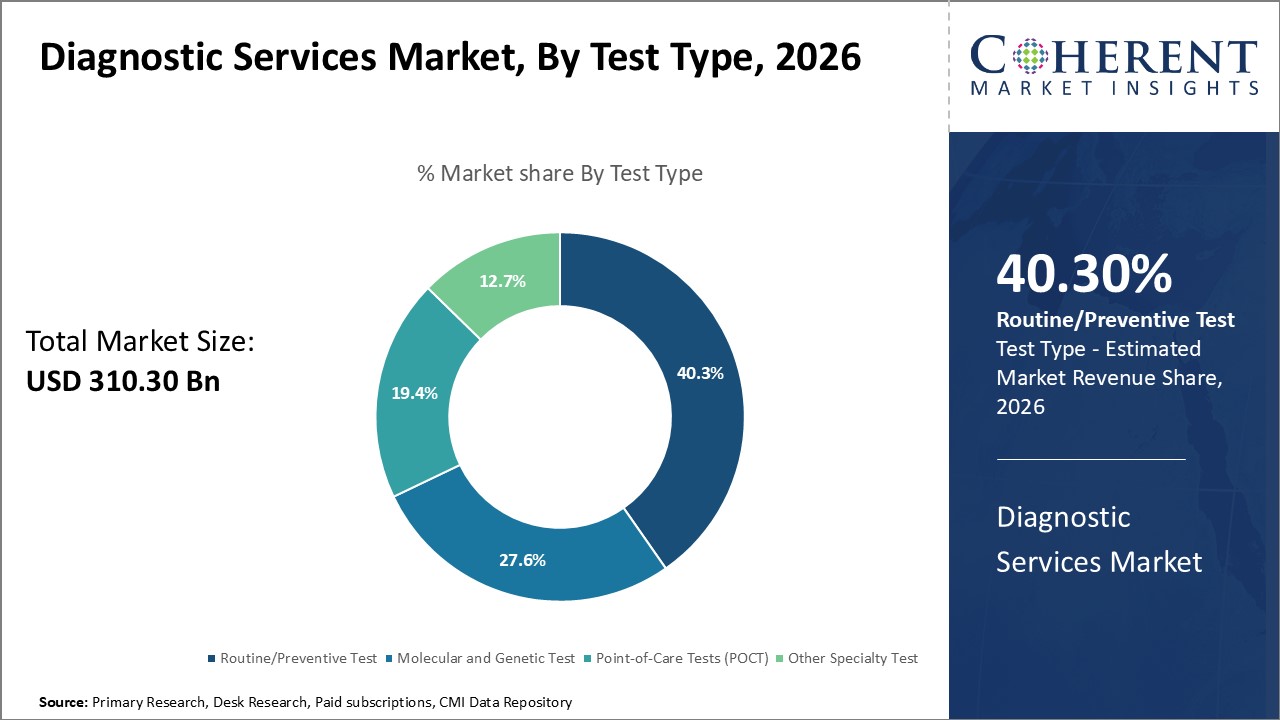
- Within test type the routine/preventive test segment including blood glucose, lipid profiles, and liver and kidney function tests is expected to lead with a 40.3 % share in 2026.
- Meanwhile, the oncology segment is projected to account for a notable 35.5 % share in 2026, supported by the rising prevalence of cancer and increasing awareness about the importance of early detection and specialized cancer diagnostics.
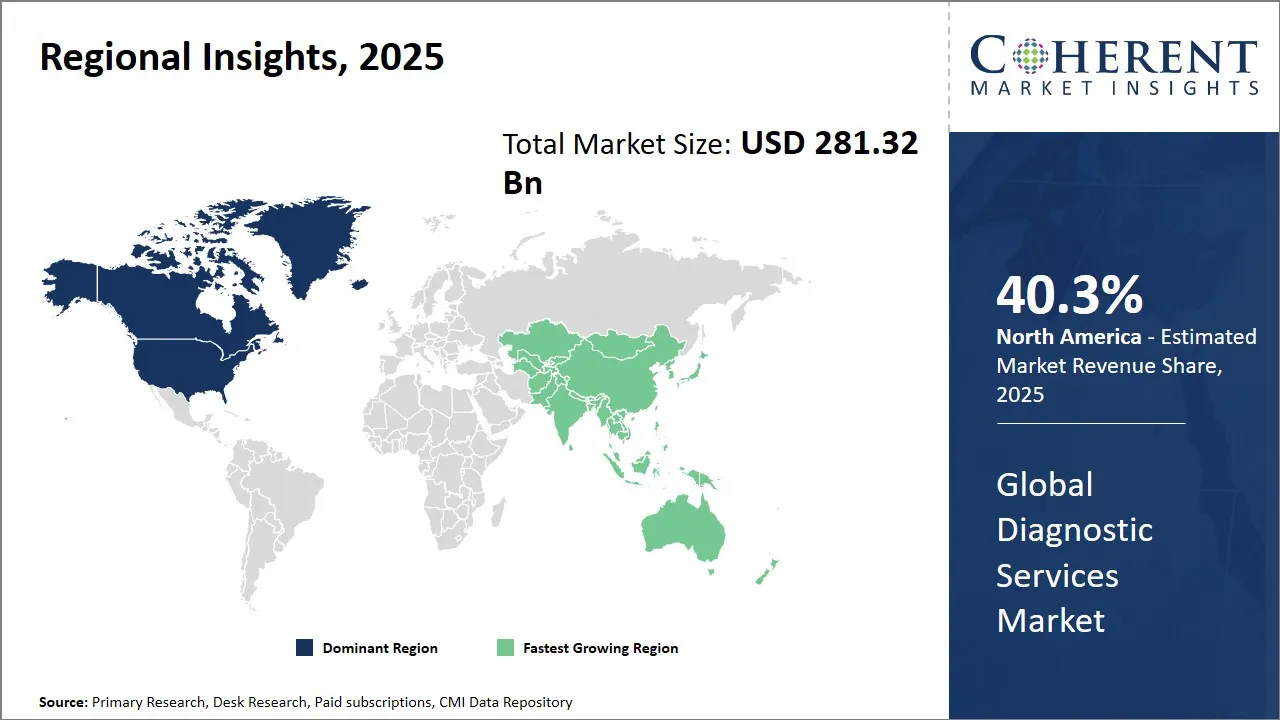
- North America is expected to lead the market, holding a share of 40.3 % in 2026. Asia Pacific is anticipated to be the fastest-growing region, with an estimated market share of 25.3% in 2026.
Market Overview
In terms of market trends, there is a notable shift toward personalized and point-of-care diagnostic services, driven by innovations such as AI-powered imaging and molecular diagnostics. Integration of digital health tools and telemedicine is enhancing accessibility and efficiency in diagnostic services. Additionally, the rise of home-based testing kits and non-invasive diagnostic methods is reshaping patient experience and care delivery. These trends collectively contribute to the rapid evolution and expansion of the diagnostic services market.
Current Events and Its Impact
Current Events | Description and its Impact |
Rising Investment in AI-Powered Diagnostic Platforms |
|
Integration of Telemedicine & At-Home Testing |
|
Segmental Insights
- Current Industry Events of 2026
- Market Size Estimation
- Regional Breakdown
- Competitive Landscape
- Customer Intelligence
- Segmental Analysis
- Pricing Analysis
- Key Market Drivers, Challenges & Future Trends
- Customized Insights Section
Diagnostic Services Market Insights, by Service Type - Pathology/Laboratory Contributes the Highest Share of the Market Owing to the Increasing Reliance on Precise Diagnostic Testing as a Foundation for Effective Healthcare Delivery
The pathology/laboratory segment, which includes a broad line of key tests, such as blood tests to biochemical tests, is projected to occupy the biggest market share of 62.3% in 2026. The success of this segment is made by the increasing rate of prevalence of chronic diseases like diabetes, cardiovascular diseases, and infectious diseases, which requires routine laboratory tests in order to provide proper care to the patients.
For example, in July 2025, Aftab Poultry Diagnostic Lab, which is a branch of Islam Group in Bangladesh, opened a free diagnostics unit in Bajitpur, Kishoreganj to provide broiler and layer farmers with necessary laboratory services. The project is the initiative of the CEO, Mr. Mahabobur Rahman Sarker, as the company intended to establish 10 poultry diagnostic laboratories around the country to help farmers and the national economic growth of the country which relies on agriculture.
Diagnostic Services Market Insights, by Test Type - Routine/Preventive Tests Hold the Largest Share due to their Foundational Role in Early Detection and Ongoing Patient Health Monitoring
The segment in this category with the largest share in 2026 is the routine/preventive test segment with an estimated market share of 40.3%; comprising blood glucose, lipid profiles, and liver and kidney function tests. The increasing interest in preventive healthcare in the world, which is supported by government policies and the health insurance policy to promote regular screening programs, drives the demand for such tests.
One example is that in July 2026, Exact Sciences, a U.S.-based cancer diagnostics company, introduced Cancerguard, the first multi-cancer early detection blood test, analyzing multiple classes of biomarkers to detect hard-to-detect cancers as part of advanced Routine and Preventive Tests.
Diagnostic Services Market Insights, by Application - Oncology Leads the Diagnostic Services Market as Cancer Continues to Pose a Significant Global Health Challenge
The oncology segment is projected to hold a significant share of 35.5% in 2026 due to the growing prevalence of cancer and rising awareness about the significance of early diagnosis and specific cancer tests. Diagnostic services in the field of oncology are based on the multidisciplinary approach consisting of the molecular diagnostics, radiology, pathology, and immunoassays that help in comprehensive cancer profiling.
For example, on September 23, 2025, Agilus Diagnostics, a leading diagnostic service provider in India and a subsidiary of Fortis Healthcare, introduced AgilusEDGE Comprehensive Genomic Profile Rapid to its Gurugram reference lab, which on a 4-day basis profiled in over 500 genes related to cancer.
Role of Artificial Intelligence (AI) on the Global Diagnostic Services Market
- Artificial Intelligence (AI) is transforming the global diagnostic services market as it can simplify workflows, work more accurately, and/or less expensively. With the help of predictive analytics, AI assists healthcare doctors to detect the risk of diseases earlier and allocate resources more efficiently, which, in addition to improving the outcomes of patients, reduce the amount of unnecessarily spent money on unnecessary tests. Machine learning in diagnostics—customized diagnostics enable the laboratories and hospitals to tailor their health assessment to each specific profile of a patient, enhancing the relevance and efficacy of the diagnostic services. AI-based image recognition in radiology or pathology can be used to automate processes and reduce turnaround time and reduce human error. As examples, such companies as PathAI and Tempus are applying AI to cancer diagnostics refinement, and IBM Watson Health has been the first to apply AI-assisted decision support to clinical diagnostics. Such innovations lead to better patient experiences through faster, more trustworthy, and supported health knowledge.
- To the future, AI is paving the way to fresh possibilities in this market with new business practices and digital-first services. Both startups and incumbents are testing remote diagnostic platforms, virtual pathology labs, and remote screening using AI with subscription-driven solutions. In practical terms, AI can help diagnostic centers to optimize staff allocation, handle surges in test demand, and predict the needs of the supply chain in a more accurate way. Nonetheless, it is necessary to take into account obstacles like the high cost of implementation, the issue of data privacy, and uncertainties with regulations. By combining AI and human experience in a clever way, i.e., automating without jeopardizing the medical care, companies can benefit in terms of competitive advantage. In order to be successful, providers of diagnostic service should invest in scaled AI platform, develop alliances with technology companies and concentrate on open and ethical use of AI. Finally, although AI may not be completely risk-free, this feature can revolutionize the diagnostic services market and promote its long-term prosperity.
Regional Insights
North America Diagnostic Services Market Analysis and Trends
In North America, the leadership position in the global diagnostic services market is driven by its well-established healthcare infrastructure, accounting for a 40.3% market share in 2026. This dominance is further supported by significant investments in R&D and the extensive presence of leading diagnostic service providers across the region. The U.S. and Canada have advanced health care systems that are backed by the government policies that encourage early disease infections and preventative measures. Through the integration of modern technologies such as molecular diagnostics, AI-enabled tools, and others, its service capabilities are expanded. Such market powerhouses as Quest Diagnostics, LabCorp, and BioReference Laboratories are strong players in the market by offering innovative testing solutions, a network of labs, and partnership with healthcare providers.
For instance, in July 2024, Quest Diagnostics, a U.S.-based leader in diagnostic information services, signed a definitive deal with OMERS to acquire LifeLabs, Canada’s largest community lab services provider, for about USD 1.35 billion. LifeLabs will keep its brand, Canadian base and leadership while gaining access to Quest’s expertise and innovations to improve patient access, digital services and data security, strengthening diagnostic care for millions of Canadians.
Asia Pacific Diagnostic Services Market Analysis and Trends
Meanwhile, the fastest growth in the global diagnostic services market is presented by Asia Pacific that has a share of 25.3% in 2026 due to increased healthcare awareness, growing middle-class populations, and the improvement of healthcare infrastructure in emerging economies. Market expansion is being triggered by government interventions to expand diagnostic accessibility and affordability in such countries as India, China, and Southeast Asia. This is due to the growing number of chronic and lifestyle diseases which are creating a demand to seek out sophisticated diagnostic tests. Asia Pacific is also enjoying low-cost labor, increased investments in the private health care sector, and the increased specialty laboratories and diagnostic chains.
Global Diagnostic Services Market Outlook for Key Countries
U.S. Diagnostic Services Market Analysis and Trends
The U.S. diagnostic services market is characterized by a mature diagnostic services infrastructure with a strong emphasis on innovative molecular and genetic testing, supported by extensive clinical research activities. Leading providers, such as Quest Diagnostics and LabCorp, offer a broad range of services including pathology, anatomic diagnostics, and next-generation sequencing. Tech integration, such as tele-diagnostics and AI analytics, is prominent in expanding outreach and efficiency. Government support via healthcare reforms and Medicare reimbursement policies significantly influence testing utilization.
In March 2026, GE HealthCare, a global leader in medical imaging, partnered with NVIDIA, a world leader in accelerated computing and AI, to develop autonomous X-ray and ultrasound systems that aim to improve efficiency, standardize imaging, and ease pressure on healthcare workers.
China Diagnostic Services Market Analysis and Trends
China continues to lead one of the fastest-growing diagnostic services markets due to rapid urbanization, rising healthcare expenditure, and supportive government programs like “Healthy China 2030.” The market sees robust participation from both domestic players and multinational companies such as BGI Group and Siemens Healthineers, focusing on expanding molecular diagnostics and infectious disease testing capacity. Investments in digital healthcare, lab automation, and network expansion in tier-2 and tier-3 cities enable broader patient access. Regulatory reforms aiming at streamlining approvals and improving quality standards enhance foreign investor confidence and innovation adoption.
In March 2026, Leica Biosystems, a global leader in anatomic pathology and part of Danaher, partnered with CellCarta, an international CRO laboratory serving the biopharmaceutical industry, to accelerate companion diagnostics development in China. The collaboration, anchored at Leica’s new Suzhou facility, will provide pharmaceutical and biotech companies with biomarker services from research to commercialization, while also establishing Danaher’s third Center for Enabling Precision Medicine worldwide.
India Diagnostic Services Market Analysis and Trends
India diagnostic services market benefits from increasing diagnostic awareness and penetration into rural and semi-urban areas, driven by government health schemes and private sector expansion. Major companies, such as Dr. Lal PathLabs, Metropolis Healthcare, and SRL Diagnostics, are instrumental in scaling high-quality diagnostic services. The country’s cost-competitive environment and growing health insurance coverage encourage wider diagnostic testing. Initiatives to strengthen primary healthcare infrastructure and integrate point-of-care testing are reshaping the diagnostic ecosystem.
In August 2026, Agilus Diagnostics, India’s largest diagnostics company and a subsidiary of Fortis Healthcare, expanded its network in Karnataka with the launch of a new diagnostic center at Kuvempunagar in Mysuru. Inaugurated by senior city officials, the facility offers CT and ultrasound scans, X-ray, mammography, EEG, ECG, pathology, and preventive health check-ups, complementing its main branch in the city and reinforcing Agilus’ mission to deliver reliable and accessible healthcare services closer to communities.
Germany Diagnostic Services Market Analysis and Trends
Germany continues to lead Europe diagnostic services market through its advanced healthcare system, public-private partnerships, and stringent regulatory environment ensuring test accuracy and reliability. Dominated by companies like Roche Diagnostics and Siemens Healthineers, the market is strong in specialized diagnostics such as oncology, cardiology, and genetic testing. The country benefits from comprehensive health insurance coverage, facilitating patient access to diagnostic services.
In May 2024, Launch Diagnostics, a provider of diagnostic services and IVD solutions, opened Launch Diagnostics Deutschland Limited in Hamburg, Germany to expand in Europe’s largest diagnostics market and offer advanced products for hospitals and private labs.
Market Players, Key Developments, and Competitive Intelligence
Key Developments
- On September 09, 2025, Redcliffe Labs, a pan-India diagnostics provider, opened a new NABL and ISO-guided laboratory in Midnapore to strengthen its services across East and West Midnapore and nearby towns. The facility at Miya Bazar offers advanced testing in biochemistry, haematology, immunoassays, pathology, serology and hormones, aiming to provide quick and reliable reports while expanding access to Tier II and Tier III regions in West Bengal.
- In June 2025, Amazon India, the e-commerce arm of Amazon, launched Amazon Diagnostics in partnership with Orange Health Labs, a leading diagnostic provider, offering at-home lab testing across Bengaluru, New Delhi, Gurgaon, Noida, Mumbai and Hyderabad. The service allows customers to book over 800 tests through the Amazon app, get doorstep sample collection in under an hour and receive digital reports in as little as six hours, strengthening Amazon Medical’s healthcare offerings in India.
- In March 2025, the American Institute of Pathology & Laboratory Sciences, known as Ampath, expanded its services in Punjab by opening a new advanced pathology laboratory in Pathankot in collaboration with Star Path Lab. Inaugurated by MLA Ashwani Sharma, the facility offers more than 2500 tests across biochemistry, hematology, microbiology, molecular diagnosis, NGS and cytogenetics, backed by skilled pathologists and advanced technology, marking Ampath’s commitment to bringing world-class diagnostics closer to communities in the region.
- In March 2025, AsiaMedic Limited, a Catalist-listed healthcare provider in Singapore, partnered with Sunway Group, a Malaysian conglomerate with one of Southeast Asia’s largest private healthcare networks, to open AsiaMedic Sunway Imaging at Royal Square in Novena. The new 6,000 sq ft center is fitted with advanced 3T MRI, CT, mammography, ultrasound and X-ray services, expanding diagnostic capacity and improving patient access in Singapore’s key medical hub.
Top Strategies Followed by Global Diagnostic Services Market Players
- Established industry leaders primarily focus on heavy investments in research and development (R&D) to continuously innovate and bring high-performance diagnostic products to market. Their R&D initiatives aim to enhance accuracy, speed, and user-friendliness of diagnostic tools, thereby meeting the evolving needs of healthcare providers. They also partner with Original Equipment Manufacturers (OEMs) and tech firms to enhance strengths, streamline supply chains, and reinforce dominance.
- Large diagnostic multinationals such as Roche Diagnostics, Siemens Healthineers, and Abbott Laboratories exemplify this tier. For instance, in July 2025, Roche Diagnostics Africa partnered with the African Society for Laboratory Medicine (ASLM) to launch the Leadership Excellence for African Diagnostics (LEAD) programme. This three-year initiative aims to strengthen laboratory leadership and improve diagnostic capacity across Africa through training, mentorship, and regional collaboration.
- Mid-level companies in the diagnostic services market adopt a differentiated approach, centered on providing cost-effective solutions that strike a balance between quality and affordability. These players typically target price-sensitive consumer segments, such as small to medium-sized healthcare facilities and emerging markets, which seek reliable diagnostic products without incurring prohibitive costs.
- Firms like Bio-Rad Laboratories, Quest Diagnostics, and PerkinElmer (now Revvity) represent mid-sized players. They differentiate themselves by offering reliable yet cost-effective diagnostic tools, catering to smaller hospitals and labs. For example, Quest Diagnostics has expanded affordable test panels targeting smaller healthcare centers in Asia and Latin America, while Bio-Rad emphasizes accessible molecular diagnostic systems without compromising quality.
- Small-scale players in the diagnostic services domain carve out their market niche by focusing on specialized product features or highly innovative diagnostic technologies that larger firms may overlook. These companies often adopt cutting-edge advancements such as artificial intelligence, biosensors, or novel sample processing techniques to differentiate their offerings in niche segments like point-of-care testing or disease-specific diagnostics.
- Innovative niche firms such as LumiraDx, Cepheid (before being acquired by Danaher, it grew rapidly as a specialized innovator), and QuantuMDx illustrate this category. LumiraDx focuses on point-of-care testing devices using microfluidic technology. QuantuMDx develops handheld molecular diagnostic platforms for infectious diseases, harnessing biosensors and novel sample processing.
Market Report Scope
Diagnostic Services Market Report Coverage
| Report Coverage | Details | ||
|---|---|---|---|
| Base Year: | 2025 | Market Size in 2026: | USD 310.30 Bn |
| Historical Data for: | 2020 To 2024 | Forecast Period: | 2026 To 2033 |
| Forecast Period 2026 to 2033 CAGR: | 10.3% | 2033 Value Projection: | USD 616.32 Bn |
| Geographies covered: |
| ||
| Segments covered: |
| ||
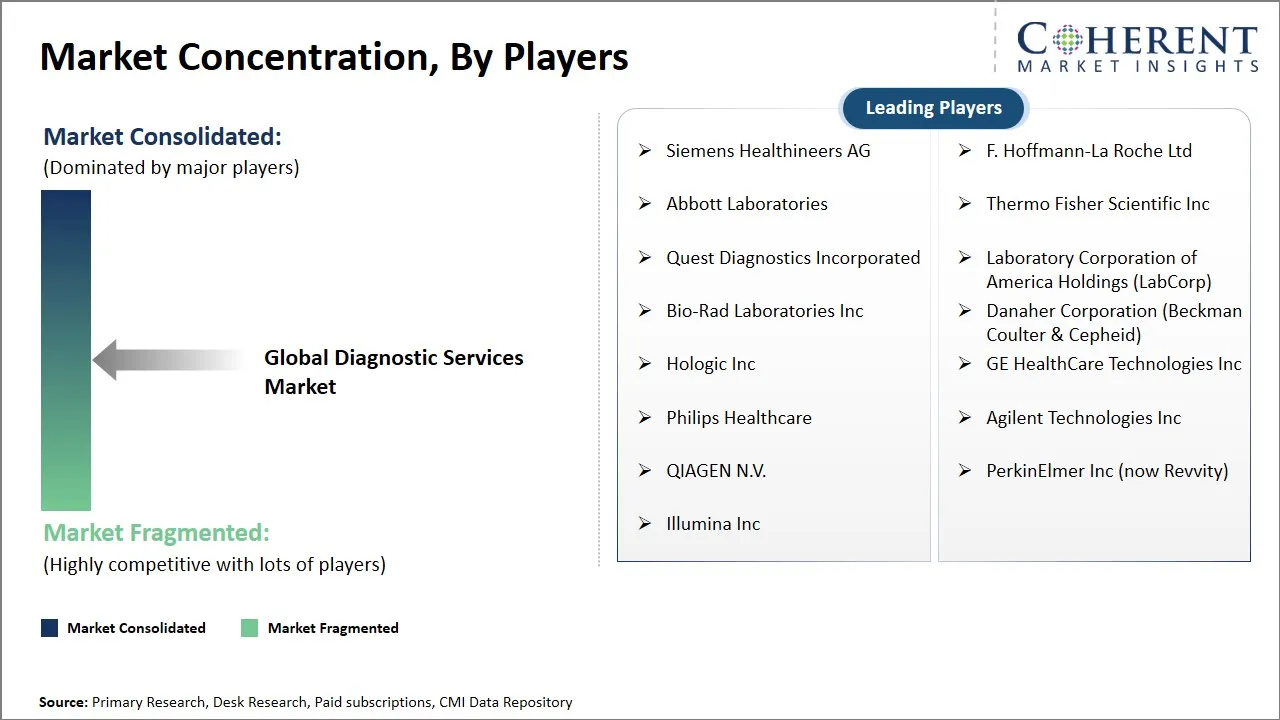
| Companies covered: | Siemens Healthineers AG, F. Hoffmann-La Roche Ltd, Abbott Laboratories, Thermo Fisher Scientific Inc, Quest Diagnostics Incorporated, Laboratory Corporation of America Holdings (LabCorp), Bio-Rad Laboratories Inc, Danaher Corporation (Beckman Coulter & Cepheid), Hologic Inc, GE HealthCare Technologies Inc, Philips Healthcare, Agilent Technologies Inc, QIAGEN N.V., PerkinElmer Inc (now Revvity), and Illumina Inc | ||
| Growth Drivers: |
| ||
| Restraints & Challenges: |
| ||
Diagnostic Services Market Dynamics
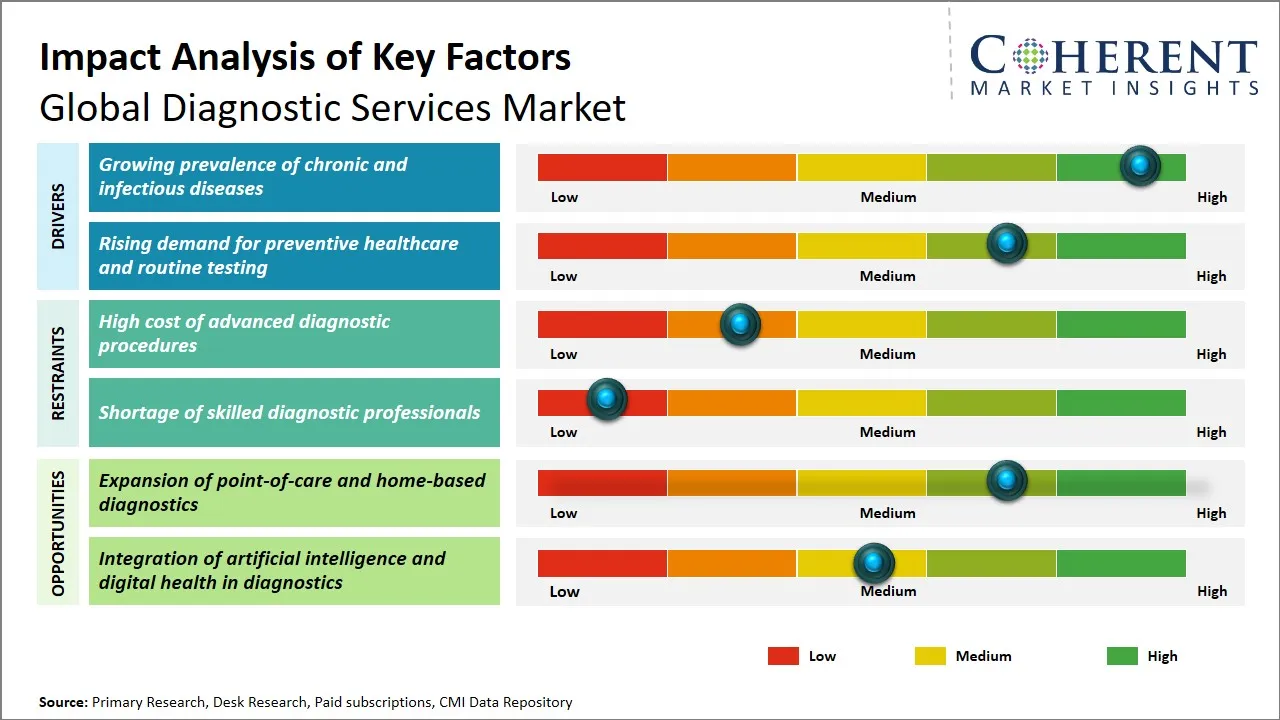
Diagnostic Services Market Driver - Growing Prevalence of Chronic and Infectious Diseases
The escalating prevalence of chronic diseases such as diabetes, cardiovascular disorders, cancer, and respiratory conditions is significantly propelling the demand for diagnostic services globally. As these conditions often require early detection, continual monitoring, and precise disease management, healthcare providers rely heavily on advanced diagnostic tools to make accurate clinical decisions. Concurrently, the persistent threat of infectious diseases, including emerging viral outbreaks and antibiotic-resistant infections, further heightens the necessity for rapid and reliable diagnostic testing.
In December 2024, WHO reported that non-communicable diseases caused at least 43 million deaths in 2021, accounting for 75% of global non-pandemic deaths, with 18 million people dying before age 70 and most of these premature deaths occurring in low- and middle-income countries. Cardiovascular diseases led with 19 million deaths, followed by cancers at 10 million, chronic respiratory diseases at 4 million, and diabetes over 2 million. WHO noted that tobacco use, unhealthy diets, physical inactivity, alcohol misuse and air pollution are the main drivers, while raised blood pressure, obesity and high glucose levels are leading metabolic risks, with air pollution alone linked to 5.6 million noncommunicable disease deaths.
Diagnostic Services Market Opportunity - Expansion of Point-of-Care and Home-Based Diagnostics
The global diagnostic services market is witnessing significant growth driven by the expanding adoption of point-of-care (POC) and home-based diagnostic solutions. This segment presents a robust opportunity as healthcare stakeholders increasingly prioritize rapid, convenient, and decentralized testing methods. The rising prevalence of chronic diseases such as diabetes, cardiovascular conditions, and respiratory disorders necessitates continuous monitoring, which traditional laboratory-based diagnostics cannot efficiently provide. Point-of-care testing enables immediate results at or near the patient’s location, enhancing decision-making and reducing turnaround time.
In June 2025, Visby Medical raised up to USD 65 million led by Catalio Capital Management to launch its U.S. FDA-cleared at-home Women’s Sexual Health Test. The San Jose company, known for rapid PCR diagnostics, also added Catalio partner Isaac Ro and industry veteran Chuck Alpuche to its board to support growth and scaling in the at-home testing market.
Analyst Opinion (Expert Opinion)
- The market of diagnostic services is steady with a significant contribution of the technological progress in the field of molecular testing, digital pathology, and the development of higher test images. The challenge of growing the need of preventive healthcare coupled with the support by the government on early detection programs would still influence the adoption in both developed economies and emerging economies. Simultaneously, the prospects are opening up in the field of combining artificial intelligence and digital health platforms that change the efficiency and accuracy in diagnostics. The main threats that the industry has experienced over time are that expensive advanced procedures, asymmetrical reimbursements, and lack of skilled professionals in most areas. The last three years have seen global conferences such as the World Health Summit, the European Congress of Radiology and the American Society for Clinical Pathology Annual Meeting offer valuable venues where policy makers, clinicians and innovators can exchange ideas on best practices, regulatory priorities and emerging diagnostic technologies of the future. Such meetings have played a significant role in harmonizing international actions towards better access and quality of diagnostic care.
- Recent attempts demonstrate the development of the sector. To illustrate, Siemens Healthineers has grown its digital diagnostics offerings by collaborating with European hospitals, and Quest Diagnostics and LabCorp have moved faster to invest in at-home testing solutions to address the increased demand of convenient consumer-focused services. It is through the population-based screening of cancer and metabolic diseases implemented in national health programs in India and the U.K. that the importance of diagnostics in the planning of population health has been demonstrated. The U.S. AI-based imaging pilot programs are already showing real-world speed and diagnostic accuracy advances in routine hospital workflows, thus efforts to transform the market into an innovation-driven growth market. Combined, these trends depict the manner in which technology, policy, and teamwork are transforming diagnostic services.
Speak to the analyst
Want personalized insights?
Take the findings above to one of our principal consultants, or have the report rebuilt around the segments, geographies and competitors you actually track.
Market Segmentation
- Service Type Insights (Revenue, USD Bn, 2021 - 2033)
- Pathology/Laboratory
- Clinical Chemistry
- Hematology
- Microbiology and Cytology
- Molecular Diagnostics
- Immunodiagnostics/Immunoassay
- Others (Histopathology)
- Radiology/Diagnostic Imaging
- X-ray
- Magnetic Resonance Imaging (MRI)
- Ultrasound
- Computed Tomography (CT) Scan
- Nuclear Imaging (PET, SPECT)
- Others (Mammography)
- Pathology/Laboratory
- Test Type Insights (Revenue, USD Bn, 2021 - 2033)
- Routine/Preventive Test
- Molecular and Genetic Test
- Point-of-Care Tests (POCT)
- Other Specialty Test
- Application Insights (Revenue, USD Bn, 2021 - 2033)
- Oncology
- Cardiology
- Neurology
- Gastroenterology
- Orthopedics
- Gynecology and Obstetrics
- Other Applications (e.g., Infectious Diseases, Endocrinology)
- End User Insights (Revenue, USD Bn, 2021 - 2033)
- Hospitals and Clinics
- Diagnostic Laboratories and Pathology Labs
- Research and Academic Institutes
- Home Healthcare/At-Home Testing
- Specialized Diagnostic Centers
- Payer Insights (Revenue, USD Bn, 2021 - 2033)
- Public
- Private
- Self-Pay (Out-of-Pocket Patients)
- Corporate/Employer-Sponsored Health Plans
- Regional Insights (Revenue, USD Bn, 2021 - 2033)
- North America
- U.S.
- Canada
- Latin America
- Brazil
- Argentina
- Mexico
- Rest of Latin America
- Europe
- Germany
- U.K.
- Spain
- France
- Italy
- Russia
- Rest of Europe
- Asia Pacific
- China
- India
- Japan
- Australia
- South Korea
- ASEAN
- Rest of Asia Pacific
- Middle East
- GCC Countries
- Israel
- Rest of Middle East
- Africa
- South Africa
- North Africa
- Central Africa
- North America
- Key Players Insights
- Siemens Healthineers AG
- F. Hoffmann-La Roche Ltd
- Abbott Laboratories
- Thermo Fisher Scientific Inc
- Quest Diagnostics Incorporated
- Laboratory Corporation of America Holdings (LabCorp)
- Bio-Rad Laboratories Inc
- Danaher Corporation (Beckman Coulter & Cepheid)
- Hologic Inc
- GE HealthCare Technologies Inc
- Philips Healthcare
- Agilent Technologies Inc
- QIAGEN N.V.
- PerkinElmer Inc (now Revvity)
- Illumina Inc
Sources
Primary Research Interviews
Industry Stakeholders list
- World Health Organization (WHO officials)
- Hospital Administrators
- Diagnostic Laboratory Directors
- Radiology Department Heads
- Clinical Pathologists
- Medical Technology Manufacturers
End Users List
- Patients undergoing diagnostic tests
- Physicians and General Practitioners
- Oncologists and Cardiologists
- Community Health Workers
- Insurance Providers
- Public Health Officials
Government and International Databases
- World Health Organization (WHO) Global Health Observatory
- OECD Health Statistics
- Centers for Medicare & Medicaid Services (CMS)
- U.S. Food and Drug Administration (FDA)
- European Medicines Agency (EMA)
- Indian Council of Medical Research (ICMR)
Trade Publications
- Diagnostic Imaging Magazine
- Clinical Laboratory News (AACC)
- Radiology Today
- CAP Today
- Medical Laboratory Observer
- Imaging Technology News
Academic Journals
- The Lancet Diagnostics
- Journal of Clinical Pathology
- Radiology (RSNA Journal)
- Journal of Molecular Diagnostics
- Clinical Chemistry
- Journal of Medical Imaging
Reputable Newspapers
- The New York Times – Health Section
- The Guardian – Health
- The Wall Street Journal – Health & Science
- The Washington Post – Health
- Financial Times – Healthcare
- BBC News – Health
Industry Associations
- American Clinical Laboratory Association (ACLA)
- College of American Pathologists (CAP)
- Radiological Society of North America (RSNA)
- European Society of Radiology (ESR)
- International Federation of Clinical Chemistry and Laboratory Medicine (IFCC)
- World Medical Association (WMA)
Public Domain Resources
- U.S. National Library of Medicine
- World Bank Health Data
- National Institutes of Health (NIH) Database
- Eurostat Health Database
Proprietary Elements
- CMI Data Analytics Tool: Proprietary analytics tool to analyze real-time market trends, consumer behavior, and technology adoption in market
- Proprietary CMI Existing Repository of Information for Last 8 Years
Get access to 250+ pages report
Every segment, forecast, competitor profile and data table behind the analysis above — available for instant download.
- ESOMAR Member
- ISO 9001:2015 Certified
- D-U-N-S Registered
- GDPR & CCPA Compliant
Missing comfort of reading report in your local language? Find your preferred language:
Transform your Strategy with Exclusive Trending Reports
Frequently Asked Questions
The global diagnostic services market is estimated to be valued at USD 310.30 Bn in 2026 and is expected to reach USD 616.32 Bn by 2033.
The CAGR of global diagnostic services market is projected to be 10.3% from 2026 to 2033.
Growing prevalence of chronic and infectious diseases and rising demand for preventive healthcare and routine testing are the major factors driving the growth of the global diagnostic services market.
High cost of advanced diagnostic procedures and shortage of skilled diagnostic professionals are the major factors hampering the growth of the global diagnostic services market.
In terms of service type, the pathology/laboratory segment is estimated to dominate the market revenue share in 2026.
Siemens Healthineers AG, F. Hoffmann-La Roche Ltd, Abbott Laboratories, Thermo Fisher Scientific Inc, Quest Diagnostics Incorporated, Laboratory Corporation of America Holdings (LabCorp), Bio-Rad Laboratories Inc, Danaher Corporation (Beckman Coulter & Cepheid), Hologic Inc, GE HealthCare Technologies Inc, Philips Healthcare, Agilent Technologies Inc, QIAGEN N.V., PerkinElmer Inc (now Revvity), and Illumina Inc are the major players.
North America is expected to lead the global diagnostic services market in 2026.