

Autism Disorder Treatment Market Size and Forecast — 2026-2033
The Global Autism Disorder Treatment Market size is estimated to be valued at USD 4.88 billion in 2026 and is expected to reach USD 8.58 billion by 2033, exhibiting a compound annual growth rate (CAGR) of 8.4% from 2026 to 2033.
Overview
Autism disorder treatment products encompass behavioral, pharmacological, and supportive interventions aimed at improving cognitive, social, and adaptive functions in patients. Pharmacological products address comorbid symptoms such as irritability, hyperactivity, or anxiety, often including antipsychotics, stimulants, and selective serotonin reuptake inhibitors (SSRIs). Non-drug products include digital therapy tools, communication devices, and sensory integration aids that support behavioral therapy programs. Emerging interventions focus on precision medicine, early intervention strategies, and neurodevelopmental modulation to enhance overall treatment efficacy.
Key Takeaways
In terms of treatment type, behavioral therapy dominates with a 39% market share supported by sustained investments and policy support in developed countries.
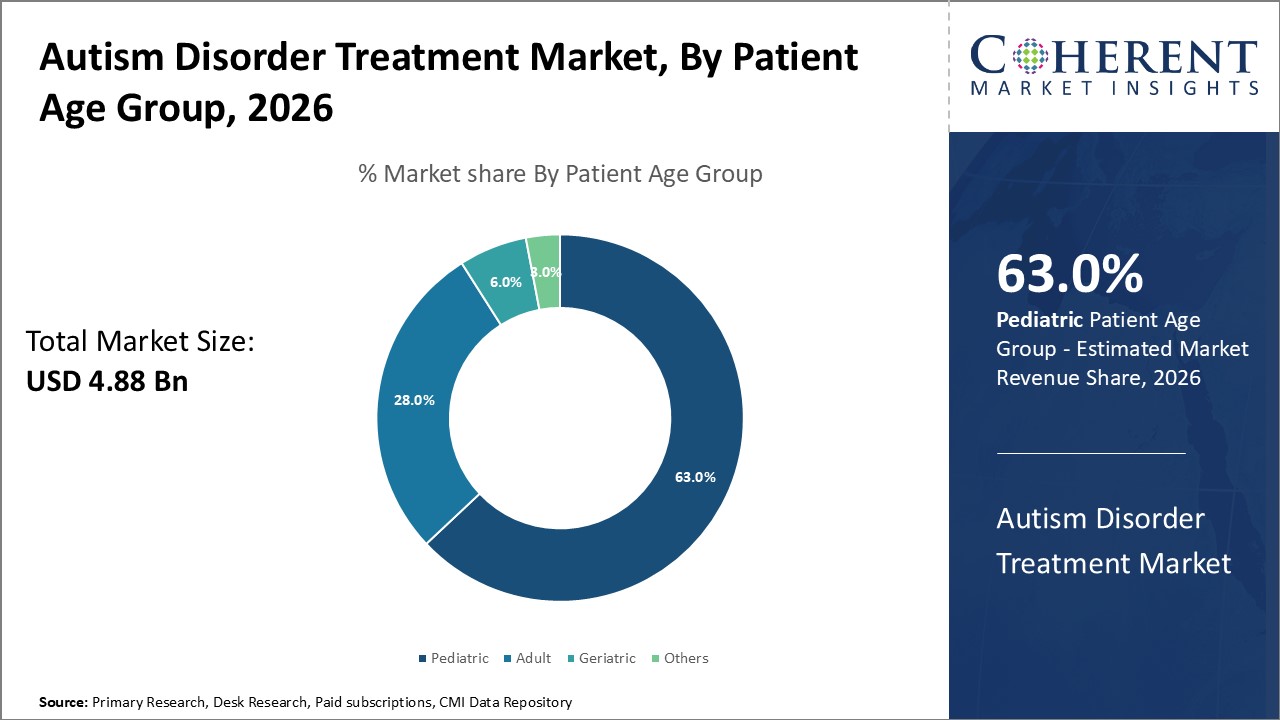
Pediatric patients under 18 years represent 63% of the patient base, emphasizing the critical nature of early intervention strategies and related market growth.
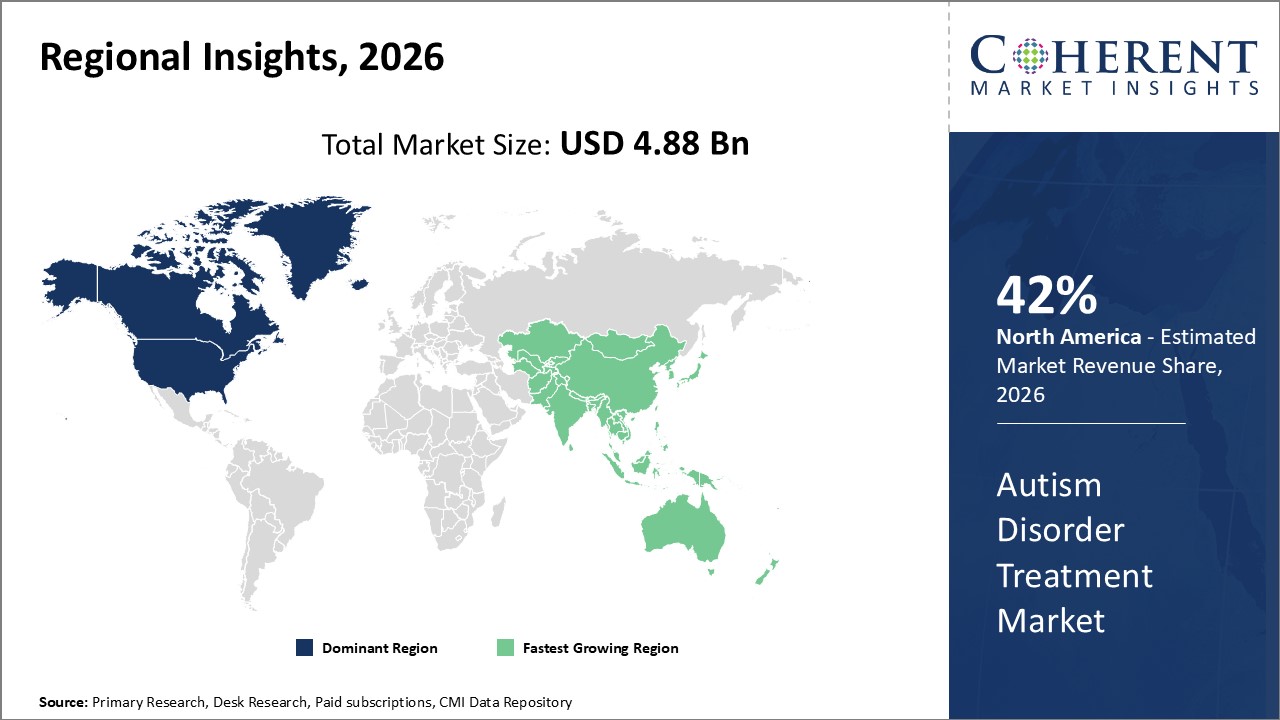
The North American region holds the largest market share, buoyed by robust healthcare infrastructure and supportive reimbursement frameworks.
Asia Pacific stands as the fastest-growing region, with a CAGR surpassing 9%, catalyzed by rising autism awareness and expanding healthcare expenditures in emerging economies.
Autism Disorder Treatment Market Segmentation Analysis
Autism Disorder Treatment Market Insights, By Treatment Type
Behavioral Therapy dominates the market share with 39%, propelled by established efficacy in improving adaptive behaviors and substantial investments in ABA-based interventions. Behavioral therapy's dominance is reinforced by expanded insurance coverage and growing evidence supporting long-term patient benefits. Pharmacological Treatment is the fastest-growing segment, driven by the launch of novel medications targeting core ASD symptoms and associated conditions such as anxiety and irritability. These drugs are capturing increased market revenue through clinical trial successes and regulatory approvals.
Autism Disorder Treatment Market Insights, By Patient Age Group
Pediatric patients dominate with a 63% share, reflecting the emphasis on early diagnosis and intervention, which significantly influence long-term outcomes. This segment benefits from robust government screening programs and school-based therapy initiatives, reinforcing market revenue growth. The Adult segment is the fastest-growing, fueled by increasing recognition of ASD persistence and the need for continued support services. Specialized adult treatment centers and growing interest in occupational therapy and social skills development underscore this growth.
Autism Disorder Treatment Market Insights, By End-User
Specialty Autism Centers represent the largest market share due to their focused expertise and comprehensive multidisciplinary treatment offerings, supported by insurance and governmental frameworks. Homecare Settings emerge as the fastest-growing subsegment, accelerated by technology adoption, teletherapy services, and increased demand for flexible treatment delivery. This trend is particularly strong in North America and the Asia Pacific, providing enhanced access to rural and underserved populations.
Autism Disorder Treatment Market Trends
Market trends in autism disorder treatment are witnessing rapid innovation in technology integration and precision therapies.
For instance, the increasing adoption of wearable devices and telehealth platforms in 2025 accelerated continuity of care, reducing therapy dropouts by 18%.
Simultaneously, advancements in genomics and biomarker discovery are enabling more accurate patient stratification, enhancing therapeutic efficacy.
The integration of AI for early diagnosis and personalized interventions represents a key transformational trend influencing market dynamics.
These trends highlight a shift from traditional uniform treatment regimens towards personalized, outcome-focused approaches, fostering better patient outcomes and business growth.
Autism Disorder Treatment Market Insights, By Geography
North America Autism Disorder Treatment Market Analysis and Trends
North America commands dominance in the Autism Disorder Treatment market share at 42%, attributed to its advanced healthcare infrastructure, high autism prevalence reporting, and comprehensive insurance coverage protocols. The U.S., contributing over 70% of the regional market, benefits from government initiatives like the Autism CARES Act and robust R&D investments by key pharmaceutical companies, which substantially enhance the industry size and innovation capacity.
Asia Pacific Autism Disorder Treatment Market Analysis and Trends
The Asia Pacific region exhibits the fastest growth, with a CAGR exceeding 9%, fueled by rising awareness campaigns, increasing government health budgets, and digital healthcare penetration. Countries such as China and India are expanding autism diagnostic and treatment centers, supported by growing collaborations between healthcare providers and tech companies, further accelerating market revenue growth.
Autism Disorder Treatment Market Outlook for Key Countries
USA Autism Disorder Treatment Market Analysis and Trends
The USA holds the largest share of the autism disorder treatment market globally, powered by comprehensive insurance reimbursements and an established network of specialty centers. Noteworthy is the surge in teletherapy adoption post-2023, with a 22% increase, supporting continuous care amidst evolving healthcare delivery models. Major players such as Johnson & Johnson and Pfizer have intensified investment in clinical trials and novel pharmacological treatments, directly impacting market revenue and innovation.
India Autism Disorder Treatment Market Analysis and Trends
India’s autism disorder treatment market is rapidly evolving, driven by rising awareness, improving healthcare infrastructure, and increased adoption of telemedicine solutions. In 2025, government programs promoting early autism intervention expanded by 18%, while private players invested heavily in digital platforms and community outreach. The expanding middle-class population with rising healthcare spending power further fuels business growth.
Analyst Opinion
The rising prevalence of autism spectrum disorder (ASD) globally has been a primary demand-side driver influencing market growth. Studies published in 2025 have reported a prevalence rate increase of approximately 14% over the past five years in North America, emphasizing the expanding patient pool. This escalation underscores the critical need for innovative treatment methodologies and fuels the continuous expansion of the autism disorder treatment market share.
Behavioral therapy segments, especially Applied Behavior Analysis (ABA), remain dominant in treatment protocols. In 2026, investment flow into ABA-based treatments grew by 12% globally, with the U.S. seeing a 14% revenue increase due to insurance policy reforms that improved treatment affordability. This supply-side indicator exemplifies how reimbursement changes directly impact market revenue and accessibility.
The integration of digital health technologies such as teletherapy and AI-driven behavioral assessments has demonstrably shifted market dynamics. This trend expands the market scope by enabling broader reach and improved patient engagement.
Pharmacological research continues to unlock new pathways for symptom management, with novel drugs targeting core and associated symptoms of ASD entering late-stage clinical trials. Data from 2026 indicates that new pharmaceutical entrants could potentially capture a 16% market share within five years of launch, signaling a transformational phase in treatment options impacting overall market growth strategies.
- Current Industry Events of 2026
- Market Size Estimation
- Regional Breakdown
- Competitive Landscape
- Customer Intelligence
- Segmental Analysis
- Pricing Analysis
- Key Market Drivers, Challenges & Future Trends
- Customized Insights Section
Market Scope
| Report Coverage | Details | ||
|---|---|---|---|
| Base Year: | 2025 | Market Size in 2026: | USD 4.88 billion |
| Historical Data for: | 2020 To 2024 | Forecast Period: | 2026 To 2033 |
| Forecast Period 2026 to 2033 CAGR: | 8.4% | 2033 Value Projection: | USD 8.58 billion |
| Geographies covered: |
| ||
| Segments covered: |
| ||
| Companies covered: | Johnson & Johnson, Roche, Novartis, Pfizer, Takeda Pharmaceuticals, Lundbeck, Acadia Pharmaceuticals, Seaside Therapeutics, MedAvante-ProPhase, Otsuka Holdings, Sunovion Pharmaceuticals, and Neurelis. | ||
| Growth Drivers: |
| ||
Autism Disorder Treatment Market Growth Factors
Market growth is fundamentally propelled by rising global autism awareness, leading to higher diagnosis rates and early intervention prioritization. For instance, government-sponsored awareness campaigns in the U.S. and Europe in 2025 contributed to a 12% increase in screening and diagnosis, directly correlating with treatment demand growth. In addition, advancements in personalized medicine and genomics are tailoring therapies, enabling more effective behavioral and pharmacological interventions, as observed in India and China’s healthcare ecosystems, where precision medicine initiatives received increased funding during 2025-2026.
Furthermore, reimbursement reforms and expanded insurance coverage in developed countries are enhancing treatment accessibility and affordability, evidenced by Canada’s expanded public health funding for autism therapies in 2026, driving a 15% rise in patient visits. Moreover, technology-driven innovations such as telehealth and mobile health applications are revolutionizing treatment delivery, expanding market scope, especially among remote or underserved populations. In 2026, teletherapy uptake in the Asia Pacific surged nearly 25%, underscoring the digital transformation's critical role.
Autism Disorder Treatment Market Development
In 2025, PaxMedica announced its intention to submit a New Drug Application (NDA) for PAX-101, a promising therapeutic candidate designed to address significant unmet needs in the autism treatment landscape. The company aims to advance this drug as a potential new option for patients, reflecting its ongoing commitment to developing innovative therapies that improve outcomes for individuals with autism spectrum disorder.
In September 2026, the U.S. Food and Drug Administration (FDA) initiated the approval process for leucovorin calcium tablets to treat symptoms in individuals with cerebral folate deficiency (CFD), a condition linked to developmental delays with autistic features
Key Players
Leading Companies include:
Johnson & Johnson
Roche
Pfizer
Takeda Pharmaceuticals
Acadia Pharmaceuticals
Seaside Therapeutics
MedAvante-ProPhase
Otsuka Holdings
Sunovion Pharmaceuticals
Neurelis
In recent years, Johnson & Johnson adopted aggressive licensing agreements with biotech firms focusing on neurodevelopmental disorders, resulting in rapid portfolio expansion and a reported 10% YoY increase in autism treatment revenue in 2025. Roche’s strategic acquisition of AI-based therapy platforms accelerated its service offerings, capturing emerging patient segments while enhancing competitive positioning in Europe. The move boosted their market share by 7.5% within one year of integration.
Autism Disorder Treatment Market Future Outlook
Future developments in autism treatment are expected to emphasize early intervention, precision medicine, and digital therapeutics. Advances in neuroimaging, genetics, and artificial intelligence are enhancing the understanding of the disorder’s biological underpinnings, paving the way for personalized treatment models. Digital platforms and wearable devices are anticipated to play a major role in therapy delivery, helping monitor behavior and support adaptive learning. The integration of telehealth solutions and AI-driven assessment tools will also expand access to care, particularly in underserved regions, while ongoing innovation in psychopharmacology aims to improve long-term outcomes for individuals with autism.
Autism Disorder Treatment Market Historical Analysis
Autism treatment has evolved from generalized behavioral interventions to a multidimensional approach that integrates pharmacological, behavioral, and digital therapies. Historically, care focused primarily on behavioral training and speech therapy to manage social and communication challenges. The introduction of pharmacological agents targeting irritability and hyperactivity added a new dimension to symptom management. With increased research into neurodevelopmental mechanisms, treatment approaches have become more individualized, incorporating genetics, early diagnosis, and family-based support systems.
Sources
Primary Research interviews:
Child Psychiatrists
Developmental Pediatricians
Clinical Psychologists
Behavioral Therapists
Databases:
PubMed / NCBI
WHO Mental Health Data
Magazines:
Autism Parenting Magazine
Psychology Today (clinical sections)
Neurology Today
Rare Disease Report
Journals:
Journal of Autism and Developmental Disorders
Autism Research
Journal of Child Psychology and Psychiatry
Developmental Medicine & Child Neurology
Newspapers:
The New York Times (Health)
The Guardian (Science)
The Washington Post (Health)
The Economic Times (Health)
Associations:
Autism Speaks
International Society for Autism Research (INSAR)
National Autistic Society
American Academy of Child and Adolescent Psychiatry (AACAP)
Get access to 250+ pages report
Every segment, forecast, competitor profile and data table behind the analysis above — available for instant download.
- ESOMAR Member
- ISO 9001:2015 Certified
- D-U-N-S Registered
- GDPR & CCPA Compliant
Missing comfort of reading report in your local language? Find your preferred language:
Transform your Strategy with Exclusive Trending Reports
Frequently Asked Questions
Leading companies include Johnson & Johnson, Roche, Pfizer, Novartis, Takeda Pharmaceuticals, and Lundbeck, all of whom have strengthened their portfolios through research, collaborations, and innovations targeting autism therapies.
The market size is projected to grow from USD 4.88 billion in 2026 to USD 8.58 billion by 2033, with a CAGR of 8.4%, driven by increasing diagnosis rates and therapeutic advancements.
Hospitals and specialty autism centers currently hold significant demand due to patient access and infrastructure, with home care settings emerging rapidly, propelled by teletherapy adoption.
The market will increasingly integrate digital and AI-enabled therapies, molecular-targeted pharmacologics, and expanded reimbursement schemes, leading to personalized, data-driven treatment approaches.
The market is competitive with significant R&D investments, yet challenges such as treatment affordability in emerging markets and regulatory hurdles persist, influencing growth strategies.
Licensing, strategic alliances, and technology acquisition are prevalent, alongside localized market penetration efforts, enabling companies to enhance product offerings and expand global footprint.