

Amebiasis Treatment Market Size and Share Analysis: 2026-2033
The amebiasis treatment market size is anticipated to grow at a CAGR of 6.3% with USD 1,200 Mn in 2026 and is expected to reach USD 2,200 Mn in 2033. The primary drivers are largely defined by the rising prevalence of amebiasis, with an estimated 40,000–100,000 annual deaths according to the World Health Organization (WHO). The new regulatory guidelines, including those from the U.S. FDA is promoting new treatments as well as emphasizing the need for better surveillance of drug-resistant strains.
Key Takeaways
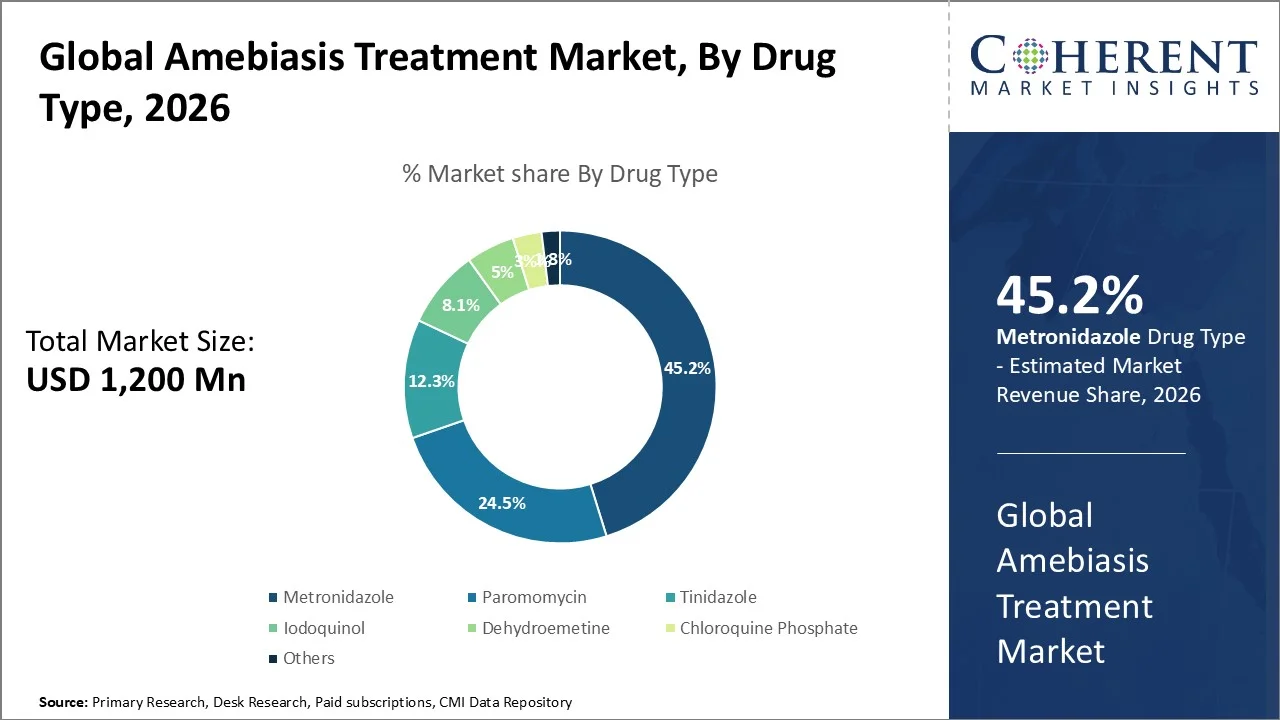
- Metronidazole is expected to account for the largest share of 45.2% in 2026. The growth is mainly owing to its efficacy as the first‑line treatment for both intestinal and extraintestinal amebiasis and its long-standing clinical use. It remains the most commonly prescribed drug for treating amebiasis in both hospital and outpatient settings. According to the CDC, Metronidazole is included in the WHO’s Essential Medicines List, underlining its global role in managing the disease.
- On the basis of distribution channel, hospital pharmacies are set to lead with 50.3% in 2026. The segment’s growth in is owing to the severe nature of invasive amebiasis, which often requires intensive medical intervention in hospitals. Hospitals are important for treating serious cases like amebic liver abscesses, which often happen in tropical areas. According to WHO, invasive forms of the disease are more common in these regions, where the need for hospital care is heightened.
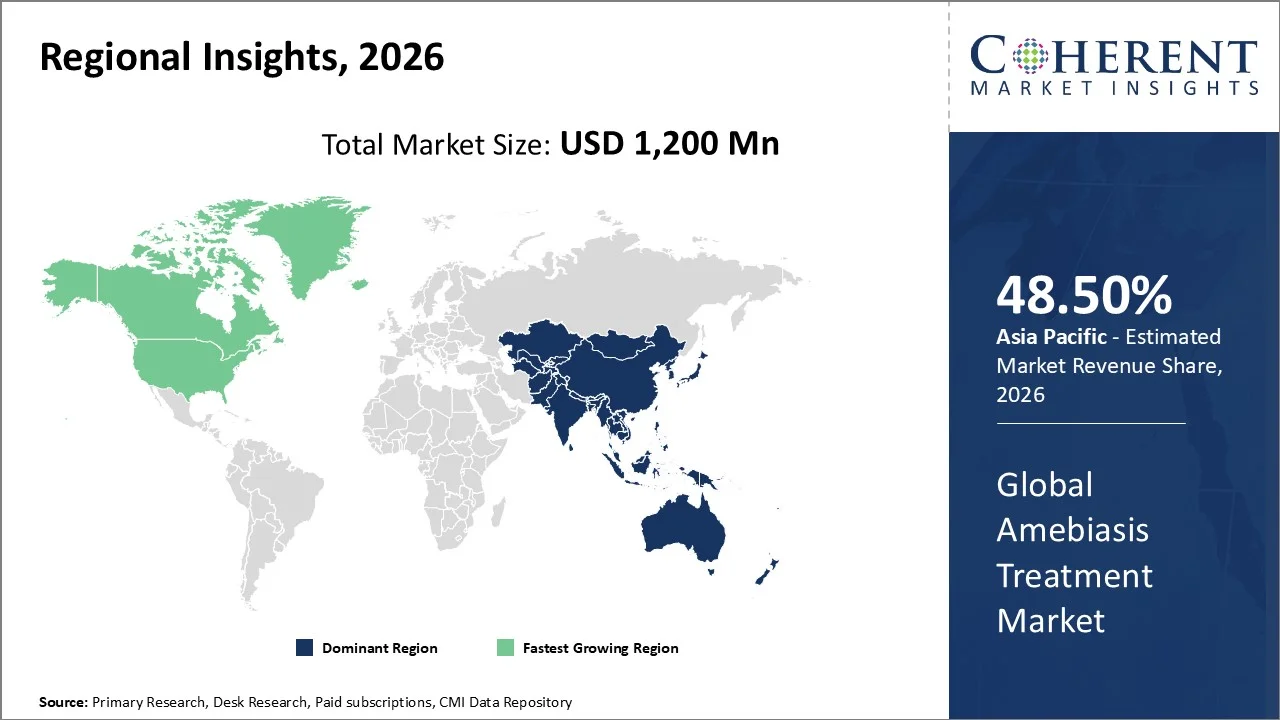
- Asia Pacific is expected to acquire the prominent share of 48.50% in 2026. This is because amebiasis mainly impacts people in areas with poor sanitation, especially in tropical and subtropical regions of Central and South America, Africa, and Asia. Millions of infections occur each year in these regions, with the disease spreading mainly through contaminated food and water. According to WHO, Asia is still one of the most affected regions by amebiasis, driving substantial demand for treatment.
Segmental Insights
Why is Metronidazole Acquiring the Largest Share?
On the basis of drug type, the metronidazole is projected to account for the largest amebiasis treatment market share of 45.2% in 2026. The segment’s growth is due to its longstanding clinical efficacy and inclusion in global treatment guidelines. The CDC and other health authorities consistently recommend it as the first-line treatment for invasive amebiasis. It is often followed by additional medications for the complete eradication. The broad use of the drug in regions with high amebiasis prevalence like South Asia, Africa, and Latin America is contributing to its leadership position in the market.
The antiprotozoal activity of Metronidazole specifically targets Entamoeba histolytica trophozoites, thereby making it a reliable therapeutic option. The FDA has approved metronidazole. The drug is prescribed widely mainly owing to its proven effectiveness and also despite the availability of alternative treatments like tinidazole. The clinical research still supports metronidazole as a cornerstone therapy, with emerging studies focusing more on diagnostics rather than new drug approvals.
Therefore, metronidazole’s robust clinical history and global endorsement ensure its continued market dominance.
- Current Industry Events of 2026
- Market Size Estimation
- Regional Breakdown
- Competitive Landscape
- Customer Intelligence
- Segmental Analysis
- Pricing Analysis
- Key Market Drivers, Challenges & Future Trends
- Customized Insights Section
Hospital Pharmacies holds the Largest Market Share
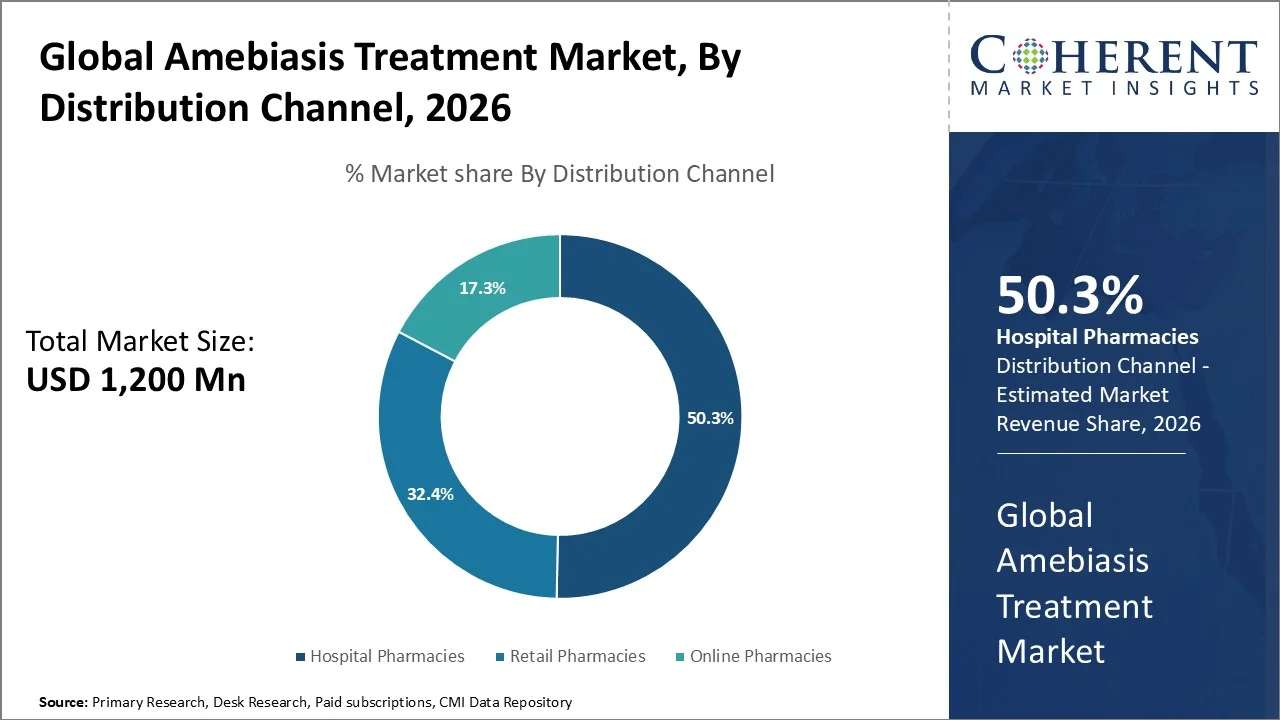
On the basis of distribution channel, hospital pharmacies lead with a major 50.3% share in 2026. The segment’s growth is due to hospitals being central to diagnosing and treating moderate to severe amebiasis cases, including those with invasive and extra-intestinal complications. The segment plays a crucial role in implementing diagnostic procedures like stool examinations and molecular testing and assist in guiding treatment decisions. The clinical trials like study NCT02734264, explore the disease's incidence as well as diagnostic approaches in endemic regions.
A large proportion of people are infected annually across the world, thereby highlighting the need for hospital intervention. In addition, the hospitals are integral in providing evidence-based treatments and post-treatment follow-up care, thus ensuring effective management of amebiasis. The holistic approach to treatment and monitoring makes hospitals the top players in the fight against this parasitic infection. As a result, the hospital segment continues to lead, bolstered by both ongoing advancements in diagnostics as well as treatment strategies.
Market Driver
Imported and Travel ‑Related Transmission Patterns is Transforming the Amebiasis Treatment Market in the US
Amebiasis, caused by Entamoeba histolytica, remains a public health concern in the United States. This mainly owing to cases imported by travelers and immigrants from endemic regions with poor sanitation, as highlighted by the CDC. In the US, the disease is most frequently diagnosed in individuals who have recently traveled to tropical areas or emigrated from countries where the parasite is common; such travel‑related exposure continues to influence treatment demand in clinical settings.
Treatment for amebiasis centers on antibiotic and antiparasitic regimens (e.g., metronidazole, tinidazole), with clinical guidelines recommending luminal agents even for asymptomatic infections to reduce transmission. Recent clinical research efforts include exploratory Phase II evaluations of repurposed drugs such as auranofin for amebiasis, assessing parasite clearance and symptom resolution, although definitive approval for new agents in the US remains pending. The data from surveillance show that only nearly 10%-20% of E. histolytica infections become symptomatic, underscoring the importance of effective treatment strategies to prevent severe outcomes like dysentery or liver abscess.
A Major Breakthrough in Amebiasis Treatment Market: Advanced and Combination Drug Therapies
Amebiasis, caused by Entamoeba histolytica, affects an estimated 35–50 million people worldwide each year, leading to about 55,000–70,000 deaths. This underlines the urgent need for improved therapies. The current treatment regimens recommended by public health sources continue to rely on nitroimidazole antibiotics like metronidazole or tinidazole followed by a luminal agent like paromomycin to prevent relapse, thereby highlighting a combination therapeutic approach as standard of care.
In clinical development, auranofin, an FDA‑approved compound repurposed for amebiasis, has achieved FDA orphan drug designation and completed Phase 2 clinical evaluation for the treatment of amebiasis, representing the first potential novel treatment option in over five decades. A Phase IIa randomized study is planned comparing auranofin against standard metronidazole therapy in adults with acute amebic colitis, aiming to evaluate time to symptomatic resolution and parasitologic response, which could establish a new therapeutic target and improve market offerings significantly.
These developments underscore the increasing clinical and regulatory activity in the amebiasis treatment field. Combination therapies as well as new drug candidates are at the forefront of fueling innovation in the market.
Current Events and Their Impact on the Amebiasis Treatment Market
Current Event | Description and its Impact |
CDC Updated Treatment Guidance (2025–2026) |
|
Global Recognition of Treatment Necessity in Endemic Regions |
|
Amebiasis Treatment Market Trends
- High global disease burden continues to influence treatment demand. According to epidemiological data, Entamoeba histolytica infection causes an estimated ~50 million symptomatic cases annually and approximately 100,000 deaths each year worldwide — figures cited in peer‑reviewed public health literature and based on WHO/CDC data synthesis.
- Prevalence remains concentrated in low‑resource settings. Infections are more common in tropical and subtropical areas with inadequate sanitation and water quality, and asymptomatic colonization (≈90 %) is far more common than clinically apparent disease.
- Standard therapeutics like nitroimidazoles remain mainstay treatment, but resistance concerns are emerging. Current clinical guidance continues to recommend agents such as metronidazole and tinidazole for invasive amebiasis, with tinidazole specifically indicated for both intestinal amebiasis and amebic liver abscess in adults and pediatric patients ≥3 years per FDA prescribing information.
- Diagnostic and treatment challenges are shaping clinical approaches. Enhanced antigen and PCR‑based assays are increasingly used to distinguish E. histolytica from non‑pathogenic Entamoeba species, important for appropriate therapeutic use, though such molecular diagnostics are still limited in some regions.
- Clinical research is ongoing, but no new global regulatory approvals for novel amebiasis drugs were identified in official pipelines in 2024–2026. Some drug repurposing and screening efforts (e.g., nitroimidazole analogues like fexinidazole showing anti‑amebic activity in preclinical studies) have been reported in scientific literature, but they have not yet resulted in new registered products.
Regional Insights
Asia Pacific Dominates Owing to the High Prevalence of Entamoeba Histolytica Infections
The Asia Pacific region accounts for 48.5% of the market share in 2026. The region’s growth is owing to the high prevalence of Entamoeba histolytica infections, particularly in tropical and subtropical areas with limited sanitation. As per the data from the World Health Organization (WHO), more than 50 million people are affected by amebiasis annually. The majority of these cases are concentrated in Southeast Asia, South Asia, as well as parts of China.
The regulatory efforts in the region are also enhancing treatment accessibility. For instance, the Indian Ministry of Health and Family Welfare has come up with national programs like National Vector Borne Disease Control Programme (NVBDCP) to improve diagnostics as well as treatment availability for parasitic infections like amebiasis. This emphasizes the need for better treatment options.
The approval of new therapies and continuous clinical trials like a Phase IIa trial for auranofin as a potential broad-spectrum treatment, could revolutionize treatment strategies. These efforts, combined with the region's high disease burden, position Asia Pacific as a key market for amebiasis treatment in the coming years.
North America Amebiasis Treatment Market Trends
North America is expected to witness strong growth in amebiasis treatment market over the forecast period. The region’s growth is owing to advancements in treatment protocols and increased awareness. The data from Mexico shows a slight decline in cases of amebic liver abscess, with reported cases decreasing from 528 in 2022 to 481 in 2023, highlighting some progress in the fight against severe forms of amebiasis. However, the region is stilling facing challenges with the persistence of cases, particularly in endemic areas. As per the data from the Centers for Disease Control and Prevention (CDC), amebiasis remains a significant parasitic infection, especially in travelers and certain immigrant populations.
The regulations are changing, with the FDA focusing on the approval of new treatments for tropical diseases like amebiasis. The recent clinical trials such as those exploring the combination therapy of nitazoxanide and metronidazole, have shown promising results. Moreover, the leading pharmaceutical firms like Sanofi and GlaxoSmithKline are focusing on developing more effective and targeted therapies.
This trend is expected to boost market growth as treatment options become more accessible and effective, especially in areas with high infection rates. The reduction in cases, while positive, also highlights the need for continual vigilance and advancements in treatment protocols.
Increasing Recognition of Entamoeba is Accelerating the Amebiasis Treatment Market Demand in China
The increasing recognition of Entamoeba histolytica–associated amoebic dysentery and improved surveillance are fueling the demand for effective treatment regimens in China. The incidence of Entamoeba histolytica–associated amebic dysentery in the country has shown a measurable epidemiological trend with 670 cases reported in 2020 and 539 in 2021 (0.048/100 000 and 0.038/100 000 respectively). This highlights seasonal peaks as well as regional clusters in southwestern provinces, according to official infectious disease surveillance data.
The China CDC continues to recommend first‑line antiparasitic therapy with metronidazole, tinidazole and luminal agents like paromomycin for effective removal of parasite. These WHO‑endorsed drugs are also on essential medicines lists, underscoring sustained clinical demand.
The recent clinical analyses from Beijing tertiary centres note increasing recognition of amebic colitis, prompting more rigorous diagnostic and treatment protocols. This evolving public health focus is influencing prescription trends and reinforcing care pathways for amebiasis in China.
United States Amebiasis Treatment Market Trends
In the United States, although amebiasis infections are rare, they still represent a substantial concern. The Centers for Disease Control and Prevention (CDC) estimates that nearly 4% of the U.S. population is affected by amebiasis. It also predicted around 5 deaths reported annually due to the infection. But the CDC also cautions that the true number of cases is likely 10 to 18 times higher than the officially reported numbers. This underreporting indicates a potential gap in diagnosis and treatment, thereby propelling the need for more effective treatment options as well as better disease tracking.
The increasing awareness and diagnostic improvements is expected to boost the incorporation of new treatment regimens in the US. In addition, with the increasing incidence of amebiasis in travelers and immigrants from tropical regions, healthcare professionals are focusing on both early detection as well as effective treatment strategies. The FDA’s recent approval of new medications for parasitic infections is expected to substantially impact the treatment landscape, thus ensuring more reliable therapeutic options for U.S. patients. The combination of rising awareness, regulatory support, and advancements in drug development is likely to contribute to the strong growth of the market in the U.S. throughout the forecast period.
Who are the Major Companies in Amebiasis Treatment Industry
Some of the major key players in Amebiasis Treatment Market are Pfizer Inc., Impax Laboratories, Lupin Pharmaceuticals, Inc., Sanofi, Actelion Pharmaceuticals Ltd., Glenmark Pharmaceuticals, Sun Pharmaceutical Industries Inc., Heritage Pharmaceuticals Inc., Mission Pharmacal Co., Novel Laboratories, and others.
Key News
- In February 2026, a multidisciplinary team at a hospital in Delhi successfully diagnosed and treated a 25-year-old man suffering from cerebral amoebiasis, an exceptionally rare and potentially fatal parasitic infection caused by Entamoeba histolytica, which had spread to his brain, lungs, and heart.
- In January 2025, Asieris Pharmaceuticals announced the signing of an investigational drug supply agreement with the Centers for Disease Control and Prevention (CDC) under the Expanded Access Investigational New Drug (IND) Program for APL-1202 (nitroxoline). This drug, developed independently by Asieris, will be evaluated by CDC experts for use in treating Free-living Amoebae (FLA) infections.
Market Report Scope
Amebiasis Treatment Market Report Coverage
| Report Coverage | Details | ||
|---|---|---|---|
| Base Year: | 2025 | Market Size in 2026: | USD 1,200 Mn |
| Historical Data for: | 2020 To 2024 | Forecast Period: | 2026 To 2033 |
| Forecast Period 2026 to 2033 CAGR: | 6.3% | 2033 Value Projection: | USD 2,200 Mn |
| Geographies covered: |
| ||
| Segments covered: |
| ||
| Companies covered: | Pfizer Inc., Impax Laboratories, Lupin Pharmaceuticals, Inc., Sanofi, Actelion Pharmaceuticals Ltd., Glenmark Pharmaceuticals, Sun Pharmaceutical Industries Inc., Heritage Pharmaceuticals Inc., Mission Pharmacal Co., Novel Laboratories, and others. | ||
| Growth Drivers: |
| ||
| Restraints & Challenges: |
| ||
Analyst Opinion
- The amebiasis treatment market is witnessing growth due to increasing incidences of amebiasis, especially in tropical and subtropical regions. In 2024, the World Health Organization (WHO) reported approximately 50 million global cases of amebiasis, with a substantial portion occurring in Asia as well as Africa. This propels the demand for better and effective treatment solutions.
- The recent policy updates like the U.S. FDA's approval of new treatments for liver issues caused by amoebas in 2025 is also constituting to the growth of the market. These approvals aim to address treatment gaps, thereby offering more efficient therapeutic options for severe cases.
- The government health agencies are placing greater efforts to combat parasitic infections, with the Indian Ministry of Health initiating national programs for amebiasis prevention as well as treatment, which further contributes to the market’s growth.
Speak to the analyst
Want personalized insights?
Take the findings above to one of our principal consultants, or have the report rebuilt around the segments, geographies and competitors you actually track.
Market Segmentation
- Drug Type Insights (Revenue, USD Mn, 2026 - 2033)
- Metronidazole
- Paromomycin
- Tinidazole
- Iodoquinol
- Dehydroemetine
- Chloroquine phosphate
- Others
- Distribution Channel Insights (Revenue, USD Mn, 2026 - 2033)
- Hospital Pharmacies
- Online Pharmacies
- Retail Pharmacies
- Regional Insights (Revenue, USD Mn, 2026 - 2033)
- North America
- U.S.
- Canada
- Latin America
- Brazil
- Argentina
- Mexico
- Rest of Latin America
- Europe
- U.K.
- Germany
- Italy
- France
- Russia
- Spain
- Rest of Europe
- Asia Pacific
- China
- India
- Japan
- ASEAN
- Australia
- South Korea
- Rest of Asia Pacific
- Middle East
- GCC
- Israel
- Rest of Middle East
- Africa
- North Africa
- Central Africa
- South Africa
- North America
Sources
Primary Research Interviews
- Amebiasis Treatment Drug Manufacturers
- Healthcare Providers and Physicians specializing in Gastroenterology
- Clinical Researchers and Academic Institutions
- Regulatory Authorities (FDA, EMA)
- Drug Development and Clinical Trial Consultants
- Others
Databases
- PubMed Central
- ClinicalTrials.gov
- World Health Organization (WHO) Global Health Observatory
- National Institutes of Health (NIH)
- U.S. Food and Drug Administration (FDA)
- Others
Magazines
- Journal of Clinical Gastroenterology
- The Lancet Infectious Diseases
- American Journal of Tropical Medicine and Hygiene
- Infectious Disease Reports
- Others
Journals
- The American Journal of Tropical Medicine and Hygiene
- Clinical Infectious Diseases
- Journal of Infectious Diseases
- The Lancet Infectious Diseases
- Others
Newspapers
- The New York Times Health Section
- Reuters Health News
- The Guardian Health News
- The Washington Post Health Section
- Bloomberg News Health
- Others
Associations
- World Health Organization (WHO)
- Centers for Disease Control and Prevention (CDC)
- International Society of Infectious Diseases (ISID)
- American Society of Tropical Medicine and Hygiene (ASTMH)
- Others
Public Domain Sources
- U.S. Centers for Disease Control and Prevention (CDC)
- World Health Organization (WHO)
- ClinicalTrials.gov
- National Institutes of Health (NIH)
- European Medicines Agency (EMA)
- Others
Proprietary Elements
- CMI Data Analytics Tool
- Proprietary CMI Existing Repository of Information for the Last 8 Years
Get access to 250+ pages report
Every segment, forecast, competitor profile and data table behind the analysis above — available for instant download.
- ESOMAR Member
- ISO 9001:2015 Certified
- D-U-N-S Registered
- GDPR & CCPA Compliant
Missing comfort of reading report in your local language? Find your preferred language:
Transform your Strategy with Exclusive Trending Reports
Frequently Asked Questions
The Amebiasis Treatment Market is expected to reach USD 2,200 Mn in 2033.
Major players operating in the global Amebiasis Treatment Market include Pfizer Inc., Impax Laboratories, Lupin Pharmaceuticals, Inc., Sanofi, Actelion Pharmaceuticals Ltd., Glenmark Pharmaceuticals, Sun Pharmaceutical Industries Inc., Heritage Pharmaceuticals Inc., Mission Pharmacal Co., Novel Laboratories, and others.
The low-income status of endemic regions, which limits access to healthcare and advanced diagnostics, and the emergence of drug-resistant strains of Entamoeba histolytica are the key factors hampering growth of the Market.
The rising global incidence of parasitic infections, particularly due to poor sanitation and rapid urbanization in developing regions, leading to higher demand for effective therapies is boosting the demand for amebiasis treatment.
The amebiasis treatment market is anticipated to grow at a CAGR of 6.3% between 2026 and 2033.
Among regions, Asia Pacific is expected to account for a largest market share in the global Amebiasis Treatment Market over the forecast period.