

Macular Degeneration Treatment Market Size and Forecast: 2026-2033
The Macular Degeneration Treatment Market is estimated to be valued at USD 17.8 Bn in 2026 and is expected to reach USD 28.6 Bn by 2033, exhibiting a compound annual growth rate (CAGR) of 5.7% from 2026 to 2033.
Key Takeaways
- By Type, Wet Age-related Macular Degeneration hold the largest market share of 53.4% in 2026 owing to its rising prevalence of age-related macular degeneration.
- By Stage of Disease, Early-stage AMD expected to hold largest market share of 42.3% in 2026 owing to the increasing aging population.
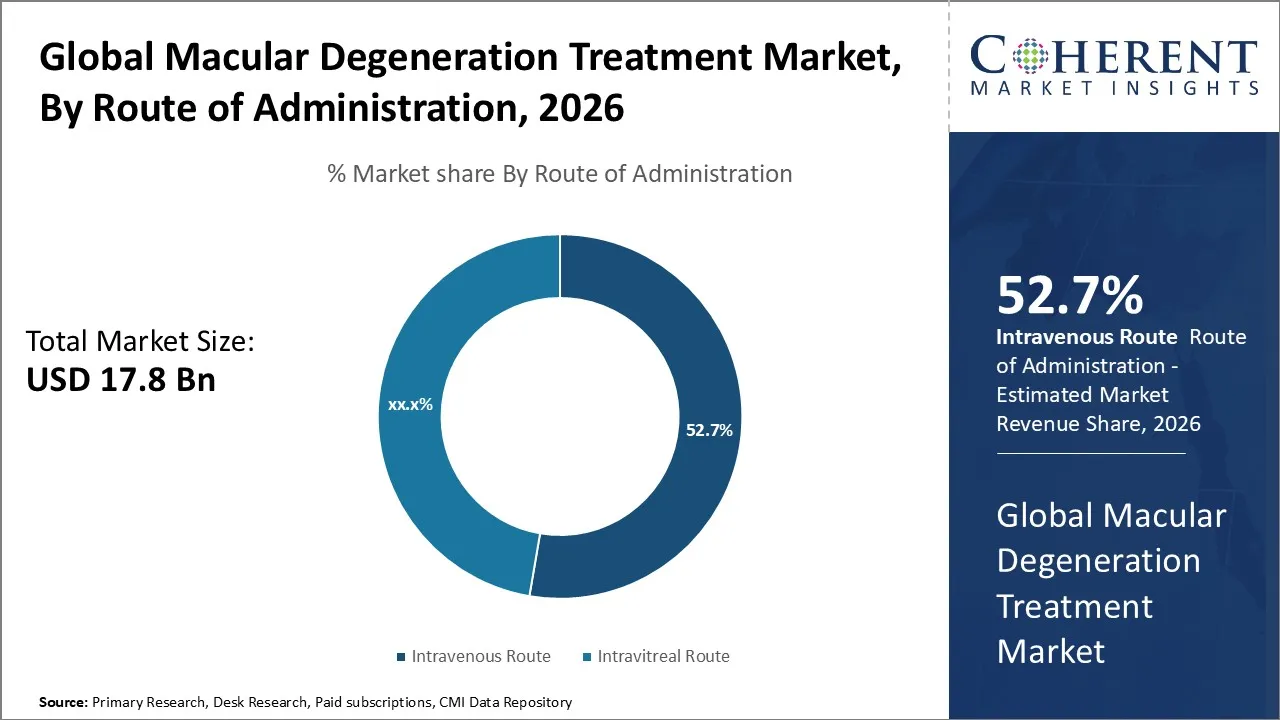
- By Route of Administration, Intravenous Route acquired the prominent market share of 52.7% in 2026 owing to the direct drug delivery to the retina.
- By Sales Channel, Hospitals captures the largest market share of 37.7% in 2026 owing to the availability of advanced diagnostic equipment.
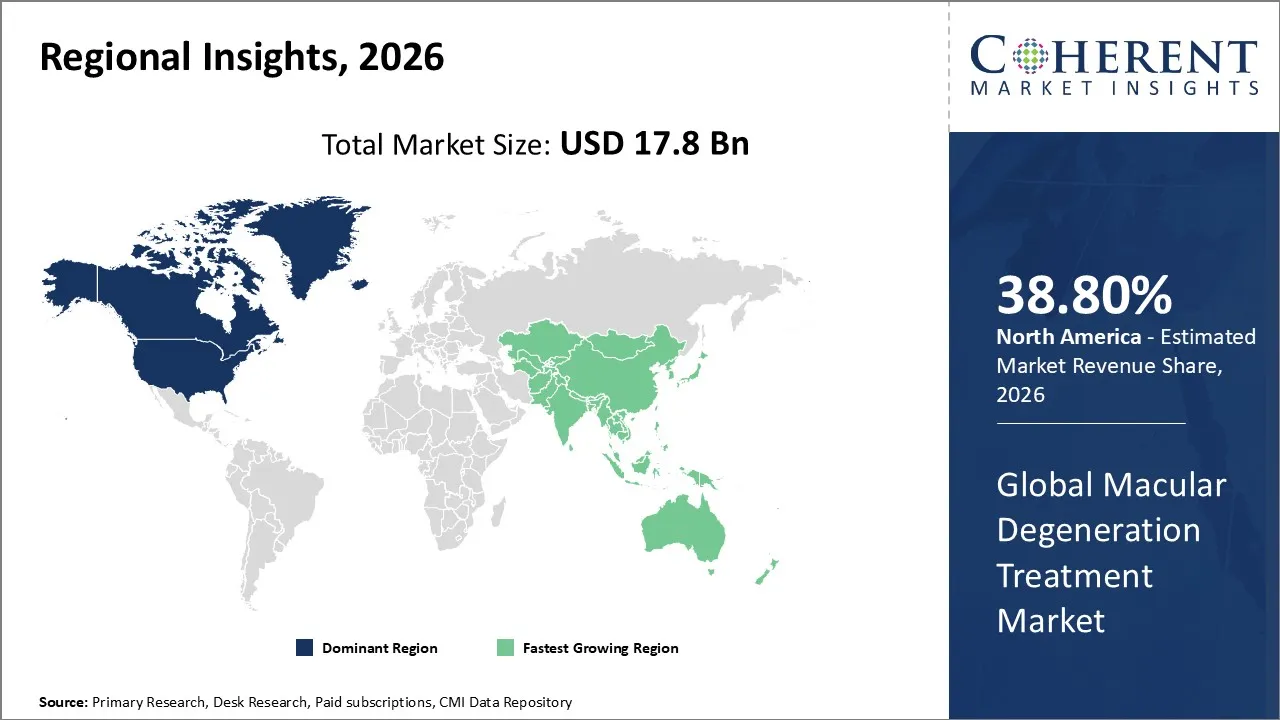
- By Region, North America dominates the overall market with an estimated share of 38.8% in 2026 owing to the strong presence of major pharmaceutical and biotechnology companies.
Market Overview
Researchers, healthcare providers, and pharmaceutical companies are driving the expansion of the Macular Degeneration Treatment Market as the prevalence of age-related macular degeneration rises and the global elderly population grows. Healthcare organizations are increasing awareness about early diagnosis and adopting advanced retinal imaging and therapeutic technologies. Clinicians use treatment approaches such as anti-VEGF therapies, nutritional supplements, and emerging regenerative and gene-based treatments. Providers emphasize early intervention to prevent vision loss, while industry players continue to strengthen research efforts, expand ophthalmology infrastructure, and introduce innovative drug delivery systems to advance the market.
Current Events and their Impact on the Macular Degeneration Treatment Market
Current Events | Description and its impact |
Regulatory and Policy Developments |
|
Technological Innovations and Clinical Advancements |
|
Demographic and Epidemiological Trends |
|
Segmental Insights
- Current Industry Events of 2026
- Market Size Estimation
- Regional Breakdown
- Competitive Landscape
- Customer Intelligence
- Segmental Analysis
- Pricing Analysis
- Key Market Drivers, Challenges & Future Trends
- Customized Insights Section
Macular Degeneration Treatment Market Insights, By Route of Administration - Intravenous Route contributes the highest share of the market owing to its standard route for anti-VEGF therapies
Intravenous Route acquired the prominent market share of 52.7% in 2026. Healthcare providers increasingly use the intravenous (IV) route because it delivers medications and fluids directly into the bloodstream, producing a rapid effect and precise dosing. Clinicians administer IV therapies for critical care, chemotherapy, and hydration to achieve therapeutic levels quickly and effectively. Innovations in catheter design, infusion pumps, and sterile techniques enhance patient safety and comfort. Expanding hospital infrastructure, the growing prevalence of acute and chronic conditions, and ongoing clinician training actively promote wider adoption of intravenous treatments across medical settings.
Macular Degeneration Treatment Market Insights, By Type - Wet Age-related Macular Degeneration contribute the highest share of the market owing to its growing awareness and screening programs
Wet Age-related Macular Degeneration hold the largest market share of 53.4% in 2026. The growing aging population drives the incidence of Wet Age-related Macular Degeneration, while the increasing prevalence of retinal disorders and greater awareness of early diagnosis further support its detection and management. Healthcare professionals use advanced imaging technologies such as Optical Coherence Tomography to detect the condition earlier and with greater accuracy, enabling timely treatment. Physicians widely prescribe targeted therapies like Ranibizumab and Aflibercept to improve patient outcomes and encourage treatment adoption. Additionally, expanding healthcare infrastructure, supportive reimbursement policies, and ongoing research into innovative biologics and gene-based therapies continue to advance clinical management of this vision-threatening disease.
For instance, in February 2026, Sandoz, a global leader in affordable medicines, announced that the FDA has approved an expanded label for Enzeevu (aflibercept-abzv) to cover multiple retinal conditions. The drug was initially approved for treating neovascular (wet) age-related macular degeneration (nAMD).
Macular Degeneration Treatment Market Insights, By Stage of Disease - Early-stage AMD contribute the highest share of the market owing to its a dvances in early diagnostic technologies
Early-stage AMD expected to hold largest market share of 42.3% in 2026. Aging populations and increased awareness of routine eye exams drive the onset of early-stage Age-related Macular Degeneration. Clinicians use advanced diagnostic tools such as Optical Coherence Tomography and Fundus Photography to identify retinal changes at the earliest stages. Lifestyle-related risk factors, including smoking, poor diet, and extended screen time, actively contribute to the disease’s development. Expanding ophthalmic services, public health screening initiatives, and ongoing research into preventive treatments and nutritional strategies further empower healthcare providers to detect and manage the condition effectively. For instance, Biogen Inc. and Samsung Bioepis announced the U.S. launch of BYOOVIZ (ranibizumab-nuna), a biosimilar to LUCENTIS.
Macular Degeneration Treatment Market Insights, By Sales Channel - Hospitals contribute the highest share of the market owing to its administration of intravitreal injections
Hospitals capture the largest market share of 37.7% in 2026. Hospitals expand as rising populations and growing demand for healthcare services increase patient access to medical care. Medical professionals use advanced diagnostic tools, treatment methods, and surgical procedures to improve patient outcomes and attract more patients. Governments and private investors actively support hospital growth by funding infrastructure and specialized services. The increasing prevalence of chronic and acute diseases, along with greater health awareness and skilled healthcare staff, drives hospital development, enhances service delivery, and strengthens the overall healthcare system.
Regional Insights
North America Macular Degeneration Treatment Market Trends
North America dominates the overall market with an estimated share of 38.8% in 2026. In North America, healthcare providers shape the Age-related Macular Degeneration treatment market through a robust healthcare infrastructure and the high prevalence of AMD among older adults. Clinicians actively adopt advanced diagnostic tools and administer intravitreal therapies, while favorable reimbursement policies enhance patient access to anti‑VEGF drugs and other biologics. Pharmaceutical companies and ongoing clinical research introduce innovative treatments, and routine eye screenings combined with increasing patient awareness enable early diagnosis and prompt intervention. For instance, in September 2025, Canadian company MacuMira Medical Devices launched the first Health Canada-approved treatment to improve vision in dry age-related macular degeneration. The non-invasive MacuMira system, now in over 150 clinics, delivers low-dose microcurrent stimulation through closed eyelids in 32-minute sessions.
Asia Pacific Macular Degeneration Treatment Market Trends
In the Asia Pacific region, healthcare providers and governments drive the Macular Degeneration Treatment market by expanding healthcare infrastructure and addressing the needs of a growing elderly population. Clinics and hospitals actively increase access to ophthalmic diagnostics and specialized treatments in countries like China, Japan, India, and South Korea. Public health initiatives and rising patient awareness promote early diagnosis, while demand for affordable therapies, wider adoption of tele‑ophthalmology, and investments from global pharmaceutical companies actively expand the market across the region.
United States Macular Degeneration Treatment Market Trends
In the United States, healthcare providers drive the Age-related Macular Degeneration treatment market by addressing the high prevalence of AMD among older adults and utilizing advanced diagnostics and specialized care. Ophthalmologists actively administer anti‑VEGF therapies and other biologics, supported by strong reimbursement systems and extensive retina specialist networks. Researchers and pharmaceutical companies continue to develop longer-acting treatments and improved delivery methods, while routine screenings and growing patient awareness enable earlier diagnosis and prompt treatment adoption across the country. For instance, in June 2025, Outlook Therapeutics unveiled LYTENAVA (bevacizumab gamma) in Germany and the UK for treating wet age-related macular degeneration (wet AMD).
India Macular Degeneration Treatment Market Trends
In India, healthcare providers drive the Age-related Macular Degeneration treatment market by addressing rising AMD incidence and the needs of an aging population. Clinics and hospitals actively expand access to diagnostics and therapies, while local manufacturers develop cost‑effective anti‑VEGF treatments to improve affordability and reach. Public awareness campaigns and screening programs enable clinicians to diagnose AMD earlier, and investments in ophthalmic infrastructure, specialist training, and supportive healthcare initiatives actively promote treatment adoption across both urban areas and emerging regional centers. For instance, in February 2026, Zydus Lifesciences launched Anyra, India’s first indigenously developed Aflibercept 2 mg biosimilar, and partnered with Regeneron Pharmaceuticals and Bayer. Anyra treats wet age-related macular degeneration, macular edema from retinal vein occlusion, diabetic macular edema, diabetic retinopathy, and myopic choroidal neovascularization.
End-user Feedback and Unmet Needs in the Macular Degeneration Treatment Market
- Patient Experience and Convenience: Patients report challenges with frequent intravitreal injections, long clinic visits, and treatment-related discomfort. They seek therapies that reduce injection frequency, minimize side effects, and offer more convenient delivery options, including sustained-release formulations or non-invasive alternatives, to improve adherence and overall quality of life.
- Accessibility and Affordability: Many patients face high costs for anti‑VEGF drugs and limited access in regional or rural areas. They need affordable treatment options, wider geographic availability, and insurance support to ensure equitable access to effective therapies without financial burden.
- Early Detection and Diagnosis: Patients and clinicians emphasize the need for improved early detection methods. Current screening programs are limited, and delayed diagnosis often reduces treatment efficacy. Advanced imaging tools, tele-ophthalmology, and public awareness campaigns can help identify AMD earlier, improving outcomes and patient satisfaction.
Macular Degeneration Treatment Market Trend
Advanced Therapeutic Adoption
Healthcare providers increasingly adopt cutting‑edge therapies to manage Macular Degeneration, focusing on agents that improve visual outcomes and reduce treatment burdens. Anti‑VEGF therapies remain foundational, while newer biologics, sustained‑release implants, and combination regimens expand clinical options. Ophthalmologists weigh efficacy, safety, and durability when selecting treatment plans. This trend supports personalized care pathways and encourages ongoing research into novel molecules designed to extend treatment intervals and optimize patient convenience.
Diagnostic Technology Expansion
Clinics and hospitals invest heavily in advanced diagnostic tools to detect Macular Degeneration earlier and more precisely. Optical Coherence Tomography (OCT), wide‑field imaging, and retinal biomarkers help clinicians monitor disease progression and tailor treatment decisions. Improved imaging capabilities support differential diagnosis and enable earlier intervention, which enhances long‑term visual outcomes. Greater accessibility to these technologies across urban and regional centers helps broaden patient reach and strengthens standard of care practices.
Macular Degeneration Treatment Market Opportunity
Enhanced Diagnostic Solutions
Advancements in imaging and diagnostic tools present opportunities for companies to expand offerings that improve early detection and disease monitoring. Technologies like enhanced optical coherence tomography, AI‑driven analysis, and portable screening devices can help clinicians identify macular degeneration sooner and more accurately. This supports tailored treatment regimens, better patient outcomes, and integration into standard eye care workflows. Partnerships with clinics and tele‑ophthalmology platforms further broaden market reach and usability.
Market Report Scope
Macular Degeneration Treatment Market Report Coverage
| Report Coverage | Details | ||
|---|---|---|---|
| Base Year: | 2025 | Market Size in 2026: | USD 17.8 Bn |
| Historical Data for: | 2020 To 2024 | Forecast Period: | 2026 To 2033 |
| Forecast Period 2026 to 2033 CAGR: | 5.7% | 2033 Value Projection: | USD 28.6 Bn |
| Geographies covered: |
| ||
| Segments covered: |
| ||
| Companies covered: | Bayer AG, REGENXBIO Inc., Aerie Pharmaceutical Inc., Panoptica, Pfizer Inc., F. Hoffmann-La Roche Ltd., Regeneron Pharmaceutical Inc., Novartis AG, and Bausch Health Companies Inc., among others. | ||
| Growth Drivers: |
| ||
| Restraints & Challenges: |
| ||
Macular Degeneration Treatment Market News
- In November 2025, Sandoz announced the European launch of Afqlir (aflibercept), available as a 2 mg vial kit and pre-filled syringe for intravitreal injection. Approved by the European Commission in November 2024, Afqlir treats retinal diseases such as AMD, RVO, and DME, helping prevent vision loss, and follows the same indications as the reference medicine, Eylea®.
- In November 2025, Intas Pharmaceuticals launched RAZUMAB, the first biosimilar to Lucentis (ranibizumab) developed globally. Manufactured under strict sterile guidelines, RAZUMAB™ is available in single-dose vials to minimize contamination risk during ocular use.
Analyst Opinion (Expert Opinion)
- In the Macular Degeneration Treatment market, clinical adoption patterns reveal a stark disparity between therapeutic promise and real‑world execution. Anti‑VEGF agents continue to anchor treatment paradigms, with aflibercept formulations accounting for over 40 % of global anti‑VEGF volume due to their ability to reduce injection frequency by 30–50 % compared with older agents yet nearly one‑third of patients discontinue treatment prematurely, underscoring persistent adherence issues in practice.
- Regional penetration also highlights systemic imbalances. North America’s advanced healthcare infrastructure supports anti‑VEGF adoption in more than 80 % of AMD cases and hosts over 40 % of clinical trials, driving faster therapeutic evolution and earlier uptake of long‑acting modalities. In contrast, emerging markets still contend with high out‑of‑pocket costs that limit therapy initiation to fewer than one‑in‑five diagnosed patients in some regions, despite swelling elderly demographics.
- Innovation pipelines, including bispecific and long‑acting agents, demonstrate meaningful progress clinical data show faricimab enabling extended 16‑week dosing intervals in a majority of participants , but regulatory hurdles and cost pressures temper the translation of these advances into broad clinical utility.
Speak to the analyst
Want personalized insights?
Take the findings above to one of our principal consultants, or have the report rebuilt around the segments, geographies and competitors you actually track.
Market Segmentation
- By Type
- Dry Age-related Macular Degeneration
- Wet Age-related Macular Degeneration
- By Stage Of Disease
- Early-stage AMD
- Intermediate AMD
- Late-stage AMD
- By Route Of Administration
- Intravenous Route
- Intravitreal Route
- By Sales Channel
- Ambulatory Surgical Centres
- Hospitals
- Other Sales Channels
- By Regional Insights
- North America
- U.S.
- Canada
- Latin America
- Brazil
- Argentina
- Mexico
- Rest of Latin America
- Europe
- Germany
- U.K.
- Spain
- France
- Italy
- Russia
- Rest of Europe
- Asia Pacific
- China
- India
- Japan
- Australia
- South Korea
- ASEAN
- Rest of Asia Pacific
- Middle East
- GCC Countries
- Israel
- Rest of Middle East
- Africa
- South Africa
- North Africa
- Central Africa
- North America
- Key Players Insights
- Bayer AG
- REGENXBIO Inc.
- Aerie Pharmaceutical Inc.
- Panoptica
- Pfizer Inc.
- Hoffmann-La Roche Ltd.
- Regeneron Pharmaceutical Inc.
- Novartis AG
- Bausch Health Companies Inc.
Sources
Primary Research interviews
- Ophthalmologists and retina specialists across North America, Europe, and Asia Pacific
- Hospital and clinic administrators in ophthalmic departments
- Pharmaceutical and biotech R&D heads focused on AMD therapies
- Patient advocacy group representatives
Databases
- PubMed
- ClinicalTrials.gov
- WHO Global Health Observatory
- U.S. National Eye Institute data repository
Magazines
- Ophthalmology Times
- Retina Today
- EyeWorld
Journals
- Investigative Ophthalmology & Visual Science (IOVS)
- American Journal of Ophthalmology
- Journal of Ophthalmic & Vision Research
Newspapers
- The New York Times – Health Section
- The Guardian – Health & Science
- The Times of India – Health
Associations
- American Academy of Ophthalmology (AAO)
- Macular Society (UK)
- International Council of Ophthalmology (ICO)
Public Domain sources
- U.S. Centers for Disease Control and Prevention (CDC)
- World Health Organization (WHO) reports
- National Institutes of Health (NIH) publications
- Government health ministry portals
Proprietary Elements
- CMI Data Analytics Tool
- Proprietary CMI Existing Repository of information for last 8 years
Get access to 250+ pages report
Every segment, forecast, competitor profile and data table behind the analysis above — available for instant download.
- ESOMAR Member
- ISO 9001:2015 Certified
- D-U-N-S Registered
- GDPR & CCPA Compliant
Missing comfort of reading report in your local language? Find your preferred language:
Transform your Strategy with Exclusive Trending Reports
Frequently Asked Questions
The Macular Degeneration Treatment Market is estimated to be valued at USD 17.8 Bn in 2026 and is expected to reach USD 28.6 Bn by 2033.
Increasing burden of retinal disorders worldwide and growing geriatric population across the globe are fueling the growth of the market.
Wet Age-related Macular Degeneration segment is the leading type segment in the market.
Lack of awareness regarding macular degeneration and increasing usage of off-label drugs are the major factors restraining growth of the market.
Major players operating in the market are Bayer AG, REGENXBIO Inc., Aerie Pharmaceutical Inc., Panoptica, Pfizer Inc., F. Hoffmann-La Roche Ltd., Regeneron Pharmaceutical Inc., Novartis AG, and Bausch Health Companies Inc., among others.