

Ophthalmic Drugs Market Analysis & Forecast: 2026 to 2033
Ophthalmic Drugs Market is estimated to be valued at USD 56.92 Bn in 2026 and is expected to reach USD 84.69 Bn in 2033, exhibiting a compound annual growth rate (CAGR) of 5.8% from 2026 to 2033.
Key Takeaways
- Based on Indication, the Retina Disorder segment is projected to hold 27.9% share of the market in 2026, driven by aging populations and rising diabetes prevalence.
- Based on Type, the Prescription Drugs segment is expected to account for the largest share of the market in 2026, due to physician-supervised therapies like anti-VEGF and glaucoma treatments.
- Based on Dosage Form, the Liquid Ophthalmic Drug Forms segment is estimated to lead with the highest share of the market in 2026, as it is widely used and preferred delivery system.
- Based on Distribution Channel, the Drug Store segment dominates the global market, account for a greatest share in 2026, due to accessibility and volume.
- Based on Therapeutic Class, the Anti-Glaucoma segment is expected to hold the largest market share in 2026, sustained by lifelong treatment needs and high prevalence.
- Based on Region, North America is set to lead the ophthalmic drugs market with 35.1% share in 2026. While, Asia Pacific is anticipated to be the fastest growing region.
Market Overview
The global ophthalmic drugs market is experiencing strong growth due to the rise in prevalence of ophthalmic disorders and growing geriatric population around the world. Furthermore, increasing demand for safe and effective ophthalmic drugs and rise in focus on the development of ophthalmic drugs is expected to boost growth of the market. However, factors such as stringent rules and regulations and risks associated with ophthalmic drugs are expected to hamper the market growth.
Current Events and Its Impacts on the Ophthalmic Drugs Market
Current Event | Description and its Impact |
Regulatory Framework Evolution and Drug Approval Acceleration |
|
Technological Innovation and Treatment Paradigm Shifts |
|
Disease Burden Data
Disease / Condition | Current Global Cases | Projected Cases | Key Notes |
Glaucoma | ~80 million | ~111 million by 2040 | 2nd leading cause of blindness; high prevalence in Asia & Africa |
Dry Eye Disease | ~350 million | Rising steadily (esp. digital lifestyle impact) | Most common subtype: evaporative dry eye; strong OTC & Rx demand |
Diabetic Retinopathy (DR) | ~30–40% of diabetics (~100+ million affected) | Surge with diabetes reaching 700 million by 2045 | Leading cause of vision impairment; AI screening >90% sensitivity |
Age-related Macular Degeneration (AMD) | ~200 million | ~288 million by 2040 | Accounts for 8.7% of global blindness; Wet AMD treatable, Dry AMD unmet need |
Others (Infections/Allergies/Inflammation) | Tens of millions | Rising with pollution & autoimmune disorders | Seasonal spikes; strong demand for anti-inflammatory & antihistamine drops |
- Current Industry Events of 2026
- Market Size Estimation
- Regional Breakdown
- Competitive Landscape
- Customer Intelligence
- Segmental Analysis
- Pricing Analysis
- Key Market Drivers, Challenges & Future Trends
- Customized Insights Section
Segmental Insights
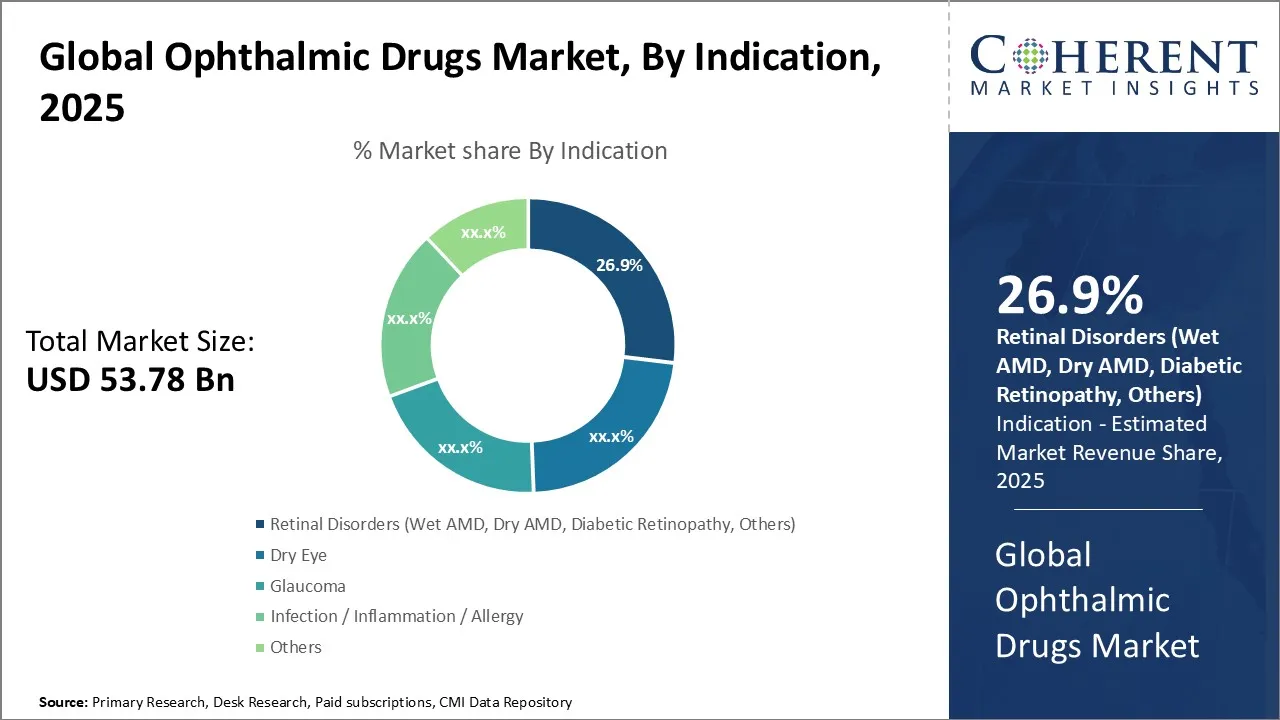
Global Ophthalmic Drugs Market Insights, By Indication - Retinal Disorders Lead the Market, Driven by Aging Populations and Rising Diabetes Prevalence
In terms of indication, the retinal disorders segment is expected to hold 27.9% share of the market in 2026. As the world's population gets older and more people get diabetes, conditions like wet age-related macular degeneration (AMD), dry AMD, and diabetic retinopathy are becoming more common. The addition of advanced anti-VEGF therapies and long-acting biologics has made this part of the market even stronger, since these treatments are high-value and need to be given on a regular basis. Even though dry eye and glaucoma are still common, retinal disorder treatments are the most common reason for getting them because they cost so much.
For instance, in February 2025, Roche declared that the FDA approved Susvimo® (ranibizumab injection) for treating diabetic macular edema (DME), which means it can now be used for more than just wet age-related macular degeneration. The refillable eye implant provides long-term treatment with as few as two refills a year. This makes treatment easier and strengthens Roche's position as a leader in ophthalmic drugs for retinal disorders.
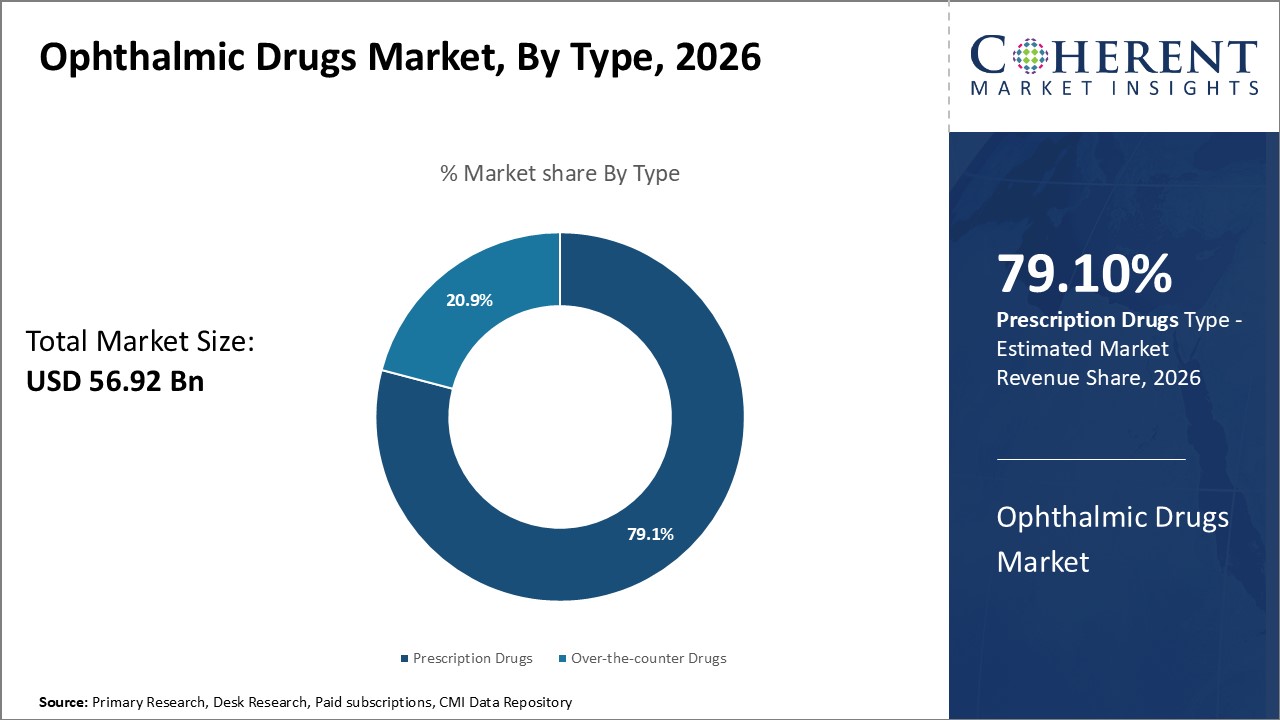
Global Ophthalmic Drugs Market Insights, By Type - Prescription Drugs Dominate Due To Physician-Supervised Therapies Like Anti-VEGF And Glaucoma Treatments
In terms of type, the prescription drugs segment is expected to lead the market with the largest share in 2026. Most effective eye treatments, like anti-glaucoma drugs and intravitreal injections for retinal diseases, need to be supervised by a doctor and can't be bought over the counter. Over-the-counter (OTC) drugs like lubricating eye drops for dry eyes are very popular, but they don't make as much money as prescription drugs because they are cheaper and don't work as well for many conditions.
For instance, in July 2025, Alcon confirmed that TRYPTYR™ (acoltremon ophthalmic solution 0.003%) is now available in the U.S. as a new prescription treatment for dry eye disease. TRYPTYR is an advanced option beyond regular lubricants that targets millions of people who suffer from dry eye. This strengthens Alcon's position as a leader in eye care and expands its portfolio in the growing prescription drugs segment of the eye health market.
Global Ophthalmic Drugs Market Insights, By Dosage Form - Liquid Formulations Remain the Most Widely Used and Preferred Delivery System
In terms of dosage form, the liquid ophthalmic drug segment is projected to account for the highest share of the market in 2026. Eye drops are the most common way to treat glaucoma, dry eyes, and infections/inflammation because they are easy to use and patients are more likely to follow the instructions. Other dosage forms, like ointments (semisolid) or tablets (solid), are not very common. Multicompartment drug delivery systems are new ideas that are not yet widely used. Liquid formulations will still be the most popular way to take medicine in 2026 because they are easy to use and widely used.
For instance, in July 2025, Lenz Therapeutics announced that the FDA approved Vizz™ (phentolamine ophthalmic solution 0.75%) for treating presbyopia, a common vision problem that comes with age. Vizz is a non-surgical, prescription-based alternative to reading glasses that comes in liquid form. It expands the range of treatment options in ophthalmology and encourages innovation in liquid ophthalmic drugs for vision correction
Global Ophthalmic Drugs Market Insights, By Distribution Channel - Drug Stores and Retail Pharmacies Capture the Largest Share Thanks to Accessibility and Volume
In terms of distribution channel, the drug store segment is projected to capture the greatest share of the market in 2026. These stores are the main places to buy prescription and over-the-counter eye drugs around the world because they are so easy to get to. Hospital pharmacies are very important for giving specialized treatments like intravitreal injections, but they don't have as many customers as retail pharmacies. Online pharmacies are growing quickly, especially after the pandemic, because more and more people want their medications delivered to their homes. However, they still have a smaller market share than physical drug stores.
For instance, in September in 2025, Sagent Pharmaceuticals launched its eye care business with the U.S. launch of Travoprost Ophthalmic Solution USP 0.004%, a prescription eye drops for people with open-angle glaucoma and ocular hypertension. The launch, which is available in drug stores and pharmacies, gives people more affordable treatment options and strengthens Sagent's presence in eye care.
Global Ophthalmic Drugs Market Insights, By Therapeutic Class - Anti-Glaucoma Drugs Top the Market, Sustained by Lifelong Treatment Needs and High Prevalence
In terms of therapeutic class, the anti-glaucoma segment is expected to acquire the dominate share of the market in 2026. People with glaucoma need to take these medications for the rest of their lives, so there is always a demand for them. This part is even stronger because there are so many different types of drugs (prostaglandin analogs, beta-blockers, carbonic anhydrase inhibitors) and combination therapies. Anti-infective and anti-inflammatory drugs are important but only used sometimes. Anti-allergy drugs are only used in certain seasons and are not as common as drugs for managing glaucoma.
For instance, in November 2024, Glenmark Pharmaceuticals announced it plans to market a generic glaucoma treatment, an eye drop solution, in India. The new drug is meant to lower intraocular pressure in people with open-angle glaucoma and ocular hypertension. It makes it easier for people to get the anti-glaucoma treatment they need, which shows Glenmark's commitment to eye health.
Regional Insights
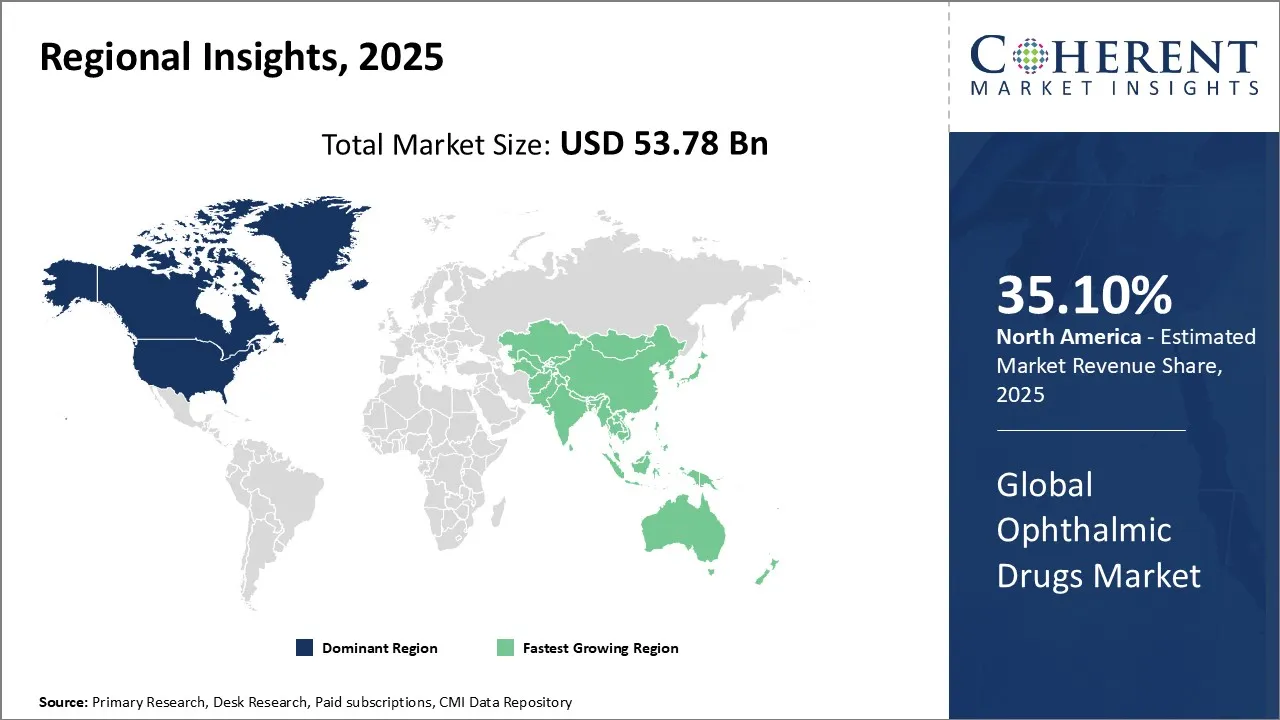
North America Ophthalmic Drugs Market Analysis & Trends
North America is expected to gain highest share of 35.1% in the market in 2026, owing to the increasing prevalence of ophthalmic disorders, growing geriatric population, and growing research and development pertaining to the development of novel drugs in the region. For instance, according to the Centers for Disease Control and Prevention (CDC), more than 4.2 million people in the U.S. aged 40 years and more are either legally blind or are with low vision. The leading causes of blindness and low vision in the U.S. are primarily age-related eye diseases such as cataract, glaucoma, diabetic retinopathy, and age-related macular degeneration.
For instance, in July 2026, Lupin reported that Loteprednol Etabonate Ophthalmic Suspension 0.5%, a prescription corticosteroid eye drops for treating eye inflammation like allergic conjunctivitis and conditions after surgery, is now available in the U.S. The product adds to Lupin's specialty portfolio in ophthalmology, making the company stronger in the U.S. market and giving patients an effective anti-inflammatory treatment option.
Asia Pacific Ophthalmic Drugs Market Analysis & Trends
Asia Pacific is also expected to witness robust growth in the global ophthalmic drugs market due to the growing prevalence of eye-related disorders, increasing geriatric population, and increase in demand for ophthalmic drugs in the region. For instance, glaucoma, cataracts, diabetic retinopathy, and macular degeneration are the four most common eye conditions among people over age 65. According to the United Nations Population Fund (UNPF), the number of elderly people in Asia-Pacific is expected to more than quadruple by 2050, increasing from 630 million in 2020 to over 1.3 billion. This in turn is expected to drive the market growth.
For instance, in October 2026, Otsuka Pharmaceutical announced that it has signed a licensing deal with 4D Molecular Therapeutics for 4D-150, a gene therapy for the eyes that is still being tested and aims to treat wet age-related macular degeneration (AMD) and diabetic macular edema (DME). The goal of the therapy is to provide long-lasting anti-VEGF treatment with just one injection into the eye. This will make Otsuka's ophthalmology portfolio stronger across Asia and Oceania.
Ophthalmic Drugs Market Outlook Country-Wise
The U.S. Ophthalmic Drugs Market Trends
The U.S. market for ophthalmic drugs will be exceptionally competitive in 2026 as increasing numbers of people are getting age-related eye diseases like glaucoma, macular degeneration, and diabetic retinopathy. More time spent on screens, an aging population, and better ways to deliver drugs all drive up demand. At the same time, more money spent on research and development speeds up the availability of new treatments.
For instance, in September 2026, Amneal Pharmaceuticals announced that the U.S. FDA has approved its Bimatoprost Ophthalmic Solution 0.01% as a treatment for people with open-angle glaucoma or ocular hypertension. The approval adds to Amneal's line of eye care products by giving patients a lower-concentration option that is meant to lower intraocular pressure while also making the product safer and easier to use.
China Ophthalmic Drugs Market Trends
In 2026, the market for ophthalmic drugs in China is expected to be strong given that the population is getting older quickly, eye diseases like glaucoma and dry eye are becoming more common, and people are spending more time in front of screens because of their digital lifestyles. There is also a lot of demand for advanced ophthalmic therapies because healthcare infrastructure is growing and more people can get treatments.
For instance, in September 2026, Santen Pharmaceutical announced that TAPCOM®, a preservative-free fixed-combination eye drop for people with open-angle glaucoma or ocular hypertension, is now available in China. The product combines tafluprost and timolol, making it easier to use, more likely to be used, and less likely to be exposed to preservatives. This meets important needs in China's growing population of people with glaucoma.
Market Report Scope
Ophthalmic Drugs Market Report Coverage
| Report Coverage | Details | ||
|---|---|---|---|
| Base Year: | 2025 | Market Size in 2026: | USD 56.92 Bn |
| Historical Data for: | 2020 To 2024 | Forecast Period: | 2026 To 2033 |
| Forecast Period 2026 to 2033 CAGR: | 5.8% | 2033 Value Projection: | USD 84.69 Bn |
| Geographies covered: |
| ||
| Segments covered: |
| ||
| Companies covered: | Abbvie Inc. (Allergan Plc), Alcon, Inc., Novartis AG, Pfizer Inc., Bausch & Lomb Incorporated, F. Hoffmann-LA Roche Ltd. (Genentech, Inc.), among others. | ||
| Growth Drivers: |
| ||
| Restraints & Challenges: |
| ||
Global Ophthalmic Drugs Market Drivers
High prevalence of ophthalmic disorders to drive market growth
One of the key factors expected to augment the growth of the global ophthalmic drugs market over the forecast period is the growing prevalence of ophthalmic disorders across the globe. According to the World Health Organization (WHO), more than 2.2 billion people worldwide have a near or distance vision impairment. In at least one billion, or almost half, of these cases, vision impairment could have been prevented or has yet to be addressed. This one billion people includes those with moderate or severe distance vision impairment or blindness due to cataract, unaddressed refractive error, glaucoma, age-related macular degeneration, diabetic retinopathy, & near vision impairment caused by unaddressed presbyopia.
Growing geriatric population to propel market growth
Another factor which is driving the growth of the global ophthalmic drugs market is the growing geriatric (aging) population around the world. For instance, most common causes of vision loss in elderly people are cataract, glaucoma, diabetic retinopathy, and age-related macular degeneration (AMD). Of which, AMD is the leading cause of registered blindness in people over the age of 50 years. Age-related macular degeneration (AMD) is a leading cause of loss of vision in people over 65 years of age, according to the American Academy of Family Physicians. According to the UN DESA’s Population Division, in many regions, the population aged 65 will double by 2050. This in turn is expected to augment the growth of the market.
Global Ophthalmic Drugs Market Opportunities
Increasing demand for safe and effective ophthalmic drugs is expected to offer significant growth opportunities for players in the global ophthalmic drugs market. For instance, with the increasing prevalence of ophthalmic disorders, the demand for ophthalmic drugs is also increasing rapidly.
Global Ophthalmic Drugs Market Trends
Rise in adoption of generics is a recent trend
Generic drugs contain the same active ingredient that had undergone all clinical trials and quality testing during its patent when it was manufactured by a brand as the non-generic medicine. Thus, these drugs are considered to be safe. There is an increasing demand for generic ophthalmic drugs due to the low cost of generics (as an alternative to branded drugs) and the large number of patents expired branded drugs.
Rise in awareness among people is another trend
Blindness and vision impairment have a significant impact on people’s quality of life. According to the WHO, visual impairment could have been avoided in at least 1 billion of these cases if the patient had received proper diagnosis and treatment. This burden of eye disorders can be greatly reduced by enhancing people’s knowledge and awareness of common eye diseases, allowing them to seek timely eye care. Increased patient understanding of common eye diseases and treatments may lead to a greater appreciation of the value of routine eye care/exams in the early detection and treatment of many eye problems. This trend is expected to continue over the forecast period.
Analyst Opinion (Expert Opinion)
- The market for ophthalmic drugs is growing steadily as a growing number of individuals around the world are losing their vision and need long-term treatments for their eyes. According to recent health data, more than 2.2 billion people around the world have some kind of vision problem. This means that there will always be a need for treatments for retinal disorders, glaucoma, dry eye disease, and ocular inflammation. Retinal anti-VEGF biologics continue to bring in the most money because they work well in clinical trials and are used often. Dry eye disease is also a big chance, with global prevalence estimates of 10–12%, making it one of the most common therapeutic categories.
- Regional performance shows that North America is seeing a lot of growth because of widespread specialist networks and high treatment use. In Asia-Pacific markets, on the other hand, volume is growing quickly because of better access to diagnostics and more ophthalmic infrastructure. Innovation is still mostly happening in extended-durability retinal biologics, biosimilars, ocular surface small molecules, and better drug-delivery platforms. But there are still big problems, like late-stage regulatory risks, price pressures from generics and biosimilars, and the market's reliance on a few high-value biologics.
- Overall, clinical need, the speed of innovation, and competition shape the market. Companies that focus on unique drug delivery technologies, making drugs last longer, and high-burden disease segments are in the best position to take advantage of the best growth opportunities.
Speak to the analyst
Want personalized insights?
Take the findings above to one of our principal consultants, or have the report rebuilt around the segments, geographies and competitors you actually track.
Global Ophthalmic Drugs Market: Key Developments
- In June 2025, Aldeyra Therapeutics announced that it has sent the U.S. FDA a new application for reproxalap, a new drug that is being tested as a topical treatment for dry eye disease. The filing comes after feedback from regulators and includes more clinical data. Its goal is to give millions of patients with ocular surface inflammation a new treatment option.
- In April 2024, Viatris announced that the FDA had approved RYZUMVL™ (phentolamine ophthalmic solution) for use in the U.S. to treat mydriasis caused by drugs. The treatment gives patients a new way to quickly reverse pupil dilation after diagnostic eye exams. This strengthens Viatris' ophthalmic portfolio and fills a major clinical need.
Market Segmentation
- Global Ophthalmic Drugs Market, By Indication (Revenue, USD Bn, 2021 - 2033)
- Dry Eye
- Glaucoma
- Infection/Inflammation/Allergy
- Retinal Disorder
- Wet Age-related Macular Degeneration
- Dry Age-related Macular Degeneration
- Diabetic Retinopathy
- Others
- Others
- Global Ophthalmic Drugs Market, By Type (Revenue, USD Bn, 2021 - 2033)
- Prescription Drugs
- Over-the-counter Drugs
- Global Ophthalmic Drugs Market, By Dosage Form (Revenue, USD Bn, 2021 - 2033)
- Liquid Ophthalmic Drug Forms
- Solid Ophthalmic Drug Forms
- Semisolid Ophthalmic Drug Forms
- Multicompartment Drug Delivery Systems
- Other Ophthalmic Drug Forms
- Global Ophthalmic Drugs Market, By Distribution Channel (Revenue, USD Bn, 2021 - 2033)
- Hospital Pharmacies
- Drug Stores
- Online Pharmacies
- Others
- Global Ophthalmic Drugs Market, By Therapeutic Class (Revenue, USD Bn, 2021 - 2033)
- Anti-glaucoma
- Anti-infection
- Anti-inflammation
- Anti-allergy
- Others
- Global Ophthalmic Drugs Market, By Geography (Revenue, USD Bn, 2021 - 2033)
- North America
- U.S.
- Canada
- Latin America
- Brazil
- Argentina
- Mexico
- Rest of Latin America
- Europe
- Germany
- U.K.
- Spain
- France
- Italy
- Russia
- Rest of Europe
- Asia Pacific
- China
- India
- Japan
- Australia
- South Korea
- ASEAN
- Rest of Asia Pacific
- Middle East & Africa
- GCC Countries
- Israel
- Rest of Middle East & Africa
- North America
- Global Ophthalmic Drugs Market: Key Companies Insights (Revenue, USD Bn, 2021 - 2033)
- Abbvie Inc. (Allergan Plc)
- Alcon, Inc.
- Novartis AG
- Pfizer Inc.
- Bausch & Lomb Incorporated
- Hoffmann-LA Roche Ltd. (Genentech, Inc.)
Sources
Primary Research Interviews
- Ophthalmic drug manufacturers (R&D, regulatory, commercial heads)
- Pharmaceutical contract research organizations (CROs) specializing in ophthalmology
- Key opinion leaders — ophthalmologists & retinal specialists
- Hospital & clinic procurement managers (eye-care centres)
- Clinical trial investigators & study coordinators (ophthalmology trials)
- Pharmacy benefit managers & payers covering ophthalmic therapies
- Distribution & specialty pharmacy managers (eye-care channels)
- Market access & reimbursement consultants for ophthalmics
- Patients / patient advocacy groups for eye diseases
- Others
Databases
- Bloomberg Terminal
- Thomson Reuters Eikon
- IQVIA (IMS Health)
- GlobalData Pharma / DRG
- Clarivate Analytics (Cortellis)
- PubMed / MEDLINE (indexed clinical literature)
- gov (trial registries & status)
- S&P Global Market Intelligence
- Elsevier PharmaPendium / Embase
- Others
Magazines
- Ophthalmology Times
- EyeWorld
- Retina Today
- Pharmaceutical Technology (industry trends & manufacturing)
- PharmaVoice (industry interviews & strategy)
- MD Magazine — Ophthalmology sections
- Others
Journals
- Ophthalmology (AAO journal)
- Investigative Ophthalmology & Visual Science (IOVS)
- British Journal of Ophthalmology
- Journal of Cataract & Refractive Surgery
- American Journal of Ophthalmology
- Eye (Nature partner journal)
- Retina — The Journal of Retinal and Vitreous Diseases
- Others
Newspapers
- Financial Times
- The Wall Street Journal
- Reuters
- Bloomberg News
- New York Times (health/industry coverage)
- Others
Associations
- American Academy of Ophthalmology (AAO)
- Association for Research in Vision and Ophthalmology (ARVO)
- International Council of Ophthalmology (ICO)
- European Society of Retina Specialists (EURETINA)
- National Eye Institute (NEI) / NIH vision research programs
- International Agency for the Prevention of Blindness (IAPB)
- Others
Public Domain Sources
- U.S. Food & Drug Administration (FDA) — approvals, drug labels, safety alerts
- European Medicines Agency (EMA) — EPARs and regulatory guidance
- World Health Organization (WHO) — essential medicines & guidelines
- ClinicalTrials.gov — registered ophthalmic trials & results
- National Eye Institute (NEI) — epidemiology and research reports
- World Bank / WHO Global Health Observatory (relevant disease burden data)
- Others
Proprietary Elements
- CMI Data Analytics Tool
- Proprietary CMI existing repository of ophthalmic market intelligence (last 8 years)
Definition: Ophthalmology is a specialized field of medicine that focuses on the health of the eye. It includes the anatomy, physiology, and diseases that may affect the eye. While, ophthalmic drugs are used to treat various disorders associated with the eyes, such as cataracts, glaucoma, diabetic retinopathy, and other ophthalmic disorders.
Get access to 250+ pages report
Every segment, forecast, competitor profile and data table behind the analysis above — available for instant download.
- ESOMAR Member
- ISO 9001:2015 Certified
- D-U-N-S Registered
- GDPR & CCPA Compliant
Missing comfort of reading report in your local language? Find your preferred language:
Transform your Strategy with Exclusive Trending Reports
Frequently Asked Questions
The Ophthalmic Drugs Market is estimated to be valued at USD 56.92 Bn in 2026, and is expected to reach USD 84.69 Bn by 2033.
The CAGR of the Ophthalmic Drugs Market is projected to be 5.8% from 2026 to 2033.
Growing prevalence of ophthalmic disorders and growing geriatric (aging) population around the world is fueling the market.
The Retinal Disorder segment is the leading component segment in the market.
Stringent rules/regulations and risks associated with ophthalmic drugs are major factors restraining market.
Major players operating in the market are Abbvie Inc. (Allergan Plc), Alcon, Inc., Novartis AG, Pfizer Inc., Bausch & Lomb Incorporated, F. Hoffmann-LA Roche Ltd. (Genentech, Inc.), among others.