

Age-Related Macular Degeneration Therapeutics Market Size and Forecast — 2026 - 2033
The Global Age-Related Macular Degeneration Therapeutics Market size is estimated to be valued at USD 5.6 billion in 2026 and is expected to reach USD 9.8 billion by 2033, exhibiting a compound annual growth rate (CAGR) of 8.1% from 2026 to 2033.
Overview
The Age-Related Macular Degeneration (AMD) Therapeutics market encompasses a range of products designed to manage and treat both wet and dry forms of AMD. Anti-VEGF therapies dominate the market, offering targeted inhibition of vascular endothelial growth factor to reduce abnormal blood vessel growth in wet AMD. Complementary treatments include photodynamic therapy, corticosteroids, and emerging gene and cell-based therapies aimed at slowing disease progression and restoring retinal function. Nutritional supplements, containing antioxidants and carotenoids, are also widely used to support eye health and delay dry AMD progression. Collectively, these products provide comprehensive options across early, intermediate, and advanced stages of AMD.
Key Takeaways
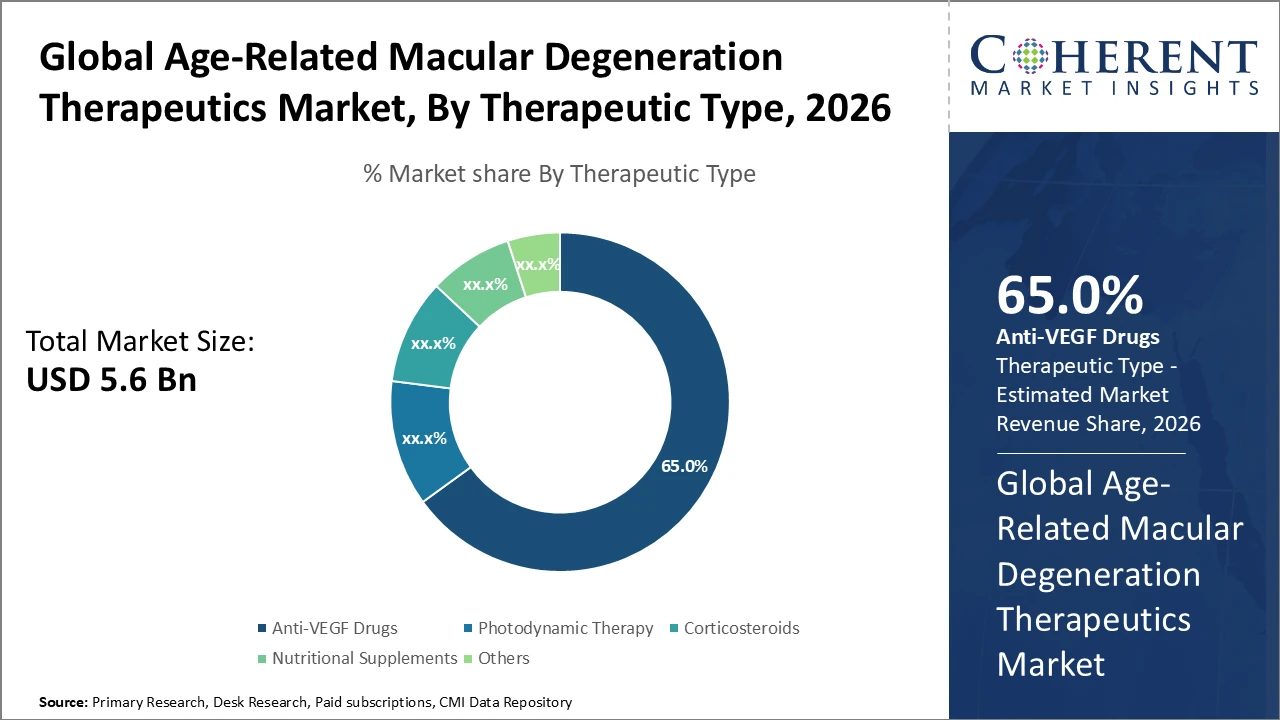
The Anti-VEGF therapeutic segment dominates the market, accounting for over 65% of revenue due to improved efficacy and expanded indications.
Wet age-related macular degeneration (AMD) is the largest application segment, with most therapies primarily targeting this form.
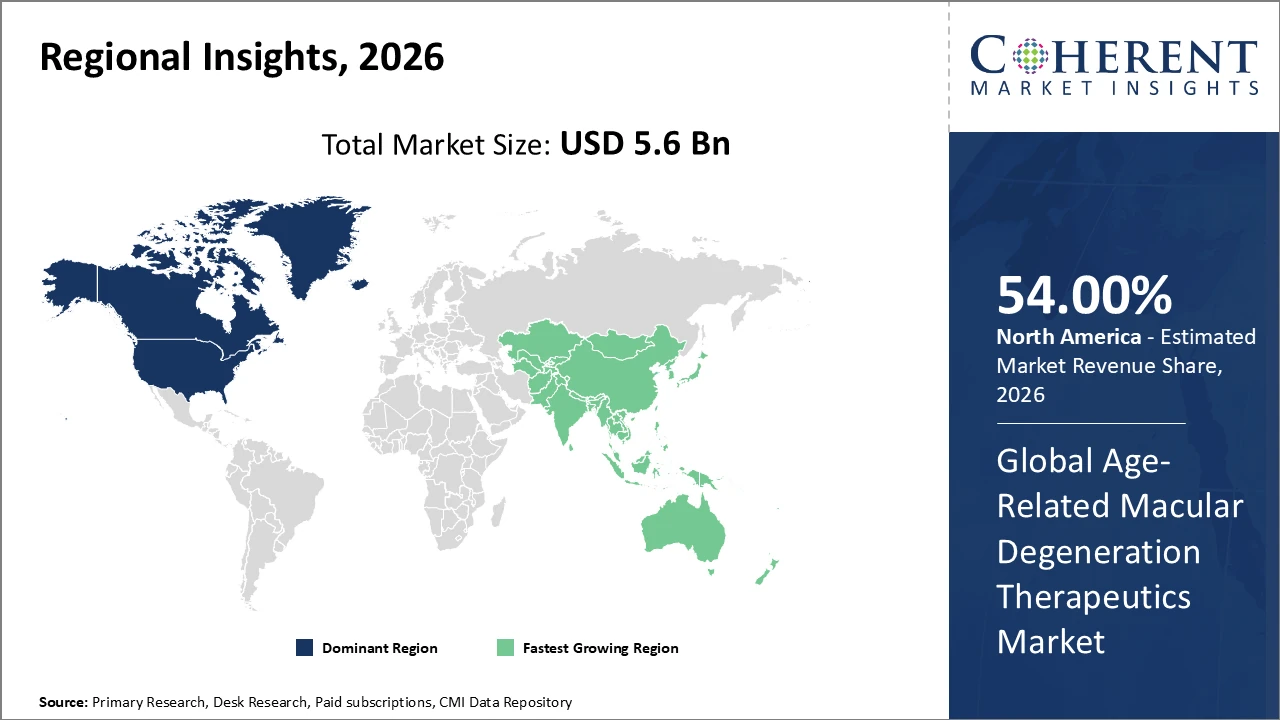
North America holds the leading regional market share, supported by advanced healthcare infrastructure, early adoption of innovative treatments, and government funding.
Asia Pacific is the fastest-growing region, driven by rising disease prevalence, expanding healthcare access, and increasing awareness, offering significant business growth opportunities.
Age-Related Macular Degeneration Therapeutics Market Segmentation Analysis
Age-Related Macular Degeneration Therapeutics Market Insights, By Therapeutic Type
Anti-VEGF drugs dominate the Age-Related Macular Degeneration Therapeutics market, capturing over 65% of industry share due to their high efficacy in treating wet AMD. Recent innovations, including longer-acting formulations, have reduced injection frequency, improved patient adherence, and expanded clinical indications. Photodynamic therapy maintains a niche presence, serving selective patient cohorts, while corticosteroids are primarily used as adjunctive treatments in combination regimens. Nutritional supplements target early-stage and dry AMD patients, benefiting from growing preventive therapy trends. Emerging experimental therapeutics, including gene and cell-based approaches, show potential but currently hold limited market share, indicating future growth opportunities in innovative treatment options.
Age-Related Macular Degeneration Therapeutics Market Insights, By Distribution Channel
Hospital pharmacies dominate the Age-Related Macular Degeneration Therapeutics market, as most treatments, particularly anti-VEGF injections, require administration and monitoring in specialized clinical settings. Retail pharmacies provide essential access for adjunct therapies, including corticosteroids and nutritional supplements, supporting outpatient care. Online pharmacies are experiencing accelerated growth, driven by e-commerce adoption, convenience, and increasing patient preference for home delivery, especially following the COVID-19 pandemic. Additional channels, such as specialty distributors and direct-to-patient services, are gradually expanding, supported by improvements in healthcare logistics and cold chain management. Collectively, these distribution channels enhance treatment accessibility and contribute to overall market growth.
Age-Related Macular Degeneration Therapeutics Market Insights, By Application
Wet age-related macular degeneration (AMD) represents the largest market segment, driven by its higher prevalence, severe visual impairment, and the availability of multiple approved therapies, generating substantial revenue. Dry AMD is the fastest-growing subsegment, fuelled by ongoing clinical trials and emerging therapeutics targeting geographic atrophy, addressing a previously underserved patient population. The Mixed Type segment includes patients exhibiting characteristics of both wet and dry AMD, often necessitating combination treatment strategies and multidisciplinary care. Other rare AMD forms currently receive limited attention and have minimal market share. Overall, these application-based segments collectively shape market dynamics and guide future therapeutic development.
Age-Related Macular Degeneration Therapeutics Market Trends
The Age-Related Macular Degeneration Therapeutics market is trending toward precision medicine, with personalized therapies increasingly integrated into treatment protocols.
In 2026, several companies launched biomarker-driven regimens that significantly improved patient outcomes and treatment efficiency.
Home-based monitoring devices, often integrated with AI, are emerging, enhancing therapeutic management and patient adherence.
Regulatory agencies have issued updated guidance to support faster approvals of innovative therapies, accelerating market revenue growth.
The introduction of biosimilars is influencing pricing dynamics, promoting competition and encouraging wider adoption, especially in cost-sensitive markets.
Age-Related Macular Degeneration Therapeutics Market Insights, By Geography
North America Age-Related Macular Degeneration Therapeutics Market Analysis and Trends
In North America, the Age-Related Macular Degeneration Therapeutics market is dominated by high healthcare expenditure, advanced pharmaceutical infrastructure, and strong government support for innovative treatments. The United States accounts for over 50% of the regional market share, driven by early adoption of cutting-edge therapies, widespread availability of anti-VEGF treatments, and extensive clinical trial activity. Leading companies such as Regeneron and Novartis have established a strong presence through product launches, research collaborations, and strategic investments, further strengthening market leadership. These factors collectively support rapid therapeutic adoption, enhanced patient access, and sustained revenue growth in the region.
Asia Pacific Age-Related Macular Degeneration Therapeutics Market Analysis and Trends
The Asia Pacific Age-Related Macular Degeneration Therapeutics market is experiencing the fastest growth, with a CAGR exceeding 10%, driven by rising elderly populations, expanding healthcare insurance coverage, and improvements in ophthalmic diagnostic infrastructure, particularly in China and India. Increasing disease awareness and early detection initiatives further accelerate treatment adoption. Leading market players are establishing regional offices, forming local partnerships, and investing in distribution networks to capture growing demand. These strategies enable companies to address diverse patient needs while strengthening their market presence. Collectively, these factors are reshaping market dynamics, creating significant growth opportunities across the Asia Pacific region.
Age-Related Macular Degeneration Therapeutics Market Outlook for Key Countries
USA Age-Related Macular Degeneration Therapeutics Market Analysis and Trends
The U.S. Age-Related Macular Degeneration Therapeutics market continues to be the largest global contributor, supported by high disease awareness, advanced healthcare infrastructure, and specialized retinal care centers. Major players such as Regeneron Pharmaceuticals and Novartis drive the market through extensive R&D initiatives, product innovation, and regulatory engagement, facilitating faster therapy approvals and widespread adoption. Enhanced insurance reimbursements and patient access programs have increased treatment volumes by approximately 7% in 2026. Combined, these factors strengthen the U.S. market’s leadership, ensuring sustained revenue growth, early adoption of novel therapies, and continued dominance in the global Age-Related Macular Degeneration Therapeutics landscape.
Germany Age-Related Macular Degeneration Therapeutics Market Analysis and Trends
The Germany Age-Related Macular Degeneration Therapeutics market is driven by a well-established healthcare system, high patient awareness, and advanced ophthalmology infrastructure. Wet AMD dominates treatment demand, supported by widespread use of anti-VEGF therapies, while emerging therapies for dry AMD and geographic atrophy are fueling growth prospects. Market players such as Novartis and Bayer leverage strong local presence, clinical trial networks, and collaborations with retinal centers to enhance adoption. Government initiatives promoting early diagnosis and reimbursement support further stimulate market uptake. Additionally, innovations in sustained-release formulations and personalized treatment approaches are shaping future trends, positioning Germany as a key market in Europe.
Analyst Opinion
Increasing adoption of innovative biologic therapies is driving market growth, with 2024 clinical trials showing a 15% improvement in efficacy for next-generation anti-VEGF drugs, reducing injection frequency and enhancing patient adherence.
Supply-side dynamics include manufacturing capacity expansions, particularly in North America, where facilities doubled output in 2025, reducing production costs by 12% and enabling competitive pricing without affecting revenue.
Geographic demand variations are significant; Asia Pacific saw a 9% year-over-year rise in AMD diagnoses in 2026, increasing demand for region-specific therapeutic formulations and driving an 18% surge in imports in South Korea and Japan.
Digital health integration, including tele-ophthalmology, grew by 20% since early 2025, allowing real-time monitoring of treatment responses and personalized therapeutic adjustments, improving outcomes and supporting market growth strategies.
- Current Industry Events of 2026
- Market Size Estimation
- Regional Breakdown
- Competitive Landscape
- Customer Intelligence
- Segmental Analysis
- Pricing Analysis
- Key Market Drivers, Challenges & Future Trends
- Customized Insights Section
Market Scope
| Report Coverage | Details | ||
|---|---|---|---|
| Base Year: | 2025 | Market Size in 2026: | USD 5.6 billion |
| Historical Data for: | 2020 To 2024 | Forecast Period: | 2026 To 2033 |
| Forecast Period 2026 to 2033 CAGR: | 8.1% | 2033 Value Projection: | USD 9.8 billion |
| Geographies covered: |
| ||
| Segments covered: |
| ||
| Companies covered: | Novartis AG, Bayer AG, Roche Holding AG, Alcon Inc., Allergan plc, Genentech Inc., Iveric Bio, Apellis Pharmaceuticals | ||
| Growth Drivers: |
| ||
Age-Related Macular Degeneration Therapeutics Market Growth Factors
The global rise in age-related macular degeneration (AMD), particularly among aging populations, is a key driver of the therapeutics market. The WHO reported over 196 million AMD cases in 2025, fuelling demand for effective treatments. Technological advancements, including long-acting anti-VEGF injections, reduce treatment frequency and improve patient adherence, supporting sustained revenue growth. Government initiatives, such as ophthalmic research funding and favorable reimbursement policies in North America and Europe, further accelerate market expansion. Awareness campaigns promoting early diagnosis and intervention have increased patient uptake, reflected in a 10% rise in hospital visits for AMD treatment in 2026, reinforcing market growth momentum.
Age-Related Macular Degeneration Therapeutics Market Development
In 2025, Regeneron Pharmaceuticals launched a next-generation anti-VEGF therapy with an extended dosing interval, reducing injection frequency for wet AMD patients. This innovation improved patient adherence and treatment outcomes, driving a 12% increase in market share within North America and reinforcing Regeneron’s leadership in the anti-VEGF segment.
Similarly, Novartis initiated a strategic partnership with European retinal clinics to expand access to their wet and dry AMD therapies. The collaboration focused on clinical trials and real-world patient monitoring, resulting in a 15% growth in therapy adoption across key EU markets, supporting overall revenue expansion and regional market penetration.
Key Players
Leading Companies of the Market
Novartis AG
Bayer AG
Roche Holdings AG
Alcon Inc.
Allergan plc
Iveric Bio
Apellis Pharmaceuticals
Genentech Inc.
Several leading companies have pursued aggressive market growth strategies, including strategic acquisitions and collaborations, to enhance their R&D pipelines. For example, Regeneron’s partnership with local manufacturers in Asia Pacific expanded regional market penetration by 25% in 2025, enabling broader access to its anti-VEGF therapies. Similarly, Novartis leveraged licensing agreements and accelerated clinical trials for biosimilar therapeutics, achieving significant market share gains in North America and Europe during the same period. These initiatives not only strengthened competitive positioning but also facilitated faster adoption of innovative and cost-effective AMD treatments across multiple regions.
Age-Related Macular Degeneration Therapeutics Market Future Outlook
The Age-Related Macular Degeneration Therapeutics market is expected to grow steadily through 2033, driven by continued innovation in anti-VEGF therapies, sustained-release formulations, and emerging treatments for dry AMD and geographic atrophy. Advances in personalized medicine, biomarker-driven therapies, and AI-enabled monitoring devices will improve patient outcomes and adherence. Expanding healthcare access in Asia Pacific, combined with favorable reimbursement policies in North America and Europe, will further fuel adoption. Additionally, the introduction of biosimilars and cost-effective therapeutic alternatives will enhance affordability and market penetration. Overall, these factors indicate robust revenue growth and an increasingly competitive yet opportunity-rich landscape for AMD therapeutics globally.
Age-Related Macular Degeneration Therapeutics Market Historical Analysis
The Age-Related Macular Degeneration Therapeutics market has experienced steady growth over the past decade, primarily driven by rising prevalence of AMD among aging populations and increased awareness of vision health. Early market development was dominated by anti-VEGF therapies, which transformed wet AMD management and established a strong revenue base. Photodynamic therapy and corticosteroid treatments contributed to niche demand, while nutritional supplements supported preventive care for dry AMD. North America led early adoption due to advanced healthcare infrastructure, while Europe and Asia Pacific gradually expanded through improved diagnostic capabilities and growing elderly demographics. These historical trends laid the foundation for current market expansion and innovation.
Sources
Primary Research Interviews:
Ophthalmologists and retinal specialists
Hospital pharmacy directors and procurement managers
Biopharmaceutical R&D scientists specializing in ophthalmic therapeutics
Industry analysts and consultants focusing on ophthalmology and retinal disease markets
Databases:
PubMed
Scopus
ClinicalTrials.gov
Thomson Reuters Eikon
IHS Markit
Euromonitor International
S&P Global Market Intelligence
Magazines:
Ophthalmology Times – AMD Treatment Updates and Innovations
Retina Today – Clinical Practice and Drug Developments
Pharmaceutical Executive – Biopharma Market Trends
EyeWorld – Ophthalmic Therapy Insights
Journals:
Journal of Ophthalmology – AMD Treatment Studies
Investigative Ophthalmology & Visual Science – Clinical Research on Retinal Therapies
British Journal of Ophthalmology – AMD Clinical Trials and Outcomes
Current Eye Research – Therapeutic Developments in Macular Degeneration
Newspapers:
The Wall Street Journal – Biopharmaceutical and Ophthalmology Market News
Financial Times – Global Pharma Industry Insights
PharmaTimes – AMD Drug Launches and Market Updates
Ophthalmology Business Review – Therapeutics Market Developments
Associations:
American Academy of Ophthalmology (AAO) – Retinal Disease & Therapeutics Division
European Society of Retina Specialists (EURETINA)
International Council of Ophthalmology (ICO) – AMD and Retinal Committees
Association for Research in Vision and Ophthalmology (ARVO) – Ophthalmic Therapeutics & Clinical Trials
Get access to 250+ pages report
Every segment, forecast, competitor profile and data table behind the analysis above — available for instant download.
- ESOMAR Member
- ISO 9001:2015 Certified
- D-U-N-S Registered
- GDPR & CCPA Compliant
Missing comfort of reading report in your local language? Find your preferred language:
Transform your Strategy with Exclusive Trending Reports
Frequently Asked Questions
Dominance is exhibited by leading companies such as Novartis AG, Apellis Pharmaceuticals, and Roche Holding AG, given their expansive pipelines and strategic regional partnerships.
The market size is expected to reach USD 9.8 billion by 2033 from USD 5.6 billion in 2026 with CAGR of 8.1%, driven by technological advancements and rising AMD prevalence.
Hospital pharmacies and specialized ophthalmology clinics hold the largest growth opportunity due to increasing treatment uptake for wet AMD.
Emerging gene therapies, biosimilars adoption, and digital health integration will reshape treatment landscapes and offer new market avenues.
Intense R&D competition focuses on efficacy improvements and cost reduction, challenged by regulatory complexities and high treatment costs.
Collaborations, licensing agreements, and regional manufacturing expansions are prevalent strategies to enhance market penetration and revenue growth.