

Dedifferentiated Liposarcoma Treatment Market Size and Share Analysis - 2026 To 2033
The dedifferentiated liposarcoma treatment market is anticipated to grow at a CAGR of 4.6% with USD 2.0 Bn in 2026 and is expected to reach USD 2.8 Bn in 2033. Rising incidence of genetic disorders (Approximately 7.9 million births worldwide (about 6% of all births) occur with genetic or partially genetic birth defects.) is one of the major factors responsible for growth of the global dedifferentiated Liposarcoma treatment market. There is an increasing emphasis on personalized medicine, which tailors’ treatment strategies to individual patient profiles. This shift is likely to enhance treatment efficacy and minimize adverse effects, thereby improving overall patient outcomes. Furthermore, the integration of novel therapies, including targeted agents and immunotherapies, appears to be reshaping the treatment landscape, offering new hope for patients with this rare malignancy.
Key Takeaways
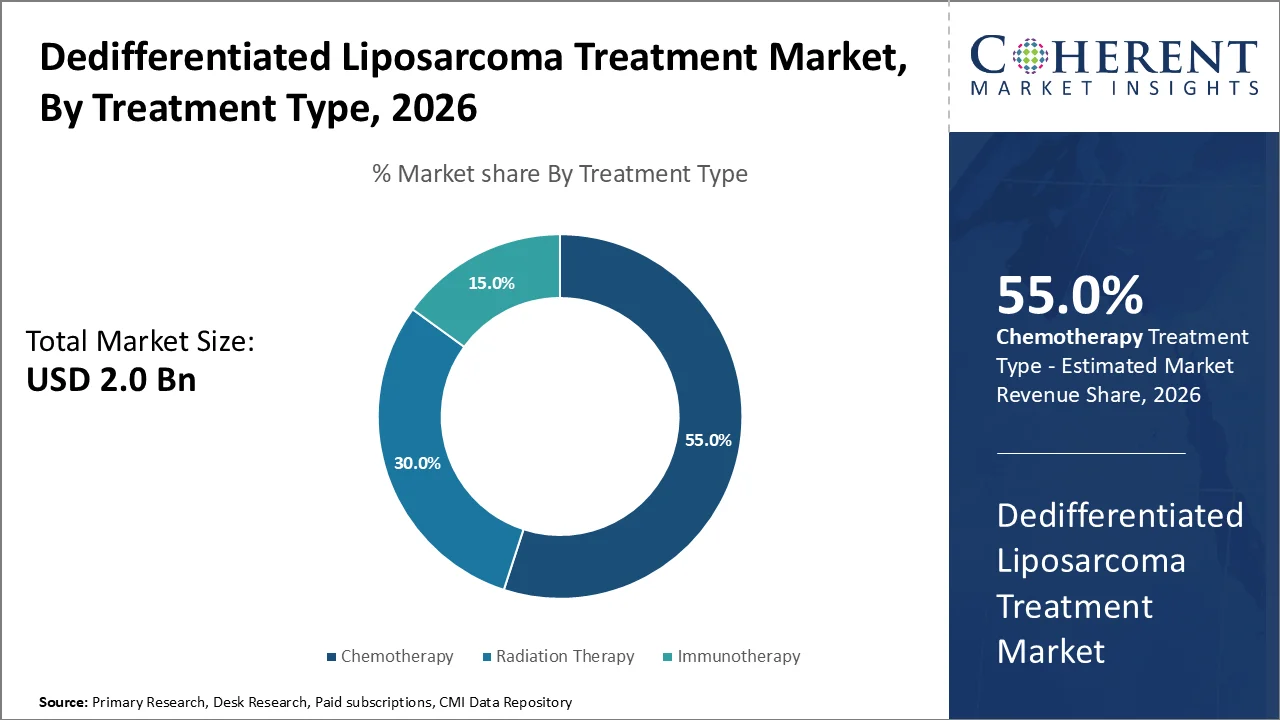
- Chemotherapy segment is expected to account the largest share of 55% in 2026, chemotherapy is the most widely used treatment approaches for liposarcoma, for advanced or metastatic cases. In 2026, around 2,114,850 new cancer cases and 626,140 cancer-related deaths are expected. Survival rates are about 91% for early-stage cancer, 75% for regional-stage cancer, and 35% for metastatic (distant-stage) cancer.
- Hospitals segment will dominate with 65% in 2026, liposarcoma treatment usually needs specialized oncology teams, surgery, chemotherapy administration, radiation facilities, imaging, and long-term patient monitoring. Complex cancer procedures are usually performed in tertiary hospitals and cancer centers. Around 70–80% of soft tissue sarcoma patients undergo surgical resection, while more than 50% receive radiation therapy during treatment.
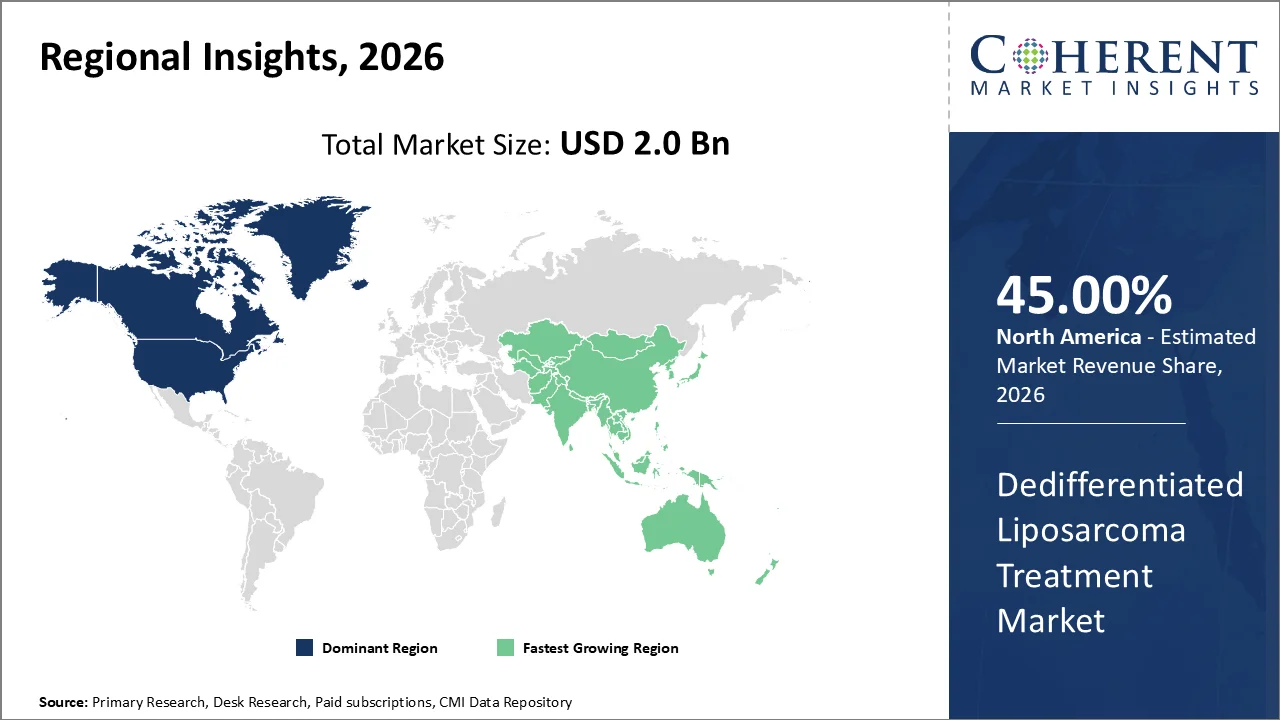
- North America is expected to acquire the dominant share of 45% in 2026, due to higher adoption of advanced cancer therapies. Advances in immunotherapy have helped increase the 5-year cancer survival rate in the U.S. to around 70%, highlighting the region's strong oncology infrastructure and continued investment in innovative cancer therapies.
Segmental Insights
Why is Chemotherapy Segment Acquiring the Largest Market Share?
Chemotherapy is projected to account for the largest share of treatment type in 2026, representing approximately 55% of the total volume. As it is highly validated systemic treatment approach for patients with unresectable, locally advanced, or metastatic DDLPS. Doxorubicin, a highly used anthracycline antibiotic, has been a cornerstone in cancer chemotherapy since the 1960s.
For instance, Doxorubicin (Adriamycin) is a chemotherapy medicine used to treat a number of cancer. It belongs to the anthracycline group of anti-cancer drugs as well as works by killing cancer cells or stopping them from growing.
Decades of clinical evidence supporting the use of anthracycline-based regimens, particularly doxorubicin, either as a monotherapy or in combination with ifosfamide, is augmenting the growth, as it is the first-line systemic treatment for soft tissue sarcomas including DDLPS.
The National Cancer Institute (NCI), a component of the U.S. Department of Health and Human Services, has consistently recognized doxorubicin-based chemotherapy as a standard treatment for advanced liposarcomas, building its high clinical adoption globally.
- Current Industry Events of 2026
- Market Size Estimation
- Regional Breakdown
- Competitive Landscape
- Customer Intelligence
- Segmental Analysis
- Pricing Analysis
- Key Market Drivers, Challenges & Future Trends
- Customized Insights Section
Hospitals Segment holds the Largest Market Share
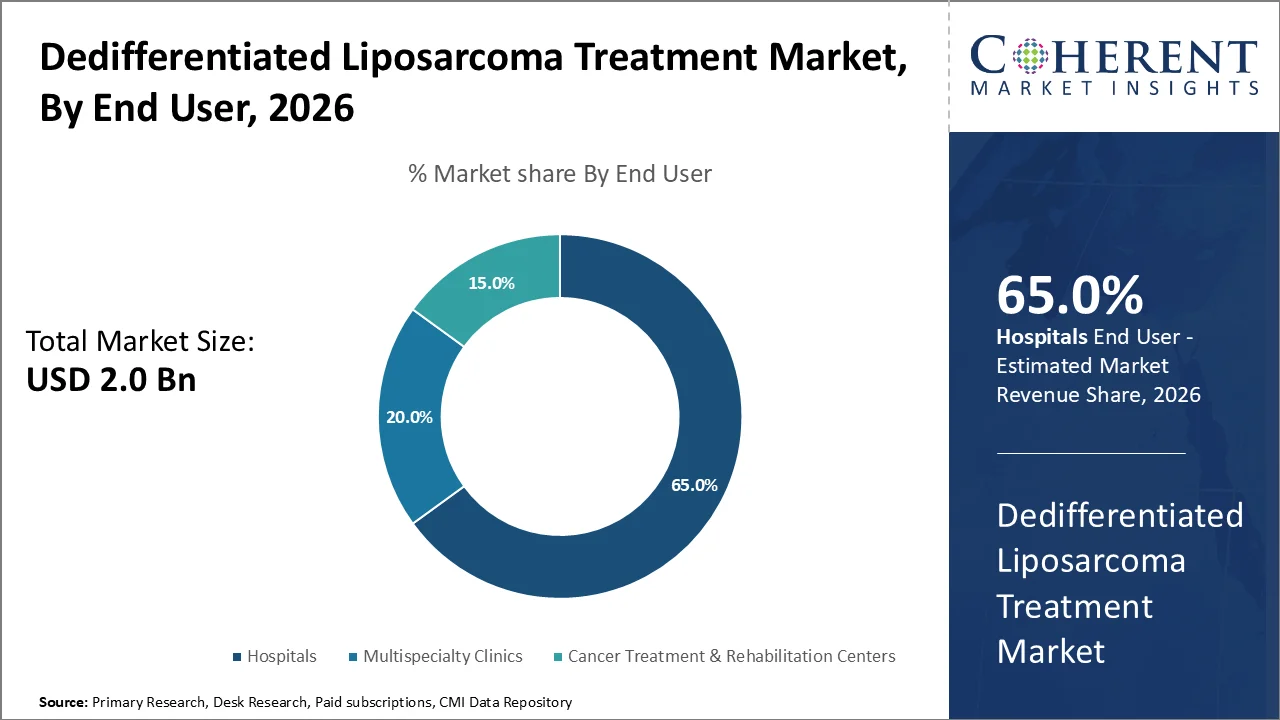
Based on end user, hospitals dominates the market, accounting for a significant 65% share in 2026. Primarily because DDLPS is a high-complexity malignancy requiring coordinated care across multiple specialties including surgical oncology, medical oncology, radiation oncology, pathology, as well as radiology. Dedifferentiated liposarcoma (DDLPS) is an aggressive cancer with a high risk of coming back and spreading to other parts of the body. The 5-year survival rate is only about 30%. It can spread to the brain, liver, lungs, bones, skin, and other soft tissues.
Their institutional capacity to handle high-acuity cancer cases is stimulating the market, demanding integrated care pathways, advanced diagnostic technologies such as MRI-guided biopsy, positron emission tomography (PET) scanning, and molecular profiling, along with surgical oncology expertise.
The National Cancer Institute (NCI) in the United States has consistently identified soft tissue sarcomas, including dedifferentiated liposarcoma, as requiring specialized treatment centers with access to sarcoma-specific tumor boards as well as dedicated surgical expertise.
Market Drivers
Molecular Targeting and MDM2 Inhibition is transforming the Dedifferentiated Liposarcoma Treatment Industry
One prominent technological breakthroughs in DDLPS treatment is the development of MDM2 inhibitors. Since MDM2 amplification is present in virtually all DDLPS cases, it shows an ideal therapeutic target. Small molecule MDM2 antagonists, particularly from the nutlin family and newer spirooxindole-based compounds, work by disrupting the MDM2-p53 protein interaction, hence reactivating the p53 tumor suppressor pathway.
Milademetan (DS-3032b) by Daiichi Sankyo has emerged as one of the most clinically advanced MDM2 inhibitors specifically evaluated in liposarcoma patients. Clinical trials have demonstrated meaningful tumor responses in well-differentiated and dedifferentiated liposarcoma patients who previously exhausted standard treatment options. This drug represents a paradigm shift from cytotoxic approaches to pathway-specific intervention.
Brigimadlin (BI-907828) by Boehringer Ingelheim is another next-generation MDM2 inhibitor showing superior potency and selectivity compared to first-generation compounds. Its favorable pharmacokinetic profile and manageable toxicity are improving patient tolerability, which directly impacts treatment adherence and outcome quality.
Pipeline Developments: in November 2025, Lamassu Biotech announced progress in its Phase 1/2a clinical trial evaluating SA53, a first-in-class small-molecule MDM2 inhibitor. The therapy demonstrated a favorable safety and tolerability profile, with no serious or dose-limiting adverse events reported during the study. SA53 is being further evaluated at higher dose levels in adult patients with solid tumors.
CDK4/6 Inhibitor Integration: A major breakthrough in Dedifferentiated Liposarcoma Treatment
CDK4 amplification, co-occurring with MDM2 in DDLPS, has made CDK4/6 inhibitors particularly relevant. Palbociclib, ribociclib, and abemaciclib originally developed for breast cancer are being evaluated in combination strategies for DDLPS patients. The rationale lies in blocking aberrant cell cycle progression driven by CDK4 overexpression.
Combination strategies pairing CDK4/6 inhibitors with MDM2 inhibitors are showing synergistic anti-tumor activity in preclinical models, as well as early-phase clinical trials are actively investigating this dual-targeting approach. This combination shows a technologically sophisticated treatment philosophy where simultaneous pathway blockade prevents compensatory resistance mechanisms from developing.
Current Events and Their Impact on the Dedifferentiated Liposarcoma Treatment Market
Current Event | Description and its Impact |
FDA and EMA Expansion of Regulatory Pathways for Rare Cancer Therapies (2025–2026) |
|
Increasing Adoption of Precision Medicine and Biomarker-Based Treatment Strategies (2025–2026) |
|
Dedifferentiated Liposarcoma Treatment Market Trends
- The recognition of consistent genomic changes in DDLPS most notably MDM2 and CDK4 co-amplification on chromosome 12q13–15 has catalyzed the development of precision oncology approaches. MDM2 inhibitors (e.g., milademetan, navtemadlin/AMG 232) as well as CDK4/6 inhibitors (e.g., palbociclib, ribociclib, abemaciclib) are among the most actively investigated therapeutic classes.
- Immunotherapy, particularly PD-1/PD-L1 checkpoint inhibitors (e.g., pembrolizumab, nivolumab) as well as combination immunotherapy regimens, is gaining traction in DDLPS. While response rates as monotherapies remain modest, combinatorial strategies including checkpoint inhibitors paired with MDM2 inhibitors or CDK4 inhibitors are generating major scientific interest as well as clinical investment.
- Advances in genomic profiling platforms as well as liquid biopsy technologies are enabling earlier and more precise diagnosis of DDLPS, facilitating eligibility determination for targeted clinical trials and personalized therapeutic planning.
- The DDLPS pipeline is active, with a number of Phase I, II, and III clinical trials evaluating novel agents including HDAC inhibitors, selinexor (XPO1 inhibitor), trabectedin-based combinations, as well as anti-angiogenic agents.
- Regulatory bodies including the U.S. FDA and European EMA have extended Orphan Drug Designations (ODD) to a number of DDLPS-targeting investigational agents. These designations provide market exclusivity (7 years in the U.S., 10 years in the EU), expedited review pathways, and reduced regulatory fees, collectively incentivizing pharmaceutical investment in this historically under-served rare disease space.
Regional Insights
North America dominates owing to its well-established oncology infrastructure
North America account 45.0% market share in 2026, the region is driven by its exceptionally well-established oncology infrastructure, as well as highly specialized sarcoma treatment centers. More than 13,000 people in the U.S. are expected to be diagnosed with sarcoma cancer in 2025.
The United States, in particular, houses some of the most prominent sarcoma-dedicated multidisciplinary programs of the world, including those at Memorial Sloan Kettering Cancer Center and MD Anderson Cancer Center, which are recognized internationally for their dedifferentiated liposarcoma research and treatment protocols. For instance, Memorial Sloan Kettering Cancer Center treats more than 600 new soft tissue sarcoma patients every year. Around 10,000 people are diagnosed with soft tissue sarcoma annually.
The National Cancer Institute (NCI), operating under the U.S. Department of Health and Human Services, actively investing in sarcoma-specific clinical trials as well as research initiatives, making a continuous pipeline of novel therapeutic options for patients diagnosed with this rare malignancy.
Asia Pacific Dedifferentiated Liposarcoma Treatment Market Trends
The Asia Pacific region is poised to be the fastest-growing region through 2026-2033, expanding at a CAGR of approximately 6.8%. Driven by high awareness of rare oncological conditions, as well as a surge in cancer research initiatives by government authorities across major economies including China, Japan, South Korea, India, Australia, etc. According to the 2026 report by the Asian Fund for Cancer Research Limited, in 2024, Asia reported about 10.5 million new cancer cases, making up around 50.7% of all cancer cases globally. It also recorded about 5.5 million cancer-related deaths.
The region is experiencing a major change in its approach to rare cancer management, with national cancer control programs highly acknowledging soft tissue sarcomas as a priority area. According to the International Agency for Research on Cancer (IARC), cancer screening data from 12 Asian countries, including India, China, Indonesia, Bangladesh, etc., were added to the CanScreen5 data repository. The data were reviewed as well as approved by experts after a 2024 training workshop in Bali, Indonesia, aid improve cancer screening monitoring as well as planning across Asia.
The National Cancer Center of Japan has stood instrumental in advancing sarcoma-specific research, while the National Medical Products Administration (NMPA) of China has promoted the review as well as approval of novel oncology therapies, facilitating faster market entry for DDLPS treatments.
Unparalleled Concentration of Sarcoma-Specialized Oncology Centers is Accelerating the Dedifferentiated Liposarcoma Treatment Market Demand in U.S.
The U.S. contributes the highest share in the dedifferentiated liposarcoma treatment market in North America owing to its unparalleled concentration of sarcoma-specialized oncology centers, advanced surgical expertise, and an extraordinarily active clinical trial environment that places it at the forefront of rare soft tissue sarcoma management. The USA has some of the world’s leading sarcoma treatment centers, including Memorial Sloan Kettering Cancer Center (MSKCC), MD Anderson Cancer Center, and Dana-Farber Cancer Institute, which provide specialized diagnosis, advanced treatments, clinical research, and multidisciplinary care for sarcoma patients.
The National Cancer Institute's Surveillance, Epidemiology, and End Results (SEER) Program has consistently tracked retroperitoneal sarcoma cases in the United States, bringing oncologists with the epidemiological intelligence needed to develop evidence-based treatment pathways particularly made for DDLPS.
The United States Food and Drug Administration's (FDA) Orphan Drug Designation program has been instrumental in accelerating the development as well as approval of targeted therapies for rare cancers including liposarcoma subtypes, with multiple investigational drugs entering late-phase clinical trials at institutions such as Memorial Sloan Kettering Cancer Center, MD Anderson Cancer Center, and Massachusetts General Hospital.
China Dedifferentiated Liposarcoma Treatment Market Trends
China contributes the highest share in the Dedifferentiated Liposarcoma Treatment Market in the Asia Pacific region, owing to its robust oncology infrastructure, rapidly expanding healthcare system, and strong government-backed cancer treatment initiatives.
The National Cancer Center of China, under the National Health Commission of China, has consistently reported soft tissue sarcomas, including liposarcoma variants, as a growing oncological concern, prompting increased allocation of resources toward specialized cancer diagnostics as well as targeted therapeutic pipelines.
The extensive network of tertiary care hospitals of the country, particularly those designated under the National Cancer Center's affiliated hospital programs, ensures that patients with rare cancers such as dedifferentiated liposarcoma receive access to advanced chemotherapy regimens, surgical interventions, as well as advancing immunotherapy protocols.
Furthermore, China's National Medical Products Administration (NMPA) has demonstrated an accelerated drug approval pathway for oncology products, enabling faster entry of novel therapeutic agents into clinical practice.
Who are the Major Companies in Dedifferentiated Liposarcoma Treatment Industry
Some of the major key players in dedifferentiated liposarcoma treatment market include, Johnson & Johnson Services, Inc., Eli Lily & Company, Novartis AG, Pfizer, Inc. and Sanofi SA
Key News
- In 2025, Boehringer Ingelheim is developing brigimadlin (BI 907828), an MDM2–p53 antagonist designed for patients with MDM2-amplified advanced dedifferentiated liposarcoma (DDLPS). The therapy is undergoing clinical evaluation to assess its effectiveness and safety compared with existing treatment options.
- In 2025, Eli Lilly’s abemaciclib, an approved CDK4/6 inhibitor for breast cancer, has been investigated in clinical studies for patients with advanced dedifferentiated liposarcoma (DDLPS). The therapy targets the CDK4 pathway, which plays an important role in tumor cell growth and is frequently altered in liposarcoma.
Market Report Scope
Dedifferentiated Liposarcoma Treatment Market Report Coverage
| Report Coverage | Details | ||
|---|---|---|---|
| Base Year: | 2025 | Market Size in 2026: | USD 2.0 Bn |
| Historical Data for: | 2020 To 2024 | Forecast Period: | 2026 To 2033 |
| Forecast Period 2026 to 2033 CAGR: | 4.6% | 2033 Value Projection: | USD 2.8 Bn |
| Geographies covered: |
| ||
| Segments covered: |
| ||
| Companies covered: | Johnson & Johnson Services, Inc., Eli Lily & Company, Novartis AG, Pfizer, Inc. and Sanofi SA | ||
| Growth Drivers: |
| ||
| Restraints & Challenges: |
| ||
Analyst Opinion
- Dedifferentiated liposarcoma (DDLPS) remains one of the most therapeutically challenging soft tissue sarcomas, primarily due to its aggressive nature, high recurrence rates, and limited response to conventional treatment modalities. Patients with dedifferentiated liposarcoma (DDLPS) have a high risk of the cancer returning as well as spreading. Around 40% of patients experience local recurrence, 15–30% may develop metastasis, and the 5-year survival rate is approximately 30%.
- The market is primarily driven by the high prevalence of soft tissue sarcomas globally, increasing research investments in rare oncology indications, as well as growing awareness among oncologists regarding early and accurate diagnosis of DDLPS.
- Advancement in molecular targeted therapies as well as immunotherapy approaches are making better opportunities for pharmaceutical companies to cater to the significant unmet clinical needs in this space. More than 1,000 immunotherapy clinical trials are currently ongoing worldwide, studying new treatments for a number of cancers.
- However, the market is facing challenges, including the rarity of the disease, which is complicating clinical trial recruitment as well as regulatory approval pathways, consequently bring down drug development timelines.
- From an opportunity standpoint, CDK4 inhibitor-based combination therapies, MDM2 antagonists, and immune checkpoint inhibitors represent promising investigational avenues that could redefine treatment paradigms.
Speak to the analyst
Want personalized insights?
Take the findings above to one of our principal consultants, or have the report rebuilt around the segments, geographies and competitors you actually track.
Market Segmentation
- By Treatment Type (Revenue, USD Bn, 2021-2033)
- Chemotherapy
- Immunotherapy
- Radiation Therapy
- By End User (Revenue, USD Bn, 2021-2033)
- Hospitals
- Multispecialty Clinics
- Cancer Treatment & Rehabilitation Centers
- By Region (Revenue, USD Bn, 2021-2033)
- North America
- U.S.
- Canada
- Latin America
- Brazil
- Mexico
- Argentina
- Rest of Latin America
- Europe
- Germany
- U.K.
- France
- Italy
- Spain
- Russia
- Rest of Europe
- Asia Pacific
- China
- India
- Japan
- Australia
- South Korea
- ASEAN
- Rest of Asia Pacific
- Middle East
- GCC
- Israel
- Rest of Middle East
- Africa
- South Africa
- Central Africa
- North Africa
- North America
Sources
Primary Research Interviews
- Oncologists and Surgical Specialists
- Medical Oncology Researchers
- Pharmaceutical and Biotech Company Executives
- Healthcare Payers and Reimbursement Specialists
- Others
Databases
- GlobalData Healthcare
- IQVIA Healthcare Database
- ClinicalTrials.gov
- PubMed/MEDLINE
- Others
Magazines
- Oncology Times
- Cancer Network
- OncLive
- Targeted Oncology
- Others
Journals
- Journal of Clinical Oncology
- Annals of Oncology
- Cancer Research
- Others
Newspapers
- The Wall Street Journal (Healthcare Section)
- Financial Times (Pharma & Biotech)
- Reuters Health
- Others
Associations
- American Society of Clinical Oncology (ASCO)
- European Society for Medical Oncology (ESMO)
- Sarcoma Foundation of America (SFA)
- National Cancer Institute (NCI)
- Others
Public Domain Sources
- U.S. Food and Drug Administration (FDA)
- World Health Organization (WHO)
- European Medicines Agency (EMA)
- National Institutes of Health (NIH)
- Others
Proprietary Elements
- CMI Data Analytics Tool
- Proprietary CMI Existing Repository of information for last 10 years
Get access to 250+ pages report
Every segment, forecast, competitor profile and data table behind the analysis above — available for instant download.
- ESOMAR Member
- ISO 9001:2015 Certified
- D-U-N-S Registered
- GDPR & CCPA Compliant
Missing comfort of reading report in your local language? Find your preferred language:
Transform your Strategy with Exclusive Trending Reports
Frequently Asked Questions
The dedifferentiated liposarcoma treatment market is expected to reach USD 2.8 Bn in 2033.
Major players operating in the global dedifferentiated liposarcoma treatment market include Johnson & Johnson Services, Inc., Eli Lily & Company, Novartis AG, Pfizer, Inc. and Sanofi SA
Significant adverse effects associated with existing chemotherapy agents is the major factors that is expected to hamper growth of the market over the forecast period.
Strengthening healthcare infrastructure and early diagnosis capabilities is driving growth of the global dedifferentiated liposarcoma treatment market.
The dedifferentiated liposarcoma treatment market is anticipated to grow at a CAGR of 4.6% between 2026 and 2033.
Among regions, North America is expected to account for a largest market share in the global Dedifferentiated Liposarcoma Treatment market over the forecast period.
The 5-year survival rate is 83% for well-differentiated retroperitoneal liposarcoma.