

Global Therapeutic Plasma Exchange Market Size and Forecast – 2026 to 2033
The Global Therapeutic Plasma Exchange Market is estimated to be valued at USD 1.56 Bn in 2026 and is expected to reach USD 2.73 Bn by 2033, growing at a compound annual growth rate (CAGR) of 8.3% from 2026 to 2033. This robust growth is driven by increasing prevalence of autoimmune and neurological disorders, rising awareness about plasma exchange therapies, and advancements in medical technologies that enhance treatment efficacy and patient outcomes across various regions.
Key Takeaways of the Global Therapeutic Plasma Exchange Market
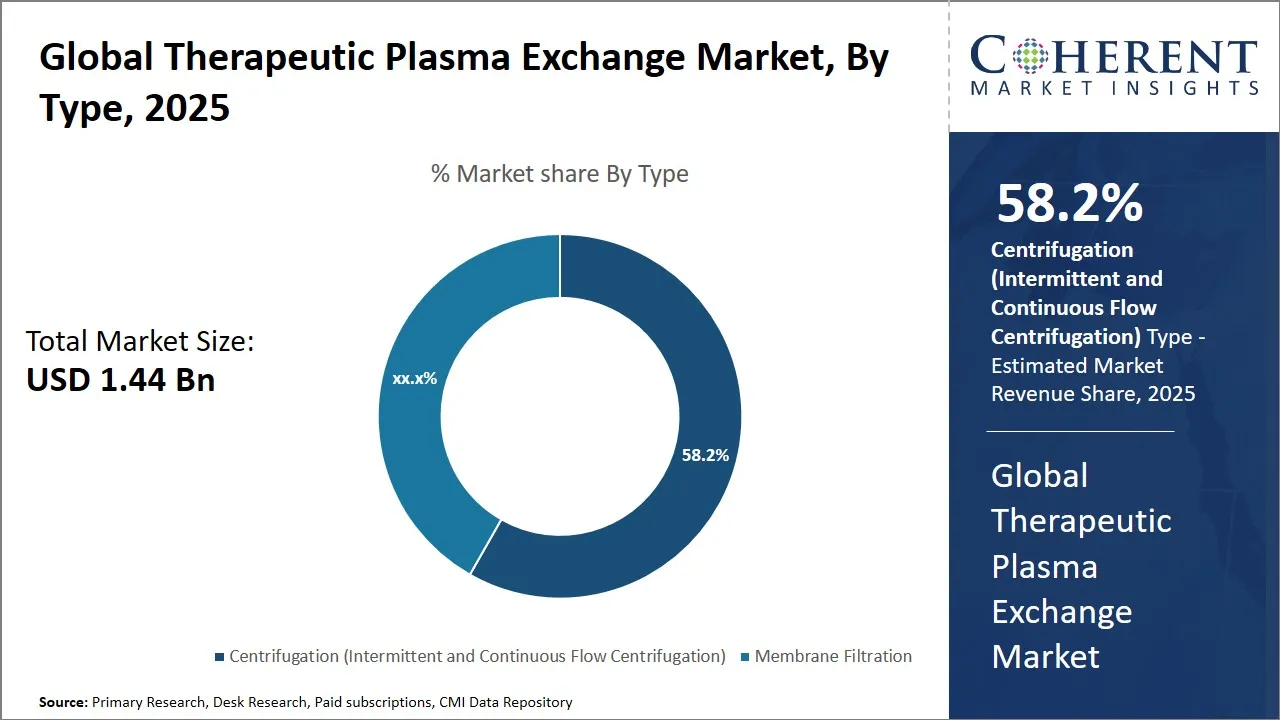
- Centrifugation (Intermittent and Continuous Flow Centrifugation) is expected to hold the largest market share of 59.2 % in 2026.
- The devices segment is expected to hold a 45.3 % market share in 2026.
- Neurological disorders are expected to hold a 33.8 % market share in 2026.
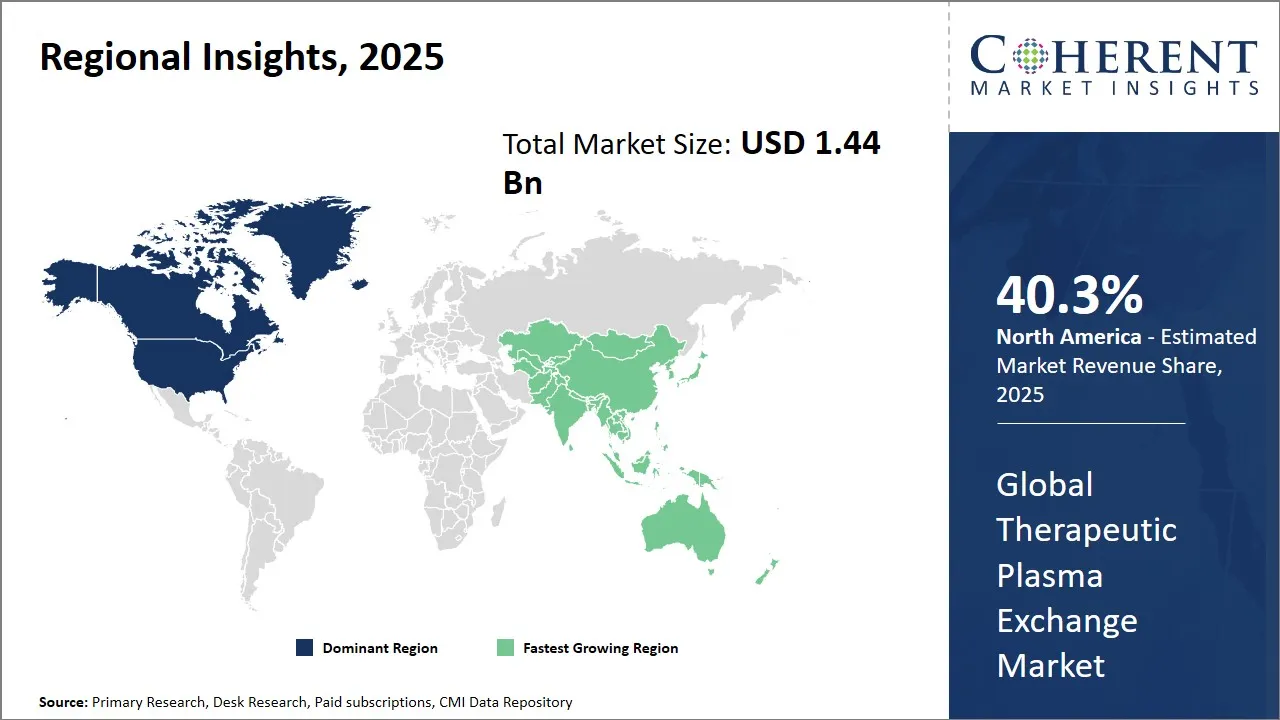
- North America is expected to lead the market, holding a share of 40.3 % in 2026. Asia Pacific is anticipated to be the fastest-growing region, a estimated market share of 24.4% in 2026.
Market Overview
Market trends indicate a significant shift towards personalized medicine and minimally invasive procedures within the plasma exchange segment. Innovations, such as the integration of automated plasma exchange systems and increasing investment in R&D activities, are boosting the adoption of advanced therapies. Furthermore, expanding healthcare infrastructure in emerging markets coupled with strategic collaborations among key players is propelling the market forward, highlighting the growing acceptance and expanding applications of therapeutic plasma exchange in clinical practice.
Current Events and Its Impact
Current Events | Description and its Impact |
Global Increase in Autoimmune Disease Prevalence |
|
Advancements in Plasma Separation Technology |
|
Segmental Insights
- Current Industry Events of 2026
- Market Size Estimation
- Regional Breakdown
- Competitive Landscape
- Customer Intelligence
- Segmental Analysis
- Pricing Analysis
- Key Market Drivers, Challenges & Future Trends
- Customized Insights Section
Therapeutic Plasma Exchange Market Insights, By Type - Centrifugation (intermittent and continuous flow centrifugation) contributes the highest share of the market owing to its superior efficiency and established clinical reliability in therapeutic plasma exchange procedures
Centrifugation (intermittent and continuous flow centrifugation) is expected to conquer the market with 59.2% of the market share in 2026. Continuous flow centrifugation is mainly preferred in large-scale blood processing laboratories owing to its capability of using blood on a continuous basis, thus reducing the risks of taking blood samples for very sick patients.
In March 2026, Thermo Fisher Scientific introduced the Cryofuge, BIOS, and LYNX centrifuges, featuring sustainable GreenCool Technology with natural refrigerants. These models offer up to 15% energy savings, comply with EU and U.S. regulations, and maintain high performance in applications like blood banking and bioprocessing.
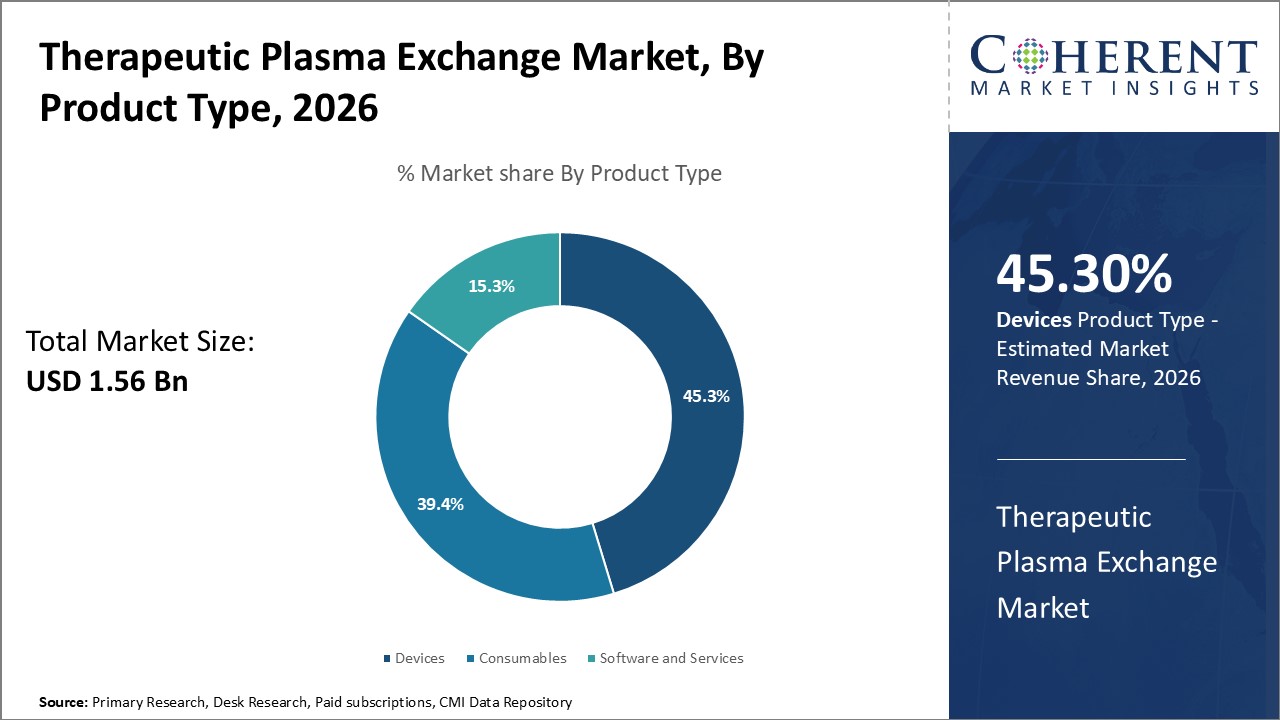
Therapeutic Plasma Exchange Market Insights, In terms of By Product Type - Devices hold the largest share in the therapeutic plasma exchange market, driven by growing demand for advanced and specialized equipment that ensures safety, precision, and procedural efficiency
The devices which consist of the advanced plasma exchange machines that either use centrifugation or membrane filtration in conjunction with computer control systems are predicted to take the largest share of the market with an estimated 45.3% in 2026. The combination of technology and innovation minimizes human error and improves outcomes of the procedure, thereby making these devices very attractive to medical practitioners.
The upsurge in the number of cases of diseases that can be treated through therapeutic plasma exchange and the increase in the number of treatments, in turn, have been the factors of high demand for long-lasting, high-quality devices.
Therapeutic Plasma Exchange Market Insights, In terms of By Disease Indication - Neurological Disorders represent the most significant segment in the therapeutic plasma exchange market, propelled by the growing prevalence of neurological diseases
Neurological disorders like Guillain–Barre syndrome and chronic inflammatory demyelinating polyneuropathy (CIDP) are expected to hold the largest market share at 33.8% in 2026. Plasma exchange therapy is especially useful for diseases like myasthenia gravis, multiple sclerosis, and neuromyelitis optica as it cleanses the blood of the harmful autoantibodies and the mediators of inflammation that are involved in the disease process.
The growing acceptance of plasma exchange as a leading or supportive treatment for these neurology disorders has broadened its clinical usage and assimilation. The state-of-the-art research is constantly uncovering the advantages of plasma exchange in both stabilizing and improving neurological function, thus boosting doctor’s encouragement in recommending this treatment.
Regional Insights
North America Therapeutic Plasma Exchange Market Analysis and Trends
In North America, the global therapeutic plasma exchange market is expected to be mainly occupied by 40.3% share in 2026. The dominance of this region is mainly due to the presence of a well-established healthcare system along with the government policies that are favorable and supportive of advanced medical treatments. The presence and operation of several leading pharmaceutical and medical device companies like Baxter International and Terumo Corporation have made a considerable impact on the ecosystem in that region.
In November 2024, Capitainer, a leading MedTech company specializing in self-sampling solutions, launched the Capitainer SEP10, a revolutionary blood plasma sampling card that separates blood cells from plasma without the need for centrifugation.
Asia Pacific Therapeutic Plasma Exchange Market Analysis and Trends
Asia Pacific is forecasted to show the highest growth rate in the market with a share of 24.4% in 2026 mainly due to the increasing healthcare spending, the rise in the number of autoimmune and blood diseases, and the growing demand for advanced therapies in developing markets like China and India.
Government measures aimed at improving healthcare infrastructure and encouraging the local production of medical devices contribute to the growth of the market. The presence of more companies like Terumo BCT, Fresenius Medical Care among others, including local companies, allows for the quick adoption of technology.
Therapeutic Plasma Exchange Market Outlook for Key Countries
U.S. Therapeutic Plasma Exchange Market Trends
The therapeutic plasma exchange market of the U.S. is still in the lead because of its outstanding healthcare system, comprehensive clinical research efforts, and approved reimbursement policies. Major companies such as Baxter International, Terumo Corporation, and Haemonetics Corporation have their major operations in this region, hence, pushing the innovation in plasma exchange technologies. The strong emphasis on research and development as well as the regulatory support from agencies like the FDA allows for the swift introduction of new devices and treatments in the market.
In October 2024, Terumo Blood and Cell Technologies (Terumo BCT), a global leader in blood management solutions, launched the Reveos Automated Blood Processing System in the U.S. Already used in over 50 countries, Reveos aims to improve efficiency and address platelet shortages by automating whole blood processing.
Germany Therapeutic Plasma Exchange Market Trends
Germany's therapeutic plasma exchange market is supported by a high-class healthcare ecosystem and large-scale government investments for disease cure programs. Besides being a home to major firms like Fresenius Medical Care and B. Braun Melsungen, the country is also significantly contributing to product development and production for the overall market. In Germany, the strong clinical infrastructure that helps in the treatment of patients with chronic autoimmune diseases, via plasma exchange, leads to high adoption of the therapy.
In June 2021, GEA, a global leader in systems and components for the food, beverage, and pharmaceutical industries based in Düsseldorf, Germany, introduced the hycon separator, revolutionizing blood plasma fractionation. This fully automatic clarifier enables "one-touch production" and is designed for cleanroom applications.
Japan Therapeutic Plasma Exchange Market Trends
Japan is still the leader in the market when it comes to technology and is the most advanced market in terms of quality and innovation in plasma exchange therapies. Among the companies that have played a major role in the development and supply of state-of-the-art plasma exchange devices are Terumo Corporation and Asahi Kasei. These three factors the growing old population, high prevalence of related diseases and thus the steady demand, high-quality medical technology and healthcare reimbursement policies, and government support in the area, all support Japan's dominance in the region.
In August 2026, Japan's Sumitomo Heavy Industries (SHI) developed a groundbreaking low-temperature plasma method for manufacturing a key layer in perovskite solar cells. The new process, known as Reactive Plasma Deposition (RPD), allows for the mass production of the electron transport layer (ETL) with minimal substrate damage, offering a cost-effective alternative to traditional high-temperature methods.
India Therapeutic Plasma Exchange Market Trends
The therapeutic plasma exchange market in India is rapidly developing mainly because of the improvements in healthcare infrastructure, patient and professional awareness about the procedure and the government policy of making healthcare affordable by increasing insurance coverage thus allowing people to access even the complex therapies. Global companies like Baxter and Terumo, along with local companies, are all investing in different areas such as the expansion of the distribution networks and training programs for the plasma exchange procedures.
In January 2026, the Indian Institute of Information Technology, Allahabad (IIIT-A) developed a low-cost device to separate blood plasma in minutes. Priced around INR 1,000, the device uses hydrodynamic techniques and micro-channels for efficient separation of blood components, providing a cost-effective alternative to traditional plasma separation machines.
End user Feedback and Unmet Needs for the Therapeutic Plasma Exchange Market
- End user feedback in the global therapeutic plasma exchange market often centers around product performance, accessibility, and integration challenges. A common theme across multiple sectors, including hospitals and healthcare providers, is the positive reception of systems that improve efficiency, particularly the ease of use and precision of therapeutic plasma exchange devices. For instance, users in clinical settings have expressed high satisfaction with automated therapeutic plasma exchange machines that offer real-time monitoring and better control over plasma collection, contributing to enhanced patient safety and treatment outcomes.
- The unmet needs in this market primarily revolve around affordability, technological advancements, and system customization. There is a noticeable gap in the availability of affordable TPE solutions for smaller clinics, which struggle to justify the high capital investment. Additionally, end-users frequently cite the lack of customization in device configurations to fit specific patient profiles or treatment protocols. Addressing these gaps could not only drive growth by making therapeutic plasma exchange technology more accessible across diverse healthcare settings but also foster customer loyalty.
Market Players, Key Developments, and Competitive Intelligence
Key Developments
- In May 2025, Terumo Blood and Cell Technologies, a global leader in blood management technologies, partnered with Join Parachute to scale the deployment of the Rika Plasma Donation System, customizing donation volumes to individual donor physiology, further enhancing its presence in the therapeutic plasma exchange market.
- In April 2025, Asahi Kasei Life Science, a biopharmaceutical company, expanded its Planova virus removal filter capacity in Shizuoka and Illinois, strengthening biotherapeutic purification pipelines and supporting therapeutic plasma exchange applications.
- In February 2025, Sanquin Blood Supply Foundation, a leading blood supply organization, signed a 10-year agreement to implement Reveos automated processing, streamlining 400,000 annual whole-blood donations, contributing to the growth of the therapeutic plasma exchange market.
- In February 2025, NHS England invested USD 1.5 million in 25 Spectra Optia systems to enhance sickle-cell disease care capacity, a critical advancement in therapeutic plasma exchange.
Top Strategies Followed by Global Therapeutic Plasma Exchange Market Players
- Established market leaders command a substantial share by heavily investing in research and development to innovate and refine high-performance plasma exchange devices and consumables. These companies prioritize developing advanced technologies that enhance procedure efficiency, safety, and patient comfort, thereby addressing evolving clinical needs. To solidify their dominance, they actively engage in strategic partnerships with major industry stakeholders, including original equipment manufacturers (OEMs) and healthcare providers, creating robust collaborative ecosystems.
- In April 2025, Drummond Scientific Company secured an exclusive license from Tufts University for a centrifuge-free plasma separation technology. Developed by Professor Charlie Mace, this paper-based device enables at-home and point-of-care diagnostics, eliminating the need for phlebotomy and centrifugation. The innovation is set to revolutionize diagnostic testing and support the therapeutic plasma exchange market by offering faster, more accessible plasma collection solutions.
- Mid-level players in the therapeutic plasma exchange market adopt strategies that center around offering cost-effective yet reliable solutions tailored to price-sensitive segments. These companies strike a balance between quality and affordability by optimizing manufacturing processes and source materials, thereby serving hospitals and clinics that require efficient therapeutic plasma exchange technology without incurring high expenditure.
- Mid-level players in the therapeutic plasma exchange market, like Fresenius Kabi and Baxter, focus on cost-effective solutions for price-sensitive hospitals and clinics. They optimize manufacturing and sourcing to offer reliable therapeutic plasma exchange technology at affordable prices.
- Small-scale players in the global therapeutic plasma exchange market, while limited by resources, leverage agility and innovation to carve out niche opportunities. They typically concentrate on specialized device features or novel consumable designs that address specific clinical challenges or user preferences, thus differentiating themselves from commoditized offerings.
- Small-scale players, such as Haemonetics and Asahi Kasei, innovate with specialized devices or consumables. For example, Haemonetics offers customized blood separation kits, while Asahi Kasei focuses on innovative therapeutic plasma exchange accessories, carving out niche opportunities by addressing specific clinical needs or user preferences.
Market Report Scope
Therapeutic Plasma Exchange Market Report Coverage
| Report Coverage | Details | ||
|---|---|---|---|
| Base Year: | 2025 | Market Size in 2026: | USD 1.56 Bn |
| Historical Data for: | 2020 To 2024 | Forecast Period: | 2026 To 2033 |
| Forecast Period 2026 to 2033 CAGR: | 8.3% | 2033 Value Projection: | USD 2.73 Bn |
| Geographies covered: |
| ||
| Segments covered: |
| ||
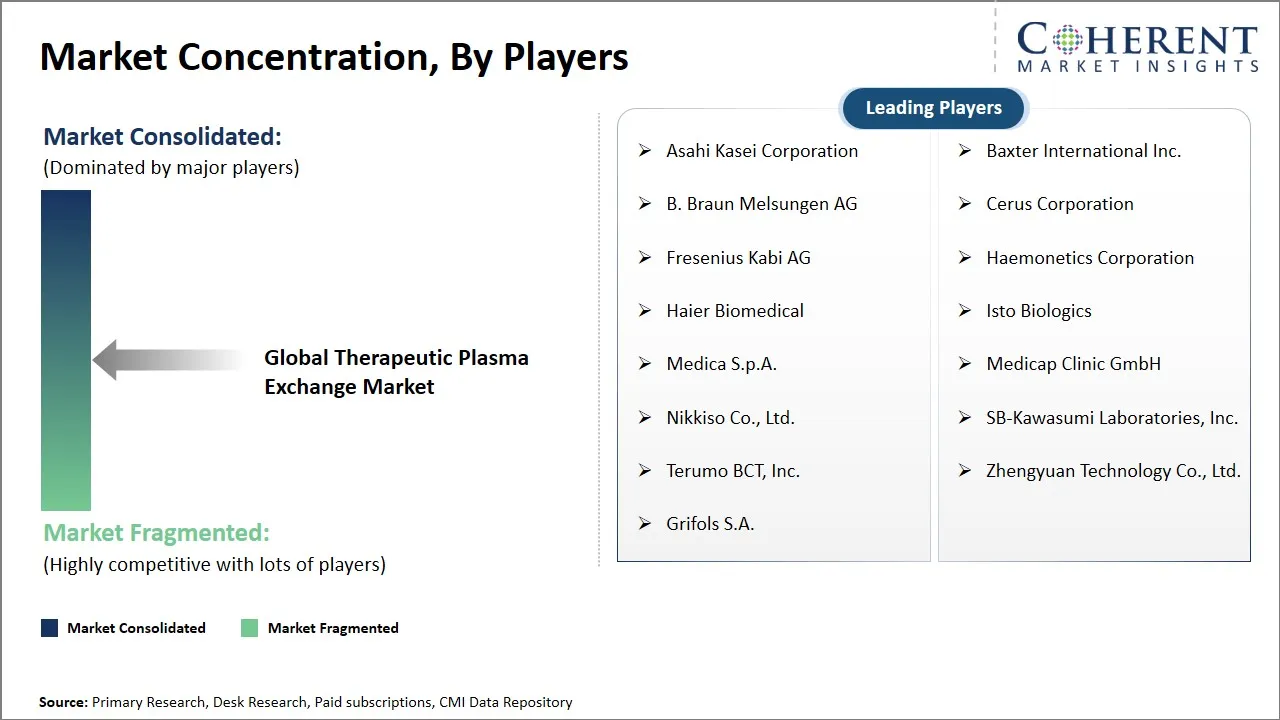
| Companies covered: | Asahi Kasei Corporation, Baxter International Inc., B. Braun Melsungen AG, Cerus Corporation, Fresenius Kabi AG, Haemonetics Corporation, Haier Biomedical, Isto Biologics, Medica S.p.A., Medicap Clinic GmbH, Nikkiso Co., Ltd., SB-Kawasumi Laboratories, Inc., Terumo BCT, Inc., Zhengyuan Technology Co., Ltd., and Grifols S.A. | ||
| Growth Drivers: |
| ||
| Restraints & Challenges: |
| ||
Therapeutic Plasma Exchange Market Dynamics
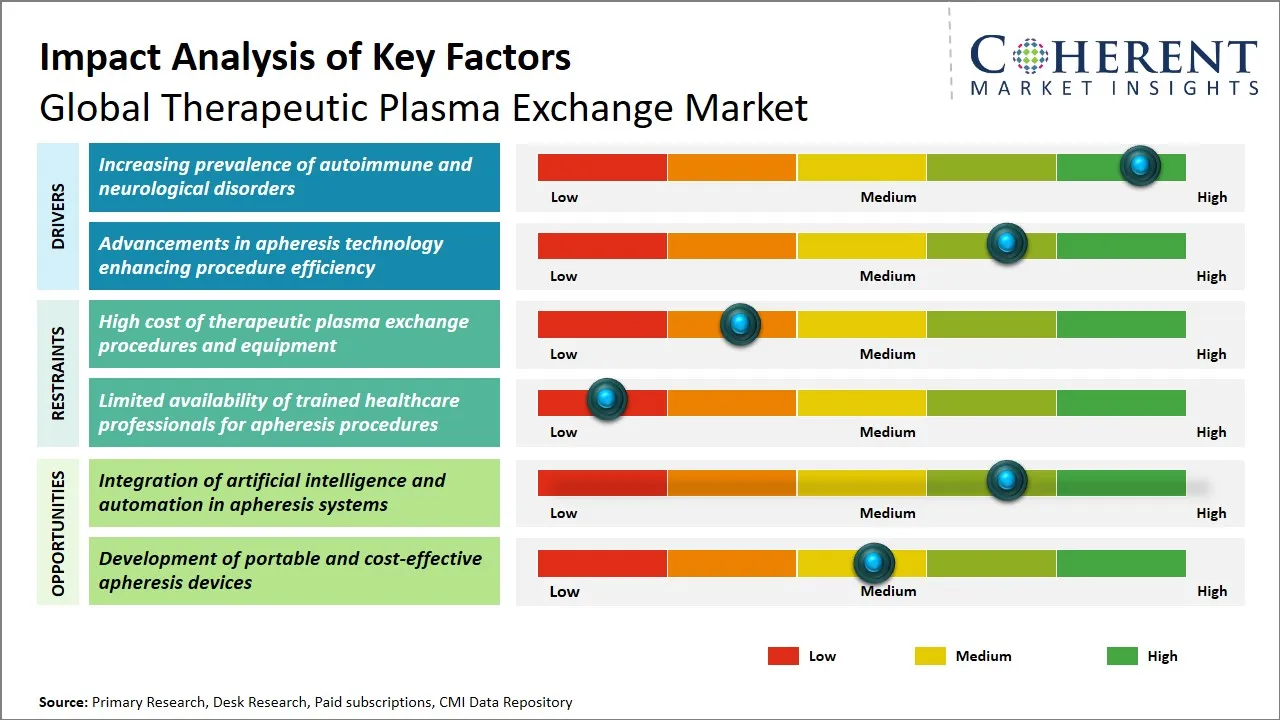
Therapeutic Plasma Exchange Market Driver - Increasing Prevalence of Autoimmune and Neurological Disorders
The global rise in the occurrence of autoimmune and neurological diseases is a major factor pushing the adoption of therapeutic plasma exchange (TPE) treatments. Some of the diseases that require plasma exchange as a major treatment method to cleanse the blood of the pathogenic autoantibodies and inflammatory mediators are multiple sclerosis, myasthenia gravis, Guillain-Barré syndrome and several other autoimmune neuropathies. Increasing awareness and better diagnostics are leading to the recognition of a larger patient population which in turn is driving the TPE procedure uptake.
In March 2024, a major study by The Lancet Neurology revealed that over 3 billion people globally were living with neurological conditions, making them the leading cause of illness and disability worldwide. The study, supported by the World Health Organization (WHO), also highlighted that more than 80% of neurological deaths occur in low- and middle-income countries, where access to treatment is limited. Conditions like stroke, dementia, and migraine are major contributors to health loss, with diabetic neuropathy seeing the fastest growth.
Therapeutic Plasma Exchange Market Opportunity - Integration of Artificial Intelligence and Automation in Apheresis Systems
The use of artificial intelligence (AI) and automation in TPE systems has been envisaged as a major driver for the growth of the global market for therapeutic plasma exchanges. Manual operations are often heavily relied upon in traditional plasma exchange which can lead to longer processing times, variability in outcomes, and increased risk of human error. AI infusion devices are able to bring the entire procedure to an optimum level through real-time monitoring, predictive analytics, and adaptive control mechanisms that make precision and efficiency better. Furthermore, the entire procedure becomes less reliant on skilled technicians, resulting in a reduction of operational costs and an increase in patient throughput in the clinic as a whole due to increasing automation.
For Example, Cytiva, a global leader in life sciences and bioprocessing, introduced the Sepax C-Pro Cell Processing Instrument, designed to automate and streamline multiple cell therapy operations. This system integrates protocol software and kits to support processes like enrichment, concentration, and washing, offering a flexible, Good Manufacturing Practice (GMP)-compliant solution
Analyst Opinion (Expert Opinion)
- The Therapeutic Plasma Exchange market is growing rapidly in the developing regions because of high technological innovators in artificial intelligence and automated systems as well as increasing demand for treatments of autoimmune and neurological disorders. The improvements in the regulatory support from institutions such as FDA and EMA have also contributed dramatically to the growth of the market. Conversely, there are still some difficulties to deal with, such as high costs of equipment, and lack of awareness in emerging markets.
- World Hemophilia Congress and American Society for Apheresis Annual Meeting among recent conferences have played a significant role in the promotion of TPE technologies and the discussions around regulatory developments. The market evolution is prominently showcased through real-world scenarios such as the cooperation between blood centers and technology providers. The ongoing pilot programs in Europe and North America which are focusing on patient access will also be a determining factor for the industry's future growth.
Speak to the analyst
Want personalized insights?
Take the findings above to one of our principal consultants, or have the report rebuilt around the segments, geographies and competitors you actually track.
Market Segmentation
- Type Insights (Revenue, USD Bn, 2021 - 2033)
- Centrifugation (Intermittent and Continuous Flow Centrifugation)
- Membrane Filtration
- Product Type Insights (Revenue, USD Bn, 2021 - 2033)
- Devices
- Consumables
- Software and Services
- Disease Indication Insights (Revenue, USD Bn, 2021 - 2033)
- Neurological Disorders
- Guillain–Barré syndrome
- Chronic inflammatory demyelinating polyneuropathy (CIDP)
- Myasthenia gravis
- Multiple sclerosis
- Neuromyelitis optica
- Renal Disorders
- Anti-GBM disease
- Post-renal transplant rejection
- Wegener’s granulomatosis
- Hematology Disorders
- Thrombotic thrombocytopenic purpura (TTP)
- Hemolytic uremic syndrome (HUS)
- Cryoglobulinemia
- Multiple myeloma
- Metabolic Disorders
- Homozygous familial hypercholesterolemia
- Fulminant Wilson’s disease
- Other Indications
- Autoimmune diseases (e.g., systemic lupus erythematosus)
- Inflammatory disorders
- Neurological Disorders
- Procedure Type Insights (Revenue, USD Bn, 2021 - 2033)
- Manual TPE
- Automated TPE
- Double Filtered Plasmapheresis (DFPP)
- End User Insights (Revenue, USD Bn, 2021 - 2033)
- Hospitals
- Specialty Clinics
- Ambulatory Surgical Centers
- Blood Collection Centers and Blood Component Providers
- Transfusion Centers
- Regional Insights (Revenue, USD Bn, 2021 - 2033)
- North America
- U.S.
- Canada
- Latin America
- Brazil
- Argentina
- Mexico
- Rest of Latin America
- Europe
- Germany
- U.K.
- Spain
- France
- Italy
- Russia
- Rest of Europe
- Asia Pacific
- China
- India
- Japan
- Australia
- South Korea
- ASEAN
- Rest of Asia Pacific
- Middle East
- GCC Countries
- Israel
- Rest of Middle East
- Africa
- South Africa
- North Africa
- Central Africa
- North America
- Key Players Insights
- Asahi Kasei Corporation
- Baxter International Inc.
- Braun Melsungen AG
- Cerus Corporation
- Fresenius Kabi AG
- Haemonetics Corporation
- Haier Biomedical
- Isto Biologics
- Medica S.p.A.
- Medicap Clinic GmbH
- Nikkiso Co., Ltd.
- SB-Kawasumi Laboratories, Inc.
- Terumo BCT, Inc.
- Zhengyuan Technology Co., Ltd.
- Grifols S.A.
Sources
Primary Research Interviews
Industry Stakeholders List
- Plasma Protein Therapeutics Association (PPTA)
- American Society for Apheresis (ASFA)
- International Society for Apheresis (ISFA)
- European Blood Alliance (EBA)
- World Health Organization (WHO) – Blood Transfusion Services
- National Institutes of Health (NIH) – National Heart, Lung, and Blood Institute (NHLBI)
End users List
- National Health Service (NHS) – Blood and Transplant
- American Red Cross
- Canadian Blood Services
- Australian Red Cross Lifeblood
- Indian Red Cross Society
- World Health Organization (WHO) – Blood Transfusion Services
Government and International Databases
- World Health Organization (WHO) Global Health Observatory
- Centers for Disease Control and Prevention (CDC) – Blood Disorders
- National Institutes of Health (NIH) – National Heart, Lung, and Blood Institute (NHLBI)
- European Medicines Agency (EMA)
- U.S. Food and Drug Administration (FDA)
- Indian Council of Medical Research (ICMR)
Trade Publications
- Transfusion Medicine Reviews
- Journal of Clinical Apheresis
- Transfusion
- Apheresis and Dialysis
- Journal of Clinical Immunology
- Blood Transfusion
Academic Journals
- Journal of Clinical Apheresis
- Transfusion
- Apheresis and Dialysis
- Journal of Clinical Immunology
- Blood Transfusion
- Journal of Thrombosis and Haemostasis
Reputable Newspapers
- The New York Times
- The Guardian
- The Washington Post
- The Times of India
- The Hindu
- The Economic Times
Industry Associations
- Plasma Protein Therapeutics Association (PPTA)
- American Society for Apheresis (ASFA)
- International Society for Apheresis (ISFA)
- European Blood Alliance (EBA)
- World Health Organization (WHO) – Blood Transfusion Services
- National Institutes of Health (NIH) – National Heart, Lung, and Blood Institute (NHLBI)
Public Domain Resources
- World Health Organization (WHO) – Blood Transfusion Services
- U.S. Food and Drug Administration (FDA)
- European Medicines Agency (EMA)
- National Institutes of Health (NIH) – National Heart, Lung, and Blood Institute (NHLBI)
- Centers for Disease Control and Prevention (CDC) – Blood Disorders
- Indian Council of Medical Research (ICMR)
Proprietary Elements
- CMI Data Analytics Tool: Proprietary analytics tool to analyze real-time market trends, consumer behavior, and technology adoption in market
- Proprietary CMI Existing Repository of Information for Last 8 Years
Get access to 250+ pages report
Every segment, forecast, competitor profile and data table behind the analysis above — available for instant download.
- ESOMAR Member
- ISO 9001:2015 Certified
- D-U-N-S Registered
- GDPR & CCPA Compliant
Missing comfort of reading report in your local language? Find your preferred language:
Transform your Strategy with Exclusive Trending Reports
Frequently Asked Questions
The global therapeutic plasma exchange market is estimated to be valued at USD 1.56 Bn in 2026 and is expected to reach USD 2.73 Bn by 2033.
The CAGR of global therapeutic plasma exchange market is projected to be 8.3% from 2026 to 2033.
Increasing prevalence of autoimmune and neurological disorders and Advancements in apheresis technology enhancing procedure efficiency are the major factor driving the growth of Global Therapeutic Plasma Exchange Market.
High cost of therapeutic plasma exchange procedures and equipment and Limited availability of trained healthcare professionals for apheresis procedures are the major factor hampering the growth of Global Therapeutic Plasma Exchange Market.
In terms of Type, Centrifugation (Intermittent and Continuous Flow Centrifugation), estimated to dominate the market revenue share 2026.
TPE is a medical procedure that removes harmful substances from the blood by replacing the plasma with donor plasma or a substitute.
Future trends include increased adoption in emerging markets, development of more efficient therapeutic plasma exchange devices, and growing use in personalized medicine.