

Middle East and Turkey Chronic Liver Disease (CLD) Therapeutics Market Size and Forecast: 2026 - 2033
The Middle East and Turkey Chronic Liver Disease (CLD) Therapeutics Market is estimated to be valued at USD 31.6 Bn in 2026 and is expected to reach USD 46.7 Bn by 2033, exhibiting a compound annual growth rate (CAGR) of 11.3% from 2026 to 2033.
Key Takeaways
- By Disease Type, Hepatitis holds the largest market share of 38.6% in 2026 owing to the high and persistent viral hepatitis burden.
- By Drug Class, Chemotherapy Drugs expected to hold largest market share of 36.2% in 2026 owing to its rising incidence of liver cancer.
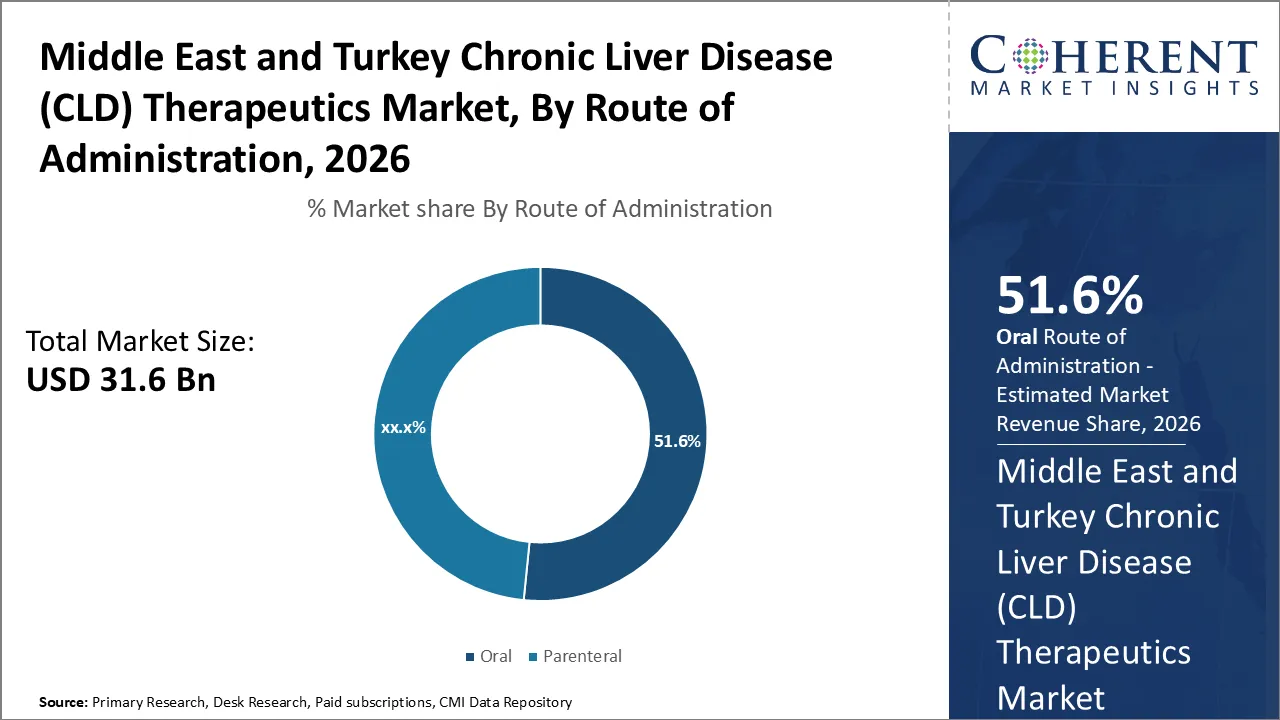
- By Route of Administration, Oral acquired the prominent market share of 51.6% in 2026 owing to the high prevalence of viral hepatitis & antiviral demand.
- By Distribution Channel, Hospital Pharmacies captures the largest market share of 42.4% in 2026 owing to its specialized & complex CLD treatment requirements.
- By Country, Saudi Arabia dominates the overall market with an estimated share of 34.4% in 2026 owing to the high and growing liver disease burden.
Market Overview
Rising cases of viral hepatitis, non-alcoholic fatty liver disease, cirrhosis, and hepatocellular carcinoma are driving the Middle East and Turkey Chronic Liver Disease (CLD) therapeutics market. Increasing obesity and diabetes rates, along with expanding screening programs and improved diagnostic capabilities, are enabling healthcare providers to identify more patients and initiate treatment earlier. Governments are strengthening healthcare infrastructure and improving access to advanced antivirals, targeted therapies, and supportive care. Hospital pharmacies continue to play a central role in distribution, while ongoing innovation and supportive policies actively fuel market expansion.
Current Events and their Impact on the Middle East and Turkey Chronic Liver Disease (CLD) Therapeutics Market
Current Events | Description and its impact |
Geopolitical Stability and Regional Conflicts |
|
Economic Fluctuations and Healthcare Funding |
|
Epidemiological Trends and Public Health Initiatives |
|
Segmental Insights
- Current Industry Events of 2026
- Market Size Estimation
- Regional Breakdown
- Competitive Landscape
- Customer Intelligence
- Segmental Analysis
- Pricing Analysis
- Key Market Drivers, Challenges & Future Trends
- Customized Insights Section
Middle East and Turkey Chronic Liver Disease (CLD) Therapeutics Market Insights, by Route of Administration - Oral contributes the highest share of the market owing to its convenience & patient compliance
Oral acquired the prominent market share of 51.6% in 2026. Patients increasingly drive growth in the oral segment of the Middle East and Turkey Chronic Liver Disease (CLD) therapeutics market by preferring convenient, self-administered treatments for long-term management. Rising cases of viral hepatitis, NAFLD, and NASH boost demand for oral antivirals and metabolic therapies. Healthcare providers expand outpatient care, optimize pharmacy distribution, and implement government-supported home-based programs to increase adoption. Pharmaceutical companies enhance oral formulations, improve patient adherence, and offer a wider range of therapies, reinforcing the segment’s role in effectively managing chronic liver diseases across the region.
Middle East and Turkey Chronic Liver Disease (CLD) Therapeutics Market Insights, By Disease Type - Hepatitis contributes the highest share of the market owing to its socioeconomic and healthcare access drivers
Hepatitis holds the largest market share of 38.6% in 2026. Sustained transmission of hepatitis B and C, delayed diagnosis among certain populations, and migration-related disease spread drive growth in the hepatitis segment of the Middle East and Turkey Chronic Liver Disease (CLD) therapeutics market. Governments expand national immunization programs, improve access to antiviral therapies, and implement elimination strategies to increase treatment demand. Healthcare systems strengthen laboratory infrastructure and conduct routine screening to detect previously undiagnosed cases, while growing awareness among providers and patients encourages earlier intervention and continuous therapeutic management.
Middle East and Turkey Chronic Liver Disease (CLD) Therapeutics Market Insights, By Drug Class - Chemotherapy Drugs contribute the highest share of the market owing to its product launches and expanded availability
Chemotherapy Drugs expected to hold largest market share of 36.2% in 2026. The rising occurrence of hepatocellular carcinoma caused by chronic hepatitis and cirrhosis drives demand for chemotherapy drugs in the Middle East and Turkey Chronic Liver Disease therapeutics market. Healthcare providers increasingly rely on systemic and combination oncology treatments due to late-stage diagnoses. Hospitals and cancer centers expand specialized services, enhance imaging capabilities, and implement multidisciplinary liver care programs to treat more patients. Governments fund oncology services, include cancer drugs in reimbursement programs, and increase access to hospital-based infusion facilities, further boosting chemotherapy use across the region.
Middle East and Turkey Chronic Liver Disease (CLD) Therapeutics Market Insights, By Distribution Channel - Hospital Pharmacies contribute the highest share of the market owing to its high share of prescription-only medications.
Hospital Pharmacies captures the largest market share of 42.4% in 2026. Hospital pharmacies drive the Middle East and Turkey Chronic Liver Disease (CLD) therapeutics market by providing regulated and safe access to complex prescription medications, such as antivirals, chemotherapy, and targeted therapies. Rising cases of advanced CLD and hepatocellular carcinoma push healthcare providers to deliver more hospital-based treatments. Hospitals expand tertiary care centers, implement centralized procurement with government support, and integrate specialized hepatology units to increase pharmacy utilization. Pharmacists actively monitor treatments, enforce clinical protocols, and ensure professional oversight, establishing hospital pharmacies as the main channel for managing chronic liver disease therapies.
Saudi Arabia Chronic Liver Disease (CLD) Therapeutics Market Trends
Saudi Arabia dominates the overall market with an estimated share of 34.40% in 2026. Rising cases of viral hepatitis, NAFLD, and hepatocellular carcinoma position Saudi Arabia as a key market in the Middle East and Turkey Chronic Liver Disease (CLD) therapeutics landscape. Healthcare providers expand infrastructure through specialized liver clinics and advanced diagnostic facilities to enable early detection and treatment. The government drives access to advanced antivirals, targeted therapies, and hospital-based care through Vision 2030 initiatives. Increased public awareness, widespread screening programs, and greater adoption of innovative oral and infusion therapies actively shape market trends and reinforce Saudi Arabia’s influence in regional CLD management.
UAE Chronic Liver Disease (CLD) Therapeutics Market Trends
The UAE strengthens its position in the Middle East and Turkey Chronic Liver Disease (CLD) therapeutics market by investing in advanced healthcare infrastructure and establishing specialized hepatology centers. Rising cases of viral hepatitis, NAFLD, and metabolic liver disorders drive healthcare providers to deliver both oral and hospital-based therapies. The government promotes early diagnosis and treatment through national screening programs, while public awareness campaigns encourage proactive disease management. Healthcare systems actively adopt innovative antivirals, targeted therapies, and infusion treatments, shaping market trends and expanding the UAE’s influence in regional CLD care
Middle East and Turkey Chronic Liver Disease (CLD) Therapeutics Market Trend
Rising Adoption of Oral Antivirals
Healthcare providers increasingly favor oral antivirals for managing chronic hepatitis B and C due to their convenience, high efficacy, and improved patient adherence. Hospitals and outpatient clinics are expanding access to these therapies, supported by government initiatives and national screening programs. Patients benefit from home-based administration, reduced hospital visits, and simplified long-term management, making oral therapeutics a primary choice for chronic liver disease care across the Middle East and Turkey.
Expansion of Hospital-Based Infusion Services
Hospital pharmacies and infusion centers are becoming central to CLD management, particularly for chemotherapy, biologics, and targeted therapies. Investments in tertiary care hospitals and specialized hepatology units enhance patient monitoring, dosing accuracy, and treatment safety. This trend reflects growing recognition of the need for centralized care delivery for complex liver conditions, including hepatocellular carcinoma and advanced cirrhosis, ensuring better therapeutic outcomes and adherence to clinical protocols.
Middle East and Turkey Chronic Liver Disease (CLD) Therapeutics Market Opportunity
Addressing Metabolic Liver Diseases
Rising rates of NAFLD and NASH present a major opportunity for new therapies targeting fibrosis, steatosis, and metabolic dysfunction. Pharmaceutical developers can focus on oral, injectable, and combination therapies alongside lifestyle interventions. Healthcare providers can integrate these therapies into preventive and long-term care programs, while hospitals can develop specialized metabolic liver units. Early intervention and targeted treatment strategies can reduce disease progression, creating a significant market niche for innovative metabolic-focused CLD therapeutics.
Market Report Scope
Middle East and Turkey Chronic Liver Disease (CLD) Therapeutics Market Report Coverage
| Report Coverage | Details | ||
|---|---|---|---|
| Base Year: | 2025 | Market Size in 2026: | USD 31.6 Bn |
| Historical Data for: | 2020 To 2024 | Forecast Period: | 2026 To 2033 |
| Forecast Period 2026 to 2033 CAGR: | 11.3% | 2033 Value Projection: | USD 46.7 Bn |
| Geographies covered: |
| ||
| Segments covered: |
| ||
| Companies covered: | Hoffmann-La Roche AG, Gilead Sciences, Inc., Intercept Pharmaceuticals, Inc., Swedish Orphan Biovitrum AB, GlaxoSmithKline Plc, Sanofi S.A, Merck & Co., Inc., AbbVie Inc., Abbott Laboratories, AstraZeneca plc, and Pfizer Inc. | ||
| Growth Drivers: |
| ||
| Restraints & Challenges: |
| ||
Middle East and Turkey Chronic Liver Disease (CLD) Therapeutics Market News
- In March 2025, King’s College Hospital London – Dubai established Dubai’s first dedicated liver transplant centre for both paediatric and adult patients, leveraging more than four decades of hepatology expertise.
Analyst Opinion (Expert Opinion)
- The Chronic Liver Disease therapeutics landscape in the Middle East and Turkey is driven by stark and measurable shifts in disease patterns that defy simplistic “growth” narratives. In Turkey, nearly half of apparently healthy adults demonstrate ultrasound‑detected NAFLD in recent large screening cohorts, with prevalence climbing from approximately 43% to over 53% in less than a decade and disproportionately affecting older, overweight males. This high baseline prevalence translates into a massive latent treatment demand that systems are only beginning to address.
- Hepatitis B and C continue to anchor disease etiology in CLD and hepatocellular carcinoma cases, with Turkish cohorts showing more than half of HCC patients attributed to HBV and a substantial proportion to HCV, while NAFLD‑related HCC has surged in recent years, underscoring shifting clinical priorities. This epidemiological mix imposes divergent therapeutic needs: clinicians must manage both traditional viral disease and the metabolic liver disease “tsunami” driven by obesity, diabetes, and metabolic syndrome—conditions that exceed global averages in the region.
- Real‑world clinical practice also reveals a persistent underdiagnosis problem: many patients present at advanced stages where treatment efficacy is constrained and survival outcomes are poor, particularly for liver cancer, which in Turkey remains diagnosed late with median survival measured in months. These patterns suggest that therapeutic strategy in the Middle East and Turkey must prioritize early detection, differentiated treatment pathways for metabolic versus viral etiologies, and integration of advanced therapeutics alongside robust public health action—not merely incremental expansion of existing services.
Speak to the analyst
Want personalized insights?
Take the findings above to one of our principal consultants, or have the report rebuilt around the segments, geographies and competitors you actually track.
Market Segmentation
- By Disease Type
- Hepatitis
- Alcohol Induced Liver Disease
- Liver Cancer
- Fatty Liver Disease
- Others
- By Drug Class
- Chemotherapy Drugs
- Targeted therapy
- Vaccines
- Immunoglobulin
- Others
- By Route of Administration
- Oral
- Parenteral
- By Distribution Channel
- Hospital Pharmacies
- Retail Pharmacies
- Online Pharmacies
- By Country Insights
- Turkey
- Saudi Arabia
- Israel
- UAE
- Egypt
- Rest of Middle East and Turkey
- Key Players Insights
- Hoffmann-La Roche AG
- Gilead Sciences, Inc.
- Intercept Pharmaceuticals, Inc.
- Swedish Orphan Biovitrum AB
- GlaxoSmithKline Plc
- Sanofi S.A
- Merck & Co., Inc.
- AbbVie Inc.
- Abbott Laboratories
- AstraZeneca plc
- Pfizer Inc.
Sources
Primary Research interviews
- Hepatologists and gastroenterologists across the Middle East and Turkey
- Clinical pharmacists specializing in liver disease therapies
- Hospital and clinic administrators in hepatology departments
- Key opinion leaders (KOLs) in liver disease research
- Pharmaceutical manufacturers and distributors in CLD therapeutics
Databases
- World Health Organization (WHO) Global Health Observatory
- International Agency for Research on Cancer (IARC) databases
- PubMed Clinical Trials database
- ClinicalTrials.gov
- WHO International Clinical Trials Registry Platform (ICTRP)
Magazines
- Hepatology International
- Liver International
- Gastroenterology & Hepatology (Middle East editions)
- Pharmaceutical Executive Middle East
- Arab Health Magazine
Journals
- Journal of Hepatology
- Clinical Gastroenterology and Hepatology
- Digestive Diseases and Sciences
- Hepatitis Monthly
- Annals of Hepatology
Newspapers
- The National (UAE)
- Arab News (Saudi Arabia)
- Hurriyet Daily News (Turkey)
- Daily Sabah (Turkey)
- Gulf News (UAE)
Associations
- Middle East Association for the Study of the Liver (MEASL)
- Turkish Society of Gastroenterology
- European Association for the Study of the Liver (EASL)
- American Association for the Study of Liver Diseases (AASLD) – Regional branches
- International Liver Congress publications
Public Domain sources
- WHO Global Health Estimates
- United Nations Population Division data
- National health ministries of UAE, Saudi Arabia, Turkey, and other GCC countries
- World Bank health statistics
- Open-access clinical guidelines on CLD
Proprietary Elements
- CMI Data Analytics Tool
- Proprietary CMI Existing Repository of information for last 8 years
Get access to 250+ pages report
Every segment, forecast, competitor profile and data table behind the analysis above — available for instant download.
- ESOMAR Member
- ISO 9001:2015 Certified
- D-U-N-S Registered
- GDPR & CCPA Compliant
Missing comfort of reading report in your local language? Find your preferred language:
Transform your Strategy with Exclusive Trending Reports
Frequently Asked Questions
The Middle East and Turkey Chronic Liver Disease (CLD) Therapeutics Market is estimated to be valued at USD 31.6 Bn in 2026 and is expected to reach USD 46.7 Bn by 2033.
Increasing prevalence of chronic liver disease (CLD), growing geriatric population, Government and non-government awareness programs related to liver disease are expected to drive the market growth.
Hepatitis segment is expected to hold a major market share in the market.
Chemotherapy Drugs segment is expected to hold the largest market share in the market.
Saudi Arabia is expected to hold the highest revenue share in market.
High cost in treatment of chronic liver disease is a key factor that is expected to hamper growth of the market.