

Prebiotics For Dietary Supplements Market Size and Share Analysis - 2026 to 2033
The prebiotics for dietary supplements market is projected to grow from about USD 3,246.7 Mn in 2026 to around USD 6,509.1 Mn by 2033, expanding at a CAGR of 10.2% due to greater numbers of individuals demand for natural ways to improve their gut health.
Key Takeaways
- Based on Ingredient Type, the Fructo-oligosaccharides (FOS) segment is expected to hold 37.2% share of the market in 2026, driven by affordability and proven gut health benefits.
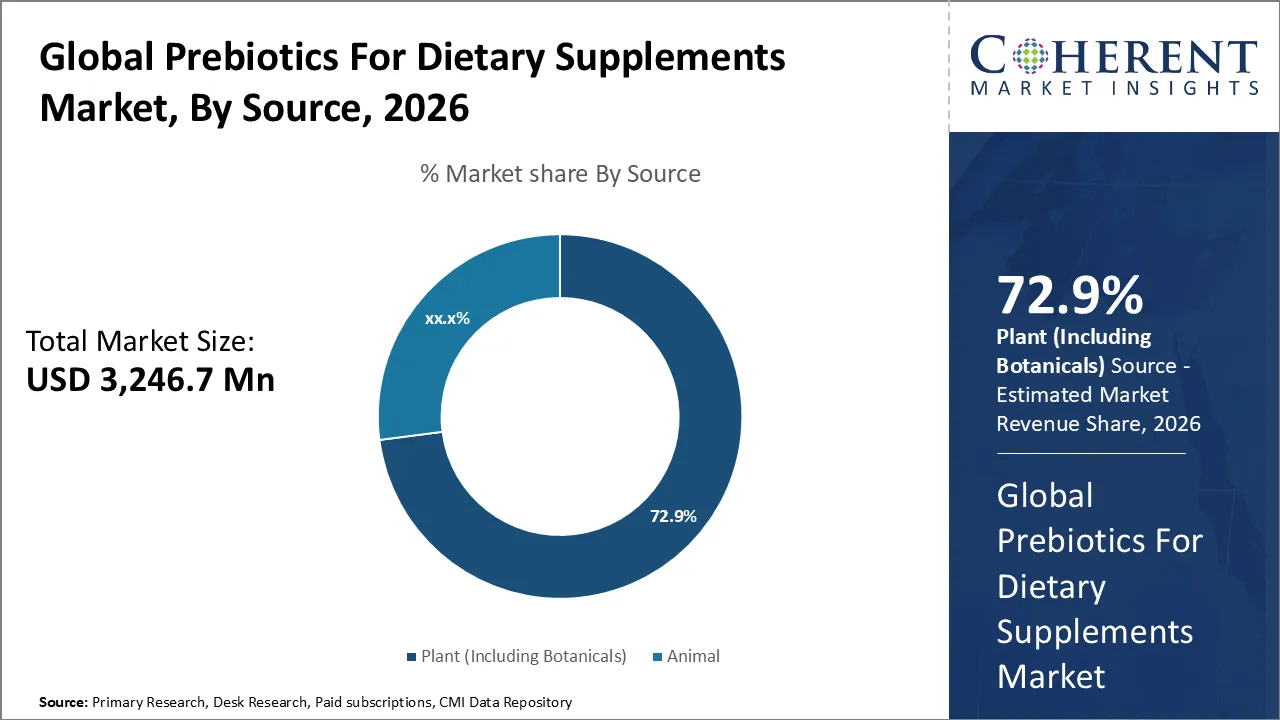
- Based on Source, the plant segment is expected to lead the market with 72.8% share in 2026, favored for sustainability, natural origin, and wide consumer acceptance globally.
- Based on Distribution Channel, the B2C (Branded) segment is projected to account 63.5% share of the market in 2026, ensuring trust, visibility, and consumer convenience.
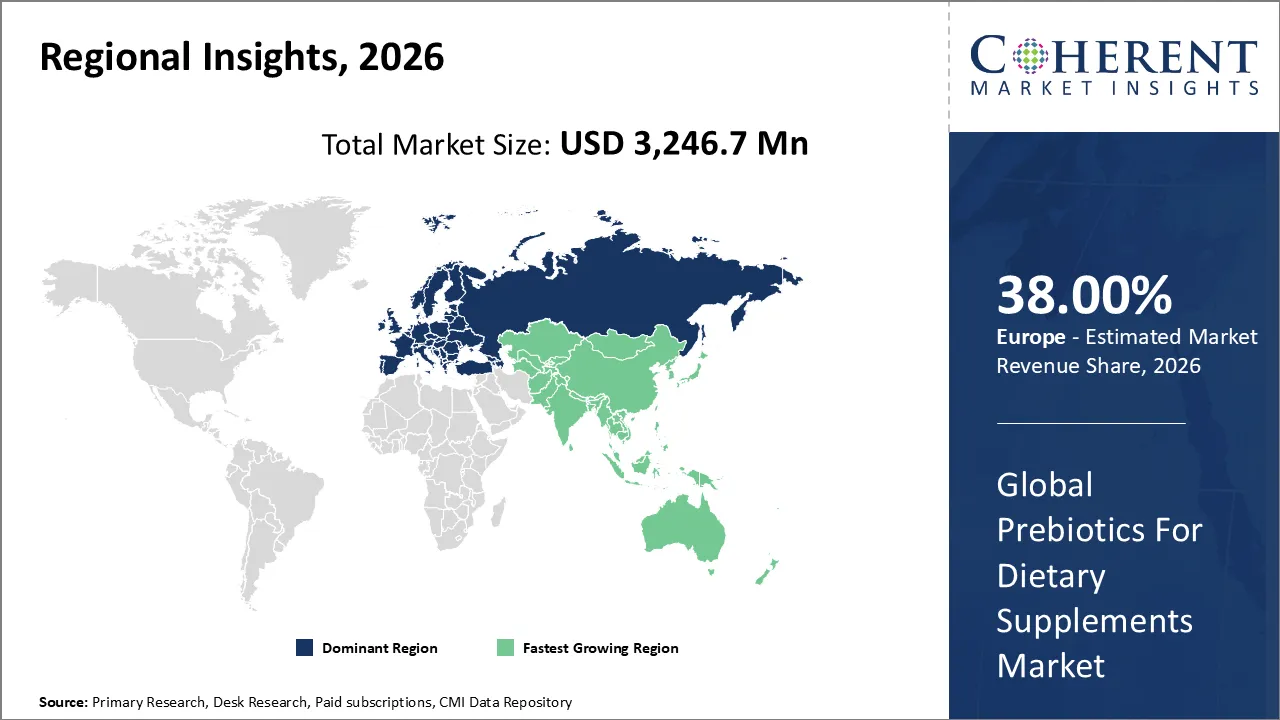
- Based on Region, Europe is set to lead the prebiotics for dietary supplements market with 38% share in 2026. While, Asia Pacific is anticipated to be the fastest growing.
Market Overview
The worldwide market for prebiotics used in dietary supplements is expanding rapidly. This surge is fueled by a growing understanding among consumers of the significance of digestive well-being, immune support, and natural nutrition. The demand for functional foods and innovative supplement formulations are key factors propelling this growth.
Current Events and their Impacts on the Prebiotics for Dietary Supplements Market
Current Event | Description and its Impact |
Regulatory Changes in Key Markets |
|
Technological Advancements in Prebiotic Development |
|
Can Prebiotics Transform Gut Health, Metabolism, and Mental Well‑Being Through Measurable Clinical Outcomes?
Benefit Area | Effect of Prebiotics | Statistical Impact |
Gut Microbiome Diversity | Increases bifidobacteria and lactobacilli populations | +20–40% in controlled trials |
Metabolic Benefits | Resistant starch supplementation improves glucose regulation | 15% reduction in postprandial glucose spikes (overweight adults) |
Mental Health Link | Prebiotics may lower stress hormone levels | Up to 18% reduction in cortisol |
Cardiovascular Health | Modulates gut microbiota to reduce risk factors | 5–10% reduction in LDL cholesterol and blood pressure in trials |
Immune Function | Enhances production of short-chain fatty acids (SCFAs) | Increase of 25–30% in SCFA levels |
Weight Management | Promotes satiety and reduces calorie intake | 8–12% lower energy intake in intervention groups |
Cognitive Function | Improves memory and attention via gut-brain axis | Early trials show 10–15% improvement in cognitive scores |
- Current Industry Events of 2026
- Market Size Estimation
- Regional Breakdown
- Competitive Landscape
- Customer Intelligence
- Segmental Analysis
- Pricing Analysis
- Key Market Drivers, Challenges & Future Trends
- Customized Insights Section
Segmental Insights
Is Fructo-Oligosaccharides’ dominance in prebiotic supplements driven by affordability and gut health benefits?
In terms of ingredient type, the Fructo-oligosaccharides (FOS) segment is expected to hold 37.2% share of the market in 2026, because they are affordable, they are good for gut health, and they can be used in supplements and functional foods. FOS are used in powders, capsules, and drinks, which makes them the most affordable and simple prebiotic choice for people all over the world.
Plant-based prebiotic supplements are gaining popularity, likely due to their sustainability, natural origins, and widespread acceptance
In terms of source, the plant segment is expected to lead the market with 72.8% share in 2026. Increasingly, consumers demand for ingredients derived from roots, grains, and plants that are natural, long-lasting, and good for the environment. Plant-based alternatives will likely remain the preferred option compared to animal-derived sources such as HMOs, owing to their broad availability, reduced production costs, and alignment with clean-label preferences.
A recent study conducted in June 2025 indicates that probiotics maintain their stability and efficacy within uncomplicated plant-based beverages, preserving their viability and sensory attributes throughout their shelf life. This finding facilitates the development of non-dairy functional drinks that promote gut health, thereby addressing the increasing consumer demand for vegan-friendly, clean-label nutritional products.
Will B2C channels predominate in probiotic supplement sales in 2026, driven by factors of trust and convenience?
In terms of distribution channel, the B2C (Branded) segment is projected to account 63.5% share of the market in 2026, since individuals trust branded products more when they buy them at pharmacies and supermarkets. These stores give credibility, convenience, and visibility, which helps them reach a large volume of customers.
For instance, in September 2025, in 2025, Balchem teamed up with FC Bayern Women to launch its first direct-to-consumer campaign, promoting its patented Vitamin K2 brand, K2VITAL, to more than 57,000 fans at the Allianz Arena. The goal of the campaign was to get more people to know about K2's health benefits by getting people involved in sports that connected B2B and B2C markets.
Regional Insights
Europe Prebiotics for Dietary Supplements Market Analysis & Trends
Europe is expected to dominate the probiotic for dietary supplements market with 38% share in 2026, due to consumers are extremely conscious of gut health, there are supportive rules in place, and the supplement culture is well-established. Europe is the biggest regional market due to functional foods are widely accepted and there are strong partnerships between healthcare providers and food companies.
For instance, in December 2025, The EmprendeXXI Awards named Genbioma, a Spanish biotech startup, the Most Innovative Startup for making probiotic and postbiotic supplements. Its patented strains help people with diabetes and prediabetes control their blood sugar levels, making probiotics more than just digestive health supplements and giving them a new role in metabolic health.
Asia Pacific Prebiotics for Dietary Supplements Market Analysis & Trends
Asia Pacific is anticipated to be the fastest growing, due to individuals are making larger investments, cities are growing quickly, and people are becoming more aware of the importance of preventive healthcare. India and China are driving consumption, and younger people are embracing functional foods and supplements, which is the fastest growth path in the region.
For instance, in January 2026, Bactolife and AceBiome have teamed up to launch a new gut health supplement in Korea. The product combines AceBiome's probiotics with Bactolife's Helm Binding Proteins to provide a complete dietary solution for gut health and immunity. After entering the Korean market, the company plans to expand into Southeast Asia.
Prebiotics for Dietary Supplements Market Outlook Country-Wise
Germany Prebiotics for Dietary Supplements Market Trends
Germany has a strong demand for prebiotics in dietary supplements in 2026 because it has an advanced nutrition research, people are extremely aware of gut health, and there is a long history of functional food culture. Germany is a major player in Europe's dominance in this market owing to its focus on preventive healthcare and trust in scientifically proven supplements.
For instance, in September 2025, from 2026 on, BioGaia AB, a Swedish company that makes probiotics, will handle its own distribution in Germany and Austria. By opening BioGaia Germany, the company makes it easier for people to get its clinically proven probiotic supplements for gut, immune, and oral health in two European dietary supplement markets that are growing.
China Prebiotics for Dietary Supplements Market Trends
China's demand for prebiotics in dietary supplements is growing in 2026 due to more people are moving to cities, middle-class incomes are rising, and growing awareness on digestive health. China is the main driver of the fastest-growing prebiotics market in the Asia-Pacific region, making the government strongly supports preventive healthcare and people in China prefer functional foods.
For instance, in January 2026, Scientists at Nanjing Agricultural University and Xiamen University in China created engineered probiotics that can be programmed to act as living medicines. Using synthetic biology, these probiotics can find disease signals and send therapeutic molecules to treat cancer, inflammatory bowel disease, metabolic disorders, and infections. This takes probiotics beyond their usual role as dietary supplements and turns them into precision therapeutics.
Market Report Scope
Prebiotics for Dietary Supplements Market Report Coverage
| Report Coverage | Details | ||
|---|---|---|---|
| Base Year: | 2025 | Market Size in 2026: | USD 3,246.7 Mn |
| Historical Data for: | 2020 To 2024 | Forecast Period: | 2026 To 2033 |
| Forecast Period 2026 to 2033 CAGR: | 10.2% | 2033 Value Projection: | USD 6,509.1 Mn |
| Geographies covered: |
| ||
| Segments covered: |
| ||
| Companies covered: | Clasado Biosciences, VW-Ingredients, Shandong Longli Biotechnology Co., Ltd, Prenexus Health., Ingredion, Tata Chemicals Ltd., Yakult Honsha Co., Ltd., Tate & Lyle, Roquette Frères, Cosucra, International Flavors & Fragrances Inc., Nestlé S.A., Renew Life, Mimi's Rock Corp, Procter & Gamble, AIDP, Hyperbiotics, Jarrow Formulas, Inc., InnovixLabs, Life Extension, Metabolic Maintenance, Naturesvelvet, and others prominent players. | ||
| Growth Drivers: |
| ||
| Restraints & Challenges: |
| ||
Prebiotics for Dietary Supplements Market Driver
Increasing awareness about prebiotic products
Consumers are becoming more health-conscious, resulting in rising awareness of the benefits of prebiotic products. Prebiotics help the gut stay healthy by encouraging the growth of good bacteria. This helps with digestion and immunity. As more people become interested in natural and functional foods, prebiotics are being added to in greater numbers dietary supplements. This trend is a big part of the Prebiotics for Dietary Supplements Market growth because people of all ages and regions are seeking for ways to stay healthy and prevent illness.
Increasing prevalence of gastrointestinal diseases
There is a strong need for effective dietary solutions because a growing number people are getting gastrointestinal disorders like irritable bowel syndrome, constipation, and acid reflux. Prebiotics are crucial for getting the balance of gut microbiota which has a direct effect on digestive health. As more people have trouble with their digestion, the need for supplements that contain prebiotics is growing quickly. this surge in health concerns is fueling the prebiotics for dietary supplements market demand, as consumers are actively searching for natural ways to deal with and avoid stomach problems.
Prebiotics for Dietary Supplements Market Opportunity
Healthcare Partnerships
Healthcare partnerships present a significant opportunity within the prebiotics for dietary supplements market forecast. Collaborating with hospitals, clinics, and nutritionists can enhance the perceived credibility and trustworthiness of prebiotic supplements, demonstrating their scientifically validated benefits for digestive health. These partnerships also facilitate clinical trials, patient education, and prescription-based recommendations. By integrating prebiotics into healthcare ecosystems, companies can broaden their reach, establish brand authority, and accelerate adoption among individuals seeking preventive care and long-term wellness solutions.
Analyst Opinion (Expert Opinion)
- Analysts are seeing a growing interest in prebiotics in dietary supplements. This is because people are becoming more aware of the connection between gut health and things like immunity, metabolism, and mental health. Reports from the industry show a growing number of functional foods, drinks, and supplements are using prebiotic ingredients like inulin and fructo-oligosaccharides. This shows that the product range is expanding.
- The market is growing because scientists have proven that prebiotics can change the microbiome. Innovation based on research, along with a growing preference for natural and clean-label products, has led to higher sales in both developed and emerging markets. This will help the sector continue to grow in the long term.
Speak to the analyst
Want personalized insights?
Take the findings above to one of our principal consultants, or have the report rebuilt around the segments, geographies and competitors you actually track.
Recent Developments
- In March 2026, Vidya Herbs has built a new factory in Florida just for making probiotics. This represents a significant step forward for the company within the U.S. nutraceutical market. The new facility will boost probiotic production, addressing the escalating demand for gut health products. This investment positions Vidya to reach a wider global audience, aligning with the increasing popularity of functional supplements.
- In August 2025, In Israel, Ecosupp introduced a new line of probiotic supplements. These include REBALANCE for recovery after antibiotics, ZEN for gut-brain support during times of stress, and BASE-IT for daily digestive balance. These sachet-based powders use ProBioAct technology to make sure that active bacteria get to the intestines. Prices are between NIS 129.90 and 159.90.
Market Segmentation
- By Ingredient Type
- Galacto-oligosaccharides (GOS)
- Fructo-oligosaccharides (FOS)
- Xylooligosaccharides (XOS)
- Isomaltooligosaccharides (IMO)
- Human milk oligosaccharides (HMO)
- By Source
- Plant (Including Botanicals)
- Animal
- By Distribution Channel
- B2B (Generic)
- Broker
- Direct (Supplier to client)
- B2C (Branded)
- Pharmacies
- Specialty Stores
- Hypermarket and Supermarket
- By Region
- North America
- U.S.
- Canada
- Latin America
- Brazil
- Argentina
- Mexico
- Rest of Latin America
- Europe
- Germany
- U.K.
- Spain
- France
- Italy
- Russia
- Rest of Europe
- Asia Pacific
- China
- India
- Japan
- Australia
- South Korea
- ASEAN
- Rest of Asia Pacific
- Middle East
- GCC Countries
- Israel
- Rest of Middle East
- Africa
- South Africa
- North Africa
- Central Africa
- North America
- Key Players
- Clasado Biosciences
- VW-Ingredients
- Shandong Longli Biotechnology Co., Ltd
- Prenexus Health.
- Ingredion
- Tata Chemicals Ltd.
- Yakult Honsha Co., Ltd.
- Tate & Lyle
- Roquette Frères
- Cosucra
- International Flavors & Fragrances Inc.
- Nestle S.A.
- Renew Life
- Mimi's Rock Corp
- Procter & Gamble
- AIDP
- Hyperbiotics
- Jarrow Formulas, Inc.
- InnovixLabs
- Life Extension
- Metabolic Maintenance
- Naturesvelvet
Sources
Primary Research Interviews
- Prebiotic Ingredient Manufacturers
- Dietary Supplement Manufacturers
- Contract Manufacturers / Nutraceutical Formulators
- Distributors & Raw Material Suppliers
- Gastrointestinal Health / Nutrition Consultants
- Regulatory & Product Development Experts
- Others
Databases
- Bloomberg Terminal
- Euromonitor International
- Others
Magazines
- NutraIngredients
- Nutraceuticals World
- Nutraceutical Business Review
- Food Business News
- Nutrition Industry Executive
- Others
Journals
- Nutrients
- Journal of Functional Foods
- Beneficial Microbes
- Frontiers in Nutrition
- Food & Function
- Others
Newspapers
- Financial Times
- The Wall Street Journal
- Reuters
- Bloomberg News
- Others
Associations
- International Scientific Association for Probiotics and Prebiotics (ISAPP)
- International Probiotics Association (IPA)
- International Alliance of Dietary/Food Supplement Associations (IADSA)
- Council for Responsible Nutrition (CRN)
- Others
Public Domain Sources
- U.S. National Institutes of Health (NIH) – Office of Dietary Supplements
- U.S. Food and Drug Administration (FDA)
- European Food Safety Authority (EFSA)
- World Health Organization (WHO)
- Food and Agriculture Organization (FAO)
- Others
Proprietary Elements
- CMI Data Analytics Tool
- Proprietary CMI Existing Repository of Information for the Last 8 Years
Get access to 250+ pages report
Every segment, forecast, competitor profile and data table behind the analysis above — available for instant download.
- ESOMAR Member
- ISO 9001:2015 Certified
- D-U-N-S Registered
- GDPR & CCPA Compliant
Missing comfort of reading report in your local language? Find your preferred language:
Transform your Strategy with Exclusive Trending Reports
Frequently Asked Questions
The global Prebiotics for Dietary Supplements Market size was valued at USD 3,246.7 Mn in 2026 and is expected to reach USD 6,509.1 Mn in 2033.
The global prebiotics for dietary supplements market size is estimated to be valued at USD 3,246.7 Mn in 2026, and is expected to exhibit a CAGR of 10.2% between 2026 and 2033.
Increasing awareness about prebiotic products and increasing prevalence of gastrointestinal diseases is expected to drive the market growth over the forecast period.
Plant (Including Botanicals) segment is expected to hold the major market share, owing to novel product launches by key players.
North America holds the largest market share in the market.
High cost of prebiotic ingredients and associated side effects of prebiotics are some factors which are expected to hamper growth of the global prebiotics for market over the forecast period.
Major players operating in the market include Clasado Biosciences, VW-Ingredients, Shandong Longli Biotechnology Co., Ltd, Prenexus Health., Ingredion, Tata Chemicals Ltd., Yakult Honsha Co., Ltd., Tate & Lyle, Roquette Frères, Cosucra, International Flavors & Fragrances Inc., Nestlé S.A., Renew Life, Mimi's Rock Corp, Procter & Gamble, AIDP, Hyperbiotics, Jarrow Formulas, Inc., InnovixLabs, Life Extension, Metabolic Maintenance, Naturesvelvet, and others prominent players.