

Plasma Protease C1-inhibitor Treatment Market Size and Share Analysis: 2026 - 2033
The Plasma Protease C1-inhibitor Treatment market is anticipated to grow at a CAGR of 9.1% with USD 4.38 Bn in 2026 and is expected to reach USD 8.06 Bn in 2033. The increasing focus of biopharmaceutical companies on development of effective plasma protease C1-inhibitor treatment drugs/therapy treating various health conditions such as HAE, diabetic macular edema (DME) (GlobalData estimates that in 2024, approximately 81% of diagnosed prevalent cases of DME in diabetes were center involving or ci-DME), and others, is expected to drive growth of the plasma protease C1-inhibitor treatment market.
Key Takeaways
- C1-inhibitors is expected to account the largest share of 65% in 2026, C1-inhibitors are the standard therapy for hereditary angioedema (HAE), which drives the majority of market revenue. HAE affects around one in every 50,000 people.
- Based on dosage, Lyophilized will dominate with 70% in 2026, due to its long-standing use in HAE treatment and established global approvals. Innovative therapies like lonvo-z, using CRISPR/Cas9 technology, could potentially provide a one-time treatment for HAE in the future.
- Based on distribution channel, hospital pharmacies will dominate with 60% in 2026, the market is heavily hospital-focused due to the specialized nature of HAE treatments. An estimated 160,000 individuals worldwide suffer from HAE, an unpredictable and often debilitating disorder that adversely impacts quality of life, which need proper treatment for the cure.
- North America is expected to acquire the dominant share of 50% in 2026, owing to increasing approvals of novel therapies by the regulatory agencies. 50 novel drugs were approved, marking one of the highest annual totals in the past decade.
Segmental Insights
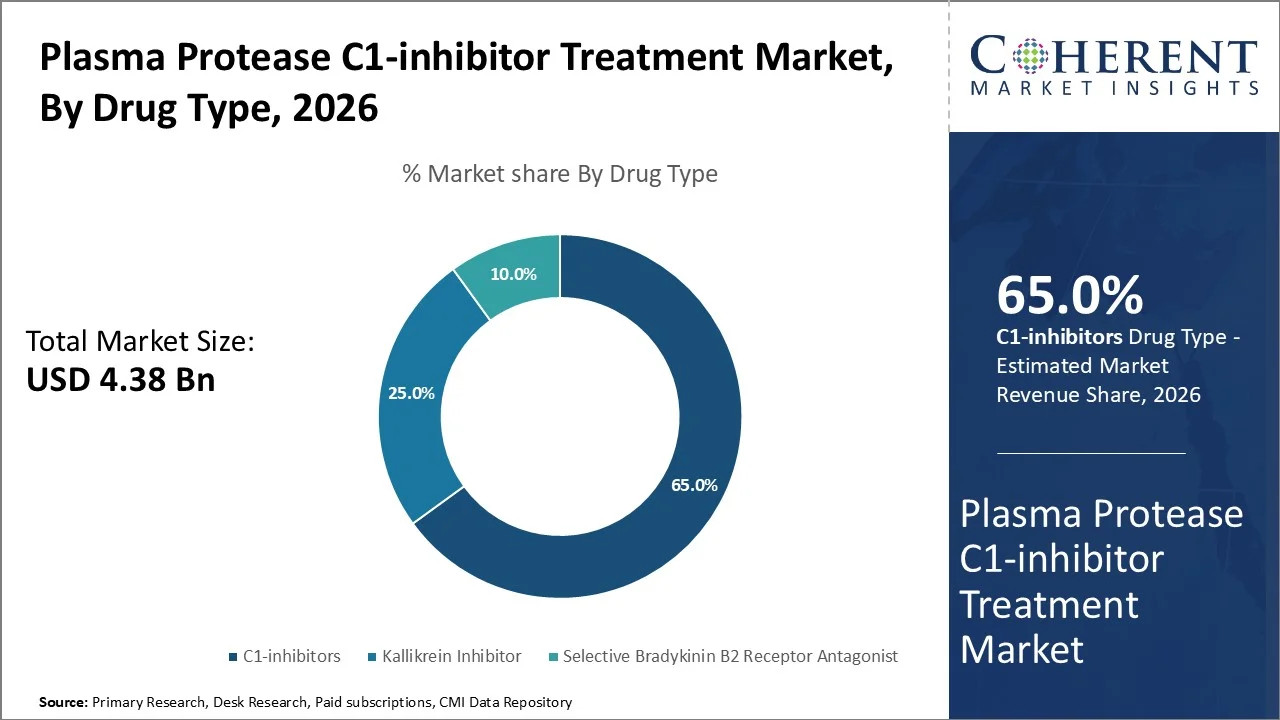
Why is C1-inhibitors Acquiring the Largest Market Share?
C1-inhibitors is projected to account for the largest share of drug type in 2026, representing approximately 65% of the total volume. C1-inhibitors are extensively used because they work well, and are approved by regulators, as well as being recommended in many HAE treatment guidelines. In 2025, about 1.22 people per 100,000 had HAE, with lower numbers in Asia and Africa compared to Europe and North America.
C1-inhibitors are the most used as they directly replace the missing or faulty C1-esterase inhibitor protein in people with HAE.
This therapeutic approach addresses the root cause of the complement as well as contact system dysregulation, making it the gold standard treatment recommended by leading medical organizations including the World Allergy Organization (WAO), the European Medicines Agency (EMA), etc.
- Current Industry Events of 2026
- Market Size Estimation
- Regional Breakdown
- Competitive Landscape
- Customer Intelligence
- Segmental Analysis
- Pricing Analysis
- Key Market Drivers, Challenges & Future Trends
- Customized Insights Section
Lyophilized holds the Largest Market Share
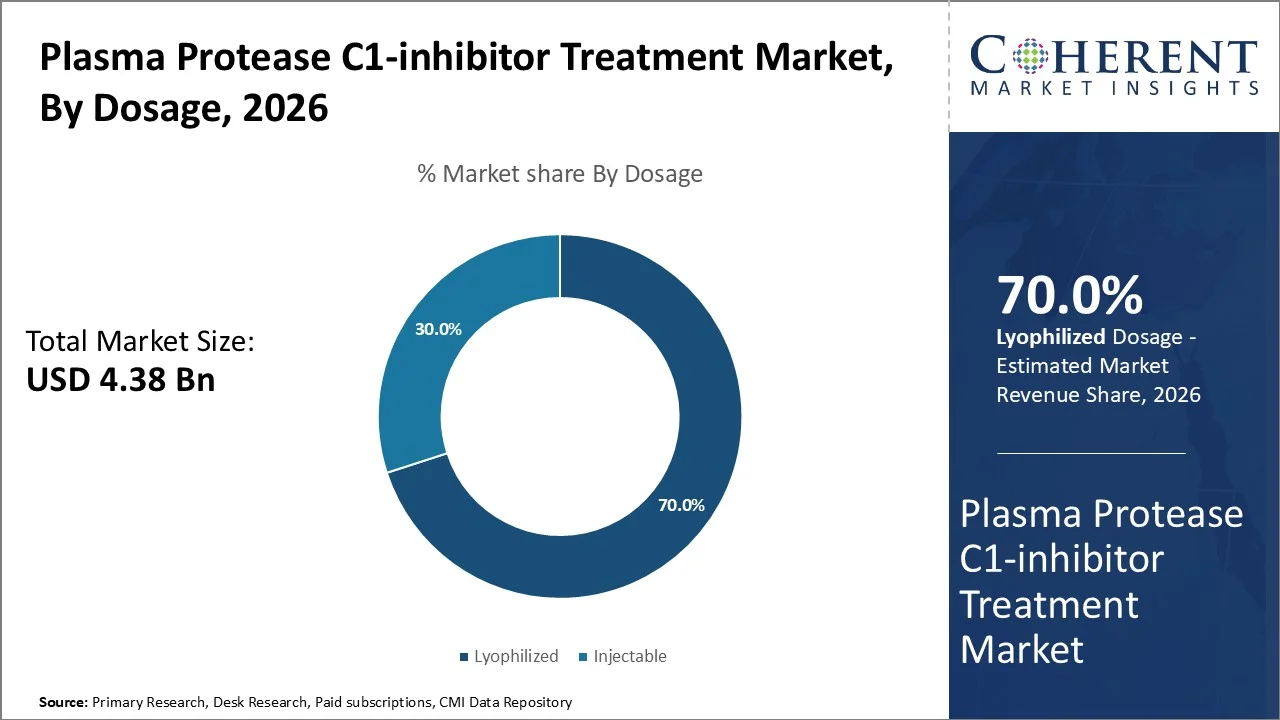
Based on dosage, lyophilized dominates the market, accounting for a significant 70% share in 2026, owing to its superior stability characteristics, extended shelf life, as well as established clinical protocols that have been improved over decades of therapeutic application. The lyophilized formulation of C1-inhibitor reflects a freeze-dried powder that holds the protein's structural integrity as well as biological activity for a longer periods compared with liquid formulations.
According to a study conducted by the National Library of Medicine in 2025, the number of FDA approvals for lyophilized injectables has surged by over 300% since 2000s. Most of the lyophilized medicines are generic small molecule drugs (70% in 2022).
Similarly, over 70% (14 out of 19) of antibiotics on the Essential Medicines list are supplied as lyophilized sterile powders for injection.
C1-inhibitor products need to stay stable because the protein is fragile and can break down in liquid form. The World Health Organization recommends keeping the protein stable during storage and shipping, which is why freeze-dried (lyophilized) forms are usually used around the world.
Hospital Pharmacies holds the Largest Market Share
Based on distribution channel, hospital pharmacies dominates the market, accounting for a significant 60% share in 2026, their dominance reflects the specialized infrastructure and clinical expertise required for administering plasma-derived therapies, particularly for hereditary angioedema patients.
The market’s expansion is supported by strong plasma supply networks. For instance, BioLife Plasma Services, part of Takeda, operates over 260 advanced plasma collection facilities across the U.S. and Europe, making a stable, high-quality plasma supply. This reliable access to plasma makes sure manufacturers to scale production of C1-inhibitor therapies.
Hospital pharmacies serve as the primary distribution hub for C1-inhibitor treatments due to the critical nature of hereditary angioedema (HAE) as well as acquired C1-inhibitor deficiency conditions that usually require instant medical treatment along with specialized storage conditions.
The dominance of hospital pharmacies comes from their ability to maintain the cold chain storage requirements essential for plasma protease C1-inhibitor products, which majorly need refrigeration between 2-8°C to maintain their therapeutic efficacy.
According to the World Federation of Hemophilia, specialized treatment centers and hospital-based facilities handle approximately 70% of plasma-derived therapeutic distributions globally, primarily because these products require careful handling, proper storage, as well as trained pharmaceutical staff who understand the complexities of coagulation disorders as well as immune deficiencies.
Recombinant C1-Inhibitor Production: A major breakthrough in Plasma Protease C1-inhibitor Treatment
Recombinant C1-inhibitors are made using new methods to make safe as well as scalable treatments. For example, Pharming Group uses rabbit milk to make Ruconest (conestat alfa), which operates like human protein, avoids blood-borne infection risks, as well as can be produced in large amounts. This method has been successful, earning €47.2 million for Pharming in 2023, and the drug is approved for treating HAE attacks in the EU (2010) and the US (2014).
Other production way include mammalian cell culture, particularly CHO cells, etc., which offer scalability but face challenges in achieving proper glycosylation, as well as plant-based systems, such as transient expression in Nicotiana benthamiana, which are pocket friendly but still showing regulatory hurdles. These diverse platforms collectively advance the development of recombinant C1-inhibitor therapies with improved safety, supply, as well as production flexibility.
Current Events and Their Impact on the Plasma Protease C1-inhibitor Treatment Market
Current Event | Description and its Impact |
FDA Rare Disease Guidance Update (2025) |
|
FDA Approval of Subcutaneous C1-Inhibitor Formulations (2024) |
|
Plasma Protease C1-inhibitor Treatment Market Trends
- High Disease Awareness & Diagnosis: Advancement in diagnostic protocols and physician education programs are leading to earlier detection of C1-inhibitor deficiency disorders, expanding the diagnosed patient pool by approximately 15-20% annually.
- More patients are using regular preventive (prophylactic) treatment instead of only treating attacks, which is helping the market grow. Preventive treatments cost more because they improve patient health. Long-term preventive treatment (LTP) has been shown to reduce how often HAE attacks happen.
- The HAE Global Registry (2025) shows that treatment for HAE varies a lot between countries. On average, 56% of patients get on-demand therapy (range 33–100%), which means almost half of patients are now using regular preventive (prophylactic) treatment.
- Patent expirations of major branded products are building opportunities for biosimilar entrants, though complex manufacturing requirements continue to limit competition.
- Development of subcutaneous formulations and extended half-life products is enhancing patient compliance as well as quality of life metrics.
Regional Insights
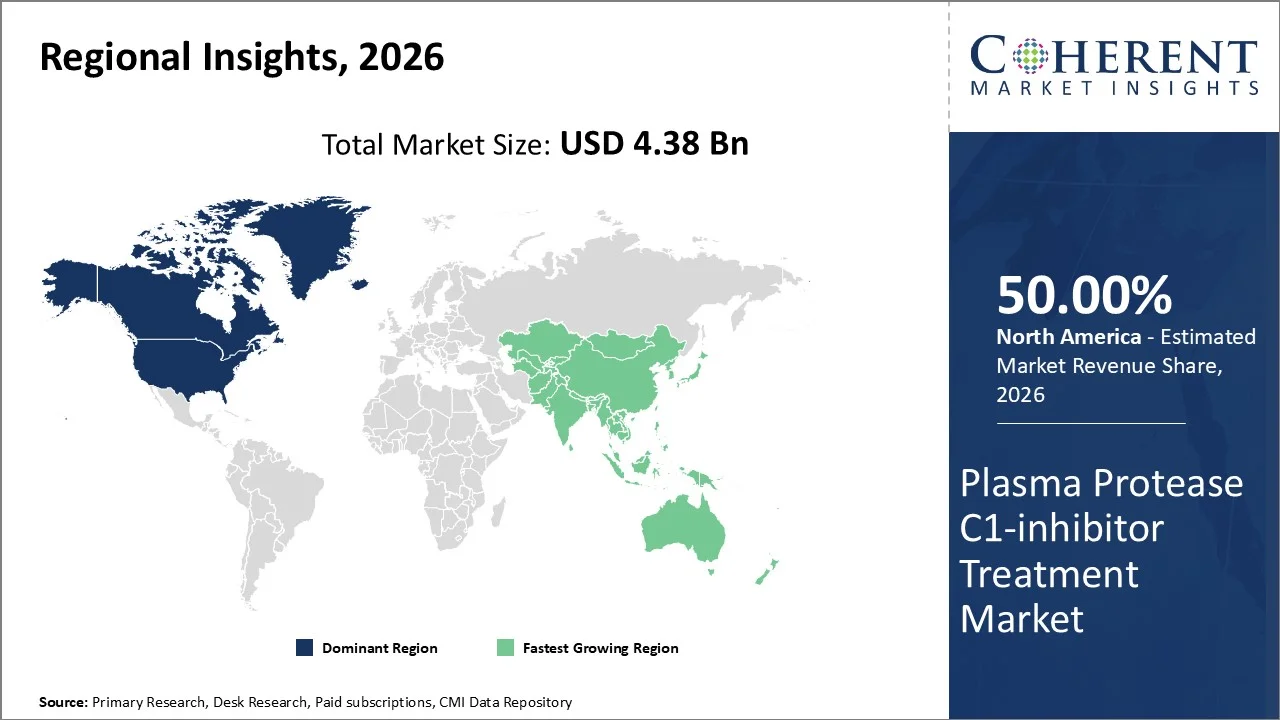
North America dominates owing to its robust healthcare infrastructure
North America account 50% market share in 2026, owing to its bolstering healthcare infrastructure, advanced medical research capabilities, as well as comprehensive regulatory framework that facilitates rapid adoption of specialized treatments like Plasma Protease C1-inhibitor therapy. According to the American Hospital Association, there are 6,100 hospitals in the United States that facilitates specialized treatments.
The region is dominated by the presence of world-class medical institutions such as Mayo Clinic, Johns Hopkins, and Cleveland Clinic, which have established specialized centers for hereditary angioedema and complement system disorders. The National Institutes of Health (NIH) has been instrumental in funding research initiatives focused on complement deficiencies, with recent grants exceeding USD15 million allocated specifically for C1-inhibitor research programs.
Asia Pacific Plasma Protease C1-inhibitor Treatment Market Trends
The Asia-Pacific region is poised to be the fastest-growing region through 2026-2033, expanding at a CAGR of approximately 7.5%. The region experiencing growth owing to fast expanding healthcare infrastructure as well as increasing diagnostic capabilities across emerging economies. Moreover, significant investments in rare disease diagnosis and treatment facilities, particularly in countries like China, India, and Southeast Asian nations, is another factore responsible for the growth of the market. The Asia-Pacific region, home to 60% of the global population, has the highest number of Persons Living with a rare disease (PLWRD). Similarly, according to a data published in the World Economic Forum, globally, there are around 400 million people living with rare diseases, with around 250 million of them in Asia.
The Asia-Pacific Society for Primary Immunodeficiencies has launched comprehensive training programs for healthcare professionals, advancing recognition as well as diagnosis of hereditary angioedema cases that were previously underdiagnosed.
Government actions are helping patients with C1-inhibitor deficiency. In China, rare disease policies include C1-inhibitor deficiency in national registries, making it easier to find patients and give them treatment. In Japan, the drug agency speeds up approval for C1-inhibitor products, and local companies like Mitsubishi Tanabe Pharma are creating plans to distribute them across the country.
Its Robust Healthcare Infrastructure is Accelerating the Plasma Protease C1-inhibitor Treatment Market Demand in United States
The U.S. contributes the highest share in the Plasma Protease C1-inhibitor Treatment Market in North America owing to its robust healthcare infrastructure, advanced research capabilities, and comprehensive regulatory framework that facilitates faster drug approvals and market access.
The United States Food and Drug Administration (FDA) has been instrumental in approving several C1-inhibitor treatments, including Berinert, Cinryze, as well as Ruconest, providing patients with multiple therapeutic options for hereditary angioedema (HAE) and acquired angioedema management.
Japan Plasma Protease C1-inhibitor Treatment Market Trends
Japan contributes the highest share in the Plasma Protease C1-inhibitor Treatment Market in Asia Pacific owing to its highly developed healthcare infrastructure, stringent regulatory framework, as well as established pharmaceutical ecosystem. The country is dominating owing to its advanced diagnostic capabilities and early adoption of specialized treatments for hereditary angioedema (HAE) and other complement-mediated disorders.
Japan's Pharmaceuticals and Medical Devices Agency (PMDA) has maintained a comprehensive approval pathway for plasma-derived therapeutics, facilitating market access for C1-inhibitor products.
Who are the Major Companies in Plasma Protease C1-inhibitor Treatment Industry
Some of the major key players in Plasma Protease C1-inhibitor Treatment Market include, CSL Behring LLC, Takeda Pharmaceutical Company Limited, Ionis Pharmaceuticals, Inc., Pharming Technologies B.V., Centogene AG, BioCryst Pharmaceuticals, and KalVista Pharmaceuticals, Inc.
Key News
- In February 2026, the U.S. Food and Drug Administration (FDA) issued draft guidance designed to speed the development and approval of targeted, individualized therapies for ultra-rare diseases, such as hereditary angioedema (HAE). The framework allows sponsors to demonstrate safety and effectiveness even when traditional randomized controlled trials are impractical due to small patient populations.
- In October 2025, Pharvaris,a late-stage biopharmaceutical company developing novel, oral bradykinin B2 receptor antagonists to help address unmet needs of those living with bradykinin-mediated diseases such as hereditary angioedema (HAE) and acquired angioedema due to C1 inhibitor deficiency (AAE-C1INH), today announced the acceptance of two abstracts for oral presentation and six for poster presentation at the American College of Allergy, Asthma, and Immunology (ACAAI) 2025 Annual Scientific Meeting to be held from November 6-10, in Orlando, Florida.
Market Report Scope
Plasma Protease C1-inhibitor Treatment Market Report Coverage
| Report Coverage | Details | ||
|---|---|---|---|
| Base Year: | 2025 | Market Size in 2026: | USD 4.38 Bn |
| Historical Data for: | 2020 To 2024 | Forecast Period: | 2026 To 2033 |
| Forecast Period 2026 to 2033 CAGR: | 9.1% | 2033 Value Projection: | USD 8.06 Bn |
| Geographies covered: |
| ||
| Segments covered: |
| ||
| Companies covered: | CSL Behring LLC, Takeda Pharmaceutical Company Limited, Ionis Pharmaceuticals, Inc., Pharming Technologies B.V., Centogene AG, BioCryst Pharmaceuticals, and KalVista Pharmaceuticals, Inc. | ||
| Growth Drivers: |
| ||
| Restraints & Challenges: |
| ||
Analyst Opinion
- The market for Plasma Protease C1-inhibitor treatments is bolstered by many people with hereditary angioedema (HAE) and other rare complement-related diseases still need better care. The U.S. FDA Rare Disease Report shows there are about 10,000–15,000 diagnosed HAE patients in the U.S., but many do not get enough treatment. C1-inhibitor therapies aid fill this gap.
- Subcutaneous as well as recombinant C1-inhibitor treatments are being utilized more in new markets. Recent approvals in 2024–2025, like the FDA approval of under-the-skin C1-inhibitor therapies, have made treatment streamlined, aid patients follow their treatment as well as make better quality of life.
- The Asia-Pacific market is growing mostly because of Japan. Strong plasma collection systems as well as fast-track orphan drug rules by the PMDA aid more patients get C1-inhibitor treatments.
- Another growth inducing factor is the strong regulatory tailwinds, including the EU Orphan Drug Regulation revision (2025) as well as PMDA fast-track pathways, which lower development risk as well as support innovation. The investment in recombinant as well as next-generation C1-inhibitors will continue to attract biotech players.
Speak to the analyst
Want personalized insights?
Take the findings above to one of our principal consultants, or have the report rebuilt around the segments, geographies and competitors you actually track.
Plasma Protease C1-inhibitor Treatment Market Segmentation
- By Drug Type (Revenue, USD Bn, 2021-2033)
- C1-inhibitors
- Kallikrein Inhibitor
- Selective Bradykinin B2 Receptor Antagonist
- By Dosage (Revenue, USD Bn, 2021-2033)
- Lyophilized
- Injectable
- By Distribution Channel (Revenue, USD Bn, 2021-2033)
- Hospital Pharmacies
- Retail Pharmacies
- Online Pharmacies
- Global Plasma Protease C1-inhibitor Treatment Market, By Region (Revenue, USD Bn, 2021-2033)
- North America
- U.S.
- Canada
- Latin America
- Brazil
- Mexico
- Argentina
- Rest of Latin America
- Europe
- Germany
- U.K.
- France
- Italy
- Spain
- Russia
- Rest of Europe
- Asia Pacific
- China
- India
- Japan
- Australia
- South Korea
- ASEAN
- Rest of Asia Pacific
- Middle East
- GCC
- Israel
- Rest of Middle East
- Africa
- South Africa
- Central Africa
- North Africa
- North America
- Key Players
- CSL Behring LLC
- Takeda Pharmaceutical Company Limited
- Ionis Pharmaceuticals, Inc.
- Pharming Technologies B.V.
- Centogene AG
- BioCryst Pharmaceuticals
- KalVista Pharmaceuticals, Inc.
Sources
Primary Research Interviews
- Chief Medical Officers and Clinical Directors from rare disease treatment centers
- Regulatory Affairs Managers from plasma-derived therapeutics companies
- Hospital Pharmacy Directors specializing in immunology treatments
- Healthcare Reimbursement Specialists for orphan drugs
- Others
Databases
- FDA Orange Book Database
- EMA European Medicines Database
- WHO Global Health Observatory Data Repository
- ClinicalTrials.gov Database
- Others
Magazines
- BioPharm International
- Pharmaceutical Commerce
- BioPharma Dive
- Rare Disease Report Magazine
- Others
Journals
- Journal of Allergy and Clinical Immunology
- Clinical Immunology
- Transfusion Medicine Reviews
- Others
Newspapers
- The Wall Street Journal (Healthcare Section)
- Financial Times (Pharmaceuticals Coverage)
- Reuters Health News
- Bloomberg Healthcare
- Others
Associations
- International Plasma and Fractionation Association (IPFA)
- Plasma Protein Therapeutics Association (PPTA)
- US Hereditary Angioedema Association
- European Society for Primary Immunodeficiencies (ESID)
- Others
Public Domain Sources
- FDA Drug Approvals and Database Updates
- European Medicines Agency Public Assessment Reports
- CMS Medicare Coverage Database
- National Institutes of Health (NIH) Publications
- Others
Proprietary Elements
- CMI Data Analytics Tool
- Proprietary CMI Existing Repository of information for last 10 years
Get access to 250+ pages report
Every segment, forecast, competitor profile and data table behind the analysis above — available for instant download.
- ESOMAR Member
- ISO 9001:2015 Certified
- D-U-N-S Registered
- GDPR & CCPA Compliant
Missing comfort of reading report in your local language? Find your preferred language:
Transform your Strategy with Exclusive Trending Reports
Frequently Asked Questions
The plasma Protease C1-inhibitor Treatment market is expected to reach USD 8.06 Bn in 2033.
Major players operating in the global Plasma Protease C1-inhibitor Treatment market include CSL Behring LLC, Takeda Pharmaceutical Company Limited, Ionis Pharmaceuticals, Inc., Pharming Technologies B.V., Centogene AG, BioCryst Pharmaceuticals, and KalVista Pharmaceuticals, Inc.
The rare occurrence of the HAE makes it difficult for efficient diagnosis and opting alternative therapies to control the disease are the major factors that are expected to restrain the plasma protease c1-inhibitor treatment market growth over the forecast period.
Increasing products approvals, rising research and development, adoption of inorganic growth strategies by key players are the factors that are driving growth of the global plasma protease C1-inhibitor treatment market.
The Plasma Protease C1-inhibitor Treatment market is anticipated to grow at a CAGR of 9.1% between 2026 and 2033.
Among regions, North America is expected to account for a largest market share in the global Plasma Protease C1-inhibitor Treatment market over the forecast period.