

Niemann-Pick Disease Drug Type C Treatment Market Analysis & Forecast 2032
The Niemann-Pick disease drug type c treatment market was valued at USD 100.9 Mn in 2026 and is forecast to reach a value of USD 406.0 Mn by 2033 at a CAGR of 22% between 2026 and 2033.
Key Takeaways
- Based on Drug Type, the phase III drugs such as Trappsol Cyclo and IB1001 segment dominates the market with 57.8% share in 2026.
- Based on Indication, the Niemann-Pick Disease Drug Type C1 segment is expected to hold 88.2% share of the market in 2026.
- Based on Distribution Channel, the hospital pharmacies segment is expected to lead the market with 66.4% share in 2026.
- Based on Region, North America is set to lead the Niemann-Pick disease drug type C Treatment market with 48% share in 2026. While, Asia Pacific is projected to be the fastest growing region.
Market Overview
Niemann-Pick disease type C (NPC) is a rare genetic disorder that is a type of lysosomal storage disorder. NPC leads to accumulation of cholesterol and other fatty substances in different tissues of the body, such as brain and others.
The onset of specific symptoms for NPC varies from person to person. In most cases, the symptoms appear in the childhood, which progresses to cause life-threatening complications with increasing age. NPC occurs as a result of mutations in the NPC 1 gene and NPC 2 gene, which is inherited in an autosomal recessive manner.
Current Events and their Impacts on the Niemann-Pick Disease Drug Type C Treatment Market
Current Event | Description and its Impact |
Regulatory and Drug Approval Developments |
|
Healthcare Infrastructure and Reimbursement Policy Changes |
|
How Prevalent is Niemann-Pick Disease Type C?
Category | Data / Statistics | Notes |
Global Prevalence | ~1 in 100,000–120,000 live births | Rare, often underdiagnosed |
Frequency (Alternative Estimate) | ~1 in 150,000 live births | Some studies report slightly lower prevalence |
Diagnosed Patients Worldwide | 1,200–1,500 | Likely underestimated due to misdiagnosis |
US Prevalence (Claims Data) | ~300–500 patients | Based on insurance and treatment records |
Median Age of Onset | ~10 years | Symptoms can appear from infancy to adulthood |
Mortality Window | Most patients die between ages 10–25 | Premature death is common without effective treatment |
Genetic Basis | Mutations in NPC1 (~95%) or NPC2 (~5%) | Autosomal recessive inheritance |
Clinical Heterogeneity | Hepatosplenomegaly, ataxia, dementia, psychiatric symptoms | Often misdiagnosed as other childhood dementias |
Regional Distribution | Higher diagnosis rates in US, EU, Japan | Pharma G7 countries dominate patient flow studies |
Life Expectancy | Infantile onset: <10 years; Juvenile onset: teens–20s; Adult onset: 30s–40s | Later onset correlates with longer survival |
- Current Industry Events of 2026
- Market Size Estimation
- Regional Breakdown
- Competitive Landscape
- Customer Intelligence
- Segmental Analysis
- Pricing Analysis
- Key Market Drivers, Challenges & Future Trends
- Customized Insights Section
Segmental Insights
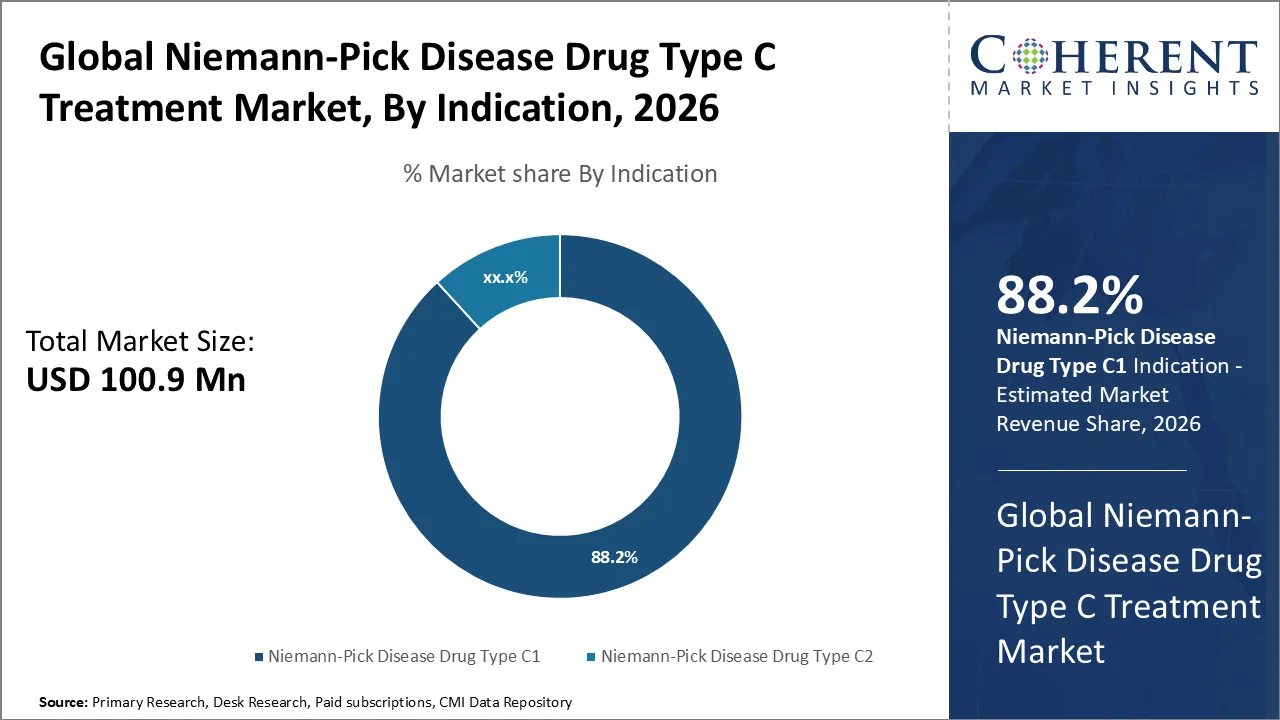
Niemann-Pick Disease Drug Type C Treatment Market Insights, By Indication - NPC1 leads the due to its higher prevalence and concentrated treatment demand
In terms of indication, the Niemann-Pick Disease Drug Type C1 segment is expected to hold 88.2% share of the market in 2026. Most diagnosed cases are NPC1, driving demand for targeted therapies. Research pipelines, clinical trials, and treatment approvals mostly focus on NPC1. This makes sure it gets most of the market share and stays the top priority for business.
For instance, in September 2025, Rafael Holdings released early Phase 3 TRANSPORTNPC sub-study data that evaluate Trappsol Cyclo in children under three years old with Niemann-Pick Disease Type C1. Early results show that Trappsol Cyclo may be safe and effective in this group of infants, which shows the promising outlook it is as a targeted therapy and importance for treating NPC1.
Niemann-Pick Disease Drug Type C Treatment Market Insights, By Drug Type - Phase III drugs dominate with late-stage therapies showing superior efficacy and momentum
In terms of drug type, the phase III drugs such as Trappsol Cyclo and IB1001 segment dominates the market with 57.8% share in 2026. Their late-stage clinical progress, promising neurological outcomes, and strong regulatory momentum have made people less interested in Miglustat. These treatments are new and give Niemann-Pick patients hope for better survival and quality of life.
Niemann-Pick Disease Drug Type C Treatment Market Insights, By Distribution Channel - Hospital pharmacies surges because of specialized care and monitoring requirements
In terms of distribution channel, the hospital pharmacies segment is expected to lead the market with 66.4% share in 2026, because NPC treatments need special administration, monitoring, and access to investigational drugs. Hospitals are the main places where people get cyclodextrins and other complex therapies that need to be given under medical supervision. Even though online and retail channels are growing, hospital-based care is still important for safety and treatment effectiveness.
Regional Insights
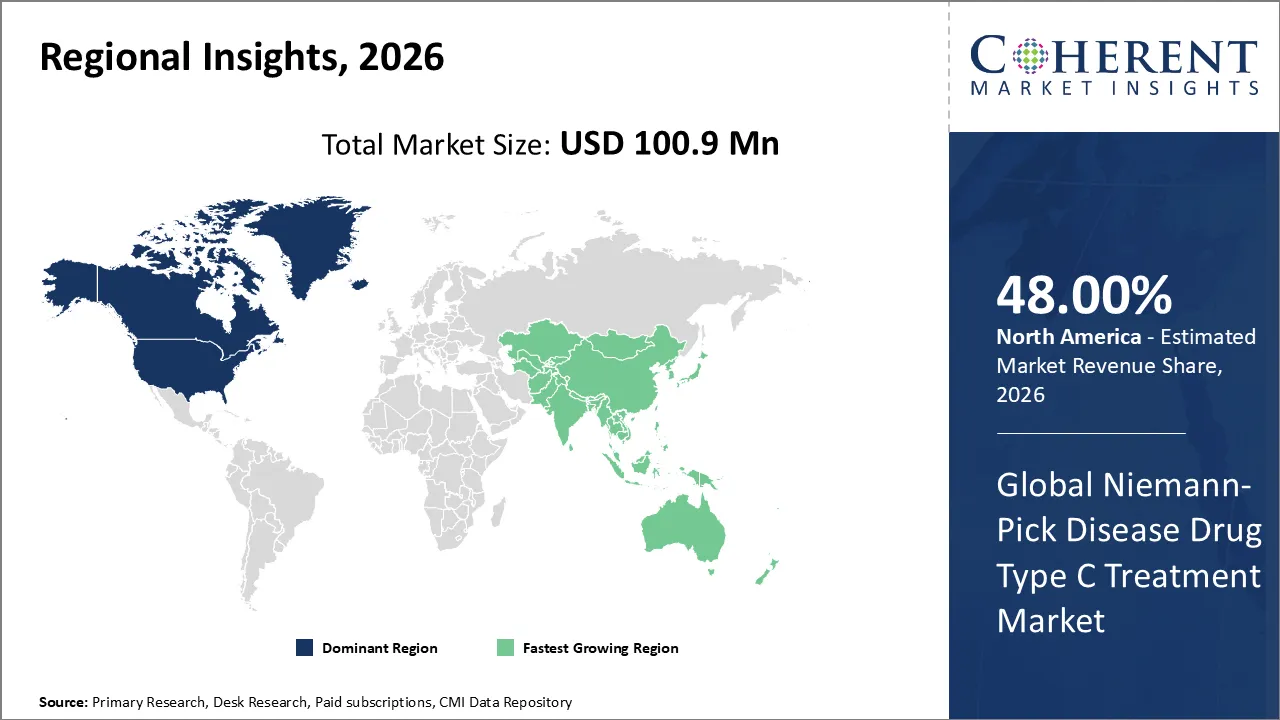
North America Niemann-Pick Disease Drug Type C Treatment Market Analysis & Trends
North America is expected to dominate the Niemann-Pick disease drug type C treatment market with 48% share in 2026, because of its advanced healthcare system, strong FDA orphan drug incentives, and active patient advocacy groups. Early diagnosis, clinical trial activity, and biotech investment all help adoption grow, making sure the region stays the top market.
For instance, in July 2025, Zevra Therapeutics claimed that MIPLYFFA® (arimoclomol) was shown at the National Niemann-Pick Disease Foundation Conference. Miglustat and this FDA-approved therapy work together to treat the neurological symptoms of Niemann-Pick Disease Type C. Presentations showed important trial data that showed arimoclomol halted the disease from getting worse and improved lysosomal function, giving patients and their families hope.
Asia Pacific Niemann-Pick Disease Drug Type C Treatment Market Analysis & Trends
Asia Pacific is expected to exhibit the fastest growth, due to rising healthcare investments, the government support, and expanding rare disease awareness. China, Japan, and India are improving their diagnostic and clinical research capabilities, which is speeding up adoption and making the region the fastest-growing market.
Niemann-Pick Disease Drug Type C Treatment Market Outlook Country-Wise
The U.S. Niemann-Pick Disease Drug Type C Treatment Market Trends
A larger number of individuals in the U.S. are demanding for Niemann-Pick Disease Type C treatments in 2026 due to improved diagnostic awareness, there are more clinical trials going on, and biopharma companies are investing into rare disease therapies. Patient advocacy, government incentives, and hospitals using new options like cyclodextrin-based drugs all help the market grow and become more accessible.
For instance, in December 2025, the FDA provided both Miplyffa (arimoclomol) and Aqneursa (levacetylleucine) an approval to treat Niemann-Pick Disease Type C. These treatments focus on fixing problems with lysosomes and mitochondria, which makes neurological symptoms like speech, swallowing, and motor skills better. This milestone gives patients with this rare, progressive neurodegenerative disorder new hope.
Canada Niemann-Pick Disease Drug Type C Treatment Market Trends
The Niemann-Pick Disease Type C treatment market in Canada is growing in 2026 because more people are aware of the disease, doctors can diagnose it better, and healthcare policies are more supportive. More clinical research, patient advocacy, and the use of new treatments like substrate-reduction and cyclodextrin-based options are driving up demand, making rare disease care easier to get across the country.
For instance, in February 2026, THX Pharma and Biocodex have signed a strategic licensing deal for TX01. The drug will be used to treat Niemann-Pick Disease Type C and Gaucher disease in Canada. The deal, which could be worth up to €173 million, helps with clinical development, compassionate access, and commercialization, giving people with rare neurological disorders more treatment options.
Market Report Scope
Niemann-Pick Disease Drug Type C Treatment Market Report Coverage
| Report Coverage | Details | ||
|---|---|---|---|
| Base Year: | 2025 | Market Size in 2026: | USD 100.9 Mn |
| Historical Data for: | 2020 To 2024 | Forecast Period: | 2026 To 2033 |
| Forecast Period 2026 to 2033 CAGR: | 22% | 2033 Value Projection: | USD 406.0 Mn |
| Geographies covered: |
| ||
| Segments covered: |
| ||
| Companies covered: | Johnson & Johnson, Intrabio, Cyclo Therapeutics, Inc., Kempharm, Inc., Azafaros B.V., StrideBio. Sarepta Therapeutics, Inc. | ||
| Growth Drivers: |
| ||
| Restraints & Challenges: |
| ||
Market Dynamics
Niemann-Pick Disease Drug Type C Treatment Market Driver
Rising Prevalence of Rare Genetic Disorders
As more people learn about rare genetic disorders, especially lysosomal storage diseases like Niemann-Pick Disease Type C, the need for new treatments is growing. Better diagnostic tools and more awareness among healthcare workers have made it possible for early detection, which directly leads to more people getting treatment. Pharmaceutical companies intend to expand their therapeutic pipelines as they find more patients. This trend greatly increases the Niemann-Pick Disease Drug Type C Treatment Market share, as the need for specialized drugs grows around the world.
Advancements in Precision Medicine
Precision medicine is changing the way rare diseases are treated by customizing treatments to fit individual's genetic profiles. Targeted approaches that focus on certain mutations and metabolic problems are accelerating drug development for Niemann-Pick Disease Type C. These new ideas not only help patients get better, but they also make it easier for regulators to approve them and clinical adoption. As personalized therapies become more popular, the Niemann-Pick Disease Drug Type C Treatment Market demand is expected to grow quickly because people seek for effective and personalized treatment options.
For instance, in January 2026, A teenager in the UK with Niemann-Pick Disease Type C got a drug that was made just for her genetic mutation at Great Ormond Street Hospital (GOSH) in London. This was a big step forward in medicine. The MHRA made this breakthrough possible, showing that precision medicine and new rules can provide personalized treatments for rare genetic disorders, giving families hope.
Niemann-Pick Disease Drug Type C Treatment Market Opportunity
Pipeline Expansion & Novel Therapies
The pipeline for Niemann-Pick Disease Type C treatment is growing with the study of new therapies. Cyclodextrin-based and substrate-reduction therapies are moving forward in clinical trials, which affords hope that they will help patients more. These new ideas not only give doctors more options for treatment, but they also open up big business opportunities for drug companies. The Niemann-Pick disease drug type C treatment market forecast predicts strong growth as these therapies get closer to getting regulatory approval. This growth will be driven by the introduction of more effective and targeted treatments for this rare genetic disorder.
For instance, in September 2025, to move forward with its pipeline for rare neurological diseases, Theranexus has changed its name to THX Pharma. Its main candidate, TX01, is aimed at Gaucher disease and Niemann-Pick Type C, and the company is working on a version for children. The company plans to submit regulatory documents and sell its products in many areas, with the goal of launching them globally around 2027.
Analyst Opinion (Expert Opinion)
- The ultra-rare prevalence, diagnostic delay, and high clinical heterogeneity that collectively define the Niemann-Pick disease type C (NPC) treatment market shape demand as "identified patient" volume rather than broad population access. The incidence of NPC is frequently reported to be approximately one case per 100,000 live births, and estimates of prevalence in the United States indicate that there are between 900 and 950 living cases and over 40 new cases annually, highlighting a small but highly treatable pool. A quantifiable barrier to starting treatment and managing a disease over time is the reported diagnostic delays of several years from the onset of symptoms.
- The market has recently moved from supportive care to regulated pharmaceutical options due to therapeutic development. In September 2024, the FDA approved levacetylleucine (Aqneursa) for neurological symptoms and arimoclomol (Miplyffa) for neurological manifestations when used with miglustat. These approvals expanded the number of patients treated and formalized payer pathways around defined labels. The fact that miglustat is still a centrally approved treatment for progressive neurological symptoms in Europe supports the ongoing need for substrate-reduction strategies in addition to recently approved U.S. alternatives.
- Data on outcomes also highlight the urgency: survival varies by age of neurological onset, and published analyses indicate that survival after diagnosis is significantly shorter for phenotypes with earlier onset. This supports the continued use of therapies that slow progression and stabilize function.
Speak to the analyst
Want personalized insights?
Take the findings above to one of our principal consultants, or have the report rebuilt around the segments, geographies and competitors you actually track.
Recent Developments
- In February 2026, Beren Therapeutics declared that the FDA has accepted its New Drug Application for adrabetadex to treat infantile-onset Niemann-Pick Disease Type C. This milestone moves forward a possible treatment that targets lysosomal dysfunction in NPC. The FDA's review of adrabetadex is a step toward giving people with this rare, devastating neurodegenerative disorder more treatment options.
- In January 2026, the European Commission provided IntraBio's AQNEURSA® (levacetylleucine) approval to treat neurological symptoms of Niemann-Pick Disease Type C. The decision was made after good Phase 3 results and a recommendation from the CHMP. If a patient is incapable of handling miglustat, they can use AQNEURSA with it or on its own. This is an important step forward for NPC patients in Europe.
Market Segmentation
- By Drug Type
- Phase III Drug
- Trappsol Cyclo
- IB1001
- Marketed Drug
- Miglustat (Zavesca)
- Phase III Drug
- By Indication
- Niemann-Pick Disease Drug Type C1
- Niemann-Pick Disease Drug Type C2
- By Distribution Channel
- Hospital Pharmacies
- Online Pharmacies
- Retail Pharmacies
- By Region
- North America
- U.S.
- Canada
- Latin America
- Brazil
- Argentina
- Mexico
- Rest of Latin America
- Europe
- Germany
- U.K.
- Spain
- France
- Italy
- Russia
- Rest of Europe
- Asia Pacific
- China
- India
- Japan
- Australia
- South Korea
- ASEAN
- Rest of Asia Pacific
- Middle East & Africa
- GCC Countries
- Israel
- Rest of Middle East & Africa
- North America
- Global Niemann-Pick Disease Drug Type C Treatment Market – Competitive Landscape
- Johnson & Johnson
- Intrabio
- Cyclo Therapeutics, Inc.
- Kempharm, Inc.
- Azafaros B.V.
- StrideBio
- Sarepta Therapeutics, Inc.
Sources
Primary Research Interviews
- Rare Disease Neurologists & Pediatric Neurologists
- Inherited Metabolic Disorder Specialists (Geneticists/Metabolic Physicians)
- Lysosomal Storage Disorder (LSD) Treatment Centers & KOLs
- Hospital Pharmacists & Specialty Pharmacy Managers
- Biopharma Companies Developing NPC Therapies (R&D, Medical Affairs, Market Access)
- CROs & Clinical Trial Investigators (NPC-focused trials)
- Diagnostic Lab Leaders (genetic testing/biomarkers)
- Patient Advocacy Groups & Caregiver Networks
- Payers/Reimbursement & HTA Stakeholders (where applicable)
- Others
Databases
- ClinicalTrials.gov
- EU Clinical Trials Register (CTIS/EUCTR)
- WHO International Clinical Trials Registry Platform (ICTRP)
- PubMed / MEDLINE
- Embase
- Cochrane Library
- Orphanet
- NIH Genetic and Rare Diseases Information Center (GARD)
- FDA (Drugs@FDA, Orphan Drug Designations & Approvals)
- EMA (EPARs, Orphan Designations)
- MHRA / PMDA public databases (as relevant)
- IQVIA (sales/claims where accessible)
- EvaluatePharma / Citeline (Pharmaprojects, Trialtrove)
- GlobalData Healthcare / Informa databases
- Others
Magazines
- Nature Biotechnology / BioPharma-oriented magazines (industry coverage)
- Pharmaceutical Executive
- Fierce Biotech / Fierce Pharma
- BioCentury (where accessible)
- Scrip / Pink Sheet (where accessible)
- Genetic Engineering & Biotechnology News (GEN)
- Others
Journals
- Orphanet Journal of Rare Diseases
- Molecular Genetics and Metabolism
- Journal of Inherited Metabolic Disease
- Genetics in Medicine
- Neurology / JAMA Neurology
- The Lancet Neurology
- The New England Journal of Medicine (select NPC studies)
- Brain
- Clinical Genetics
- European Journal of Paediatric Neurology
- Others
Newspapers / Newswires
- Reuters
- Bloomberg News
- Financial Times
- The Wall Street Journal
- The Economist (healthcare/pharma coverage)
- Others
Associations / Foundations
- National Niemann-Pick Disease Foundation (NNPDF)
- International Niemann-Pick Disease Alliance (INPDA)
- National Organization for Rare Disorders (NORD)
- EURORDIS – Rare Diseases Europe
- Genetic Alliance
- European Society for Paediatric Endocrinology / Metabolic societies (as relevant)
- American Academy of Neurology (AAN) / European Academy of Neurology (EAN) – guideline/congress sources
- Others
Public Domain Sources
- U.S. FDA – Orphan Drug Designations, approvals, labels, safety communications
- European Medicines Agency (EMA) – EPARs, orphan designation database
- NIH / NCBI (PubMed, OMIM)
- Orphanet (disease epidemiology, care pathways)
- WHO (rare disease policy resources; trial registry via ICTRP)
- National health technology assessment bodies (e.g., NICE, HAS) for access decisions (where relevant)
- Government health statistics portals (for broader neurology/rare disease context)
- Others
Proprietary Elements
- CMI Data Analytics Tool
- Proprietary CMI Existing Repository of Information for the Last 8 Years
Get access to 250+ pages report
Every segment, forecast, competitor profile and data table behind the analysis above — available for instant download.
- ESOMAR Member
- ISO 9001:2015 Certified
- D-U-N-S Registered
- GDPR & CCPA Compliant
Missing comfort of reading report in your local language? Find your preferred language:
Transform your Strategy with Exclusive Trending Reports
Frequently Asked Questions
The global Niemann-Pick Disease Drug Type C Treatment Market size was valued at USD 100.9 million in 2026 and is expected to reach USD 406.0 million in 2033.
Johnson & Johnson, Intrabio, Cyclo Therapeutics, Inc., Kempharm, Inc., Azafaros B.V., StrideBio. Sarepta Therapeutics, Inc. are the prominent players operating in the market across the globe.
North America is the prominent region in the market.
Rising prevalence of rare genetic disorders and advancements in precision medicine are some of the factors, which are expected to drive growth of the market.