

Vaginal Fungi Infections Treatment Market Size and Share Analysis - 2026 To 2033
The Vaginal Fungi Infections Treatment Market is anticipated to grow at a CAGR of 5.4% with USD 1,347.5 Mn in 2026 and is expected to reach USD 1,935.9 Mn in 2033. The Vaginal Fungi Infections Treatment Market is expanding steadily on the back of a high and persistent global disease burden, particularly vulvovaginal candidiasis, which affects an estimated 75% of women at least once in their lifetime, predominantly caused by Candida albicans in nearly 80–90% of cases, underscoring recurrent therapy demand, as reported in a 2026 study by the Springer Nature. In 2026, the market size is supported by strong outpatient demand across gynecology clinics, retail and online pharmacies, and adoption of both azole and topical antifungal therapies. North America remains a leading regional contributor, reflecting high infection prevalence, robust healthcare infrastructure and widespread clinician awareness. Market growth is propelled by rising awareness campaigns, improved diagnostics, and expanding treatment options, although antifungal resistance and OTC access challenges persist.
Key Takeaways
- Fluconazole is expected to account the largest share of 50.0% in 2026, because it offers single-dose oral convenience, strong physician familiarity, low treatment cost, and reliable Candida albicans coverage in uncomplicated cases. According to the data published by the International Journal of Medical and Pharmaceutical Research, in 2026, a formulary evaluation scored fluconazole 150 mg highest at 9.0 versus clotrimazole tablet 8.4 and itraconazole 7.3, while CDC guidance notes azoles achieve 80%–90% symptom relief and negative cultures in compliant patients, supporting routine prescribing.
Source: International Journal of Medical and Pharmaceutical Research; CDC
- Based on route of administration, oral will dominate with 55.0% in 2026, supported by because it offers single-dose convenience, broad physician familiarity, easy pharmacy dispensing, and strong efficacy for uncomplicated and recurrent cases. Mayo Clinic’s dosage guidance, published on March 31, 2026, lists fluconazole 150 mg once for adult vaginal candidiasis. A 2025 American Journal of Obstetrics and Gynecology-AJOG meta-analysis of 50 randomized trials involving 7,208 subjects found treatments exceeded 75% overall cure rates, with single-day 150 mg fluconazole ranking highest for late mycological cure.
- Retail pharmacies hold the dominant share of 50.0% in 2026 as it provides widespread access to both over‑the‑counter antifungal products and prescription meds that patients can conveniently purchase without a hospital visit. FDA regulations support broad OTC availability of antifungal agents, enhancing consumer access across pharmacies. Pharmacies also offer pharmacist counselling, boosting appropriate use and adherence. Industry data show retail pharmacies accounted for the largest distribution share over 50% in 2024 due to accessibility and consumer preference for self‑care options.
- North America is expected to acquire the dominant share of 42.0% in 2026, because of its high disease burden, strong healthcare infrastructure, and widespread diagnostic access. According to CDC‑linked data, over 50% of U.S. women experience vulvovaginal candidiasis during their lifetime and many seek outpatient care, boosting treatment demand (2024). WHO reports that vulvovaginal candidiasis affects Mns worldwide, with North America’s robust insurance coverage and patient awareness driving higher antifungal use and market share in 2026.
Segmental Insights
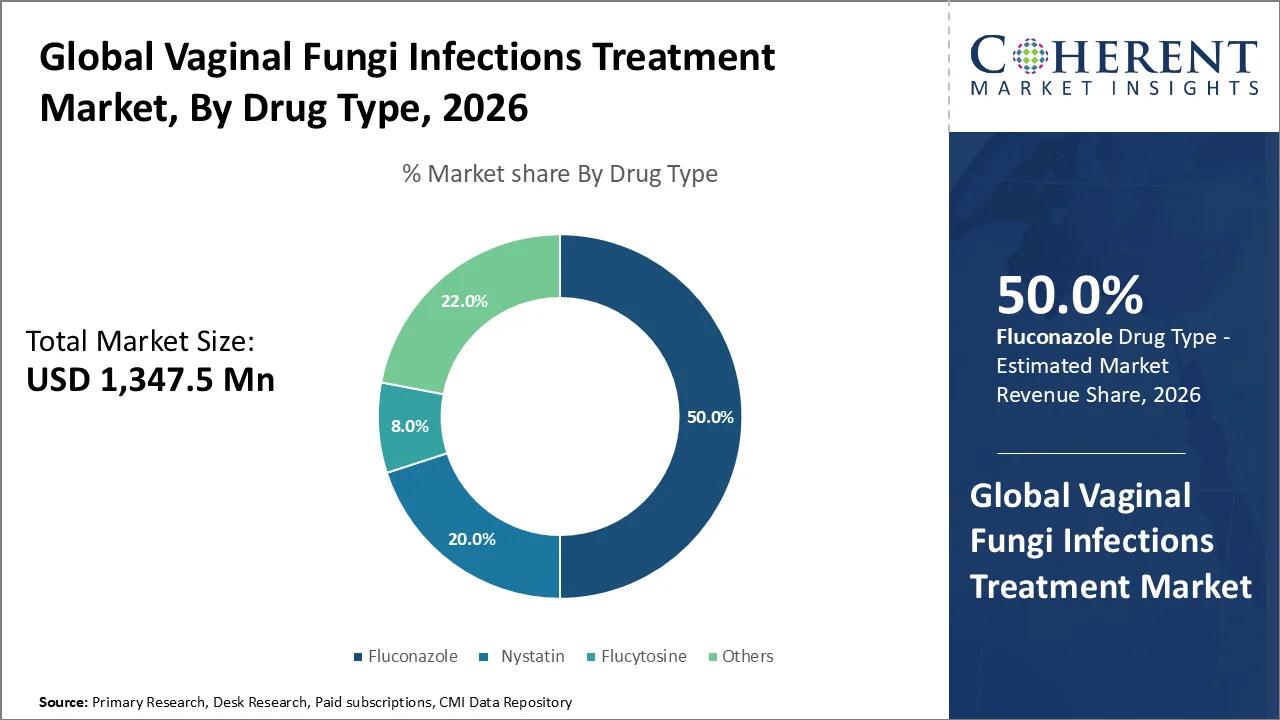
Why is Fluconazole Acquiring the Largest Market Share?
Fluconazole is projected to account for the largest share of cognitive systems spending in 2026, representing approximately 50.0% of the total volume. The Fluconazole drug‑type segment is dominant in the vaginal fungi infection treatment market due to its established clinical efficacy, ease of administration, cost‑effectiveness, and guideline support. Oral Fluconazole (single 150 mg dose) is widely recommended as a first‑line treatment for uncomplicated vulvovaginal candidiasis, achieving >90% clinical cure rates and faster symptom relief compared with many topical therapies, according to 2026 treatment recommendations by the Dr. Oracle. A 2026 comparative evaluation using the WHO’s rational drug selection approach identified Fluconazole as the top P‑drug based on efficacy, safety, cost, and convenience versus other azoles, reinforcing its preferred status in routine care. Additionally, Fluconazole is FDA‑approved for vulvovaginal candidiasis, supporting widespread adoption in clinical practice.
- Current Industry Events of 2026
- Market Size Estimation
- Regional Breakdown
- Competitive Landscape
- Customer Intelligence
- Segmental Analysis
- Pricing Analysis
- Key Market Drivers, Challenges & Future Trends
- Customized Insights Section
Oral holds the Largest Market Share
Based on route of administration, oral dominate the market, accounting for a significant 55.0% share in 2026, due to high bioavailability, convenience, and proven clinical performance. A 2026 review in MDPI noted that oral fluconazole remains the only systemic azole routinely licensed for VVC, with a single 150 mg dose often achieving rapid clinical response and extensive patient acceptance. Oral formulations like fluconazole and newer agents such as ibrexafungerp approved by the FDA provide effective systemic drug levels that are not affected by local vaginal conditions, simplifying adherence compared with multi‑day topical regimens. Clinical data also show oral antifungals deliver consistently high cure rates and are preferred by patients for ease of use and reduced dosing complexity, reinforcing their leading role in treatment practice.
Oral antifungals such as fluconazole, recommended as standard induction therapy in vulvovaginal candidiasis regimens, often consist of single or short‑course doses that improve compliance and clinical outcomes versus prolonged intravaginal applications. Clinical studies show novel oral agents like ibrexafungerp deliver clinical cure rates over 65% in acute and recurrent cases and reduce recurrence when dosed monthly, demonstrating robust systemic effectiveness and tolerability. Oral formulations also bypass variable mucosal absorption limitations seen with inserts or creams, offering predictable pharmacokinetics and broader activity factors repeatedly highlighted in 2026 peer‑reviewed therapeutic reviews and clinical trial results published on National Library of Medicine.
Which Distribution Channel segment dominates the market?
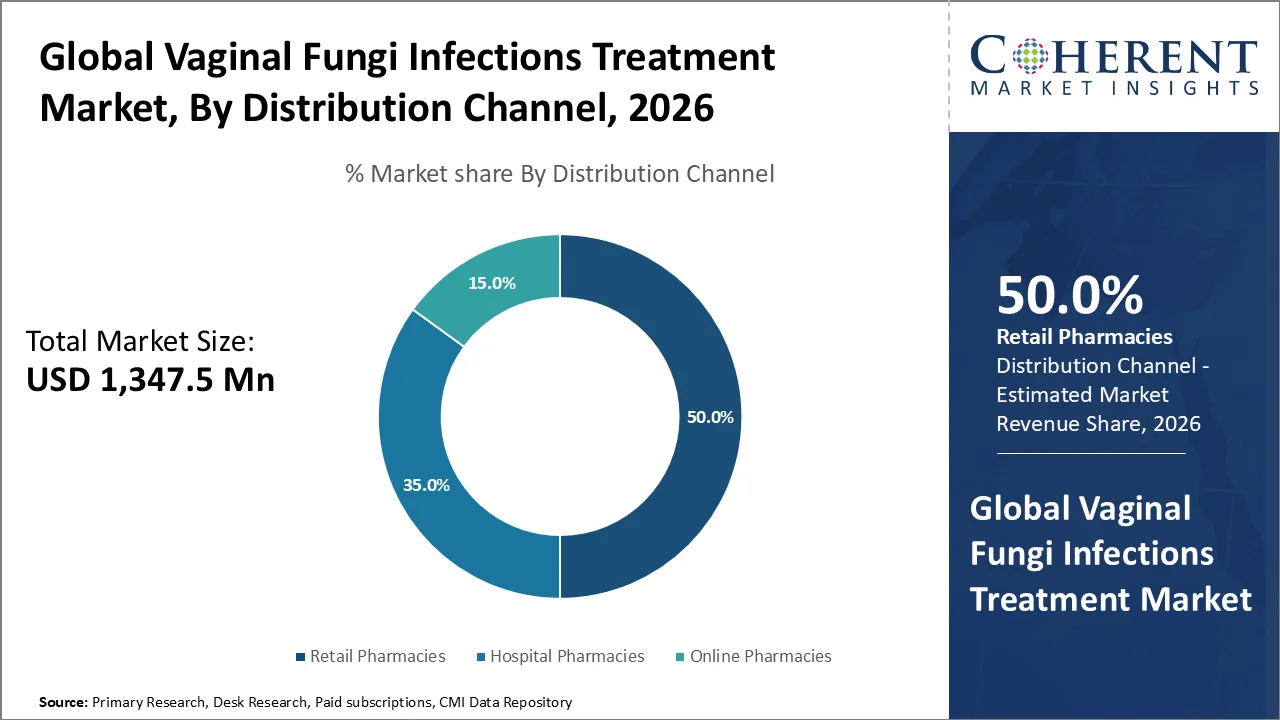
Retail Pharmacies account for the largest share of 50.0% in 2026 as the retail pharmacy outlets offer easy access to both prescription and OTC antifungal medications for outpatient use, enhanced patient education, and pharmacist counselling that encourages proper self‑care and adherence. In the vaginal fungi infection treatment market, the retail pharmacies segment dominates because it provides broad access to both OTC and prescription antifungal therapies, allowing women to conveniently obtain treatments like clotrimazole and miconazole creams or oral fluconazole at local drugstores without a hospital visit. For instance, in 2025, according to the WHO guidance notes topical and oral antifungals are standard first‑line treatments for vulvovaginal candidiasis, and CDC data emphasize that many topical treatments are available OTC, which boosts pharmacy sales and self‑care adoption (2024). Moreover, CDC data show that up to 75% of women experience at least one episode of vulvovaginal candidiasis in their lifetime (lifetime prevalence) and many seek immediate OTC relief (2021 guidance cited by CDC). The availability of topical creams and oral antifungals at retail pharmacies enhances convenience, supports pharmacist counselling, and boosts adherence to treatment, reinforcing pharmacy preference among consumers.
Market Drivers
Rising incidence of vaginal fungi infection
Rising prevalence of vaginal fungi infection has driven the vaginal fungi infections treatment market growth over the forecast period. The increasing incidence of vaginal fungi infections is a key growth driver for the Vaginal Fungi Infection Treatment Market because as more women experience infections like vulvovaginal candidiasis, the demand for effective treatment increases both for initial therapy and for recurrent cases. A 2026 systematic analysis by the National Center for Biotechnology Information (NCBI) estimated that about 32.6% of women globally are affected by vulvovaginal candidiasis, with Candida albicans being the predominant pathogen, reinforcing the ongoing clinical need for antifungal treatments. This high prevalence and recurrence rate naturally expand outpatient visits, physician prescriptions, over‑the‑counter therapy usage, and patient reliance on pharmaceutical options, driving market growth in pharmaceuticals and related healthcare services.
Product Approvals and Launches for Treatment of Vaginal Fungi Infection
Increasing product approval and launches for treatment of vaginal fungi infection has driven the vaginal fungi infections treatment market growth over the forecast period. Product approvals and launches are driving vaginal fungi infection treatment market growth by expanding therapeutic options, addressing unmet needs, and stimulating clinician and patient uptake. For instance, in March 2026, according to data published by Gedea Biotech, a Swedish women's health company, the launch of pHyph, a promising new antifungal therapy for the treatment of vaginal fungi infections, marks a significant milestone in the vaginal fungi infection treatment market. The drug, which has received regulatory approval in Sweden, is designed to address vulvovaginal candidiasis, one of the most common forms of vaginal fungal infection caused primarily by Candida albicans. pHyph stands out for its dual-benefit effects, which target both the infection and inflammation associated with these conditions, offering a new solution beyond the traditional azole-based treatments like fluconazole. This launch is expected to broaden treatment options for both healthcare providers and patients, addressing an unmet need in the market for more effective, localized therapies with fewer side effects. Gedea Biotech's strategic focus on expanding the scope of antifungal therapies is poised to further enhance market growth, with additional clinical studies set to evaluate pHyph’s effectiveness in various populations. As of March 2026, clinical evaluations for this new treatment are well underway.
Revolutionizing Vaginal Fungi Infections Treatment: How Cutting-Edge Innovations Are Shaping the Future of Women's Health
Innovation in vaginal fungi infection therapies is expanding treatment options and driving market growth by addressing resistance and recurrence. According to the Vulvovaginal Candidiasis – Pipeline Insight, 2026 report, more than 7 novel antifungal candidates are in development, including next‑generation systemic and localized drugs targeting resistant Candida strains, broadening clinical choice beyond traditional azoles. Recent research published in 2026 has also highlighted advanced treatment modalities such as self‑healing hydrogels for personalized drug delivery, offering improved symptom relief and retention in the vaginal mucosa compared with conventional forms. These breakthroughs are under active investigation to enhance efficacy and patient adherence, reflecting a paradigm shift in therapeutic design and delivery technologies. The focus on innovative formulations and pipeline drugs strongly supports future market expansion by offering differentiated solutions for recurring and resistant infections, setting new standards in women’s health care.
For instance, in January 2026, SCYNEXIS, Inc., biotechnology company announced that the U.S. Food and Drug Administration (FDA) granted Qualified Infectious Disease Product (QIDP) and Fast Track designations to its second‑generation antifungal therapy SCY‑247 for difficult‑to‑treat and recurrent fungal infections, including potential applications in vulvovaginal candidiasis (VVC). This follows the successful approval and ongoing relaunch efforts of BREXAFEMME (ibrexafungerp tablets) to treat VVC and reduce recurrent VVC, highlighting innovation beyond traditional azoles and strengthening treatment options in 2026. The designations aim to accelerate development timelines and address unmet needs amid rising antifungal resistance, signaling robust momentum in new drug development for vaginal fungal conditions in the 2026.
Current Events and Their Impact on the Vaginal Fungi Infections Treatment Market
Current Event | Description and its Impact |
Increasing Regulatory Approval |
|
Launch of Over-the-Counter Antifungal Treatments for Vaginal Fungal Infections |
|
Rising Government Initiatives & Government Funding Activity for Antifungal Resistance Research |
|
Vaginal Fungi Infections Treatment Market Trends
- Emergence of Next‑Generation Antifungals: The market in 2026 is seeing strong innovation with novel antifungal agents entering clinical pipelines, such as ibrexafungerp and rezafungin, which show activity against drug‑resistant Candida strains and offer convenient dosing options that improve compliance and outcomes. These advanced molecules are aiming to overcome resistance and reduce recurrence rates, as highlighted in 2026 infectious disease literature.
- Focus on Personalized and Advanced Delivery Systems: Scientific research in 2026 underscores R&D into next‑gen delivery platforms, like self‑healing hydrogels, that can tailor drug release and improve local drug distribution in vulvovaginal candidiasis. This personalized approach not only enhances effectiveness but also represents a shift from one‑size‑fits‑all therapy to precision antifungal management reflecting a cutting‑edge treatment innovation trend.
- Persistent Prevalence Driving Treatment Demand: Vaginal candidiasis continues to be pervasive, with studies showing that up to 75–80% of women will experience the condition in their lifetime due to factors like hormonal changes and microbiome imbalance. This sustained high disease burden boosts demand for both established and emerging therapies, pushing healthcare systems and manufacturers to expand treatment options and accessibility.
Regional Insights
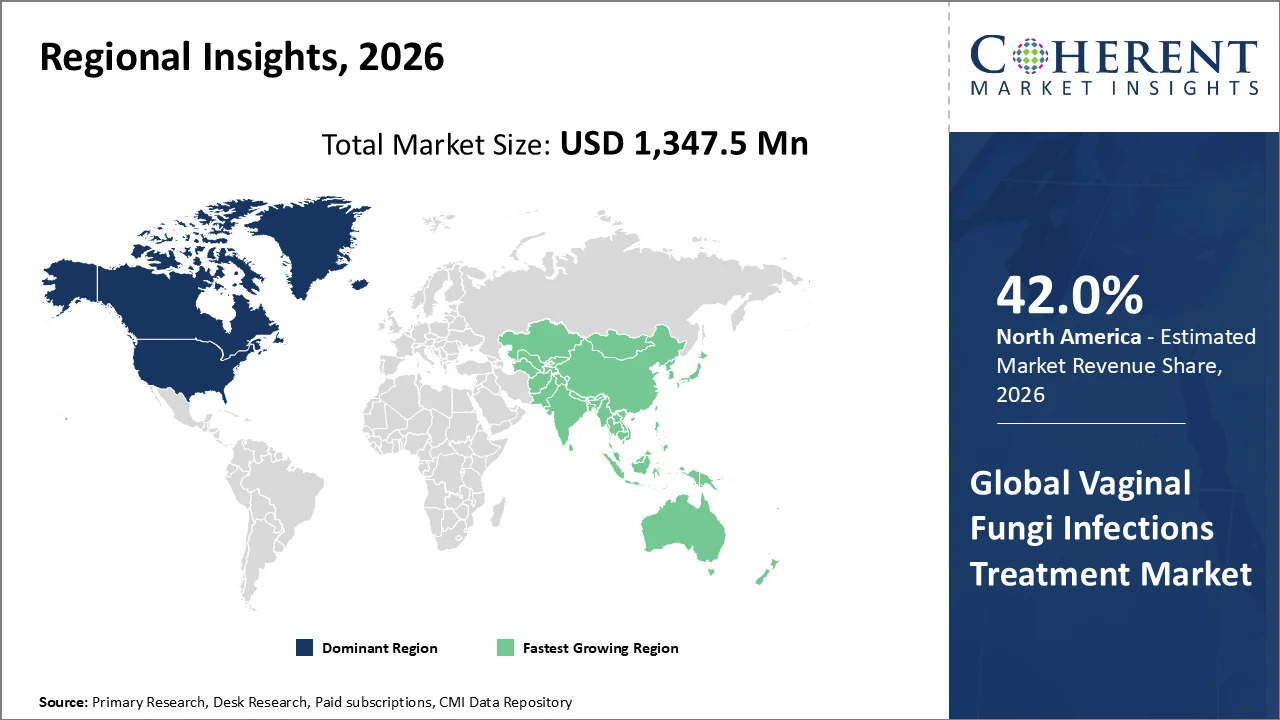
North America dominates owing to High Prevalence & Advanced Healthcare Infrastructure
North America account 42.0% market share in 2026, supported by high prevalence of vulvovaginal candidiasis (VVC), For instance, in 2025 according to the data published by the CDC an estimated 75 % of women will have at least one episode of VVC in their lifetime and 40 %–45 % experiencing two or more episodes, underscores significant treatment demand. Moreover, according to the same source, the United States also carries a substantial clinical and economic burden from fungal diseases overall, with CDC estimates indicating approximately 13 million outpatient visits annually related to fungal infections and roughly US$19 billion in associated costs, reflecting strong clinical engagement with antifungal therapies. Advanced healthcare infrastructure, widespread awareness of reproductive health, and proactive regulatory environments (e.g., US FDA approvals of new antifungal agents like non‑azole Ibrexafungerp for vaginal yeast infections) facilitate both early diagnosis and adoption of effective treatments. Furthermore, high healthcare expenditure and robust R&D in the region support rapid integration of novel formulations and evidence‑based clinical guidelines, further reinforcing North America’s leadership in this therapeutic segment.
Asia Pacific Vaginal Fungi Infections Treatment Market Trends
The Asia-Pacific region is poised to be as the fastest-growing region through 2026-2033. The Asia‑Pacific region is the fastest‑growing market for vaginal fungal infection treatments largely due to high disease burden and expanding healthcare access. Epidemiological studies in Vietnam (published June 2025) found that 22.6 % of women presenting at a dermatology‑venereology hospital had vaginitis, with Candida species causing 66.1 % of cases, highlighting significant regional prevalence of fungal infections among reproductive‑age women.
In India, a cross‑sectional study conducted in 2024–2025 reported 19% prevalence of vaginal candidiasis among women with symptomatic leucorrhoea, with higher rates in younger and pregnant women, compounded by rising non‑albicans species and drug resistance concerns.
Additionally, global fungal infection reports by the World Health Organization in 2025 describe an overall increase in Candida infections with limited diagnostic tools and treatment access in low‑ and middle‑income countries, further driving treatment demand in Asia‑Pacific.
This substantial disease prevalence, combined with expanding healthcare infrastructure, growing awareness, and increased availability of affordable antifungal therapies in nations such as China and India, is accelerating regional market demand faster than in other global regions.
Strong Patient Access to Antifungal Therapies is Accelerating the Vaginal Fungi Infections Treatment Market Demand in United States
The United States remains the dominant country in the North America vaginal fungi infection treatment market due to its ongoing regulatory activity and expanding treatment landscape in 2026, supported by strong clinical demand and innovation. Epidemiological research published in 2026 by G. Quindós et al. (MDPI) highlights advancements in novel formulations such as sertaconazole‑loaded mucoadhesive liposomes aimed at enhanced drug delivery and efficacy for vulvovaginal candidiasis, reflecting active pharmaceutical progress. Increasing research and development of new drug for vaginal fungal infection treatment in the U.S. has driven the market growth in the country. For instance, U.S. FDA‑recognized developments include ongoing clinical studies such as the VVC2025 trial initiated in March 2026 to evaluate Gedea Biotech’s product pHyph for symptom relief in vulvovaginal candidiasis, indicating future innovation pathways. ([gedeabiotech.com][2]) Established FDA approvals such as ibrexafungerp (Brexafemme) and oteseconazole (Vivjoa) approved in 2021 and 2022 respectively continue to drive market leadership by offering oral non‑azole options and recurrent yeast infection prevention, further strengthening U.S. treatment adoption and clinician preference compared with other North American markets.
Source: MDPI
India Vaginal Fungi Infections Treatment Market Trends
India’s position as the dominant country in the Asia‑Pacific vaginal fungal infection treatment market is driven by high disease burden and rising treatment accessibility. According to WHO data published in April 2025, vulvovaginal candidiasis (vaginal yeast infection) affects millions of women globally, with higher regional burdens in populous countries like India. Indian studies report that vaginal candidiasis accounts for 15%–20% of symptomatic vaginal discharge cases, reflecting substantial prevalence that fuels treatment demand. Moreover, affordable over‑the‑counter antifungal options like clotrimazole‑based creams and tablets such as Candid‑V3 and Canesten (2026) are widely available in Indian pharmacies, enhancing self‑care and market uptake. These factors, combined with increasing women’s health awareness and strong retail distribution, position India as a leading driver of regional market growth.
Who are the Major Companies in Vaginal Fungi Infections Treatment Market
Some of the major key players in Global Vaginal Fungi Infections Treatment Market are Pfizer Inc., Bausch Health Companies Inc, ANI Pharmaceuticals, Inc., Hikma Pharmaceuticals Plc, Lupin Limited, Mycovia Pharmaceuticals, Inc., Glenmark Pharmaceuticals Limited, Unique Pharmaceuticals, PEPTONIC medical AB, Aurobindo Pharma Limited, Dr. Reddy's Laboratories, and SCYNEXIS, Inc.
Key News
- On 5 March 2026, Gedea Biotech, biotechnology company based in Sweden announced the start of its VVC2025 clinical study evaluating p Hyph as a potential antibiotic‑free treatment for vulvovaginal candidiasis, with the first patients enrolled following approval from the Swedish Medical Products Agency. This trial could position p Hyph as a dual‑effect vaginal therapy for yeast and bacterial infections if results support expanded regulatory claims.
Source: Gedea Biotech
- In January 2026, Gedea Biotech, biotechnology company also reported the initiation of study BV2025 post‑CE‑marking of p Hyph, which will support further clinical validation and potential future treatments of vaginal fungal conditions.
Market Report Scope
Vaginal Fungi Infections Treatment Market Report Coverage
| Report Coverage | Details | ||
|---|---|---|---|
| Base Year: | 2025 | Market Size in 2026: | USD 1,347.5 Mn |
| Historical Data for: | 2020 To 2024 | Forecast Period: | 2026 To 2033 |
| Forecast Period 2026 to 2033 CAGR: | 5.4% | 2033 Value Projection: | USD 1,935.9 Mn |
| Geographies covered: |
| ||
| Segments covered: |
| ||
| Companies covered: | Pfizer Inc., Bausch Health Companies Inc, ANI Pharmaceuticals, Inc., Hikma Pharmaceuticals Plc, Lupin Limited, Mycovia Pharmaceuticals, Inc., Glenmark Pharmaceuticals Limited, Unique Pharmaceuticals, PEPTONIC medical AB, Aurobindo Pharma Limited, Dr. Reddy's Laboratories, and SCYNEXIS, Inc. | ||
Analyst Opinion
- The vaginal fungal infection treatment market is poised for sustained, data‑driven growth, underpinned by high global disease prevalence and expanding treatment access. According to a 2025 WHO fact sheet, vaginal yeast infections remain one of the most common fungal infections globally, with antifungal medications topical and oral forming the backbone of treatment. Epidemiological evidence suggests that up to 75 % of women will experience at least one yeast infection in their lifetime and about 40–45 % will have two or more episodes, reinforcing persistent unmet medical need. CDC guidance (2024) also highlights the commonality of vaginal candidiasis and the reliance on both OTC creams and prescription oral therapy like fluconazole in clinical practice.
- Pharmaceutical companies are investing heavily in research and development (R&D) for new treatments, especially those targeting recurrent infections and azole-resistant strains of Candida. In 2026, the approval of newer, non-azole antifungals such as ibrexafungerp (Brexafemme) and oteseconazole (Vivjoa) reflects the ongoing evolution of the market. The launch of such drugs is expected to address resistant strains, which will further solidify their role in treating difficult cases of VVC.
- Retail pharmacies and self‑care options are key growth drivers, giving women affordable, accessible treatment choices without hospital visits. CDC data emphasize that many common antifungal treatments, including topical azoles, are available OTC, which boosts retail channel sales and adherence in 2026.
- North America remains the dominant region in the vaginal fungal infection treatment market, driven by high prevalence and robust healthcare infrastructure, with 75% of women experiencing at least one episode of VVC, according to the data published by the CDC in 2025. Asia-Pacific, emerging as the fastest-growing market, benefits from rising healthcare access and awareness, particularly in India and China, where 20% of women report vaginal candidiasis in 2025, according to the data published by the World Health Organization. Europe remains the second-largest market, with stable growth due to increasing adoption of OTC treatments and awareness.
Speak to the analyst
Want personalized insights?
Take the findings above to one of our principal consultants, or have the report rebuilt around the segments, geographies and competitors you actually track.
Market Segmentation
- By Drug Type (Revenue, USD Mn, 2021-2033)
- Fluconazole
- Nystatin
- Flucytosine
- Others
- By Route of Administration (Revenue, USD Mn, 2021-2033)
- Oral
- Topical
- By Distribution Channel (Revenue, USD Mn, 2021-2033)
- Hospital Pharmacies
- Retail Pharmacies
- Online Pharmacies.
- By Region (Revenue, USD Mn, 2021-2033)
- North America
- U.S.
- Canada
- Latin America
- Brazil
- Mexico
- Argentina
- Rest of Latin America
- Europe
- Germany
- U.K.
- France
- Italy
- Spain
- Russia
- Rest of Europe
- Asia Pacific
- China
- India
- Japan
- Australia
- South Korea
- ASEAN
- Rest of Asia Pacific
- Middle East
- GCC
- Israel
- Rest of Middle East
- Africa
- South Africa
- Central Africa
- North Africa
- North America
Sources
Primary Research Interviews
- Interviews with Healthcare Providers and Clinicians: Understand adoption challenges, patient adherence, and the impact of emerging therapies like ibrexafungerp and oteseconazole.
- Insights from Pharmaceutical Companies and Drug Developers: Discuss novel antifungals, OTC treatments, microbiome therapies, and market entry plans for 2026.
- Conversations with Industry Analysts and Consultants: Evaluate market trends, growth drivers, antifungal resistance, and OTC product expansion.
- Discussions with Decision-Makers in Retail Pharmacies and E-Commerce Platforms: Assess consumer preferences, OTC adoption, pricing strategies, and retail channel impact on access and adherence.
Databases
- National Center for Biotechnology Information (NCBI)
- PubMed Central (PMC)
- Global Health Database (WHO)
- The Cochrane Library
- ClinicalTrials.gov (for clinical studies on antifungal treatments)
Magazines
- Women's Health Magazine
- Health Affairs
- American Journal of Obstetrics and Gynecology
- The Lancet Infectious Diseases
- Fertility and Sterility
Journals
- Journal of Clinical Microbiology
- Mycoses
- International Journal of Antimicrobial Agents
- American Journal of Obstetrics and Gynecology (AJOG)
- Medical Mycology
Newspapers
- The New York Times (Health Section)
- The Guardian (Health Section)
- The Wall Street Journal (Healthcare and Pharma Sections)
- USA Today (Health Section)
- The Washington Post (Health Section)
Associations
- American College of Obstetricians and Gynecologists (ACOG)
- Infectious Diseases Society of America (IDSA)
- American Medical Association (AMA)
- National Women's Health Network (NWHN)
- Global Health Council
Public Domain Sources
- World Health Organization (WHO) – Fungal Infections Reports
- U.S. Centers for Disease Control and Prevention (CDC)
- National Institutes of Health (NIH) – Fungal Disease Research
- FDA Annual Reports
- European Medicines Agency (EMA)
Databases
- U.S. Bureau of Labor Statistics (BLS)
- OECD (Organisation for Economic Co-operation and Development) ICT Database
- U.S. National Institute of Standards and Technology (NIST)
- U.S. Department of Energy (DOE)
- European Commission Digital Strategy Database
Magazines
- AI & Machine Learning Review (published by IEEE)
- IEEE Spectrum (Technology and AI section)
- MIT Technology Review (AI and cognitive systems sections)
- Government Technology Magazine (for public-sector technology trends)
- The Journal of Cognitive Computing (published by Springer)
Journals
- Journal of Artificial Intelligence Research (AAAI)
- Cognitive Systems Research (Elsevier)
- Journal of Machine Learning Research (MIT Press)
- IEEE Transactions on Cognitive and Developmental Systems (IEEE)
- Journal of AI and Data Mining (Springer)
Newspapers
- Financial Times (Technology Section)
- Government Technology News (U.S. Federal Technology News)
- The New York Times (Technology Section)
- The Guardian (Technology and AI Section)
- The Wall Street Journal (Technology Section)
Associations
- Association for the Advancement of Artificial Intelligence (AAAI)
- Cognitive Science Society (official association for cognitive science professionals)
- International Association for AI and Cognitive Science (IAAI)
- Institute of Electrical and Electronics Engineers (IEEE) AI Section
- U.S. National Artificial Intelligence Initiative (NAII)
Public Domain Sources
- U.S. Government AI Research Reports (AI.gov)
- European Commission AI and Digitalization Policy Documents
- U.S. Federal Government Whitepapers on AI (e.g., from NIST)
- National AI Research and Development Strategic Plan (Office of Science and Technology Policy)
- Company Annual Reports and Investor Presentations from publicly listed firms
Proprietary Elements
- CMI Data Analytics Tool
- Proprietary CMI Existing Repository of information for last 10 years
Get access to 250+ pages report
Every segment, forecast, competitor profile and data table behind the analysis above — available for instant download.
- ESOMAR Member
- ISO 9001:2015 Certified
- D-U-N-S Registered
- GDPR & CCPA Compliant
Missing comfort of reading report in your local language? Find your preferred language:
Transform your Strategy with Exclusive Trending Reports
Frequently Asked Questions
The Vaginal Fungi Infections Treatment Market is expected to reach USD 1,935.9 Mn in 2033.
Major players operating in the global Vaginal Fungi Infections Treatment Market include Pfizer Inc., Bausch Health Companies Inc, ANI Pharmaceuticals, Inc., Hikma Pharmaceuticals Plc, Lupin Limited, Mycovia Pharmaceuticals, Inc., Glenmark Pharmaceuticals Limited, Unique Pharmaceuticals, PEPTONIC medical AB, Aurobindo Pharma Limited, Dr. Reddy's Laboratories, and SCYNEXIS, Inc.
Increasing adoption of alternative therapies is the major factors hampering the growth of the cognitive systems spending market.
Rising incidence of vaginal fungi infection and product approvals and launches for treatment of vaginal fungi infection are the factors driving the growth of the market.
The Vaginal Fungi Infections Treatment Market is anticipated to grow at a CAGR of 5.4% between 2026 and 2033.
Among regions, North America is expected to account for a largest market share in the global Vaginal Fungi Infections Treatment Market over the forecast period.
The most common treatments for vaginal fungal infections, specifically vulvovaginal candidiasis (VVC), include azole antifungals (e.g., fluconazole, miconazole, clotrimazole), non-azole oral agents like ibrexafungerp (Brexafemme), and topical treatments such as nystatin and terbinafine. Antifungal creams, suppositories, and oral tablets are used, depending on the severity and recurrence of the infection. Treatment duration ranges from a single dose (oral) to up to 7 days (topical).