

Onychomycosis Treatment Market Size and Share Analysis: 2026 - 2033
The global onychomycosis treatment market size is estimated to reach USD 3,755 Mn in 2026 and is projected to grow at a compound annual growth rate (CAGR) of 5.6% during the forecast period (2026-2033), surpassing USD 5,497 Mn by 2033. This is attributable to rising prevalence of fungal nail infections and improved availability of advanced antifungal therapies.
Key Takeaways from the Onychomycosis Treatment Market Report
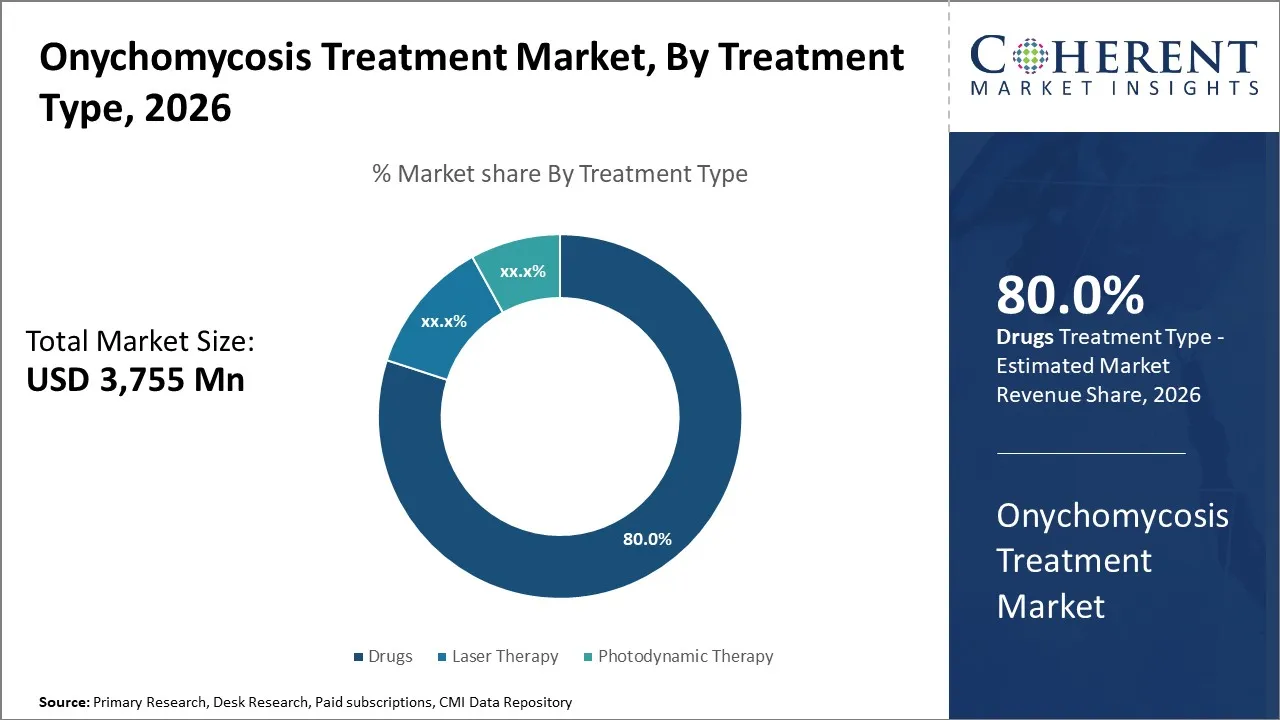
- Based on treatment type, drugs segment is expected to dominate the market with a revenue share of more than 80% in 2026, due to higher cure rates, affordability, and first-line clinical use.
- Distal subungual onychomycosis (DSO) is slated to account for a prominent market share of around 74% in 2026 because it is clinically the most common presentation globally.
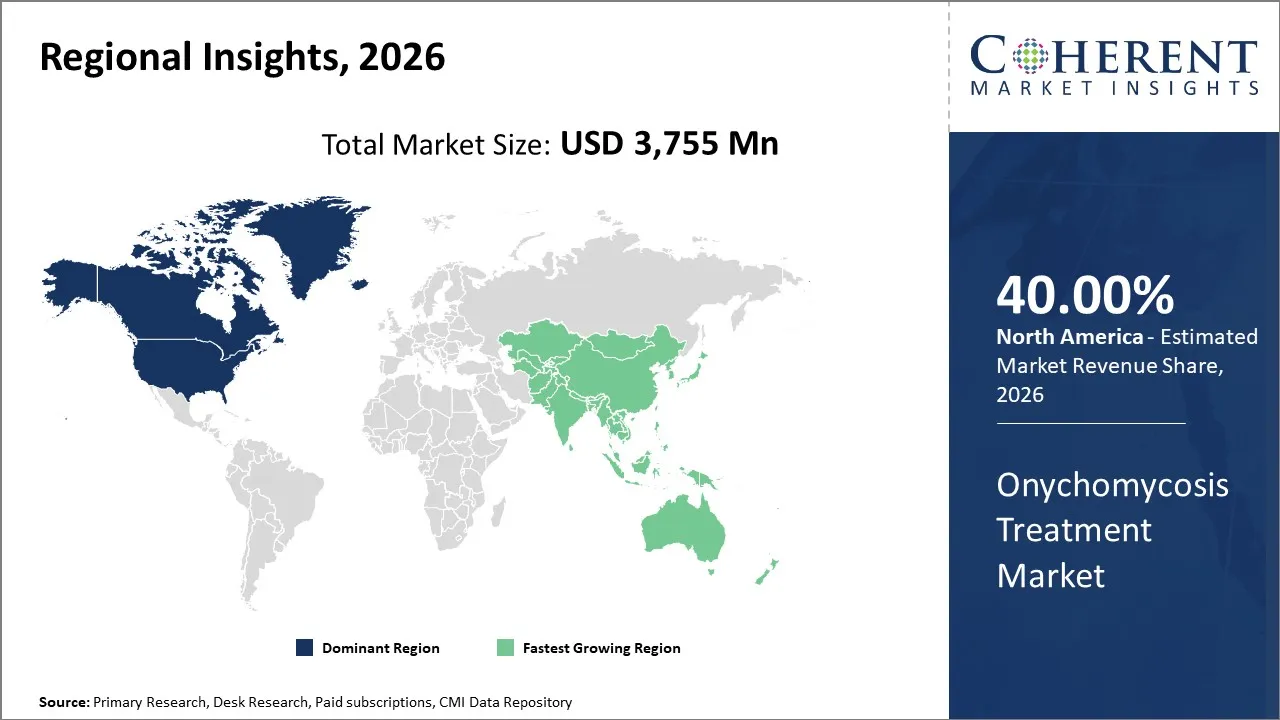
- North America is expected to retain its dominance over the global onychomycosis treatment industry with a share of 40% in 2026, thanks to high diagnosis rates, advanced dermatology infrastructure, and increasing use of prescription antifungals.
- Asia Pacific, holding a share of 22% in 2026, is anticipated to emerge as the fastest-growing market for onychomycosis treatments during the forecast period, mostly due to increasing awareness of fungal nail infections, growing diabetic and aging population, and improving access to advanced antifungal therapies across emerging economies.
Onychomycosis Treatment Market Overview
The global onychomycosis treatment market is poised to exhibit steady growth during the forecast period. This is mostly due to rising incidence of fungal nail infections, increasing awareness about personal hygiene and nail health, and growing demand for effective and convenient treatment options. In addition, rising geriatric population, higher incidence of diabetes and immunocompromised conditions, and lifestyle changes are supporting onychomycosis medications market expansion.
For instance, a clinical study found that onychomycosis prevalence increases sharply with age, reaching ≥20% in people aged 60+ and ≥50% in those aged 70+. Thus, increasing aging population across the world is expected to provide a strong impetus for the growth of onychomycosis treatment market during the projection period.
Advancements in antifungal therapies like new topical solutions, oral medications, and laser-based treatments are fostering growth of fungal nail infection treatment market. Pharmaceutical companies and research institutes are focusing more on research and development to create new formulations that work better and have fewer side effects.
For example, in October 2025, the National Institute for Health and Care Research (NIHR) awarded £2.7 million to King’s College London to develop a device for treating nail fungal infections. The college is working on OnchyMed, an artificial nail with a special gel that quickly kills nail fungus while limiting exposure to the rest of the body. The device is in early development and clinical testing to check its safety and effectiveness.
Shift towards patient-centric and effective therapies is also providing impetus for the growth of nail fungus treatment market. There is a rising demand for treatments that are more convenient, with improved nail penetration, fewer side effects, and shorter treatment duration. This is putting novel topical antifungals, combination therapies, and advanced delivery systems like nail lacquers and laser-assisted treatments into the limelight. These innovations enhance patient compliance as well as improve clinical outcomes, thereby expanding the overall market potential
Current Events and Their Impact on the Onychomycosis Treatment Market
Current Event | Description and its Impact |
Advanced Drug Development and FDA Approvals |
|
Digital Health and Telemedicine Integration |
|
Segmental Insights
- Current Industry Events of 2026
- Market Size Estimation
- Regional Breakdown
- Competitive Landscape
- Customer Intelligence
- Segmental Analysis
- Pricing Analysis
- Key Market Drivers, Challenges & Future Trends
- Customized Insights Section
Which Treatment Type Dominates the Onychomycosis Market?
Drug-based Therapies Continue to Lead as First-Line Treatment
Drug-based therapies are expected to dominate the onychomycosis treatment market due to high efficacy and widespread clinical adoption. As per CMI’s latest onychomycosis treatment market analysis, drugs segment is projected to account for a revenue share of over 80% in 2026. Pharmacological therapies offer strong clinical effectiveness and are widely recommended in treatment guidelines, especially for moderate-to-severe fungal nail infections.
Oral antifungal agents like terbinafine and itraconazole deliver higher cure rates and faster results compared to other treatments, making them the preferred choice for healthcare providers. In addition, the growing availability of advanced topical antifungal formulations that penetrate nails better is giving more treatment options for mild-to-moderate cases.
Which Onychomycosis Type Leads the Market?
Distal Subungual Onychomycosis Leads Due to High Prevalence and Treatment Demand
Based on type, distal subungual onychomycosis segment is expected to dominate the global market, accounting for a share of 74% in 2026. This is mostly due to its high prevalence as the most common form of fungal nail infection, particularly affecting toenails. The condition is primarily caused by dermatophytes such as Trichophyton rubrum, which thrive in warm and moist environments, increasing infection rates globally.
Distal subungual onychomycosis usually develops slowly but steadily, causing nail discoloration, thickening, and brittleness, symptoms that prompt patients to seek medical treatment. The increasing number of cases among aging populations, diabetic patients, and immunocompromised individuals is also supporting segment growth.
Regional Insights
North America Leads with High Adoption of Novel Topical and Oral Therapies
North America is expected to dominate the global onychomycosis treatment market, accounting for a share of 40% in 2026. This can be attributed to high adoption of newly approved topical antifungal agents, strong prescription rates for oral therapies, and favorable reimbursement frameworks. In addition, the increasing geriatric population, more prone to fungal nail infections, and a high prevalence of diabetes are fueling onychomycosis treatment market demand.
In North America, there is a growing preference for new topical treatments over traditional oral drugs. Patients and healthcare providers are choosing topical formulations more often because of concerns about side effects and drug interactions from oral antifungals. This is driving higher demand for advanced topical solutions with better nail penetration and shorter treatment durations.
Asia Pacific Gains Momentum with Expanding OTC Market and Rising Self-Care Trends
The onychomycosis treatment market in Asia Pacific is poised to grow rapidly during the forecast period. This is mostly due to high patient pool, expanding availability of over-the-counter (OTC) antifungal products, and increasing consumer inclination toward self-care. The region is expected to account for 22% of the global onychomycosis treatment market share in 2026.
Rising demand for OTC and home-based treatment solutions is an important trend in the Asia Pacific market. Consumers are increasingly using easily available antifungal creams, lacquers, and natural remedies without consulting a doctor. This change is driven by cost concerns, convenience, and growing influence of online health platforms. As a result, manufacturers are expanding their OTC products and using online channels to reach more consumers.
Onychomycosis Treatment Market Outlook – Country-wise
U.S. Onychomycosis Treatment Market Trends
The United States remains at the epicentre of onychomycosis treatment market growth due to high prevalence of fungal nail infections, increasing healthcare expenditure, and strong adoption of prescription-based antifungal therapies. Rising adoption of advanced oral antifungal drugs supported by well-established dermatology care systems and favorable reimbursement policies is providing a strong impetus for the growth of onychomycosis treatment market in the U.S.
Continuous advancements in oral antifungal formulations and treatment protocols are significantly improving cure rates as well as reducing relapse risks, encouraging higher prescription rates among healthcare providers. In addition, increasing emphasis on early diagnosis and physician-guided treatment is enhancing patient outcomes. Emerging trends include using laser-based therapies and combination treatments, which are becoming more popular for improving effectiveness in resistant or severe cases.
China Onychomycosis Treatment Market Forecast
China is becoming a hotbed for onychomycosis treatment companies. This growth is because of the increasing prevalence of fungal infections due to humid climatic conditions, expanding healthcare infrastructure, and increasing consumer awareness of nail health and hygiene. Rapid growth of online pharmacies and digital health platforms is further enhancing access to over-the-counter antifungal treatments, making them more affordable and widely available. This trend is encouraging early-stage treatment and self-medication, particularly among younger and middle-income populations.
Onychomycosis Treatment Industry News
- In January 2026, Hallux Inc. got FDA approval to start a Phase 2b clinical trial for its Hallux Subungual Gel 42% (HSG 42) to treat toenail fungus. The trial will include about 134 participants and will test how safe and effective HSG 42 is.
- In November 2025, Moberg Pharma entered into an exclusive license agreement with Karo Healthcare for the commercialization of MOB‑015 (Terclara®) in Europe. The agreement gives Karo Healthcare the rights to market and sell MOB‑015 in 19 European countries.
- In February 2024, MOB‑015 was launched in Sweden under the brand name Terclara®. The product is used to treat onychomycosis, also known as toenail fungus.
Market Report Scope
Onychomycosis Treatment Market Report Coverage
| Report Coverage | Details | ||
|---|---|---|---|
| Base Year: | 2025 | Market Size in 2026: | USD 3,755 Mn |
| Historical Data for: | 2020 To 2024 | Forecast Period: | 2026 To 2033 |
| Forecast Period 2026 to 2033 CAGR: | 5.6% | 2033 Value Projection: | USD 5,497 Mn |
| Geographies covered: |
| ||
| Segments covered: |
| ||
| Companies covered: | Lumenis Ltd., Cipla Ltd., Bayer AG, Johnson & Johnson, Moberg Pharma AB, Pfizer Inc., Novartis, Galderma SA, Dr. Reddys Laboratories Ltd., Medimetriks Pharmaceuticals Inc., and Bausch Health Companies Inc. (Valeant Pharmaceuticals Inc.), among others. | ||
| Growth Drivers: |
| ||
| Restraints & Challenges: |
| ||
Onychomycosis Treatment Market Drivers
Rising Prevalence of Onychomycosis: Onychomycosis is a common fungal nail infection and the most frequently diagnosed disorder affecting the nail unit, accounting for a significant share of all nail diseases. Global prevalence is estimated at 5–6% of the general population, with higher rates among older adults and individuals with diabetes or other comorbidities. The widespread occurrence of this infection, coupled with increasing awareness of nail health, is driving patients to seek effective treatments, fueling growth in the nail fungus treatment market.
Onychomycosis Treatment Market Drivers
Aging Population and Improved Diagnostic Technologies: Rising geriatric population is expected to fuel sales of onychomycosis treatments during the forecast period. According to the World Health Organization, the global population aged 80 years and above is likely to reach 426 million by 2050. Older adults are more susceptible to nail infections due to weakened immune systems, slower nail growth, and comorbid conditions, driving long-term demand for onychomycosis treatment. In addition, advancements in diagnostics, including AI-enhanced imaging and molecular tests, enable earlier and more accurate detection, improving treatment uptake and adherence.
Onychomycosis Treatment Market Trends
Shift Towards Device-Based and Adjunctive Therapies: Device therapies like lasers are gaining traction for patients seeking non systemic alternatives. This is because such treatments offer targeted action with minimal systemic exposure, reduced risk of drug interactions, shorter treatment durations, and the potential for improved cosmetic outcomes. These advantages make them an appealing option for individuals who cannot tolerate or prefer to avoid oral antifungal medications.
Rising Adoption of Combination Treatment Approaches: There is a growing trend of using combination therapies for onychomycosis, as clinicians try to improve treatment effectiveness and patient outcomes. Combining oral and topical antifungals, sometimes with additional procedures like photodynamic therapy, has been shown to increase cure rates and patient satisfaction, especially in moderate-to-severe or treatment-resistant cases.
Onychomycosis Treatment Market Opportunities
Growing Incidence of Diabetes: The increasing global prevalence of diabetes is creating strong growth opportunities for the onychomycosis treatment market. People with diabetes are more prone to onychomycosis because of poor circulation and weaker immunity. A cross-sectional study at a tertiary care hospital in North India found that 34% of diabetic patients had onychomycosis, showing the higher risk in this group. As a result, the rising number of diabetes cases is expected to increase demand for onychomycosis treatments during the forecast period.
Advancements in Treatment Options: Ongoing innovations in onychomycosis therapies are creating new growth opportunities for the nail fungus industry. Companies are developing novel topical antifungals with improved nail penetration and more effective oral antifungals. Likewise, they are exploring device-based approaches such as laser therapy and photodynamic therapy. These advancements are broadening therapeutic options and have the potential to improve clinical outcomes for patients.
Analyst Opinion (Expert Opinion)
- The main problem in the onychomycosis (nail fungus) treatment market is that many patients don’t get fully cured, even though there are plenty of drugs available. Studies show that popular oral antifungals like terbinafine only completely cure about 38–50% of patients, and topical treatments often work for fewer than 20%. This big gap between available treatments and actual results shows a strong need for better solutions. Companies that develop more effective treatments or combine therapies are likely to do better than those sticking to older single-drug options.
- Patient adherence is an often-overlooked factor that can shake up the market. Treating nail infections usually takes 3 to 9 months, and studies show that 40–50% of patients stop treatment early because they don’t see quick results. Treatments that work faster or are easier to use give companies a clear advantage, since doctors prefer options patients are more likely to finish.
- Recurrence rates are shaping prescribing behavior more than initial cure rates. Research indicates that 20–25% of successfully treated patients experience reinfection within 2–3 years, especially in diabetic and elderly populations. This is pushing clinicians toward maintenance strategies and preventive care, meaning companies that integrate antifungal treatments with long-term nail care or recurrence prevention will build stronger brand loyalty and repeat usage.
- The growing use of device-based and laser treatments isn’t just a trend—it’s a response to the limits of drugs. Early studies show lasers can improve nail appearance in 60–70% of patients, although fully eliminating the fungus isn’t always consistent. This shows that patients now care not just about curing the infection, but also about visible results. As a result, drug companies need to rethink how they show value beyond just antifungal effectiveness.
Speak to the analyst
Want personalized insights?
Take the findings above to one of our principal consultants, or have the report rebuilt around the segments, geographies and competitors you actually track.
Onychomycosis Treatment Market Segmentation
- By Treatment Type Insights ( Revenue, USD Mn, 2020 - 2033)
- Drugs
- Laser Therapy
- Photodynamic Therapy
- By Type Insights ( Revenue, USD Mn, 2020 - 2033)
- Distal Subungual Onychomycosis
- White Superficial Onychomycosis
- Proximal Subungual Onychomycosis
- Other Types
- By Region Insights ( Revenue, USD Mn, 2020 - 2033)
- North America
- U.S.
- Canada
- Latin America
- Brazil
- Argentina
- Mexico
- Rest of Latin America
- Europe
- Germany
- U.K.
- Spain
- France
- Italy
- Russia
- Rest of Europe
- Asia Pacific
- China
- India
- Japan
- Australia
- South Korea
- ASEAN
- Rest of Asia Pacific
- Middle East & Africa
- GCC Countries
- Israel
- Rest of Middle East & Africa
- North America
- Key Players in the Onychomycosis Treatment Market
- Lumenis Ltd.
- Cipla Ltd.
- Bayer AG
- Johnson & Johnson
- Moberg Pharma AB
- Pfizer Inc.
- Novartis
- Galderma SA
- Reddys Laboratories Ltd.
- Medimetriks Pharmaceuticals Inc.
- Bausch Health Companies Inc. (Valeant Pharmaceuticals Inc.)
- Others.
Sources
Primary Research Interviews
- Dermatologists
- Podiatrists
- Pharmaceutical manufacturers
- Hospital procurement managers
- Clinical researchers
- Healthcare distributors
Databases
- PubMed
- ClinicalTrials.gov
- WHO Global Health Observatory
- FDA Drug Database
- EMA (European Medicines Agency) Database
Magazines
- Pharmaceutical Executive Magazine
- Dermatology Times
- Healthcare Business Today
- Drug Discovery & Development Magazine
Journals’
- Journal of the American Academy of Dermatology
- British Journal of Dermatology
- Journal of Clinical and Aesthetic Dermatology
- Mycoses Journal
- International Journal of Dermatology
Newspapers
- The New York Times (Health Section)
- The Guardian (Healthcare)
- The Wall Street Journal (Pharma & Healthcare)
- Business Standard
- The Economic Times.
Associations
- American Academy of Dermatology (AAD)
- International Society for Human and Animal Mycology (ISHAM)
- World Health Organization (WHO)
- Centers for Disease Control and Prevention (CDC)
- European Academy of Dermatology and Venereology (EADV)
Public Domain Sources
- Government health ministry publications
- Annual reports of pharmaceutical companies
- SEC filings
- Clinical trial results
- Healthcare white papers
- Official regulatory authority publications
Proprietary Elements
- CMI Data Analytics Tool
- Proprietary CMI Existing Repository of information for last 8 years
Get access to 250+ pages report
Every segment, forecast, competitor profile and data table behind the analysis above — available for instant download.
- ESOMAR Member
- ISO 9001:2015 Certified
- D-U-N-S Registered
- GDPR & CCPA Compliant
Missing comfort of reading report in your local language? Find your preferred language:
Transform your Strategy with Exclusive Trending Reports
Frequently Asked Questions
The global market is estimated to be valued at USD 3,755 Mn in 2026.
The global Onychomycosis Treatment Market value is expected to reach USD 5,497 Mn by 2033.
The global Onychomycosis Medications market is poised to exhibit a CAGR of 5.6% from 2026 to 2033.
Major growth factors include rising prevalence of risk of onychomycosis in diabetic patients and growing geriatric population worldwide
Side effects of onychomycosis treatment and availability of alternative treatment options are slowing down market growth.
Some major companies in the Onychomycosis Treatment Market include Lumenis Ltd., Cipla Ltd., Bayer AG, Johnson & Johnson, Moberg Pharma AB, Pfizer Inc., Novartis, Galderma SA, Dr. Reddys Laboratories Ltd., Medimetriks Pharmaceuticals Inc., and Bausch Health Companies Inc.
North America, with 40% share in 2026, is expected to lead the market during the forecast period.