

North America and Europe Acute Bacterial Skin and Skin Structure Infections (ABSSSI) Market Size and Share Analysis: 2026 - 2033
The North America and Europe Acute Bacterial Skin and Skin Structure Infections (ABSSSI) market is anticipated to grow at a CAGR of 5.5% with USD 1,615.5 Mn in 2026 and is expected to reach USD 2,111.7 Mn in 2033. The major driver for the growth of the North America and Europe acute bacterial skin and skin structure infections (ABSSSI) market is research and development of products and novel treatments by pharmaceutical (U.S. pharmaceutical, USD 721.16 Bn in 2025, and Germany, USD 172 billion (EUR 159.4 billion)) and biopharmaceutical companies.
Key Takeaways
- Oral & Parenteral Antibiotics is expected to account the largest share of 70% in 2026, Oral and parenteral antibiotics are used for serious infections like MRSA, cellulitis, and abscesses. An estimated 14.5 million cases of cellulitis occur each year in the United States, accounting for USD3.7 billion in ambulatory care costs alone, thus indicating a significant healthcare burden.
- Community-Acquired ABSSSI will dominate with 60% in 2026, CA-ABSSSI includes cellulitis, abscesses, and impetigo that affect millions in the general population. French guidelines recommend amoxicillin as a first-line antibiotic for cellulitis and pristinamycin for severe impetigo, whereas the UK guidelines recommend flucloxacillin for both infections and no Belgian guidelines are published.
- Based on route of administration, parenteral will dominate with 45% in 2026, Serious ABSSSI often requires hospital-administered IV therapy, which drives higher revenue for parenteral antibiotics. Evidence from outpatient parenteral antibiotic therapy (OPAT) programs shows that the majority of patients still receive IV antibiotics in a hospital or clinic setting rather than at home (approximately 67% in one cohort), highlighting the reliance on healthcare facilities for administration. Most patients received commonly used broad-spectrum IV antibiotics such as ceftriaxone and ertapenem, underscoring the high-value nature of parenteral therapy (OPAT study).
- Based on distribution channel, hospital pharmacies will dominate with 45% in 2026 ABSSSI is often treated in hospitals, especially moderate-to-severe infections requiring parenteral antibiotics. European citizens make more than 4 billion visits to community pharmacies each year.
- North America is expected to acquire the dominant share of 60% in 2026, North America has higher incidence reporting, more hospital treatments, higher drug prices, and greater adoption of novel antibiotics. Drugmaker Wockhardt said its novel antibiotic Zaynich has an addressable market opportunity of USD 7 billion in the US and Europe.
Segmental Insights
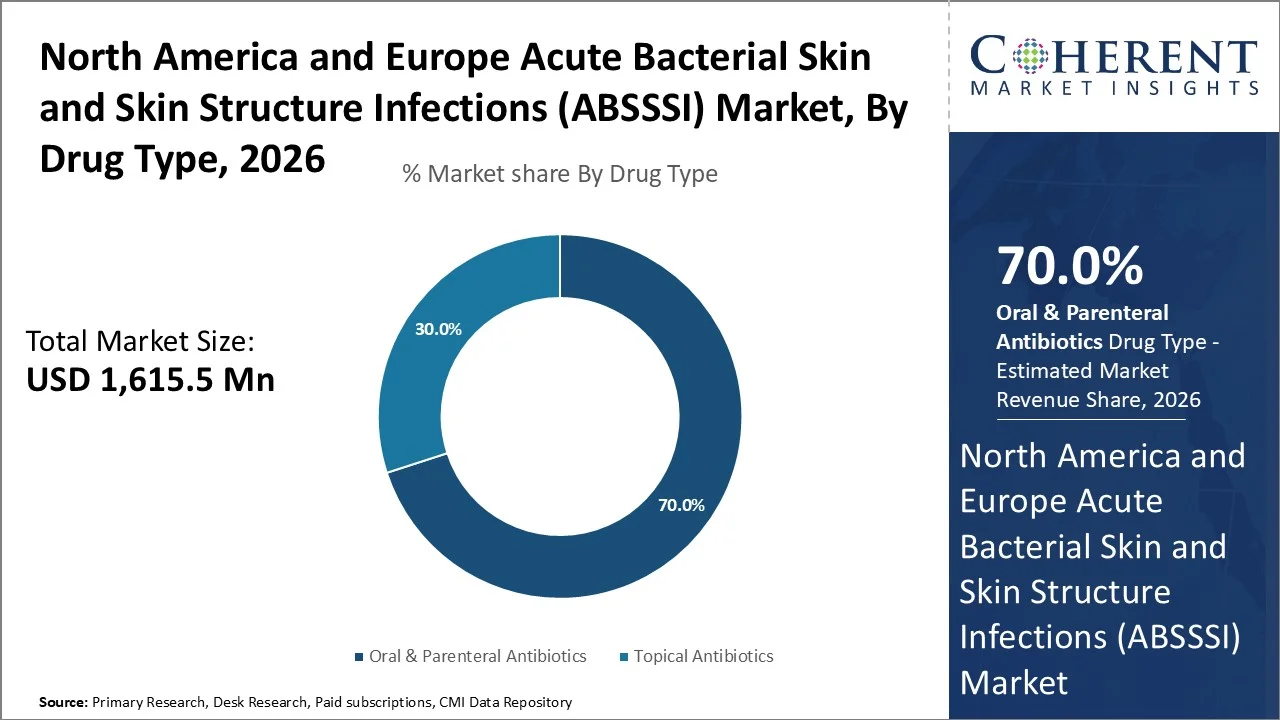
Why is Oral & Parenteral Antibiotics Acquiring the Largest Market Share?
Oral & parenteral antibiotics is projected to account for the largest share of drug type in 2026, representing approximately 70% of the total volume. owing to their superior efficacy in treating severe as well as complicated ABSSSI cases that require systemic intervention.
The dominance of this segment is primarily attributed to the high prevalence of methicillin-resistant Staphylococcus aureus (MRSA) infections, which have become a major concern in both North American and European healthcare systems. Approximately 2% of the population carries MRSA. The societal economic burden of MRSA in the USA was estimated to range from USD 1.4 billion to USD13.8 billion.
According to the Centers for Disease Control and Prevention (CDC), MRSA accounts for a substantial proportion of skin and soft tissue infections in the United States, 5.4 million patients experienced 9.1 million SSTI episodes, with an incidence of 77.5 (95% confidence interval, 77.4–77.5) per 1000 person-years of observation (PYO), necessitating the use of potent systemic antibiotics like vancomycin and linezolid that can potentially penetrate deep tissue layers as well as achieve therapeutic concentrations at infection sites.
- Current Industry Events of 2026
- Market Size Estimation
- Regional Breakdown
- Competitive Landscape
- Customer Intelligence
- Segmental Analysis
- Pricing Analysis
- Key Market Drivers, Challenges & Future Trends
- Customized Insights Section
Community Acquired ABSSSI holds the Largest Market Share
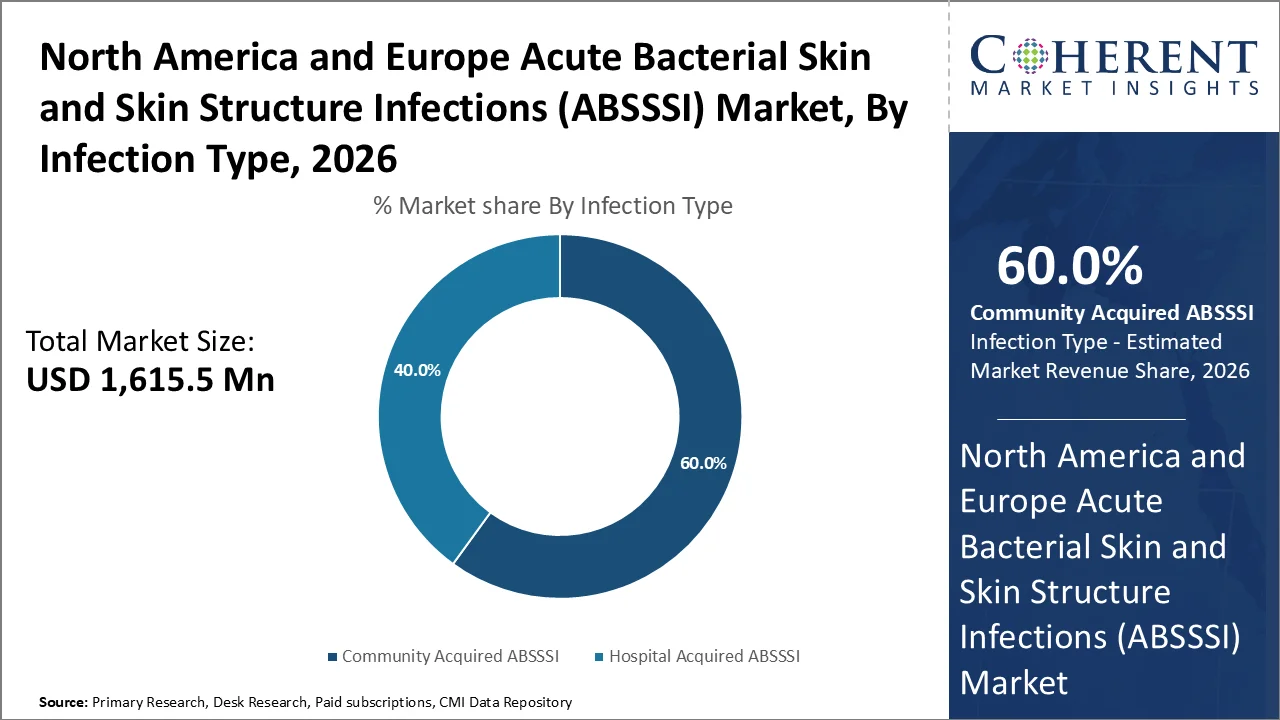
Based on infection type, Community Acquired ABSSSI dominates the market, accounting for a significant 60% share in 2026, owing to its significantly higher prevalence in the general population as well as the widespread nature of risk factors that predispose individuals to these infections outside healthcare settings.
The prevalence of Community Acquired ABSSSI is fundamentally driven by a high incidence of conditions that compromise skin integrity as well as immune function in the general population. Diabetes mellitus, which affects millions of individuals across North America and Europe, serves as a primary risk factor for community-acquired skin and soft tissue infections.
According to the International Diabetes Federation, the rising prevalence of diabetes creates a substantial population at risk for developing ABSSSI due to impaired wound healing, reduced peripheral circulation, and compromised immune responses. Diagnosed diabetes 29.1 million, estimated number of people with diagnosed diabetes in the United States, including 28.8 million adults aged ≥18 years.
Parenteral holds the Largest Market Share
Based on route of administration, parenteral dominate the market, accounting for a significant 45% share in 2026, owing to the critical nature of severe ABSSSI cases that require immediate as well as effective therapeutic intervention. The parenteral route, which includes intravenous as well as intramuscular administration, offers superior bioavailability and rapid onset of action compared to other delivery methods, making it the preferred choice for hospitalized patients and those with complicated infections. There are over 14 million cases of a common bacterial skin infection called cellulitis each year in the U.S. alone.
According to the Centers for Disease Control and Prevention (CDC), complicated skin and soft tissue infections usually involve deeper tissue layers, necrotizing fasciitis, or infections in immunocompromised patients, conditions that necessitate aggressive parenteral antibiotic therapy to prevent systemic complications and potential mortality.
Hospital Pharmacies holds the Largest Market Share
Based on distribution channel, hospital pharmacies dominate the market, accounting for a significant 45% share in 2026, as ABSSSI treatments are very important and severe cases need quick medical help, hospital pharmacies are the main place where strong antibiotics are given, especially when patients need IV treatment or special monitoring. In 2025, retail, mail, long-term care, and specialty pharmacies collectively dispensed an estimated USD293.4 billion in specialty pharmaceuticals a 9.6% surge over the revised 2024 figure.
Hospital pharmacies are important because ABSSSI cases are often emergencies that need quick hospital care. The European Centre for Disease Prevention and Control says serious skin and tissue infections often need antibiotics given through a drip, which must be done safely in hospitals by medical staff.
Market Driver
Advanced Diagnostic Technologies is transforming the North America and Europe Acute Bacterial Skin and Skin Structure Infections (ABSSSI) Industry
Advanced diagnostic technologies, particularly molecular diagnostics and PCR-based systems, are transforming the detection of bacterial pathogens in acute bacterial skin and skin structure infections (ABSSSI). Real-time and multiplex PCR platforms can identify pathogens and resistance genes within 1–2 hours, compared to the 24–72 hours required for traditional culture methods. Leading systems include the Cepheid GeneXpert (used by Mayo Clinic, Johns Hopkins, and NHS trusts), bioMérieux FilmArray (Cleveland Clinic, Massachusetts General Hospital, Charité Berlin), and BD Max (Kaiser Permanente and Swedish healthcare system).
Adoption of these technologies majorly improves clinical outcomes as well as reduces costs. Hospitals report a 40–60% faster initiation of appropriate antibiotic therapy, a 25% reduction in patient length of stay, and savings of USD2,000–4,000 per ABSSSI episode. Additionally, using antibiotics the wrong way goes down by 30–45%, showing that fast molecular tests help both patients and healthcare work better.
MALDI-TOF Mass Spectrometry: A major breakthrough in North America and Europe Acute Bacterial Skin and Skin Structure Infections (ABSSSI)
Matrix-Assisted Laser Desorption/Ionization Time-of-Flight (MALDI-TOF) technology enables rapid bacterial identification using protein fingerprinting, dramatically shortening the time required for diagnosis. Key systems include the Bruker MALDI Biotyper, used at the University of Pennsylvania Health System, Toronto General Hospital, as well as major German university hospitals, and the bioMérieux VITEK MS, adopted by Intermountain Healthcare and French hospital networks.
The adoption of MALDI-TOF has majorly improved laboratory efficiency and clinical outcomes. Accuracy in bacterial identification reaches 85–95%, with identification times reduced from 24–48 hours to just 2–6 hours. This translates to a 20% improvement in appropriate empirical therapy selection and annual laboratory cost savings of USD150,000–300,000, highlighting both clinical as well as economic benefits.
Current Events and Their Impact on the North America and Europe Acute Bacterial Skin and Skin Structure Infections (ABSSSI) Market
Current Event | Description and its Impact |
EU MDR 2024 Implementation Updates |
|
U.S. FDA Antimicrobial Stewardship Guidelines (2025) |
|
North America and Europe Acute Bacterial Skin and Skin Structure Infections (ABSSSI) Market Trends
- Rising Antimicrobial Resistance (AMR): The emergence of multidrug-resistant organisms is stimulating demand for novel therapeutic approaches, with MRSA infections accounting for approximately 30-40% of ABSSSI cases in both regions.
- Shift Toward Outpatient Care: Healthcare systems are highly adopting outpatient antibiotic therapy (OPAT) programs, reducing hospitalization costs while maintaining treatment efficacy.
- Personalized Medicine Integration: Growing adoption of rapid diagnostic tools as well as biomarker-guided therapy selection is improving treatment outcomes and reducing therapy duration.
- Regulatory Support: Expedited approval pathways (FDA's QIDP designation, EMA's PRIME scheme) are accelerating market entry for innovative ABSSSI treatments.
Regional Insights
North America dominates owing to the robust healthcare infrastructure
North America account 40% market share in 2026, owing to the robust healthcare infrastructure, advanced diagnostic capabilities, as well as well-established antibiotic development programs that have positioned the region as the dominant force in addressing Acute Bacterial Skin and Skin Structure Infections (ABSSSI). The Centers for Disease Control and Prevention (CDC) reports that skin and soft tissue infections account for approximately 14 million outpatient visits annually in the United States, with ABSSSI cases showing a major portion requiring intensive antibiotic therapy.
Hospital admissions for SSTI impose a substantial burden in the US, with SSTIs accounting for roughly 10% of all infection-related hospitalizations.
The region's leadership stems from its comprehensive approach to combating antibiotic-resistant pathogens, particularly methicillin-resistant Staphylococcus aureus (MRSA), which affects nearly 80,000 Americans annually according to CDC surveillance data.
Europe Acute Bacterial Skin and Skin Structure Infections (ABSSSI) Market Trends
The Europe region is poised to be the fastest-growing region through 2026-2033, driven by high domestic pharmaceutical innovation as well as strengthened regulatory frameworks that support local drug development initiatives. European pharmaceutical companies such as GSK, Sanofi, Novartis, etc., have targeted their efforts to develop region-specific ABSSSI treatments made for local resistance patterns. This focus is supported by the persistent prevalence of antibiotic-resistant infections in the EU.
In 2024, about 11 out of every 100,000 people in the EU had bloodstream infections from E. coli that resist third-generation cephalosporins. This is 5.9% higher than in 2019 and more than the 2030 goal of 9.38 per 100,000, showing that better treatments are still needed.
Its Advanced Medical Research Capabilities is Accelerating the Acute Bacterial Skin and Skin Structure Infections (ABSSSI) Market Demand in United States
Owing to its extensive healthcare infrastructure, advanced medical research capabilities, and substantial healthcare expenditure allocation. The U.S. healthcare system's sophisticated diagnostic capabilities enable early identification as well as comprehensive treatment of ABSSSI cases, with the Centers for Disease Control and Prevention (CDC) reporting significant investment in antimicrobial resistance surveillance programs specifically targeting skin and soft tissue infections.
The presence of world-renowned medical institutions such as the Mayo Clinic, Cleveland Clinic, and Johns Hopkins has established the U.S. as a global leader in infectious disease management protocols. Recently, the FDA has made faster ways to approve new ABSSSI treatments. For example, some new medicines that fight MRSA infections were approved quickly.
Germany Acute Bacterial Skin and Skin Structure Infections (ABSSSI) Market Trends
Germany contributes the highest share in the market in Europe owing to its robust healthcare infrastructure, advanced medical research capabilities, as well as comprehensive antimicrobial stewardship programs that have positioned it as the leading segment for Acute Bacterial Skin and Skin Structure Infections (ABSSSI) treatment.
The German healthcare system's emphasis on evidence-based medicine and its well-established network of specialized dermatology centers have created an optimal environment for ABSSSI management. For example, the German Society for Dermatology (DDG) has implemented standardized treatment protocols that have resulted in improved patient outcomes as well as reduced hospital readmission rates.
Who are the Major Companies in North America and Europe Acute Bacterial Skin and Skin Structure Infections (ABSSSI) Industry
Some of the major key players in North America and Europe Acute Bacterial Skin and Skin Structure Infections (ABSSSI), include Merck & Co., Inc., Pfizer Inc., GlaxoSmithKline plc, Teva Pharmaceutical Industries Ltd., Paratek Pharmaceuticals, Inc., Melinta Therapeutics, Inc., Arrevus, Inc., AbbVie Inc., Aurobindo Pharma Ltd., Amneal Pharmaceuticals LLC, and Sun Pharmaceutical Industries Ltd.
Key News
- In March 2026, Acurx Pharmaceuticals, Inc. is a clinical-stage drug company making new antibiotics for hard-to-treat bacterial infections. The company announced it will start a new trial for patients who have recurrent C. difficile infections (rCDI). The trial begins with a small open-label study of 20 patients who have had at least three infections in the past year. The results will help plan a larger Phase 3 trial. If that trial is successful, Acurx plans to ask the FDA for approval to treat and prevent rCDI under the Limited Population Pathway for antibacterial drugs.
- In May 2025, Zevtera® (ceftobiprole medocaril sodium for injection) is now available for the treatment of: adults with Staphylococcus aureus bloodstream infections (bacteremia; SAB), including those with right-sided infective endocarditis; adults with acute bacterial skin and skin structure infections (ABSSSI); and adult and pediatric patients 3 months to less than 18 years of age with community-acquired bacterial pneumonia (CABP).
Market Report Scope
North America and Europe Acute Bacterial Skin and Skin Structure Infections (ABSSSI) Market Report Coverage
| Report Coverage | Details | ||
|---|---|---|---|
| Base Year: | 2025 | Market Size in 2026: | USD 1,615.5 Mn |
| Historical Data for: | 2020 To 2024 | Forecast Period: | 2026 To 2033 |
| Forecast Period 2026 to 2033 CAGR: | 5.5% | 2033 Value Projection: | USD 2,111.7 Mn |
| Geographies covered: |
| ||
| Segments covered: |
| ||
| Companies covered: | Merck & Co., Inc., Pfizer Inc., GlaxoSmithKline plc, Teva Pharmaceutical Industries Ltd., Paratek Pharmaceuticals, Inc., Melinta Therapeutics, Inc., Arrevus, Inc., AbbVie Inc., Aurobindo Pharma Ltd., Amneal Pharmaceuticals LLC, and Sun Pharmaceutical Industries Ltd. | ||
| Growth Drivers: |
| ||
| Restraints & Challenges: |
| ||
Analyst Opinion
- The ABSSSI market is driven by urgent clinical need rather than trends. In 2025, the CDC reported 120,000 MRSA-related hospitalizations in North America, while WHO noted 670,000 resistant Gram-positive infections in Europe, highlighting persistent demand for effective treatment.
- Rapid diagnostics are transforming care. Hospitals using PCR and MALDI-TOF in 2025 cut time to appropriate therapy by up to 50%, less hospital stays, and improved antibiotic stewardship.
- Novel antibiotics and regulatory incentives are boosting adoption. EU funding for innovative antibiotics in 2025 accelerated development and hospital uptake, expanding the market in Europe.
- In short, North America and Europe ABSSSI markets are growing because clinical urgency, advanced diagnostics, and innovative therapies are converging, not just because of industry hype.
Speak to the analyst
Want personalized insights?
Take the findings above to one of our principal consultants, or have the report rebuilt around the segments, geographies and competitors you actually track.
North America and Europe Acute Bacterial Skin and Skin Structure Infections (ABSSSI) Market Segmentation
- By Drug Type
- Oral & Parenteral Antibiotics
- Vancomycin
- Linezolid
- Clindamycin
- Ceftaroline
- Daptomycin
- Dalbavancin
- Tedizolid
- Others
- Topical Antibiotics
- Hydrogen Peroxide
- Fusidic Acid
- Mupirocin
- Retapamulin
- Povidone-Iodine
- Oral & Parenteral Antibiotics
- By Infection Type
- Hospital Acquired ABSSSI
- Community Acquired ABSSSI
- By Route of Administration
- Oral
- Parenteral
- Topical
- By Distribution Channel
- Hospital Pharmacies
- Retail Pharmacies
- Online Pharmacies
- North America and Europe Acute Bacterial Skin and Skin Structure Infections (ABSSSI) Market, By Region
- North America
- U.S.
- Canada
- Europe
- Germany
- U.K.
- France
- Italy
- Spain
- Russia
- Rest of Europe
- North America
Sources
Primary Research Interviews
- Hospital Infectious Disease Specialists
- Dermatologists and Emergency Medicine Physicians
- Pharmaceutical Company Executives (Antibiotics Division)
- Healthcare Procurement Managers
- Others
Databases
- FDA Orange Book Database
- European Medicines Agency (EMA) Database
- Healthcare Cost and Utilization Project (HCUP)
- National Healthcare Safety Network (NHSN)
- Others
Magazines
- Infectious Disease News
- Dermatology Times
- Hospital Healthcare Europe
- Pharmacy Times
- Others
Journals
- Clinical Infectious Diseases Journal
- Journal of Antimicrobial Chemotherapy
- Antimicrobial Agents and Chemotherapy
- Others
Newspapers
- The Wall Street Journal (Healthcare Section)
- Financial Times (Pharmaceuticals Coverage)
- Reuters Health News
- Bloomberg Healthcare
- Others
Associations
- Infectious Diseases Society of America (IDSA)
- European Society of Clinical Microbiology and Infectious Diseases (ESCMID)
- American Academy of Dermatology (AAD)
- International Society of Antimicrobial Chemotherapy (ISAC)
- Others
Public Domain Sources
- Centers for Disease Control and Prevention (CDC)
- World Health Organization (WHO) Antimicrobial Resistance Reports
- European Centre for Disease Prevention and Control (ECDC)
- National Institutes of Health (NIH) Clinical Guidelines
- Others
Proprietary Elements
- CMI Data Analytics Tool
- Proprietary CMI Existing Repository of information for last 10 yearsl
Get access to 250+ pages report
Every segment, forecast, competitor profile and data table behind the analysis above — available for instant download.
- ESOMAR Member
- ISO 9001:2015 Certified
- D-U-N-S Registered
- GDPR & CCPA Compliant
Missing comfort of reading report in your local language? Find your preferred language:
Transform your Strategy with Exclusive Trending Reports
Frequently Asked Questions
The North America and Europe Acute Bacterial Skin and Skin Structure Infections (ABSSSI) market is expected to reach USD 2,111.7 Mn in 2033.
Major players operating in the North America and Europe Acute Bacterial Skin and Skin Structure Infections (ABSSSI) market include Merck & Co., Inc., Pfizer Inc., GlaxoSmithKline plc, Teva Pharmaceutical Industries Ltd., Paratek Pharmaceuticals, Inc., Melinta Therapeutics, Inc., Arrevus, Inc., AbbVie Inc., Aurobindo Pharma Ltd., Amneal Pharmaceuticals LLC, and Sun Pharmaceutical Industries Ltd.
Patent expiration of ABSSSI antibiotic drugs is a major factor restraining growth of the North America and Europe acute bacterial skin and skin structure infections (ABSSSI) market.
Research and development activities and increasing number of product launches are expected to drive growth of the North America and Europe acute bacterial skin and skin structure infections (ABSSSI) market.
The North America and Europe Acute Bacterial Skin and Skin Structure Infections (ABSSSI) market is anticipated to grow at a CAGR of 5.5% between 2026 and 2033.
Among regions, North America is expected to account for a largest market share in the North America and Europe Acute Bacterial Skin and Skin Structure Infections (ABSSSI) market over the forecast period.