

Bone Cancer Drugs Market Size and Trends Forecast: 2026 - 2033
The bone cancer drugs market is estimated to be valued at USD 1,500.2 Mn in 2026 and is expected to reach USD 2,167.8 Mn by 2033, exhibiting a compound annual growth rate (CAGR) of 5.4% from 2026 to 2033.
Key Takeaways of the Bone Cancer Drugs Market
- By drug type, the antimetabolites segment is expected to contribute the highest share of the bone cancer drugs market with 37.2% in 2026.
- By disease indication, the multiple myeloma segment is expected to dominate the market over the forecast period due to the increasing prevalence of multiple myeloma across the globe.
- By distribution channel, the hospital pharmacies segment is expected to dominate the market over the forecast period due to easy availability of the drugs which can prompt the treatment that can lead to proper recovery.
- North America is expected to be the largest market for bone cancer drugs during the forecast period, accounting for over 33. 5% of the market share in 2026.
Market Overview
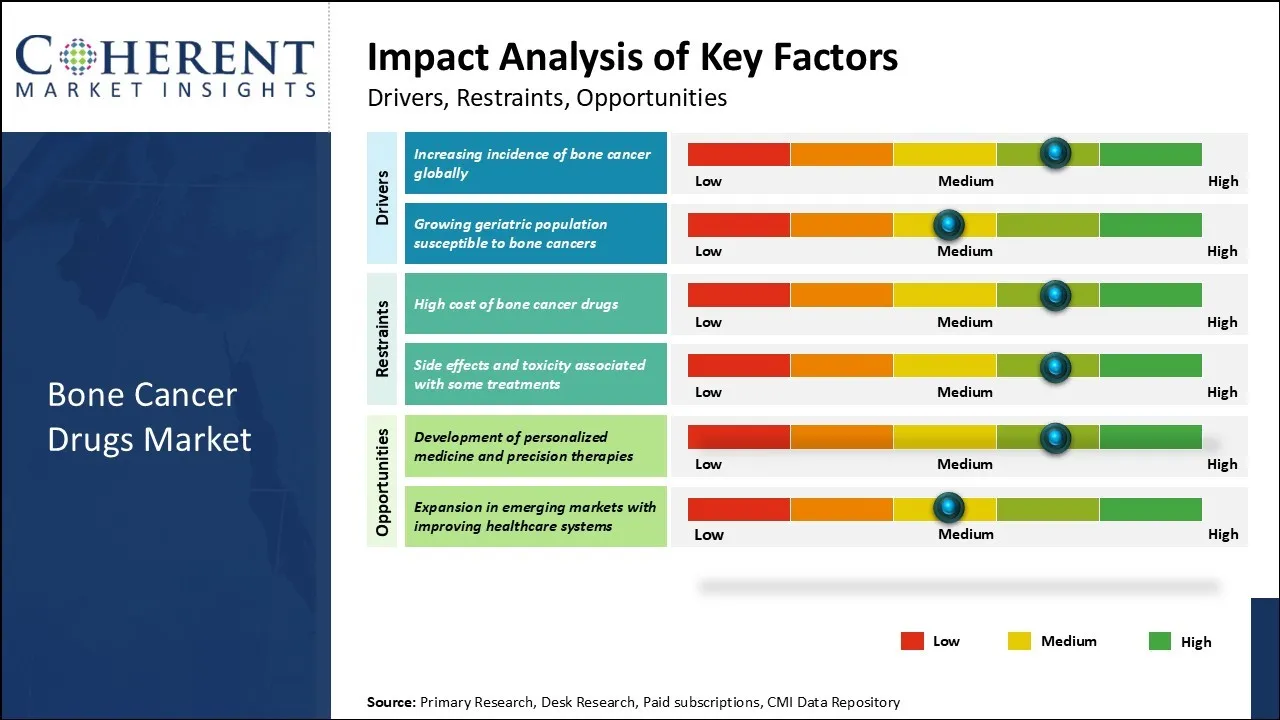
The global bone cancer drugs market is witnessing steady growth driven by the increasing prevalence of bone cancers such as osteosarcoma, Ewing sarcoma, and chondrosarcoma, alongside advancements in targeted therapies and immunotherapies. Rising awareness, improved diagnostic capabilities, and supportive governmental initiatives further amplify the demand for innovative treatment options in this niche but critical therapeutic area.
However, limited availability of effective treatments for rare bone cancer types is one of the factors restraining the market growth.
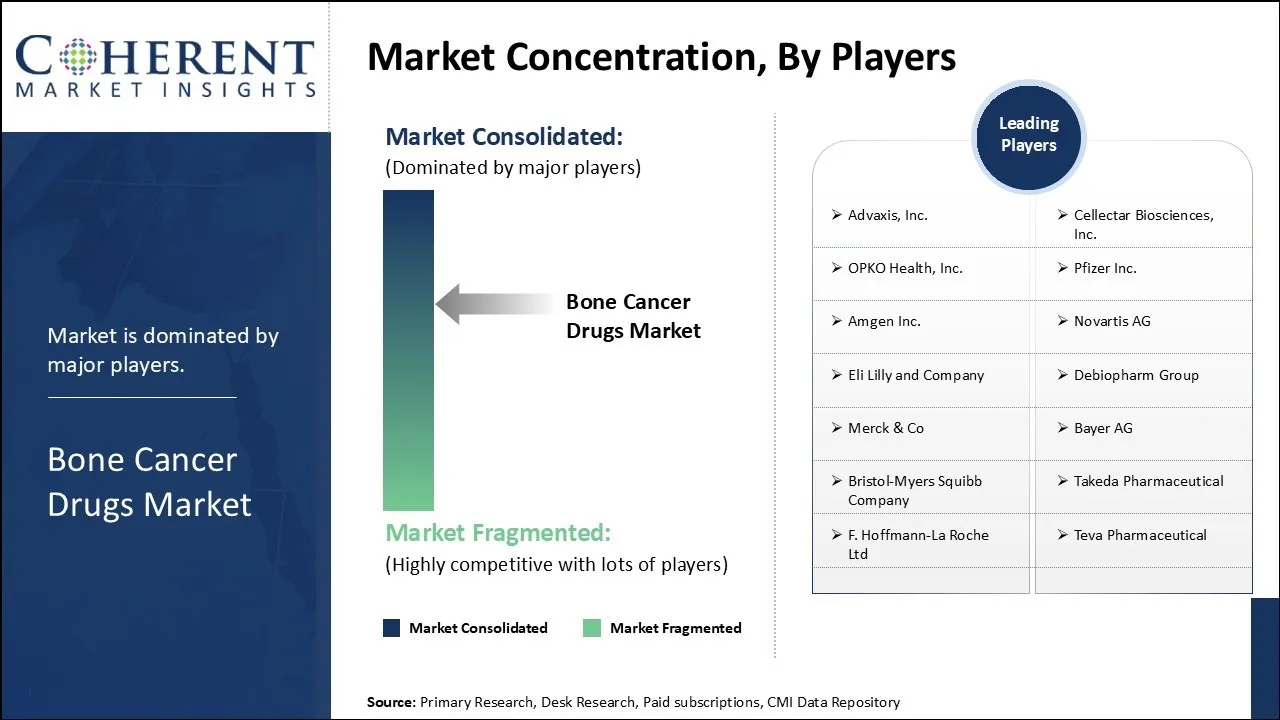
Market Concentration and Competitive Landscape
Current Events and their Impact on the Bone Cancer Drugs Market
Current Events | Description and its impact |
Regulatory Advancements in Oncology Drug Approvals |
|
Geopolitical and Trade Dynamics |
|
- Current Industry Events of 2026
- Market Size Estimation
- Regional Breakdown
- Competitive Landscape
- Customer Intelligence
- Segmental Analysis
- Pricing Analysis
- Key Market Drivers, Challenges & Future Trends
- Customized Insights Section
Market Trends
Increasing Incidence of Bone Cancer
The increasing incidence of bone cancer globally is a significant factor propelling the demand for bone cancer drugs, thereby influencing the overall expansion of the bone cancer drugs market. Bone cancer, although relatively rare compared to other cancers, has witnessed a noticeable rise in diagnosed cases, attributed to improved diagnostic techniques and greater awareness among healthcare professionals and patients.
For instance, according to the American Cancer Society's Cancer Facts & Figures 2025, primary bone and joint cancers are projected to account for approximately 3,770 new cases and 2,190 deaths in the U.S. in 2025.
Segmental Insights
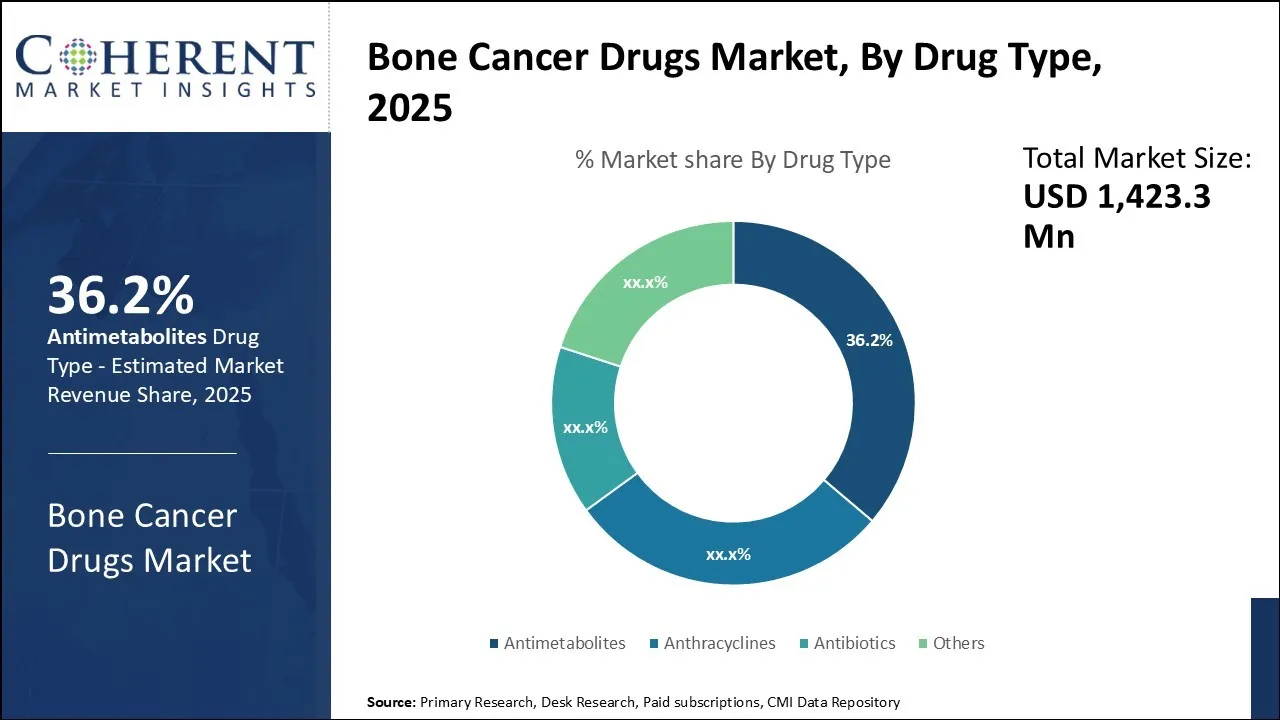
Bone Cancer Drugs Market Insights, By Drug Type: Extensive Clinical Usage is Projected to Drive the Antimetabolites Segment Growth
In terms of drug type, the antimetabolites segment is estimated to contribute the highest market share of 37.2% in 2026, owing to their mode of action, and strong backing from well-established treatment protocols.
Antimetabolites act primarily by interfering with DNA and RNA synthesis, thereby inhibiting the proliferation of cancerous cells, which is a crucial mechanism given that bone cancers such as osteosarcoma and Ewing sarcoma typically involve rapidly dividing malignant cells. The widespread adoption of drugs like methotrexate and cytarabine in chemotherapy regimens has solidified the position of antimetabolites in treatment strategies globally.
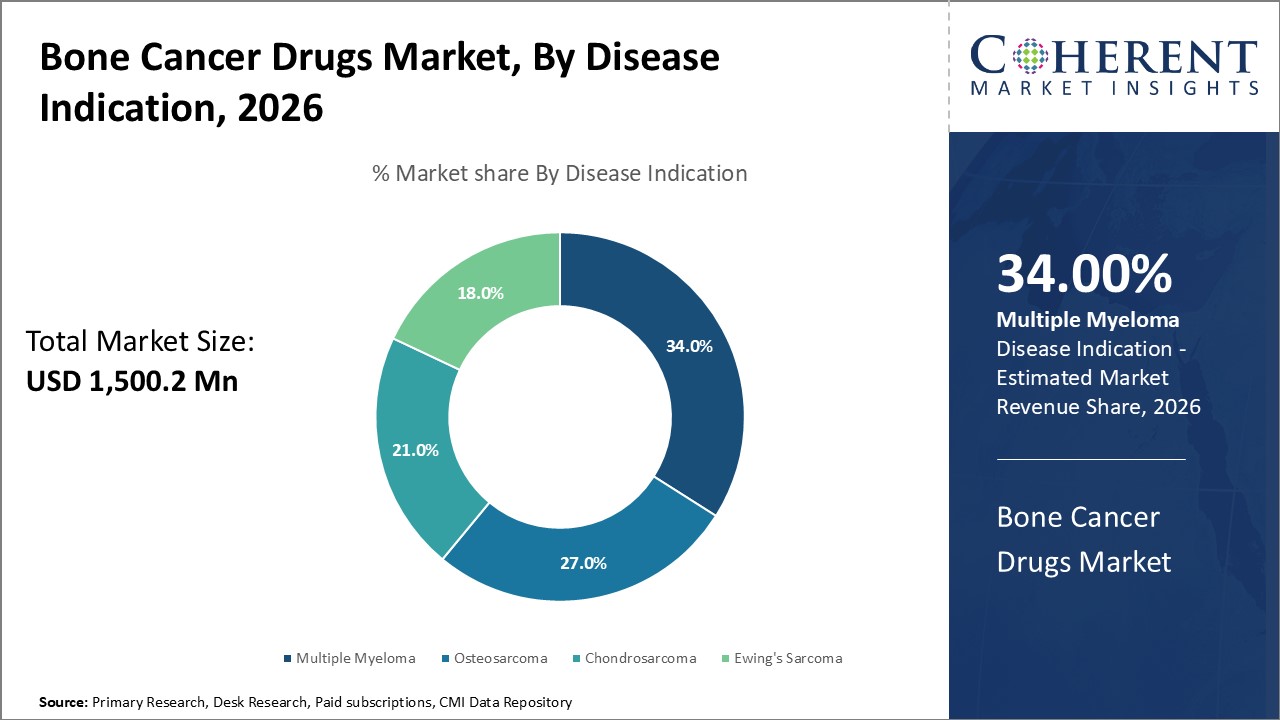
Bone Cancer Drugs Market Insights, By Disease Indication: High Prevalence Augments the Multiple Myeloma Segment Growth
In terms of disease indication, the multiple myeloma segment is estimated to contribute the highest market share in 2026, owing to the increasing prevalence of multiple myeloma across the globe.
The chronic and relapsing nature of multiple myeloma has created persistent demand for innovative drugs that can manage the disease over extended periods, thereby increasing the market share of drug therapies addressing this condition. Breakthroughs in Immunomodulatory Drugs (IMiDs), proteasome inhibitors, and monoclonal antibodies have been instrumental in transforming the treatment landscape for multiple myeloma, encouraging sustained investment and a focus by pharmaceutical companies.
Bone Cancer Drugs Market Insights, By Distribution Channel: Easy Availability of the Drugs Propels the Hospital Pharmacies Segment Growth
In terms of distribution channel, the hospital pharmacies segment is estimated to contribute the highest market share in 2026, largely attributable to their critical role within healthcare infrastructure and direct integration with oncology treatment protocols.
Hospital pharmacies serve as key touchpoints in the management and dispensing of bone cancer medications, primarily because of the specialized and often complex nature of bone cancer treatment. Unlike many other medicinal areas, bone cancer typically requires highly coordinated care, including chemotherapy, radiotherapy, surgery, and targeted drug therapy, all of which are frequently administered or monitored in hospital settings.
Emerging Innovations in the Bone Cancer Drugs Market
- Proliferation of Targeted Therapies
- Precision medicine, fueled by deeper genetic and molecular understanding of bone cancers, allows for more tailored drug development aimed at specific pathways involved in tumor growth and metastasis. For instance, the identification of mutations and oncogenic drivers such as the EWS-FLI1 fusion gene in Ewing sarcoma or aberrant signaling pathways in osteosarcoma facilitates the creation of small molecules and monoclonal antibodies that selectively inhibit these targets.
- Immunotherapy Technologies
- Cancer immunotherapy technologies have gained significant traction in the treatment of various cancers, including bone malignancies. Immune checkpoint inhibitors, CAR-T cell therapies, and cancer vaccines are being investigated and gradually integrated into therapeutic regimens. Specifically, CAR-T cell therapy, which involves engineering a patient’s own T cells to recognize and destroy cancer cells expressing particular antigens, has shown promising preliminary results in bone cancer clinical trials. Technological improvements in gene editing tools such as CRISPR-Cas9 have accelerated the development of these cellular therapies.
Impacts of Artificial Intelligence (AI) on the Bone Cancer Drugs Market
By integrating AI into drug discovery, development, and patient management, companies are accelerating innovation while improving outcomes.
- Novartis has embedded AI into its drug discovery processes to predict how compounds affect cancer cells at the molecular level. The company’s collaboration with digital health firms emphasizes strategic initiatives to harness machine learning for precision oncology, specifically targeting hard-to-treat cancers including bone malignancies. This integrated approach reduces development times and costs while increasing the likelihood of successful drug candidates.
- Tempus, a technology company specializing in AI-powered cancer care, utilizes machine learning models to analyze clinical and molecular data from patients. Their platform helps oncologists better understand tumor biology and treatment response patterns specific to bone sarcomas. By doing so, Tempus improves treatment precision, enabling tailored therapies that increase efficacy and reduce adverse effects. This not only enhances patient outcomes but also streamlines clinical decision-making.
Regional Insights
North America Bone Cancer Drugs Market Analysis and Trends
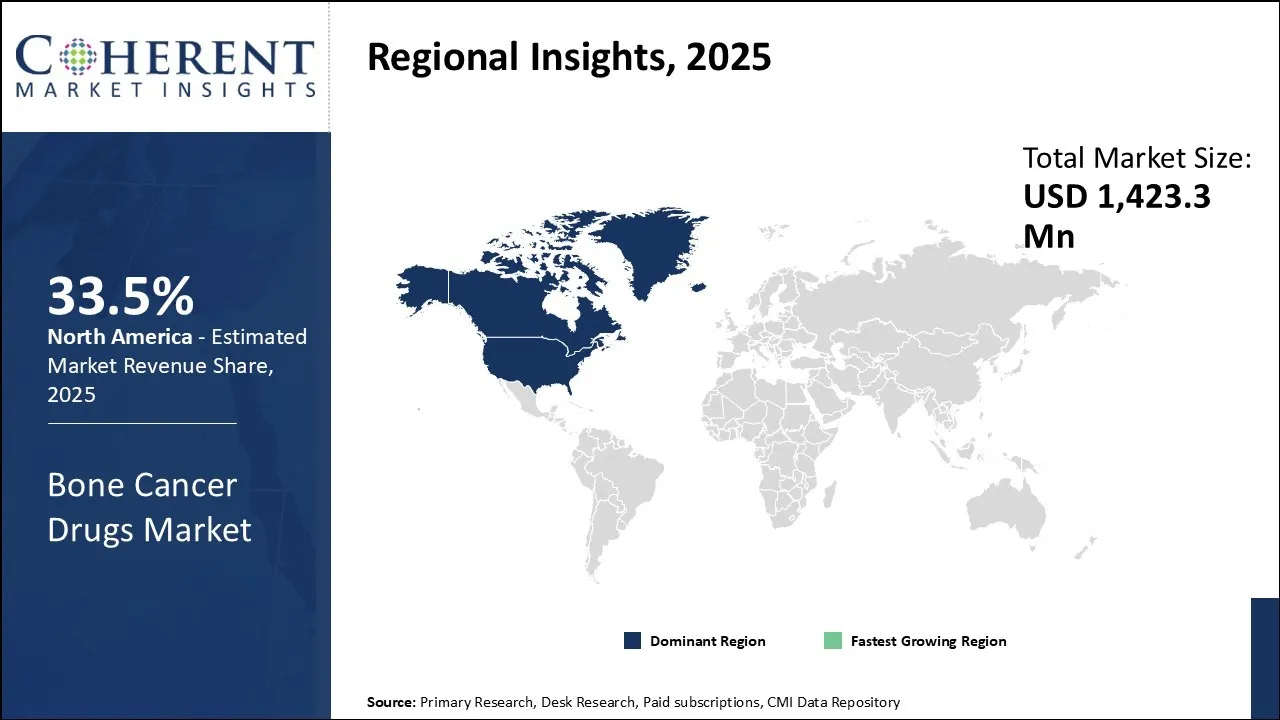
North America is estimated to hold a dominant position in the global bone cancer drugs market over the forecast period. North America is estimated to hold 33.5% of the market share in 2026. Global bone cancer drugs market is expected to witness significant growth in the near future due to high prevalence of bone cancer, favorable health reimbursement, and increased awareness. Increasing prevalence of neurological disorders is contributing to growth of the bone cancer drugs market in North America region.
For instance, as per the American Cancer Society, primary bone cancers (cancers that start in the bones) are uncommon, accounting for less than 1% of all cancers. In adults, cancers that spread to the bones from other organs (known as bone metastasis) are much more common than primary bone cancers.
Bone Cancer Drugs Market Outlook for Key Countries
U.S. Bone Cancer Drugs Market Analysis and Trends
The U.S. bone cancer drugs market is driven by its robust healthcare infrastructure and significant investments in cancer research. The U.S. Food and Drug Administration (FDA) plays a major role by providing expedited approvals for innovative therapies, including orphan drugs for rare cancers. This regulatory support accelerates the availability of new treatments.
Germany Bone Cancer Drugs Market Analysis and Trends
Germany's bone cancer drugs market is significantly bolstered by its comprehensive healthcare system and emphasis on preventive care. The country's well-established referral pathways ensure timely access to specialized care, which is crucial for effective bone cancer treatment. Germany's focus on health education as well as early detection programs leads to higher awareness among the population, promoting early diagnosis and intervention.
India Bone Cancer Drugs Market Analysis and Trends
India's bone cancer treatment landscape is characterized by distinct challenges, notably the prevalence of advanced-stage diagnoses and constrained access to specialized care in rural regions. These issues are compounded by a shortage of medical professionals in underserved areas, leading to delays in diagnosis and treatment. However, concerted efforts are underway to address these disparities.
China Bone Cancer Drugs Market Analysis and Trends
China is swiftly advancing in the realm of bone cancer treatment, driven by substantial investments in healthcare infrastructure and research. The National Medical Products Administration's approval of innovative therapies, such as radionuclide-drug conjugates for bone metastases, underscores the nation's commitment to expanding treatment options. Collaborations between Chinese biotech firms and Western pharmaceutical companies are fostering the development of competitive therapies, including PD-1 and PD-1 VEGF inhibitors.
Pricing Analysis of the Bone Cancer Drugs Market
Drug Category | Price Range per Treatment Cycle/Month (USD) |
Chemotherapy | USD 300 – USD 1,800 |
Targeted Therapies | USD 3,500 – USD 13,000 |
Immunotherapy | USD 10,000 – USD 15,000 per dose |
Bone-Modifying Agents | USD 500 – USD 4,200 per dose |
Supportive Care | USD 20 – USD 3,000 |
Market Report Scope
Bone Cancer Drugs Market Report Coverage
| Report Coverage | Details | ||
|---|---|---|---|
| Base Year: | 2025 | Market Size in 2026: | USD 1,500.2 Mn |
| Historical Data for: | 2020 To 2024 | Forecast Period: | 2026 To 2033 |
| Forecast Period 2026 to 2033 CAGR: | 5.4% | 2033 Value Projection: | USD 2,167.8 Mn |
| Geographies covered: |
| ||
| Segments covered: |
| ||
| Companies covered: | Advaxis, Inc., Cellectar Biosciences, Inc., OPKO Health, Inc., Pfizer Inc., Amgen Inc., Novartis AG, Eli Lilly and Company, Debiopharm Group, Merck & Co, Bayer AG, Bristol-Myers Squibb Company, Takeda Pharmaceutical, F. Hoffmann-La Roche Ltd, and Teva Pharmaceutical | ||
| Growth Drivers: |
| ||
| Restraints & Challenges: |
| ||
Bone Cancer Drugs Industry News
- In June 2025, Pfizer Inc. announced the U.S. Food and Drug Administration’s (FDA) decision on the supplemental New Drug Application (sNDA) for TALZENNA (talazoparib) in combination with XTANDI (enzalutamide) for men with metastatic castration-resistant prostate cancer (mCRPC). The FDA approved updated labelling with the inclusion of final overall survival (OS) data for the combination’s existing indication for the treatment of adults with homologous recombination repair (HRR) gene-mutated mCRPC but did not expand the indication to include patients with non-HRR gene mutated mCRPC.
- In June 2025, Amgen announced the Phase 3 FORTITUDE-101 clinical trial evaluating first-line bemarituzumab plus chemotherapy (mFOLFOX6) and met its primary endpoint of overall survival (OS) at a pre-specified interim analysis.
- In June 2025, Novartis announced the successful completion of the acquisition of Regulus Therapeutics Inc. (“Regulus”). With the completion of the acquisition, shares of common stock, par value USD 0.001 per share (the “Shares”), of Regulus, ceased trading on the Nasdaq Stock Market LLC and Regulus is now an indirect wholly owned subsidiary of Novartis.
- In January 2025, Cellectar Biosciences, Inc., announced plans to highlight the Company’s 2025 strategic initiatives at Biotech Showcase, San Francisco during the 43rd Annual JP Morgan Healthcare Conference. James Caruso, president and CEO of Cellectar, presented a corporate update.
Analyst View
- The bone cancer drugs market is witnessing notable evolution driven by advancements in targeted therapies and increasing prevalence of bone malignancies. A key driver fueling market expansion is the rising incidence of primary and metastatic bone cancers, coupled with enhanced diagnostic capabilities that enable earlier detection and treatment initiation.
- Furthermore, growing investment in oncology research has led to the development of novel agents that improve patient outcomes and minimize side effects, thereby broadening therapeutic options.
- However, the high cost of these specialized drugs and stringent regulatory approvals remain significant restraints affecting market penetration, especially in emerging economies.
- Opportunities lie in the integration of precision medicine and immunotherapy approaches, which hold promise for more effective and personalized treatment regimens. Additionally, expanding healthcare infrastructure in developing regions presents untapped potential for market growth.
- Geographically, North America expected to dominates the bone cancer drugs market, attributable to robust healthcare systems, substantial R&D investments, and a favorable reimbursement environment.
- Overall, the bone cancer drugs market is poised for progressive transformation, underpinned by technological advancements and evolving clinical practices. Market players focusing on innovation, strategic collaborations, and expanding presence in underserved regions are likely to gain competitive advantage.
Market Segmentation
- By Drug Type Insights (Revenue, USD Mn, 2021 - 2033)
- Antimetabolites
- Anthracyclines
- Antibiotics
- Others (RANK ligand inhibitors, etc.)
- By Disease Indication Insights (Revenue, USD Mn, 2021 - 2033)
- Multiple Myeloma
- Osteosarcoma
- Chondrosarcoma
- Ewing’s Sarcoma
- By Distribution Channel Insights (Revenue, USD Mn, 2021 - 2033)
- Hospital Pharmacies
- Retail Pharmacies
- Online Pharmacies
- Regional Insights (Revenue, USD Mn, 2021 - 2033)
- North America
- U.S.
- Canada
- Latin America
- Brazil
- Argentina
- Mexico
- Rest of Latin America
- Europe
- Germany
- U.K.
- Spain
- France
- Italy
- Russia
- Rest of Europe
- Asia Pacific
- China
- India
- Japan
- Australia
- South Korea
- ASEAN
- Rest of Asia Pacific
- Middle East
- GCC Countries
- Israel
- Rest of Middle East
- Africa
- South Africa
- North Africa
- Central Africa
- Key Players Insights
- Advaxis, Inc.
- Cellectar Biosciences, Inc.
- OPKO Health, Inc.
- Pfizer Inc.
- Amgen Inc.
- Novartis AG
- Eli Lilly and Company
- Debiopharm Group
- Merck & Co.
- Bayer AG
- Bristol-Myers Squibb Company
- Takeda Pharmaceutical
- F. Hoffmann-La Roche Ltd.
- Teva Pharmaceutical
Sources
Primary Research Interviews
- Oncologists specializing in bone cancer
- Pharmaceutical company R&D executives
- Key opinion leaders (KOLs) in oncology
- Medical device manufacturers involved in drug delivery systems
- Others
Magazines
- Oncology Times
- Pharmaceutical Technology
- Cancer Therapy Advisor
- Others
Journals
- Journal of Bone Oncology
- Cancer Treatment Reviews
- Clinical Cancer Research
- Others
Newspapers
- The Lancet Oncology News
- Reuters Health
- PharmaTimes
- Others
Associations
- American Society of Clinical Oncology (ASCO)
- The Bone Cancer Research Trust
- International Bone and Soft Tissue Tumor Society (BSTT)
- Others
Public Domain Sources
- World Health Organization (WHO)
- U.S. Food and Drug Administration (FDA)
- Centers for Disease Control and Prevention (CDC)
- National Cancer Institute (NCI)
- Others
Proprietary Elements
- CMI Data Analytics Tool – Bone Cancer Drugs Market
- CMI Existing Repository of Information for the Last 8 Years
*Definition: Bone cancer develops in bone or cartilage cells. Primary bone cancer is another name for it. A mass of cancer cells known as a cancerous (malignant) tumour is capable of invading neighboring tissue and wreaking havoc on it. It has the ability to "metastasize" to other body regions. Rising number of patient population with bone cancer is expected to boost demand for bone cancer treatment across the globe. Thus, it offers the opportunity for various market players to offer cost effective treatment.
Get access to 250+ pages report
Every segment, forecast, competitor profile and data table behind the analysis above — available for instant download.
- ESOMAR Member
- ISO 9001:2015 Certified
- D-U-N-S Registered
- GDPR & CCPA Compliant
Missing comfort of reading report in your local language? Find your preferred language:
Transform your Strategy with Exclusive Trending Reports
Frequently Asked Questions
The bone cancer drugs market is estimated to be valued at USD 1,500.2 Mn in 2026, and is expected to reach USD 2,167.8 Mn by 2033.
The CAGR of the bone cancer drugs market is projected to be 5.4% from 2026 to 2033.
Increasing prevalence of the bone cancer and increasing funding and investments by market players are expected to drive the global bone cancer drugs market growth.
High cost of bone cancer treatment is expected to hinder the market over the forecast period.
Antimetabolites is the leading drug type segment in the market.
Major players operating in the market are Advaxis, Inc., Cellectar Biosciences, Inc., OPKO Health, Inc., Pfizer Inc., Amgen Inc., Novartis AG, Eli Lilly and Company, Debiopharm Group, Merck & Co, Bayer AG, Bristol-Myers Squibb Company, Takeda Pharmaceutical, F. Hoffmann-La Roche Ltd, and Teva Pharmaceutical.
North America is expected to lead the bone cancer drugs market in 2026.