

China Mesalazine Market Size and Share Analysis - Growth Trends and Forecast (2026 - 2033)
The China mesalazine market is estimated to be valued at USD 58.3 Mn in 2026 and is projected to grow at a CAGR of 3.1% during the forecast period (2026-2033), surpassing USD 72.2 Mn by 2033. This growth is mostly due to increasing prevalence of inflammatory bowel diseases (IBD), rising awareness regarding early diagnosis and treatment, and continued preference for mesalazine as a first-line therapy for mild-to-moderate ulcerative colitis.
Key Takeaways
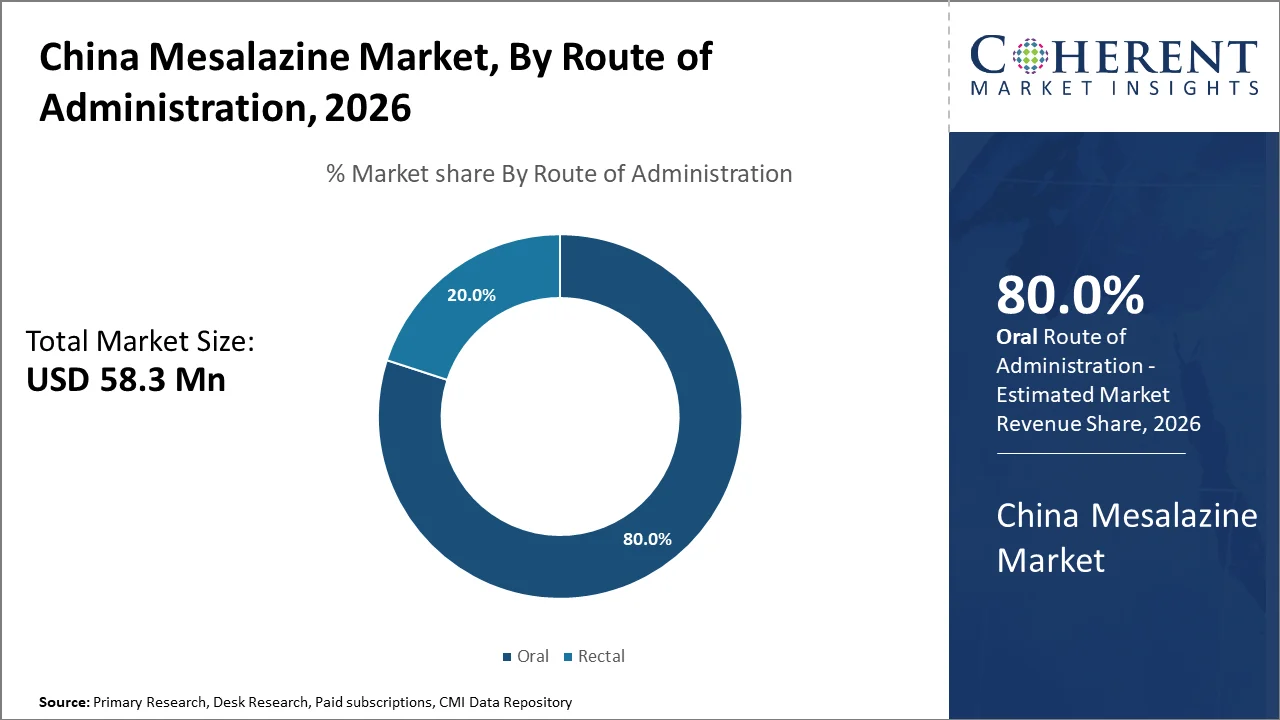
- Oral mesalazine is expected to lead the market with a share of 80. 0% in 2026 due to its convenience and higher patient adherence. Oral mesalazine tablets, capsules, and granules are the standard first-line therapy for mild-to-moderate ulcerative colitis. For example, a study published in the Journal of Gastroenterology found that ulcerative colitis patients receiving once-daily oral 5-ASA (mesalazine) achieved 95% adherence, showing the convenience and superior treatment compliance associated with oral formulations.
- The ulcerative colitis category is projected to account for the largest market share of 70.0% in 2026 because Mesalazine is primarily indicated and most effective for ulcerative colitis, where it remains a cornerstone therapy. Clinical studies have shown remission rates of up to 38.9% in moderately active UC patients treated with mesalazine.
- Hospital pharmacies segment is slated to 54% of the China mesalazine market share in 2026 because most mesalazine prescriptions are issued and dispensed through hospitals.
China Mesalazine Market Overview
The mesalazine market in China is expected to register moderate growth during the forecast period. This is primarily due to rising prevalence of Inflammatory Bowel Diseases (IBD), especially ulcerative colitis, increasing diagnosis rates, expanding access to gastroenterology care, and growing adoption of mesalazine as a first-line treatment for mild-to-moderate ulcerative colitis.
Mesalazine is an aminosalicylate (5-aminosalicylic acid) drug used for the treatment of mild to moderate active ulcerative colitis and for maintaining remission once achieved. It is an anti-inflammatory agent structurally related to salicylates and exerts its effects locally in the intestinal mucosa.
Ulcerative colitis is a chronic inflammatory bowel disease characterized by inflammation of the colon and rectum. It leads to the formation of ulcers in the intestinal lining, which may result in symptoms such as abdominal pain, diarrhea, and the presence of blood or mucus in stools.
Mesalazine helps reduce inflammation by inhibiting the production of inflammatory mediators such as prostaglandins and leukotrienes, and by modulating immune responses in the gut. This results in reduced intestinal inflammation and relief from symptoms such as pain, bleeding, and diarrhea. Rising adoption of this drug for managing IBDs is expected to boost China mesalamine market growth during the forecast period.
China’s strong domestic pharmaceutical base, supported by government initiatives, is increasing the availability of cost-effective generic mesalazine products. This expansion of local manufacturing is improving supply and affordability, thereby creating a favourable environment for mesalazine market growth in China.
There is also a rising shift towards personalized medicine in China, where treatment is increasingly tailored based on disease severity, patient response, and clinical profiles to improve outcomes and reduce relapse risk. Similarly, digital pharmacies and e-commerce healthcare platforms are becoming a major channel for chronic disease drug distribution.
Segmental Insights
Why Are Oral Mesalazine Formulations Preferred Over Other Formats?
Patient Convenience and Higher Patient Adherence Support Oral Drug Adoption
According to CMI’s latest China mesalazine market analysis, oral mesalazine drugs are expected to lead the market, capturing a share of 80.0% in 2026. This dominance can be attributed to higher patient compliance associated with oral dosage forms, as they are easier to administer compared to rectal or injectable alternatives.
Oral mesalazine is widely prescribed for long-term management of ulcerative colitis, where consistent daily dosing is required, making convenience a key factor in treatment adherence. In addition, oral formulations such as tablets and extended-release capsules allow controlled drug delivery throughout the gastrointestinal tract, improving therapeutic effectiveness.
For example, a meta-analysis covering 11 clinical studies and 4,070 patients found that once-daily oral mesalazine was as effective and safe as conventional multiple-dose regimens for both induction and maintenance of remission. As a result, its demand is expected to rise steadily during the forecast period.
In October 2024, Jiangsu Anbisheng received NMPA approval for Shunxinping mesalazine enteric-coated sustained-release capsules and granules, both of which passed consistency evaluation. This development supports the preference for oral mesalazine formats due to targeted intestinal release, convenient dosing, and improved patient compliance.
- Current Industry Events of 2026
- Market Size Estimation
- Regional Breakdown
- Competitive Landscape
- Customer Intelligence
- Segmental Analysis
- Pricing Analysis
- Key Market Drivers, Challenges & Future Trends
- Customized Insights Section
Which Application Leads the Mesalazine Market in China?
Ulcerative Colitis Set to Account for Over Two-Third of Market Share in 2026
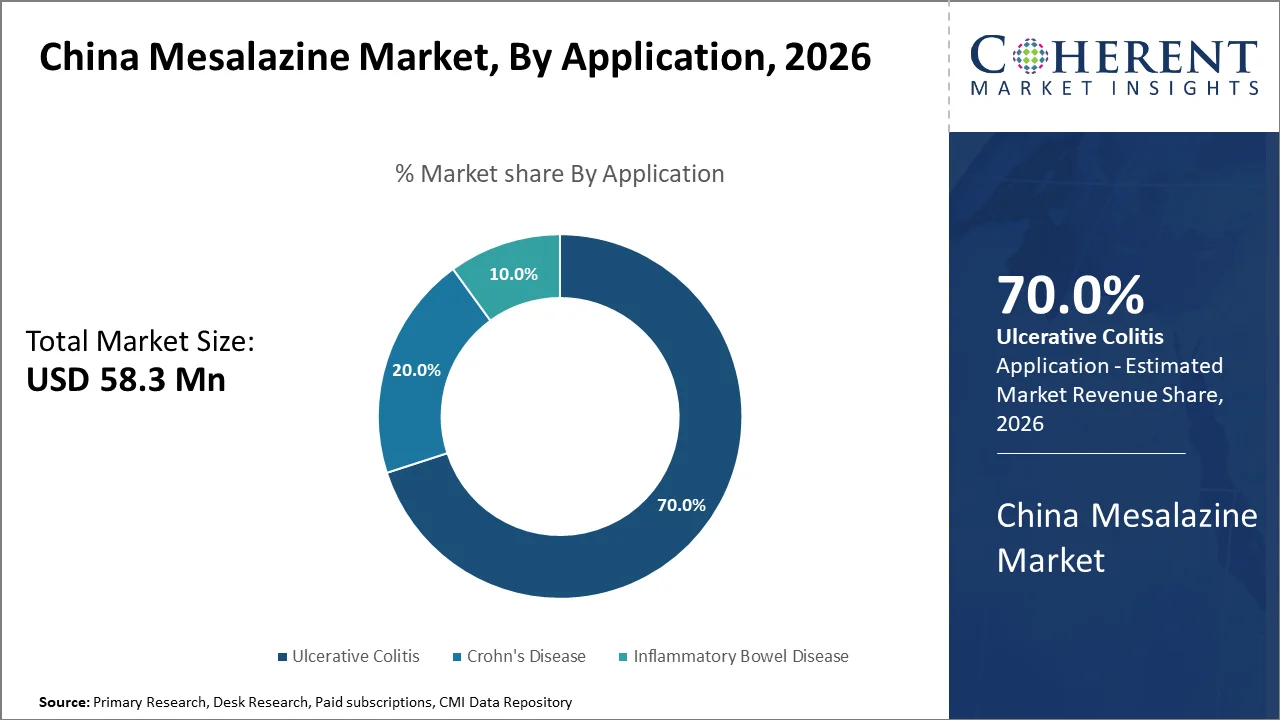
By application, ulcerative colitis segment is expected to dominate the market, accounting for a revenue share of 70.0% in 2026. This is mostly due to its role as the first-line standard treatment for mild to moderate ulcerative colitis, rising diagnosis rates of inflammatory bowel disease in China, and growing need for long-term maintenance therapy, which leads to continuous and repeated use of mesalazine among patients.
Mesalazine is being increasingly used for the treatment of ulcerative colitis due to its proven efficacy in reducing intestinal inflammation, maintaining remission as well as its favorable safety profile that allows for long-term use compared to systemic therapies. For example,In addition, its availability in multiple oral and rectal formulations improves treatment flexibility, making it a preferred option for both induction and maintenance therapy in clinical practice.
In February 2024, Xuantai Pharmaceutical received NMPA approval for its generic Mesalazine Enteric-coated Sustained-Release Tablets, the first approved product of this format in China. The approval strengthens the ulcerative colitis application segment, as the tablet is indicated for induction and maintenance of remission in adults with mild to moderate active ulcerative colitis.
China Mesalazine Market Drivers
Rising Prevalence of Inflammatory Bowel Diseases
Increasing incidence of ulcerative colitis, Crohn’s disease, and other IBDs in China is providing a strong impetus for the growth of the mesalazine market. Lifestyle westernization, dietary changes, urbanization, and environmental factors are significantly increasing IBD cases across China, directly boosting demand for mesalazine-based therapies.
Recent population-based studies from China estimate the prevalence of inflammatory bowel disease at approximately 31 per 100,000 population, with ulcerative colitis representing the predominant disease subtype. This rise in IBD burden is expected to fuel demand for mesalazine drugs in China during the forthcoming period.
China Mesalazine Market Opportunities
Growing Patient Awareness and Improved Diagnosis
Rising patient awareness and advancements in diagnostic capabilities are expected to create lucrative growth opportunities for the China Mesalazine market during the forecast period. Increased awareness among both patients and physicians and improved diagnostic accuracy are enabling earlier detection of inflammatory bowel disease (IBD), including ulcerative colitis and Crohn’s disease. This is significantly expanding the diagnosed and treated patient population, thereby driving demand for mesalazine-based therapies.
China Mesalazine Market Trends
Advancements in Drug Formulations
Ongoing developments in mesalazine formulations represent an important trend in the China market. Innovations in controlled-release, delayed-release, oral, and rectal dosage forms are enhancing targeted drug delivery to the colon and improving patient convenience and adherence. These improvements may support better long-term disease management in ulcerative colitis patients.
Current Events and Their Impact on the China Mesalazine Market
Current Event | Description and its Impact |
Approval of new advanced IBD biologic drugs in China (2026) |
|
Rising ulcerative colitis burden driving treatment demand in China |
|
Who are the Major Companies in the China Mesalazine Market?
Some of the major players in China mesalazine market are Zhejiang Hengkang Pharmaceutical Co. Ltd., Jiangsu Jubang Pharmaceutical Co., Ltd., ALP Pharm Beijing Co., Ltd., Shanghai Pharmaceuticals Holding Co Ltd., Heilongjiang Tianhong Pharmaceutical Co., Ltd., AbbVie Inc., F. Hoffmann-La Roche AG, Takeda Pharmaceuticals Company Limited, GSK Plc., Tillotts Pharma AG, Novartis AG, Salix Pharmaceuticals, FERRING B.V., Viatris Inc., and Dr. Falk Pharma GmbH.
Key Strategies Adopted by Industry Players
Leading mesalazine manufacturers in China are adopting various organic and inorganic strategies to boost their revenue as well as gain a competitive edge in the industry. These include new product launches and approvals, partnerships, mergers and acquisitions, and distribution agreements.
- In July 2025, Dr. Falk Pharma entered into a partnership with Allianthera (Suzhou) Biopharmaceuticals. The collaboration focuses on the development of novel aryl hydrocarbon receptor (AhR) agonists for the treatment of ulcerative colitis.
- In June 2024, Ethypharm strengthened its presence in China through its affiliate Shanghai Ethypharm Pharmaceuticals Ltd. This move helped the company expand its Mesalazine (Etiasa) portfolio in the Chinese market.
Market Report Scope
China Mesalazine Market Report Coverage
| Report Coverage | Details | ||
|---|---|---|---|
| Base Year: | 2025 | Market Size in 2026: | USD 58.3 Mn |
| Historical Data for: | 2020 To 2024 | Forecast Period: | 2026 To 2033 |
| Forecast Period 2026 to 2033 CAGR: | 3.1% | 2033 Value Projection: | USD 72.2 Mn |
| Geographies covered: |
| ||
| Segments covered: |
| ||
| Companies covered: | Zhejiang Hengkang Pharmaceutical Co. Ltd., Jiangsu Jubang Pharmaceutical Co., Ltd., ALP Pharm Beijing Co., Ltd., Shanghai Pharmaceuticals Holding Co Ltd., Heilongjiang Tianhong Pharmaceutical Co., Ltd., AbbVie Inc., F. Hoffmann-La Roche AG, Takeda Pharmaceuticals Company Limited, GSK Plc., Tillotts Pharma AG, Novartis AG, Salix Pharmaceuticals, FERRING B.V., Viatris Inc., and Dr. Falk Pharma GmbH | ||
| Growth Drivers: |
| ||
| Restraints & Challenges: |
| ||
Analyst Opinion (Expert Opinion)
- Rising Ulcerative Colitis Burden in China is fueling the demand for mesalazine drugs. Ulcerative colitis cases are increasing in China due to changing diet, urban lifestyle, and better disease recognition. This, in turn, increases long-term demand for mesalazine as the first-line treatment for mild to moderate cases.
- Improved diagnosis and healthcare access in China is set to boost sales of mesalazime formulations during the forthcoming period. More hospitals now use colonoscopy and modern diagnostic tools, leading to earlier and more accurate detection of ulcerative colitis. Earlier diagnosis increases long-term treatment duration, boosting consistent mesalazine prescriptions.
- Doctors often prefer mesalazine over steroids for long-term management due to its better safety profile and fewer side effects. This drives continuous repeat prescriptions and stable market demand, especially in chronic care settings.
Speak to the analyst
Want personalized insights?
Take the findings above to one of our principal consultants, or have the report rebuilt around the segments, geographies and competitors you actually track.
Market Segmentation
- By Route of Administration ( Revenue, USD Mn, 2021 - 2033)
- Oral
- Rectal
- By Application ( Revenue, USD Mn, 2021 - 2033)
- Ulcerative Colitis
- Crohn's Disease
- Inflammatory Bowel Disease
- By Distribution Channel ( Revenue, USD Mn, 2021 - 2033)
- Hospital Pharmacies
- Retail Pharmacies
- Online Pharmacies
Sources
Primary Research interviews
- Key opinion leaders (KOLs)
- Gastroenterologists
- Hospital pharmacists
- Distributors
- Pharmaceutical company representatives
- Regulatory experts in China
Databases
- National Medical Products Administration (NMPA) drug approval database
- World Health Organization (WHO) Global Health Observatory
- PubMed
- ScienceDirect
- China National Knowledge Infrastructure (CNKI)
- Clinical trial registries
Magazines
- Pharmaceutical Technology
- Pharma Times
- Drug Topics
- China Pharmaceutical News
- Healthcare Asia Magazine
Journals
- The Lancet Gastroenterology & Hepatology
- Journal of Crohn’s and Colitis
- World Journal of Gastroenterology
- Chinese Journal of Digestion
- International Journal of Clinical Pharmacy
Newspapers
- Reuters
- Bloomberg
- China Daily
- South China Morning Post
- Financial Times
Associations
- Chinese Medical Association (CMA)
- China Association of Pharmaceutical Commerce (CAPC)
- European Crohn’s
- Colitis Organisation (ECCO)
- Crohn’s & Colitis Foundation
Public Domain sources
- Government health ministry publications
- NMPA regulatory updates
- WHO reports
- Hospital formulary listings
- Clinical guidelines
- Open-access academic publications
Proprietary Elements
- CMI Data Analytics Tool
- Proprietary CMI Existing Repository of information for last 8 years
Get access to 250+ pages report
Every segment, forecast, competitor profile and data table behind the analysis above — available for instant download.
- ESOMAR Member
- ISO 9001:2015 Certified
- D-U-N-S Registered
- GDPR & CCPA Compliant
Missing comfort of reading report in your local language? Find your preferred language:
Transform your Strategy with Exclusive Trending Reports
Frequently Asked Questions
The target market is estimated to be valued at USD 58.3 Mn in 2026.
The China Mesalazine Market value is expected to reach USD 72.2 Mn by 2033.
The China Mesalazine Market is poised to exhibit a CAGR of 3.1% from 2026 to 2033.
Major growth factors include increasing prevalence of inflammatory bowel diseases, growing patient awareness and improved diagnosis, and advancements in drug formulations.
Ulcerative colitis is projected to account for the largest market share of 70.0% in 2026.
Major players in the China Mesalazine Market include Zhejiang Hengkang Pharmaceutical Co. Ltd., Jiangsu Jubang Pharmaceutical Co., Ltd., ALP Pharm Beijing Co., Ltd., Shanghai Pharmaceuticals Holding Co Ltd., Heilongjiang Tianhong Pharmaceutical Co., Ltd., AbbVie Inc., F. Hoffmann-La Roche AG, Takeda Pharmaceuticals Company Limited, GSK Plc., Tillotts Pharma AG, Novartis AG, Salix Pharmaceuticals, FERRING B.V., Viatris Inc., and Dr. Falk Pharma GmbH.