

Adrenocortical Carcinoma Treatment Market Size and Forecast — 2026-2033
The Global Adrenocortical Carcinoma Treatment Market size is estimated to be valued at USD 343.2 million in 2026 and is expected to reach USD 699.1 million by 2033, exhibiting a compound annual growth rate (CAGR) of 10.7% from 2026 to 2033.
Overview
The Adrenocortical Carcinoma Treatment products are designed to control tumor growth, reduce hormone secretion, and improve survival rates. Standard therapy includes mitotane-based drug regimens, chemotherapeutic combinations such as etoposide, doxorubicin, and cisplatin, and targeted therapies under clinical development. Immunotherapies, including PD-1 inhibitors, are being explored to enhance patient outcomes in advanced cases.
Surgical resection remains the first-line treatment for localized tumors, often supported by adjuvant pharmacological therapy. The development of molecularly targeted agents and personalized medicine strategies continues to expand treatment possibilities for this rare endocrine malignancy.
Key Takeaways
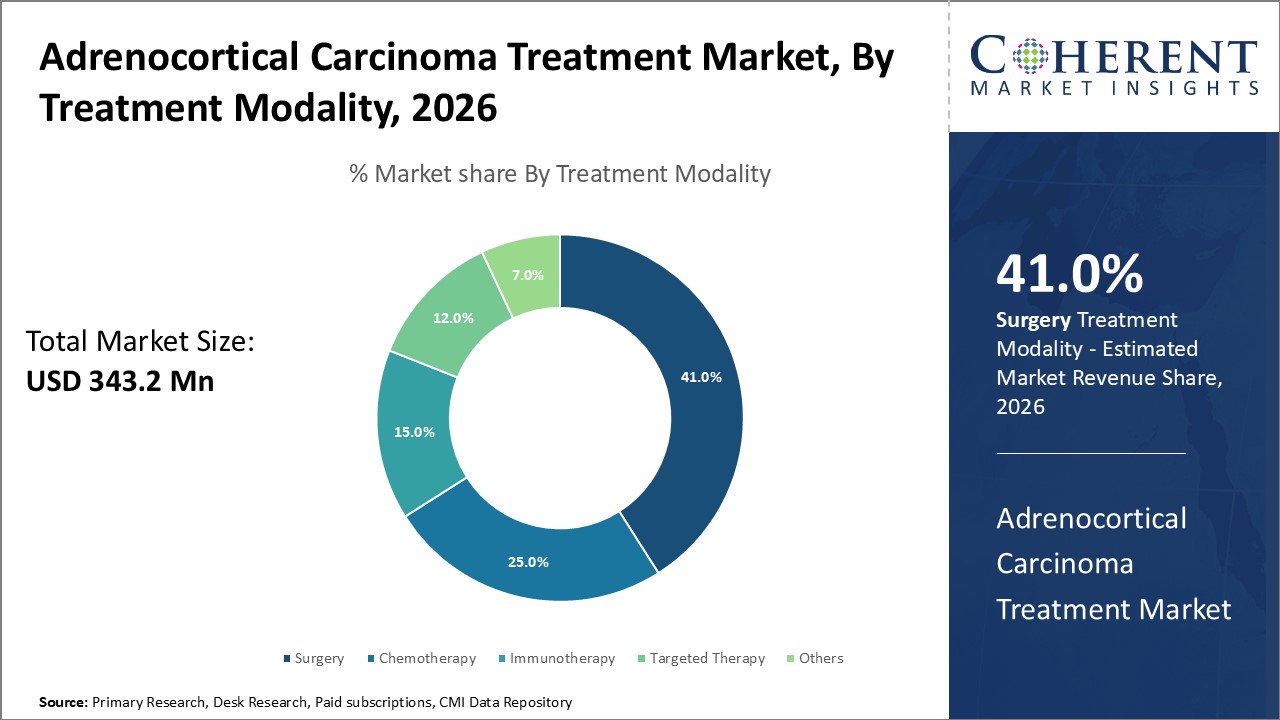
The Surgery segment commands a dominant share within treatment modalities, illustrating the continuing clinical reliance on traditional interventions despite emerging therapeutics.
Immunotherapy and targeted therapy subsegments exhibit the fastest growth, underpinned by increasing regulatory approvals and clinical adoption.
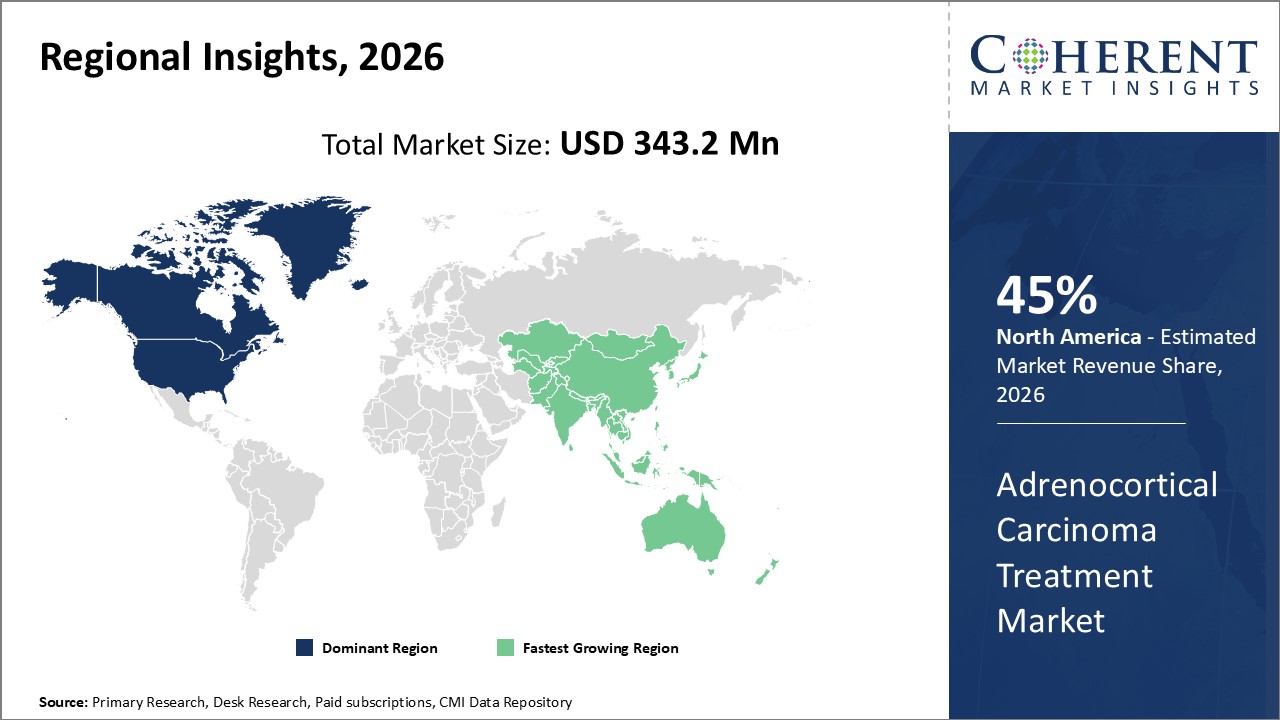
North America holds the largest market share due to advanced healthcare infrastructure and high adoption rates of novel therapies.
Asia Pacific presents the fastest growth trajectory, underpinned by expanding healthcare investment and a growing patient base.
Adrenocortical Carcinoma Treatment Market Segmentation Analysis
Adrenocortical Carcinoma Treatment Market Insights, By Treatment Modality
In terms of treatment modality, Surgery maintains its dominant position at 41% market share due to its role as the first-line treatment for localized tumors. The segment’s sustained high share is attributed to the critical need for tumor resection that directly impacts survival outcomes. However, the fastest-growing subsegment is Immunotherapy, which has shown a remarkable growth surge prompted by breakthrough approvals and clinical validation. Immunotherapy presents a promising alternative to patients with advanced or resistant disease through modulation of the immune system. Chemotherapy and Targeted Therapy provide supportive roles but face competition from emerging agents
Adrenocortical Carcinoma Treatment Market Insights, By Disease Stage
In terms of disease stage, Localized disease represents the dominating share. Localized stage patients benefit most from standard surgical interventions, which account for the bulk of market revenue due to effective curative outcomes. Locally Advanced disease is the fastest-growing subsegment, reflecting an unmet need for integrated therapeutic approaches combining surgery with systemic therapies. Metastatic and Recurrent stages require complex treatment regimens often involving immunotherapy and targeted therapies, driving incremental market revenue.
Adrenocortical Carcinoma Treatment Market Insights, By End-User
Hospitals command the largest industry share, due to their comprehensive oncology infrastructure, multidisciplinary approaches, and capacity to manage complex adrenocortical carcinoma treatments. They are the primary adopters of novel therapies and advanced surgical interventions. The fastest-growing end user segment is Specialty Clinics, favored for their focused oncology services and increasing adoption of targeted therapies and immunotherapies, which require specialized clinical expertise.
Adrenocortical Carcinoma Treatment Market Trends
Market trends in the Adrenocortical Carcinoma Treatment market clearly point toward a paradigm shift, with immunotherapy gaining substantial momentum.
For example, FDA approvals for checkpoint inhibitors in 2025 accelerated therapeutic uptake, while genomic profiling emerged as a cornerstone in enabling personalized regimens.
Additionally, combination therapies pairing surgery with adjuvant treatments demonstrate enhanced survival rates, upending previous monotherapy reliance.
Adrenocortical Carcinoma Treatment Market Insights, By Geography
North America Adrenocortical Carcinoma Treatment Market Analysis and Trends
North America dominates with approximately 45% market share, underscoring its advanced healthcare ecosystem and strong presence of pharmaceutical innovators. This region benefits from high healthcare expenditure and swift regulatory pathways, facilitating faster treatment adoption.
Asia Pacific Adrenocortical Carcinoma Treatment Market Analysis and Trends
Asia Pacific exhibits the fastest CAGR of around 13%, propelled by expansive healthcare infrastructure development in China and India, coupled with increasing government support and growing oncology patient pools.
Adrenocortical Carcinoma Treatment Market Outlook for Key Countries
USA Adrenocortical Carcinoma Treatment Market Analysis and Trends
The USA leads the Adrenocortical Carcinoma Treatment market by revenue and innovation output. Several landmark clinical trials conducted domestically have accelerated the availability of novel therapies such as targeted agents and immunotherapy combinations. The presence of top pharmaceutical companies and a favorable regulatory environment enables swift market penetration. For instance, the FDA granted breakthrough therapy status to multiple agents in 2025, which catalyzed a 15% increase in treatment adoption. Large academic medical centers and specialty cancer hospitals continue to drive research and best clinical practices, solidifying the USA as the backbone of the industry ecosystem.
Germany Adrenocortical Carcinoma Treatment Market Analysis and Trends
Germany’s market constitutes a significant share in Europe, supported by a well-established oncology infrastructure and comprehensive reimbursement frameworks. The country’s emphasis on precision medicine has led to enhanced adoption of biomarker-driven therapies. Moreover, strong government funding for cancer research and collaborative networks between hospitals and biopharmaceutical firms boost business growth.
Analyst Opinion
The rise in diagnosis rates attributed to improved imaging and biomarker identification has significantly increased treatment demand. In 2025 alone, the number of cases diagnosed globally rose by approximately 8%, which directly impacted market revenue growth. Better diagnostic tools have expanded the eligible patient population, creating a wider scope and driving market size expansion.
Treatment modality diversification is another critical driver. Surgery remains the primary intervention with a 41% market share, but adjuvant therapies such as mitotane and novel immunotherapies are rapidly gaining traction. For instance, immunotherapy adoption increased by over 16% in 2026, signaling a shift towards combination treatment regimens that enhance patient outcomes.
Pricing dynamics reflect increased R&D investments and efficacy-driven market strategies. Mitotane’s average treatment cost increased by approximately 9% in 2025 as manufacturers optimized formulations and delivery mechanisms. Concurrently, price sensitivity remains a restraint in emerging markets, influencing market penetration rates.
Export and regulatory approvals across regions like North America and Asia Pacific have heightened competitive intensity and product availability. The U.S. FDA approved two new adrenocortical carcinoma therapies in 2025, reinforcing the importance of regulatory alignment in market growth strategies and amplifying market share.
- Current Industry Events of 2026
- Market Size Estimation
- Regional Breakdown
- Competitive Landscape
- Customer Intelligence
- Segmental Analysis
- Pricing Analysis
- Key Market Drivers, Challenges & Future Trends
- Customized Insights Section
Market Scope
| Report Coverage | Details | ||
|---|---|---|---|
| Base Year: | 2025 | Market Size in 2026: | USD 343.2 million |
| Historical Data for: | 2020 To 2024 | Forecast Period: | 2026 To 2033 |
| Forecast Period 2026 to 2033 CAGR: | 10.7% | 2033 Value Projection: | USD 699.1 million |
| Geographies covered: |
| ||
| Segments covered: |
| ||
| Companies covered: | Ipsen Pharma, Pfizer Inc., Novartis AG, Bayer AG, AstraZeneca PLC, EUSA Pharma, HRA Pharma, Mundipharma, Sanofi, Bristol-Myers Squibb, Merck & Co., Inc., Takeda Pharmaceutical Company Limited. | ||
| Growth Drivers: |
| ||
Adrenocortical Carcinoma Treatment Market Growth Factors
The increasing incidence of adrenocortical carcinoma, driven by heightened awareness and improved diagnostic sensitivity, remains the primary market driver recorded over the last two years. Regulatory approvals for innovative therapies, including breakthrough immunotherapy medicines, complement this growth trajectory by broadening treatment options. Rising healthcare expenditures and expanding oncology infrastructure in developed and emerging economies further augment market revenue. Additionally, the surge in clinical research focused on less invasive and more effective treatment protocols has led to accelerated market growth. For instance, clinical trials registered globally increased by 20% in 2025 compared to the previous year, reflecting intensified efforts to capture this niche market.
Adrenocortical Carcinoma Treatment Market Development
In May 2026, the U.S. Food and Drug Administration (FDA) approved Merck's drug Welireg (belzutifan) for the treatment of locally advanced, unresectable, or metastatic pheochromocytoma (a tumor on the adrenal gland) and paraganglioma (PPGL). This marks the first time an oral medication has been approved for these rare adrenal gland tumors, offering a convenient oral option for adult and pediatric patients aged 12 and older.
In January 2026, a multinational Phase II trial began for the synthetic peptide immunotherapy CY-101, a collaboration between Cancer Research UK, Cytovation, and the Norwegian Cancer Society, to treat adrenocortical carcinoma (ACC). The trial aims to provide new treatment options for ACC by using CY-101 to both destroy cancer cells and trigger an immune response, while also inhibiting the Wnt/β-catenin pathway that promotes tumor growth and resistance to immunotherapy
Key Players
Leading Companies of the Market
Ipsen Pharma
Pfizer Inc.
Novartis AG
Bayer AG
AstraZeneca PLC
EUSA Pharma
HRA Pharma
Mundipharma
Sanofi
Bristol-Myers Squibb
Merck & Co., Inc.
Takeda Pharmaceutical Company Limited
Several leading companies focus on strategic clinical trial advancements and licensing partnerships to reinforce their market positions. For example, Pfizer recently expanded its immunotherapy portfolio through a licensing agreement with a biotech firm focused on novel checkpoint inhibitors, enhancing its product pipeline and market share in 2025. Similarly, Ipsen’s acquisition of specialized oncology assets in Europe resulted in a 13% revenue increase, substantiating the efficacy of mergers and acquisitions as a growth strategy in this highly competitive domain.
Adrenocortical Carcinoma Treatment Market Future Outlook
The future of Adrenocortical Carcinoma treatment is expected to be shaped by molecular oncology and precision medicine. Increasing knowledge of the genomic landscape of ACC is driving the development of novel targeted therapies and immunotherapeutic agents, such as PD-1 and CTLA-4 inhibitors. Research on tumor biomarkers and next-generation sequencing is paving the way for personalized treatment regimens, enabling better prediction of therapy response. Additionally, the emergence of multi-center clinical collaborations will likely accelerate drug discovery and clinical validation. With greater integration of advanced imaging, molecular diagnostics, and systemic therapy innovation, future treatment strategies are projected to significantly improve survival outcomes and reduce relapse rates.
Adrenocortical Carcinoma Treatment Market Historical Analysis
Historically, treatment for adrenocortical carcinoma (ACC) has been centered on surgical intervention as the primary curative approach, with limited efficacy from systemic chemotherapy. Due to its rarity, the disease has seen slow therapeutic advancements and a reliance on mitotane, a drug developed decades ago, for adjuvant or palliative care. Combination regimens like EDP-M (etoposide, doxorubicin, cisplatin, and mitotane) became standard but provided modest benefits and significant toxicity. Improvements in diagnostic imaging, hormonal profiling, and surgical precision have enhanced early detection and resection success rates over time. Multidisciplinary treatment models have also improved patient management, though survival rates for metastatic ACC remained poor.
Sources
Primary Research interviews:
Oncologists
Endocrinologists
Pathologists
Clinical Trial Coordinators
Databases:
National Cancer Institute (NCI)
PubMed Oncology Database
WHO Global Health Observatory
SEER Cancer Statistics
Magazines:
Oncology Times
Cancer Therapy Advisor
PharmaVoice
BioPharma Dive
Journals:
Journal of Clinical Oncology
Endocrine-Related Cancer
Cancer Medicine
European Journal of Endocrinology
Newspapers:
The Wall Street Journal (Health)
Financial Express (Pharma)
The Times of India (Medical)
The Guardian (Health Science)
Associations:
American Society of Clinical Oncology (ASCO)
European Society for Medical Oncology (ESMO)
Endocrine Society
National Cancer Institute (NCI)
Get access to 250+ pages report
Every segment, forecast, competitor profile and data table behind the analysis above — available for instant download.
- ESOMAR Member
- ISO 9001:2015 Certified
- D-U-N-S Registered
- GDPR & CCPA Compliant
Missing comfort of reading report in your local language? Find your preferred language:
Transform your Strategy with Exclusive Trending Reports
Frequently Asked Questions
Leading market companies include Ipsen Pharma, Pfizer, Novartis, Bayer, and AstraZeneca, which leverage clinical innovations and strategic partnerships to maintain a competitive advantage.
The market size is forecasted to reach USD 699.1 million by 2033, exhibiting a CAGR of 10.7% from 2026 to 2033.
Hospitals remain the primary end users, driving the majority of the market revenue due to highly specialized care requirements for adrenocortical carcinoma.
The increased integration of immunotherapy and precision medicine will define the market trends, supported by innovation in diagnostics and combination treatments.
Market players face challenges related to pricing pressures and regulatory complexities; however, competitive strategies focusing on product innovation and geographic expansion provide resilience.
Companies prioritize licensing collaborations, clinical trial expansions, and targeted marketing campaigns focusing on oncologists and specialized treatment centers.