

Sarcopenia Treatment Market Size and Forecast — 2026-2033
The Global Sarcopenia Treatment Market size is estimated to be valued at USD 1.39 billion in 2026 and is expected to reach USD 3.4 billion by 2033, exhibiting a compound annual growth rate (CAGR) of 16.0% from 2026 to 2033.
Overview
Sarcopenia treatment products include pharmaceuticals, nutritional supplements, and therapeutic formulations aimed at preventing or reversing age-related muscle loss. Key product types include selective androgen receptor modulators (SARMs), anabolic agents, myostatin inhibitors, and peptide-based therapeutics targeting muscle regeneration pathways. Nutritional products—such as leucine-enriched amino acids, protein supplements, and vitamin D formulations—support muscle protein synthesis and functional strength. These products are often complemented by exercise-supportive therapies and emerging biologics designed to enhance muscle mass and improve physical performance in older adults.
Key Takeaways
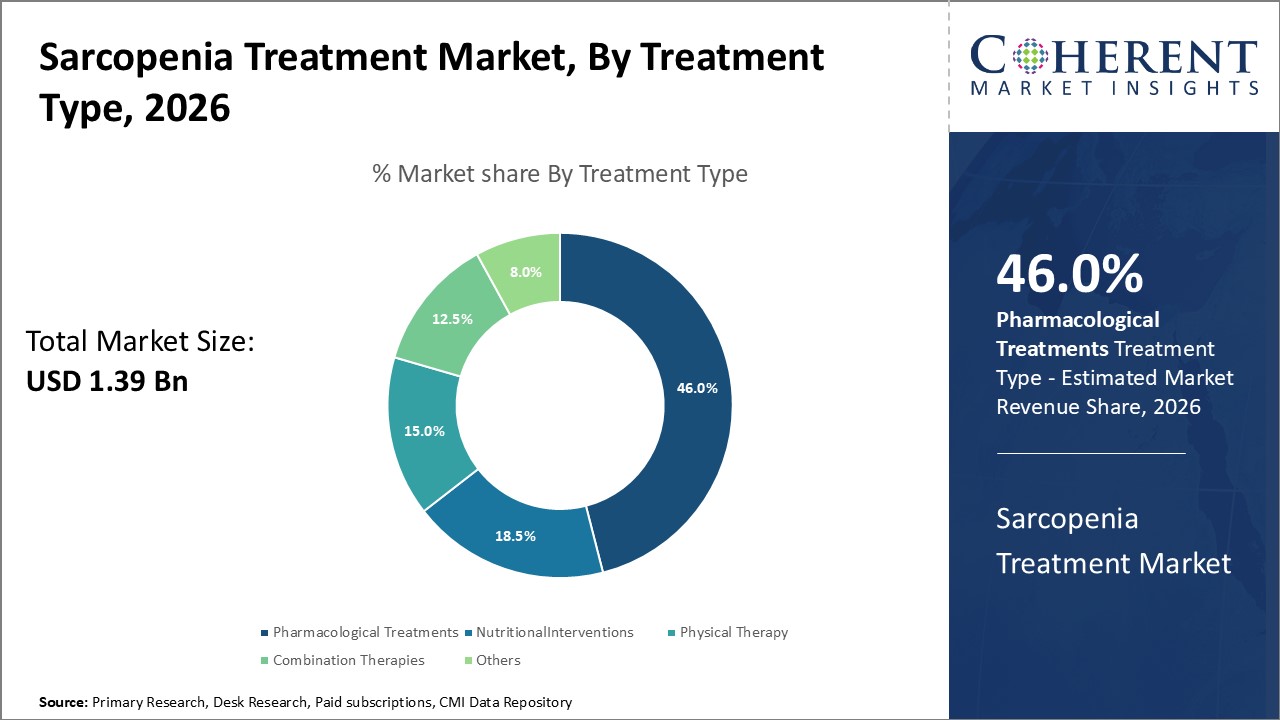
The Pharmacological Treatments segment retains dominance due to continuous innovation and strong pipeline releases, holding 46% market share, while the Nutritional Interventions segment is emerging rapidly, influenced by personalized nutrition trends.
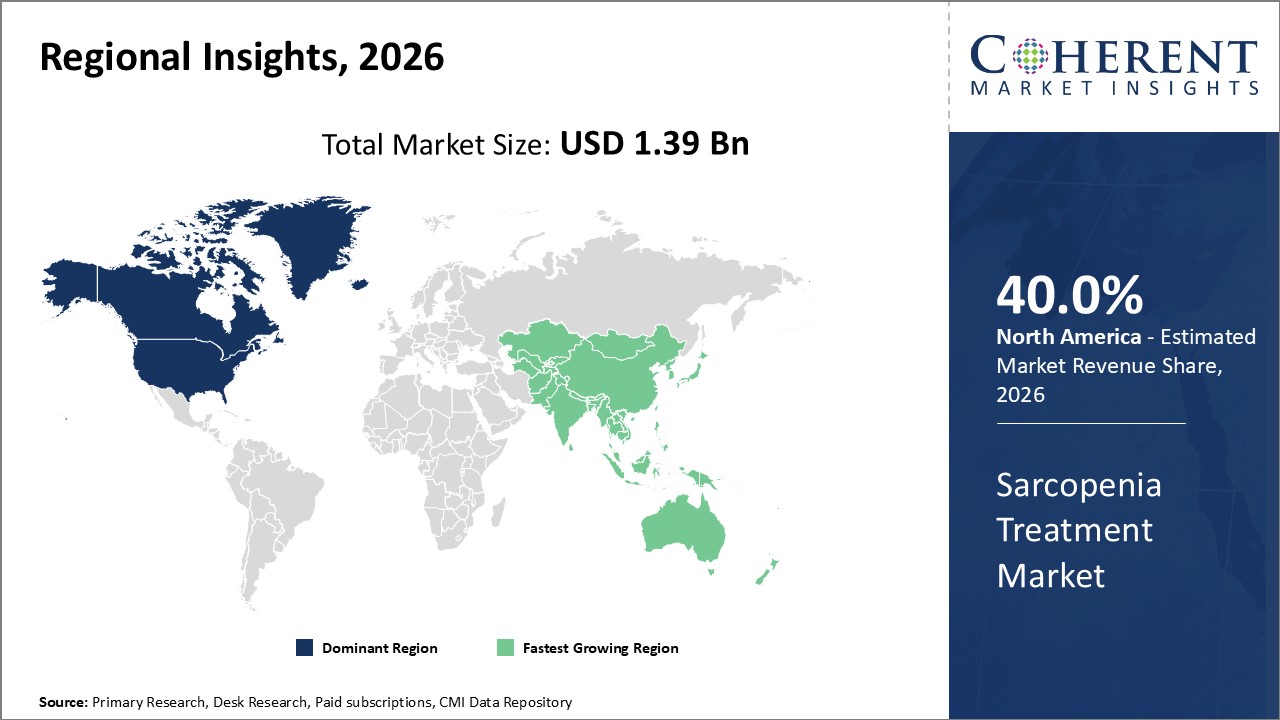
Regarding geography, North America leads with over 40% industry share credited to advanced healthcare infrastructure and government initiatives supporting musculoskeletal health.
Meanwhile, Asia Pacific exhibits the fastest growth with a CAGR exceeding 17%, driven by rising geriatric populations and expanding healthcare access in emerging economies such as India and China.
Sarcopenia Treatment Market Segmentation Analysis
Sarcopenia Treatment Market Insights, By Treatment Type
Pharmacological Treatments dominate the market share. This dominance is driven by the increasing development and regulatory approvals of novel drug candidates focused on muscle regeneration and anabolic action, which command the majority of market revenue. The fastest-growing subsegment is Combination Therapies, reflecting a holistic approach integrating pharmacological, nutritional, and physical therapy components, capturing rising patient preference trends for multipronged treatment efficacy. Nutritional Interventions remain vital for managing sarcopenia's metabolic aspects, Physical Therapy supports functional mobility.
Sarcopenia Treatment Market Insights, By Patient Demographic
The Elderly subsegment dominates the market share due to the highest prevalence of sarcopenia within this age group, leading to significant treatment demand in clinical and home care settings. The middle-aged segment is the fastest growing, fueled by increased screening and preventive care initiatives focusing on early-stage muscle loss. This segment represents a burgeoning opportunity for market players promoting early intervention therapies.
Sarcopenia Treatment Market Insights, By Distribution Channel
Hospitals & Clinics dominate the market share largely due to the availability of advanced treatment options and specialist care facilities, contributing significantly to overall market revenue. The fastest growing segment is Home Care Settings, which benefits from rising geriatric care trends, telemedicine integration, and convenience preferences. Specialized Rehabilitation Centers facilitate targeted physical therapies, Online Pharmacies offer increasing accessibility to nutritional and pharmacological products, while Others represent ancillary channels supporting niche market needs.
Sarcopenia Treatment Market Trends
The Sarcopenia Treatment market exhibits growing reliance on biomarker-driven personalized therapies, evidenced by a 28% increase in genetic biomarker testing in Europe in 2025.
Additionally, digital therapeutics combined with telehealth interventions expanded patient engagement by 35% year-over-year in North America.
Apart from this, expanding reimbursement policies in Asia Pacific have led to a 20% surge in pharmacological treatment adoption across India and China, reflecting shifting market dynamics toward holistic care models.
Sarcopenia Treatment Market Insights, By Geography
North America Sarcopenia Treatment Market Analysis and Trends
In North America, the dominance in the Sarcopenia Treatment market stems from well-established healthcare infrastructure, comprehensive insurance coverage, and high industry share surpassing 40%. The presence of major market companies and robust government funding for age-related muscle disorders fortify its lead.
Asia Pacific Sarcopenia Treatment Market Analysis and Trends
Meanwhile, the Asia Pacific exhibits the fastest growth with a CAGR above 17%, propelled by rising geriatric demographics, increasing healthcare spending, and expanding access to innovative therapies. Robust economic development in countries like India and China fuels this trend alongside supportive regulatory reforms.
Sarcopenia Treatment Market Outlook for Key Countries
USA Sarcopenia Treatment Market Analysis and Trends
The USA market is a crucial contributor with numerous advanced drug trials initiated in 2025, particularly around anabolic agents and myostatin inhibitors. Leading pharmaceutical entities like Pfizer and Amgen maintain strong market positions supported by robust reimbursement frameworks and widespread clinical infrastructure. The favorable regulatory landscape accelerates therapy approvals, enhancing overall market revenue and reinforcing the USA’s leadership position in sarcopenia treatment innovation.
Japan Sarcopenia Treatment Market Analysis and Trends
Japan’s market is characterized by an aging population exceeding 28% over 65 years old in 2025, intensifying demand for sarcopenia interventions. Companies such as Novartis and local biotechnology firms leverage advanced diagnostics and personalized approaches to capture market share. Government-led healthcare initiatives emphasizing preventative care have also catalyzed significant business growth, making Japan a focal point for emerging treatment adoption in the Asia Pacific.
Analyst Opinion
The first actionable insight revolves around the increasing adoption of pharmacological interventions targeting muscle protein synthesis. Recent data shows that clinical trials for myostatin inhibitors alone surged by 26% in 2025, highlighting rising investments in drug development which underpins a critical portion of market growth. Regulatory approvals observed for novel anabolic agents have further expanded therapeutic options realising significant market revenue increments this year.
Demand-side indicators illustrate robust uptake of combination therapies integrating nutrition and physical exercise regimens. For example, over 61% of sarcopenia patients in South Korea received multidisciplinary treatments in 2025, reflecting an evolving treatment ecosystem which diversifies market players’ portfolio and drives market share gains globally.
Production capacity enhancements, especially in biotechnological manufacturing, show considerable supply-side momentum. Manufacturing facilities producing protein supplements tailored for sarcopenia registered a 20% capacity increase in 2026, facilitating better market distribution and addressing rising patient volumes in Europe and North America effectively.
Micro-market indicators spotlight telehealth and remote monitoring as critical facilitators for treatment adherence. Telemedicine platforms servicing sarcopenia patients saw a 36% month-over-month growth in new users in 2025 across developed regions, underscoring technology’s role in sustaining long-term patient engagement and business growth dynamics within the market segments.
- Current Industry Events of 2026
- Market Size Estimation
- Regional Breakdown
- Competitive Landscape
- Customer Intelligence
- Segmental Analysis
- Pricing Analysis
- Key Market Drivers, Challenges & Future Trends
- Customized Insights Section
Market Scope
| Report Coverage | Details | ||
|---|---|---|---|
| Base Year: | 2025 | Market Size in 2026: | USD 1.39 billion |
| Historical Data for: | 2020 To 2024 | Forecast Period: | 2026 To 2033 |
| Forecast Period 2026 to 2033 CAGR: | 16.0% | 2033 Value Projection: | USD 3.4 billion |
| Geographies covered: |
| ||
| Segments covered: |
| ||
| Companies covered: | Novartis AG, Eli Lilly and Company, Pfizer Inc., Biopharmaceutical Solutions Inc., Johnson & Johnson, Amgen Inc., Sanofi, GlaxoSmithKline plc, Merck & Co., Inc., Astellas Pharma Inc., Roche Holding AG. | ||
| Growth Drivers: |
| ||
Sarcopenia Treatment Market Growth Factors
The rising global elderly population is the primary driver, with the United Nations reporting a 15% increase in individuals aged 65+ between 2023 and 2026, which intensifies demand for effective sarcopenia treatments. Technological advances in biomarker identification and diagnostic tools facilitate early detection, improving treatment outcomes, and expanding market scope. Shifts in healthcare policies promoting preventative care, especially in developed countries, are bolstering reimbursements and market revenue streams. Additionally, growing patient awareness and acceptance of multifactorial treatment approaches fuel business growth by increasing the adoption of combination therapies in clinics and home care.
Sarcopenia Treatment Market Development
In March 2026, the U.S. FDA authorized the initiation of the SARA-31 Phase 3 clinical trial evaluating a novel therapeutic candidate for severe sarcopenia. The study aims to assess improvements in muscle strength, mobility, and functional independence, marking one of the most advanced late-stage clinical programs targeting age-related muscle degeneration in the U.S.
In March 2026, Allosteric Bioscience licensed proprietary technology from Johns Hopkins University to develop preventive and therapeutic interventions for sarcopenia. The agreement strengthens the company’s pipeline in musculoskeletal aging by leveraging mechanistic pathways linked to muscle loss, with plans to accelerate translational research and future clinical development.
Key Players
Leading Companies of the Market
Eli Lilly and Company
Pfizer Inc.
Biopharmaceutical Solutions Inc.
Johnson & Johnson
Amgen Inc.
Sanofi
GlaxoSmithKline plc
Merck & Co., Inc.
Astellas Pharma Inc.
Roche Holding AG
Several leading companies have prioritized strategic acquisitions and collaborations to diversify their portfolios. For instance, Eli Lilly secured an exclusive licensing agreement in 2025 with a biotech firm providing a next-generation myostatin inhibitor, resulting in accelerated clinical market entry with projected revenue growth by 19% in 2026. Similarly, Pfizer has increased R&D investments directed at gene therapy innovations, driving dominance in pharmacological treatments and yielding a 21% market share expansion in North America.
Sarcopenia Treatment Market Future Outlook
The future sarcopenia treatment market will expand rapidly as demographic trends make muscle loss a major global health concern. Pharmaceutical innovation is expected to accelerate, with numerous clinical candidates—including myostatin inhibitors, selective androgen receptor modulators (SARMs), and metabolic enhancers—progressing through trials. Nutritional interventions will remain foundational, with advanced formulations combining HMB, leucine, omega-3 fatty acids, and specialized protein blends gaining popularity. Increasing integration of sarcopenia into national healthcare guidelines, combined with a rise in home-based rehabilitation and digital health solutions, will broaden patient access to treatment. Asia, Europe, and North America will be the fastest-growing regions due to rapidly aging populations. As early diagnosis becomes standard practice, the addressable market is set to expand dramatically.
Sarcopenia Treatment Market Historical Analysis
Historically, the sarcopenia treatment market evolved slowly due to limited awareness of age-related muscle loss and lack of diagnostics across healthcare systems. Until the past decade, therapeutic options were limited to nutritional support—such as protein supplements, amino acids, and vitamin D—and physical rehabilitation programs. However, the increasing aging population and rising prevalence of mobility disorders brought greater clinical attention to sarcopenia. Research into the molecular mechanisms of muscle degeneration promoted early development of pharmaceutical candidates targeting pathways like myostatin inhibition and anabolic signaling. Healthcare providers began integrating sarcopenia screening into geriatric assessments, and demand for dietary supplements increased significantly as consumers sought preventative measures.
Sources
Primary Research interviews:
Geriatricians
Clinical nutritionists
Pharma R&D scientists
Rehabilitation specialists
Databases:
WHO Aging Statistics
ClinicalTrials.gov
GlobalData Pharma Pipeline
NIH Geriatric Medicine Data
Magazines:
The Lancet Healthy Longevity Reports
Medical News Today
Pharmaceutical Technology
Nutrition Insight
Journals:
Journal of Cachexia
Sarcopenia and Muscle
Age & Ageing
Clinical Nutrition
Journal of Geriatric Physical Therapy
Newspapers:
The New York Times (Health)
The Guardian (Ageing)
Reuters Health
Hindustan Times (Healthcare)
Associations:
International Sarcopenia Initiative
ESPEN
American Geriatrics Society
World Health Organization
Get access to 250+ pages report
Every segment, forecast, competitor profile and data table behind the analysis above — available for instant download.
- ESOMAR Member
- ISO 9001:2015 Certified
- D-U-N-S Registered
- GDPR & CCPA Compliant
Missing comfort of reading report in your local language? Find your preferred language:
Transform your Strategy with Exclusive Trending Reports
Frequently Asked Questions
The leading market companies include Novartis AG, Pfizer Inc., Amgen Inc., Acceleron Pharma, and Abbott Laboratories, who collectively drive major innovations and market share.
Market size is projected to grow from USD 1.39 billion in 2026 to USD 3.4 billion by 2033, demonstrating robust market growth driven by demographic and technological factors.
Hospitals & Clinics represent the largest growth opportunity, accounting for 50% of the distribution channel market share, owing to their central role in administering complex therapies.
Trends point toward integration of AI-driven diagnostics, personalized nutrition, and combination pharmacotherapies expanding treatment landscapes and patient adherence globally.
The landscape is fragmented but consolidating through strategic partnerships. Market challenges include regulatory hurdles and the high cost of novel therapies affecting adoption rates.
Companies focus on strategic alliances, accelerated regulatory approvals, diversified product portfolios, and patient engagement via digital health platforms to reinforce their market share.