

Artificial Insemination Market Size and Forecast — 2026 - 2033
The Global Artificial Insemination Market size is estimated to be valued at USD 5.3 billion in 2026 and is expected to reach USD 9.6 billion by 2033, exhibiting a compound annual growth rate (CAGR) of 8.7% from 2026 to 2033.
Overview
The Artificial Insemination Market is driven by the increasing prevalence of infertility, delayed parenthood, and growing awareness of assisted reproductive technologies (ART). Rising rates of male and female reproductive disorders, coupled with lifestyle factors such as stress, obesity, and smoking, are fueling demand for fertility treatments. Technological advancements in sperm processing, cryopreservation, and fertility monitoring have improved procedure success rates, encouraging wider adoption. Additionally, expanding access to fertility clinics, supportive government initiatives, and increasing acceptance of single parenthood and same-sex parenting are contributing to market growth. Rising disposable incomes and growing healthcare expenditure further support the adoption of artificial insemination services worldwide.
Key Takeaways
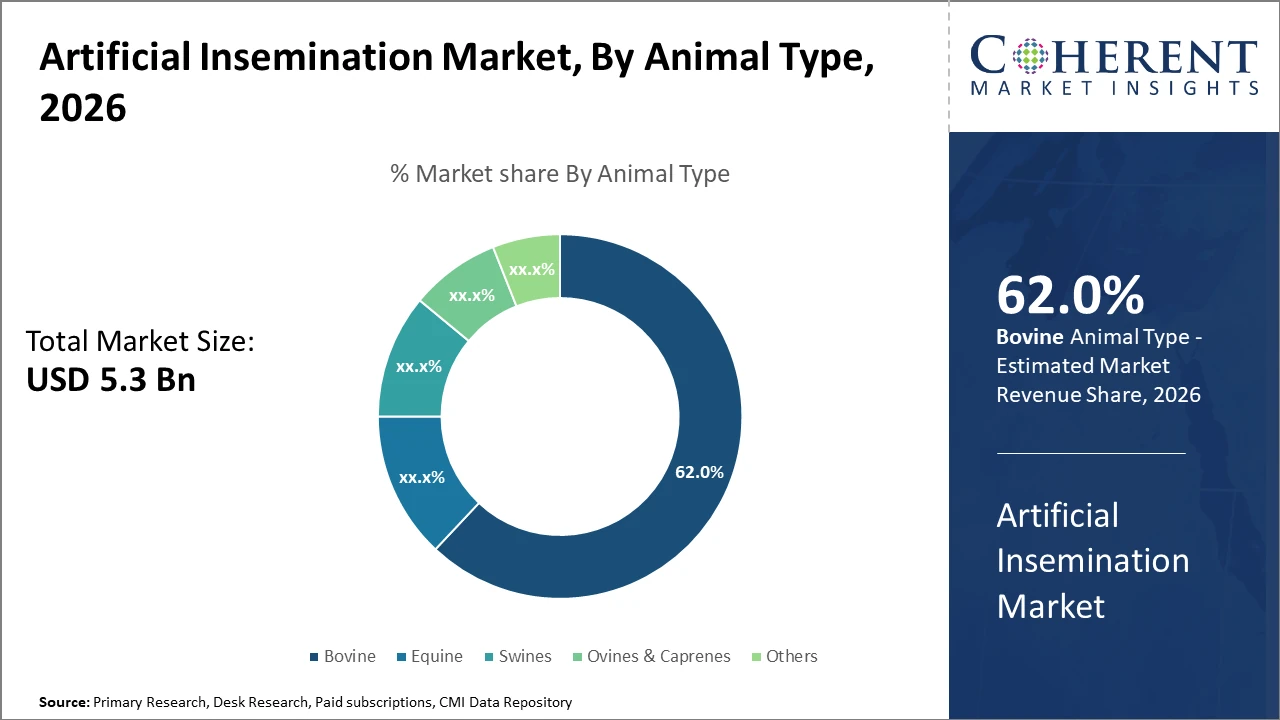
The Bovine segment dominates the artificial insemination market with approximately 62% market share, supported by increasing demand for improved dairy and beef productivity, superior livestock genetics, and efficient breeding practices.
Semen products represent the leading product type segment, serving as the foundation of artificial insemination procedures due to their direct contribution to reproductive success rates and market revenue generation.
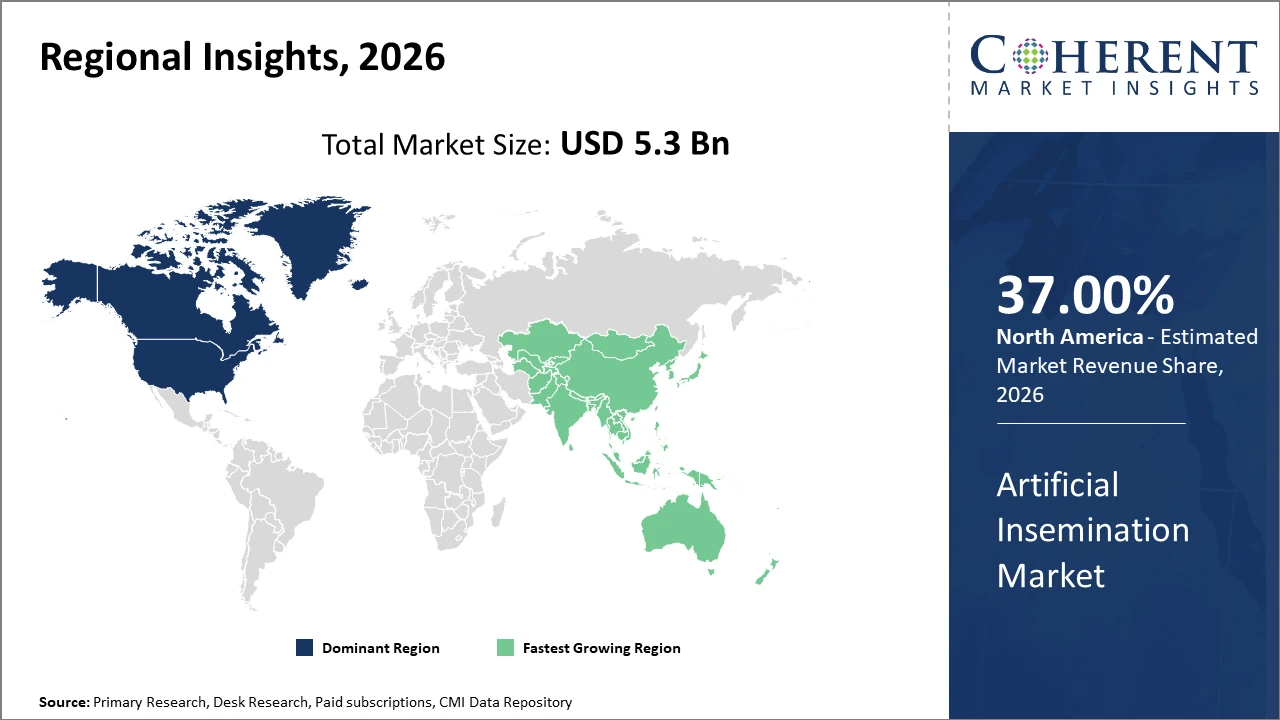
North America remains the largest regional market, benefiting from advanced livestock breeding infrastructure, widespread adoption of reproductive technologies, and strong investment in animal genetics programs.
Asia Pacific is emerging as the fastest-growing regional market, driven by expanding livestock industries, rising demand for high-quality animal products, and supportive government policies promoting modern breeding and reproductive technologies.
Artificial Insemination Market Segmentation Analysis
Artificial Insemination Market Insights, By Animal Type
The bovine segment dominates the artificial insemination market, accounting for nearly 62% of total market share due to the widespread adoption of artificial insemination in dairy and beef cattle breeding. The technology plays a critical role in improving milk production, meat quality, and livestock genetics across large-scale farming operations worldwide. Strong demand from Asia Pacific and North America continues supporting segment growth. Equine artificial insemination is emerging as the fastest-growing subsegment, driven by expanding equestrian sports and premium horse breeding programs in Europe. Swine artificial insemination remains important for commercial pork production, while ovine and caprine applications support regional livestock farming and specialized breeding activities.
Artificial Insemination Market Insights, By Product Type
Semen products represent the dominant subsegment in the artificial insemination market, generating the highest revenue share due to their essential role in breeding procedures across multiple animal categories. Frozen and chilled semen doses are widely utilized, supported by advancements in cryopreservation technologies that improve viability, storage duration, and fertilization success rates. Expanding semen processing facilities in North America and Europe continue strengthening supply capacity. Services are emerging as the fastest-growing subsegment, driven by rising demand for integrated artificial insemination solutions including veterinary support, technician training, and breeding management services, particularly in developing Asia Pacific markets. Instruments, equipment, and consumable accessories also contribute steadily to overall market revenue growth.
Artificial Insemination Market Insights, By End User
Commercial farms dominate the artificial insemination market due to their extensive adoption of advanced breeding technologies aimed at improving productivity, genetic quality, and operational efficiency. Large-scale dairy, beef, and livestock operations invest heavily in artificial insemination programs to maximize breeding performance and economic returns, particularly in developed agricultural economies. Small-scale farms are emerging as the fastest-growing end-user segment, supported by improved access to affordable artificial insemination services, government subsidies, and rural livestock development initiatives. Government and research institutes continue playing a crucial role in advancing reproductive technologies and breeding practices through innovation and training programs. Other users, including conservation centers and zoos, also contribute to specialized artificial insemination applications.
Artificial Insemination Market Trends
The artificial insemination market is increasingly integrating artificial intelligence and IoT-based reproductive monitoring systems to support precision livestock breeding and improve reproductive efficiency.
Real-time fertility tracking technologies are helping farmers optimize insemination timing, significantly improving conception and fertility success rates across commercial livestock operations.
Dairy farms in the United States reported notable improvements in fertility performance during 2026 through the adoption of connected reproductive monitoring platforms and automated breeding management systems.
Sustainability-focused breeding programs are gaining importance across Europe and South America as governments and consumers increasingly emphasize ethical livestock production, animal welfare, and environmentally responsible farming practices.
Government funding initiatives and agricultural modernization programs in India and Brazil are accelerating artificial insemination adoption by supporting innovation, livestock productivity improvement, and rural breeding infrastructure development.
Artificial Insemination Market Insights, By Geography
North America Artificial Insemination Market Analysis and Trends
North America dominates the artificial insemination market, acquiring a share of 37%, due to its highly developed livestock industry, advanced breeding infrastructure, and widespread adoption of reproductive technologies across dairy and beef farming operations. The United States holds a significant regional market share supported by extensive use of artificial insemination among commercial livestock producers. Strong cold chain logistics for semen storage and distribution, advanced veterinary healthcare systems, and favorable regulatory standards contribute to stable market growth. Leading companies such as Zoetis and Select Sires continue investing heavily in research, genetic improvement technologies, and reproductive innovation programs across North America.
Asia Pacific Artificial Insemination Market Analysis and Trends
The Asia Pacific artificial insemination market is experiencing the fastest growth globally due to rising government support, expanding commercial livestock farming, and increasing awareness among farmers regarding genetic improvement technologies. Countries such as India and China are witnessing rapid growth in artificial insemination equipment imports, veterinary services, and breeding infrastructure development. Government initiatives promoting modernization of animal husbandry practices and livestock productivity are further accelerating market adoption. The region’s CAGR exceeds that of other global markets by nearly 11%, driven by strong participation from small- and medium-scale farms increasingly adopting advanced reproductive technologies and precision breeding systems.
Artificial Insemination Market Outlook for Key Countries
USA Artificial Insemination Market Analysis and Trends
The United States artificial insemination market remains a major contributor to global industry revenue, with more than 70% of dairy farms utilizing artificial insemination technologies in 2026. Leading companies continue operating advanced research centers focused on improving breeding efficiency, livestock genetics, and animal health through innovations in cryopreservation and fertility monitoring systems. Strategic collaborations between agricultural universities and commercial breeding organizations have increased adoption rates among small- and medium-sized farms. These initiatives contributed to nearly 15% growth in revenue generated from artificial insemination services between 2024 and 2026, reinforcing the United States’ leadership in livestock reproductive technology and large-scale breeding operations.
Germany Artificial Insemination Market Analysis and Trends
The Germany artificial insemination market is experiencing steady growth due to rising infertility rates, delayed pregnancies, and increasing acceptance of assisted reproductive technologies. Fertility clinics and hospitals across Germany are witnessing higher demand for intrauterine insemination procedures supported by advanced reproductive healthcare infrastructure. Government support for fertility treatments and expanding awareness regarding reproductive health are further contributing to market growth. In the veterinary sector, artificial insemination is increasingly adopted in cattle and livestock breeding programs to improve genetic quality and productivity. Technological advancements in sperm preservation, fertility monitoring, and reproductive diagnostics are also strengthening market development. Germany remains a key contributor to the European artificial insemination industry.
Analyst Opinion
Rising demand for high-quality livestock products and improved animal genetics is significantly driving the artificial insemination market, with dairy farms in the United States reporting notable increases in milk yield through AI-supported breeding programs.
Competitive pricing strategies and technological advancements reduced average artificial insemination service costs in 2025, improving accessibility for small- and medium-scale breeders, while AI equipment imports in India increased strongly in 2026.
Expanding applications across bovine, equine, swine, and other livestock categories demonstrate strong market versatility, with bovine breeding accounting for more than 60% of market demand and equine breeding programs growing rapidly in Europe.
Technological advancements in precision breeding and sperm cryopreservation improved post-thaw sperm viability and artificial insemination success rates, particularly across North America and Europe.
- Current Industry Events of 2026
- Market Size Estimation
- Regional Breakdown
- Competitive Landscape
- Customer Intelligence
- Segmental Analysis
- Pricing Analysis
- Key Market Drivers, Challenges & Future Trends
- Customized Insights Section
Market Scope
| Report Coverage | Details | ||
|---|---|---|---|
| Base Year: | 2025 | Market Size in 2026: | USD 5.3 billion |
| Historical Data for: | 2020 To 2024 | Forecast Period: | 2026 To 2033 |
| Forecast Period 2026 to 2033 CAGR: | 8.7% | 2033 Value Projection: | USD 9.6 billion |
| Geographies covered: |
| ||
| Segments covered: |
| ||
| Companies covered: | Zoetis Inc, Genus PLC, IMV Technologies, CRV, ST Genetics, Calpis Co. Ltd.., Neogen Corporation, Select Sires Inc, ABS Global Inc., AI Tech Systems | ||
| Growth Drivers: |
| ||
Artificial Insemination Market Growth Factors
Growing awareness regarding livestock productivity improvement and superior animal genetics is a major factor driving the artificial insemination market. In 2025, more than 70% of dairy farmers in Australia preferred artificial insemination to strengthen herd genetics and enhance production efficiency. Technological advancements in semen processing and cryopreservation, including new cryoprotectant solutions introduced in 2024, improved insemination success rates by nearly 18%. Increasing public and private investments in breeding programs across countries such as India and Brazil are accelerating adoption. Additionally, demand for sustainable and environmentally efficient livestock breeding practices continues supporting long-term global market growth.
Artificial Insemination Market Development
In February 2026, the ICAR–Central Sheep and Wool Research Institute (CSWRI), Avikanagar, launched the first batch of a two-day training program on artificial insemination in sheep and goats. The initiative aims to train 700 veterinarians and paraveterinary personnel from Rajasthan’s Animal Husbandry Department through multiple batches during the financial year.
Key Players
Leading Companies of the Market
Zoetis Inc.
Genus PLC
CRV
Select Sires Inc.
ABS Global Inc.
AI Tech Systems
ST Genetics
Calpis Co. Ltd.
IMV technologies
Neogen Corporation
Leading companies in the artificial insemination market are increasingly adopting integrated growth strategies focused on mergers, acquisitions, and technological advancement to strengthen market presence. For instance, Zoetis expanded its artificial insemination and livestock genetics portfolio in 2025 through acquisitions of genetics-focused startups, significantly enhancing its service capabilities and regional market share across North America. Similarly, Select Sires established strategic partnerships with livestock breeding associations throughout the Asia Pacific region in 2026, contributing to substantial revenue growth by expanding breeding programs, improving genetic services, and increasing adoption of advanced reproductive technologies among commercial livestock producers.
Artificial Insemination Market Future Outlook
The future outlook for the artificial insemination market remains highly positive due to rising infertility rates, delayed parenthood trends, and growing awareness of assisted reproductive technologies worldwide. Increasing acceptance of fertility treatments among couples and advancements in reproductive medicine are expected to accelerate market expansion. Technological innovations such as AI-assisted fertility monitoring, automated sperm selection, and improved cryopreservation techniques will enhance treatment success rates and procedural efficiency. Expanding veterinary artificial insemination programs in livestock breeding are also contributing to long-term market growth. In addition, supportive government initiatives, increasing healthcare investments, and the expansion of fertility clinics across emerging economies will continue strengthening global market demand.
Artificial Insemination Market Historical Analysis
The artificial insemination market has evolved significantly over the past decades due to advancements in reproductive medicine and increasing awareness of fertility treatments. Initially adopted primarily in veterinary applications to improve livestock breeding efficiency and genetic quality, artificial insemination later gained widespread acceptance in human fertility care. Rising infertility rates, delayed pregnancies, and changing lifestyle factors accelerated demand for assisted reproductive technologies globally. Technological progress in sperm preservation, ovulation monitoring, and laboratory diagnostics improved treatment success rates and procedural safety. Expansion of fertility clinics, supportive healthcare policies, and growing social acceptance of reproductive treatments further contributed to the market’s steady historical growth across both human and veterinary sectors.
Sources
Primary Research Interviews:
Fertility clinic specialists, reproductive endocrinologists, gynecologists, sperm bank operators, veterinary breeding experts, laboratory equipment manufacturers, and distributors involved in assisted reproductive technologies and artificial insemination procedures.
Embryologists, reproductive health researchers, biotechnology professionals, regulatory consultants, livestock breeding specialists, and R&D directors specializing in sperm preservation, fertility diagnostics, cryopreservation technologies, and reproductive healthcare solutions.
Magazines:
Fertility and Sterility Today – Insights into fertility treatments, assisted reproductive technologies, and reproductive healthcare innovations.
Medical Device Network – Coverage of fertility devices, reproductive diagnostics, and healthcare technology advancements.
Dairy Global – Updates on livestock breeding technologies, veterinary reproduction, and artificial insemination trends in animal husbandry.
Journals:
Fertility and Sterility – Research on reproductive medicine, infertility treatments, and assisted reproductive technologies.
Human Reproduction – Studies focused on fertility science, reproductive endocrinology, and clinical reproductive procedures.
Theriogenology – Research related to animal reproduction, veterinary fertility treatments, and livestock breeding technologies.
Newspapers:
Financial Times – Coverage of healthcare investments, fertility clinic expansions, and biotechnology market developments.
Reuters – Reporting on fertility technology launches, reproductive healthcare policies, and biotechnology industry updates.
Bloomberg – Insights into mergers, acquisitions, and strategic collaborations among fertility service providers and biotechnology companies.
Associations:
American Society for Reproductive Medicine (ASRM) – Research developments, clinical guidelines, and innovations in reproductive healthcare and fertility treatments.
European Society of Human Reproduction and Embryology (ESHRE) – Insights into fertility research, assisted reproduction technologies, and reproductive medicine standards.
National Association of Animal Breeders (NAAB) – Information on livestock genetics, artificial insemination technologies, and animal breeding advancements.
Get access to 250+ pages report
Every segment, forecast, competitor profile and data table behind the analysis above — available for instant download.
- ESOMAR Member
- ISO 9001:2015 Certified
- D-U-N-S Registered
- GDPR & CCPA Compliant
Missing comfort of reading report in your local language? Find your preferred language:
Transform your Strategy with Exclusive Trending Reports
Frequently Asked Questions
The artificial insemination market is led by major companies such as Zoetis, Genus, Select Sires, and CRV, recognized for their strong genetics portfolios, advanced breeding technologies, and global distribution networks.
The global artificial insemination market is projected to grow from USD 5.3 billion in 2026 to approximately USD 9.6 billion by 2033, registering a CAGR of around 8.7% during the forecast period.
Commercial farms present the largest growth opportunity due to increasing demand for enhanced livestock genetics, higher dairy and beef productivity, and efficient large-scale breeding operations.
Future market trends are expected to include greater integration of digital fertility monitoring systems, adoption of gene-editing technologies, precision breeding solutions, and environmentally sustainable livestock breeding practices through 2033.
The market is highly competitive, driven by innovation, strategic partnerships, and expansion of genetic service portfolios. Major challenges include high initial investment requirements, varying regional regulatory standards, and limited awareness among smaller livestock operators in developing regions.
Companies commonly pursue mergers and acquisitions, regional breeding collaborations, expansion of veterinary support services, and technological advancements such as enhanced cryopreservation and reproductive monitoring systems to strengthen market presence and competitiveness.