

Global Bipolar Disorder Mood Stabilizers Market -Size and Forecast – 2026 to 2033
The Global Bipolar Disorder Mood Stabilizers Market is estimated to be valued at USD 2.30 Bn in 2026 and is expected to reach USD 2.75 Bn by 2033, exhibiting a compound annual growth rate (CAGR) of 2.7% from 2026 to 2033.
Key Takeaways of the Global Bipolar Disorder Mood Stabilizers Market:
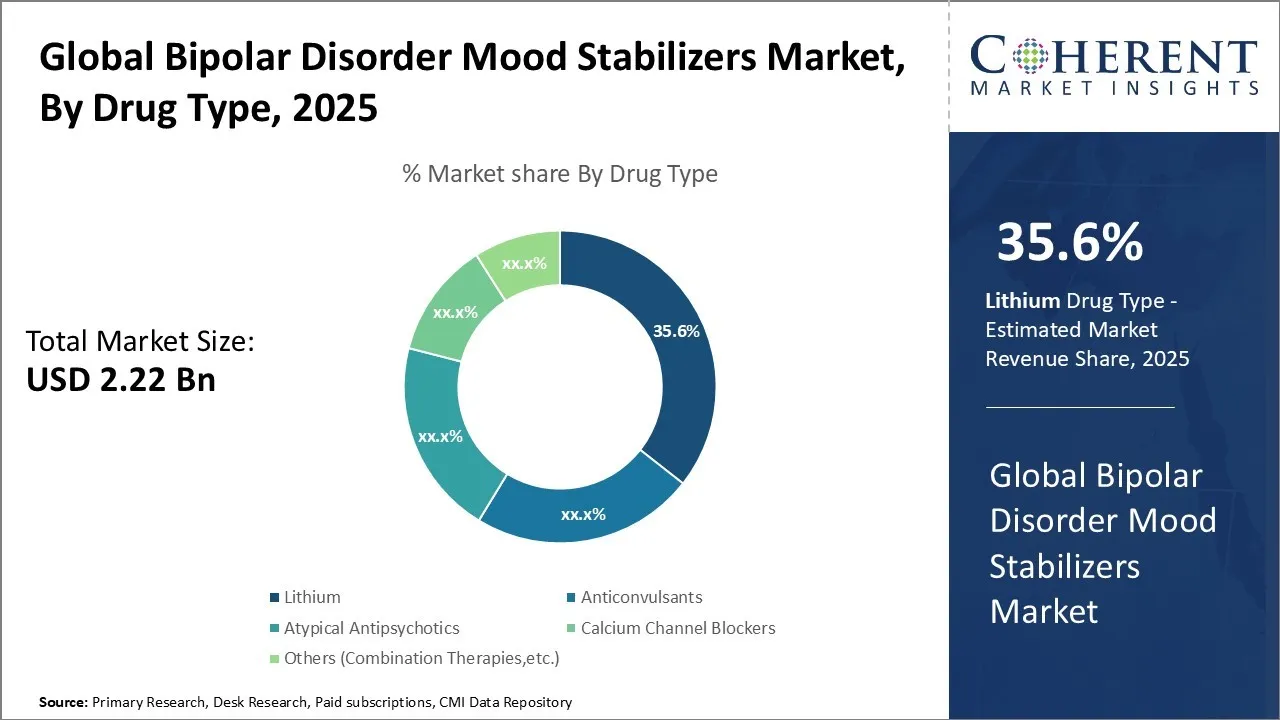
- By drug type, the lithium segment is projected to account for the largest share of the global bipolar disorder mood stabilizers market in 2026, contributing 36.6%, due to its well-established clinical effectiveness and decades of widespread therapeutic use.
- The bipolar I disorder segment leads with 33.2% in 2026 due to its higher prevalence, severe symptoms requiring intensive treatment, long-term medication use, and strong clinical focus
- By route of administration, the oral segment is expected to remain the most preferred method, comprising 42.1% of the market share in 2026.
- By region, North America is expected to lead with 40. 3% in 2026 due to advanced healthcare and strong R&D, while Asia Pacific is expected to show the fastest growth, accounting for 34.3% market share in 2026 driven by rising awareness, access, and government support
Market Overview:
The bipolar disorder mood stabilizers market is expected to witness steady growth over the forecast period. While mood stabilizers have been an effective therapeutic option for bipolar disorder treatment, growing awareness about mental health issues, and increasing diagnosis rates especially in developing nations are some key factors expected to drive the demand. However, the presence of alternative treatment options and patent expiries of some major branded drugs may restrain the market growth to a certain extent. Overall, measures taken by various government and non-government bodies to promote mental healthcare are expected to present several opportunities for players in this market.
Currents Events and their Impact
Current Events | Description and its impact |
Advancements in Digital Health Tools for Bipolar Disorder |
|
Emergence of Combination Drug Therapies |
|
Segmental Analysis:
- Current Industry Events of 2026
- Market Size Estimation
- Regional Breakdown
- Competitive Landscape
- Customer Intelligence
- Segmental Analysis
- Pricing Analysis
- Key Market Drivers, Challenges & Future Trends
- Customized Insights Section
Bipolar Disorder Mood Stabilizers Market Insights, By Drug Type, - Patient preference and efficacy drive lithium's market dominance
In terms of drug type, the lithium segment is expected to contribute the highest share of the global bipolar disorder mood stabilizers market with 36.6% in 2026 owing to its long history of clinical use and proven efficacy. Lithium was one of the first drugs approved for treating mania in bipolar disorder and is still considered a first-line treatment option by major clinical guidelines. Over 60 years of clinical experience have demonstrated that lithium can effectively reduce symptoms of mania and depression when patients adhere to treatment. Compliance can however be challenging due to a narrow therapeutic window and need for regular blood monitoring.
Lithium works by modulating neurotransmitters like serotonin and norepinephrine to achieve mood stabilization. Clinical trials have found it comparable or superior to other options like valproate and carbamazepine in reducing manic episodes. As a result, psychiatrists remain comfortable prescribing lithium which builds long-term patient trust and continuity of care. This contributes to continued preference and demand despite newer treatment entrants.
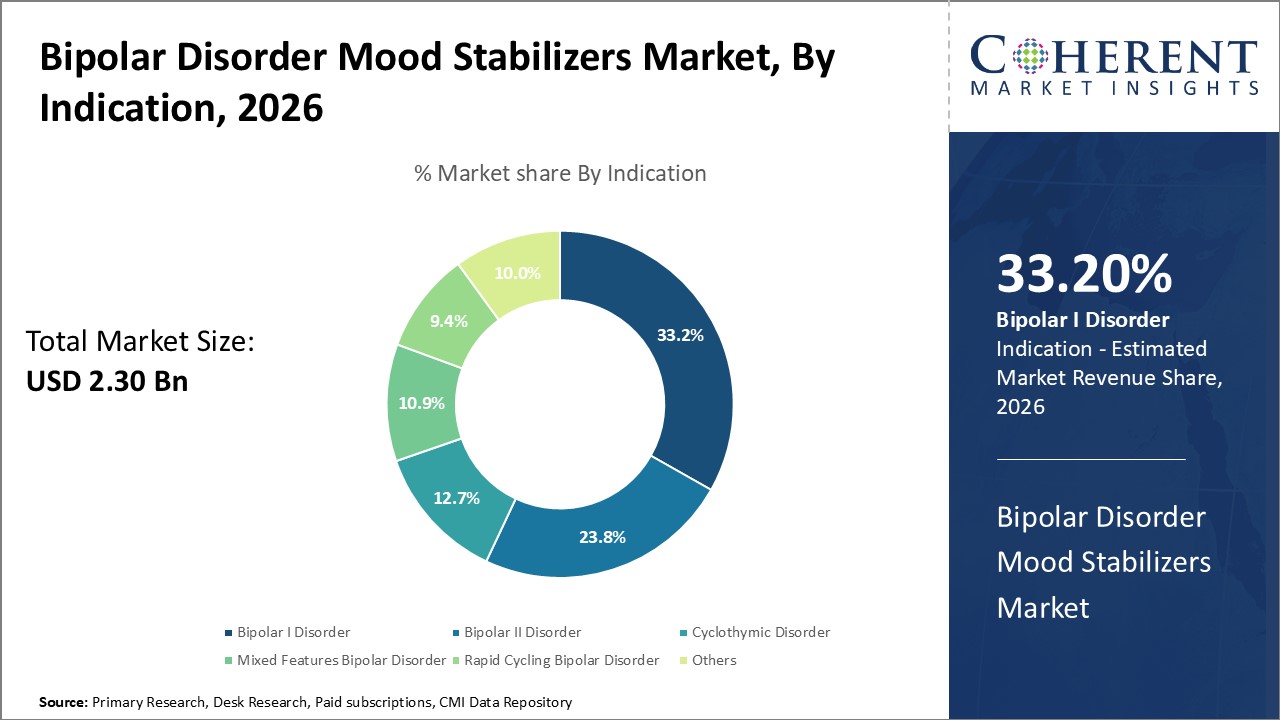
Bipolar Disorder Mood Stabilizers Market Insights, By Indication - Bipolar I disorder market share is led by acute manic episodes
In terms of indication, the bipolar I disorder segment is expected to contribute the highest share of the global bipolar disorder mood stabilizers market with 33.2% in 2026. This is mainly due to bipolar I being characterized by manic or mixed episodes which severely impact functioning if not appropriately treated. Compared to bipolar II, the condition presents in a more severe form with greater mood swings between mania and depression.
Episodes of mania or mixed states in bipolar I disorder are considered medical emergencies, as patients may exhibit impulsive behavior, rapid thought patterns, excessive activity, and heightened irritability if not promptly managed. Hospitalization is often needed for safety during acute phases. Given risks of suicide, lower relapse threshold, and higher disability, treatment aims to not just control current mood episodes but reduce future recurrence.
The acute nature of manic episodes drives both high and long-term utilization of mood stabilizing medications. Drugs must work rapidly to curb severe manic symptoms to prevent escalation. Continued treatment is then required to maintain remission and prevent new manic/depressive episodes from developing. This sustained use pattern maximizes bipolar I patient share of the overall bipolar disorder mood stabilizers market versus less severe indications.
Bipolar Disorder Mood Stabilizers Market Insights, By Route of Administration - Oral Medications Lead Due to Convenience and Better Adherence
Finally, in terms of route of administration, the oral segment is expected to contribute the highest share of the global bipolar disorder mood stabilizers market with 42.1% in 2026. This is because oral pills, capsules, or liquids are generally the most convenient and preferred method for administering long-term maintenance treatment of mood disorders versus injections.
Compliance can be a challenge with mental illnesses and anything impairing convenience risks reduced medication adherence over time. Hospital-based parenteral options are reserved mainly for acute crises when rapid symptom control is required. But transitioning patients to oral refills allows independent, discreet self-administration fitting into daily routines without disrupting lives or activities. This becomes critical for long-term management of a chronic mental illness like bipolar disorder.
The oral route is also associated with better tolerability and less pain versus injections for most drugs. Combined with oral generics being more affordable than specialty injectable or implant options, adherence is maximized – critical for preventing dangerous mood relapses and cost of further healthcare utilization.
Regional Insights:
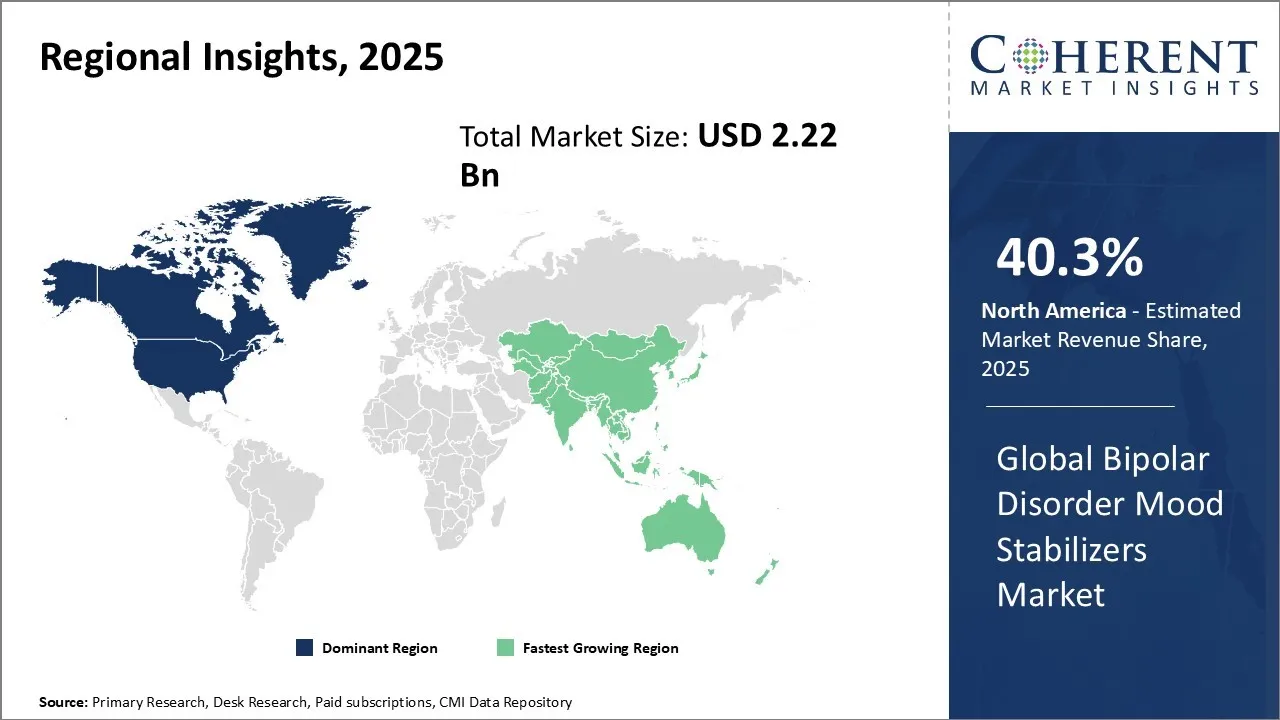
North America Bipolar Disorder Mood Stabilizers Market Analysis and Trends
In North America, the dominance in the bipolar disorder mood stabilizers market with an estimated share of 40.3% in 2026 can be attributed to several factors. The region has a highly developed healthcare infrastructure and healthcare spending is the highest in the world. Moreover, awareness levels regarding mental health conditions are also quite high. The favorable reimbursement policies for pharmaceutical drugs in countries like the U.S. and Canada have ensured higher patient access to treatment options.
North American companies have also led research and development activities in this field over the years. Players like GlaxoSmithKline, Eli Lilly, Johnson & Johnson, and Pfizer have established strong market presence through their innovative drug portfolios and robust commercialization strategies. Extensive collaboration between healthcare providers, pharma companies and patient advocacy groups have further supported market growth.
Asia Pacific Bipolar Disorder Mood Stabilizers Market Analysis and Trends
Meanwhile, the Asia Pacific region is expected to exhibit the fastest growth with a share of 34.3% in 2026, led by China and India. Rapid economic development and rising affluence has boosted healthcare investments and spending across the region in the past decade. At the same time, growing urbanization and changing lifestyles have also increased stress levels and prevalence of mental health disorders.
Governments of various countries have initiated programs to spread awareness about conditions like bipolar disorder and their treatment. This has supported the uptake of evidence-based therapies. For example, India’s National Mental Health Programme (NMHP) has been instrumental in improving awareness, diagnosis, and treatment access for mental health conditions like bipolar disorder. Similarly, China’s Healthy China 2030 initiative emphasizes mental health integration in primary care, aiming to reduce stigma and improve service delivery. Further, many international players have intensified their focus on the emerging Asia Pacific markets through partnerships with regional generic drug makers and by introducing low-cost formulations.
Bipolar Disorder Mood Stabilizers Market Outlook for Key Countries
U.S Bipolar Disorder Mood Stabilizers Market Analysis and Trends
The U.S. bipolar disorder mood stabilizers market is significantly driven by increasing awareness and treatment options. In April 2024, Vanda Pharmaceuticals announced U.S. FDA approval for Fanapt (iloperidone) for treating manic episodes in bipolar I disorder, expanding the available therapeutic options. This approval reflects the growing focus on innovative treatments to address the rising prevalence of bipolar disorder in the U.S., where approximately 2.8% of adults are diagnosed with the condition.
Canada Bipolar Disorder Mood Stabilizers Market Analysis and Trends
Canada bipolar disorder mood stabilizers market is driven by increasing government funding for mental health initiatives. In April 2024, the Canadian government announced an investment of USD 200 million to improve mental health services, enhancing access to treatments for bipolar disorder. This funding aims to address the growing demand for effective mood stabilizers, reflecting a national commitment to improving mental health care and reducing stigma associated with mental illness.
China Bipolar Disorder Mood Stabilizers Market Analysis and Trends
China is emerging as a key player in the Asia Pacific bipolar disorder mood stabilizers market, backed by robust manufacturing capabilities and well-established distribution networks. The country’s rapid urbanization has contributed to a rise in mental health diagnoses, fueling demand for mood stabilizers. A major growth driver is government backing, particularly through initiatives like Healthy China 2030, which seeks to incorporate mental health professionals into over 80% of elementary and secondary schools. Additionally, the expansion of telemedicine and mobile mental health apps is further boosting market growth.
U.K. Bipolar Disorder Mood Stabilizers Market Analysis and Trends
The U.K. bipolar disorder mood stabilizers market is expanding through government initiatives strengthening mental health services and National Health Service (NHS)-funded programs. A key driver is the National Institute for Health and Care Excellence (NICE) updated guidelines for bipolar disorder management, which emphasize early intervention and comprehensive treatment approaches. The integration of digital mental health platforms is transforming care delivery, with NHS Digital reporting a 300% increase in virtual mental health consultations since 2020. Advancements in long-acting injectable antipsychotics are improving medication adherence rates, according to Public Health England data. The NHS Long Term Plan's allocation of resources specifically for mental health services further supports this growing market.
End User Feedback and Unmet Needs
End users of bipolar disorder mood stabilizers—comprising psychiatric clinics, public health institutions, and private practitioners—have consistently emphasized the reliability of long-standing stabilizers like lithium and valproate in managing manic and depressive episodes. For example, the Central Institute of Mental Health in Mannheim, Germany, reported a notable decrease in hospitalization rates and improved long-term patient adherence with lithium therapy. These outcomes underline lithium’s effectiveness and cost-efficiency, particularly in public healthcare settings where long-term management and budget considerations are paramount.
However, recurring concerns persist among healthcare providers and patients regarding side-effect profiles, lack of individualized treatment options, and the need for frequent blood monitoring, especially with traditional stabilizers. Many clinicians highlight the limited availability of newer, well-tolerated alternatives in emerging markets due to cost constraints and regulatory delays. Unmet needs include the development of targeted formulations with fewer cognitive side effects, simplified monitoring protocols, and improved access through generic or subsidized versions. Addressing these gaps could significantly enhance treatment outcomes, broaden market penetration, and foster innovation in next-generation stabilizers.
Market Players, Key Developments, & Competitive Intelligence
Key Developments:
- In February 2025, UCLA Health, a public healthcare system, announced a 16-week pilot study to assess whether a ketogenic diet, alongside mood-stabilizing medications, can help stabilize mood symptoms in youth aged 12–21 with bipolar disorder. This marks the first study of its kind in adolescents, building on promising adult trials.
- In January 2025, Johnson & Johnson, a global healthcare leader, via its Janssen division, received U.S. FDA approval for SPRAVATO (esketamine) as the first and only monotherapy for treatment-resistant depression (TRD) in adults. Approved after a Priority Review, SPRAVATO demonstrated rapid symptom relief within 24 hours and significantly higher remission rates (22.5% vs. 7.6% on placebo) by week 4. This marks a major advancement for patients unresponsive to traditional antidepressants.
- In May 2024, Neumora Therapeutics, a clinical-stage biotechnology company, launched a Phase 2 study to evaluate navacaprant, an oral KOR antagonist, for treating bipolar depression. Navacaprant’s novel mechanism targets symptoms like anhedonia, which are often unmet by current treatments. Previous Phase 2 results showed improvements in mood and anhedonia, supporting its potential in addressing the significant unmet needs of people with bipolar depression.
- In July 2024, a new study led by the University of Pennsylvania found that accelerated intermittent theta burst stimulation (aiTBS) can significantly reduce bipolar disorder treatment time from 4–6 weeks to just five days. aiTBS, a non-invasive magnetic brain stimulation technique, showed promise in treating depression symptoms in bipolar patients who may not respond well to medications.
Top Strategies Followed by Global Bipolar Disorder Mood Stabilizers Market Players
- Established Players: Large companies focus heavily on research and development to introduce innovative products. Leaders such as Pfizer, GlaxoSmithKline, and AstraZeneca invest over 10% of annual revenues into R&D. They conduct extensive clinical trials to develop new drugs with fewer side effects and more targeted mechanisms of action. These players also form strategic alliances to broaden their portfolios and service offerings.
- For example, in September 2023, Fabre-Kramer Pharmaceuticals, a biopharmaceutical company has received U.S. FDA approval for Exxua (gepirone ER) to treat major depressive disorder (MDD) in adults. Exxua is the first antidepressant to selectively target the serotonin 1A receptor, offering a novel mechanism of action. It has demonstrated effectiveness in relieving depression symptoms without warnings for sexual dysfunction or weight gain. The drug is expected to launch in early 2024.
- Mid-Level Players: Companies of this size emphasize affordable solutions. Companies like Allergan, INTAS, and Amneal focus on generics and biosimilars to capture a share of the price-sensitive market segment. They invest in improving manufacturing efficiencies to keep costs low. These players also leverage partnerships for joint product development or to expand into new therapy areas and geographical regions through shared research, production capabilities, or distribution networks.
- For Instance, in September 2024, 4M Therapeutics (4MTx) announced promising preclinical results for its lead candidate 4MT2001, a novel GSK3β inhibitor targeting neuropsychiatric and neurodegenerative disorders. The drug showed clear Central Nervous System (CNS) target engagement and positive behavioral effects in animal models, with significant reductions in brain pCRMP2 and PKC substrates—biomarkers linked to mood stabilization.
- Small-Scale Players: Emerging companies target specific market niches. For instance, BioXcel focuses exclusively on developing novel treatments based on AI and neuroscience. Minerva Neurosciences researches therapies for severe mood disorders. These smaller players adopt cutting-edge technologies like digital biomarkers and predictive analytics to track treatment responses in real-time. They form regional collaborations for initial market access and visibility before expanding globally.
Analyst Opinion (Expert Opinion)
- The global bipolar disorder mood stabilizers market is witnessing notable growth, driven by rising awareness of mental health disorders, improved diagnostic capabilities, and expanding access to psychiatric care across emerging economies. Technological advancements, such as AI-driven mental health apps and digital adherence tools, are enhancing treatment personalization and medication compliance. Government initiatives and regulatory backing, particularly in regions like North America and Europe, have accelerated drug approvals and increased funding for mental health research. However, challenges remain—most notably, the persistent side-effect profiles of traditional stabilizers like lithium and valproate, as well as the underdiagnosis of bipolar disorder in low-income populations. Opportunities lie in the development of novel stabilizers with fewer adverse effects, long-acting formulations, and targeted therapies based on genetic profiling.
- Notable global events such as the World Mental Health Congress, European Congress of Psychiatry (EPA), and Mental Health America Conference have been instrumental in spotlighting bipolar disorder and advancing discourse around therapeutic innovation. These forums have helped shape clinical guidelines, highlight digital therapeutics, and promote public-private partnerships. On-ground, instances like the NHS-backed rollout of early intervention programs in the UK and Germany’s psychiatric hospital initiative supporting lithium therapy adoption underscore growing institutional support. In Asia Pacific, India’s National Mental Health Programme (NMHP) and China’s policy-led psychiatric infrastructure improvements are paving the way for increased treatment uptake—making emerging markets crucial for future growth.
Speak to the analyst
Want personalized insights?
Take the findings above to one of our principal consultants, or have the report rebuilt around the segments, geographies and competitors you actually track.
Market Report Scope
Bipolar Disorder Mood Stabilizers Market Report Coverage
| Report Coverage | Details | ||
|---|---|---|---|
| Base Year: | 2025 | Market Size in 2026: | USD 2.30 Bn |
| Historical Data for: | 2020 To 2024 | Forecast Period: | 2026 To 2033 |
| Forecast Period 2026 to 2033 CAGR: | 2.7% | 2033 Value Projection: | USD 2.75 Bn |
| Geographies covered: |
| ||
| Segments covered: |
| ||
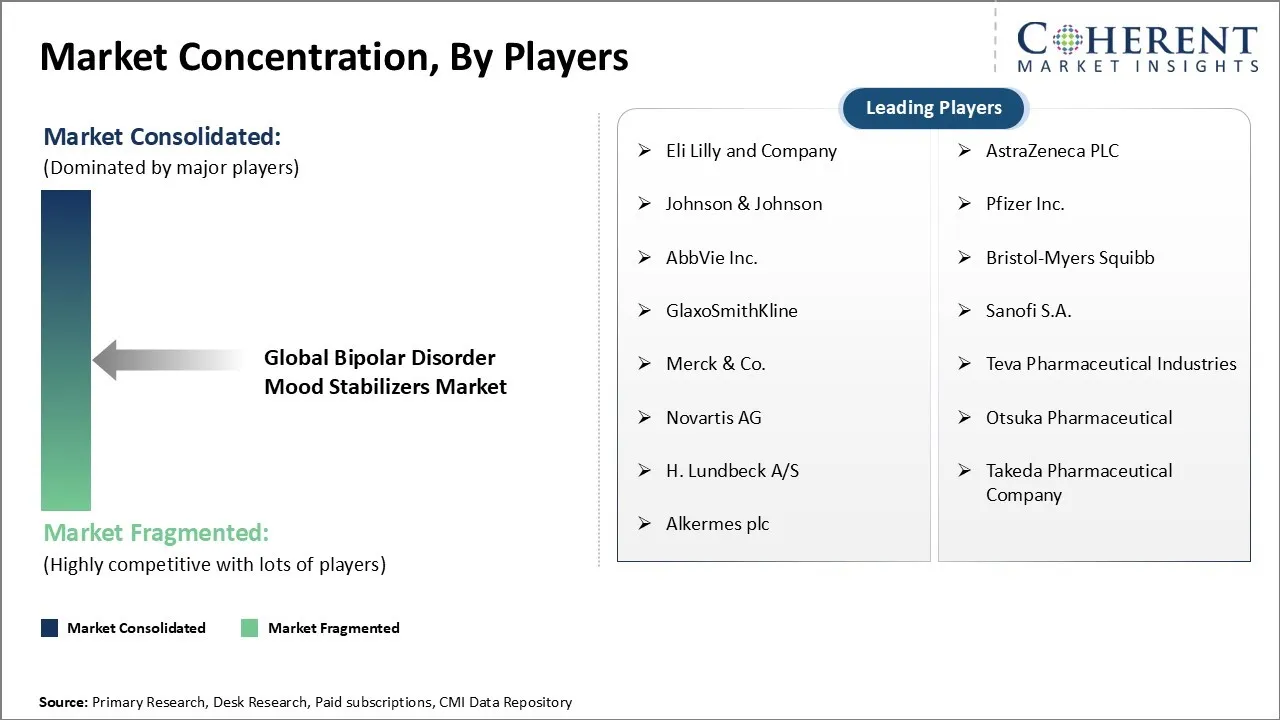
| Companies covered: | Eli Lilly and Company, AstraZeneca PLC, Johnson & Johnson, Pfizer Inc., AbbVie Inc., Bristol-Myers Squibb, GlaxoSmithKline, Sanofi S.A., Merck & Co., Teva Pharmaceutical Industries, Novartis AG, Otsuka Pharmaceutical, H. Lundbeck A/S, Takeda Pharmaceutical Company, and Alkermes plc | ||
| Growth Drivers: |
| ||
| Restraints & Challenges: |
| ||
Bipolar Disorder Mood Stabilizers Market Dynamics
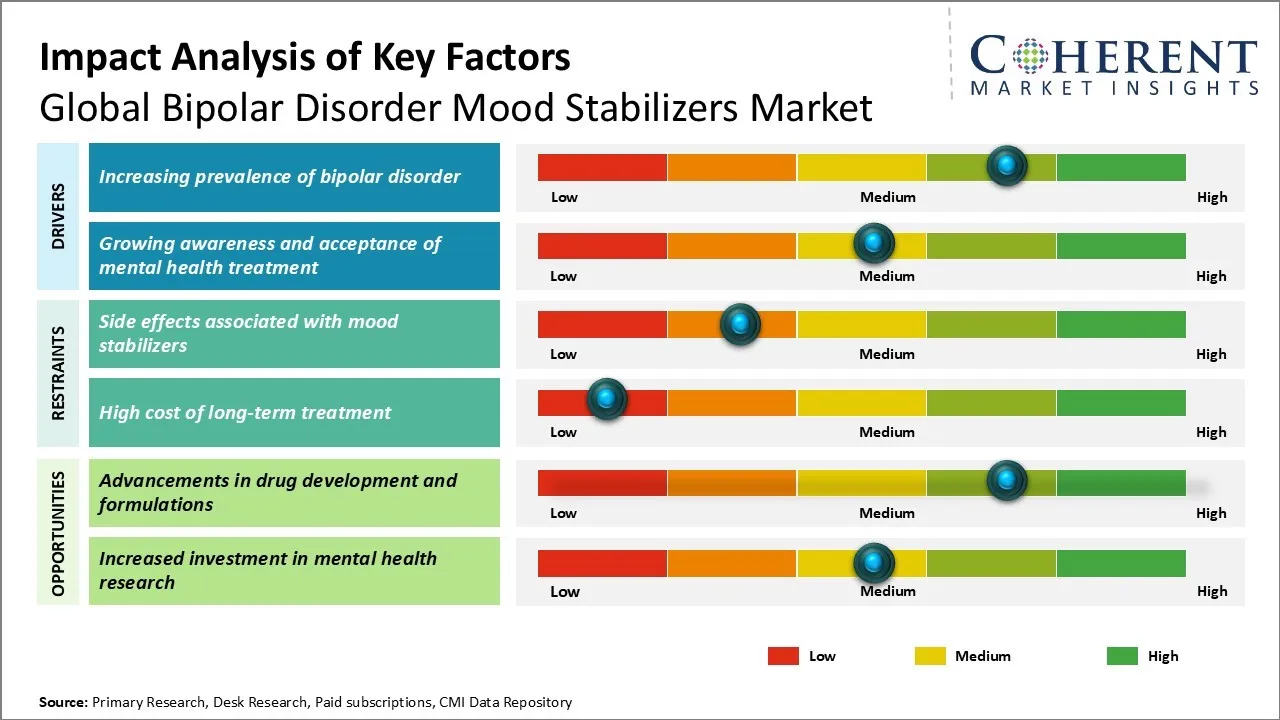
Bipolar Disorder Mood Stabilizers Market Driver - Increasing prevalence of bipolar disorder
The increasing prevalence of bipolar disorder across the globe has emerged as a key driver augmenting the growth of the global bipolar disorder mood stabilizers market. The rising mental health burden of bipolar disorder due to factors such as increasing stress levels, family history of mental illnesses, and substance abuse has led to an uptick in the number of patients seeking clinical management of their condition. This has significantly propelled the demand for effective mood stabilizing drugs for long-term treatment and management of bipolar disorder symptoms across phases.
The growing awareness and diagnosis of bipolar disorder types I and II have further stimulated the sales momentum of bipolar disorder mood stabilizers in recent years. For instance, in March 2025, BioXcel Therapeutics, a biopharmaceutical company, announced 33% enrollment in its SERENITY At-Home Phase 3 trial for treating agitation in bipolar disorder and schizophrenia using BXCL501, an orally dissolving film. The study aims to assess safety in a home setting and support a potential sNDA for expanding the IGALMI® label. Topline results are expected in the second half of 2025.
Bipolar Disorder Mood Stabilizers Market Opportunity - Advancements in drug development and formulations
A key opportunity in the global bipolar disorder mood stabilizers market lies in the shift toward precision-based and delivery-optimized treatments. Recent R&D efforts have focused on developing mood stabilizers that specifically modulate glutamatergic transmission and intracellular signaling pathways like GSK-3β, offering a mechanistic alternative to traditional agents such as lithium. For example, companies like Sunovion and Intra-Cellular Therapies are advancing pipeline drugs with differentiated receptor targets to reduce cognitive dulling and metabolic side effects. Moreover, long-acting injectable formulations—such as those being developed for mood stabilization by Alkermes—are poised to address non-compliance and relapse rates by maintaining consistent plasma levels over weeks. These innovations not only offer clinical advantages but also align with payor and provider demands for outcomes-based mental health management.
These newer treatment options have the potential to capture more market share if successfully commercialized. They are likely to drive overall market revenues upwards in the coming years. For instance, according to National Institutes of Health (NIH) recent research highlights significant progress in bipolar disorder drug development, 75 years after lithium's discovery. Ongoing Phase II and III clinical trials (as of April 2024) focus on repurposing existing drugs and developing innovative therapies targeting mood-related neuroinflammation, dopamine stabilization, and serotonin receptor activities. New formulations for rapid symptom management and broader therapeutic applications are also emerging, creating strong market opportunities for improved, targeted treatments addressing the complex needs of bipolar disorder patients.
Market Segmentation
- Drug Type Insights (Revenue, USD Bn, 2021 - 2033)
- Lithium
- Lithium Carbonate
- Lithium Citrate
- Anticonvulsants
- Valproic Acid/Valproate/Divalproex Sodium
- Lamotrigine
- Carbamazepine
- Oxcarbazepine
- Topiramate
- Atypical Antipsychotics
- Aripiprazole
- Olanzapine
- Quetiapine
- Risperidone
- Lurasidone
- Ziprasidone
- Asenapine
- Calcium Channel Blockers
- Others (Combination Therapies, etc.)
- Lithium
- Indication Insights (Revenue, USD Bn, 2021 - 2033)
- Bipolar I Disorder
- Bipolar II Disorder
- Cyclothymic Disorder
- Mixed Features Bipolar Disorder
- Rapid Cycling Bipolar Disorder
- Others
- Route of Administration Insights (Revenue, USD Bn, 2021 - 2033)
- Oral
- Parenteral/Injectable
- Transdermal
- Others
- Patient Demographics Insights (Revenue, USD Bn, 2021 - 2033)
- Age Groups
- Children and adolescents
- Adults
- Elderly
- Gender
- Male
- Female
- Distribution Channel Insights (Revenue, USD Bn, 2021 - 2033)
- Hospital Pharmacies
- Retail Pharmacies
- Online Pharmacies
- Regional Insights (Revenue, USD Bn, 2021 - 2033)
- North America
- U.S.
- Canada
- Latin America
- Brazil
- Argentina
- Mexico
- Rest of Latin America
- Europe
- Germany
- U.K.
- Spain
- France
- Italy
- Russia
- Rest of Europe
- Asia Pacific
- China
- India
- Japan
- Australia
- South Korea
- ASEAN
- Rest of Asia Pacific
- Middle East
- GCC Countries
- Israel
- Rest of Middle East
- Africa
- South Africa
- North Africa
- Central Africa
- North America
- Key Players Insights
- Eli Lilly and Company
- AstraZeneca PLC
- Johnson & Johnson
- Pfizer Inc.
- AbbVie Inc.
- Bristol-Myers Squibb
- GlaxoSmithKline
- Sanofi S.A.
- Merck & Co.
- Teva Pharmaceutical Industries
- Novartis AG
- Otsuka Pharmaceutical
- Lundbeck A/S
- Takeda Pharmaceutical Company
- Alkermes plc
Sources
Primary Research Interviews:
- Psychiatrists and clinical psychologists
- Pharmaceutical company R&D and regulatory professionals
- Hospital procurement managers and pharmacy heads
- Patients and caregivers involved in bipolar disorder treatment
Databases:
- World Health Organization (WHO)
- National Institute of Mental Health (NIMH)
- OECD Health Statistics – Mental health expenditure and access
- gov
- Centers for Disease Control and Prevention (CDC) Database
Magazines:
- Psychiatry Advisor
- PharmaTimes
- Mental Health Weekly
Journals:
- Journal of Affective Disorders
- Bipolar Disorders Journal
- The American Journal of Psychiatry
- CNS Drugs
Newspapers:
- The New York Times
- The Guardian
- The Times of India
Associations:
- International Society for Bipolar Disorders (ISBD)
- American Psychiatric Association (APA)
- European College of Neuropsychopharmacology (ECNP)
Public Domain Sources:
- U.S. Food and Drug Administration (FDA)
- European Medicines Agency (EMA)
- Centers for Disease Control and Prevention (CDC)
- World Health Organization (WHO)
- Global mental health conferences and psychiatry summits
Proprietary Elements:
- CMI Data Analytics Tool: Proprietary analytics tool to analyze real-time market trends, consumer behavior, and technology adoption in dark factories.
- Proprietary CMI Existing Repository of Information for Last 8 Years
Get access to 250+ pages report
Every segment, forecast, competitor profile and data table behind the analysis above — available for instant download.
- ESOMAR Member
- ISO 9001:2015 Certified
- D-U-N-S Registered
- GDPR & CCPA Compliant
Missing comfort of reading report in your local language? Find your preferred language:
Transform your Strategy with Exclusive Trending Reports
Frequently Asked Questions
The global bipolar disorder mood stabilizers market is estimated to be valued at USD 2.22 Bn in 2025 and is expected to reach USD 2.64 Bn by 2032.
The CAGR of the global bipolar disorder mood stabilizers market is projected to be 2.5% from 2025 to 2032.
Increasing prevalence of bipolar disorder and growing awareness and acceptance of mental health treatment are the major factors driving the growth of the global bipolar disorder mood stabilizers market.
Side effects associated with mood stabilizers and high cost of long-term treatment are the major factors hampering the growth of the global bipolar disorder mood stabilizers market.
In terms of drug type, the lithium segment is estimated to dominate the market revenue share in 2025.
Eli Lilly and Company, AstraZeneca PLC, Johnson & Johnson, Pfizer Inc., AbbVie Inc., Bristol-Myers Squibb, GlaxoSmithKline, Sanofi S.A., Merck & Co., Teva Pharmaceutical Industries, Novartis AG, Otsuka Pharmaceutical, H. Lundbeck A/S, Takeda Pharmaceutical Company, and Alkermes plc are the major players.
North America is expected to lead the global bipolar disorder mood stabilizers market in 2025.