

Pharyngitis Therapeutics Market Size and Forecast – 2026 to 2033
The Pharyngitis Therapeutics Market is anticipated to grow at a CAGR of 4.8% with USD 2.6 Bn in 2026 and is expected to reach USD 3.8 Bn in 2033. The pharyngitis therapeutics market is driven by the increasing prevalence of throat infections, greater awareness and diagnosis, and ongoing advances in antimicrobial and supportive therapies. Viruses account for 85–95% of throat infections in adults and children under 5 years.
Key Takeaways
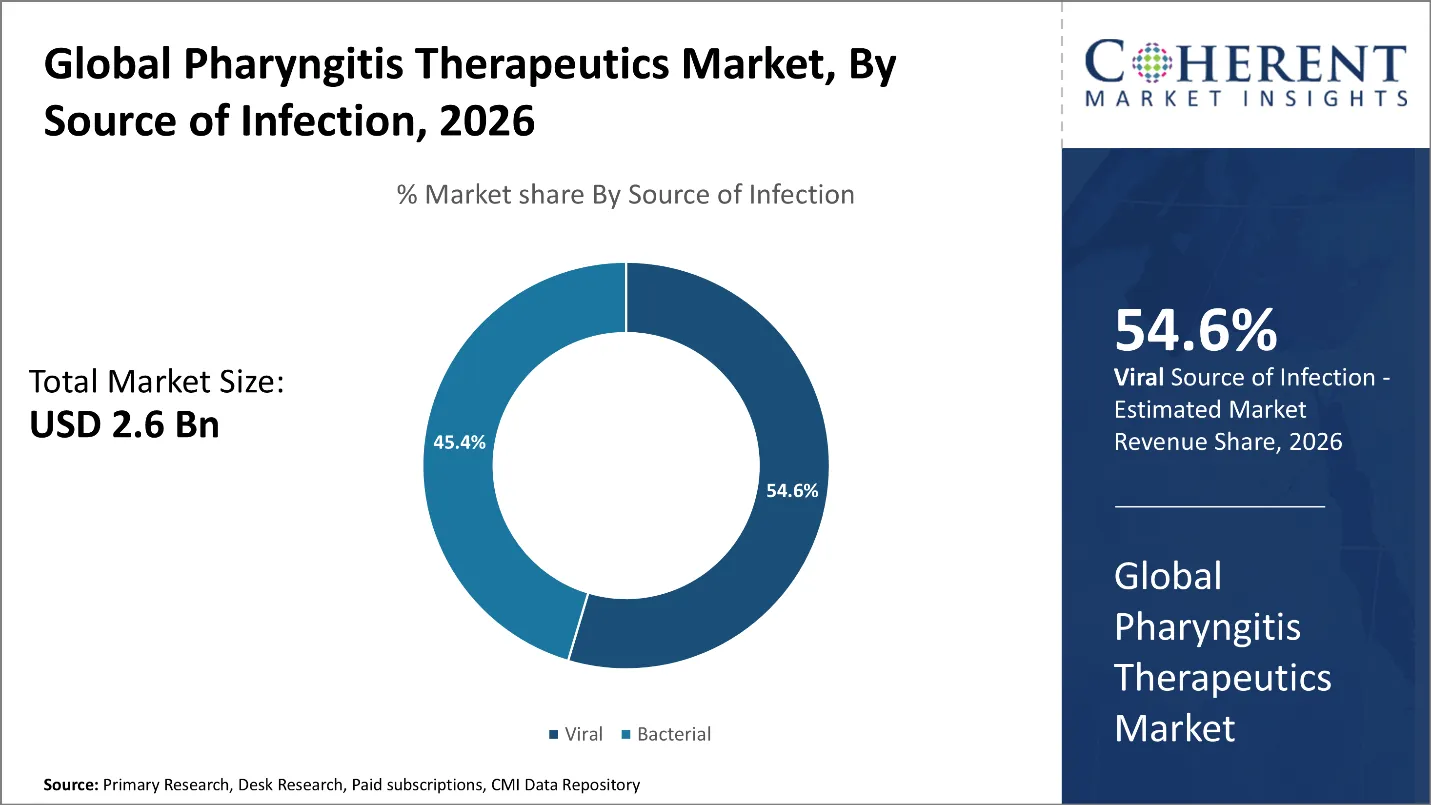
- Viral hold the largest market share of 54.6% in 2026 owing to the high prevalence of viral respiratory infections. Respiratory syncytial virus causes more than 3.6 million hospitalizations and approximately 100,000 deaths annually among children younger than 5 years.
- Antiviral Drugs expected to hold largest market share of 38.7% in 2026 owing to its growing emphasis on early antiviral treatment. According to our research, global antiviral drugs industry is estimated to surpass USD 100 Bn by 2033.
- Hospital Pharmacy acquired the largest market share of 42.2% in 2026 owing to the increasing treatment of severe and complicated cases.
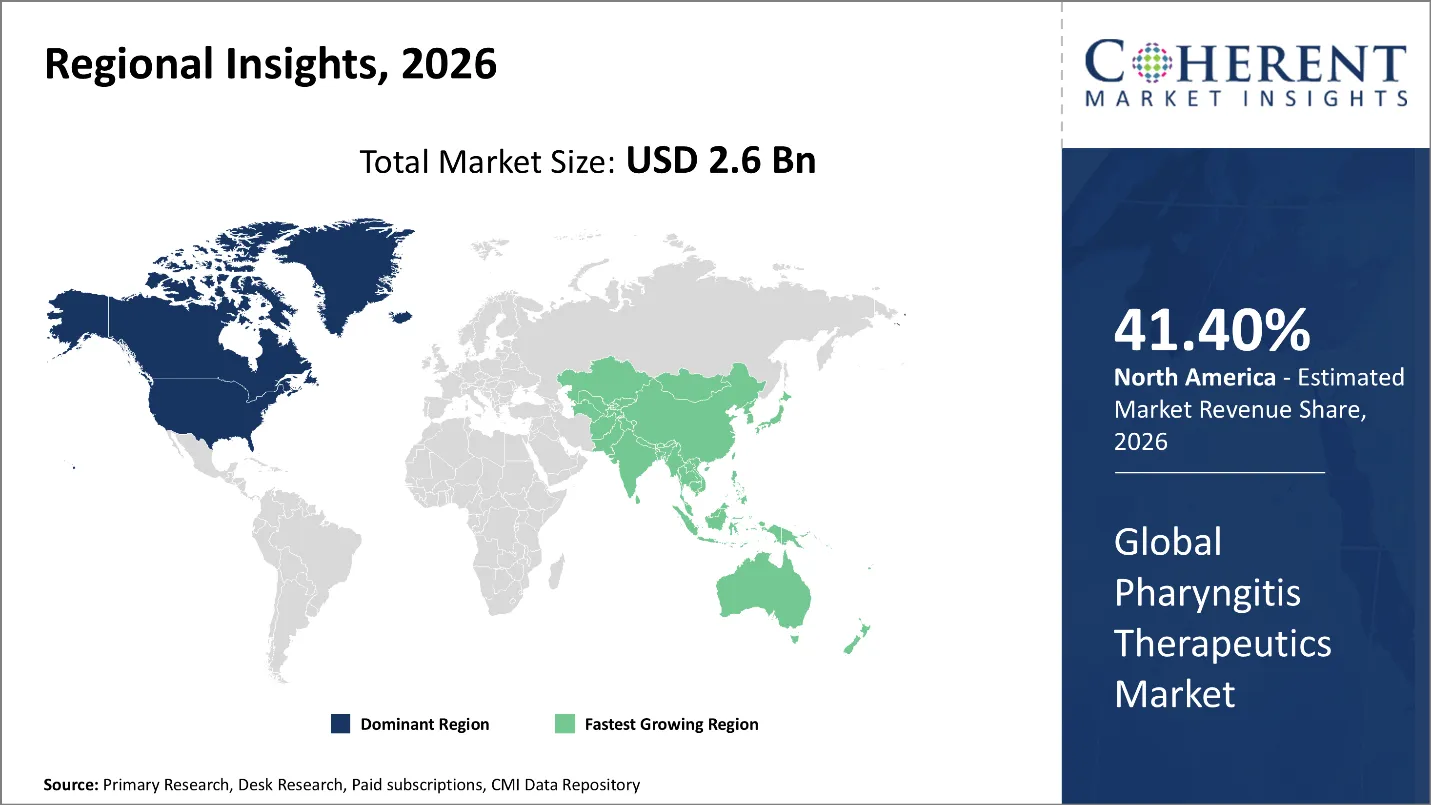
- North America is expected to acquire the dominant share of 41.4% in 2026 owing to its high prevalence of pharyngitis and sore-throat conditions. Pharyngitis (sore throat) affects approximately 50% of children and 20% of adults each year, with the greatest burden occurring among those aged 5–24 years.
Current Events and Their Impact on the Pharyngitis Therapeutics Market
Current Event | Description and its Impact |
CDC 2025 Updated Clinical Guidance for Group A Streptococcal Pharyngitis |
|
U.S. Antibiotic Stewardship Intensification – 2025/26 CDC Framework |
|
Segmental Insights
- Current Industry Events of 2026
- Market Size Estimation
- Regional Breakdown
- Competitive Landscape
- Customer Intelligence
- Segmental Analysis
- Pricing Analysis
- Key Market Drivers, Challenges & Future Trends
- Customized Insights Section
Why is Viral Acquiring the Largest Market Share?
Viral hold the largest market share of 54.6% in 2026. The viral segment of the Pharyngitis Therapeutics Market grows as respiratory viral infections become more prevalent and patients seek effective symptom relief. Seasonal influenza and other respiratory viruses generate recurring treatment demand, while improved diagnostic testing helps healthcare providers identify treatable viral infections. Stronger antibiotic stewardship encourages appropriate use of antiviral and supportive therapies. Growing healthcare awareness also promotes early treatment among high-risk patients. Furthermore, pharmaceutical companies continue to develop convenient oral antiviral formulations, improving treatment accessibility and supporting the expansion of the viral therapeutics segment. For instance, TG Therapeutics, Inc. announced that the U.S. Food and Drug Administration (FDA) approved BRIUMVI (ublituximab-xiiy) to treat relapsing forms of multiple sclerosis (RMS), including clinically isolated syndrome, relapsing-remitting disease, and active secondary progressive disease in adults.
Antiviral Drugs expected to hold largest market share
Antiviral Drugs expected to hold largest market share of 38.7% in 2026 owing to its antibiotic stewardship. The antiviral drugs segment in the Pharyngitis Therapeutics Market expands as influenza and other viral respiratory infections increasingly cause sore throat and related symptoms. Healthcare providers prioritize early antiviral treatment, especially for high-risk patients, which increases demand for these therapies. Improved diagnostic testing enables providers to identify viral infections and select appropriate treatments. Greater awareness of respiratory virus complications, recurring seasonal infections, and the availability of convenient oral antiviral medicines further encourage treatment adoption and support market expansion.
Which Distribution Channel segment dominates the market?
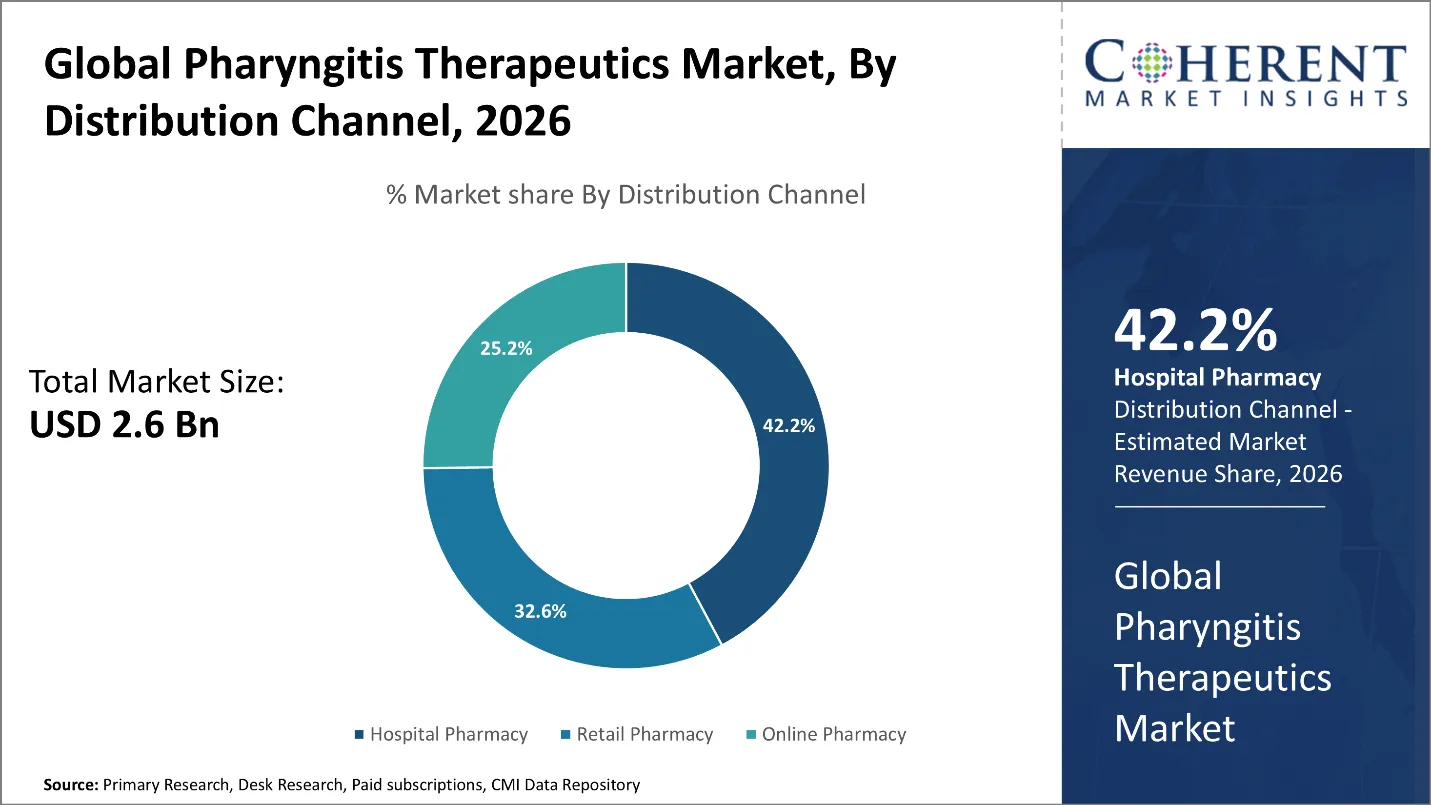
Hospital Pharmacy acquired the largest market share of 42.2% in 2026. The hospital pharmacy segment in the Pharyngitis Therapeutics Market grows as healthcare providers treat more severe and complicated cases that require immediate intervention. Patients with difficulty swallowing, dehydration, airway complications, and bacterial infections increase demand for prescription and supportive therapies. Healthcare providers use improved diagnostic testing to select appropriate treatments, while antimicrobial stewardship encourages targeted antibiotic use for confirmed bacterial infections. Rising pediatric cases, expanding hospital infrastructure, and broader access to emergency and specialized services further increase demand for pharyngitis therapeutics through hospital pharmacies.
Pharyngitis Therapeutics Market Trends
- Growing adoption of rapid diagnostic testing: Healthcare providers increasingly use rapid antigen detection tests (RADTs) and throat cultures to distinguish Group A Streptococcal (GAS) pharyngitis from viral illness. According to the CDC, GAS accounts for approximately 20–30% of pharyngitis episodes in children and 5–15% in adults, while viruses remain the most common cause of pharyngitis. CDC guidance recommends confirming a negative RADT with a throat culture in symptomatic children aged 3 years and older.
- Increasing preference for OTC symptomatic therapies: Most sore throats are viral rather than bacterial, creating continued demand for symptomatic management, including analgesics, antipyretics and topical throat preparations. The CDC reports that only around 1 in 10 adults and 3 in 10 children with a sore throat have strep throat, indicating that a substantial proportion of patients require supportive rather than antibiotic treatment.
- Rapid expansion of pharmacy-based sore-throat care: NHS Pharmacy First data demonstrate substantial real-world use of community pharmacies for acute sore throat. NHS Business Services Authority data record 2,374,909 claimed acute-sore-throat consultations from February 2024 through May 2026, with medicine supplied in 1,534,607 consultations (64.6%). Monthly claimed consultations reached 142,105 in March 2026.
- Continued pharmacy-based treatment volumes in 2026: NHSBSA data show that claimed acute-sore-throat consultations remained substantial in 2026, including 120,358 in January, 126,216 in February, 142,105 in March, and 116,257 in April 2026. Medicines were supplied in 59.7%, 60.1%, 61.3%, and 62.2% of these consultations, respectively.
Regional Insights
North America dominates owing to large pediatric patient population
North America is expected to acquire the dominant share of 41.40% in 2026. The North American Pharyngitis Therapeutics Market benefits from the region’s high burden of respiratory infections, strong healthcare infrastructure, and widespread access to diagnostic and treatment services. Healthcare providers increasingly use rapid tests to differentiate viral and bacterial pharyngitis, supporting appropriate therapy selection. Seasonal respiratory infections generate recurring demand for symptomatic treatments, while antibiotic stewardship encourages targeted antibiotic use. In addition, broad availability of OTC medications, established pharmacy networks, advanced medical facilities, and increasing patient awareness support continued market development across North America. Vernalis Therapeutics relaunched Moxatag (extended-release amoxicillin) to treat tonsillitis and/or pharyngitis caused by Streptococcus pyogenes in adults and patients aged 12 years and older.
Asia Pacific Pharyngitis Therapeutics Market Trends
The Asia Pacific pharyngitis therapeutics market grows as respiratory and infectious diseases remain widespread, especially in densely populated countries such as India and China. Governments and healthcare providers are increasing healthcare spending, expanding medical infrastructure, and improving access to treatment. The 2025 National Statistical Office (NSO) survey, covering over 1.39 lakh households, indicates a significant rise in healthcare-seeking among Indians. Greater awareness of infectious disease management and wider availability of antibiotics and symptomatic therapies also stimulate demand. Retail and online pharmacies are broadening product access, while government initiatives and pharmaceutical R&D investments continue to support market development and antimicrobial-resistance-conscious treatment approaches.
United States Pharyngitis Therapeutics Market Trends
The United States pharyngitis therapeutics market grows as healthcare providers address the widespread occurrence of sore throat and streptococcal infections, particularly among children and adolescents. Frequent outpatient visits and advances in rapid diagnostic testing support treatment demand. Healthcare professionals prescribe antibiotics such as penicillin and amoxicillin for confirmed group A streptococcal infections, while symptomatic medicines manage viral and non-bacterial cases. Seasonal infection trends, healthcare accessibility, greater awareness of early diagnosis, and ongoing efforts to manage antibiotic resistance further shape the market. Vernalis Therapeutics began promoting MOXATAG (extended-release amoxicillin) to U.S. primary care physicians as the first approved once-daily amoxicillin formulation.
Japan Pharyngitis Therapeutics Market Trends
Japan’s pharyngitis therapeutics market is driven by frequent respiratory infections, greater healthcare awareness, and growing demand for prompt diagnosis and symptom relief. Rising upper respiratory tract infections sustain demand for supportive treatments and appropriate antibacterial therapies. Japan’s aging population further increases healthcare needs, especially for patients requiring closer infection monitoring. Antimicrobial stewardship programs promote accurate diagnosis and targeted antibiotic use. At the same time, advances in rapid diagnostic testing and primary-care services help healthcare providers make faster and more appropriate treatment decisions for bacterial pharyngitis.
Who are the Major Companies in Pharyngitis Therapeutics Industry
Some of the major key players in Pharyngitis Therapeutics are Genentech Inc., Adamas Pharmaceutical Inc., PLIVA HRVATSKA d.o.o., Pfizer Inc., Valeant Pharmaceuticals International, Inc., Mylan N.V., GSK group of companies, Teva Pharmaceutical Industries Ltd., and AbbVie Inc.
Key News
- Vernalis Therapeutics has re-launched Moxatag (amoxicillin extended-release tablets) for treating Streptococcus pyogenes-associated tonsillitis and/or pharyngitis in adults and children aged 12 years and older.
Market Report Scope
Pharyngitis Therapeutics Market Report Coverage
Report Coverage | Details | ||
Base Year: | 2025 | Market Size in 2026: | USD 2.6 Bn |
Historical Data for: | 2020 to 2024 | Forecast Period: | 2026 to 2033 |
Forecast Period 2026 to 2033 CAGR: | 4.8% | 2033 Value Projection: | USD 3.8 Bn |
Geographies covered: |
| ||
Segments covered: |
| ||
Companies covered: | Genentech Inc., Adamas Pharmaceutical Inc., PLIVA HRVATSKA d.o.o., Pfizer Inc., Valeant Pharmaceuticals International, Inc., Mylan N.V., GSK group of companies, Teva Pharmaceutical Industries Ltd., and AbbVie Inc. | ||
Analyst Opinion
- Pharyngitis therapeutics is a treatment-need market, not a trend-driven market. The strongest demand signal is the sheer clinical burden: the CDC estimates that strep throat alone accounts for about 5.2 million outpatient visits annually in the U.S. among people younger than 65, generating approximately 2.8 million antibiotic prescriptions. Globally, the burden is substantially larger, with WHO estimates cited by the CDC indicating more than 600 million children develop Group A Streptococcus (GAS) pharyngitis each year. In our view, these figures make pharyngitis therapeutics fundamentally volume-supported by recurring clinical need rather than dependent on discretionary treatment adoption.
- Antimicrobial stewardship will reshape the competitive dynamics of pharyngitis therapeutics, but it will not eliminate antibiotic demand. GAS remains clinically important, and the CDC states that penicillin and amoxicillin remain effective first-line antibiotics because GAS has not developed resistance to them. At the same time, resistance to erythromycin and clindamycin is a growing concern in invasive GAS, with the CDC reporting that around one in three invasive GAS infections are resistant to these agents. In our assessment, this creates a clear split in the market: mature, low-cost antibiotics will continue to dominate confirmed bacterial disease, while differentiation will increasingly come from better-targeted therapies, pediatric formulations, improved tolerability, and treatment approaches that reduce unnecessary antibiotic exposure.
- Diagnostic integration is becoming one of the most important competitive levers for pharyngitis treatment. A clinical study of 10,081 outpatient records found that point-of-care PCR reduced antibiotic prescribing among patients with a negative test by 44.1%, from 18.0% with RADT to 10.1% with PCR, while prescribing among test-positive patients remained virtually unchanged at 76.2% versus 76.5%. That is commercially significant: the value proposition is not merely faster diagnosis, but the ability to preserve antibiotic treatment for patients who actually need it. We expect therapeutics companies that understand this diagnostic-treatment interface to be better positioned than those relying exclusively on traditional empiric-treatment models.
- The evidence increasingly favors rapid, targeted intervention over blanket empirical therapy. In a randomized trial involving 543 evaluable adults with acute pharyngitis, antibiotic prescribing was 64.1% without rapid testing versus 43.8% when rapid antigen testing was available. Inappropriate prescribing was also markedly lower with testing, at 26.9% versus 60%. These results reinforce our view that the future of pharyngitis therapeutics will be defined less by simply increasing prescription volumes and more by identifying the right patient, pathogen, and treatment at the point of care.
- Pharyngitis remains an under-optimized therapeutic category rather than a saturated one. The recurring patient burden is unquestionable, but the bigger opportunity lies in the mismatch between disease confirmation and treatment decisions. With millions of annual U.S. outpatient visits, hundreds of millions of pediatric GAS cases globally, persistent antibiotic overuse, and measurable reductions in inappropriate prescribing from molecular diagnostics, we believe the market's most credible innovation pathway is precision treatment — combining effective symptomatic relief, pathogen-directed antibiotics, pediatric-friendly formulations, and rapid diagnostic integration rather than relying on another wave of undifferentiated antibiotic prescribing.
Speak to the analyst
Want personalized insights?
Take the findings above to one of our principal consultants, or have the report rebuilt around the segments, geographies and competitors you actually track.
Market Segmentation
- By Source of Infection (Revenue, USD Bn, 2021-2033)
- Viral
- Bacterial
- By Drug Class (Revenue, USD Bn, 2021-2033)
- Antiviral Drugs
- Antibacterial Drugs
- Anti-inflammatory Drugs
- Topical Anesthetics Drugs
- By Distribution Channel (Revenue, USD Bn, 2021-2033)
- Hospital Pharmacy
- Retail Pharmacy
- Online Pharmacy
- By Region (Revenue, USD Bn, 2021-2033)
- North America
- U.S.
- Canada
- Latin America
- Brazil
- Mexico
- Argentina
- Rest of Latin America
- Europe
- Germany
- U.K.
- France
- Italy
- Spain
- Russia
- Rest of Europe
- Asia Pacific
- China
- India
- Japan
- Australia
- South Korea
- ASEAN
- Rest of Asia Pacific
- Middle East
- GCC
- Israel
- Rest of Middle East
- Africa
- South Africa
- Central Africa
- North Africa
- North America
Sources
Primary Research interviews
- Infectious disease specialists
- Otolaryngologists (ENT specialists)
- Pediatricians and primary-care physicians
- Hospital pharmacists and community pharmacists
- Clinical microbiologists
- Healthcare professionals involved in the diagnosis and treatment of acute and streptococcal pharyngitis
- Pharmaceutical company professionals involved in anti-infective and symptomatic-treatment portfolios
- Key distributors and healthcare providers involved in pharyngitis therapeutics
Databases
- PubMed / MEDLINE
- PubMed Central (PMC)
- ClinicalTrials.gov
- World Health Organization (WHO) Global Health Observatory
- WHO IRIS
- U.S. Centers for Disease Control and Prevention (CDC) databases and surveillance resources
- U.S. Food and Drug Administration (FDA) databases
- European Medicines Agency (EMA) databases
- National Library of Medicine (NLM) resources
- Cochrane Library
- Embase
- Scopus
- Web of Science
- Google Scholar
- National and regional health statistics databases
Magazines
- Medical and pharmaceutical trade publications
- Infectious-disease and healthcare professional magazines
- Pharmacy and hospital-management publications
- General healthcare industry publications
- Regulatory and pharmaceutical news publications
Journals
- Clinical Infectious Diseases
- The Lancet
- Journal of Antimicrobial Chemotherapy
- Journal of Clinical Microbiology
- Clinical Microbiology Reviews
- Pediatrics
- JAMA
- New England Journal of Medicine
- BMJ
- Cochrane Database of Systematic Reviews
- European Journal of Clinical Microbiology & Infectious Diseases
- International Journal of Infectious Diseases
- The Journal of Infectious Diseases
- Otolaryngology–Head and Neck Surgery
Newspapers
- The New York Times
- The Guardian
- Reuters
- The Washington Post
- The Wall Street Journal
- Financial Times
- Major national and regional newspapers covering healthcare, pharmaceuticals, infectious diseases, and public-health developments
Associations
- Infectious Diseases Society of America (IDSA)
- American Academy of Pediatrics (AAP)
- American Academy of Family Physicians (AAFP)
- American Academy of Otolaryngology–Head and Neck Surgery (AAO-HNS)
- American Society of Health-System Pharmacists (ASHP)
- European Society of Clinical Microbiology and Infectious Diseases (ESCMID)
- World Health Organization (WHO)
- Centers for Disease Control and Prevention (CDC)
- National Institutes of Health (NIH)
- National Association of Community Health Centers (NACHC)
Public Domain sources
- WHO guidelines, reports, and epidemiological publications
- CDC clinical guidance and surveillance information
- U.S. FDA drug labels, approvals, safety communications, and regulatory documents
- NIH and National Library of Medicine resources
- ClinicalTrials.gov trial registrations and study information
- U.S. National Center for Health Statistics (NCHS)
- U.S. Census Bureau demographic and population data
- World Bank health and population indicators
- OECD health statistics
- Eurostat healthcare and demographic statistics
- National health ministry and public-health agency publications
- National antimicrobial-resistance surveillance reports
- Government healthcare expenditure and utilization statistics
- Publicly available treatment guidelines and clinical protocols
Proprietary Elements
- CMI Data Analytics Tool
- Proprietary CMI Existing Repository of Information for the Last 10 Years
Get access to 250+ pages report
Every segment, forecast, competitor profile and data table behind the analysis above — available for instant download.
- ESOMAR Member
- ISO 9001:2015 Certified
- D-U-N-S Registered
- GDPR & CCPA Compliant
Missing comfort of reading report in your local language? Find your preferred language:
Transform your Strategy with Exclusive Trending Reports
Frequently Asked Questions
The Pharyngitis Therapeutics Market is anticipated to grow at a CAGR of 4.8% with USD 2.6 Bn in 2026 and is expected to reach USD 3.8 Bn in 2033.
Demand is primarily supported by the recurring clinical burden of viral and bacterial throat infections, particularly Group A Streptococcus (GAS). In the U.S., strep throat accounts for approximately 5.2 million outpatient visits annually among people younger than 65, with about 2.8 million antibiotic prescriptions.
The viral segment is expected to dominate, accounting for 54.6% of the market in 2026.
Antiviral drugs are projected to account for 38.7% of the market in 2026. Their position is supported by influenza, where antiviral therapy can be clinically important for appropriate high-risk patients. Improved diagnostic capabilities are also making pathogen-directed treatment more practical.
Antimicrobial stewardship is changing what gets prescribed rather than eliminating pharmaceutical treatment demand.
Rapid testing directly addresses the industry's central treatment problem: distinguishing patients who are likely to benefit from antibiotics from those who are not.