

Tiamulin Market Size and Forecast – 2026 to 2033
The Tiamulin Market is anticipated to grow at a CAGR of 5.7% with USD 253.7 Mn in 2026 and is expected to reach USD 382.8 Mn in 2033. The Tiamulin market grows as swine and poultry production expand, livestock infections increase, and farmers seek effective veterinary antibiotics. Poultry production is growing at an annual rate of approximately 8%, generating an estimated annual turnover of US$7.5 billion.
Key Takeaways
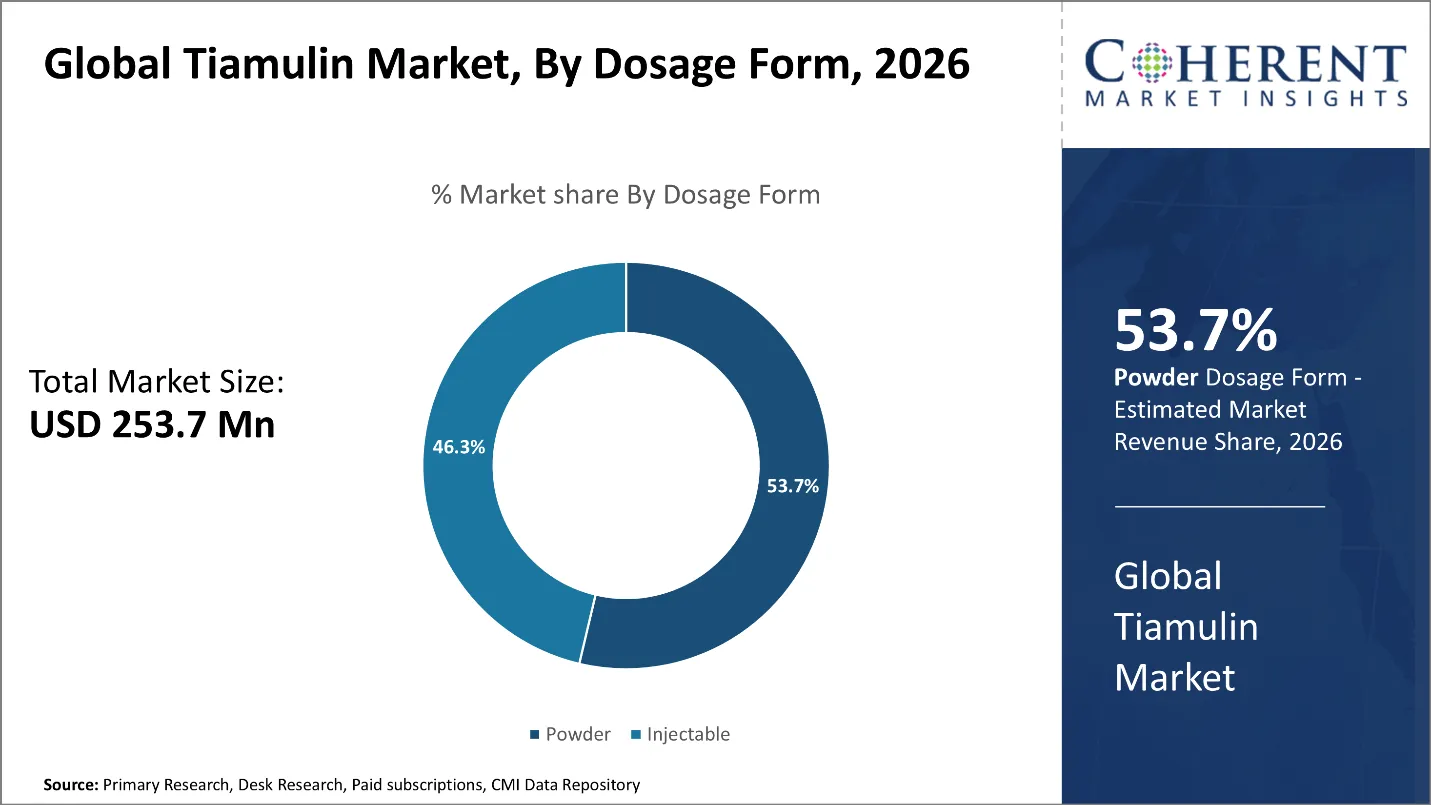
- Powder holds the largest market share of 53.7% in 2026 owing to the rising demand for pork and poultry. Global pork consumption is approximately 131.04 Mn metric tons and is projected to reach 131.5 Mn metric tons by 2031, representing an increase of about 0.35%.
- Poultry expected to hold largest market share of 43.7% in 2026 owing to its rising poultry meat and egg production. India produced 149.11 billion eggs in 2024–25, ranking second globally in total egg production.
- Veterinary Hospital acquired the prominent market share of 42.8% in 2026 owing to its growing livestock disease burden.
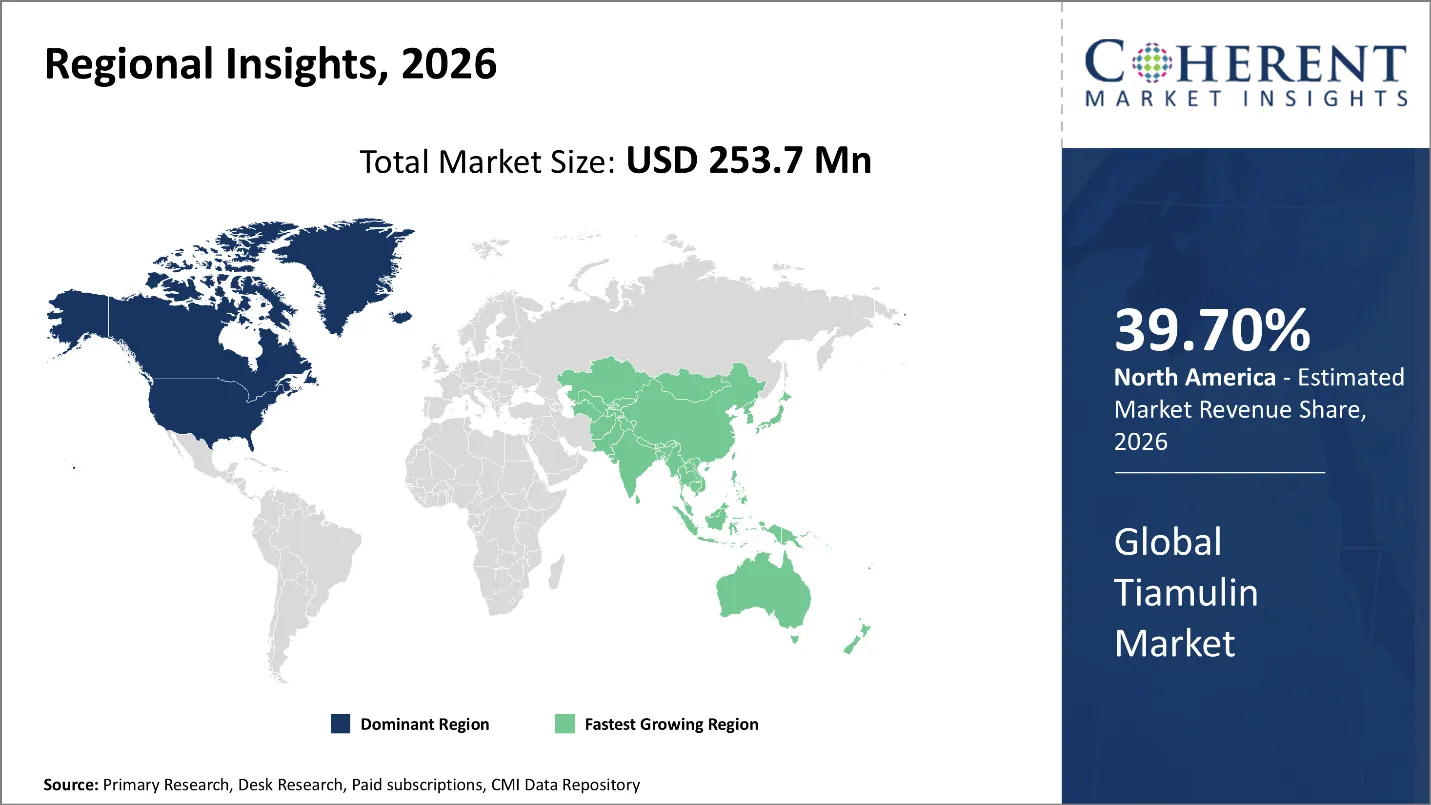
- North America is expected to acquire the dominant share of 39.7% in 2026 owing to the large commercial swine industry. North Carolina was the leading pork-producing state, accounting for 11.1% of the U.S. hog and pig inventory and 13.4% of the nation’s hogs.
Current Events and Their Impact on the Tiamulin Market
Current Event | Description and its Impact |
EMA's 2025 antimicrobial categorisation update |
|
EU antimicrobial-use requirements for imported food-producing animals and products — effective September 2026 |
|
Segmental Insights
- Current Industry Events of 2026
- Market Size Estimation
- Regional Breakdown
- Competitive Landscape
- Customer Intelligence
- Segmental Analysis
- Pricing Analysis
- Key Market Drivers, Challenges & Future Trends
- Customized Insights Section
Why is Powder Acquiring the Largest Market Share?
Powder holds the largest market share of 53.7% in 2026. The powder segment in the Tiamulin Market benefits from its easy incorporation into animal feed and convenient administration to large livestock populations. Commercial swine and poultry producers increasingly use tiamulin powder to manage bacterial and respiratory infections and maintain herd and flock health. Veterinary professionals promote its use through growing awareness and improved animal-health infrastructure. Intensive farming practices also increase demand for effective disease-management solutions. In addition, powder formulations simplify handling, storage, distribution, and administration for commercial producers and veterinary suppliers.
Poultry expected to hold largest market share
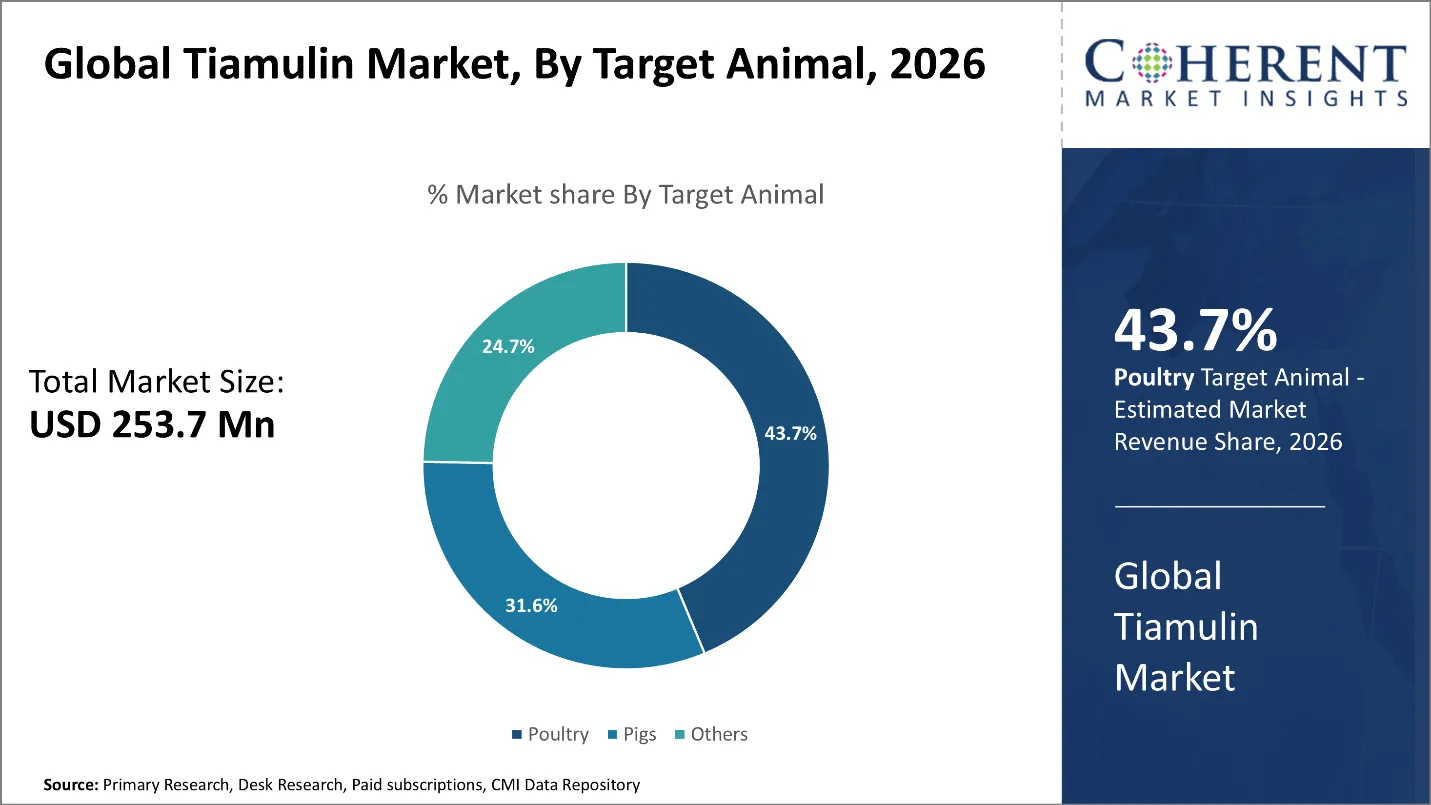
Poultry expected to hold largest market share of 43.7% in 2026 owing to its expansion of intensive poultry farming. Rising poultry meat and egg production drives the Poultry segment in the Tiamulin Market by increasing demand for effective disease-management solutions. Poultry producers use tiamulin to treat susceptible bacterial and respiratory infections, particularly those caused by Mycoplasma species. Intensive poultry farming further increases the need for effective flock-health management. Growing veterinary awareness, improved diagnostic capabilities, and stronger investments in poultry productivity and healthcare infrastructure also encourage producers to adopt tiamulin for targeted disease treatment and control. Dechra Veterinary Products launched Tialin (tiamulin hydrogen fumarate), an antibiotic for treating bacterial infections in pigs and poultry. It targets dysentery, colitis, ileitis, pneumonia, and pleuropneumonia in pigs, as well as respiratory disease, infectious synovitis, sinusitis, and airsacculitis in poultry.
Which Distribution Channel segment dominates the market?
Veterinary Hospital acquired the prominent market share of 42.8% in 2026. The Veterinary Hospital segment in the Tiamulin Market grows as animal owners increasingly seek professional healthcare and effective disease management. Veterinary hospitals identify bacterial and respiratory infections in livestock and prescribe tiamulin to treat susceptible infections when appropriate. Growing livestock populations, expanding commercial farming, advanced diagnostic facilities, and greater awareness of animal health further drive demand. Veterinary professionals also promote antimicrobial stewardship by using tiamulin selectively under proper supervision. Expanding veterinary infrastructure and specialized animal-health services continue to support tiamulin adoption. Lakefield Veterinary Group launched the Care Beyond Limits Fund to help pet owners overcome financial barriers and access essential veterinary care when they cannot afford treatment.
Tiamulin Market Trends
- Increasing adoption of tiamulin in commercial swine and poultry production supports its continued relevance in veterinary antimicrobial treatment. EMA identifies tiamulin as a veterinary antibiotic used in pigs, chickens, turkeys, and rabbits, with approved uses including swine dysentery, enzootic pneumonia, chronic respiratory disease, and other susceptible bacterial infections.
- Antimicrobial-resistance concerns are reshaping veterinary antibiotic use. WOAH reported that global antimicrobial use in animals increased by 2% between 2019 and 2021, following several years of decline, highlighting the continuing need for improved antimicrobial-use surveillance and stewardship. This broader regulatory and stewardship environment supports more controlled and evidence-based use of tiamulin.
- Global livestock production provides a substantial underlying demand base for veterinary medicines. FAO reported that global meat production reached 374 million tonnes in 2024, an increase of approximately 7 million tonnes from 2023. Chicken, pig, and cattle meat were the three most-produced meat categories globally.
- Resistance management is particularly relevant to tiamulin because reduced susceptibility has been documented in important livestock pathogens. During its 2020 review, EMA reported concerns about increasing resistance of Brachyspira hyodysenteriae to tiamulin and concluded that unnecessary or prolonged low-dose use could increase resistance risk. This supports a market trend toward diagnosis-led and appropriately dosed tiamulin treatment rather than routine administration.
Regional Insights
North America dominates owing to established animal-health pharmaceutical industry
North America is expected to acquire the dominant share of 39.70% in 2026. North America’s Tiamulin Market grows as its established swine and poultry industries increase demand for veterinary disease-management products. Livestock producers rely on advanced veterinary services and diagnostic capabilities to identify susceptible bacterial and respiratory infections and select appropriate treatments. Bovine respiratory disease (BRD) accounts for approximately 34.8%–46.5% of deaths among weaned calves, making it one of the most prevalent and economically significant infectious diseases affecting cattle. Rising animal-health awareness, investments in livestock productivity, and expanding veterinary services further drive demand. Veterinarians also promote responsible antimicrobial use through targeted treatment and professional oversight. Meanwhile, established pharmaceutical distribution networks improve access to tiamulin products across commercial livestock operations.
Asia Pacific Tiamulin Market Trends
Asia Pacific’s tiamulin market grows as producers expand swine and poultry farming to meet rising demand for animal protein. Livestock producers increasingly use tiamulin to control bacterial respiratory and intestinal diseases in intensive farming systems. China’s large-scale pig industry and expanding poultry sectors in India and Southeast Asia drive veterinary antibiotic demand. According to China’s National Bureau of Statistics, pork production reached 16.7 million tonnes in the first quarter of 2026, representing a 4.2% year-on-year increase. Livestock commercialization, stronger veterinary healthcare infrastructure, enhanced disease surveillance, and broader adoption of medicated feed and water-soluble formulations further support tiamulin consumption across the region.
United States Tiamulin Market Trends
Strong demand for effective veterinary antibiotics in swine and poultry production drives the United States tiamulin market. Farmers and veterinarians use tiamulin to control respiratory diseases, mycoplasmal infections, and swine dysentery. Large-scale livestock operations and the need for consistent disease management further increase demand. Veterinary oversight and antimicrobial stewardship programs encourage producers to adopt targeted treatments. Changes in animal health conditions, livestock populations, and farming practices also influence tiamulin consumption across the United States.
Japan Tiamulin Market Trends
Japan’s tiamulin market continues to grow as swine and poultry producers seek effective veterinary antibiotics. Intensive livestock farming increases the need to prevent and manage respiratory and enteric infections, encouraging tiamulin use. Producers also strengthen disease prevention, biosecurity, and productivity practices, which supports demand. Veterinary professionals and established pharmaceutical distribution networks improve access to tiamulin-based treatments. Furthermore, Japan maintains strict food safety and livestock health standards, encouraging responsible antimicrobial use and sustaining demand for approved veterinary products.
Who are the Major Companies in Tiamulin Industry
Some of the major key players in Tiamulin are Elanco Inc., Hester Biosciences Limited, Huvepharma AD, Jiangsu SEL Biochem, Shandong Shengli Co Ltd.
Market Report Scope
Tiamulin Market Report Coverage
Report Coverage | Details | ||
Base Year: | 2025 | Market Size in 2026: | USD 253.7 Mn |
Historical Data for: | 2020 to 2024 | Forecast Period: | 2026 to 2033 |
Forecast Period 2026 to 2033 CAGR: | 5.7% | 2033 Value Projection: | USD 382.8 Mn |
Geographies covered: |
| ||
Segments covered: |
| ||
Companies covered: | Elanco Inc., Hester Biosciences Limited, Huvepharma AD, Jiangsu SEL Biochem, Shandong Shengli Co Ltd. | ||
Analyst Opinion
- Tiamulin demand is fundamentally tied to swine respiratory and enteric disease management rather than discretionary veterinary spending. Its established activity against Mycoplasma hyopneumoniae and other porcine pathogens gives producers a targeted treatment option when disease outbreaks threaten herd performance. In a European susceptibility study, tiamulin recorded an MIC50/MIC90 of 0.016/0.062 mg/L against M. hyopneumoniae, demonstrating continued in-vitro activity against contemporary field isolates.
- The strongest commercial argument for tiamulin is its role in managing complex respiratory disease, where producers cannot afford prolonged reductions in animal performance. In a field study involving 102 tiamulin-treated pigs, treatment was associated with significant reductions in fever and clinical respiratory signs by days 2 and 10. Tiamulin also formed part of combination therapy in trials of complicated enzootic pneumonia, where tiamulin plus chlortetracycline produced a 156 g increase in average daily weight gain versus untreated controls.
- However, we view antimicrobial stewardship as an increasingly important filter on tiamulin demand. Japan’s Ministry of Agriculture, Forestry and Fisheries explicitly promotes responsible and prudent veterinary antimicrobial use to maximize therapeutic benefit while minimizing selection for antimicrobial-resistant bacteria. This means future tiamulin utilization will increasingly depend on veterinary diagnosis, appropriate indication, and controlled administration rather than routine preventive use. Japan also maintains annual surveillance of veterinary antimicrobial sales and resistance, reinforcing this shift toward evidence-based prescribing.
Speak to the analyst
Want personalized insights?
Take the findings above to one of our principal consultants, or have the report rebuilt around the segments, geographies and competitors you actually track.
Tiamulin Market Segmentation
- By Dosage From (Revenue, USD Mn, 2021-2033)
- Powder
- Injectable
- By Target Animal (Revenue, USD Mn, 2021-2033)
- Pigs
- Poultry
- Others
- By Distribution Channel (Revenue, USD Mn, 2021-2033)
- Veterinary Hospital
- Retail Pharmacies
- Online Pharmacies
- By Region (Revenue, USD Mn, 2021-2033)
- North America
- U.S.
- Canada
- Latin America
- Brazil
- Mexico
- Argentina
- Rest of Latin America
- Europe
- Germany
- U.K.
- France
- Italy
- Spain
- Russia
- Rest of Europe
- Asia Pacific
- China
- India
- Japan
- Australia
- South Korea
- ASEAN
- Rest of Asia Pacific
- Middle East
- GCC
- Israel
- Rest of Middle East
- Africa
- South Africa
- Central Africa
- North Africa
- North America
Sources
Primary Research interviews
- Veterinary practitioners specializing in swine and poultry medicine
- Animal-health pharmaceutical manufacturers and product managers
- Livestock producers and commercial swine/poultry farm operators
- Veterinary distributors, wholesalers, and pharmacy representatives
- Animal-health regulatory and technical experts
- Feed manufacturers and animal-nutrition specialists
Databases
- Food and Agriculture Organization (FAOSTAT) livestock and poultry production databases
- World Organization for Animal Health (WOAH) ANIMUSE database
- U.S. Department of Agriculture (USDA) livestock, poultry, and agricultural statistics
- European Commission Eurostat agricultural and livestock databases
- Japan Ministry of Agriculture, Forestry and Fisheries (MAFF) livestock and veterinary medicine statistics
- U.S. Food and Drug Administration (FDA) animal drug databases
- European Medicines Agency (EMA) veterinary medicines database
- PubMed biomedical and veterinary literature database
Magazines
- Poultry World
- Pig Progress
- Feed Strategy
- Feedstuffs
- WATT PoultryUSA
- International Poultry Production
- Pig International
Journals
- Journal of Veterinary Pharmacology and Therapeutics
- Poultry Science
- Veterinary Microbiology
- Antimicrobial Agents and Chemotherapy
- Research in Veterinary Science
- Journal of Veterinary Medical Science
- Veterinary Record
- Frontiers in Veterinary Science
Newspapers
- Reuters
- The Japan Times
- Nikkei Asia
- The Guardian
- The New York Times
- Financial Times
Associations
- World Organisation for Animal Health (WOAH)
- World Veterinary Association (WVA)
- American Veterinary Medical Association (AVMA)
- National Pork Producers Council (NPPC)
- National Chicken Council (NCC)
- European Poultry Producers and Traders Association
- European Pig Producers
- Japan Veterinary Medical Association
Public Domain sources
- U.S. Food and Drug Administration (FDA) – Center for Veterinary Medicine
- U.S. Department of Agriculture (USDA)
- European Medicines Agency (EMA)
- European Commission
- World Organisation for Animal Health (WOAH)
- Food and Agriculture Organization of the United Nations (FAO)
- World Health Organization (WHO)
- Japan Ministry of Agriculture, Forestry and Fisheries (MAFF)
- Japan Veterinary Medical Association
- National veterinary medicine and antimicrobial-resistance surveillance programs
- National statistical agencies and agricultural ministries
- PubMed and publicly accessible peer-reviewed scientific publications
Proprietary Elements
- CMI Data Analytics Tool
- Proprietary CMI Existing Repository of information for last 10 years
Get access to 250+ pages report
Every segment, forecast, competitor profile and data table behind the analysis above — available for instant download.
- ESOMAR Member
- ISO 9001:2015 Certified
- D-U-N-S Registered
- GDPR & CCPA Compliant
Missing comfort of reading report in your local language? Find your preferred language:
Transform your Strategy with Exclusive Trending Reports
Frequently Asked Questions
The Tiamulin Market is anticipated to grow at a CAGR of 5.7% with USD 253.7 Mn in 2026 and is expected to reach USD 382.8 Mn in 2033.
The market is primarily driven by demand for veterinary antibiotics in swine and poultry production, particularly for managing susceptible respiratory and enteric bacterial infections.
Powder is the leading dosage form, supported by its convenient administration and suitability for commercial livestock operations.
Powder formulations offer advantages in handling, storage, transportation, and administration across commercial farms.
Poultry is projected to represent the largest target-animal segment.
Poultry producers increasingly emphasize flock health and disease prevention as production becomes more intensive.