

Mental Disorder Treatment Market Size and Share Analysis - 2026 To 2033
The Mental Disorder Treatment Market is anticipated to grow at a CAGR of approximately 6.6%, with a market size of USD 75.1 Bn in 2026 and is expected to reach USD 116.7 Bn in 2033. Market growth is attributed to an increase in the worldwide prevalence of mental disorders, greater awareness and diagnoses, improved availability of psychiatric services, and the use of digital mental health products, facilitated by innovations in telepsychiatry, drugs, and behavioral health care systems.
Key Takeaways from the Mental Disorder Treatment Market Report
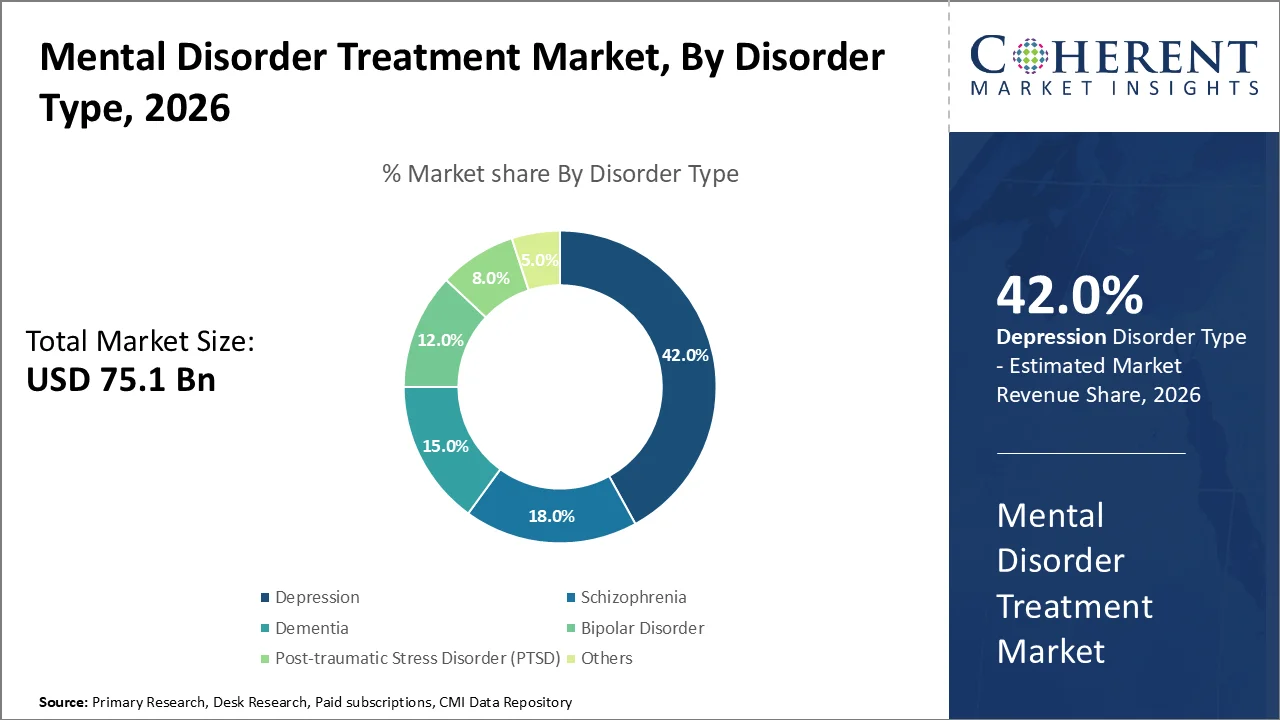
- By disorder type, depression segment is expected to lead the market with a share of 42% in 2026, driven by its high global prevalence and rising diagnosis rates. As per the World Health Organization (WHO), depression affects more than 280 million people globally, making it one of the leading causes of disability worldwide. This highlights the increasing demand for antidepressant therapies and psychological interventions.
- On the basis of drug type, antidepressant drugs market is anticipated to have the largest share with almost 46% market share in 2026, owing to its prescription across depression, anxiety, and PTSD. Antidepressants are among the most widely prescribed psychotropic medications globally
- By distribution channel, hospital pharmacies segment is projected to hold major share of around 47% by 2026 owing to the dependency on controlled prescription drugs for mental disorders. According to World Health Organization, access to key mental disorder drugs is a crucial element for integrated care services.
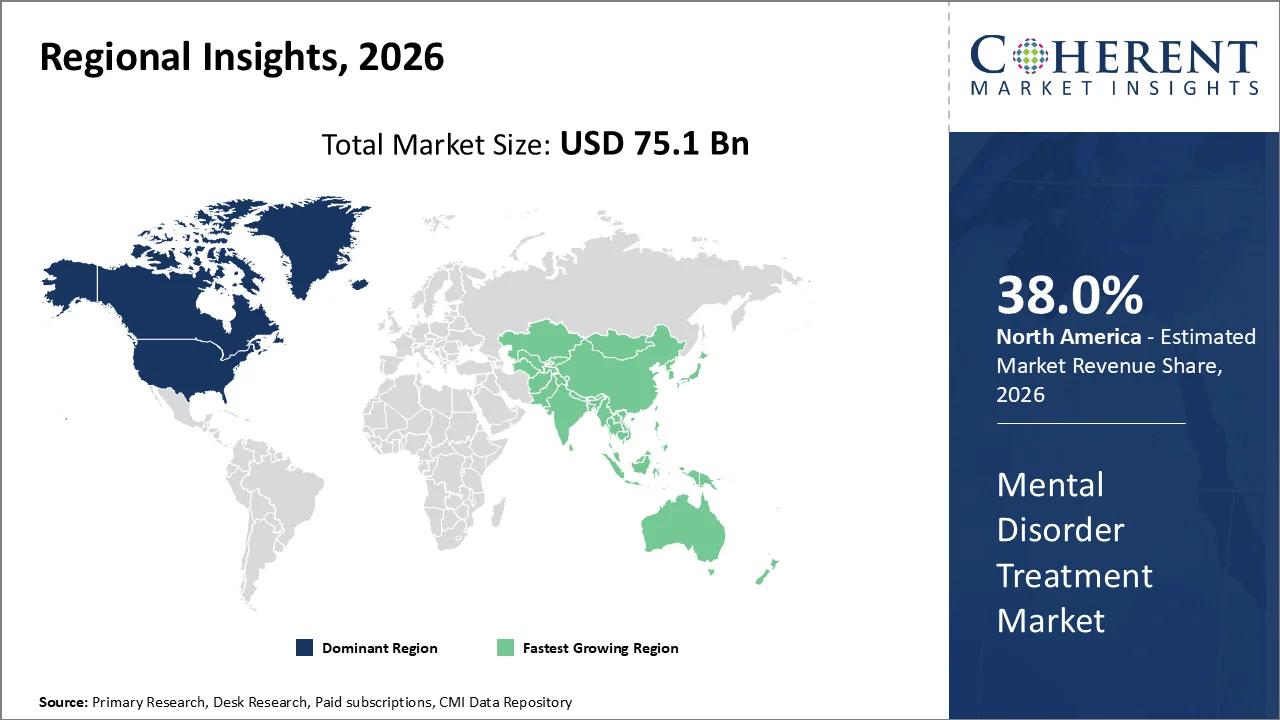
- By 2026, the North America region will lead the Mental Disorders Treatment Market with a market share of 38%, owing to the presence of more patients having mental health conditions, advanced healthcare infrastructure, and rapid uptake of newer treatment options for psychiatric disorders. According to the WHO and NIMH (USA), 1 adult in 5 Americans suffers from some mental disorder each year.
Depression Prevalence by Country
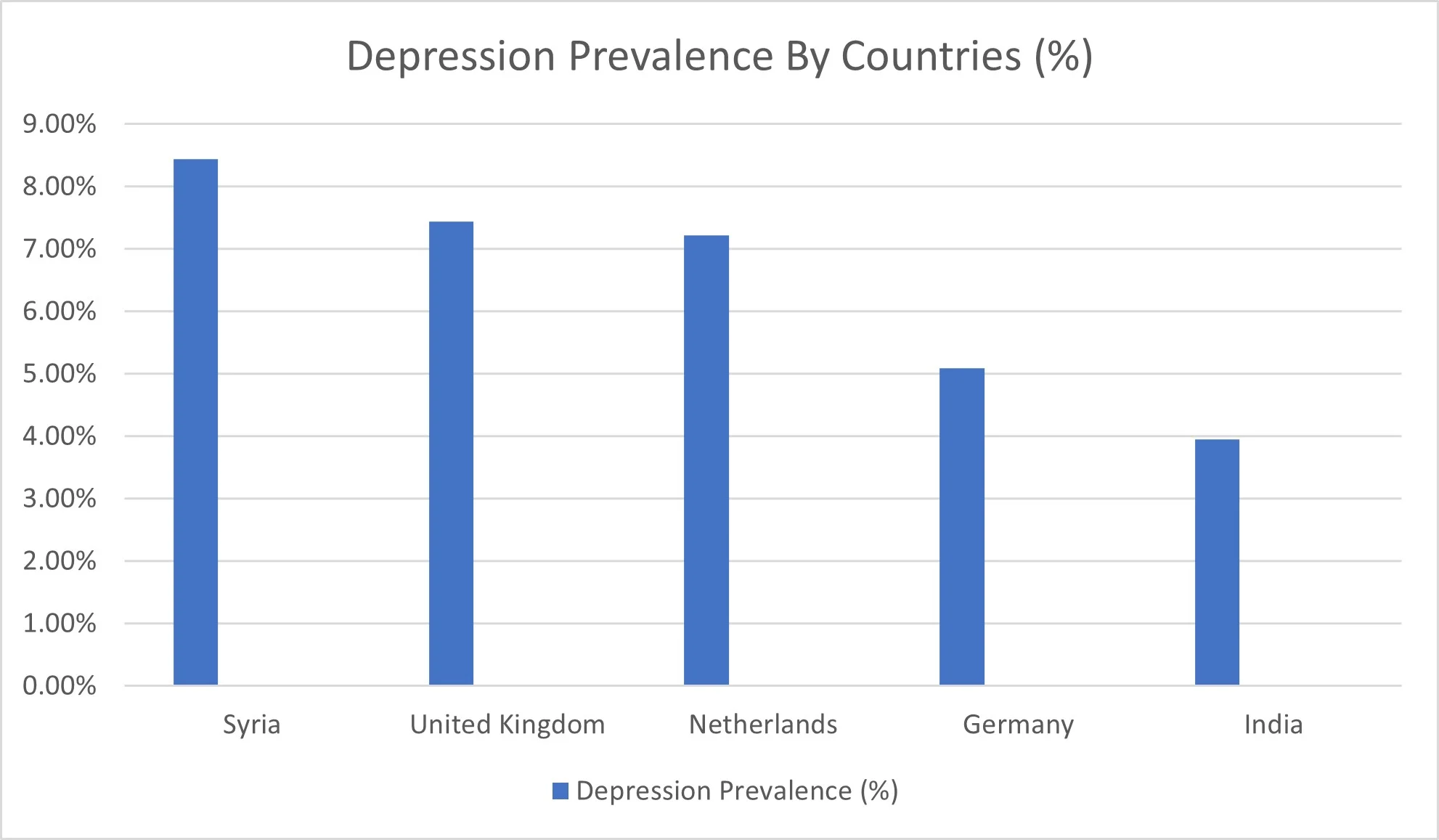
Country | Prevalence (%) | Estimated Cases |
Syria | 8.44% | 1.5 million |
United Kingdom | 7.44% | 4.9 million |
Netherlands | 7.22% | 1.2 million |
Germany | 5.09% | 4.1 million |
India | 3.95% | 55.8 million |
Segmental Insights
- Current Industry Events of 2026
- Market Size Estimation
- Regional Breakdown
- Competitive Landscape
- Customer Intelligence
- Segmental Analysis
- Pricing Analysis
- Key Market Drivers, Challenges & Future Trends
- Customized Insights Section
Which Segment Leads the Mental Disorder Treatment Market?
Depression segment is projected to dominate the market, accounting for 42% of the market share in 2026. This will be attributed to the increasing prevalence rate of depressive disorders globally and rising rates of diagnosis in developed and developing countries. Depression is among the major reasons for disability worldwide.
As per the World Health Organization, there are over 280 million cases of depression worldwide, which is one of the most prevalent mental illnesses and a significant source of treatment demands.
The growing availability of antidepressants, improved access to mental healthcare services, and expansion of telepsychiatry platforms are further supporting the dominance of this segment during the forecast period.
Which Medication Segment Leads the Mental Disorder Treatment Market?
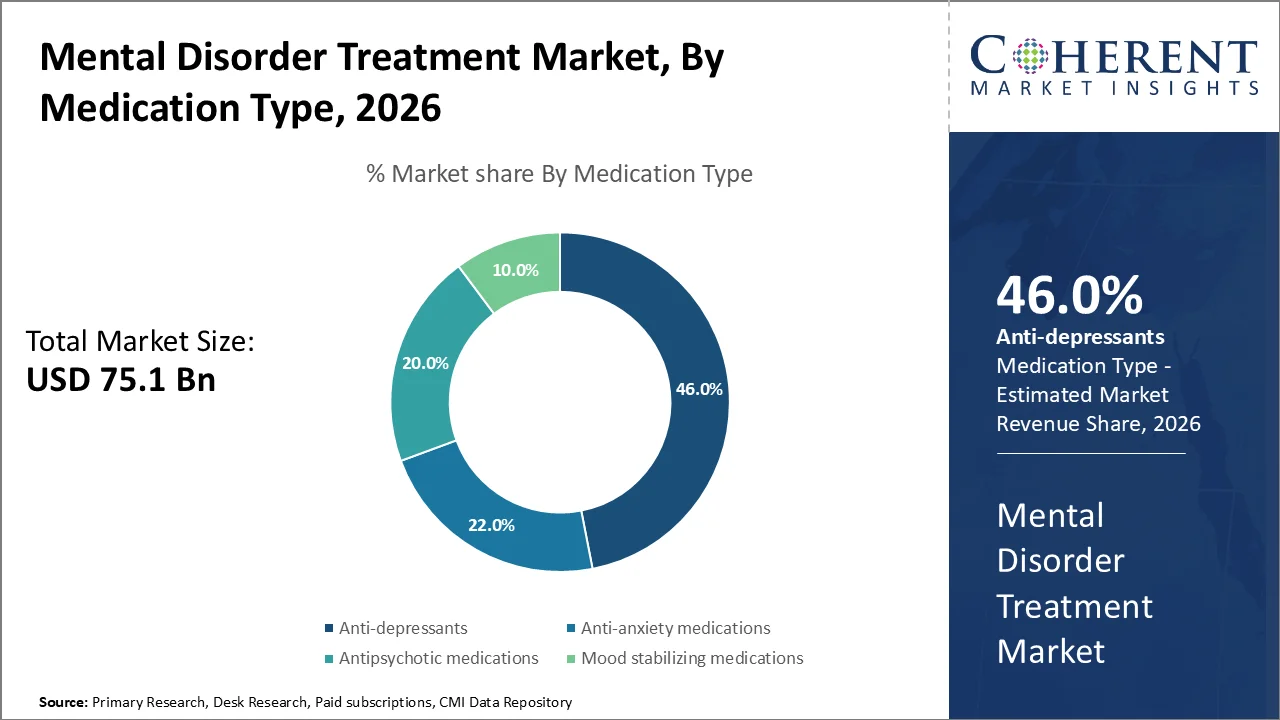
By medication type, antidepressant segment will have a significant market share at nearly 46% in 2026. The reason behind this trend is that antidepressants are prescribed for several health issues such as depression, anxiety, post-traumatic stress disorder, and other stress-related diseases. SSRIs and SNRIs drugs have shown better safety and tolerance, and hence they have become highly prevalent.
In November 2025, the U.S. Food and Drug Administration (FDA) approved the expanded use of CAPLYTA (lumateperone) by Johnson & Johnson as an adjunct therapy with oral antidepressants for Major Depressive Disorder (MDD).
Which Distribution Channel Leads the Mental Disorder Treatment Market?
By distribution channels, the hospital pharmacies is expected to remain the leading segment, accounting for 47% of the total share in 2026. The dominance of this market segment is attributed to the heavy reliance on inpatient psychiatric services, prescription drug dispensation, and the rise in inpatient admissions of patients with severe mental disorders.
In March 2026, the Nagpur Bench of the Bombay High Court (India) intervened after reports revealed a severe shortage of essential psychiatric medicines at the Regional Mental Hospital in Nagpur, where over 500 inpatients and 300 daily outpatients depend on continuous medication.
Market Drivers
Expanding Adoption of Antidepressants and Psychotropic Medications is transforming treatment outcomes globally
Advancements in pharmaceuticals, particularly in the field of antidepressants, antipsychotics, and mood stabilizers, have enhanced patient compliance. According to the National Institute of Mental Health (NIMH, USA), antidepressants are among the most commonly used medications for moderate to severe depression, particularly SSRIs and SNRIs, which have improved safety profiles and higher efficacy rates compared to older drug classes.
Rising Geriatric Population is increasing demand for dementia and neuropsychiatric treatments
A key driver of rising demand for dementia-related mental health treatment is the growing elderly population around the world. According to Alzheimer’s Disease International (ADI), over 55 million people worldwide currently suffer from dementia, and this trend will continue into the future with much higher numbers.
Current Events and Their Impact on the Mental Disorder Treatment Market
Current Event | Description and its Impact |
Expansion of Tele-Mental Health Reimbursement and Digital Psychiatry Adoption (2025–2026) |
|
Tightening on AI-Based Mental Health Applications and Data Privacy Compliance (EU AI Act & Global Updates 2025–2026) |
|
Mental Disorder Treatment Market Trends
- The increasing usage of combined psychotropic drug therapies leads to better clinical results in depression and treatment-refractory psychiatric conditions due to the growing use of antidepressants in conjunction with antipsychotic drugs.
- Expansion of rapid-acting antidepressants (like ketamine therapy) contributes to the changing face of the treatment of depression by providing quicker relief than regular SSRIs, thus facilitating the development of hospital psychiatry.
- Market demand is expected to rise due to increasing prevalence of mental disorders across the world, where the World Health Organization (WHO) states that one in eight people in the world suffers from a mental disorder. (Source: WHO)
- Rising integration of digital mental health and telepsychiatry platforms improves access to psychiatric care, reduces treatment gaps, and increases prescription volumes through remote consultations and online pharmacies.
Regional Insights
North America Mental Disorder Treatment Market Trends
The North American region is projected to have a 38% market share in the global Mental Disorder Treatment Market by 2026 due to the widespread occurrence of mental health disorders, robust healthcare facilities, and the early implementation of sophisticated psychiatric treatments. The advanced reimbursement policies, significant presence of pharmaceuticals, and high awareness levels concerning mental health treatments contribute to this trend.
The US and Canada have higher levels of acceptance of treatment due to increased incidences of depression, anxiety disorders, and bipolar disorder, and increased prescription of antidepressants and antipsychotics.
According to the World Health Organization (WHO), mental disorders affect nearly 1 in 5 adults in the U.S. annually, contributing to strong demand for structured psychiatric care and medication-based treatments.
Asia Pacific Mental Disorder Treatment Market Trends
Asia Pacific will witness the fastest growth during the forecast period (2026–2033), attributable to growing awareness regarding mental health, a rising number of patients, improved healthcare infrastructure, and an increase in the availability of psychiatric care services.
Urbanization, pressure on lifestyles, and increased awareness of mental illness are leading to more diagnoses and treatments for mental disorders in countries like China, India, and Japan. Moreover, the region boasts several government-led programs aimed at mental health and a growing network of drug manufacturers.
In July 2025, the World Health Organization (WHO) South-East Asia Region launched a Mental, Neurological and Substance Use (MNSS) Health Dashboard to improve planning, monitoring, and treatment access across Asia Pacific countries.
U.S. Mental Disorder Treatment Market Trends
The United States mental disorder treatment market is experiencing significant growth due to the high incidence rate of psychological disorders, well-developed medical facilities, and the adoption of novel treatment approaches. The nation is considered to be among the top consumers of antidepressants and antipsychotics on a per capita basis, facilitated by comprehensive insurance cover and mental wellness programs.
In November 2025, the U.S. FDA expanded approval of CAPLYTA (lumateperone) as an adjunct treatment for Major Depressive Disorder (MDD), marking a major shift toward combination antidepressant therapies. This reflects the growing adoption of multi-mechanism psychiatric treatments aimed at improving outcomes in treatment-resistant depression.
Japan Mental Disorder Treatment Market Forecast
Japan’s mental disorder treatment market is growing continuously due to the rapid increase in the country’s aging population, rising cases of dementia-associated psychoses, and well-developed health care systems. Japan ranks highly among nations with an aging populace, making it a significant consumer of antidepressants and dementia drugs.
According to the World Health Organization (WHO), Japan’s aging demographic is contributing to a rising burden of neuropsychiatric disorders, particularly dementia and late-life depression, which require long-term pharmacological and supportive care.
Who are the Major Companies in Mental Disorder Treatment Industry
Some of the major key players in Mental Disorder Treatment are Allergan plc, Eli Lilly and Company, VistaGen Therapeutics, Sanofi S.A, Novartis International AG, Mylan N.V., Amneal Pharmaceuticals LLC, Cipla Ltd, Sun Pharmaceutical Industries Ltd., Glenmark Pharmaceuticals Limited, Lupin Limited, Janssen Pharmaceutica, Bristol Myers Squibb, and Sumitomo Dainippon Pharma Co., Ltd.
Key Strategies Adopted by Industry Players
- In April 2025, Eli Lilly expanded its neuroscience and CNS pipeline, focusing on psychiatric disorders including depression, bipolar disorder, and neurodegenerative-linked psychiatric conditions.
- In November 2025, the U.S. FDA expanded approval of CAPLYTA (lumateperone) for use as an adjunct treatment with antidepressants in Major Depressive Disorder (MDD). This marks a major advancement in combination therapy for depression.
Market Report Scope
Mental Disorder Treatment Market Report Coverage
| Report Coverage | Details | ||
|---|---|---|---|
| Base Year: | 2025 | Market Size in 2026: | USD 75.1 Bn |
| Historical Data for: | 2020 To 2024 | Forecast Period: | 2026 To 2033 |
| Forecast Period 2026 to 2033 CAGR: | 6.6% | 2033 Value Projection: | USD 116.7 Bn |
| Geographies covered: |
| ||
| Segments covered: |
| ||
| Companies covered: | Allergan plc, Eli Lilly and Company, VistaGen Therapeutics, Sanofi S.A, Novartis International AG, Mylan N.V., Amneal Pharmaceuticals LLC, Cipla Ltd, Sun Pharmaceutical Industries Ltd., Glenmark Pharmaceuticals Limited, Lupin Limited, Janssen Pharmaceutica, Bristol Myers Squibb, and Sumitomo Dainippon Pharma Co., Ltd | ||
| Growth Drivers: |
| ||
| Restraints & Challenges: |
| ||
Analyst Opinion
- Demand for mental disorder treatment is largely non-cyclical, driven by persistent clinical needs rather than economic cycles. As per WHO, 1 out of 8 people worldwide suffer from mental disorders, which implies that the market is growing because of the presence of disease burdens across the globe.
- Depression continues to be the primary source of revenue generation in the market, as more than 280 million individuals suffer from depression worldwide, as per WHO estimates.
- Adoption rates are still far lower than required levels. In many developing nations, over 70% of those suffering from psychological disorders have received no treatments at all, which indicates a significant number of patients who will ensure future growth in the sector.
- Antidepressants and antipsychotics keep dominating the therapy patterns because pharmacotherapy is often the first-line treatment for moderate-to-severe conditions recommended by most clinical guidelines, particularly in moderate-to-severe psychiatric conditions like schizophrenia and major depressive disorder.
- The market trend is moving towards combinational and novel mechanism therapies. FDA approvals of combinations between antipsychotics and antidepressants and fast acting agents such as esketamine show that the market trend is moving towards tackling resistant depression.
Speak to the analyst
Want personalized insights?
Take the findings above to one of our principal consultants, or have the report rebuilt around the segments, geographies and competitors you actually track.
Market Segmentation
- By Disorder Type (Revenue, USD Bn, 2021-2033)
- Depression
- Bipolar Disorder
- Schizophrenia
- Dementia
- Post-traumatic stress disorder
- Others
- By Medication (Revenue, USD Bn, 2021-2033)
- Anti-depressants
- Anti-anxiety
- Mood Stabilizing Medication
- Antipsychotic Medications
- By Distribution Channel (Revenue, USD Bn, 2021-2033)
- Hospital Pharmacies
- Retail Pharmacies
- Online Pharmacies
- By Region (Revenue, USD Bn, 2021-2033)
- North America
- U.S.
- Canada
- Latin America
- Brazil
- Mexico
- Argentina
- Rest of Latin America
- Europe
- Germany
- U.K.
- France
- Italy
- Spain
- Russia
- Rest of Europe
- Asia Pacific
- China
- India
- Japan
- Australia
- South Korea
- ASEAN
- Rest of Asia Pacific
- Middle East
- GCC
- Israel
- Rest of Middle East
- Africa
- South Africa
- Central Africa
- North Africa
- North America
Sources
Primary Research Interviews
- Psychiatrists
- Neurologists
- Clinical psychologists
- Hospital administrators
- Mental health clinic managers
- Pharmaceutical company executives
- Key opinion leaders (KOLs) in psychiatry and neuroscience
Databases
- World Health Organization (WHO)
- National Institute of Mental Health (NIMH, USA)
- Centers for Disease Control and Prevention (CDC)
- Organisation for Economic Co-operation and Development (OECD)
- World Bank Health Data
Magazines
- Psychiatric Times
- Behavioral Health Business
- Medscape Psychiatry
- Nature Mental Health News
Journals
- The Lancet Psychiatry
- JAMA Psychiatry
- American Journal of Psychiatry
- Journal of Clinical Psychiatry
- World Psychiatry
Newspapers
- The New York Times
- The Guardian
- The Washington Post
- The Wall Street Journal
Associations
- American Psychiatric Association (APA)
- World Psychiatric Association (WPA)
- National Alliance on Mental Illness (NAMI)
- European Psychiatric Association (EPA)
- World Federation for Mental Health (WFMH)
Public Domain Sources
- WHO Mental Health Reports and Fact Sheets
- National government health ministry publications
- FDA drug approval announcements and labeling updates
- ClinicalTrials.gov (psychiatric and CNS drug trials)
- OECD Health Statistics
Proprietary Elements
- CMI Data Analytics Tool
- Proprietary CMI Mental Health Market Database (historical 10-year dataset)
Get access to 250+ pages report
Every segment, forecast, competitor profile and data table behind the analysis above — available for instant download.
- ESOMAR Member
- ISO 9001:2015 Certified
- D-U-N-S Registered
- GDPR & CCPA Compliant
Missing comfort of reading report in your local language? Find your preferred language:
Transform your Strategy with Exclusive Trending Reports
Frequently Asked Questions
The Mental Disorder Treatment Market is expected to reach USD 116.7 Bn in 2033, growing from USD 75.1 Bn in 2026.
Major players include Allergan plc, Eli Lilly and Company, VistaGen Therapeutics, Sanofi S.A, Novartis International AG, Mylan N.V., Amneal Pharmaceuticals LLC, Cipla Ltd, Sun Pharmaceutical Industries Ltd., Glenmark Pharmaceuticals Limited, Lupin Limited, Janssen Pharmaceutica, Bristol Myers Squibb, and Sumitomo Dainippon Pharma Co., Ltd.
High cost of psychiatric medications, limited access in low-income regions, social stigma, and shortage of mental health professionals continue to restrict market growth.
Rising global prevalence of mental disorders, increasing awareness and diagnosis rates, expanding telepsychiatry adoption, and strong pharmaceutical innovation in antidepressants and antipsychotics are driving growth.
The Mental Disorder Treatment Market is anticipated to grow at a CAGR of 6.6% between 2026 and 2033.
North America is expected to dominate the global Mental Disorder Treatment Market with the largest share of 38% in 2026.
The Depression segment leads the market with a 42% share in 2026, driven by its high global prevalence and rising diagnosis rates.