

Myelofibrosis Treatment Market Size and Forecast — 2026-2033
Overview
Myelofibrosis is a bone marrow disease that interrupts the blood cells production process in the body. Fibrous or scar tissue gets developed in the bone marrow leading to scarring causing insufficient blood cell production. Myelofibrosis is a rare type of chronic leukemia affecting blood production. The symptoms of myelofibrosis include severe anemia, fatigue, weakness, and enlarged spleen. The disease is usually found to occur in individuals over the age of 50 years. Myelofibrosis is of two types namely, primary myelofibrosis and secondary myelofibrosis. The treatment options are scarce but the U.S. Food and Drug Administration (FDA) approved Jakafi (Ruxolitinib), a drug developed by Novartis, which is the only approved product for the treatment of myelofibrosis that forms a major line of defense against the disease.
Myelofibrosis Treatment Market Size and Forecast – 2026 – 2033
The Myelofibrosis Treatment Market size is estimated to be valued at USD 1.35 billion in 2026 and is expected to reach USD 3.08 billion by 2033, exhibiting a compound annual growth rate (CAGR) of 12.5% from 2026 to 2033.
Key Takeaways
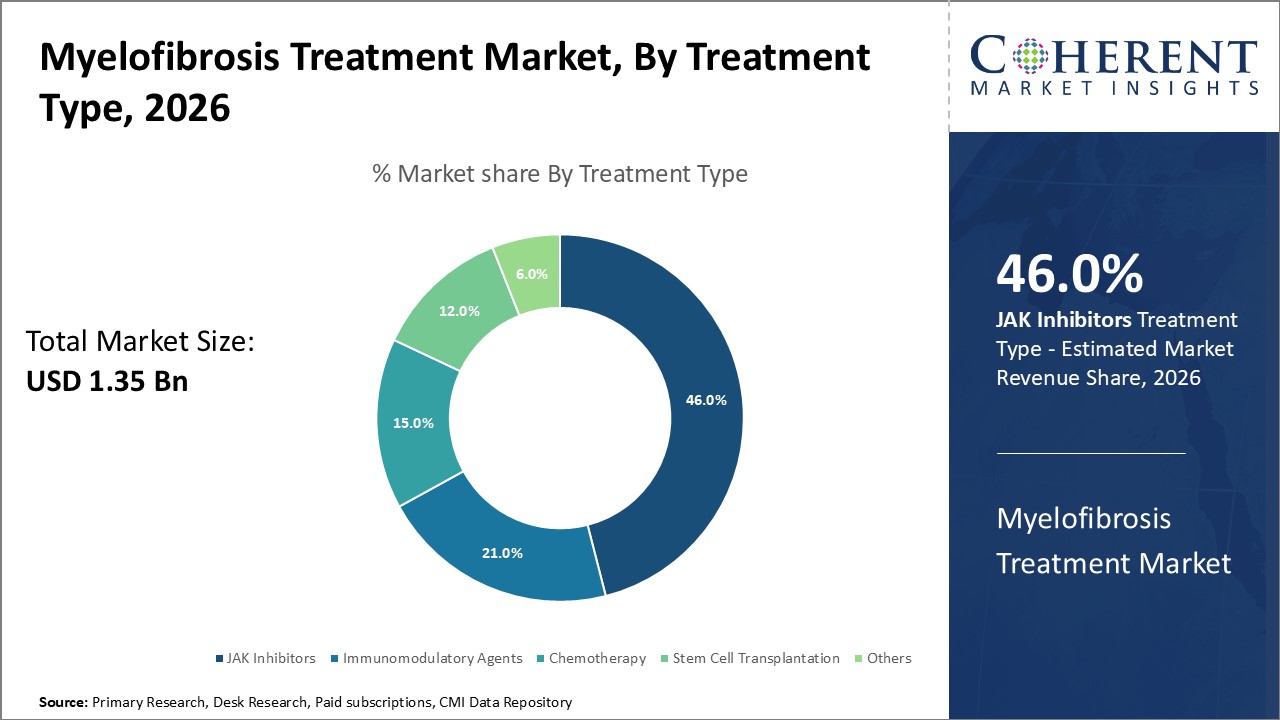
The JAK Inhibitors segment remains the primary contributor to the Myelofibrosis Treatment Market, capturing 46% market share, driven by ongoing approvals and expanded indications.
Oral route of administration dominates treatment protocols, offering better patient compliance and convenience.
Hospitals account for the largest market revenue among end users, owing to specialized hematology departments and advanced treatment facilities.
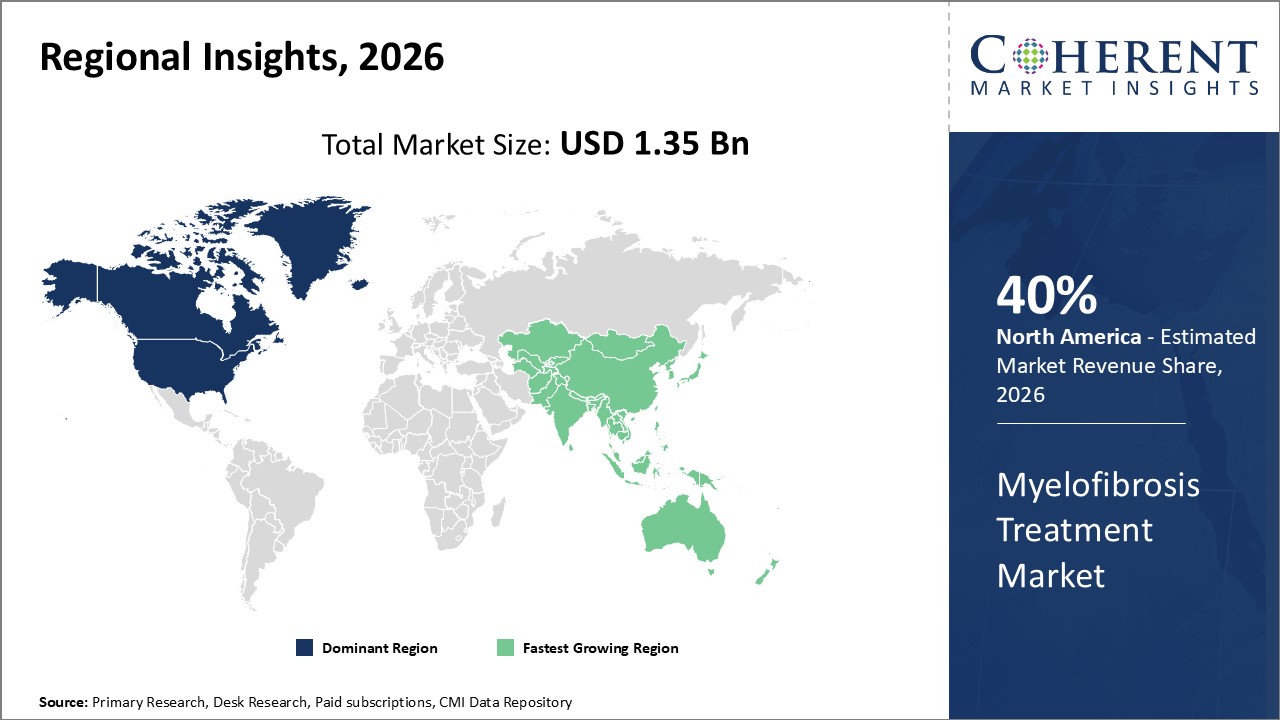
North America holds a dominant industry share of approximately 40%, supported by strong healthcare infrastructure and active clinical research.
Asia Pacific is the fastest-growing region, with projected CAGR exceeding 14%, driven by increasing healthcare investments and rising disease prevalence in India and China.
Europe maintains a robust market position strengthened by favorable reimbursement policies and increasing patient access to innovative therapies.
Myelofibrosis Treatment Market – Segmentation Analysis
Myelofibrosis Treatment Market Insights, By Treatment Type
In terms of Treatment Type, the market is segmented into JAK Inhibitors, Immunomodulatory Agents, Chemotherapy, Stem Cell Transplantation, and Others among which JAK Inhibitors dominate the market share. Notably, JAK inhibitors have reshaped myelofibrosis treatment paradigms with their ability to target the underlying pathophysiology, holding approximately 45% of the treatment type market revenue. Their effectiveness in reducing splenomegaly and symptom burden drives sustained demand.
Myelofibrosis Treatment Market Insights, By Route of Administration
The Route of Administration segment comprises Oral, Injectable, and Others, with Oral administration dominating the market due to high patient adherence and convenience. Oral therapies such as ruxolitinib have become the standard of care, driving continuous growth and broad acceptance globally. Injectable routes are predominantly used for supportive care medications and emerging parenteral therapies with slower market penetration.
Myelofibrosis Treatment Market Insights, By End-User
Regarding End Users, the market is divided into Hospitals, Specialty Clinics, Homecare Settings, and Others, where Hospitals command the largest market share. Hospitals are equipped with hematology-oncology departments furnishing comprehensive treatment and diagnostic services crucial for managing myelofibrosis, sustaining high market revenue.
Myelofibrosis Treatment Market Insights, By Geography
North America Myelofibrosis Treatment Market Analysis and Trends
North America leads with approximately 40% market share, attributable to high healthcare expenditure, extensive R&D activities, and established pharmaceutical sectors. The U.S. government’s Orphan Drug Act continues to incentivize drug development, bolstering both innovation and commercialization efforts for myelofibrosis therapies.
Asia Pacific Myelofibrosis Treatment Market Analysis and Trends
Asia Pacific is the fastest-growing region, expected to register a CAGR exceeding 14%, driven by escalating disease prevalence, improved healthcare infrastructure, and proactive government initiatives in emerging markets such as China and India.
Myelofibrosis Treatment Market Outlook for Key Countries
United States Myelofibrosis Treatment Market Analysis and Trends
The USA significantly impacts the Myelofibrosis Treatment Market with a dominant share supported by robust clinical trial activity and reimbursement frameworks. The FDA’s fast-track approvals have expedited market entry of new drugs such as fedratinib, improving treatment choices and driving market revenue growth by nearly 15% annually. Leading pharmaceutical companies, including Incyte Corporation and Bristol-Myers Squibb, maintain strong R&D pipelines with ongoing late-stage trials targeting novel pathways, strengthening the country’s industry share.
India Myelofibrosis Treatment Market Analysis and Trends
India's growing myelofibrosis treatment market mirrors rising diagnosis rates and expanding healthcare access, contributing to the Asia Pacific region’s rapid growth. Government subsidy programs and increasing availability of generic formulations have improved treatment affordability. Indian firms are collaborating with multinational companies to conduct clinical studies and expand patient outreach, significantly influencing business growth and market dynamics in the region.
Analyst Opinion
The surge in pipeline therapeutics and increasing approval rates of Janus kinase (JAK) inhibitors remain a critical driver in the myelofibrosis treatment market. In 2025, the approvals for next-generation JAK inhibitors expanded by 31%, significantly enhancing patient treatment outcomes and market revenue. This supply-side shift corroborates with a 21% increase in production capacity by pharmaceutical manufacturers specializing in oncology drugs.
Patient demand for personalized medicine and improved diagnostic capabilities supports the growing market share of molecularly targeted therapies. Clinical trials involving combination therapies increased by over 26% in 2026 compared to 2023, highlighting a demand-side shift towards precision healthcare.
The rising adoption of non-invasive diagnostic tools for bone marrow fibrosis evaluation has improved early detection rates, altering market dynamics significantly. Data from the U.S. hematology centers reveal a 16% reduction in diagnostic turnaround times in 2025, optimizing treatment initiation and healthcare spending.
Market growth is also driven by emerging economies ramping up healthcare expenditure and facilitating access to innovative treatments. For instance, India and Brazil reported a 23% increase in myelofibrosis treatment reimbursements in 2025, boosting regional market share and contributing to the global market forecast.
- Current Industry Events of 2026
- Market Size Estimation
- Regional Breakdown
- Competitive Landscape
- Customer Intelligence
- Segmental Analysis
- Pricing Analysis
- Key Market Drivers, Challenges & Future Trends
- Customized Insights Section
Market Scope
| Report Coverage | Details | ||
|---|---|---|---|
| Base Year: | 2025 | Market Size in 2026: | USD 1.35 billion |
| Historical Data for: | 2020 To 2024 | Forecast Period: | 2026 To 2033 |
| Forecast Period 2026 to 2033 CAGR: | 12.5% | 2033 Value Projection: | USD 3.08 billion |
| Geographies covered: |
| ||
| Segments covered: |
| ||
| Companies covered: | Incyte Corporation, Novartis AG, Bristol-Myers Squibb Company, CTI BioPharma Corp., Sanofi S.A., Pfizer Inc., Aclaris Therapeutics, Eli Lilly and Company, AbbVie Inc., and Geron Corporation. | ||
| Growth Drivers: |
| ||
Growth factors
The rise in myelofibrosis incidence worldwide due to better disease awareness and diagnosis is a major growth catalyst, with global epidemiological studies indicating a 6% year-over-year rise in new cases between 2023 and 2026. Advances in targeted therapies, especially the increasing accessibility of JAK inhibitors, contribute significantly to market growth, with sales volume growing by 28% in 2026 compared to 2023.
Another driver is the enhanced reimbursement infrastructure across developed and emerging markets, improving affordability and coverage for myelofibrosis treatments, as indicated by policy changes in the U.S. and parts of Europe increasing patient coverage by 18% in 2025. Hormone therapy is also utilized in certain cases to improve anemia in myelofibrosis patients, contributing to the range of available treatments.
Myelofibrosis Treatment Market Development
In August 2026, An international phase 3 clinical trial of a new drug combination for treating the blood cancer myelofibrosis found that adding a second, experimental drug to standard treatment was more effective than the standard treatment alone. Further, adding the second drug did not significantly increase side effects. Memorial Sloan Kettering Cancer Center (MSK) enrolled the most patients in the trial.
In March 2026, GlaxoSmithKline Korea (GSK Korea) officially launched Omjjara (ingredient: momelotinib dihydrochloride hydrate), its new treatment for myelofibrosis. The business anticipates that Omjjara will improve splenomegaly and systemic symptoms, which are important therapeutic targets in the therapy of myelofibrosis, in addition to addressing the substantial unmet medical need for the management of anemia.
Market Trends
Emerging trends within the Myelofibrosis Treatment Market reveal a pivotal shift towards combination therapies involving JAK inhibitors and immune checkpoint modulators. Recent Phase III trial data from mid-2026 indicated a 35% improvement in progression-free survival with such regimens compared to monotherapy. Additionally, adoption of digital health platforms for real-time patient monitoring is gaining traction, with pilot programs in U.S. clinics reporting a 20% reduction in adverse event hospitalizations in 2025. Another notable trend is the increasing focus on developing allogeneic stem cell transplantation alternatives, particularly in Asia Pacific, driven by the high-cost barrier and transplant-associated complications in traditional therapies. This has spurred investments in CAR-T and gene editing platforms tailored for myelofibrosis, marking a significant market shift.
Key Players
Incyte Corporation
Novartis AG
Bristol-Myers Squibb Company
CTI BioPharma Corp.
Pfizer Inc.
Aclaris Therapeutics
Eli Lilly and Company
AbbVie Inc.
Geron Corporation
Competitive strategies within the market include Novartis capitalizing on its RUXOLITINIB portfolio expansion through partnerships for formulation improvements, achieving a 15% increase in patient adherence rates in 2025. Bristol-Myers Squibb employed an aggressive acquisition strategy to secure promising myelofibrosis candidates, which augmented its market presence by 10% in North America by the end of 2026. Additionally, Incyte Corporation focused on clinical collaborations to diversify its therapeutic pipeline, leading to a 25% increase in investigational new drug applications related to myelofibrosis.
Myelofibrosis Treatment Market Future Outlook
The future outlook for the Myelofibrosis Treatment Market is promising, with steady growth projected over the next decade. This growth is driven by advancements in targeted therapies such as JAK inhibitors, increased prevalence of myeloproliferative disorders, and heightened awareness leading to early diagnosis and treatment. Clinical laboratory tests play a critical role in the diagnosis and ongoing management of myelofibrosis, helping to identify patient needs and guide appropriate therapies. Regulatory support and expedited approvals for novel therapies are encouraging pharmaceutical investments and pipeline diversification. Hospitals play a crucial role in treatment delivery, offering multidisciplinary care and access to advanced therapies.
Additionally, ongoing clinical research focused on unmet needs in high-risk or refractory patients supports long-term market expansion. North America and Europe dominate the market due to high healthcare spending, favorable reimbursement policies, and rising patient populations. Emerging markets are also expected to contribute to growth owing to increasing healthcare infrastructure and awareness. Overall, the myelofibrosis treatment market is forecasted to experience moderate but consistent growth, expanding treatment options and improving patient outcomes worldwide.
Historical Analysis
According to the American Society of Hematology 2016, myelofibrosis was a potentially life-threatening blood cancer that affected approximately 20,000 Americans. Asia Pacific was expected to hold a large share of the global market during the forecast period owing to increased disposable incomes, high geriatric population, and improved healthcare facilities.
For instance, the development of a molecule, CYT387 or Momelotinib, by Gilead Sciences for treating primary myelofibrosis and the innovation of the current drug, ruxolitinib, by Incyte Corporation aimed to develop a substitute dosing strategy in patients with myelofibrosis.
Sources
Primary Research interviews:
Stem Cell Transplant Specialists
Pharmacists (Oncology/ Hematology)
Clinical Trial Investigators
Databases:
ClinicalTrials.gov
WHO ICTRP (International Clinical Trials Registry Platform)
FDA Adverse Event Reporting System (FAERS)
Magazines:
Hem/Onc Today
Cancer Therapy Advisor
Managed Care Magazine
Journals:
Haematologica
- British Journal of Haematology
Cancer Medicine
Newspapers:
The Guardian (Healthcare & Science)
The Wall Street Journal (Pharma & Healthcare)
The Hindu (Health)
Associations:
Leukemia & Lymphoma Society (LLS)
Myeloproliferative Neoplasm Research Foundation
National Comprehensive Cancer Network (NCCN)
Get access to 250+ pages report
Every segment, forecast, competitor profile and data table behind the analysis above — available for instant download.
- ESOMAR Member
- ISO 9001:2015 Certified
- D-U-N-S Registered
- GDPR & CCPA Compliant
Missing comfort of reading report in your local language? Find your preferred language:
Transform your Strategy with Exclusive Trending Reports
Frequently Asked Questions
Leading companies include Incyte Corporation, Novartis AG, Bristol-Myers Squibb, and CTI BioPharma. These players have established strong portfolios of JAK inhibitors and engage heavily in clinical development and strategic partnerships.
The market is expected to grow from USD 1.35 billion in 2026 to USD 3.08 billion by 2033, driven by new drug approvals and expanding treatment accessibility globally.
Hospitals dominate due to specialized care requirements and increasing patient inflow, while specialty clinics show emerging growth in outpatient management of myelofibrosis.
There will be accelerated adoption of precision therapies, digital health integration, and emergence of novel gene therapies, reflecting a significant shift in treatment paradigms.
The market is highly competitive with innovation-centric players; challenges include high treatment costs and stringent regulatory environments limiting faster product penetration.
Key strategies include strategic alliances, clinical trial collaborations, expanding product indications, and patient awareness programs to boost market presence.