

Drug Abuse Treatment Market Size and Forecast – 2026 to 2033
Drug Abuse Treatment Market is estimated to be valued at USD 26.20 Bn in 2026 and is expected to reach USD 45.78 Bn in 2033, exhibiting a compound annual growth rate (CAGR) of 8.3% from 2026 to 2033.
Key Takeaways
- By Abuse Type, Alcohol Dependence hold the largest market share in 2026 owing to high prevalence of alcohol use disorders (AUDs).
- By Drug Type, Nicotine Addiction Treatment acquired the prominent share of 27.2% in 2026 as rising public awareness of health risks.
- By Distribution Channel, Hospital Pharmacies dominates the overall market share in 2026 owing to the integration into multidisciplinary treatment teams.
- By Region, North America dominates the overall market with an estimated share of 40.5% in 2026 owing to the escalating substance use disorders and overdose deaths.
Market Overview
Rising awareness of substance use disorders and the urgent need for effective therapies are driving significant growth in the Drug Abuse Treatment Market. Advances in medication-assisted treatments and the integration of digital health tools are improving patient outcomes and increasing accessibility. Governments are supporting the market expansion through initiatives and increased funding. Although stigma and high treatment costs pose challenges, the market continues to evolve by adopting personalized care approaches and innovative therapies to comprehensively support individuals battling addiction worldwide.
Current Events and their Impact on the Drug Abuse Treatment Market
Current Events | Description and its impact |
Global Regulatory Shifts on Controlled Substances |
|
Rising Synthetic and Novel Psychoactive Substance (NPS) Abuse |
|
Economic and Funding Trends Impacting Healthcare Budgets |
|
Segmental Insights
- Current Industry Events of 2026
- Market Size Estimation
- Regional Breakdown
- Competitive Landscape
- Customer Intelligence
- Segmental Analysis
- Pricing Analysis
- Key Market Drivers, Challenges & Future Trends
- Customized Insights Section
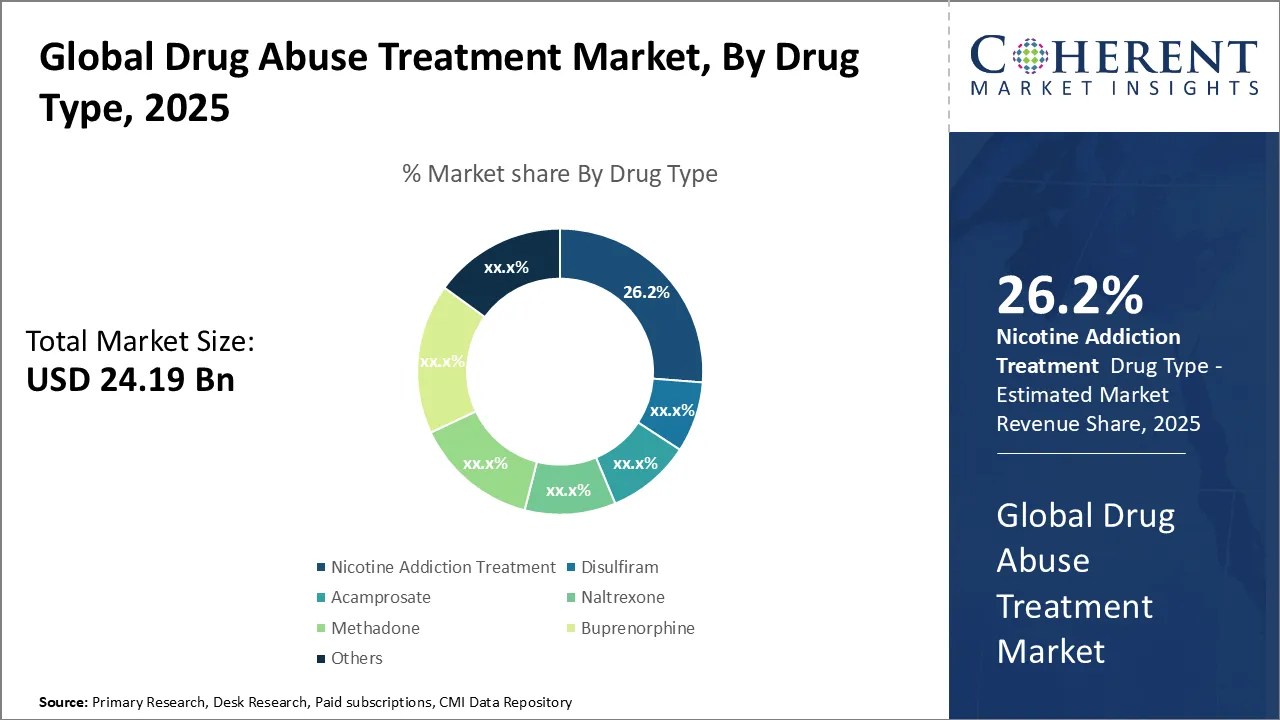
Drug Abuse Treatment Market Insights, By Drug Type: Nicotine Addiction Treatment contributes the highest share of the market owing to its advancements in nicotine replacement therapies (NRTs)
Nicotine Addiction Treatment acquired the prominent share of 26.2% in 2025. Growing awareness of the health risks linked to tobacco use and increasing demand for effective cessation therapies drive the nicotine addiction treatment segment in the Drug Abuse Treatment Market. Advances in nicotine replacement products and non-nicotine medications boost treatment success. Governments enforce regulations, run anti-smoking campaigns, and launch public health initiatives to encourage quitting. Additionally, digital health solutions and telemedicine expand accessibility and offer personalized care. These factors collectively help more individuals overcome nicotine addiction and fuel market growth. For instance, in December 2024, Truth Initiative, the nation's largest nonprofit public health organization focused on preventing nicotine addiction among youth and young adults, launched Outsmart Nicotine—a positive, multi-platform campaign aimed at reaching 18- to 24-year-olds and empowering them to break free from nicotine addiction. Such initiatives are boosting the drug abuse treatment market revenue.
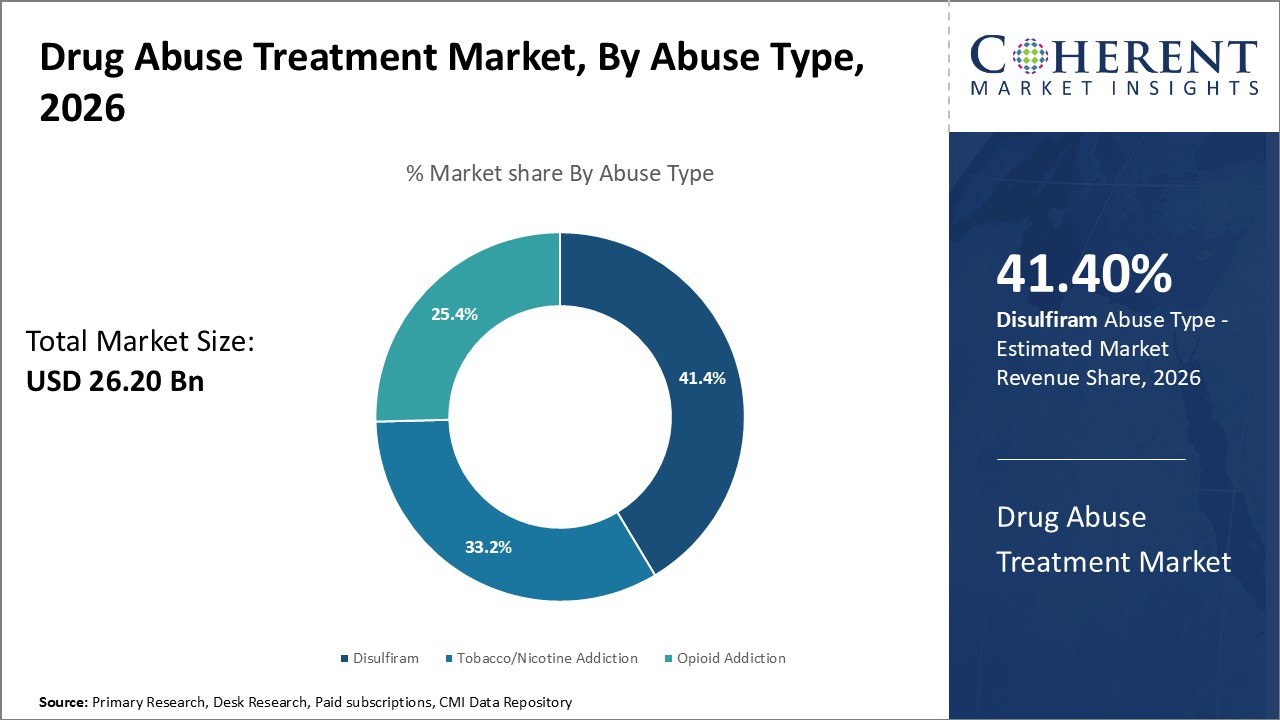
Drug Abuse Treatment Market Insights, By Abuse Type: Alcohol Dependence contribute the highest share of the market owing to its integration of AUD care into general healthcare
Increasing awareness of alcohol-related health risks and the rising prevalence of alcohol use disorders drive the growth of the alcohol dependence segment in the Drug Abuse Treatment Market. According to the 2024 National Survey on Drug Use and Health (NSDUH), about 27.9 million people aged 12 and older (10.7%) had Alcohol Use Disorder (AUD) in the past year. This included 16.7 million males (11.8%) and 11.2 million females (7.6%). Treatment options, such as medication-assisted therapies and counseling, have advanced and improved recovery rates. Governments and public health campaigns actively promote early intervention and support services. Additionally, specialized treatment centers are expanding access, and the growing acceptance of behavioral therapies encourages more individuals to seek and receive comprehensive care for alcohol dependence.
Drug Abuse Treatment Market Insights, By Distribution Channel: Hospital Pharmacies contribute the highest share of the market owing to its provision of naloxone and overdose prevention
Hospital pharmacies play a crucial role in driving the Drug Abuse Treatment Market by managing medications and delivering safe, effective treatments for patients with substance use disorders. They administer medication-assisted treatments like methadone and buprenorphine, which improve recovery outcomes. Hospital pharmacists actively collaborate with healthcare teams to personalize therapies and monitor patient progress. Furthermore, government support and funding enable hospital pharmacies to expand services, including overdose prevention programs, enhancing the quality and accessibility of care for individuals fighting addiction. For instance, in October 2024, Paul D. Tonko and Mike Turner announced that they have sent inquiries to dozens of hospitals, insurance plans, pharmacies, pharmacists, and providers to gather information on their current efforts and future plans to remove barriers to accessing medications for opioid use disorder (MOUD), following the MAT Act’s goal of expanding access to buprenorphine for addiction treatment. Such initiatives are expected to propel the drug abuse treatment market demand.
Regional Insights
North America Drug Abuse Treatment Market Trends
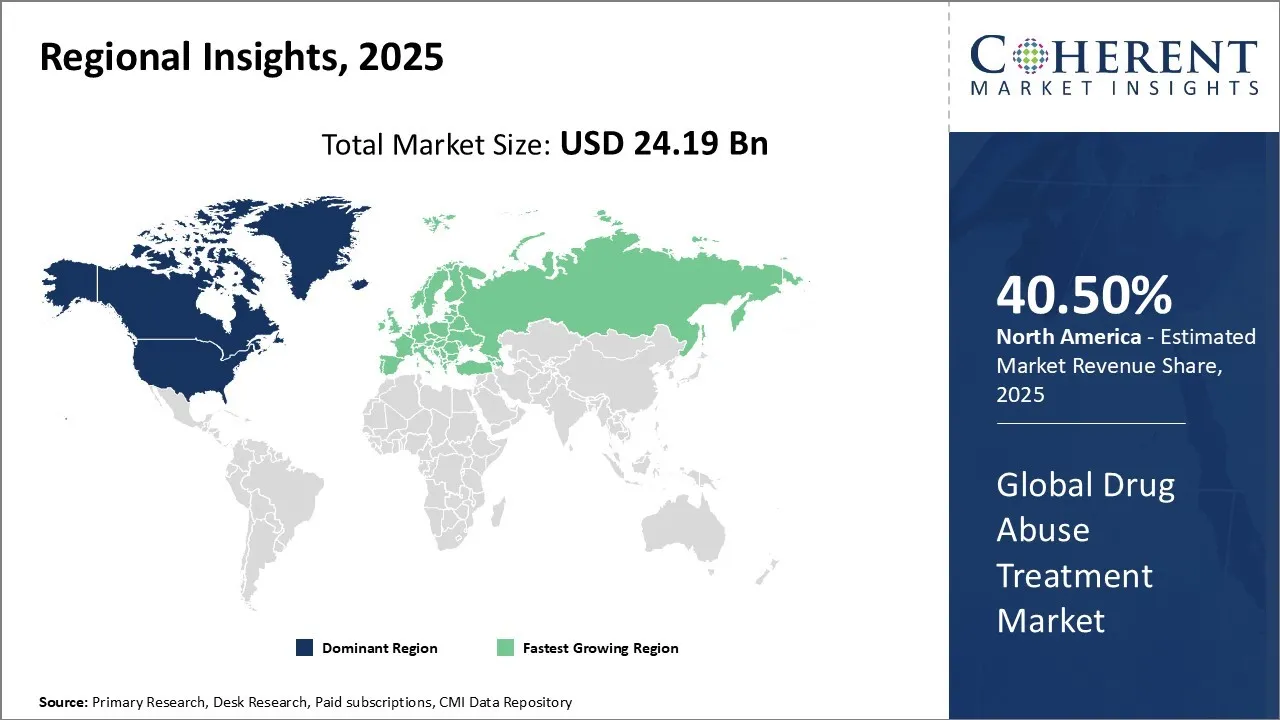
North America dominates the overall market with an estimated share of 40.50% in 2026. Rising substance use disorders and growing demand for effective treatment options are shaping the North America Drug Abuse Treatment Market share. Governments across the region actively support recovery efforts by providing funding, launching public awareness campaigns, and expanding access to medication-assisted therapies. Healthcare providers integrate digital health tools like telemedicine and mobile apps to improve accessibility and boost patient engagement. As society increasingly recognizes addiction as a medical condition, reduced stigma motivates more individuals to seek professional help and commit to long-term recovery. For instance, U.S. and U.K based A drug and alcohol rehabilitation centre in Kent launched a new service aimed at preventing relapse among individuals recovering from addiction. The centre established Recovery Plus in response to local residents’ concerns about the lack of ongoing support services for substance misuse.
Europe Drug Abuse Treatment Market Trends
Rising cases of substance use disorders and a strong emphasis on harm reduction strategies are driving growth in the Europe Drug Abuse Treatment Market. Governments and health organizations actively promote early intervention, rehabilitation services, and medication-assisted treatments. Healthcare providers across the region are adopting integrated care models that combine medical, psychological, and social support. Public health campaigns continue to expand, while growing awareness of mental health and addiction motivates more individuals to seek treatment, leading to ongoing improvements in recovery services throughout Europe. For instance, UNODC Executive Director Yury Fedotov launched a joint initiative in Rome with Italy's Department for Anti-Drug Policies, titled "Prevention Strategy and Policymakers." Through this initiative, UNODC will provide access to its upcoming international standards on drug use prevention and support the development of evidence-based national drug prevention systems.
United Kingdom Drug Abuse Treatment Market Trends
The United Kingdom Drug Abuse Treatment Market continues to evolve as healthcare providers prioritize integrated care that treats both addiction and mental health conditions. The NHS and local authorities actively expand harm reduction efforts, such as needle exchange programs and supervised consumption sites. They also invest more in community-based services and peer-led support programs. Providers increasingly adopt digital tools, including online counseling and recovery apps, to enhance access. Public health campaigns work to reduce stigma and promote earlier intervention and treatment engagement. For instance, Bristol Drugs Project (BDP), a local charity, has launched a choir as part of its services to help combat alcohol addiction. The organization also offers a quiz to assess the severity of a person’s alcohol dependency and then provides appropriate support based on the results.
India Drug Abuse Treatment Market Trends
Growing awareness of substance use disorders and increased national focus on mental health are driving momentum in the India Drug Abuse Treatment Market. The government is launching national campaigns and supporting de-addiction centers to expand access to care, especially in rural and underserved areas. Non-governmental organizations and community outreach programs actively deliver education and support to affected populations. Additionally, healthcare providers are combining traditional practices like yoga and Ayurveda with modern treatments to offer culturally tailored and holistic recovery solutions. For instance, in March 2026, Kerala University of Health Sciences (KUHS) launched a campaign to end drug abuse in the State’s colleges by implementing strategies focused on prevention, early intervention, enforcement, and rehabilitation.
Market Report Scope
Drug Abuse Treatment Market Report Coverage
| Report Coverage | Details | ||
|---|---|---|---|
| Base Year: | 2025 | Market Size in 2026: | USD 26.20 Bn |
| Historical Data for: | 2020 To 2024 | Forecast Period: | 2026 To 2033 |
| Forecast Period 2026 to 2033 CAGR: | 8.3% | 2033 Value Projection: | USD 45.78 Bn |
| Geographies covered: |
| ||
| Segments covered: |
| ||
| Companies covered: | Cipla Limited, Glenmark Pharmaceuticals, Pfizer Inc., Mylan N.V., Odyssey Pharmaceuticals Inc., Lil' Drug Store Products Inc., Indivior Plc., Dr. Reddy's Laboratories, Teva Pharmaceutical Industries Ltd., British American Tobacco Plc., Alkermes, Sun Pharmaceuticals, BioCorRx, Inc., DXC Technology Company, and GenoLogics. | ||
| Growth Drivers: |
| ||
| Restraints & Challenges: |
| ||
Drug Abuse Treatment Market Trend
- Shift Toward Personalized Treatment Plans
The market is witnessing a growing trend toward personalized treatment, where providers tailor interventions based on a patient’s specific drug history, mental health status, and social environment. Rather than relying on standardized care, practitioners now integrate genetic testing, psychological profiling, and lifestyle analysis to customize recovery strategies. This approach improves engagement, enhances outcomes, and reduces relapse rates. As technology and diagnostics evolve, the push for individualized care is shaping a more precise and patient-centric treatment landscape.
In August 2025, Sacred Journey Recovery in Vista, California, expanded its personalized addiction treatment services to reach more individuals. The center offers tailored rehab programs focused on holistic healing, combining traditional care with innovative methods like adventure and experiential therapy. Clients benefit from expert support in a transformative setting and can choose to pay with cryptocurrency for added privacy.
- Integration of Technology and Teletherapy
Digital transformation is reshaping the drug abuse treatment landscape through teletherapy, mobile health apps, and virtual support platforms. These tools allow remote counseling, remote patient monitoring, and access to peer communities, especially for those in underserved or stigmatized environments. Treatment centers increasingly incorporate wearable devices and AI-driven tools to monitor patient behavior and adherence. This tech-driven evolution not only enhances accessibility but also enables early intervention, empowering patients to stay connected with care providers throughout their recovery journey.
Drug Abuse Treatment Market News
- In August 2025, the BBC has launched an investigation after receiving allegations of drug use involving two Strictly Come Dancing According to The Sun, law firm Russells, representing former celebrity contestant Wynne Evans, submitted the claims to the BBC in a legal filing in March.
- In January 2025, the UNODC and the Government of Brazil have launched study on nitazenes—an emerging class of new synthetic opioids (NSOs) known for their high potency, significant abuse potential, and serious health risks—which have increasingly drawn global concern.
Analyst Opinion (Expert Opinion)
- The Drug Abuse Treatment Market is at a critical juncture, driven less by market forces and more by urgent public health imperatives. Despite decades of investment, the persistent surge in opioid-related deaths—over 80,000 fatalities in the U.S. alone in 2022—exposes glaring deficiencies in treatment accessibility and efficacy. Medication-assisted treatment (MAT) remains underutilized, with only about 25% of individuals with opioid use disorder receiving MAT, underscoring a vast unmet need.
- Furthermore, the fragmentation of care models hinders outcomes. Integrated dual diagnosis programs, which treat co-occurring mental health disorders alongside addiction, have demonstrated superior success rates—up to 40% better retention in treatment—but remain scarce outside major urban centers. This gap illustrates the market’s failure to scale best practices.
- Another overlooked factor is the socio-economic and racial disparity in treatment access. For example, Black and Hispanic communities in the U.S. have significantly lower rates of receiving evidence-based treatments, despite rising overdose rates. Addressing this inequity is not just a moral imperative but a strategic necessity for any meaningful market transformation.
- Technological integration, such as telehealth, promises expanded reach, yet regulatory inertia and inconsistent reimbursement models slow adoption. The future of the market hinges on aligning policy frameworks with innovative delivery mechanisms to break down stigma and logistical barriers.
- In conclusion, while the Drug Abuse Treatment Market is flooded with new therapies and digital tools, the true challenge lies in systemic reforms—streamlining care pathways, enhancing equitable access, and embedding proven interventions at scale. Without these shifts, the market risks perpetuating cycles of relapse and preventable deaths, regardless of innovation volume.
Speak to the analyst
Want personalized insights?
Take the findings above to one of our principal consultants, or have the report rebuilt around the segments, geographies and competitors you actually track.
Market Segmentation
- Global Drug Abuse Treatment Market, By Abuse Type (Revenue, USD Bn, 2021 - 2033)
- Alcohol Dependence
- Tobacco/Nicotine Addiction
- Opioid Addiction
- Global Drug Abuse Treatment Market, By Drug Type (Revenue, USD Bn, 2021 - 2033)
- Disulfiram
- Acamprosate
- Naltrexone
- Methadone
- Buprenorphine
- Nicotine Addiction Treatment
- Nicotine Replacement Treatment
- Nicotine Patch
- Nicotine Gum
- Nicotine Lozenge
- Nicotine Spray
- Nicotine Inhaler
- Non-Nicotine Medication
- Bupropion
- Varenicline
- Others
- Global Drug Abuse Treatment Market, By Distribution Channel (Revenue, USD Bn, 2021 - 2033)
- Hospital Pharmacies
- Retail Pharmacies
- Online Pharmacies
- Global Drug Abuse Treatment Market, By Region (Revenue, USD Bn, 2021 - 2033)
- North America
- U.S.
- Canada
- Latin America
- Brazil
- Argentina
- Mexico
- Rest of Latin America
- Europe
- Germany
- U.K.
- Spain
- France
- Italy
- Russia
- Rest of Europe
- Asia Pacific
- China
- India
- Japan
- Australia
- South Korea
- ASEAN
- Rest of Asia Pacific
- Middle East
- GCC Countries
- Israel
- Rest of Middle East
- Africa
- South Africa
- North Africa
- Central Africa
- North America
- Key Players Insights
- Cipla Limited
- Glenmark Pharmaceuticals
- Pfizer Inc.
- Mylan N.V.
- Odyssey Pharmaceuticals Inc.
- Lil' Drug Store Products Inc.
- Indivior Plc.
- Reddy's Laboratories
- Teva Pharmaceutical Industries Ltd.
- British American Tobacco Plc.
- Alkermes
- Sun Pharmaceuticals
- BioCorRx, Inc.
- DXC Technology Company
Sources
Primary Research Interviews
- Healthcare professionals and addiction specialists
- Hospital pharmacists and treatment center administrators
- Public health officials and policy makers
- Patients and caregivers involved in drug abuse treatment
Databases
- World Health Organization (WHO) Global Health Observatory
- National Institute on Drug Abuse (NIDA) Data Repository
- Centers for Disease Control and Prevention (CDC) WONDER Database
- United Nations Office on Drugs and Crime (UNODC) Data Portal
Magazines
- Addiction Professional
- Substance Abuse Treatment, Prevention, and Policy Magazine
- Behavioral Healthcare Executive
Journals
- Journal of Substance Abuse Treatment
- Addiction
- The American Journal of Drug and Alcohol Abuse
- Drug and Alcohol Dependence
Newspapers
- The New York Times (Health Section)
- The Guardian (Health and Science)
- The Washington Post (Health and Policy)
Associations
- American Society of Addiction Medicine (ASAM)
- International Society of Addiction Medicine (ISAM)
- National Association of Drug Court Professionals (NADCP)
Public Domain Sources
- Government health departments and public health reports
- WHO reports on substance abuse
- National Health Service (NHS) publications
- Open-access clinical trial registries
Proprietary Elements
- CMI Data Analytics Tool, and Proprietary CMI Existing Repository of information for last 8 years
Get access to 250+ pages report
Every segment, forecast, competitor profile and data table behind the analysis above — available for instant download.
- ESOMAR Member
- ISO 9001:2015 Certified
- D-U-N-S Registered
- GDPR & CCPA Compliant
Missing comfort of reading report in your local language? Find your preferred language:
Transform your Strategy with Exclusive Trending Reports
Frequently Asked Questions
The Drug Abuse Treatment Market is estimated to be valued at USD 26.20 Bn in 2026, and is expected to reach USD 45.78 Bn by 2033.
Social stigma associated with drug abuse and lack of medical reimbursement policies are the key factors hampering growth of the global drug abuse treatment market.
Novel drug development, government initiatives and funding, and need to curtail healthcare costs are the major factors driving the global drug abuse treatment market growth.
The leading abuse type segment is Alcohol Dependence due to increasing product launch by market players.
The major players operating in the global drug abuse treatment market are Cipla Limited, Glenmark Pharmaceuticals, Pfizer Inc., Mylan N.V., Odyssey Pharmaceuticals Inc., Lil' Drug Store Products Inc., Indivior Plc., Dr. Reddy's Laboratories, Teva Pharmaceutical Industries Ltd., and British American Tobacco Plc., Alkermes, Sun Pharmaceuticals, BioCorRx, Inc., DXC Technology Company, and GenoLogics.
North America leads the global drug abuse treatment market.
The CAGR of the Drug Abuse Treatment Market is projected to be 8.3% from 2026 to 2033.