

Angiosarcomas Treatment Market Size and Forecast — 2026 - 2033
The Global Angiosarcomas Treatment Market size is estimated to be valued at USD 1.22 billion in 2026 and is expected to reach USD 2.35 billion by 2033, exhibiting a compound annual growth rate (CAGR) of 10.4% from 2026 to 2033.
Overview
The Angiosarcomas Treatment Market encompasses therapies targeting aggressive vascular tumors, primarily involving chemotherapy, targeted therapy, and immunotherapy. Chemotherapeutic agents, including paclitaxel and doxorubicin, remain widely used for systemic control. Targeted therapies, such as tyrosine kinase inhibitors, offer precision treatment against tumor-specific pathways. Immunotherapies, including immune checkpoint inhibitors, are emerging as promising options to enhance anti-tumor responses. Supportive and palliative care products also play a role in managing symptoms. The market is characterized by ongoing clinical trials exploring novel biologics and combination therapies, aiming to improve survival rates and quality of life for patients with these rare, aggressive cancers.
Key Takeaways
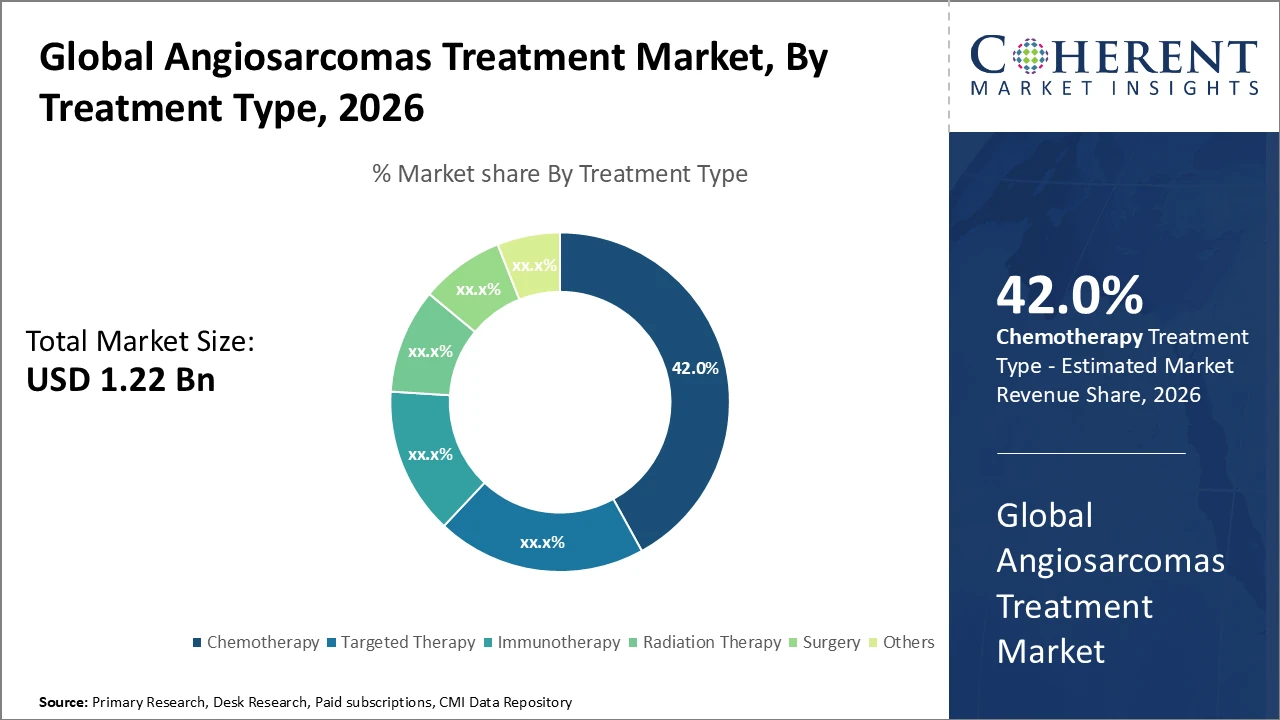
The chemotherapy segment dominates treatment modalities, accounting for over 42% of market share, owing to its longstanding use and cost-effectiveness, while immunotherapy emerges as the fastest-growing due to recent approvals.
Cutaneous angiosarcoma represents the leading application segment, strongly influencing market growth, with visceral angiosarcoma showing rapid expansion attributed to improved diagnostics.
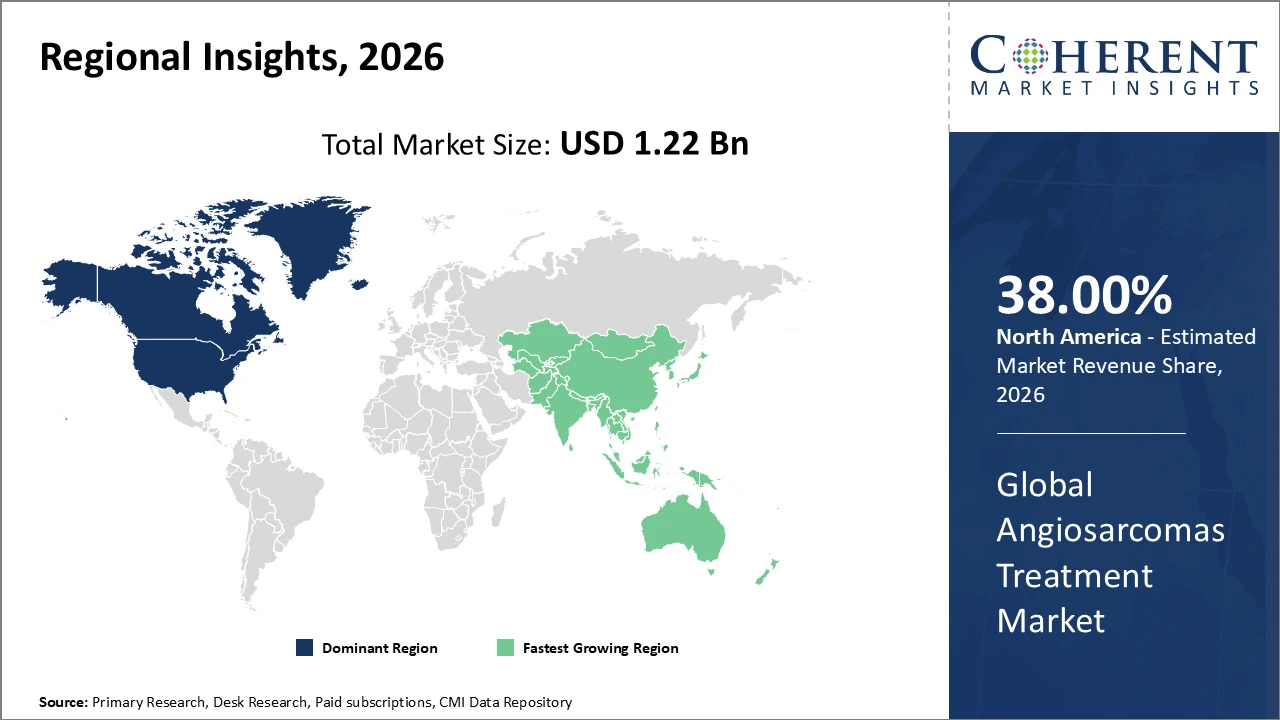
North America leads the market share with over 38%, supported by robust R&D and strong healthcare infrastructure, while Asia Pacific shows the highest CAGR driven by expanding market scope and healthcare investments, particularly in China and India.
The oncology hospital segment dominates end-user share, with specialized cancer treatment centers expanding capacity to meet rising patient influx, fostering considerable market revenue growth.
Angiosarcomas Treatment Market Segmentation Analysis
Angiosarcomas Treatment Market Insights, By Treatment Type
Chemotherapy dominates the angiosarcoma treatment market, holding a 42% share due to its established role in standard care, cost-effectiveness, and broad accessibility across healthcare settings. Its wide cytotoxic activity addresses multiple angiosarcoma subtypes, maintaining its relevance despite emerging therapies. Immunotherapy is the fastest-growing subsegment, driven by recent approvals and promising clinical outcomes in improving durable response rates and survival. Targeted therapies, focusing on angiogenesis inhibition and molecular pathways, provide personalized options, though at higher costs. Radiation therapy and surgery remain important as adjunct or primary treatments based on tumor location and stage, while other innovative approaches continue to be explored.
Angiosarcomas Treatment Market Insights, By Application
Cutaneous angiosarcoma dominates the market, holding the largest share due to its higher incidence and frequent diagnosis in the skin and scalp, which allows timely intervention with established therapies. Visceral angiosarcoma is the fastest-growing subsegment, driven by advancements in imaging and diagnostics that enable earlier detection of deep tissue tumors, historically associated with poor prognosis. Soft tissue angiosarcoma remains an important subtype managed through multidisciplinary approaches, with evolving treatment protocols improving patient outcomes. The ‘Others’ category encompasses rare presentations and mixed histologies, attracting increasing research attention and supporting future expansion in treatment options and overall market growth.
Angiosarcomas Treatment Market Insights, By End User
Hospitals dominate the market, leveraging extensive infrastructure, oncology departments, and multidisciplinary teams to deliver comprehensive angiosarcoma treatment, including advanced therapies and supportive care. Specialty clinics represent the fastest-growing subsegment, driven by focused expertise in oncology and personalized treatment plans that enhance patient adherence and outcomes. Cancer research institutes contribute significantly through clinical trials and therapeutic innovations, directly supporting market expansion by enabling pipeline development. Ambulatory surgical centers and other facilities offer outpatient treatment options, emphasizing cost-efficiency and accessibility, further broadening patient reach and complementing the overall growth of the angiosarcoma treatment market.
Angiosarcomas Treatment Market Trends
Precision oncology is increasingly shaping the angiosarcoma treatment market, with biomarker-driven therapy selection becoming essential since 2024.
Recent approvals of therapies targeting VEGF receptors and immune checkpoints have enhanced treatment efficacy and improved patient survival rates.
Immunotherapy and targeted therapies are gaining prominence, reflecting a shift toward more personalized treatment approaches.
The adoption of digital health tools for patient monitoring is rising, supporting real-time tracking of treatment response and side effects.
Real-world data collection is expanding, enabling adaptive treatment regimens and informing clinical decision-making for better patient outcomes.
Angiosarcomas Treatment Market Insights, By Geography
North America Angiosarcomas Treatment Market Analysis and Trends
In terms of regional dynamics, North America holds the largest share of the angiosarcoma treatment market at around 38%, supported by substantial oncology research funding, a well-established healthcare ecosystem, and multiple regulatory approvals for novel therapies over the past three years. Leading companies in the region have significantly contributed through extensive clinical trial programs, introducing innovative treatment options and expanding therapeutic access. The presence of advanced medical infrastructure, skilled healthcare professionals, and strong reimbursement frameworks further reinforces market dominance. Combined, these factors ensure North America remains a pivotal region for growth, innovation, and the adoption of cutting-edge angiosarcoma therapies.
Asia Pacific Angiosarcomas Treatment Market Analysis and Trends
Asia Pacific is the fastest-growing region in the angiosarcoma treatment market, with a CAGR exceeding 12%, driven by rising healthcare expenditure, government initiatives improving access to oncology treatments, and increasing incidence rates, particularly in China and India. Expanding medical infrastructure and enhanced collaborations with multinational pharmaceutical companies support this growth. The active presence of firms such as Takeda and Novartis, partnering with regional stakeholders for market entry, has accelerated the adoption of advanced therapies. Combined with growing awareness, improved diagnostic capabilities, and investment in oncology care, these factors position Asia Pacific as a key driver of future market expansion.
Angiosarcomas Treatment Market Outlook for Key Countries
USA Angiosarcomas Treatment Market Analysis and Trends
The USA is the largest contributor to the angiosarcoma treatment market, generating over USD 500 million in revenue in 2026, driven by substantial investments in oncology R&D and a well-established healthcare infrastructure. Recent FDA approvals, including novel immunotherapies and targeted agents from Pfizer and Bristol-Myers Squibb, have improved treatment accessibility. The country’s strong clinical trial ecosystem promotes continuous innovation, with patient recruitment for angiosarcoma studies rising 22% in 2025 compared to 2023. Supportive healthcare reimbursement frameworks facilitate access to high-cost therapies, positioning the USA as a key hub for market growth and competitive strategic initiatives.
Germany Angiosarcomas Treatment Market Analysis and Trends
Germany holds a significant position in the angiosarcoma treatment market, driven by advanced healthcare infrastructure, strong oncology research, and early adoption of innovative therapies. The country benefits from well-established reimbursement systems and high patient awareness, facilitating access to standard and novel treatments. Recent approvals of targeted therapies and immunotherapies have enhanced clinical outcomes, while multidisciplinary care centers support comprehensive management of angiosarcoma subtypes. Germany also demonstrates active participation in clinical trials, contributing to pipeline development and treatment innovation. Ongoing government initiatives and collaborations with pharmaceutical companies further strengthen market growth, positioning Germany as a key contributor in the European angiosarcoma treatment landscape.
Analyst Opinion
Treatment modality diversification continues to drive market growth, with targeted therapies accounting for over 40% of revenue in 2025, while immunotherapy rapidly gains traction following recent FDA approvals. Pembrolizumab, for instance, showed promising efficacy in Phase III trials, boosting adoption in 2026.
Early diagnosis rates are rising, supported by advances in imaging and molecular diagnostics, leading to a 6.8% year-over-year increase in case detections through 2024, which expands treatment demand and pipeline development.
The pricing landscape trends upward, with average annual costs for novel immunotherapies reaching USD 150,000 per patient in 2026, a 12% increase from 2024.
Export volumes of biologics and specialty drugs for angiosarcoma treatment grew 14% globally in 2025, particularly from North America and Europe, strengthening supply and market share.
- Current Industry Events of 2026
- Market Size Estimation
- Regional Breakdown
- Competitive Landscape
- Customer Intelligence
- Segmental Analysis
- Pricing Analysis
- Key Market Drivers, Challenges & Future Trends
- Customized Insights Section
Market Scope
| Report Coverage | Details | ||
|---|---|---|---|
| Base Year: | 2025 | Market Size in 2026: | USD 1.22 billion |
| Historical Data for: | 2020 To 2024 | Forecast Period: | 2026 To 2033 |
| Forecast Period 2026 to 2033 CAGR: | 10.4% | 2033 Value Projection: | USD 2.35 billion |
| Geographies covered: |
| ||
| Segments covered: |
| ||
| Companies covered: | Novartis AG, Pfizer Inc., Amgen Inc., Bayer AG, GlaxoSmithKline PLC, Sanofi SA, Roche Holdings AG, Eli Lily and Company, Merck & Co. Inc., Incyte Corporation | ||
| Growth Drivers: |
| ||
Angiosarcomas Treatment Market Growth Factors
The rising prevalence of angiosarcomas, driven by demographic changes and increased awareness, is a key market driver, with global diagnosed cases growing at a 5.6% CAGR between 2024 and 2026. Advances in molecular targeted therapies and immunotherapies have improved patient outcomes, boosting adoption and revenue. Government initiatives supporting rare cancer research and expedited drug approvals have accelerated product development. Technological improvements in diagnostic imaging enable earlier and more accurate detection, expanding treatment opportunities. Additionally, the growth of healthcare infrastructure in developing regions increases access to specialty oncology care, overcoming previous barriers related to affordability and availability, further supporting market expansion.
Angiosarcomas Treatment Market Development
In August 2024, the U.S. Food and Drug Administration granted accelerated approval to afamitresgene autoleucel for treating adults with the rare soft tissue cancer synovial sarcoma.
Key Players
Leading Companies of the Market
Novartis AG
Pfizer Inc.
Bayer AG
GlaxoSmithKline PLC
Amgen Inc.
Sanofi SA
Roche Holdings AG
Eli Lily and Company
Merck & Co. Inc.
Incyte Corporation
Several leading companies have utilized strategic alliances and licensing agreements to enhance their product portfolios in the angiosarcoma treatment market. For example, Bristol-Myers Squibb’s collaboration with a biotech firm in 2025 expedited the commercialization of a novel immunotherapy, contributing to a 15% revenue increase in their oncology segment in 2026. Likewise, Novartis pursued targeted acquisitions in 2024 to diversify its pipeline of angiogenesis inhibitors, strengthening its competitive position and expanding treatment options. These strategic moves have enabled both companies to accelerate innovation, improve market presence, and respond effectively to the growing demand for advanced angiosarcoma therapies.
Angiosarcomas Treatment Market Future Outlook
The angiosarcoma treatment market is poised for robust growth, driven by continued advancements in targeted therapies, immunotherapies, and precision oncology approaches. Emerging biomarkers and novel combination regimens are expected to enhance treatment efficacy and patient outcomes, while ongoing clinical trials expand the therapeutic pipeline. Adoption of digital health technologies and real-world data analytics will optimize patient monitoring and individualized care. Geographic expansion, particularly in Asia Pacific and other developing regions, will increase access to specialized oncology treatments. Strong investment in R&D, government support for rare cancers, and rising disease awareness are likely to sustain market momentum and shape future innovation.
Angiosarcomas Treatment Market Historical Analysis
The angiosarcoma treatment market has experienced steady growth over the past decade, driven by increasing disease awareness, improved diagnostic capabilities, and the development of novel therapies. Historically, chemotherapy dominated treatment approaches due to its established efficacy and accessibility, while surgery and radiation were employed based on tumor location and stage. The introduction of targeted therapies and immunotherapies in the early 2020s marked a significant shift toward precision oncology, improving patient outcomes and expanding treatment options. Investment in clinical research, regulatory approvals, and multidisciplinary care models contributed to market expansion, laying the foundation for continued innovation and the adoption of advanced therapeutic strategies in subsequent years.
Sources
Primary Research Interviews:
Oncologists, hematologists, and surgical oncologists involved in angiosarcoma diagnosis and treatment planning.
Hospital administrators, oncology department heads, and procurement managers overseeing cancer care services and therapy adoption.
R&D specialists, clinical trial managers, and product managers from pharmaceutical companies developing targeted therapies, immunotherapies, and combination regimens for angiosarcomas.
Magazines:
Oncology Times – Updates on clinical practices, emerging therapies, and treatment guidelines.
Cancer Therapy Advisor – Market developments, therapy efficacy reports, and clinical adoption trends.
MedTech Insight – Innovations in oncology drug delivery, precision medicine, and diagnostic integration
HealthTech Magazine – Digital health tools, patient monitoring technologies, and therapeutic advancements in oncology.
Journals:
Journal of Clinical Oncology – Research on angiosarcoma treatment outcomes, clinical trials, and therapy comparisons.
The Oncologist – Studies on novel immunotherapies, targeted agents, and patient survival rates.
Cancer Medicine – Advances in molecular-targeted therapy, precision oncology, and treatment protocols.
Newspapers:
The Wall Street Journal – Market trends, pharmaceutical investments, and mergers in oncology.
Financial Times – Global healthcare technology developments and regulatory updates for cancer therapies.
Reuters Health – Drug approvals, clinical trial outcomes, and market entry news for oncology treatments.
Bloomberg Healthcare – Market analysis, company performance, and adoption trends of angiosarcoma therapies.
Associations:
American Society of Clinical Oncology (ASCO) – Guidelines, clinical standards, and research updates on sarcomas.
Sarcoma Alliance – Patient advocacy, awareness programs, and rare sarcoma treatment guidelines.
National Cancer Institute (NCI) – Research funding, trial registries, and therapeutic innovations for rare cancers.
Get access to 250+ pages report
Every segment, forecast, competitor profile and data table behind the analysis above — available for instant download.
- ESOMAR Member
- ISO 9001:2015 Certified
- D-U-N-S Registered
- GDPR & CCPA Compliant
Missing comfort of reading report in your local language? Find your preferred language:
Transform your Strategy with Exclusive Trending Reports
Frequently Asked Questions
Dominant market companies include Takeda Pharmaceutical, Novartis AG, Pfizer Inc., Amgen Inc., and Eli Lilly, which have maintained leading market share through robust pipelines and strategic collaborations.
The Angiosarcomas Treatment Market size is projected to grow from USD 1.22 billion in 2026 to USD 2.35 billion by 2033, manifesting a CAGR of 10.4% over the 2026-2033 forecast period.
Hospitals, especially oncology specialty centers, represent the largest growth opportunity due to increasing case volume and enhanced treatment delivery capabilities.
Trends emphasize expansion of immunotherapy and targeted agents, integration of precision medicine, and use of combination therapy regimens, supported by technological advances in diagnostics and patient care.
The landscape is highly competitive with rapid innovation cycles. Challenges include pricing pressures, reimbursement complexities, and market access barriers in emerging regions.
Key strategies include strategic partnerships, licensing agreements, expansion of specialty treatment centers, and investment in clinical trials to accelerate approvals and market penetration.