

Diagnostic Radiopharmaceuticals And Contrast Media Market Size and Forecast — 2026-2033
Diagnostic Radiopharmaceuticals And Contrast Media Market is estimated to be valued at USD 8,081.3 Mn in 2026 and is expected to reach USD 12,151.3 Mn in 2033, exhibiting a compound annual growth rate (CAGR) of 6.0% from 2026 to 2033. The global diagnostic radiopharmaceuticals and contrast media market is experiencing strong growth due to the rise in burden of cardiovascular diseases and rise in burden of cancer worldwide. Moreover, increase in demand for diagnostic radiopharmaceuticals and contrast media and rising number of diagnostic centres worldwide is expected to boost growth of the market. However, factors such as short half-life of radiopharmaceuticals and high costs of these techniques are expected to hamper growth of the market.
Global Diagnostic Radiopharmaceuticals and Contrast Media Market : Regional Insights
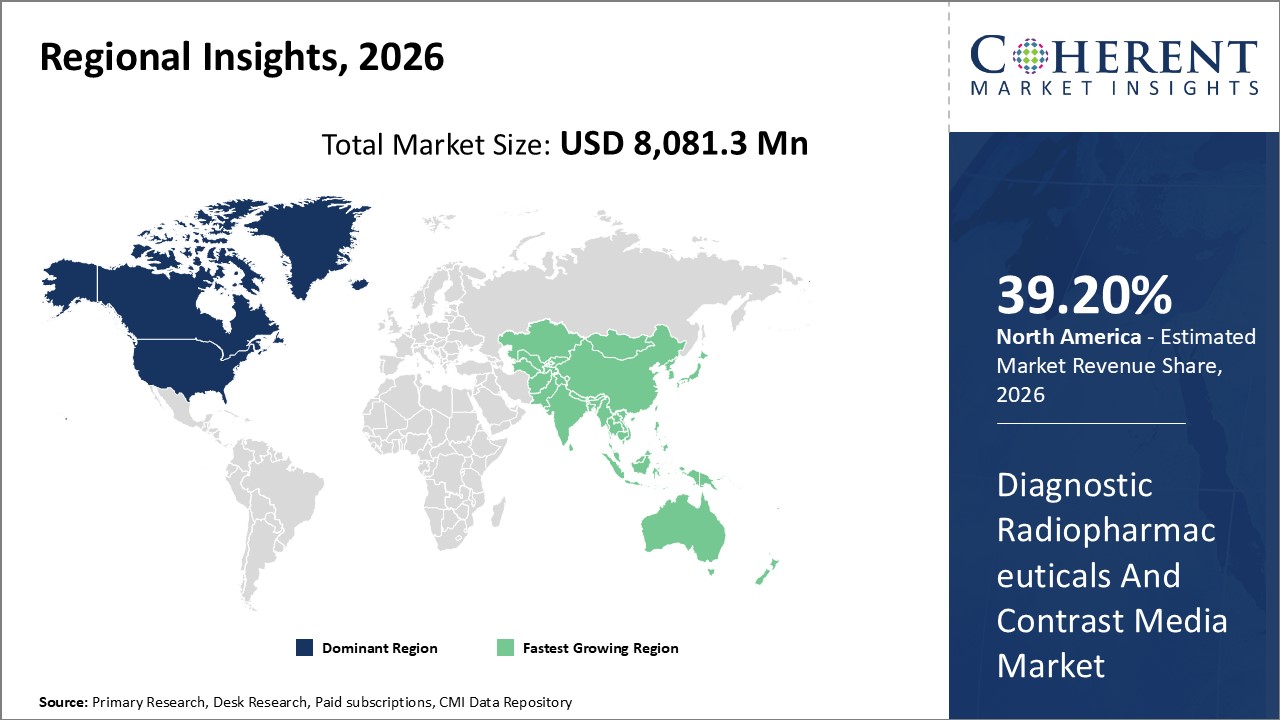
Based on geography, the global diagnostic radiopharmaceuticals and contrast media market is segmented into North America, Europe, Asia Pacific, Latin America, and Middle East & Africa.
Among regions, North America is expected to gain highest share in the market during the forecast period due to the growing burden of cancer and cardiovascular diseases, technology advancements in medical imaging, and increasing demand for image-guided procedures and diagnostics in this region. For instance, radiopharmaceutical therapy (RPT) is emerging as safe and effective targeted approach to treating many types of cancer. According to the American Cancer Society, in 2026, a total of 1.9 million new cancer cases (about 5,370 cases each day) and 609,820 deaths from cancer are expected to occur (about 1,670 deaths a day) in the U.S.
Europe and Asia Pacific are also expected to witness significant growth in the global diagnostic radiopharmaceuticals and contrast media market owing to the increasing prevalence of cancer and cardiac disease, increasing demand for image-guided procedures and diagnostics, and rapid growth of the pharmaceutical industry in these regions. For instance, as per the European Heart Network, each year, cardiovascular disease (CVD) causes 3.9 million deaths in Europe and over 1.8 million deaths in the European Union. Thus in turn is increasing demand for image-guided procedures and diagnostics, driving the growth of the market.
Figure 1. Global Diagnostic Radiopharmaceuticals and Contrast Media Market Share (%), By Region, 2026
Global Diagnostic Radiopharmaceuticals and Contrast Media Market Drivers:
Rise in burden of cardiac diseases to augment market growth
One of the key factors expected to augment growth of the global diagnostic radiopharmaceuticals and contrast market over the forecast period is the increase in prevalence of cardiovascular diseases worldwide. For instance, positron emission tomography (PET) imaging is useful in cardiovascular disease across several areas. According to the World Health Organization (WHO), cardiovascular diseases (CVDs) are the leading cause of death across the globe, taking an estimated 17.9 million lives each year. This in turn is expected to drive growth of the market.
Rise in burden of cancer to underpin market growth
Another key factor which is driving the growth of the global diagnostic radiopharmaceuticals and contrast market is the rise in burden of cancer around the world. For instance, radiopharmaceutical therapy (RPT) is both safe and effective targeted approach to treat many types of cancer. According to the World Health Organization (WHO), cancer is one of the leading cause of death worldwide, accounting for nearly 10 million deaths in 2020, or nearly one in six deaths. Thus, with the rise in burden of cancer, the use of oncology radiopharmaceuticals is also increasing rapidly.
Global Diagnostic Radiopharmaceuticals and Contrast Media Market Opportunities:
Increase in demand for diagnostic radiopharmaceuticals and contrast media is expected to provide significant growth opportunities for players in the diagnostic radiopharmaceuticals and contrast media market. For instance, in September 2022, University of Texas MD Anderson Cancer Center and Radiopharm Theranostics launched Radiopharm Ventures, a joint venture to develop novel radiopharmaceutical therapeutic products for cancer. The venture will focus initially on developing at least four therapeutic products based on MD Anderson intellectual property.
Rising number of diagnostic centres especially in developed countries is expected to offer lucrative growth opportunities for players in the global diagnostic radiopharmaceuticals and contrast media market. For instance, India boasts of a large number of diagnostics labs and chains to cater to the needs of the growing population. India has around 100,000 diagnostic laboratories, which include pathology laboratories and radiology centres, according to a research report of Seattle-based non-governmental organization PATH. This in turn is expected to increase the number of image-guided procedures and diagnostics, driving the market growth.
- Current Industry Events of 2026
- Market Size Estimation
- Regional Breakdown
- Competitive Landscape
- Customer Intelligence
- Segmental Analysis
- Pricing Analysis
- Key Market Drivers, Challenges & Future Trends
- Customized Insights Section
Diagnostic Radiopharmaceuticals and Contrast Media Market Report Coverage
| Report Coverage | Details | ||
|---|---|---|---|
| Base Year: | 2025 | Market Size in 2026: | USD 8,081.3 Mn |
| Historical Data for: | 2020 To 2024 | Forecast Period: | 2026 To 2033 |
| Forecast Period 2026 to 2033 CAGR: | 6.0% | 2033 Value Projection: | USD 12,151.3 Mn |
| Geographies covered: |
| ||
| Segments covered: |
| ||
| Companies covered: | Siemens Healthineers, Nordion Inc., Lantheus Holdings Inc., Guerbet Group, GE Healthcare, Curium, Bracco Imaging SpA, Bayer AG, Cardinal Health Inc., and NTP Radioisotopes SOC Ltd. | ||
| Growth Drivers: |
| ||
| Restraints & Challenges: |
| ||
Global Diagnostic Radiopharmaceuticals and Contrast Media Market Trends:
Rise in number of clinical trials is a recent trend
Several clinical trials/studies are being conducted in the radiopharmaceuticals segment worldwide. Most of them are currently under development to be used for the purpose of cancer diagnosis and treatment, however, drug molecules for other diseases such as heart disease are also in the pipeline of major market players. Moreover, players in the market are focusing on developing or launching novel drug molecules in the market to meet increasing demand. This trend is expected to continue over the forecast period, driving the growth of the market.
Increasing patient awareness is another trend
Due to increasing patient awareness levels pertaining to cardiovascular diseases and oncology, the use of radiopharmaceuticals and contrast media is also increasing with the rapid pace worldwide. Moreover, with the increasing patient awareness, the demand for image-guided procedures as well as accurate diagnosis is also increasing rapidly. Thus, players in the market are launching advanced imaging and diagnostic tools in the market. This trend is also expected to continue over the forecast period, driving the growth of the market.
Global Diagnostic Radiopharmaceuticals and Contrast Media Market Restraints:
Short half-life of radiopharmaceuticals to hinder market growth
One of the key factors expected to hamper the growth of the diagnostic radiopharmaceuticals and contrast media market is the short half-life of radiopharmaceuticals. Radiopharmaceuticals have half-life periods, after which the radioactivity decreases to half of its original value. There are three half-lives that are important when considering the use of radioactive drugs for both diagnostic and therapeutic purposes, which are physical, biological, and effective half-life. Shorter half-life of a radiopharmaceutical poses challenges in terms of utilizing its medicinal properties.
High costs of the techniques to hamper market growth
Another factor which is hampering the growth of the global diagnostic radiopharmaceuticals and contrast media market is the high costs of these techniques. Radiopharmaceuticals are not being approved at a rate that can attract R&D from the market players. This has led to the limited scope of research for radiopharmaceuticals leading to higher costs of radiopharmaceuticals and imaging procedure and thus, presently available procedures remain unaffordable to small clinics/hospitals. Moreover, the R&D expenses for new contrast agents costs on an average of about US$ 150-200 million, which is a lengthy process and takes years together to innovate a new imaging agent.
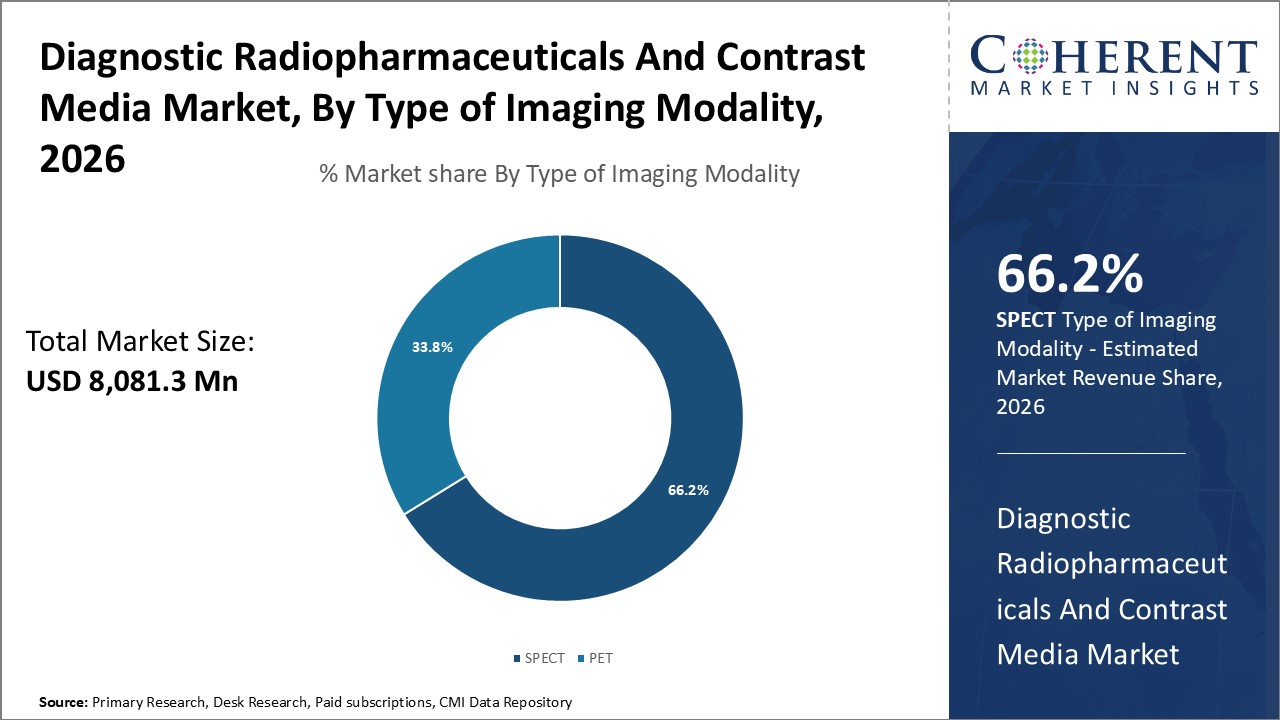
Figure 2. Global Diagnostic Radiopharmaceuticals and Contrast Media Market Share (%), By Modality, 2026
Global Diagnostic Radiopharmaceuticals and Contrast Media Market Segmentation:
The global diagnostic radiopharmaceuticals and contrast media market report is segmented into Radiopharmaceuticals, Contrast Media, and Geography.
Based on Radiopharmaceuticals, the market is segmented into Type of Imaging Modality and Application. Type of Imaging Modality further segmented into SPECT and PET. Out of which, SPECT Segment is expected to dominate the diagnostic radiopharmaceuticals and contrast media market over the forecast period and this is attributed to the increase in prevalence of cardiac disease and cancer across the globe. A single-photon emission computerized tomography (SPECT), a type of nuclear imaging, lets a doctor analyze body's organs, tissue, and bones.
PET Segment is also expected to witness significant growth in the near future and this is owing to the increase in demand for image-guided procedures. Positron emission tomography (PET) scan is an imaging test that can help reveal the metabolic or biochemical function of your tissues and organs. The PET scan uses a radioactive drug to show normal and abnormal metabolic activity.
Based on Contrast Media, the market is segmented into Procedure and Application. Application further segmented into Cardiovascular Disease, Oncology, Gastrointestinal Disorder, Neurological Disorder, and Other Indications. Out of which, Cardiovascular Disease Segment is expected to dominate the market over the forecast period and this is attributed to the increase in prevalence of cardiovascular disease across the world.
Oncology Segment is also expected to witness significant growth in the near future and this is owing to increase in prevalence of cancer worldwide.
Global Diagnostic Radiopharmaceuticals and Contrast Media Market : Key Developments
In October 2022, Duchem Bio launched FACBC, the world’s first radiopharmaceutical used when diagnosing prostate cancer patients, in Korea. FACBC had already received approval in the U.S. and EU in 2016 and 2017, respectively, and has been applied to about 196,000 patients.
In January 2021, QSAM Biosciences Inc. announced favorable results from a study to evaluate the radioactive impurity levels in its flagship drug candidate Samarium-153-DOTMP (aka CycloSam). The results of this study are positive indicators about the safety profile and potential expanded uses of CycloSam if ultimately approved for commercial usage.
In May 2020, the U.S. Food and Drug Administration (FDA) approved the radiopharmaceutical, flortaucipir F18 of Avid Radiopharmaceuticals, which is indicated to help image a distinctive characteristic of Alzheimer’s disease.
Global Diagnostic Radiopharmaceuticals and Contrast Media Market : Key Companies Insights
The global diagnostic radiopharmaceuticals and contrast media market is highly competitive. This is attributed to the rise demand for long-term pain management from geriatric population, as a result, players in the market are focusing on launching novel products in the market.
Some of the key players in the global diagnostic radiopharmaceuticals and contrast media market are Siemens Healthineers, Nordion Inc., Lantheus Holdings Inc., Guerbet Group, GE Healthcare, Curium, Bracco Imaging SpA, Bayer AG, Cardinal Health Inc., and NTP Radioisotopes SOC Ltd.
Sources
Primary Research Interviews
- Radiopharmaceutical and contrast media makers (e.g., GE Healthcare, Bayer, Bracco Imaging, Guerbet, Lantheus, Curium)
- Nuclear medicine, radiology and PET center directors
- Radiochemistry and cyclotron operators
Databases
- U.S. FDA approved radiopharmaceuticals
- EMA EPAR
- IAEA radiopharmaceutical data
Magazines
- Applied Radiology
- Diagnostic Imaging
Journals
- Journal of Nuclear Medicine (SNMMI)
- Radiology (RSNA)
Newspapers
- Reuters Health
- Financial Times – Pharmaceuticals
Associations
- SNMMI
- EANM
- ACR
Public Domain Sources
- U.S. FDA radiopharmaceutical guidance
- IAEA publications
- ResearchGate publications on contrast media
Proprietary Elements
- CMI Data Analytics Tool, Proprietary CMI Existing Repository of information for last 10 years.
*Definition: Radiopharmaceuticals are used to produce images of organs or tissues of interest, a process that is called scintigraphy. While, contrast media is used in imaging techniques to enhance the differences between body tissues on images.
Get access to 250+ pages report
Every segment, forecast, competitor profile and data table behind the analysis above — available for instant download.
- ESOMAR Member
- ISO 9001:2015 Certified
- D-U-N-S Registered
- GDPR & CCPA Compliant
Missing comfort of reading report in your local language? Find your preferred language:
Transform your Strategy with Exclusive Trending Reports
Frequently Asked Questions
The Diagnostic Radiopharmaceuticals And Contrast Media Market is estimated to be valued at USD 8,081.3 Mn in 2026, and is expected to reach USD 12,151.3 Mn by 2033.
The CAGR of the Diagnostic Radiopharmaceuticals And Contrast Media Market is projected to be 6.0% from 2026 to 2033.
Increase in prevalence of cardiovascular diseases and rise in burden of cancer around the world is fueling the growth of the market.
SPECT segment is the leading modality segment in the market.
Short half-life of radiopharmaceuticals and high costs of these techniques are factors restraining growth of the market.
Major players operating in the market are Siemens Healthineers, Nordion Inc., Lantheus Holdings Inc., Guerbet Group, GE Healthcare, Curium, Bracco Imaging SpA, Bayer AG, Cardinal Health Inc., and NTP Radioisotopes SOC Ltd.