

Opioid Drugs Market Size and Trends - 2026 to 2033
The Opioid Drugs Market is estimated to be valued at USD 49.70 Bn in 2026 and is expected to reach USD 63.23 Bn by 2033, growing at a compound annual growth rate (CAGR) of 3.5% from 2026 to 2033.
Key Takeaways
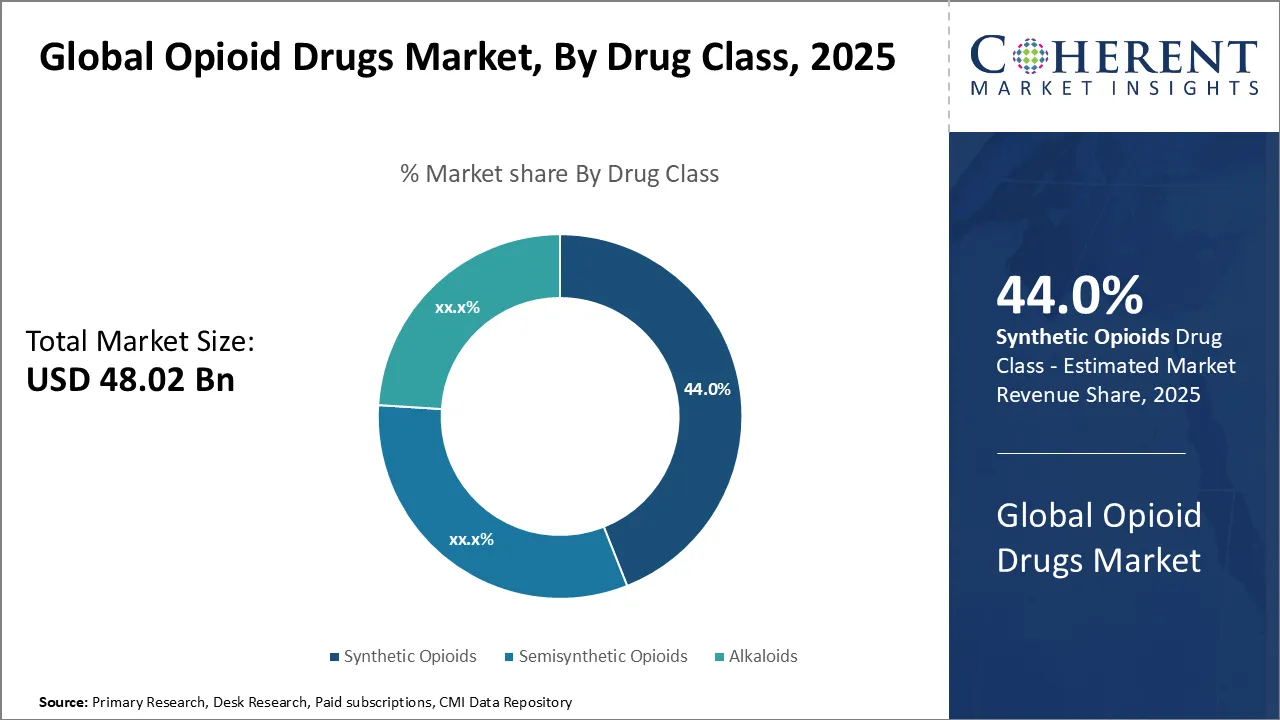
- Based on Drug Class, the Synthetic Opioids segment is expected to lead the market with 45% share in 2026, due to its wide applications.
- Based on Application, the Analgesia segment is expected to hold a share of the market in 2026, driven by increased demand for the management of postoperative pain.
- Based on Route of Administration, the Parenteral segment is projected to account for a share in 2026, due to rise in product approvals.
- Based on Distribution Channel, the Hospital Pharmacies segment is projected to capture the largest share of the market in 2026, due to increase in the number of hospitals and hospital pharmacies.
- Based on Region, North America is set to lead the Opioid Drugs Market with 33.5% share in 2026. While, Europe is anticipated to be the fastest growing region.
Market Overview
This sector includes prescription pain medications for both short-term and long-term pain relief as well as emergency treatment for opioid overdose. The growing number for surgeries, rise in chronic pain cases and increased awareness about overdose prevention are driving market growth in this area.
The market is moving towards safer drug formulations and better delivery methods. Pharmaceutical companies are developing new technologies like nasal sprays, syringes, and long-lasting formulations with safety features to prevent misuse. These newer options are becoming more popular than traditional pills because they are safer, work faster, and allow doctors to monitor patients more easily. This focus on innovation along with stricter regulations and better prescribing practices will continue to shape the industry in the coming years.
Current Events and Its Impacts on the Opioid Drugs Market
Current Event | Description and the Impact |
Geopolitical and Regional Healthcare Policies |
|
Economic and Supply Chain Factors |
|
Public Health and Societal Trends |
|
Segmental Insights
- Current Industry Events of 2026
- Market Size Estimation
- Regional Breakdown
- Competitive Landscape
- Customer Intelligence
- Segmental Analysis
- Pricing Analysis
- Key Market Drivers, Challenges & Future Trends
- Customized Insights Section
Opioid Drugs Market Insights By, Drug Class: Wide Use Drives Preference for Synthetic Opioids
In terms of drug class, the synthetic opioids segment contributes the highest share of 45% in 2026 of the market owing to their wide application in managing severe and chronic pain conditions. Synthetic opioids like fentanyl and tramadol are used widely for managing end-cancer pain, post-operative pain and other acute pain scenarios where standard pain medications provide insufficient relief. This treatment practice built over years of medical use makes synthetic opioids more effective compared to other options. For instance, Nitazenes—an emerging group of highly potent synthetic opioids with significant abuse potential and health risks—were examined in a first-of-its-kind study presented by the United Nations Office on Drugs and Crime (UNODC), in partnership with Brazil’s Ministry of Justice and Public Security and the United Nations Development Programme (UNDP).
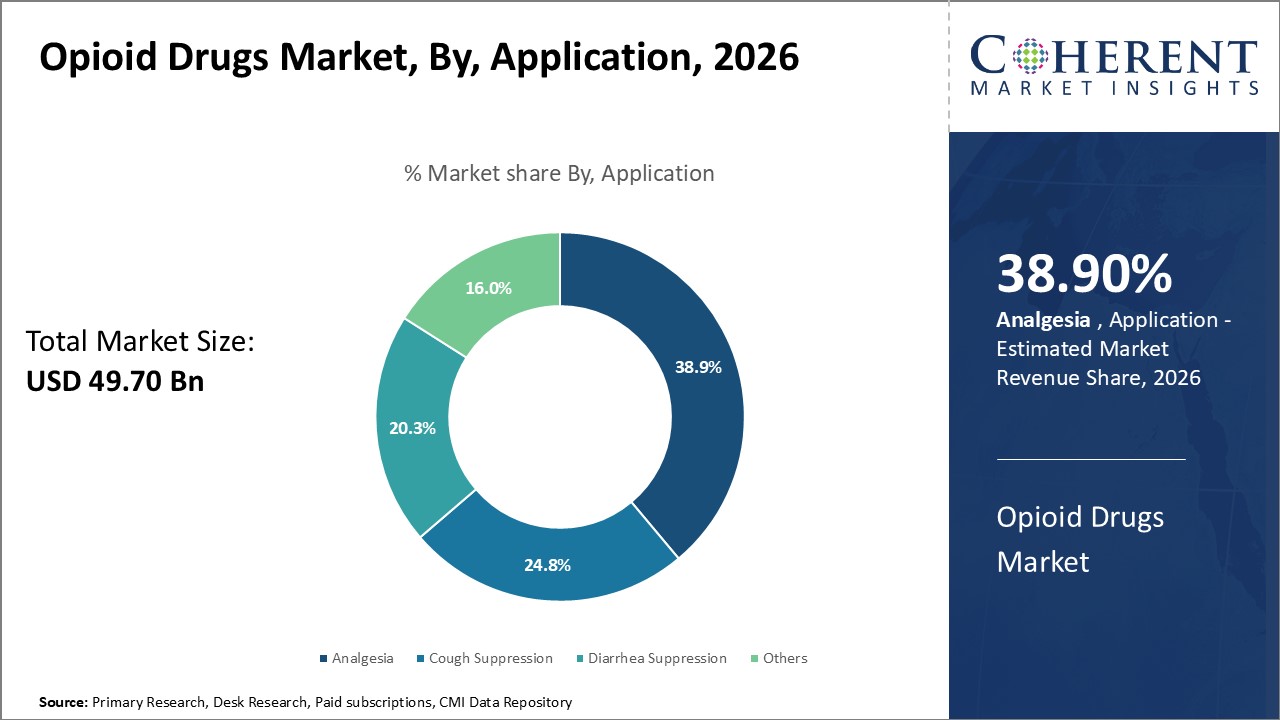
Opioid Drugs Market Insights By, Application: Analgesia Leads with Growing Need for Pain Relief Medications
In terms of application, the analgesia segment contributes the highest share of the market owing to the growing need for pain relief medications in hospitals and healthcare facilities. The rising number of surgeries performed across the world along with growing cases of chronic pain conditions has increased the demand for opioid based pain management solutions. This allows healthcare providers to prescribe targeted opioid therapies with greater precision and faster results. The training programs for healthcare professionals regarding opioids assessment and management has also contributed to the increasing acceptance of analgesia opioids in clinical practice.
Opioid Drugs Market Insights By, Route of Administration: Reliable Effects Drives Preference for Parenteral Opioids
In terms of route of administration, the parenteral segment contributes the highest of the market owing to rapid onset requirements that make injectable formulations a high priority in hospitals. Acute care units and emergency departments require immediate pain relief results which is impossible with oral opioids that take time to work. High costs are justifiable to secure injectables offering precise control, instant absorption and reliable effects between different patients and treatment settings. Parental delivery avoids digestive system issues that reduce effectiveness in urgent pain management.
Opioid Drugs Market Insights, By Distribution Channel: Hospital Pharmacies Leads Owing to Controlled Administration
In terms of distribution channel, the hospital pharmacies segment is expected to lead the market with largest share because they handle controlled opioids and manage high-cost prescriptions. They distribute the most opioid drugs since they have strong oversight systems due to special storage for strong pain medications. They also provide direct delivery from injectable opioids for severe pain cases and run treatment programs for patients with opioid addiction.
Regional Insights
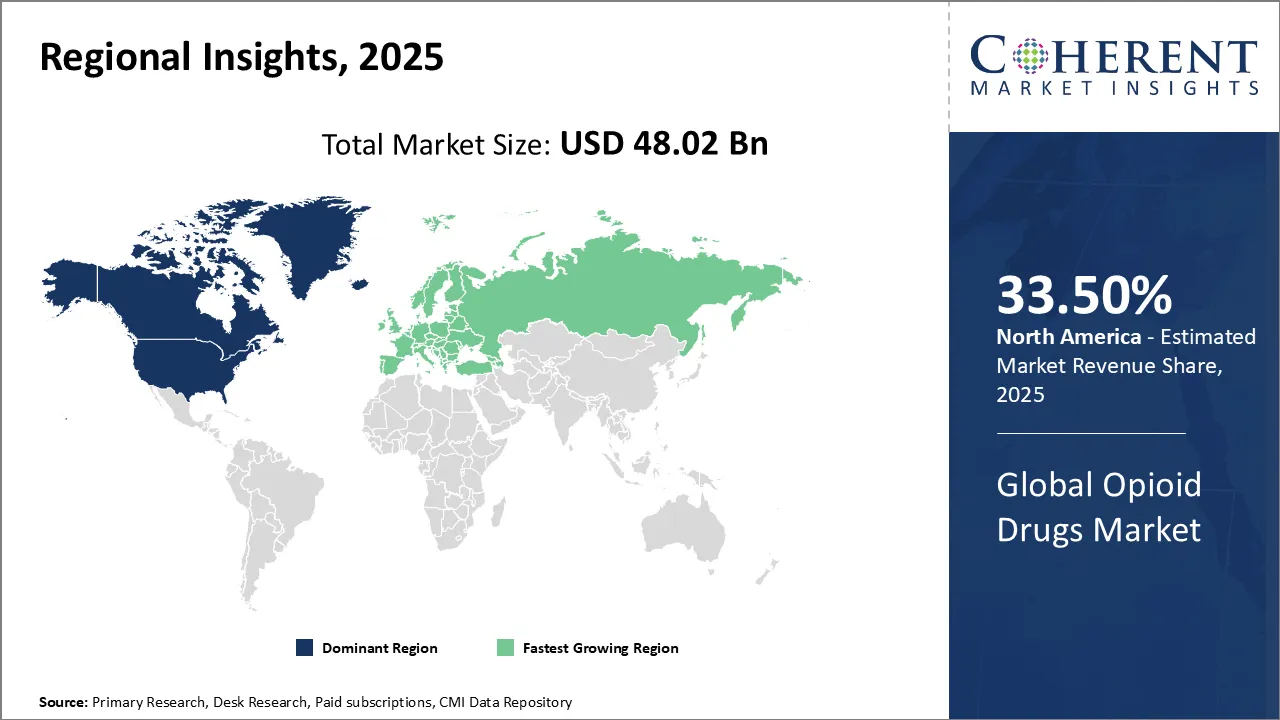
North America Opioid Drugs Market Analysis & Trends
North America has remained the dominant region with 33.5% in2024 of the global Opioid Drugs Market over the past decade. The region boasts a strong presence of pharmaceutical manufacturers and healthcare providers that provide various opioid medications catered towards pain management. The prescription infrastructure and dispensing rates are highly developed here allowing for seamless patient access both domestically and cross-border. In addition, supportive regulations by governing bodies have helped create a conducive environment for prescription opioid medications to thrive. Healthcare sectors like hospitals and clinics that involve significant opioid activity are well established in the region. This has sustainably driven the utility of prescription opioid for acute pain, chronic pain, post-surgical care and others on a large scale.
Europe Opioid Drugs Market Analysis & Trends
The Europe region has emerged as the fastest growing market for opioid drugs globally in recent years. Rapid aging of populations combined with rising chronic pain conditions and cancer prevalence have accelerated the shift from traditional to advanced opioid pain management methods. Cross-border healthcare collaborations between European countries as well as with North America and Asia Pacific are increasing at a breakneck pace. This is strengthening the medical case for pain management solutions tailored to diverse patient populations. Several global pharmaceutical manufacturers have augmented their presence in developing markets within Europe to tap rising demand from hospital and outpatient care segments. Regional players are also introducing new formulation opioid products to gain ground in the evolving healthcare landscape of Europe. The confluence of healthcare reforms, patient-centered care and medical advancement continue to propel the Opioid Drugs Market in Europe ahead of other regions.
Opioid Drugs Market Outlook Country-Wise
The U.S. Opioid Drugs Market Trends
In 2026, the opioids market in the U.S. is expected to be strong as many hospitals and healthcare facilities use prescription and controlled pain management. There is a large healthcare provider and pharmaceutical ecosystem, the regulatory framework is advanced, and there is a high demand for fast, safe, and efficient pain relief and chronic pain management in many medical conditions.
U.K. Opioid Drugs Market Trends
In 2026, the market in U.K. is booming owing to comprehensive healthcare coverage, the growth of palliative care and pain clinics, government programs that encourage safer prescribing practices, and the widespread use of advanced pain management solutions. Healthcare providers are using monitored, safe, and efficient opioid medication systems more and more to handle a lot of patients, both within the acute settings and community care.
Market Report Scope
Opioid Drugs Market Report Coverage
| Report Coverage | Details | ||
|---|---|---|---|
| Base Year: | 2025 | Market Size in 2026: | USD 49.70 Bn |
| Historical Data for: | 2020 To 2024 | Forecast Period: | 2026 To 2033 |
| Forecast Period 2026 to 2033 CAGR: | 3.5% | 2033 Value Projection: | USD 63.23 Bn |
| Geographies covered: |
| ||
| Segments covered: |
| ||
| Companies covered: | Teva Pharmaceutical Industries Ltd., Johnson & Johnson, Endo International plc, Lupin Limited, Cadila Healthcare Limited, Purdue Pharma L.P., AbbVie Inc., Fresenius Kabi, Mallinckrodt Pharmaceuticals, Pfizer Inc., Rhodes Pharmaceuticals L.P., Sun Pharmaceutical Industries Limited, Nesher Pharmaceuticals (USA) LLC, Amneal Pharmaceuticals LLC, Trevena Inc., and Aurobindo Pharma Limited. | ||
| Growth Drivers: |
| ||
| Restraints & Challenges: |
| ||
Opioid Drugs Market Drivers
Increasing cancer burden
Rising incidence of cancer worldwide is a key driver for the market growth of opioid drugs market. As more individuals face the disease, demand for effective pain management solutions is expected to increase. Opioids serve as the cornerstone for treatment of moderate to severe cancer related pain. Therse medications provide rapid relief, flexible dosing, and versatile delivery operations. This makes opioid drugs indispensable in palliative and oncology care. Healthcare providers are highly dependent on opioids to improve patient quality of life amid prolonged treatment durations and better survival outcomes. This trend spurs pharmaceutical innovation in safer formulations and expanded access propelling market growth.
Analyst Opinion (Expert Opinion)
The opioid drugs market remains a critical component of the global pharmaceutical sector, supported by sustained clinical demand for effective pain management therapies. Industry data indicate that opioids account for a substantial proportion of prescription analgesics used worldwide, with millions of patients receiving opioid-based treatments annually for post-surgical pain, cancer-related pain, and severe chronic conditions. Morphine, oxycodone, fentanyl, hydrocodone, and codeine collectively represent the majority of prescription volumes due to their established efficacy and broad therapeutic application.
North America continues to record the highest prescription volumes, reflecting advanced healthcare infrastructure and higher treatment rates for surgical and chronic pain conditions. Europe follows with regulated but consistent utilization, while Asia Pacific shows expanding prescription activity driven by improving access to healthcare services and rising hospitalization rates. Hospital pharmacies account for a significant share of opioid dispensing, particularly for acute and inpatient care, while retail pharmacies dominate outpatient and long-term pain management distribution.
Product innovation has increasingly focused on controlled-release and abuse-deterrent formulations, which now represent a growing share of newly approved and prescribed opioids. These formulations are gaining traction as they align with regulatory requirements and clinical safety priorities. Overall, statistical indicators suggest that the opioid drugs market is characterized by stable demand, regionally differentiated prescribing patterns, and ongoing formulation advancements that continue to shape its long-term structure.
Speak to the analyst
Want personalized insights?
Take the findings above to one of our principal consultants, or have the report rebuilt around the segments, geographies and competitors you actually track.
Opioid Drugs Industry News
- In July 2025, global pharmaceutical manufacturer, Hikma Pharmaceuticals PLC, introduced Morphine Sulfate Injection, USP, to the American market. They are available in two concentrations - 2mg/mL and 4mg/mL doses. The prefilled syringe can help treat severe pain that needs opioid-based therapy when other pain management options prove insufficient.
- In March 2025, SCIENTURE HOLDINGS, INC. revealed that its fully owned subsidiary, Scienture, LLC had signed a licensing deal with SUMMIT BIOSCIENCES INC. This agreement grants exclusive U.S. commercialization rights for REZENOPY, 10mg naloxone nasal spray. This opioid antagonist serves as an emergency intervention for potential or confirmed opioid overdoses.
- In January 2025, Hikma Pharmaceuticals PLC announced a special sales deal with Emergent BioSolutions. This partnership lets Hikma sell KLOXXADO® naloxone HCl nasal spray 8 mg in the U.S. and Canada. The U.S. Food and Drug Administration (FDA) approved KLOXXADO in April 2021. It treats emergencies known or suspected opioid overdoses.
- In August 2020, biopharmaceutical firm Trevena, Inc. obtained the U.S. Food and Drug Administration (FDA) for OLINVYK. This opioid medication received approval for adult patients experiencing severe acute pain that necessities IV opioid administration when other therapeutic approaches fail to provide adequate relief.
Market Segmentation
- Drug Class Insights (Revenue, USD Bn, 2026 - 2033)
- Alkaloids
- Semisynthetic Opioids
- Synthetic Opioids
- Application Insights (Revenue, USD Bn, 2026 - 2033)
- Analgesia
- Cough Suppression
- Diarrhea Suppression
- Route of Administration Insights (Revenue, USD Bn, 2026 - 2033)
- Oral
- Topical
- Parenteral
- Others
- Distribution Channel Insights (Revenue, USD Bn, 2026 - 2033)
- Hospital Pharmacies
- Retail Pharmacies
- Online Pharmacies
- Regional Insights (Revenue, USD Bn, 2026 - 2033)
- North America
- U.S.
- Canada
- Latin America
- Brazil
- Argentina
- Mexico
- Rest of Latin America
- Europe
- Germany
- U.K.
- France
- Italy
- Russia
- Rest of Europe
- Asia Pacific
- China
- India
- Japan
- Australia
- South Korea
- ASEAN
- Rest of Asia Pacific
- Middle East & Africa
- GCC Countries
- South Africa
- Rest of Middle East & Africa
- Key Players Insights (Revenue, USD Bn, 2021 - 2033)
- Teva Pharmaceutical Industries Ltd.
- Johnson & Johnson
- Endo International plc
- Lupin Limited
- Cadila Healthcare Limited
- Purdue Pharma L.P.
- AbbVie Inc.
- Fresenius Kabi
- Mallinckrodt Pharmaceuticals
- Pfizer Inc.
- Rhodes Pharmaceuticals L.P.
- Sun Pharmaceutical Industries Limited
- Nesher Pharmaceuticals (USA) LLC
- Amneal Pharmaceuticals LLC
- Trevena Inc.
- Aurobindo Pharma Limited
Sources
Primary Research Interviews
- Opioid Drug Manufacturers (Branded & Generic)
- Active Pharmaceutical Ingredient (API) Producers
- Contract Development & Manufacturing Organizations (CDMOs)
- Hospital Pharmacists & Pain Management Specialists
- Anesthesiologists & Oncology Pain Care Physicians
- Addiction Medicine Specialists
- Regulatory Affairs & Pharmacovigilance Experts
- Wholesalers and Drug Distribution Channel Partners
- Others
Databases
- Bloomberg Terminal
- Thomson Reuters Eikon
- IQVIA
- S&P Global Market Intelligence
- Evaluate Pharma
- GlobalData Healthcare
- Factiva
- Others
Magazines
- Pharmaceutical Executive
- Pharma Times
- Drug Discovery Today
- Pharmaceutical Manufacturing
- BioPharma Dive
- Chemical & Engineering News
- Others
Journals
- Journal of Pain
- Pain Medicine
- The Lancet (Pain & Therapeutics Sections)
- New England Journal of Medicine
- Journal of Opioid Management
- Clinical Pharmacology & Therapeutics
- Others
Newspapers
- Financial Times
- The Wall Street Journal
- The New York Times
- Reuters
- Bloomberg News
- The Guardian
- Others
Associations
- American Pain Society (APS)
- International Association for the Study of Pain (IASP)
- American Society of Anesthesiologists (ASA)
- World Health Organization (WHO) – Pain & Essential Medicines Program
- International Narcotics Control Board (INCB)
- Others
Public Domain Sources
- U.S. Food and Drug Administration (FDA)
- U.S. Centers for Disease Control and Prevention (CDC)
- National Institutes of Health (NIH)
- World Health Organization (WHO)
- European Medicines Agency (EMA)
- World Bank Open Data
- Others
Proprietary Elements
- CMI Data Analytics Tool
- Proprietary CMI Existing Repository of Information for the Last 8 Years
Definition: The Opioid Drugs Market facilitates pain management between healthcare providers and patients. It provides pharmaceutical solutions that allow physicians to treat acute and chronic pain conditions in a safe, controlled and effective way. Healthcare providers can use this market to prescribe medications, manage post-surgical pain, treat cancer related discomfort, and provide palliative care for terminated patients. Medication types include oral tablets, transdermal patches, injectable formulations, and extended-release technologies.
Get access to 250+ pages report
Every segment, forecast, competitor profile and data table behind the analysis above — available for instant download.
- ESOMAR Member
- ISO 9001:2015 Certified
- D-U-N-S Registered
- GDPR & CCPA Compliant
Missing comfort of reading report in your local language? Find your preferred language:
Transform your Strategy with Exclusive Trending Reports
Frequently Asked Questions
The Opioid Drugs Market is estimated to be valued at USD 49.70 Bn in 2026, and is expected to reach USD 63.23 Bn by 2033.
The CAGR of the Opioid Drugs Market is projected to be 3.5% from 2026 to 2033.
Increasing incidence of cancer and increasing number of orthopedic surgical procedures are expected to drive the global opioid drugs market growth.
Synthetic opioids is the leading drug class segment in the market.
Side effect associated with use of opioids drugs is expected to hinder the market over the forecast period.
Major players operating in the market are Teva Pharmaceutical Industries Ltd., Johnson & Johnson, Endo International plc, Lupin Limited, Cadila Healthcare Limited, Purdue Pharma L.P., AbbVie Inc., Fresenius Kabi, Mallinckrodt Pharmaceuticals, Pfizer Inc., Rhodes Pharmaceuticals L.P., Sun Pharmaceutical Industries Limited, Nesher Pharmaceuticals (USA) LLC, Amneal Pharmaceuticals LLC, Trevena Inc., and Aurobindo Pharma Limited.