

Pain Management Drugs Market Size and Trends - 2026 to 2033
The Pain Management Drugs Market is estimated to be valued at USD 88.4 Bn in 2026 and is expected to reach USD 113.15 Bn by 2033, growing at a compound annual growth rate (CAGR) of 3.6% from 2026 to 2033.
Key Takeaways
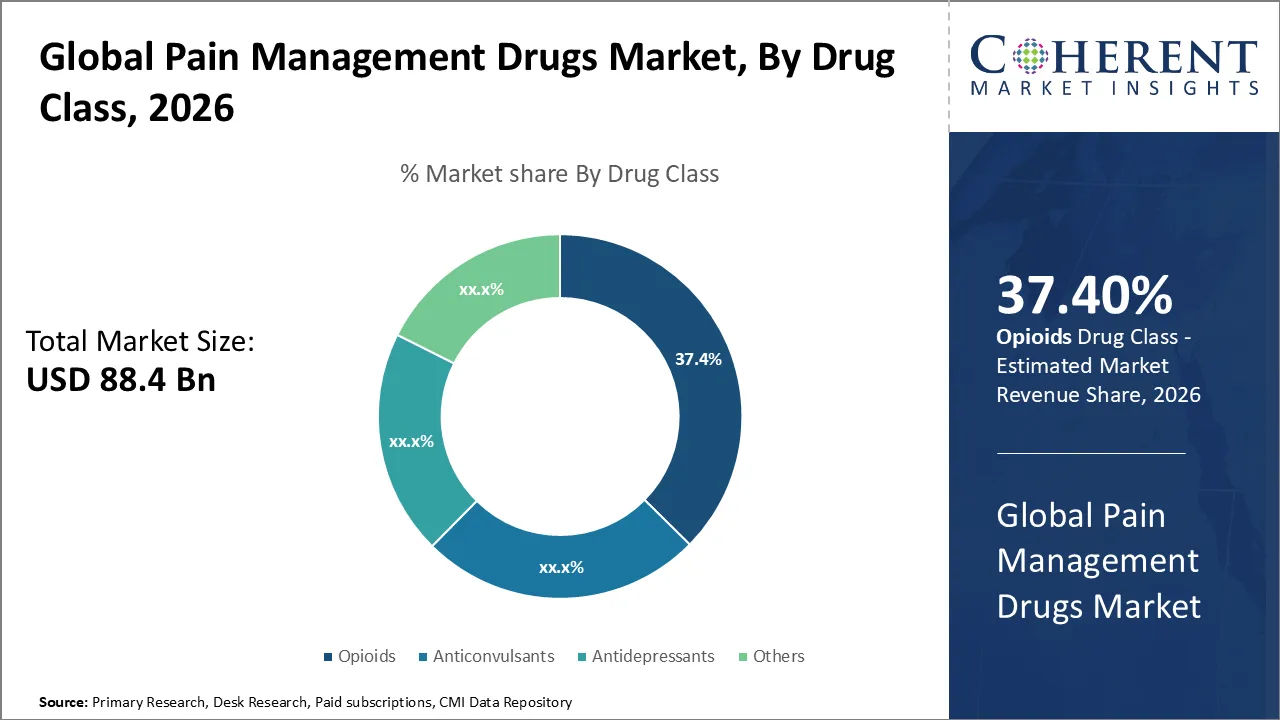
- Based on Drug Class, the Opioids segment is expected to lead the market with 37.40% share in 2026, due to its unmatched efficacy for severe acute and chronic pain, especially in hospital settings and cancer pain management.
- Based on Distribution Channel, the Retail Pharmacies segment is expected to lead the market with 51.90% share in 2026, driven by high accessibility, OTC availability of painkillers (especially NSAIDs), and strong consumer preference for in‑store counseling and repeat purchase convenience.
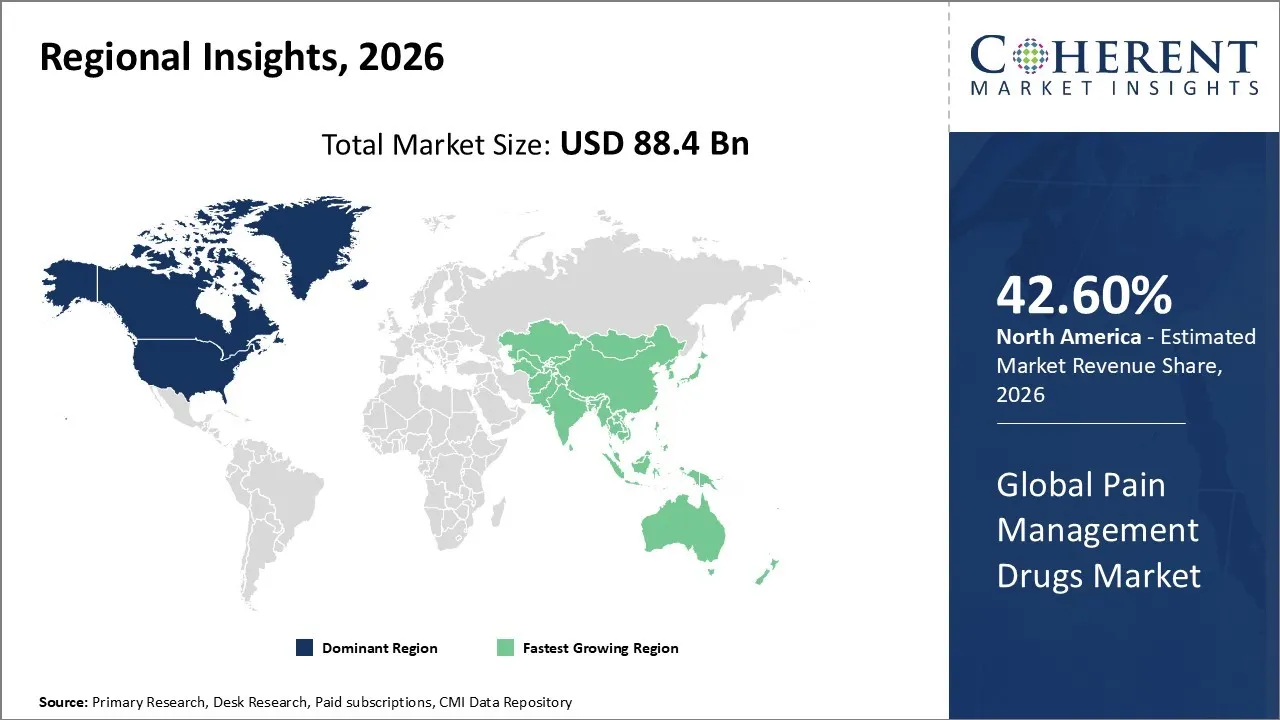
- Based on Region, North America is set to lead the market with 42.60% share in 2026. While, Asia Pacific is anticipated to be the fastest growing region.
Market Overview
The pain management drugs market is advancing significantly with the rising demand for innovative analgesic solutions and non-opioid alternatives in the healthcare and pharmaceutical sectors. The growing consumer awareness regarding the risks of opioid dependency and a strategic shift toward multimodal pain management are expected to propel market growth over the forecast period. Pain management drugs are essential for addressing chronic conditions such as arthritis, neuropathy, and oncology-related pain. They represent a potent therapeutic category including NSAIDs, anticonvulsants, and specialized biologics. This makes pain management drugs a vital component in modern clinical care and patient wellness formulations.
The industry is entering a transformative era propelled by the deployment of sophisticated drug delivery systems like extended-release injectables and high-performance transdermal patches. The integration of biopharmaceutical breakthroughs like nerve growth factor inhibitors and monoclonal antibodies is providing more targeted relief for patients with treatment-resistant pain. These advancements enhance the safety profiles and bioavailability of modern therapeutics while allowing manufacturers to replace high-risk medications with precision-based alternatives. The advancements help meet the growing global regulatory demands for safety, purity, and transparency in clinical practice.
Current Events and Its Impacts on the Pain Management Drugs Market
Current Event | Description and the Impact |
Technological Advances in Pain Management |
|
Innovation in Biologics and Personalized Medicine |
|
Public Health Trends and Societal Attitudes |
|
Segmental Insights
- Current Industry Events of 2026
- Market Size Estimation
- Regional Breakdown
- Competitive Landscape
- Customer Intelligence
- Segmental Analysis
- Pricing Analysis
- Key Market Drivers, Challenges & Future Trends
- Customized Insights Section
Pain Management Drugs Market Insights, By Drug Class – Opioids Leads Due to Its Unmatched Efficacy for Severe Acute and Chronic Pain
In terms of drug class, the opioids segment contributes the highest share of 37.40% in 2026 of the market. The growth is owing to its unmatched efficacy in treating severe acute pain, post-surgical recovery, and cancer pain. The clinicians use these treatments to address patients suffering from high-intensity pain. This segment is growing due to a rising demand for long-acting formulations and specialized delivery systems like transdermal patches and intravenous infusions. Although regulatory bodies like the FDA and EMA have tightened prescribing guidelines to address the opioid crisis, the pharmaceutical industry has responded by developing abuse-deterrent formulations (ADFs).
These innovations make it more difficult to crush or dissolve medications for misuse, thereby helping to sustain the segment's viability within the medical community. In addition, in emerging markets across the Asia Pacific and Latin America, the expansion of palliative care infrastructure is generating new demand for medical-grade opioids that were previously inaccessible to significant portions of the population. The top companies like Purdue Pharma, Hikma Pharmaceuticals, and Mallinckrodt play a pivotal role in this industry.
For instance, in January 2026, Pacira BioSciences, Inc. partnered with LG Chem to improve opioid-sparing postsurgical pain control in select Asia-Pacific markets. This partnership gives LG Chem exclusive rights to sell Pacira's long-acting local analgesic EXPAREL for managing postsurgical pain in the region.
Pain Management Drugs Market Insights, By Distribution Channel – Retail Pharmacies Leads Due to High Accessibility
In terms of distribution channel, the retail pharmacies segment contributes the highest share of 51.90% in 2026 of the market. The growth is owing to the accessibility and convenience offered to patients of acute and chronic pain. These settings play an essential role in providing channels through which healthcare providers can be linked to patients. These settings provide opportunities to distribute large amounts of Over-the-Counter (OTC) analgesics like NSAIDs and those that are heavily regulated like opioids and anticonvulsants.
The increasing prevalence of chronic conditions like arthritis and neuropathy, which necessitate long-term medication management, is also propelling the segment's growth. The patients favor local retail outlets for their routine refills owing to the established trust and the availability of professional consultations from pharmacists regarding potential drug interactions and side effects. The retail pharmacies like CVS Health, Walgreens Boots Alliance, and Rite Aid have opted for cutting edge technology for the management of their inventory. This ensures the consistent supply of these drugs while strictly monitoring the tracking of controlled substances.
Regional Insights
North America Pain Management Drugs Market Analysis & Trends
North America has consistently been the leading region in the global Pain Management Drugs Market and holds a 42.60% share in 2026 throughout the forecast period. This growth is owing to an increasing geriatric population and a high prevalence of chronic conditions like arthritis, neuropathy, and cancer. A significant shift is currently taking place as regulatory pressures and the opioid crisis drive the transition toward non-addictive alternatives. Major industry leaders, including Pfizer, Teva Pharmaceutical, and Johnson & Johnson, are prioritizing precision medicine and multimodal therapy regimens that integrate pharmacology with digital health monitoring to enhance patient safety and improve long-term outcomes.
For instance, in January 2025, the FDA has approved Journavx (suzetrigine) 50 milligram oral tablets as a first-in-class non-opioid analgesic for the treatment of moderate to severe acute pain in adults. Journavx works by targeting sodium channels in the peripheral nervous system, effectively blocking pain signals before they reach the brain.
Asia Pacific Pain Management Drugs Market Analysis & Trends
The Asia Pacific region is recognized as the fastest growing market for pain management drugs. This growth is owing to an aging population, particularly in Japan and China. The substantial rise in the prevalence of chronic diseases and an increasing number of surgical procedures in emerging economies like India is also constituting to the growth in the region. The region demonstrates a strong preference for nonsteroidal anti-inflammatory drugs (NSAIDs) and topical analgesics over opioids, influenced by stringent local regulations and a high demand for affordable, over-the-counter options. Major industry players such as Pfizer, Teva Pharmaceutical, and GlaxoSmithKline (GSK) are competing with prominent local firms like Sun Pharmaceutical Industries and Hisamitsu Pharmaceutical. The firms are developing affordable generic formulations and transdermal patch technologies to meet the needs of large patient populations in India and Southeast Asia.
For instance, in February 2025, VIVOZON Pharmaceutical has announced the approval of its non-opioid analgesic, UNAFRA Inj., by the Ministry of Food and Drug Safety (MFDS). UNAFRA Inj., developed using the company's proprietary multi-target drug development platform, is the first analgesic in the world that is both non-opioid and non-NSAIDs.
Pain Management Drugs Market Outlook Country-Wise
The US Pain Management Drugs Market Trends
The US is currently at the forefront of the pain management drugs market owing to a staggering chronic pain burden and an aging population prone to arthritis, neuropathy, and cancer. Modern prescribing practices now favor multimodal regimens that combine different drug classes to minimize opioid reliance. In addition, the market is witnessing an increase in innovative drug delivery systems like long-acting injectables and transdermal patches, which enhance patient compliance and safety. Prominent pharmaceutical companies, including Pfizer, Johnson & Johnson, Teva Pharmaceutical, and Eli Lilly, are making substantial investments in these technologies and in research and development for biologic therapies to sustain their competitive advantage.
For instance, in November 2025, Tonix Pharmaceuticals Holding Corp. has announced that TONMYATM is available by prescription at pharmacies across the US. TONMYA is a first-in-class treatment for fibromyalgia in adults and is formulated as a non-opioid analgesic taken once daily at bedtime.
China Pain Management Drugs Market Trends
China is rapidly emerging as the fastest-growing market for pain management drugs. This growth is owing to the nation's vast and aging population. The analgesic landscape in China is dominated by Non-Steroidal Anti-Inflammatory Drugs (NSAIDs) and non-opioid analgesics due to substantial cultural concerns regarding opioid addiction and strict regulatory oversight. The opioids play a crucial role in cancer pain management, with increasing morphine consumption as the government aligns local protocols with World Health Organization (WHO) standards. The market is currently experiencing a shift toward specialty analgesics and innovative delivery systems, such as injectable pain medications and transdermal patches. Regionally, economically developed areas like Beijing, Shanghai, and Zhejiang have the highest pain health indices, attributed to superior medical infrastructure and enhanced access to advanced therapies. In addition, the rise of online pharmacies and telemedicine is significantly improving medication adherence and distribution efficiency in the country.
Market Report Scope
Pain Management Drugs Market Report Coverage
| Report Coverage | Details | ||
|---|---|---|---|
| Base Year: | 2025 | Market Size in 2026: | USD 88.4 Bn |
| Historical Data for: | 2020 To 2024 | Forecast Period: | 2026 To 2033 |
| Forecast Period 2026 to 2033 CAGR: | 3.6% | 2033 Value Projection: | USD 113.15 Bn |
| Geographies covered: |
| ||
| Segments covered: |
| ||
| Companies covered: | Pfizer, Inc., Sanofi S.A., Mylan N.V., Teva Pharmaceutical Industries Ltd., Eli Lilly and Company, Abbott Laboratories, Purdue Pharma L.P., GlaxoSmithKline Plc, Johnson & Johnson, and F. Hoffmann La Roche Ltd. | ||
| Growth Drivers: |
| ||
| Restraints & Challenges: |
| ||
Pain Management Drugs Market Drivers
Rising incidence of chronic disorders
The rising prevalence of chronic conditions acts as a primary driver of growth in the Pain Management Drugs Market. The long-term ailments like arthritis, diabetes, and cancer require consistent pharmacological support to manage persistent pain and improve daily functioning. The global health trends indicate a growing necessity for a diverse range of analgesics. The increase in the aging population also plays a crucial role in the growth of the market. Older adults are more frequently diagnosed with degenerative bone diseases and nerve-related complications. Sedentary lifestyles have caused a surge in chronic pain across younger demographics. To address this growing patient base, the pharmaceutical industry is intensifying its focus on developing innovative, non-addictive treatments. These therapies offer safer long-term relief for those living with permanent or recurring conditions.
Analyst Opinion (Expert Opinion)
The Pain Management Drugs Market is experiencing substantial growth due to the rising prevalence of chronic pain conditions, including neuropathic, musculoskeletal, and postoperative pain. Prescription trends indicate an increasing preference for combination therapies that integrate NSAIDs with adjuvant medications, aimed at enhancing pain relief while minimizing adverse effects. Recent data show that more than 60% of newly approved drugs in major pharmaceutical hubs focus on targeted therapies, such as selective COX-2 inhibitors, nerve growth factor inhibitors, and novel local anesthetics.
Healthcare utilization patterns highlight a shift toward outpatient and home-care administration of pain management drugs, supported by telemedicine and remote monitoring, which has improved patient adherence. Pharmacy dispensing data demonstrate rising demand for sustained-release and extended-release formulations, reflecting a growing preference for convenience-oriented therapeutic options.
Regionally, North America remains the largest consumer of pain management therapies, while Europe and Asia-Pacific are emerging growth markets driven by aging populations and expanding healthcare infrastructure. Emerging economies in Southeast Asia and Latin America are witnessing rapid growth in prescription volumes, reflecting increased access to healthcare and adoption of advanced analgesic therapies.
Speak to the analyst
Want personalized insights?
Take the findings above to one of our principal consultants, or have the report rebuilt around the segments, geographies and competitors you actually track.
Pain Management Drugs Industry News
- In December 2025, Akums Drugs & Pharmaceuticals has introduced Gabapentin Extended-Release (ER) for the treatment of postherpetic neuralgia (PHN). This neuropathic pain condition affects approximately 10–20% of patients who have experienced shingles.
- In December 2025, Ambros Therapeutics is concentrating on the development of neridronate, a non-opioid pain medication that has already gained approval from Italy's Abiogen Pharma. Ambros is set to initiate a pivotal trial in the U.S. soon.
- In July 2025, Johnson & Johnson MedTech has announced a partnership with Pacira BioSciences, Inc. This agreement enhances the Company’s Early Intervention portfolio to include ZILRETTA®. The injectable is intended for treating pain associated with osteoarthritis (OA) of the knee.
- In May 2025, Senores Pharmaceuticals Limited acquired the USFDA-approved Abbreviated New Drug Application for Tramadol Tablets from APDM Pharmaceuticals Private Limited. Tramadol is indicated for managing pain that is severe enough to necessitate an opioid analgesic when alternative treatments are insufficient.
Market Segmentation
- Drug Class Insights (Revenue, USD Bn, 2026 - 2033)
- Opioids
- NSAIDs
- Anticonvulsants
- Antidepressants
- Others
- Distribution Channel Insights (Revenue, USD Bn, 2026 - 2033)
- Hospital Pharmacies
- Retail Pharmacies
- Online Pharmacies
- Regional Insights (Revenue, USD Bn, 2026 - 2033)
- North America
- U.S.
- Canada
- Latin America
- Brazil
- Argentina
- Mexico
- Rest of Latin America
- Europe
- Germany
- U.K.
- France
- Italy
- Russia
- Rest of Europe
- Asia Pacific
- China
- India
- Japan
- Australia
- South Korea
- ASEAN
- Rest of Asia Pacific
- Middle East
- GCC
- Israel
- Rest of Middle East
- Africa
- North Africa
- Central Africa
- South Africa
- Key Players Insights
- Pfizer, Inc.
- Sanofi S.A.
- Mylan N.V.
- Teva Pharmaceutical Industries Ltd.
- Eily, Lilly, and Company
- Abbott Laboratories
- Purdue Pharma L.P.
- GlaxoSmithKline Plc
- Johnson & Johnson
- F. Hoffmann La Roche Ltd.
Sources
Primary Research Interviews
- Pharmaceutical Manufacturers (Pain Management Drugs)
- Contract Research Organizations (CROs)
- Clinical Pharmacologists & Pain Specialists
- Hospital & Pharmacy Procurement Managers
- Regulatory Affairs Consultants
- Others
Databases
- Bloomberg Terminal
- Thomson Reuters Eikon
- Others
Magazines
- Pharmaceutical Executive
- Drug Topics
- PharmaTimes
- Pain Management Today
- Others
Journals
- Pain
- Journal of Pain Research
- Clinical Journal of Pain
- European Journal of Pain
- Journal of Pharmacology & Experimental Therapeutics
- Others
Newspapers
- Financial Times
- The Wall Street Journal
- Reuters
- Bloomberg News
- Others
Associations
- International Association for the Study of Pain (IASP)
- American Pain Society (APS)
- European Pain Federation (EFIC)
- World Health Organization (WHO) – Pain Management Programs
- Others
Public Domain Sources
- U.S. Food & Drug Administration (FDA)
- European Medicines Agency (EMA)
- World Health Organization (WHO)
- Centers for Disease Control and Prevention (CDC) – Pain & Analgesic Data
- National Institutes of Health (NIH)
- Others
Proprietary Elements
- CMI Data Analytics Tool
- Proprietary CMI Existing Repository of Pain Management Drug Information for the Last 8 Years
Definition: The Pain Management Drugs Market covers the global pharmaceutical sector focused on the development, manufacturing, and sale of medications designed to mitigate acute and chronic pain. These medications, known as analgesics, work by changing how the nervous system senses pain or by reducing inflammation where it occurs. The market is structured around several major drug categories like nonsteroidal anti-inflammatory drugs (NSAIDs), opioids, anticonvulsants, and antidepressants. These agents are indicated for the treatment of conditions like postoperative recovery and chronic neuropathic pain. The growth in the market is owing to an aging population and the increasing prevalence of long-term conditions like arthritis and cancer. The industry operates through a vast network of clinical settings and retail pharmacies to provide essential relief to millions of patients.
Get access to 250+ pages report
Every segment, forecast, competitor profile and data table behind the analysis above — available for instant download.
- ESOMAR Member
- ISO 9001:2015 Certified
- D-U-N-S Registered
- GDPR & CCPA Compliant
Missing comfort of reading report in your local language? Find your preferred language:
Transform your Strategy with Exclusive Trending Reports
Frequently Asked Questions
The Pain Management Drugs Market is estimated to be valued at USD 88.4 Bn in 2026, and is expected to reach USD 113.15 Bn by 2033.
The CAGR of the Pain Management Drugs Market is projected to be 3.6% from 2026 to 2033.
Factors such as increasing government initiatives for research and development on pain management drugs and high prevalence of chronic pain diseases are some of the major factors that are driving the growth of the Pain Management Drugs Market.
The side effects associated with the pain management drugs is one of the major factors that are hampering the growth of the Pain Management Drugs Market.
In terms of drug class, the opioids segment is estimated to dominate the market revenue share in 2026.
Pfizer, Inc., Sanofi S.A., Mylan N.V., Teva Pharmaceutical Industries Ltd., Eli Lilly and Company, Abbott Laboratories, Purdue Pharma L.P., GlaxoSmithKline Plc, Johnson & Johnson, and F. Hoffmann La Roche Ltd. are the major players.
North America is expected to lead the Pain Management Drugs Market in 2026.