

Palliative Care Market Size and Forecast — 2026-2033
The Global Palliative Care Market size is estimated to be valued at USD 10.15 billion in 2026 and is expected to reach USD 15.7 billion by 2033, exhibiting a compound annual growth rate (CAGR) of 8.0% from 2026 to 2033.
Overview
Palliative care products and services focus on managing pain and improving quality of life for patients with chronic or terminal illnesses. The product segment includes pain relief drugs, antiemetics, nutritional supplements, and medical devices such as infusion pumps and respiratory support systems. Historically, palliative care was limited to end-of-life support, but the approach has broadened to encompass early-stage chronic disease management. Integration of pharmacologic and psychological support, telehealth-based monitoring, and multidisciplinary care models has significantly enhanced accessibility. Increasing emphasis on personalized symptom control and home-based care delivery continues to drive product innovation and clinical adoption.
Key Takeaways
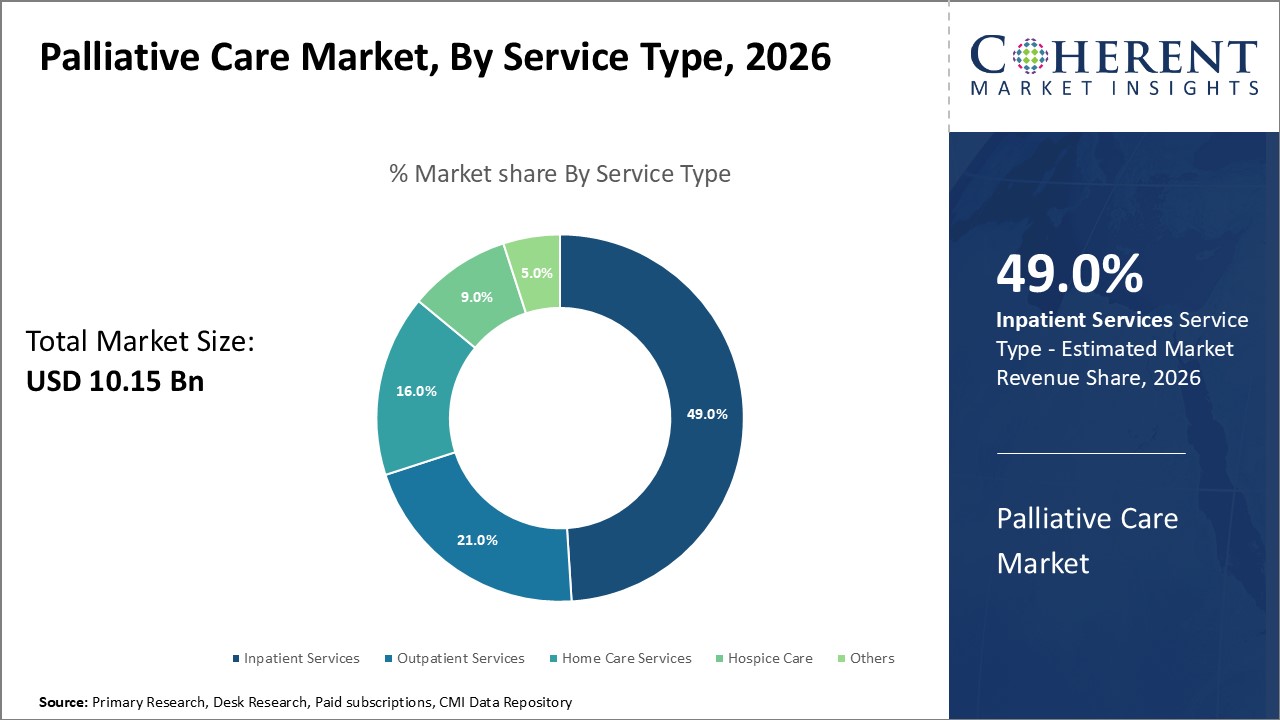
The Inpatient Services segment dominates market revenue, accounting for 49%, reflecting a strong preference for hospital-centered palliative interventions supported by multidisciplinary teams.
The Cancer category leads disease-wise segments due to rising global incidence, driving the highest market share among disease types.
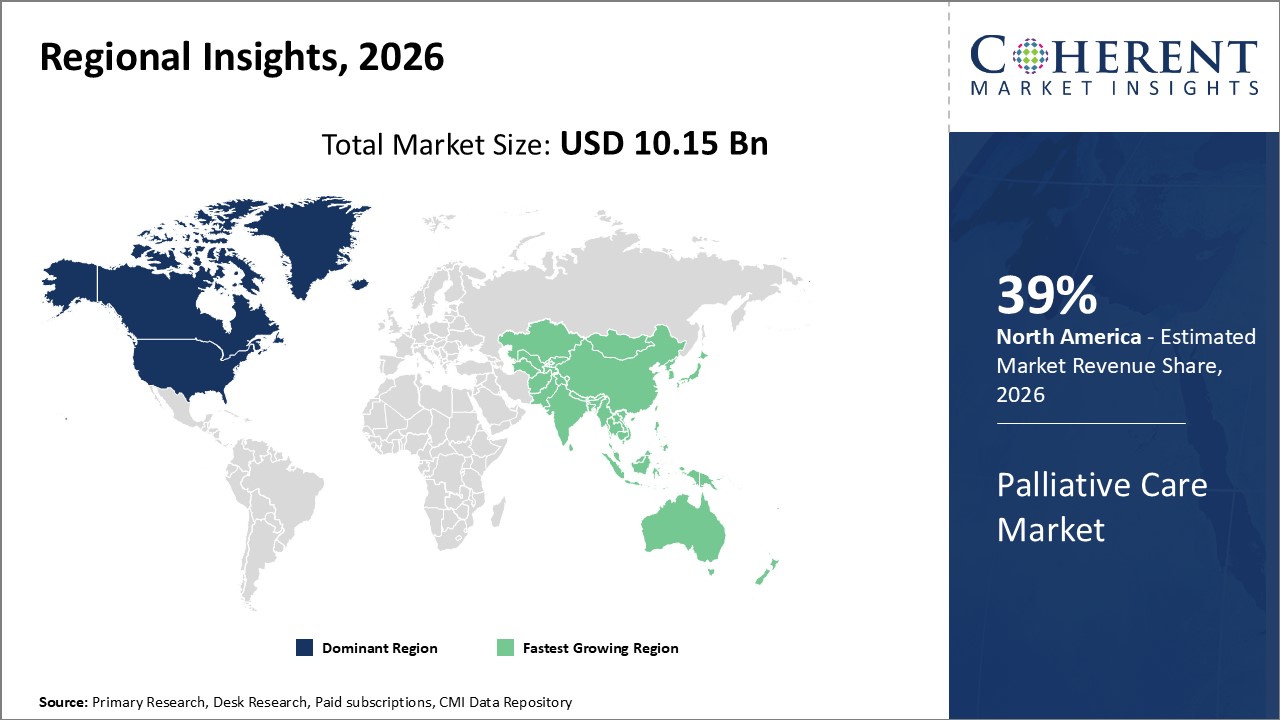
Regionally, North America remains dominant, holding approximately 39% of the market share owing to advanced healthcare infrastructure and robust reimbursement systems.
Asia Pacific records the fastest CAGR, driven largely by burgeoning elderly populations and government initiatives facilitating palliative care integration.
Europe also illustrates steady growth, strengthened by widespread public health policies emphasizing end-of-life care and patient rights.
Palliative Care Market Segmentation Analysis
Palliative Care Market Insights, By Service Type
Inpatient Services dominate the market share. Inpatient Services maintain this leadership due to the intensive care requirements of critically ill patients, supported by multidisciplinary clinical teams and advanced therapeutic modalities. The fast adoption of Outpatient Services stems from their ability to offer cost-effective, flexible care models, especially appealing in outpatient clinics and community health centers. Home Care Services have gained momentum aligned with patient preferences for home comfort and decreasing hospitalization rates.
Palliative Care Market Insights, By Disease Type
Cancer represents the dominating disease type segment. Cancer continues to lead due to its high global prevalence and the significant symptom burden necessitating palliative interventions, especially in lung and breast cancers that represent over 30% of cases utilizing such care. Cardiovascular Diseases represent the fastest growing subsegment as rising rates of heart failure and ischemic conditions prompt increased palliative symptom management strategies. Neurological Disorders such as Alzheimer’s and Parkinson’s Disease contribute to sustained demand alongside respiratory diseases like COPD, reflecting comprehensive palliative care adoption for chronic, degenerative conditions.
Palliative Care Market Insights, By End-User
The End-User segment comprises Hospitals, Specialty Clinics, Homecare Providers, Hospice Centers, and Others, with Hospitals dominating market share. Hospitals serve as centralized hubs offering multidisciplinary expertise and infrastructure essential for managing complex symptomatology. Specialty Clinics are experiencing the fastest growth driven by their focused services in oncology and cardiovascular palliative treatments, allowing for tailored therapies and patient-specific protocols. Homecare Providers are expanding access particularly in rural and underserved areas, matching the rising trend of domiciliary care. Hospice Centers provide specialized end-of-life care and emotional support, while Others include rehabilitation centers and nursing homes integrating palliative practices.
Palliative Care Market Trends
Market trend analysis reveals a robust pivot towards digital integrations such as telemedicine and AI-enabled monitoring systems across major regions.
For example, tele-palliative care consultations increased globally by an average of 35% in 2025, reflecting consumer demand for remote and personalized care solutions.
Moreover, early referral and integration protocols within clinical pathways have gained traction with proven reductions in overall treatment costs and hospitalization times, particularly in North America.
Palliative Care Market Insights, By Geography
North America Palliative Care Market Analysis and Trends
North America remains the leading region in the palliative care market, holding a share close to 39%, driven by a robust healthcare ecosystem, widespread institutional capacity, and well-defined reimbursement structures. The region’s mature insurance landscape—particularly Medicare and Medicaid—plays a central role in supporting both inpatient and home-based palliative services, enabling broader access to multidisciplinary care.
Asia Pacific Palliative Care Market Analysis and Trends
Asia Pacific represents the fastest-growing region in the global palliative care market, expanding at a CAGR of nearly 9.5%, supported by rapidly evolving healthcare systems and demographic shifts. The region faces a steep rise in aging populations, chronic illness burden, and late-stage cancer diagnoses, which is accelerating demand for both institutional and home-based palliative services. Countries like China, India, Japan, and South Korea are steadily increasing healthcare investment, with governments introducing frameworks to improve training, regulatory guidelines, and community care infrastructures.
Palliative Care Market Outlook for Key Countries
USA Palliative Care Market Analysis and Trends
The USA remains a focal point for palliative care market growth due to a combination of high healthcare expenditure and progressive policy implementations such as Medicare reimbursement expansions in 2025, which increased patient access by around 22%. Major companies like CVS Health Corporation and Humana Inc. have spearheaded initiatives in remote patient monitoring and integrative hospice services, together contributing to a substantial share of market revenue. The growing adoption of AI and telehealth platforms in palliative care in states like California and New York further bolsters the USA’s leadership in this sector.
India Palliative Care Market Analysis and Trends
India’s palliative care market has expanded rapidly with government-led programs such as the National Programme for Palliative Care (NPPC), which saw a 25% increase in operational centers from 2023 to 2026. A shift toward home-based care solutions and rising investments from private healthcare companies have propelled business growth within the country. Rising incidences of chronic diseases, notably cancer and cardiovascular ailments, have increased demand, making India one of the fastest-growing markets in Asia Pacific. Companies such as Apollo Hospitals and Fortis Healthcare are at the forefront, integrating tele-palliative services and community outreach programs.
Analyst Opinion
The increasing healthcare expenditure among developed nations remains a strong demand-side indicator, as evidenced by the U.S. allocating over USD 1.3 trillion annually toward chronic disease management in 2025, directly amplifying palliative care market share. This trend primarily reflects broader insurance coverage and government policies incentivizing holistic patient management programs.
Supply-side analysis highlights capacity expansion in specialized palliative units. For example, healthcare providers in Europe increased dedicated palliative care beds by over 15% between 2023 and 2025, aligning with rising patient influx and regulatory standardization of care. This enhanced capacity is a critical driver of market revenue growth.
Pharmaceutical innovations in symptom management therapies underpin the nano-indicators of market growth. In 2026, opioid alternatives and non-invasive analgesic innovations saw a 23% increase in global therapeutic use, positioning pharmaceutical treatment as a key subsegment influencing Palliative Care Market size expansion.
Import dynamics show a growing cross-border trade of medical equipment used in palliative settings. Asia Pacific witnessed a 19% surge in imports of advanced mobility aids and respiratory devices in 2025, signaling regional infrastructural developments fostered by rising chronic disease incidence.
- Current Industry Events of 2026
- Market Size Estimation
- Regional Breakdown
- Competitive Landscape
- Customer Intelligence
- Segmental Analysis
- Pricing Analysis
- Key Market Drivers, Challenges & Future Trends
- Customized Insights Section
Market Scope
| Report Coverage | Details | ||
|---|---|---|---|
| Base Year: | 2025 | Market Size in 2026: | USD 10.15 billion |
| Historical Data for: | 2020 To 2024 | Forecast Period: | 2026 To 2033 |
| Forecast Period 2026 to 2033 CAGR: | 8.0% | 2033 Value Projection: | USD 15.7 billion |
| Geographies covered: |
| ||
| Segments covered: |
| ||
| Companies covered: | Cardinal Health, Humana Inc., McKesson Corporation, CVS Health Corporation, Fresenius SE & Co. KGaA, Teva Pharmaceutical Industries Ltd., Cigna Corporation, Pfizer Inc., Becton Dickinson and Company, Koninklijke Philips N.V., UnitedHealth Group Incorporated. | ||
| Growth Drivers: |
| ||
Palliative Care Market Growth Factors
The expanding geriatric population globally remains the foremost growth driver, with the World Health Organization reporting a 9.3% rise in the population aged above 65 from 2023 to 2026, escalating the demand for palliative care services geared toward chronic illness management. Additionally, an upsurge in cancer prevalence, particularly lung and gastrointestinal cancers, accounts for approximately. 28% of palliative care patients in 2025—propels market revenue. Technological advancements, particularly in tele-palliative care, catalyze accessibility improvements, with teleconsultations surging by 35% in 2025, enabling broader patient reach. Lastly, favorable healthcare policies supporting reimbursement and standardized care pathways in North America and Europe significantly accelerate market growth strategies and business growth prospects.
Palliative Care Market Development
In July 2026, Apollo Home Healthcare introduced an integrated home-based palliative care program in Delhi, designed to bring medical, psychological, and end-of-life support directly to patients’ homes. The service combines physician visits, nursing care, symptom management, and digital monitoring, aiming to reduce hospital dependency while providing families with a coordinated and compassionate care pathway.
In February 2023, Pallium India partnered with Athulya Senior Care to launch dedicated palliative care services across South India. The collaboration integrates Pallium’s expertise in specialist palliative medicine with Athulya’s senior-living and assisted-care infrastructure, expanding access to structured pain management, chronic illness support, and continuity-of-care programs for elderly patients in the region.
Key Players
Leading Companies of the Market
Cardinal Health
Humana Inc.
McKesson Corporation
CVS Health Corporation
Fresenius SE & Co. KGaA
Teva Pharmaceutical Industries Ltd.
Pfizer Inc.
Becton Dickinson and Company
Koninklijke Philips N.V.
UnitedHealth Group Incorporated
Competitive strategies strongly lean on strategic partnerships and acquisitions. For instance, Pfizer’s 2025 acquisition of a niche palliative pharmaceuticals firm enhanced its portfolio significantly, driving a reported 13% revenue increase in associated therapies. Similarly, Philips invested in AI-enabled remote palliative monitoring solutions in early 2026, resulting in improved patient outcome metrics and widened market share within telehealth segments.
Palliative Care Market Future Outlook
In the future, palliative care will expand significantly through digital health, telemedicine, and integrated care pathways. AI-driven symptom assessment and remote monitoring will optimize care delivery, while personalized medicine approaches will tailor treatment to patient needs. Pharmaceutical innovation in pain management and symptom control drugs will complement non-pharmacological therapies. The focus on home-based care models and community engagement will improve accessibility, especially in developing regions. Global policy initiatives promoting dignified end-of-life care will continue to strengthen this sector.
Palliative Care Market Historical Analysis
Historically, palliative care was primarily associated with hospice services focused on terminal-stage cancer patients. The concept has since evolved to encompass comprehensive symptom management for a broad range of chronic and life-limiting illnesses, including cardiovascular, neurological, and respiratory disorders. Over the past two decades, multidisciplinary care models integrating pharmacologic management, psychological counseling, and home-based support have gained global recognition. Government policies, aging populations, and healthcare system reforms have increased awareness and funding for palliative care integration into mainstream healthcare.
Sources
Primary Research Interviews:
Palliative Physicians
Nurses
Healthcare Administrators
Hospice Program Directors
Databases:
WHO Palliative Care Statistics
National Hospice and Palliative Care Organization (NHPCO) Data
OECD Health Data
GlobalData Healthcare Reports
Magazines:
Palliative Medicine Journal
Healthcare IT News
Journal of Pain and Symptom Management
Health Affairs
Journals:
The Lancet Global Health
Journal of Palliative Medicine
BMC Palliative Care
Pain Management Nursing
Newspapers:
The Guardian (Health)
The Times (Healthcare)
The Hindu (Health)
The Economic Times (Medical)
Associations:
World Health Organization (WHO)
National Hospice and Palliative Care Organization (NHPCO)
International Association for Hospice and Palliative Care (IAHPC)
American Academy of Hospice and Palliative Medicine (AAHPM)
Get access to 250+ pages report
Every segment, forecast, competitor profile and data table behind the analysis above — available for instant download.
- ESOMAR Member
- ISO 9001:2015 Certified
- D-U-N-S Registered
- GDPR & CCPA Compliant
Missing comfort of reading report in your local language? Find your preferred language:
Transform your Strategy with Exclusive Trending Reports
Frequently Asked Questions
Leading market companies include Cardinal Health, Humana Inc., McKesson Corporation, CVS Health Corporation, Fresenius SE & Co. KGaA, and Pfizer Inc. These entities are pivotal in shaping market dynamics through expanded service offerings and innovative therapeutic solutions.
The market size is projected to grow from USD 10.15 billion in 2026 to USD 15.7 billion by 2033, with an estimated CAGR of 8.0%, underpinned by demographic shifts and healthcare technology advancements.
Hospitals represent the largest end-user segment, driven by the integration of palliative care into conventional patient management frameworks and increasing patient admissions requiring specialized symptom relief.
Emerging trends suggest accelerated adoption of tele-palliative services, AI-enabled patient monitoring, and early integration of palliative care in treatment plans, alongside policy reforms favoring reimbursement and standardized care delivery.
The competitive landscape is marked by strategic acquisitions and technology-driven innovation; however, market restraints include regulatory variability across regions and challenges in workforce training for specialized care delivery.
Market players emphasize partnerships with healthcare providers, digital health integration, and patient-centered care models to maximize outreach and service efficacy.