

Brucellosis Vaccines Market Size and Forecast – 2026 to 2033
The Brucellosis Vaccines Market is estimated to be valued at USD 1.2 Bn in 2026 and is expected to reach USD 2.4 Bn by 2033, exhibiting a compound annual growth rate (CAGR) of 7.3% from 2026 to 2033.
Key Takeaways
- By Type, RB51 Vaccine hold the largest market share of 41.1% in 2026 owing to the rising prevalence of brucellosis in livestock.
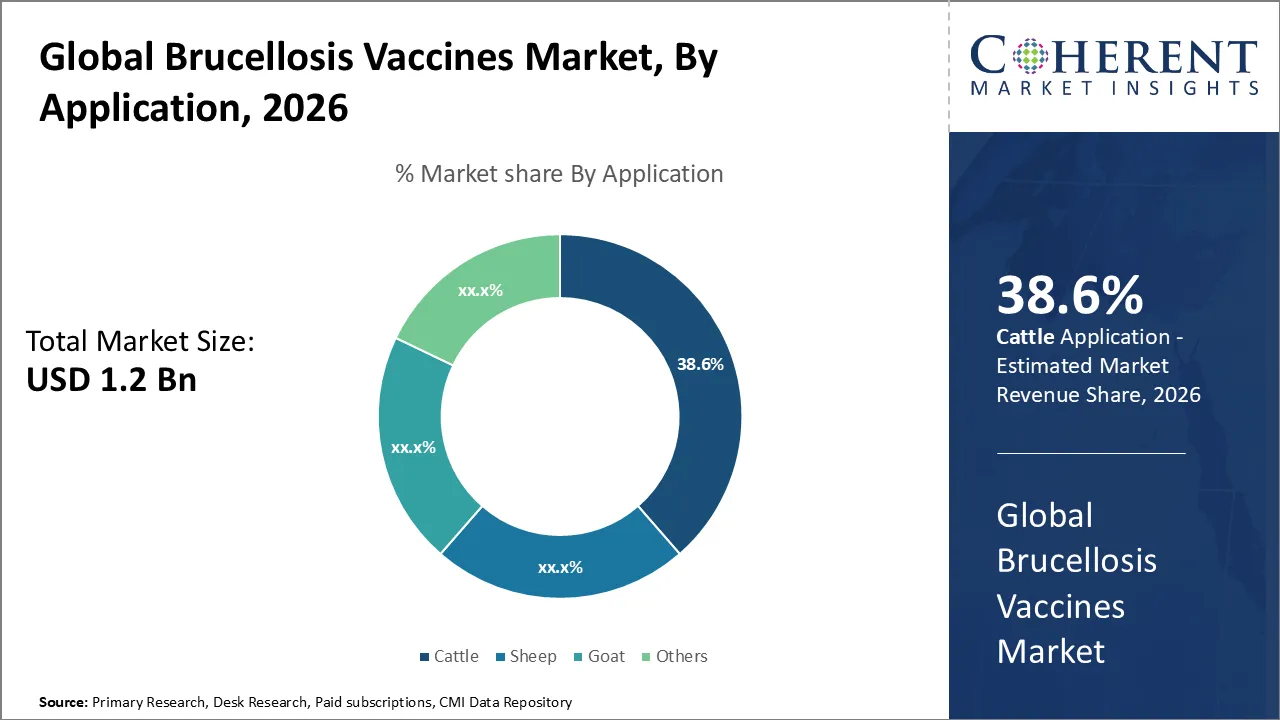
- By Application, Cattle expected to hold the largest market share of 38.6% in 2026 owing to its high prevalence of bovine brucellosis.
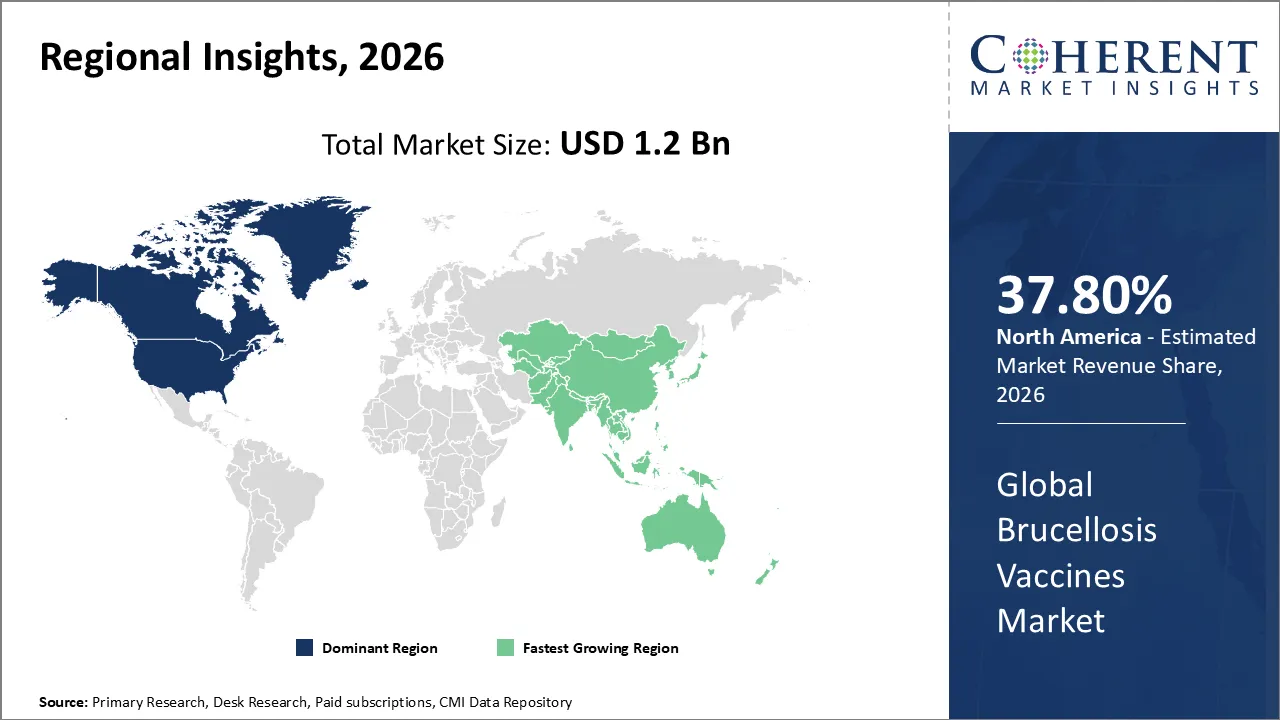
- By Region, North America dominates the overall market with an estimated share of 37.8% in 2026 owing to the government brucellosis control and eradication programs.
Market Overview
Efforts to control zoonotic diseases affecting livestock and humans are driving the Brucellosis Vaccines Market. Brucella bacteria cause brucellosis, which affects cattle, sheep, goats, and other animals, resulting in reproductive disorders and economic losses in the livestock sector. Rising awareness about animal health, expanding livestock populations, and government-led vaccination initiatives are promoting market expansion. In addition, advancements in veterinary biotechnology and the development of vaccines such as RB51 and S19 are strengthening disease prevention strategies and improving herd health management worldwide.
Current Events and their Impact
Current Events | Description and its impact |
Global Livestock Disease Outbreaks and Surveillance Enhancements |
|
Technological Innovations in Vaccine Development |
|
Economic Factors Affecting Livestock Industry |
|
Segmental Insights
- Current Industry Events of 2026
- Market Size Estimation
- Regional Breakdown
- Competitive Landscape
- Customer Intelligence
- Segmental Analysis
- Pricing Analysis
- Key Market Drivers, Challenges & Future Trends
- Customized Insights Section
Brucellosis Vaccines Market Insights, By Application - Cattle contribute the highest share of the market owing to its economic losses from brucellosis in cattle
Cattle expected to hold the largest market share of 38.6% in 2026. The cattle segment strongly drives the Brucellosis Vaccines Market as cattle remain highly susceptible to Brucella abortus infection, which leads to reproductive problems and reduced milk yield. Livestock producers actively implement preventive healthcare measures to protect herd productivity and maintain food safety standards. Governments also promote livestock health through organized vaccination campaigns and disease control initiatives, encouraging wider vaccine use in cattle. Moreover, the continued expansion of the dairy and beef sectors increases the need for reliable vaccination strategies to safeguard large cattle populations. For instance, Assam Chief Minister Sarbananda Sonowal launched the National Animal Disease Control Programme’s vaccine drive, aiming to fully vaccinate India’s cattle, buffalo, sheep, goats, and pigs against deadly diseases like Brucellosis and FMD.
Brucellosis Vaccines Market Insights, By Type - RB51 Vaccine contribute the highest share of the market owing to its safety advantages over older vaccines
RB51 Vaccine hold the largest market share of 41.1% in 2026. The RB51 vaccine segment drives growth in the Brucellosis Vaccines Market due to its effectiveness in controlling bovine brucellosis and its compatibility with routine disease surveillance systems. Veterinary authorities adopt this vaccine widely because it enables effective immunization without interfering with standard diagnostic tests used to identify infections. Livestock producers and regulators also increase its use as they focus on improving herd productivity and enforcing stricter animal health regulations. Furthermore, veterinary research institutions promote RB51 for its dependable performance in large-scale livestock vaccination programs. For instance, the US Centers for Disease Control and Prevention (CDC) warned that people in Connecticut, New Jersey, New York, and Rhode Island who drank raw milk from Udder Milk may have been exposed to the rare Brucella abortus RB51 bacterium and should seek antibiotic treatment.
Regional Insights
North America Brucellosis Vaccines Market Trends
North America dominates the overall market with an estimated share of 37.80% in 2026. The North America Brucellosis Vaccines Market is advancing steadily as stakeholders enhance animal health monitoring and implement preventive veterinary care. Livestock producers follow structured vaccination programs to protect cattle and other farm animals from infectious diseases. Veterinary diagnostic innovations and improved vaccine technologies actively shape market trends. Furthermore, animal health companies, research institutions, and regulatory agencies collaborate to drive innovation and strengthen disease surveillance across the region. These efforts actively improve livestock protection and promote sustainable animal production practices.
Asia Pacific Brucellosis Vaccines Market Trends
The Asia Pacific Brucellosis Vaccines Market grows as countries actively strengthen livestock disease control and implement preventive health measures. Rising populations of cattle, sheep, and goats drive farmers to adopt effective vaccination programs. Governments and veterinary authorities organize large-scale immunization campaigns to curb brucellosis outbreaks and safeguard both animal and public health. Innovations in veterinary biotechnology, combined with increasing farmer awareness of herd productivity and food safety, actively influence market trends and promote widespread use of brucellosis vaccines throughout the region. For instance, the state launched the National Animal Disease Control Programme (NADCP) in all districts. This fully government-funded scheme will register all cloven-footed livestock for biannual FMD vaccination and give female calves aged four to eight months a one-time Brucellosis shot.
United States Brucellosis Vaccines Market Trends
The United States Brucellosis Vaccines Market grows as livestock producers and veterinary authorities actively prioritize preventive healthcare for cattle and other farm animals. Federal and state programs organize vaccination campaigns to control brucellosis and maintain herd health. Innovations in vaccine technology and veterinary diagnostics improve disease detection and enhance immunization efficiency. Animal health companies, research institutions, and regulatory agencies collaborate to drive innovation and strengthen monitoring systems. Together, these efforts protect livestock, support safer dairy and meat production, and expand the adoption of brucellosis vaccines across the country.
India Brucellosis Vaccines Market Trends
The India Brucellosis Vaccines Market grows as the government and veterinary authorities actively strengthen livestock disease prevention programs. Expanding populations of cattle, buffalo, goats, and sheep drive farmers to implement widespread vaccination to protect herd health and productivity. Veterinary organizations carry out immunization campaigns while educating farmers about brucellosis and its effects on animals and public health. Advances in vaccine development and improved veterinary services increase coverage, promote the adoption of brucellosis vaccines, and actively enhance livestock safety nationwide. For instance, Prime Minister Narendra Modi launched the National Animal Disease Control Programme (NADCP) to eradicate FMD and Brucellosis in livestock. India’s 125-crore-plus livestock faces low productivity and disease challenges, which have blocked some export markets and limited the industry’s income potential.
Market Dynamics
Brucellosis Vaccines Market Trend
Growing Focus on Preventive Livestock Healthcare
Livestock producers increasingly prioritize preventive healthcare to protect herd productivity and reduce economic losses. Regular vaccination campaigns against brucellosis are becoming integral to farm management practices. This trend is reinforced by government programs and veterinary advisories that encourage proactive disease control. Farmers are adopting structured immunization schedules, combining brucellosis vaccines with other routine vaccines, which enhances overall herd health, minimizes outbreak risks, and strengthens the role of vaccines as a core livestock management tool.
Expansion of RB51 and DIVA-Compatible Vaccines
The market shows strong adoption of RB51 and other DIVA-compatible vaccines, which allow differentiation between vaccinated and infected animals. Veterinary authorities and research institutions support these vaccines because they improve surveillance accuracy and reduce false positives in testing programs. The trend highlights an emphasis on precision livestock management, with governments and private farms favoring vaccines that maintain herd immunity while enabling reliable disease monitoring and efficient eradication strategies across large-scale livestock operations.
Brucellosis Vaccines Market Opportunity
Development of Safer and More Effective Vaccines
There is an opportunity to innovate vaccines that enhance safety and immune response while minimizing side effects. End-users seek formulations that prevent reproductive complications and provide long-lasting immunity with fewer booster doses. Manufacturers can leverage recombinant technology, adjuvants, and DIVA-compatible approaches to create next-generation vaccines. Safer and more effective vaccines can improve adoption among farmers, strengthen disease surveillance, and position companies as leaders in preventive livestock healthcare solutions globally.
Reimbursement of Brucellosis vaccination
Brucellosis vaccination is a key component of the Government of India’s efforts to improve livestock productivity and safeguard animal health under the Livestock Health & Disease Control Programme (LHDCP), implemented by the Department of Animal Husbandry and Dairying. The programme supports States and Union Territories in conducting prophylactic vaccinations against major livestock diseases to reduce economic losses and improve productivity. Vaccination against brucellosis, along with diseases such as Foot and Mouth Disease, Peste des Petits Ruminants, and Classical Swine Fever, is fully funded by the Government of India. Continuous government investment in animal health has been reflected in increased budget allocations to the department, rising from ₹3342.65 crore in 2019–20 to ₹4931.24 crore in 2024–25 (Budget Estimate). These funds support vaccine procurement, disease surveillance, veterinary infrastructure, and capacity building of veterinary services.
As of February 2025, the national vaccination programme has achieved cumulative coverage of approximately 4.57 crore doses for Brucellosis, contributing significantly to disease control and improved livestock health. Ensuring reimbursement for brucellosis vaccines is therefore essential to sustain vaccination drives, maintain adequate vaccine supply, and support continued disease prevention efforts. Such financial support strengthens veterinary public health systems, protects farmers’ livelihoods, and enhances the overall productivity and sustainability of the livestock sector in India.
Market Report Scope
Brucellosis Vaccines Market Report Coverage
| Report Coverage | Details | ||
|---|---|---|---|
| Base Year: | 2025 | Market Size in 2026: | USD 1.2 Bn |
| Historical Data for: | 2020 To 2024 | Forecast Period: | 2026 To 2033 |
| Forecast Period 2026 to 2033 CAGR: | 7.3% | 2033 Value Projection: | USD 2.4 Bn |
| Geographies covered: |
| ||
| Segments covered: |
| ||
| Companies covered: | Merck & Co., Inc., CZ Vaccines, Colorado Serum Company, Indian Immunologicals Ltd., Hester Biosciences Limited, Veterinary Technologies Corporation, Jordan Bio-industries Center, Laboratorios Tornel, Fivet Animal Health, and VETAL Animal Health Products Inc. | ||
| Growth Drivers: |
| ||
| Restraints & Challenges: |
| ||
Brucellosis Vaccines Market News
- In October 2024, Union Minister Rajeev Ranjan Singh (Lalan Singh) of MoFAH&D launched the USD 25 million Pandemic Fund Project in New Delhi, funded by the G20, to boost India’s animal health security and pandemic preparedness.
Analyst Opinion (Expert Opinion)
- The Brucellosis Vaccines market increasingly reflects a shift from basic preventive measures to strategic disease control, underpinned by real-world epidemiological and economic evidence. Data shows that livestock vaccination campaigns have become a cornerstone of brucellosis management, with over 120 million vaccine doses administered globally each year, notably with significant uptake in India through its National Animal Disease Control Programme and substantial coverage in Asia‑Pacific endemic regions.
- Despite longstanding use of live attenuated vaccines like RB51 and S19, current formulations still exhibit limitations. Field studies consistently report vaccine‑associated abortions and adverse reactions in vaccinated animals, a real cost for producers balancing herd productivity with disease control. The absence of a human brucellosis vaccine further underscores a critical gap in the market, leaving occupationally exposed workers vulnerable and highlighting unmet needs in translational research.
- From a competitive standpoint, the market remains concentrated with relatively few manufacturers, yet there is marked investment into next‑generation platforms and recombinant approaches that promise improved safety profiles and broader host species applicability — an opportunity that established players are only beginning to capitalize on.
Speak to the analyst
Want personalized insights?
Take the findings above to one of our principal consultants, or have the report rebuilt around the segments, geographies and competitors you actually track.
Market Segmentation
- By Type
- RB51 Vaccine
- S19 Vaccine
- B19 Vaccine
- Others (45/20 vaccine, SR82 vaccine, etc.)
- By Application
- Cattle
- Sheep
- Goat
- Others (swine, horses, etc.)
- By Regional Insights
- North America
- U.S.
- Canada
- Latin America
- Brazil
- Argentina
- Mexico
- Rest of Latin America
- Europe
- Germany
- U.K.
- Spain
- France
- Italy
- Russia
- Rest of Europe
- Asia Pacific
- China
- India
- Japan
- Australia
- South Korea
- ASEAN
- Rest of Asia Pacific
- Middle East
- GCC Countries
- Israel
- Rest of Middle East
- Africa
- South Africa
- North Africa
- Central Africa
- North America
- Key Players Insights
- Merck & Co., Inc.
- CZ Vaccines
- Colorado Serum Company
- Indian Immunologicals Ltd.
- Hester Biosciences Limited
- Veterinary Technologies Corporation
- Jordan Bio-industries Center
- Laboratorios Tornel
- Fivet Animal Health
- VETAL Animal Health Products Inc.
Sources
Primary Research interviews
- Interviews with veterinary vaccine manufacturers
- Discussions with livestock health experts
- Consultations with veterinarians and animal health practitioners
- Conversations with regulatory authorities on veterinary vaccines
Databases
- PubMed
- Scopus
- Web of Science
- ClinicalTrials.gov
- WHO Vaccine-preventable Diseases Monitoring System
Magazines
- Veterinary Practice News
- Vaccine & Immunotherapy Magazine
- Animal Health International
- Livestock Magazine
Journals
- Vaccine (Elsevier)
- Journal of Veterinary Science
- Journal of Immunology
- Frontiers in Veterinary Science
- Preventive Veterinary Medicine
Newspapers
- The Guardian – Health & Science Section
- The New York Times – Science Section
- Livestock Weekly
- The Hindu – Agriculture & Health Sections
Associations
- World Organisation for Animal Health (OIE)
- Food and Agriculture Organization of the United Nations (FAO)
- International Veterinary Vaccinology Association
- American Veterinary Medical Association (AVMA)
Public Domain sources
- WHO reports and guidelines
- FAO statistical databases
- National Center for Biotechnology Information (NCBI)
- Government reports on animal health and zoonotic diseases
Proprietary Elements
- CMI Data Analytics Tool, and Proprietary CMI Existing Repository of information for last 8 years
Get access to 250+ pages report
Every segment, forecast, competitor profile and data table behind the analysis above — available for instant download.
- ESOMAR Member
- ISO 9001:2015 Certified
- D-U-N-S Registered
- GDPR & CCPA Compliant
Missing comfort of reading report in your local language? Find your preferred language:
Transform your Strategy with Exclusive Trending Reports
Frequently Asked Questions
The Brucellosis Vaccines Market is estimated to be valued at USD 1.2 Bn in 2026 and is expected to reach USD 2.4 Bn by 2033.
Increasing prevalence of brucellosis and increasing government initiatives are expected to drive market growth over the forecast period.
RB51 Vaccine is leading type segment in the market.
North America holds the largest market share in the market.
Major factors hampering the market growth include drawbacks associated with brucellosis vaccines.
Major players operating in the market include Merck & Co., Inc., CZ Vaccines, Colorado Serum Company, Indian Immunologicals Ltd., Hester Biosciences Limited, Veterinary Technologies Corporation, Jordan Bio-industries Center, Laboratorios Tornel, Fivet Animal Health, and VETAL Animal Health Products Inc.