

U.S. Digital Therapeutics Market Size and Share Analysis – 2026 to 2033
U.S. Digital Therapeutics Market is estimated to be valued at USD 6.73 Bn in 2026 and is expected to reach USD 52.18 Bn in 2033, exhibiting a compound annual growth rate (CAGR) of 34.0% from 2026 to 2033.
Key Takeaways
- Based on Application, Treatment & Disease Management Segment is expected to dominate the with 85.2% market share. This is due to the increasing prevalence of chronic disease in the U.S.
Market Overview
The U.S. market for digital therapeutics (DTx) growth is driven by the rising need for affordable, customized, and evidence-based healthcare options. Growing prevalence of conditions such as diabetes, hypertension, depression, and anxiety, and the growing necessity for non-pharmacological intervention have forced healthcare providers and patients to turn to digital health technologies. Clinically validated software-based treatments in the form of digital therapeutics are being increasingly adopted and integrated into conventional care systems, driven by enhanced regulatory clarity, reimbursement mechanisms, and increasing acceptance by physicians.
Current Events and Its Impact on U.S. Digital Therapeutics Market
Current Events | Description and its impact |
Shift to AI-Based Personalized Digital Therapeutics |
|
Expansion of Medicare Reimbursement for Digital Therapeutics |
|
U.S. Digital Therapeutics Market Drivers
- High prevalence of chronic diseases to drive market growth
One of the key factors expected to augment the growth of the U.S. Digital Therapeutics Market over the forecast period is the increase in incidence of chronic diseases in the U.S. For instance, chronic diseases are highly prevalent in the U.S. and are expected to increase substantially in the coming years.
According to the Centers for Disease Control and Prevention (CDC), chronic diseases, such as cardiovascular disease, cancer, and diabetes, are the leading causes of death and disability in the U.S. Research has shown that digital therapeutics solutions for disease management can drive better outcomes for patients living with chronic diseases.
In March 2024, Better Therapeutics presented pivotal 180‑day outcomes from its AspyreRx™ (BT‑001) pivotal trial at the International Conference on Advanced Technologies & Treatments for Diabetes (ATTD). The findings demonstrated statistically significant improvements in HbA1c, blood pressure, weight, mood, and life quality in adults with type 2 diabetes compared to standard care—while also reducing medication use and adverse events.
U.S. Digital Therapeutics Market Opportunities
Growing adoption of digital healthcare is expected to provide significant growth opportunities for players in the U.S. Digital Therapeutics Market. For instance, there are currently more than 40 FDA-(the Food & Drug Administration) approved digital therapeutics (DTx) applications on the market. According to the American Medical Association (AMA) digital health research, about nine in ten physicians now believe digital health tools are an advantage for the patient care.
Growing adoption of novel technologies is expected to offer significant growth opportunities for players in the U.S. Digital Therapeutics Market. For instance, digital therapeutics (DTx) is evidence-based treatment or therapy that utilizes digital and often Internet-based health technologies to spur changes in patient behavior.
U.S. Digital Therapeutics Market Trends
- Rise in focus towards preventive healthcare is a recent trend
Mobile Health (mHealth) is the use of mobile and wireless technologies to support the achievement of health objectives. The most common application of mobile health is the use of mobile devices to educate consumers about preventive healthcare services.
Furthermore, mHealth is also used for disease surveillance, outbreak tracking, treatment support, and chronic disease management. Thus, with the rise in disease burden, the use/adoption of mHealth is also increasing rapidly. This trend is expected to continue over the forecast period, driving the market growth.
- Government initiatives to digitalize healthcare is another trend
Digital transformation in the healthcare industry means digitizing processes and products to deliver better healthcare services along with improved customer experience. The digital revolution in the healthcare in the U.S. is marching steadily forward, spurred by the federal government regulations, financial incentives and technological innovations. The government has also invested billions to digitize, modernize, and/or interoperate STLT (State, Territorial, Local and Tribal) public health data infrastructure over the next ten years.
- Current Industry Events of 2026
- Market Size Estimation
- Regional Breakdown
- Competitive Landscape
- Customer Intelligence
- Segmental Analysis
- Pricing Analysis
- Key Market Drivers, Challenges & Future Trends
- Customized Insights Section
Segmental Insights
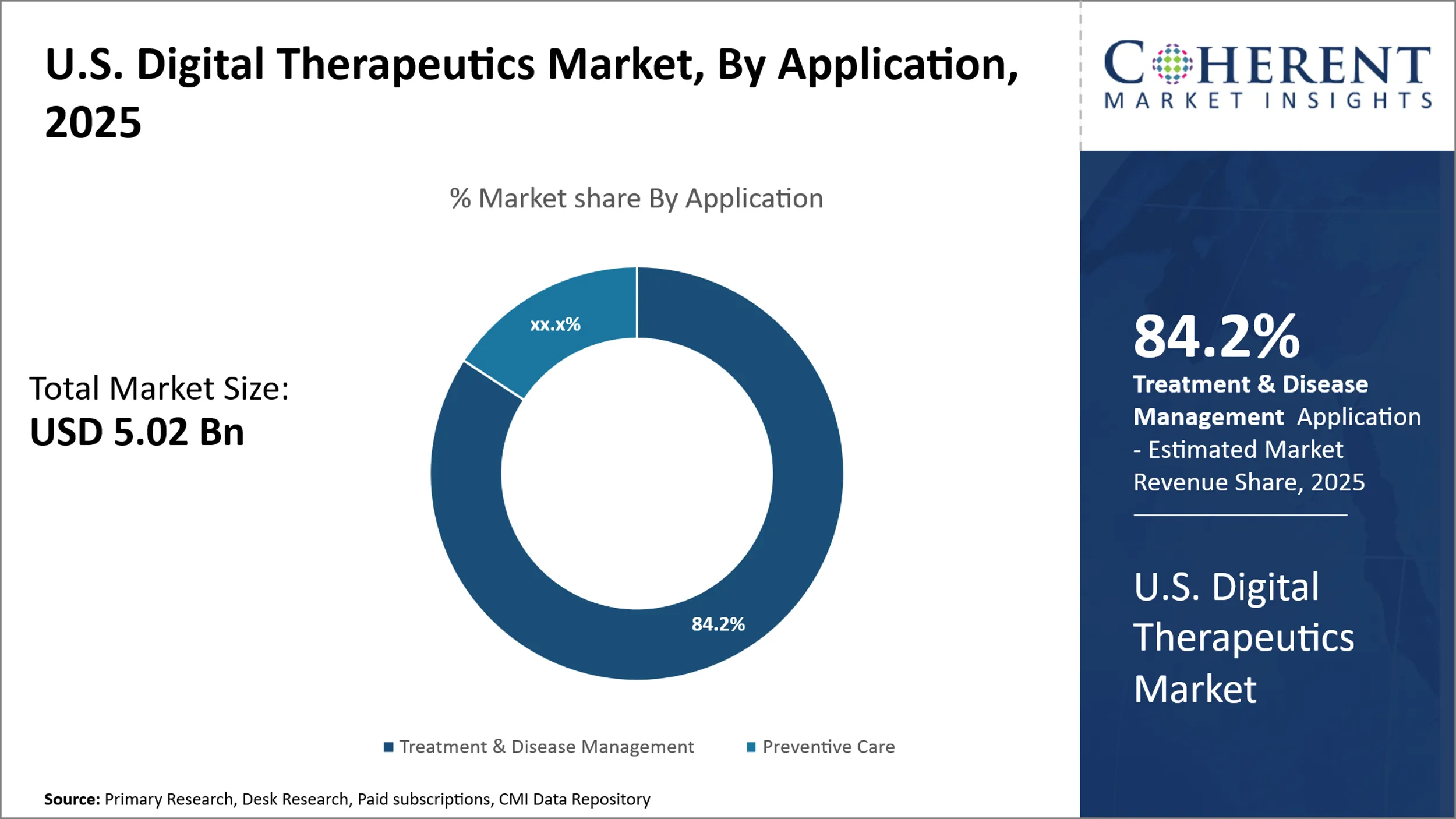
U.S. Digital Therapeutics Market Insights, By Application
Based on Application, the market is segmented into Treatment & Disease Management (Chronic Care, Mental Health & Neurological Disorders, and Others) and Preventive Care (Pre-diabetes, Weight Management, and Others). Out of which, Treatment & Disease Management Segment is expected to dominate the U.S. Digital Therapeutics Market during the forecast period and this is attributed to the increase in prevalence of chronic disease in the U.S.
Preventive Care Segment is also expected to witness significant growth in the near future and this is owing to the rise in focus towards preventive healthcare.
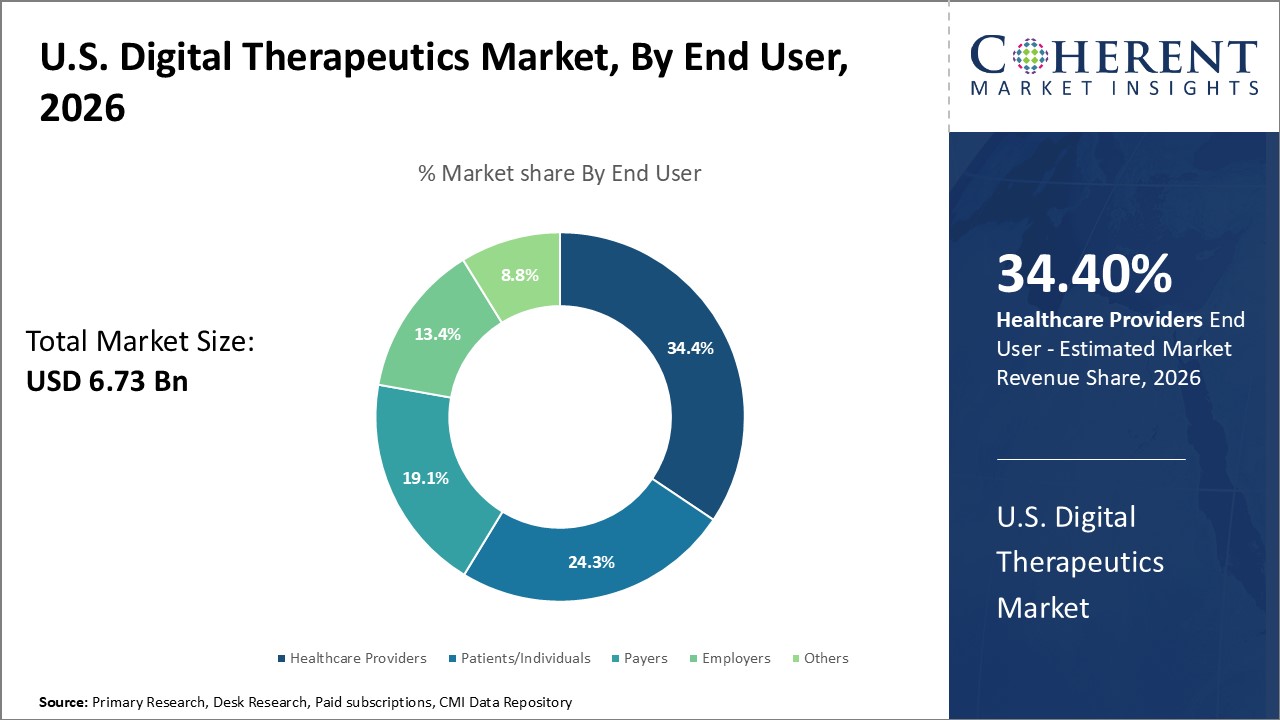
U.S. Digital Therapeutics Market Insights, By End User
Based on end user, the market is segmented into Healthcare Providers, Patients/Individuals, Payers, Employers, and Others. Out of which, Healthcare Providers Segment is expected to dominate the market during the forecast period and this is attributed to the increasing adoption of digital healthcare and growing adoption of novel technologies. Patients/Individuals Segment is also expected to witness robust growth in the near future and this is owing to increase in awareness among people about digital therapeutics.
Market Report Scope
U.S. Digital Therapeutics Market Report Coverage
| Report Coverage | Details | ||
|---|---|---|---|
| Base Year: | 2025 | Market Size in 2026: | USD 6.73 Bn |
| Historical Data for: | 2020 To 2024 | Forecast Period: | 2026 To 2033 |
| Forecast Period 2026 to 2033 CAGR: | 34.0% | 2033 Value Projection: | USD 52.18 Bn |
| Segments covered: |
| ||
| Companies covered: | 2Morrow Inc., ResMed, Pear Therapeutics, Omada Health Inc., Teladoc Health, Lark Technologies, Kaia Health, Fitbit, Cognoa Inc., and Akili Interactive Labs, among others | ||
| Growth Drivers: |
| ||
| Restraints & Challenges: |
| ||
U.S. Digital Therapeutics Market: Key Developments
- In June 2024, Akili received FDA approval for EndeavorOTC, the first over-the-counter video game-based therapy for adults with ADHD. Clinical outcomes demonstrated 83% of users improved in focus and attention. This achievement highlighted how gamified digital tools are becoming viable non-pharmacological options. It also expanded access to cognitive therapies across the country.
- In March 2024, The FDA approved Rejoyn, a smartphone digital therapy for major depressive disorders. The app employs structured brain training and CBT to augment mental health in conjunction with conventional treatment. This was a significant breakthrough for app therapies in the clinical environment. It demonstrates increasing FDA recognition of non-drug digital treatments.
Analyst View
- The American digital therapeutics market is a revolutionary frontier in healthcare provision, fueled by record-breaking convergence of technology with evidence-based medical treatments. The industry draws heavily from strong regulation systems, most importantly FDA's forward-leaning policy on digital health technologies, which has spurred market adoption among healthcare providers and patients as well.
- The main drivers of growth are the growing incidence of chronic diseases that need ongoing management, increasing cost of healthcare necessitating affordable solutions, and more patient preference for remote health solutions.
- Substantial opportunities arise from collaborations among pharmaceutical firms and digital health platforms, allowing for personalized treatment paradigms and enhanced patient compliance monitoring. Convergence of artificial intelligence and machine learning technologies provides richer therapeutic outcomes and predictive analytics.
Market Segmentation
- U.S. Digital Therapeutics Market, By Application (Revenue, USD Bn, 2021 - 2033)
- Treatment & Disease Management
- Chronic Care
- Mental Health & Neurological Disorders
- Others
- Preventive Care
- Pre-diabetes
- Weight Management
- Others
- U.S. Digital Therapeutics Market, By End User (Revenue, USD Bn, 2021 - 2033)
- Healthcare Providers
- Patients/Individuals
- Payers
- Employers
- Others
- Company Profiles
- 2Morrow Inc.
- ResMed
- Pear Therapeutics
- Omada Health Inc.
- Teladoc Health
- Lark Technologies
- Kaia Health
- Fitbit
- Cognoa Inc.
- Akili Interactive Labs
Sources
Primary Research Interviews
- Digital Therapeutics Alliance (DTA) executives and board members
- Healthcare providers and physicians specializing in digital health
- Pharmaceutical and biotechnology company executives
- Digital therapeutics startup founders and CEOs
- Others
Databases
- FDA 510(k) Premarket Notification Database
- ClinicalTrials.gov Registry
- PitchBook Private Market Database
- Healthcare Cost and Utilization Project (HCUP)
- Others
Magazines
- MobiHealthNews
- Digital Medicine Today
- Healthcare IT News
- Modern Healthcare
- Others
Journals
- Journal of Medical Internet Research (JMIR)
- Digital Medicine Journal
- Nature Digital Medicine
- Others
Newspapers
- The Wall Street Journal (Healthcare Technology section)
- Forbes (Digital Health coverage)
- Reuters (Healthcare & Technology news)
- Financial Times (Digital Health reporting)
- Others
Associations
- Digital Therapeutics Alliance (DTA)
- Healthcare Information and Management Systems Society (HIMSS)
- American Medical Association (AMA)
- Digital Medicine Society (DiMe)
- Others
Public Domain Sources
- U.S. Food and Drug Administration (FDA) official website and publications
- Centers for Medicare & Medicaid Services (CMS) reports
- National Institutes of Health (NIH) research publications
- U.S. Department of Health and Human Services reports
- Others
Proprietary Elements
- CMI Data Analytics Tool
- Proprietary CMI Existing Repository of information for last 8 years.
*Definition: Digital therapeutics (DTx) are evidence based therapeutic interventions, driven by high quality software programs, to prevent, manage, or treat a medical disorder or disease. DTx have potential to reduce disease burdens, deliver better clinical outcomes, and improve patients’ lives by offering better ways to manage chronic health conditions.
Get access to 250+ pages report
Every segment, forecast, competitor profile and data table behind the analysis above — available for instant download.
- ESOMAR Member
- ISO 9001:2015 Certified
- D-U-N-S Registered
- GDPR & CCPA Compliant
Missing comfort of reading report in your local language? Find your preferred language:
Transform your Strategy with Exclusive Trending Reports
Frequently Asked Questions
The U.S. Digital Therapeutics Market size is estimated to be valued at USD 6.73 Bn in 2026, and is expected to reach USD 52.18 Bn by 2033.
The CAGR of the U.S. Market is projected to be 34.0% from 2026 to 2033.
Trends in digital therapeutics include increased FDA approvals, AI-powered personalization, integration with wearable devices, and broader insurance reimbursement support.
DTx, or digital therapeutics, refers to evidence-based software-driven interventions designed to prevent, manage, or treat medical conditions.
The treatment and disease management segment is the leading component segment in the market.
Growing concerns about patient data privacy and challenges involved with digital therapeutics are major factors restraining growth of the market.
Major players operating in the market are 2Morrow Inc., ResMed, Pear Therapeutics, Omada Health Inc., Teladoc Health, Lark Technologies, Kaia Health, Fitbit, Cognoa Inc., and Akili Interactive Labs, among others.