

Alveolar Rhabdomyosarcoma Treatment Market Size and Share Analysis - 2026 To 2033
The global alveolar rhabdomyosarcoma treatment market is anticipated to grow at a CAGR of 7.3%, from USD 1.93 Bn in 2026 to USD 3.16 Bn by 2033. The primary growth drivers are largely defined by advancements in multimodal cancer treatment, increasing research into molecularly targeted therapies and immunotherapies, improved genetic diagnosis and risk stratification, expanding pediatric oncology clinical trials, and growing healthcare expenditure on rare and aggressive cancers. According to the National Cancer Institute, rhabdomyosarcoma treatment normally uses
Key Takeaways
- The combination therapy segment is predicted to represent 63.5% share of the global alveolar rhabdomyosarcoma treatment market in 2026. This segment’s leadership is due to the aggressive nature of alveolar rhabdomyosarcoma and the standard application of chemotherapy along with radiation therapy and surgical treatment for disease management at both local and systemic levels.
- The hospitals segment is expected to hold 74.8% of the global alveolar rhabdomyosarcoma treatment market in 2026.Hospitals are expected to dominate because treatment requires pediatric or medical oncologists, radiation oncologists, surgeons, molecular pathologists, imaging specialists, and supportive-care teams within a coordinated clinical setting. In March 2026, the Children's Oncology Group stated that the biospecimens collected by its Project were obtained from children receiving treatment at over 220 hospitals, which shows how the diagnosis, treatment, research, and surveillance of pediatric cancer is concentrated in dedicated hospital facilities.
- North America will continue to dominate the global alveolar rhabdomyosarcoma therapy market in 2026 with a 42.6% market share. The reasons for North America’s domination in the market include the region’s sophisticated pediatric oncology ecosystem, availability of molecular diagnostics and radiotherapy facilities, financial backing for cancer research, and participation in the clinical trial of rare pediatric cancers. According to reports from the U.S. National Cancer Institute as on May 20, 2026, there are 74 NCI-Designated Cancer Centers in 37 states and Washington DC.
Market Drivers
High Relapse and Metastatic Disease Burden is Accelerating Demand for Novel Treatment Combinations
The market for alveolar rhabdomyosarcoma treatment is fueled by the unmet needs of the patient population that has metastatic, recurrent, and FOXO1 fusion-positive alveolar rhabdomyosarcoma. Despite initial response to chemotherapy and local therapy, sustained disease control is challenging due to the likelihood of distant recurrence and drug resistance.
Moreover, the 2024 FaR-RMS clinical-trial report described results from the randomized VIT-0910 study involving 120 patients with relapsed or refractory rhabdomyosarcoma. Adding temozolomide to vincristine and irinotecan reduced the risk of disease progression, with a progression-free survival hazard ratio of 0.65, and reduced the risk of death, with an overall survival hazard ratio of 0.53, compared with vincristine and irinotecan alone.
In August 2025, the U.S. National Cancer Institute announced an active Phase I clinical trial of FGFR4-directed CAR T-cell therapy for children and young adults with recurrent or refractory rhabdomyosarcoma.
Increasing Adoption of Maintenance Therapy is Extending Treatment Duration
Maintenance chemotherapy is becoming an important component of high-risk rhabdomyosarcoma treatment because residual malignant cells can remain after the completion of intensive induction therapy. Low-dose, prolonged treatment may delay recurrence by suppressing minimal residual disease, inhibiting angiogenesis, and maintaining antitumor activity after an initial clinical response.
In 2024, FaR-RMS found out that high-risk patients undergoing a regimen of six months of vinorelbine and oral cyclophosphamide had an overall survival rate of 86.5% after 5 years compared to those on standard care regimen at 73.7%. This means the risk of death was lowered by about 48%, indicated by a hazard ratio of 0.52.
Current Events and Their Impact on the Alveolar Rhabdomyosarcoma Treatment Market
Current Event | Description and its Impact |
U.S. Reauthorizes the Rare Pediatric Disease Priority Review Voucher Program Through 2029 (February 2026) |
|
U.S. Government Doubles Childhood Cancer Data Initiative Funding and Launches an AI-Based Pediatric Cancer Program (September 2025) |
|
- Current Industry Events of 2026
- Market Size Estimation
- Regional Breakdown
- Competitive Landscape
- Customer Intelligence
- Segmental Analysis
- Pricing Analysis
- Key Market Drivers, Challenges & Future Trends
- Customized Insights Section
Segmental Insights
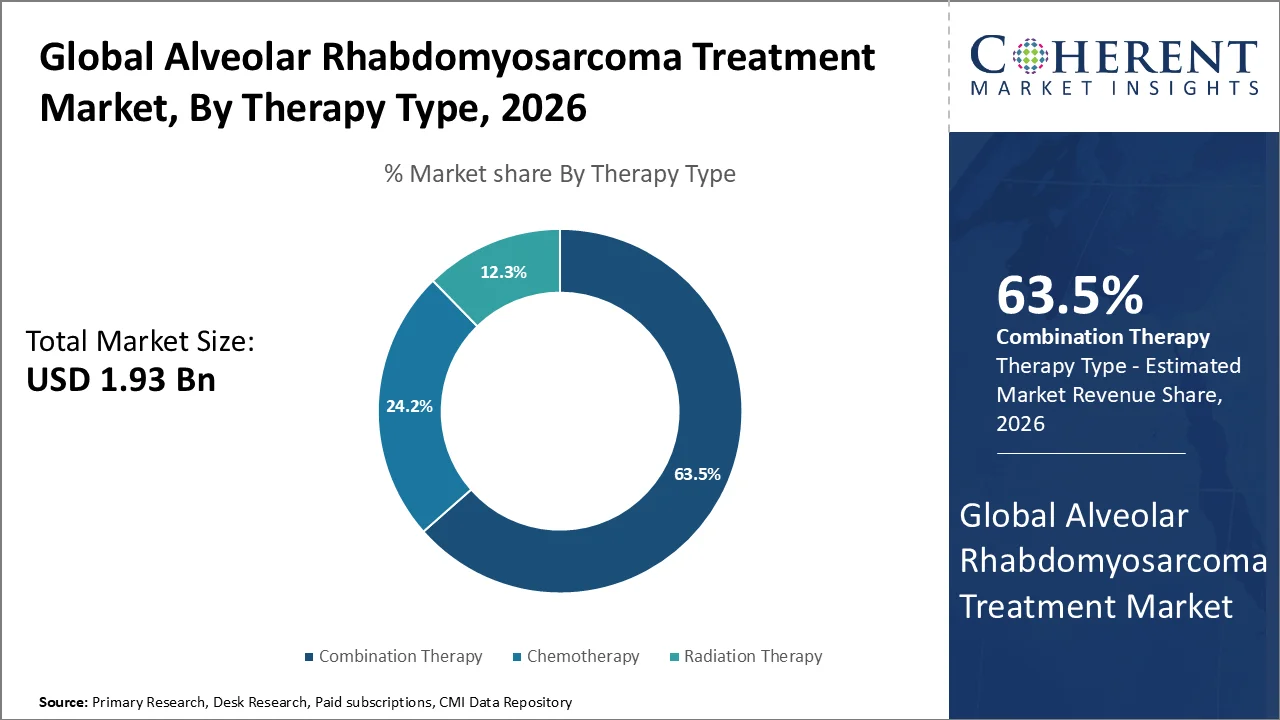
Why is Combination Therapy Acquiring the Largest Share?
On the basis of treatment type, the combination therapy segment is projected to account for the largest global alveolar rhabdomyosarcoma treatment market share of 63.5% in 2026. The segment’s dominance is owing to the aggressive and systemic nature of alveolar rhabdomyosarcoma, which generally requires multi-agent chemotherapy combined with surgery, radiotherapy, or both to control the primary tumor and eliminate microscopic or metastatic disease.
A 2025 U.S. study assessing patients with alveolar rhabdomyosarcoma reported that 92% received chemotherapy, 70% underwent radiotherapy, and 44% underwent surgical resection, demonstrating the widespread use of multiple treatment modalities rather than standalone therapy.
In November 2024, Senhwa Biosciences announced that the first patient had been dosed in a Phase I/II clinical trial evaluating silmitasertib, an investigational CK2 inhibitor, in combination with chemotherapy for children and young adults with relapsed or refractory solid tumor.
Why are Hospitals Holding the Largest Market Share?
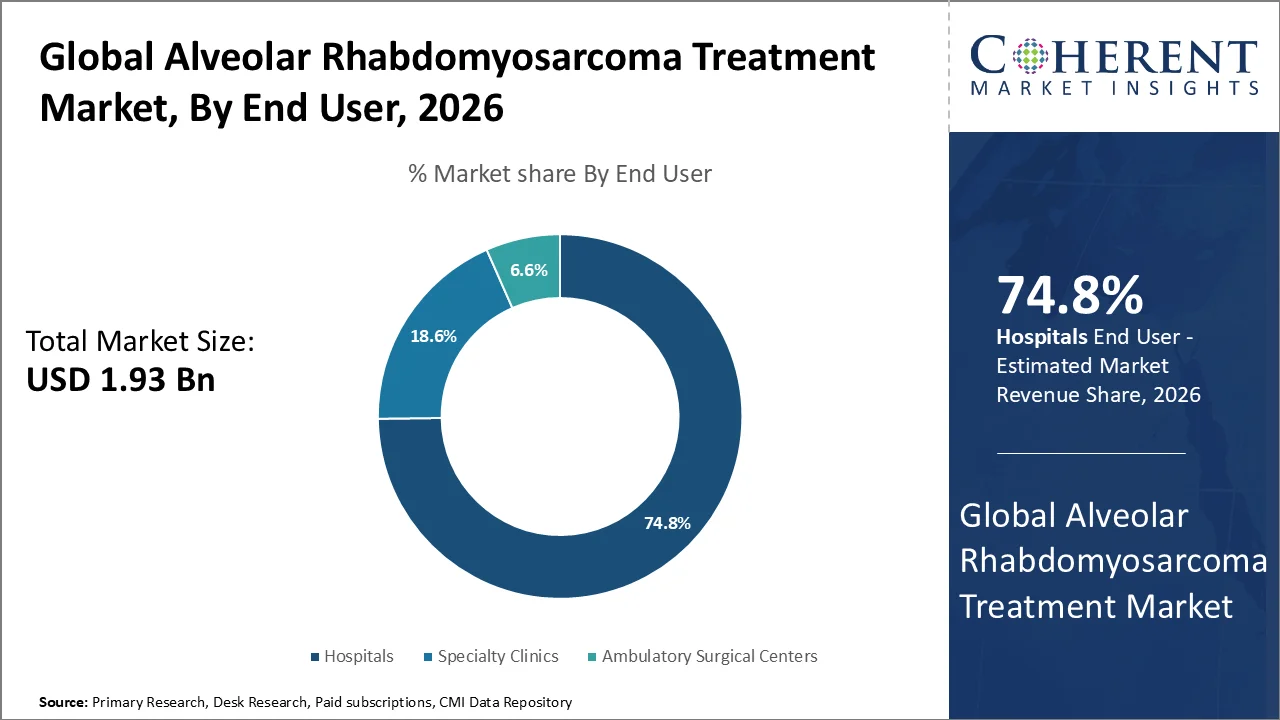
On the basis of end user, the hospitals segment is projected to hold the largest global alveolar rhabdomyosarcoma treatment market share of 74.8% in 2026. The segment’s leadership is owing to the need for centralized delivery of chemotherapy, tumor surgery, radiotherapy, molecular diagnostics, imaging, toxicity management, and long-term pediatric oncology follow-up.
Hospital dominance is also supported by the scale of organized pediatric oncology infrastructure. The Children’s Oncology Group currently operates through more than 220 participating hospitals and a network of over 13,500 researchers, clinicians, and specialists worldwide. Such hospital-based networks provide access to standardized treatment protocols, molecular testing, radiation facilities, supportive care, and clinical trials that are generally unavailable through standalone clinics.
In May 2025, Texas Children’s Hospital and The University of Texas MD Anderson Cancer Center announced a USD 150 million investment to establish the Kinder Children’s Cancer Center, with integrated patient-care operations planned to begin in 2026.
Alveolar Rhabdomyosarcoma Treatment Market Trends
- The increasing use of fusion-status-based treatment selection is shifting alveolar rhabdomyosarcoma toward precision oncology. Treatment decisions and clinical-trial eligibility are increasingly based on PAX3::FOXO1 or PAX7::FOXO1 status rather than histology alone. A 2026 therapeutic-development assessment reported that alveolar rhabdomyosarcoma accounts for approximately 20% of childhood rhabdomyosarcoma cases, with most cases carrying one of these oncogenic fusions.
- The development of FGFR4-targeted cell therapies and antibody-based treatments is expanding the investigational pipeline for high-risk disease. In February 2026, an international pediatric therapeutic-development workshop identified FGFR4 as the highest-priority therapeutic target in rhabdomyosarcoma and confirmed that an FGFR4-directed CAR-T trial, NCT06865664, is underway for patients with relapsed or refractory disease.
- Maintenance chemotherapy is becoming more established for patients with high-risk rhabdomyosarcoma. A June 2025 analysis evaluated 171 pediatric patients who received vinorelbine and low-dose cyclophosphamide maintenance therapy after intensive frontline treatment.
Regional Insights
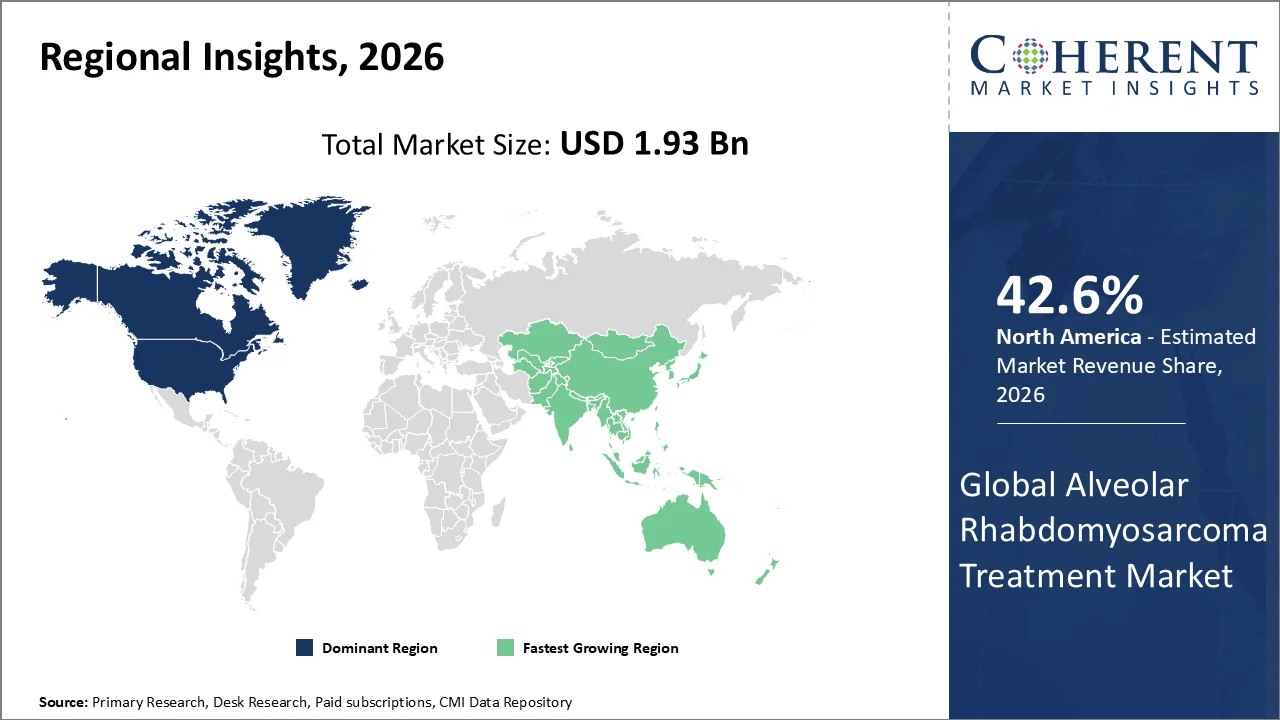
North America Dominates Owing to Its Advanced Pediatric Oncology Research and Treatment Infrastructure
North America is projected to dominate the global alveolar rhabdomyosarcoma treatment market with a 42.6% share in 2026. The region’s leadership is owing to its established pediatric oncology centers, substantial public research funding, routine molecular profiling, extensive clinical-trial infrastructure, and early adoption of targeted and cell-based therapies for rare childhood cancers.
The U.S. National Cancer Institute reported that its available funding totaled approximately USD 7.2 billion in fiscal year 2025, including USD 28 million for the Childhood Cancer Survivorship, Treatment, Access, and Research Act. This funding supports pediatric cancer research, treatment-access programs, survivorship studies, and multicenter clinical development.
In May 2026, Children’s Health and UT Southwestern Medical Center announced the advancement of the VITAS study into a Phase II cohort for children and young adults with relapsed or refractory rhabdomyosarcoma.
Asia Pacific is Expected to be the Fastest-Growing Region
Asia Pacific is expected to witness the fastest growth in the global alveolar rhabdomyosarcoma treatment market during the forecast period. Regional expansion is owing to the large pediatric patient population, increasing childhood-cancer diagnosis, development of specialized oncology hospitals, improved access to essential medicines, and growing participation in international pediatric research programs.
China alone records nearly 50,000 new childhood cancer cases annually, according to St. Jude Global. Its regional program is expanding access to clinical trials and supporting improvements in treatment delivery, creating a stronger infrastructure for diagnosing and managing rare pediatric sarcomas.
In July 2025, Apollo Hospitals announced the growing availability of pediatric proton therapy through the Apollo Proton Cancer Centre in Chennai, described as South Asia’s first and only dedicated proton therapy center.
Advanced Translational Research and Cell-Therapy Trials are Accelerating the U.S. Alveolar Rhabdomyosarcoma Treatment Market
The U.S. alveolar rhabdomyosarcoma treatment market is witnessing steady development owing to its advanced pediatric oncology hospitals, extensive molecular-research infrastructure, and increasing evaluation of targeted and cellular therapies for relapsed or refractory disease. Research programs are increasingly focused on the biological vulnerabilities of PAX3::FOXO1- and PAX7::FOXO1-driven tumors, which could support the development of therapies beyond conventional chemotherapy, surgery, and radiotherapy.
The U.S. research ecosystem is also benefiting from larger collaborative datasets. In January 2025, St. Jude reported that researchers from the U.S. and Europe pooled 72 rhabdomyosarcoma samples to develop a standardized classification of tumor-cell populations. The analysis found that fusion-positive tumors contained a previously unidentified cell subtype that emerged during treatment, which may help researchers identify mechanisms of resistance and recurrence. Fusion-positive disease represents approximately 30% of rhabdomyosarcoma cases and is generally associated with poorer outcomes than fusion-negative disease.
In April 2025, St. Jude Children’s Research Hospital reported that researchers had identified leucine metabolism as a potentially targetable vulnerability in alveolar rhabdomyosarcoma.
Clinical-Trial Expansion and Pediatric Oncology Reforms are Strengthening the China Alveolar Rhabdomyosarcoma Treatment Market
China is expected to record strong growth in the alveolar rhabdomyosarcoma treatment market owing to the expansion of pediatric oncology hospitals, increasing evaluation of targeted-plus-chemotherapy regimens, and regulatory policies designed to accelerate pediatric anticancer drug development. The country is moving toward more structured development pathways for treatments addressing rare pediatric tumors and significant unmet medical needs.
In February 2025, Shandong Cancer Hospital and Institute initiated a Phase II study evaluating pazopanib combined with TGI/CIV chemotherapy in children and adolescents with recurrent or refractory rhabdomyosarcoma. The recruiting study has a target enrollment of 38 patients.
Who are the Major Companies in Alveolar Rhabdomyosarcoma Treatment Industry
Some of the major key players in Alveolar Rhabdomyosarcoma Treatment Market are Eli Lilly and Company, GlaxoSmithKline Plc., Boehringer Ingelheim GmbH, Bristol-Myers Squibb, F. Hoffmann-La Roche AG, Oasmia Pharmaceutical, Celgene Corporation, Pfizer, Inc., and Johnson & Johnson Services, Inc.
Key News
- In February 2025, Bristol Myers Squibb confirmed that the European Commission had approved Augtyro (repotrectinib) for adults and pediatric patients aged 12 years and older with advanced solid tumors expressing an NTRK gene fusion.
- In July 2026, GlaxoSmithKline announced that the Phase III ARTEMIS-008 study of risvutatug rezetecan, previously known as GSK5764227 or GSK’227, met its primary overall-survival endpoint.
Market Report Scope
Alveolar Rhabdomyosarcoma Treatment Market Report Coverage
| Report Coverage | Details | ||
|---|---|---|---|
| Base Year: | 2025 | Market Size in 2026: | USD 1.93 Bn |
| Historical Data for: | 2020 To 2024 | Forecast Period: | 2026 To 2033 |
| Forecast Period 2026 to 2033 CAGR: | 7.3% | 2033 Value Projection: | USD 3.16 Bn |
| Geographies covered: |
| ||
| Segments covered: |
| ||
| Companies covered: | Eli Lilly and Company, GlaxoSmithKline Plc., Boehringer Ingelheim GmbH, Bristol-Myers Squibb, F. Hoffmann-La Roche AG, Oasmia Pharmaceutical, Celgene Corporation, Pfizer, Inc., and Johnson & Johnson Services, Inc. | ||
| Growth Drivers: |
| ||
| Restraints & Challenges: |
| ||
Analyst Opinion
- The alveolar rhabdomyosarcoma treatment market will remain dominated by multimodal and extended-duration therapy rather than standalone targeted drugs. Mature results from the 2025 RMS2005 study involving 371 high-risk rhabdomyosarcoma patients showed that adding vinorelbine and low-dose cyclophosphamide maintenance therapy increased the 10-year overall survival rate from 70.8% to 82.9% and disease-free survival from 66.5% to 77.1%. Although the study was not limited to the alveolar subtype, it supports greater adoption of maintenance therapy among eligible high-risk patients.
- Future market expansion is expected to be driven by biomarker-guided combinations and dual-target therapies. A 2026 international therapeutic-development workshop identified FGFR4 as the highest-priority rhabdomyosarcoma target and recommended accelerated development of FGFR4-directed CAR-T cells, antibody-drug conjugates, and degraders. The workshop also identified B7-H3 as a priority because it is expressed across most rhabdomyosarcoma tumors and is regulated by the PAX3::FOXO1 fusion associated with alveolar disease. Early combination evidence is encouraging, with an HDAC inhibitor plus vinorelbine producing partial responses in four of eight evaluable patients.
- The market presents a high-value but low-volume opportunity centered on relapsed and metastatic fusion-positive disease. The National Pediatric Cancer Foundation reported in 2025 that metastatic fusion-positive rhabdomyosarcoma frequently responds initially but almost inevitably recurs, with a three-year event-free survival rate of approximately 10%. This severe unmet need will support investment in precision therapies and specialized hospital programs, but the small patient pool, limited tumor-tissue availability, and difficult trial recruitment will continue to restrict rapid commercialization.
Speak to the analyst
Want personalized insights?
Take the findings above to one of our principal consultants, or have the report rebuilt around the segments, geographies and competitors you actually track.
Market Segmentation
- By Therapy Type (Revenue, USD Bn, 2021-2033)
- Chemotherapy
- Radiation Therapy
- Combination Therapy
- By End User (Revenue, USD Bn, 2021-2033)
- Hospitals
- Specialty Clinics
- Ambulatory Surgical Centers
- By Region (Revenue, USD Bn, 2021-2033)
- North America
- U.S.
- Canada
- Latin America
- Brazil
- Mexico
- Argentina
- Rest of Latin America
- Europe
- Germany
- U.K.
- France
- Italy
- Spain
- Russia
- Rest of Europe
- Asia Pacific
- China
- India
- Japan
- Australia
- South Korea
- ASEAN
- Rest of Asia Pacific
- Middle East
- GCC
- Israel
- Rest of Middle East
- Africa
- South Africa
- Central Africa
- North Africa
- North America
Sources
Primary Research Interviews
- Pediatric oncologists and pediatric hematologist-oncologists
- Medical oncologists specializing in sarcomas
- Pediatric surgical oncologists
- Radiation oncologists treating childhood solid tumors
- Molecular pathologists and genomic-testing specialists
- Clinical investigators involved in rhabdomyosarcoma trials
- Hospital pharmacy and oncology-drug procurement managers
- Pediatric oncology nurses and supportive-care specialists
- Pharmaceutical R&D and clinical-development executives
- Patient advocacy representatives and pediatric cancer KOLs
Databases
- National Cancer Institute Surveillance, Epidemiology, and End Results Program
- ClinicalTrials.gov
- World Health Organization Global Health Observatory
- International Agency for Research on Cancer – Global Cancer Observatory
- European Cancer Information System
- U.S. Food and Drug Administration Drugs@FDA Database
- European Medicines Agency Medicines Database
- World Bank Healthcare Indicators
- Organisation for Economic Co-operation and Development Health Statistics
- WHO International Clinical Trials Registry Platform
Magazines
- Oncology Times
- OncLive
- Cancer Network
- The ASCO Post
- HemOnc Today
- Pharmaceutical Technology
- BioPharma Dive
- Fierce Biotech
Journals
- Journal of Clinical Oncology
- Pediatric Blood & Cancer
- Clinical Cancer Research
- Cancer Discovery
- British Journal of Cancer
- European Journal of Cancer
- Frontiers in Oncology
- Cancers
- Nature Reviews Clinical Oncology
- Journal of Pediatric Hematology/Oncology
Newspapers
- The New York Times
- The Guardian
- The Wall Street Journal
- Financial Times
- Reuters
- The Economic Times
Associations
- Children’s Oncology Group
- International Society of Paediatric Oncology
- American Society of Clinical Oncology
- American Association for Cancer Research
- Connective Tissue Oncology Society
- European Paediatric Soft Tissue Sarcoma Study Group
- National Pediatric Cancer Foundation
- American Childhood Cancer Organization
Public Domain Sources
- Company annual reports and investor presentations
- Pharmaceutical pipeline and clinical-development disclosures
- FDA and EMA drug-approval documents
- National Cancer Institute treatment guidelines and research publications
- Clinical-trial protocols and results from public registries
- Pediatric oncology treatment guidelines and consensus statements
- Government childhood-cancer policies and funding announcements
- Hospital and academic cancer-center research publications
- Peer-reviewed clinical and translational research studies
- Conference abstracts from ASCO, AACR, SIOP, and CTOS
- Patent databases such as WIPO, USPTO, and Google Patents
- Publicly available epidemiological and cancer-registry reports
Proprietary Elements
- CMI Data Analytics Tool
- Proprietary CMI Existing Repository of Information for the Last 10 Years
Get access to 250+ pages report
Every segment, forecast, competitor profile and data table behind the analysis above — available for instant download.
- ESOMAR Member
- ISO 9001:2015 Certified
- D-U-N-S Registered
- GDPR & CCPA Compliant
Missing comfort of reading report in your local language? Find your preferred language:
Transform your Strategy with Exclusive Trending Reports
Frequently Asked Questions
The global Alveolar Rhabdomyosarcoma Treatment Market is expected to reach USD 3.16 Bn by 2033, increasing from USD 1.93 Bn in 2026.
The Alveolar Rhabdomyosarcoma Treatment Market is anticipated to grow at a CAGR of 7.3% between 2026 and 2033.
Major players covered in the market include Eli Lilly and Company, GlaxoSmithKline Plc., Boehringer Ingelheim GmbH, Bristol-Myers Squibb, F. Hoffmann-La Roche AG, Oasmia Pharmaceutical, Celgene Corporation, Pfizer, Inc., and Johnson & Johnson Services, Inc.
Market growth is driven by the expanding pediatric oncology clinical-trial pipeline, increasing government and nonprofit funding, advances in molecular diagnosis, rising development of targeted therapies and immunotherapies, and growing adoption of multimodal treatment.
The major challenges include the high cost of multimodal treatment and long-term supportive care, limited availability of approved targeted therapies, treatment-related toxicities, small clinical-trial populations, and poor outcomes in recurrent or metastatic disease.
The combination therapy segment is expected to dominate the market with a 63.5% share in 2026, owing to the established use of chemotherapy together with surgery, radiation therapy, or maintenance treatment.
Alveolar rhabdomyosarcoma is an aggressive cancer that generally requires systemic chemotherapy for controlling disseminated disease and surgery or radiation therapy for controlling the primary tumor and localized residual disease.