

Nasal Polyps Treatment Market Size and Forecast — 2026-2033
The global nasal polyps treatment market is estimated to be valued at USD 3.94 Billion in 2026 and is expected to reach USD 6.76 Billion by 2033, exhibiting a compound annual growth rate (CAGR) of 8.0% from 2026 to 2033.
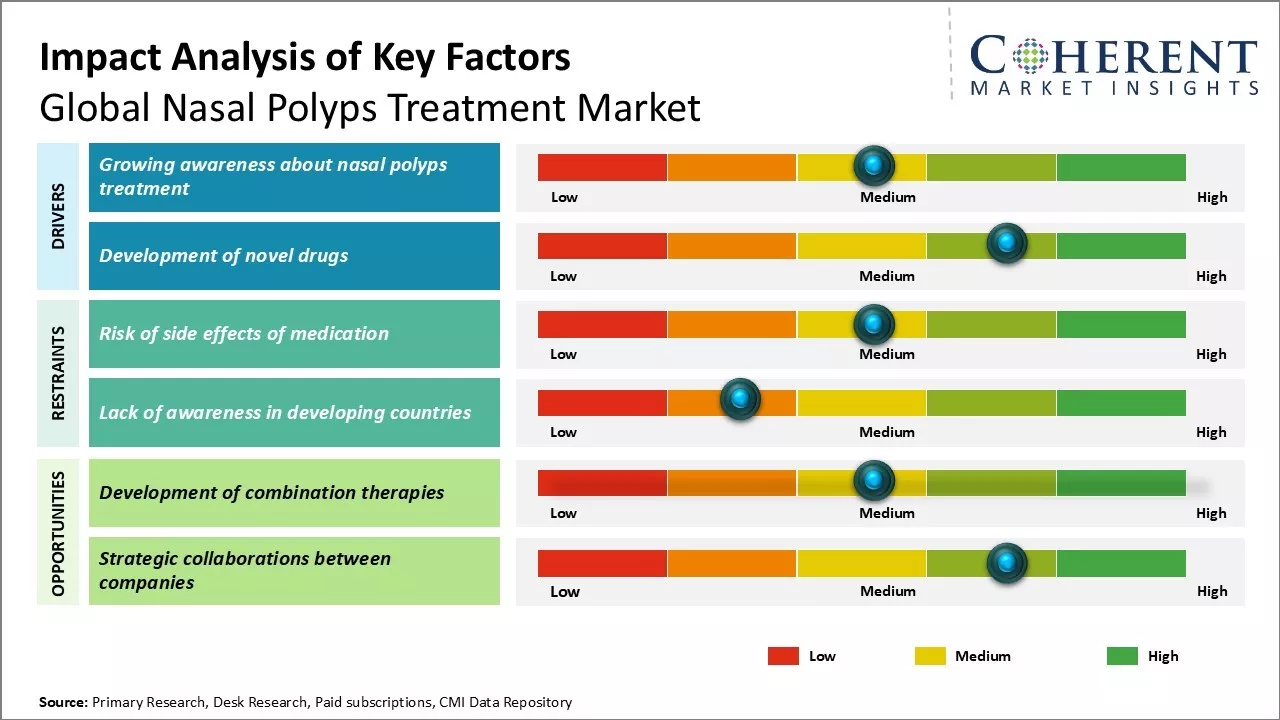
The global nasal polyps treatment market is projected to experience positive growth driven by the rising prevalence of chronic sinusitis and nasal polyps worldwide. Increasing adoption of biologic therapies, such as dupilumab, and advancements in minimally invasive surgical techniques are significant market drivers. However, challenges such as high treatment costs, misdiagnosis, and limited awareness may restrain the market growth. Additionally, the need for personalized medicine and ongoing research into new treatment options will further shape the market landscape. Overall, the combination of rising demand and innovative therapies positions the nasal polyps treatment market for substantial growth in the coming years.
Insights By Drug Class
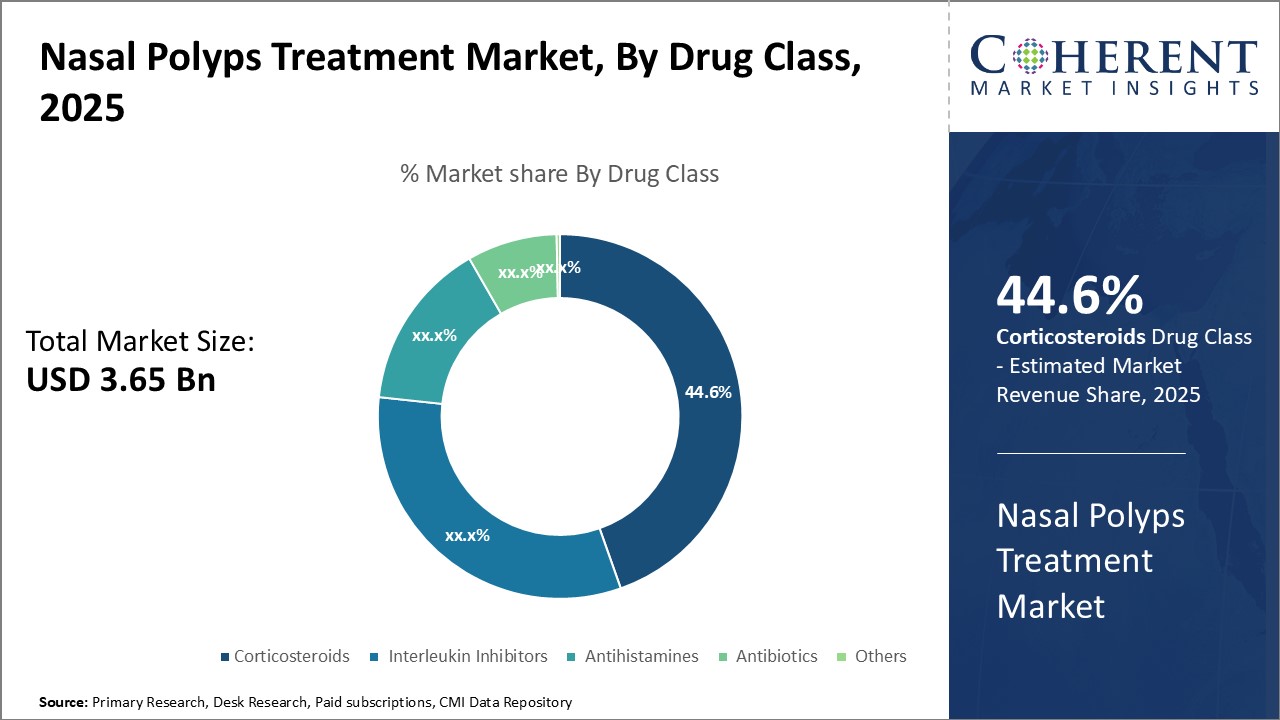
Insights By Drug Class- Robust management of nasal polyps establishes corticosteroids’ popularity
In terms of drug class, corticosteroids is expected to contribute the highest share of 45.6% in 2026, owing to its high acceptance and efficacy in managing nasal polyp symptoms. As nasal polyps are non-cancerous growths caused by inflammation, corticosteroids work by reducing inflammation and swelling of the nasal passages. The administration of corticosteroids directly to the nasal cavity also allows for higher drug concentrations at the site of inflammation with minimal systemic side effects.
Insights By Route of Administration
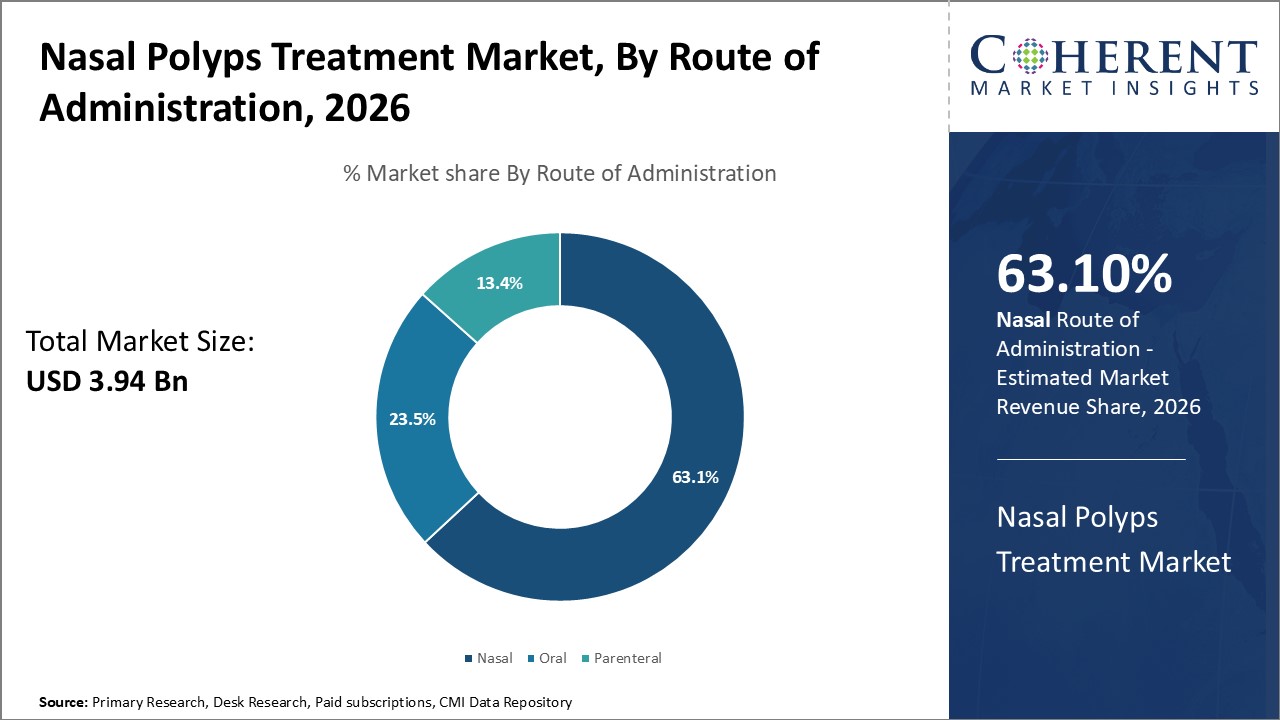
Insights By Route of Administration- Nasal segment dominates due to ease of administration
In terms of route of administration, the nasal segment is expected to contribute the highest share of 63.1% in 2026. This is because nasal polyps originate and develop within the nasal cavity allowing direct delivery of drugs to the site of action via the intranasal route. Compared to oral and parenteral administration, nasal delivery provides better efficacy by achieving higher drug concentrations within the nasal tissue and paranasal sinuses with minimal systemic absorption and side effects.
Insights By Distribution Channel
Insights By Distribution Channel- Hospital pharmacies dominate owing to convenience and accessibility
In terms of distribution channel, the hospital pharmacies segment is expected to contribute the highest share of 49.7% in 2026. This is because patients undergoing nasal polyps treatment may require follow-up consultations and check-ups. Thus, having the medications dispensed at the hospital makes it very easy for them. Hospital pharmacies allow patients to obtain their drugs right at the location where their treatment is taking place, saving them time and effort.
Regional Insights
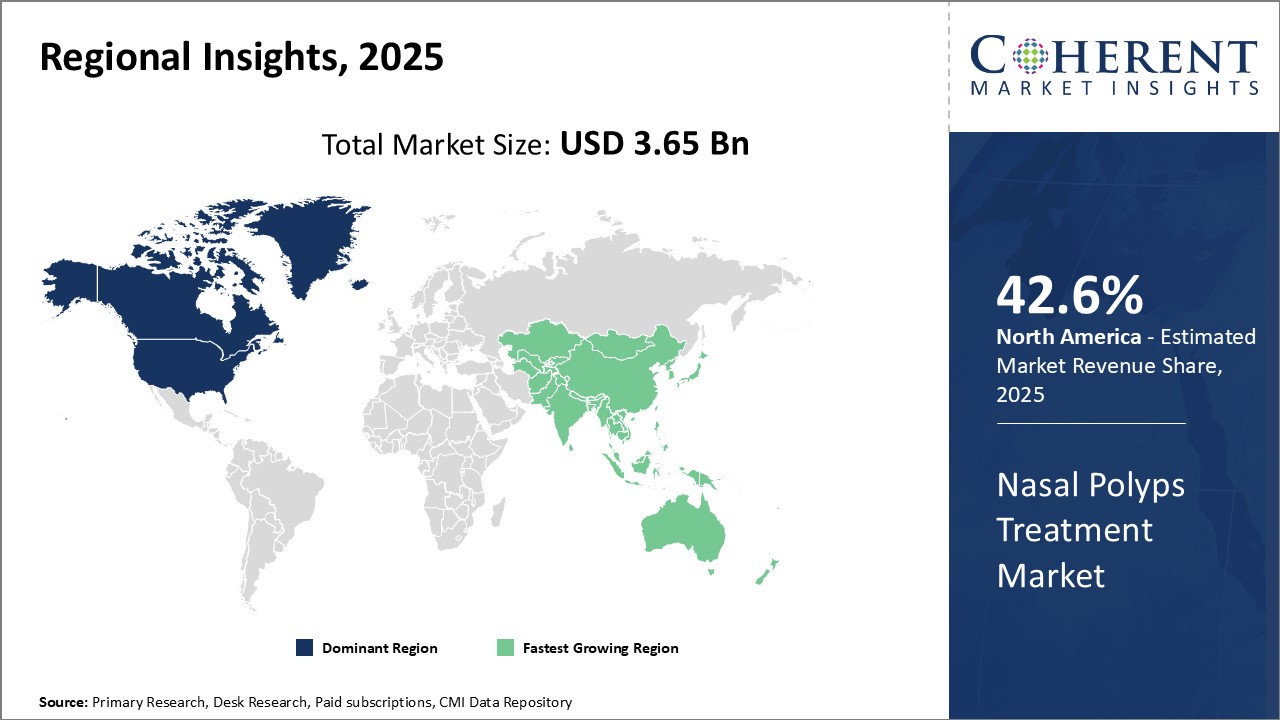
Regional Analysis: Global Nasal Polyps Treatment Market
Dominating Region: North America
North America is expected to dominate the global nasal polyps treatment industry, with an estimated market share of 42.6% in 2026, due to factors such as the strong presence of leading pharmaceutical and medical device companies, rising healthcare expenditure, and favorable reimbursement scenario.
Fastest-Growing Region: Asia Pacific
Asia Pacific region exhibits the fastest growth in the nasal polyps treatment industry, with an estimated market share of 23.9% in 2026, due to the large patient pool, increasing awareness about nasal polyps, and growing focus of international players on expanding their footprint in emerging countries.
Nasal Polyps Treatment Market Outlook for Key Countries
High adoption of advanced therapies in the U.S.
The U.S. nasal polyps treatment industry is characterized by a high adoption of advanced therapies and procedure-based treatments. Leading U.S.-based companies are introducing innovative drugs and devices that significantly enhance clinical outcomes, driving the market growth. This focus on cutting-edge solutions positions the U.S. as a leader in effective nasal polyps management.
Strategic collaborations between domestic and foreign industries in China
The nasal polyps treatment industry in China is experiencing robust growth, fueled by strategic collaborations between domestic and foreign industry stakeholders. The government is actively implementing initiatives to enhance local manufacturing capabilities and improve access to care, ensuring that innovative treatments are more readily available to patients across the country.
Low-cost drug manufacturing in India
India continues to excel in the nasal polyps treatment industry, driven by its leadership in low-cost drug manufacturing. Several Indian pharmaceutical companies provide affordable generic medications globally, leveraging extensive distribution networks to dominate the local market. This accessibility enhances treatment options for patients suffering from nasal polyps, supporting broader healthcare initiatives.
Research and Development in Japan
The nasal polyps treatment sector in Japan is advanced due to substantial R&D investments from prominent medical technology companies. These investments have led to rapid approvals of innovative therapies, such as GSK's Nucala (mepolizumab), which is gaining preference among healthcare providers. This focus on cutting-edge treatments enhances patient care and positions Japan as a leader in the market.
Market Players, Key Development, and Competitive Intelligence
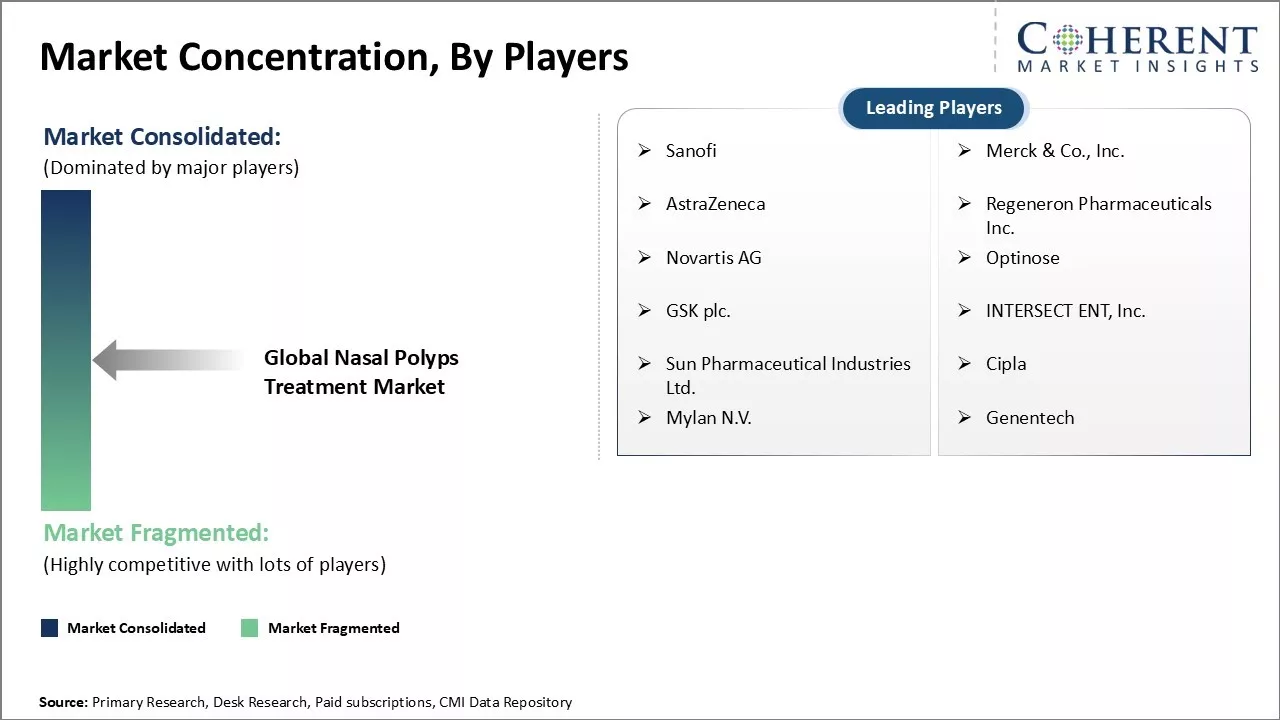
Top Strategies Followed by Global Nasal Polyps Treatment Market Players
- Established Players: Leading companies in the global nasal polyps treatment industry recognize that continuous innovation is crucial to remaining competitive. They invest heavily in research and development to develop more effective treatment options.
- Mid-Level Players: Mid-sized companies in the market focus on delivering affordable treatment choices. They leverage cheaper manufacturing routes while maintaining quality standards. For example, Stallergenes Greer produces allergen immunotherapy tablets that are inexpensive alternatives to conventional subcutaneous injections. These tablets target the root cause of polyps in some patients through gradual exposure to allergens.
- Small-Scale Players: New entrants often look at specific therapeutic areas with unmet needs. For instance, Neopharma is targeting intranasal corticosteroid formulations for patients who cannot use oral steroids due to side effects. Another niche is pediatric nasal polyps where treatment options are limited. Established players typically overlook such narrow segments due to commercial viability issues. Specialization helps small companies address specialty requirements and generate profits.
Emerging Startups in the Global Nasal Polyps Treatment Market
- Innovative Technologies: Novel startup technologies are poised to revolutionize the nasal polyps treatment landscape. Voyce specializes in vocal biomarkers that can non-invasively diagnose and monitor polyp progress via smartphone apps. Other examples are Epocal developing allergy tests based on molecular footprinting and Anthropic developing AI-based models for precision diagnosis and outcome predictions. Nasus Pharma is known for localized drug delivery hydrogels that target polyps more effectively while reducing systemic side effects.
- Market/Impact: Vocal biomarkers and AI-powered diagnosis tools may facilitate early detection and remote monitoring, catching polyps before surgery is needed. Allergy tests based on molecular footprinting could uncover specific triggers and point to targeted immunotherapy options with higher success rates. Advanced drug delivery methods may improve current therapies’ efficacy while limiting unwanted side effects.
- Current Industry Events of 2026
- Market Size Estimation
- Regional Breakdown
- Competitive Landscape
- Customer Intelligence
- Segmental Analysis
- Pricing Analysis
- Key Market Drivers, Challenges & Future Trends
- Customized Insights Section
Market Report Scope
Nasal Polyps Treatment Market Report Coverage
| Report Coverage | Details | ||
|---|---|---|---|
| Base Year: | 2025 | Market Size in 2026: | USD 3.94 Bn |
| Historical Data for: | 2020 To 2024 | Forecast Period: | 2026 To 2033 |
| Forecast Period 2026 to 2033 CAGR: | 8.0% | 2033 Value Projection: | USD 6.76 Bn |
| Geographies covered: |
| ||
| Segments covered: |
| ||
| Companies covered: | Sanofi, Merck & Co., Inc., AstraZeneca, Regeneron Pharmaceuticals Inc., Novartis AG, Optinose, GSK plc., INTERSECT ENT, Inc., Sun Pharmaceutical Industries Ltd., Cipla, Mylan N.V., and Genentech | ||
| Growth Drivers: |
| ||
| Restraints & Challenges: |
| ||
Market Dynamics
Market Driver - Growing awareness about nasal polyps
There has been a significant rise in awareness regarding nasal polyps and their treatment options globally. This increase is attributed to better access to health-related information online, improved health literacy, government initiatives, and promotional efforts by pharmaceutical companies. As a result, people are now more likely to recognize symptoms such as chronic nasal obstruction and seek medical advice for effective treatment.
Market Challenge - Risk of side effects of medication
The use of medications for nasal polyps, particularly corticosteroids, often leads to side effects such as headaches, nausea, and nasal irritation with long-term use. Complications like insomnia, anxiety, and high blood pressure can also arise, making patients hesitant to adhere to treatment schedules. These risks contribute to non-adherence, negatively impacting treatment effectiveness and increasing the likelihood of polyp recurrence. Consequently, the occurrence of side effects presents significant challenges for physicians and hinders market growth in the nasal polyps treatment sector.
Market Opportunity - Development of combination therapies for market
The growing demand for more effective and safer treatment options presents a significant opportunity in the nasal polyps treatment market. There is considerable potential for developing novel combination therapies that integrate corticosteroids with other drug classes such as monoclonal antibodies and antihistamines. Collaborative partnerships between drug manufacturers to create well-researched combination formulations represent an untapped area that could capture a substantial market share, positioning companies at the forefront of addressing the unmet needs in advanced polyp management therapies.
Analyst Opinion (Expert Opinion)
Key Takeaways from Analyst
The market growth is primarily driven by the rising prevalence of chronic sinusitis and growing adoption of drug therapies over surgical procedures. Nasal polyps are also commonly associated with asthma, which is increasingly prevalent worldwide. This will fuel the demand for drugs to treat associated nasal polyps.
The market potential can be restrained by the lack of awareness regarding nasal polyps in developing nations. This may deter timely diagnosis and treatment. Moreover, the presence of alternative treatment options like watchful waiting can impede the treatment-seeking rate to some extent.
North America is anticipated to dominate the global landscape led by rising healthcare expenditures and growing accessibility to advanced medications. Meanwhile, Asia Pacific is likely to witness the fastest growth in the coming years. This can be credited to the improving healthcare infrastructure, massive patient population, and increasing focus of key companies towards emerging Asian countries.
Speak to the analyst
Want personalized insights?
Take the findings above to one of our principal consultants, or have the report rebuilt around the segments, geographies and competitors you actually track.
Market Segmentation
- By Drug Class Insights (Revenue, USD Bn, 2021 - 2033)
- Corticosteroids
- Interleukin Inhibitors
- Antihistamines
- Antibiotics
- Others
- By Route of Administration Insights (Revenue, USD Bn, 2021 - 2033)
- Nasal
- Oral
- Parenteral
- By Distribution Channel Insights (Revenue, USD Bn, 2021 - 2033)
- Hospital Pharmacies
- Retail Pharmacies
- Online Pharmacies
- Regional Insights (Revenue, USD Bn, 2021 - 2033)
- North America
- U.S.
- Canada
- Latin America
- Brazil
- Argentina
- Mexico
- Rest of Latin America
- Europe
- Germany
- U.K.
- Spain
- France
- Italy
- Russia
- Rest of Europe
- Asia Pacific
- China
- India
- Japan
- Australia
- South Korea
- ASEAN
- Rest of Asia Pacific
- Middle East
- GCC Countries
- Israel
- Rest of Middle East
- Africa
- South Africa
- North Africa
- Central Africa
- North America
- Key Players Insights
- Sanofi
- Merck & Co., Inc.
- AstraZeneca
- Regeneron Pharmaceuticals Inc.
- Novartis AG
- Optinose
- GSK plc.
- INTERSECT ENT, Inc.
- Sun Pharmaceutical Industries Ltd.
- Cipla
- Mylan N.V.
- Genentech
Get access to 250+ pages report
Every segment, forecast, competitor profile and data table behind the analysis above — available for instant download.
- ESOMAR Member
- ISO 9001:2015 Certified
- D-U-N-S Registered
- GDPR & CCPA Compliant
Missing comfort of reading report in your local language? Find your preferred language:
Transform your Strategy with Exclusive Trending Reports
Frequently Asked Questions
The Nasal Polyps Treatment Market is estimated to be valued at USD 3.94 Bn in 2026, and is expected to reach USD 6.76 Bn by 2033.
The CAGR of the Nasal Polyps Treatment Market is projected to be 8.0% from 2026 to 2033.
Growing awareness about nasal polyps treatment and development of novel drugs are the major factors driving the growth of the global nasal polyps treatment market.
Risk of side effects of medication and lack of awareness in developing countries are the major factors hampering the growth of the global nasal polyps treatment market.
In terms of drug class, corticosteroids is estimated to dominate the market revenue share in 2026.
Sanofi, Merck & Co., Inc., AstraZeneca, Regeneron Pharmaceuticals Inc., Novartis AG, Optinose, GSK plc., INTERSECT ENT, Inc., Sun Pharmaceutical Industries Ltd., Cipla, Mylan N.V., and Genentech are the major players.
North America is expected to lead the global nasal polyps treatment market.