

Sterile Injectables Market Analysis & Forecast
Sterile Injectables Market is estimated to be valued at USD 683.69 Bn in 2026 and is expected to reach USD 1,179.34 Bn in 2033, exhibiting a compound annual growth rate (CAGR) of 8.1% from 2026 to 2033.
Key Takeaways
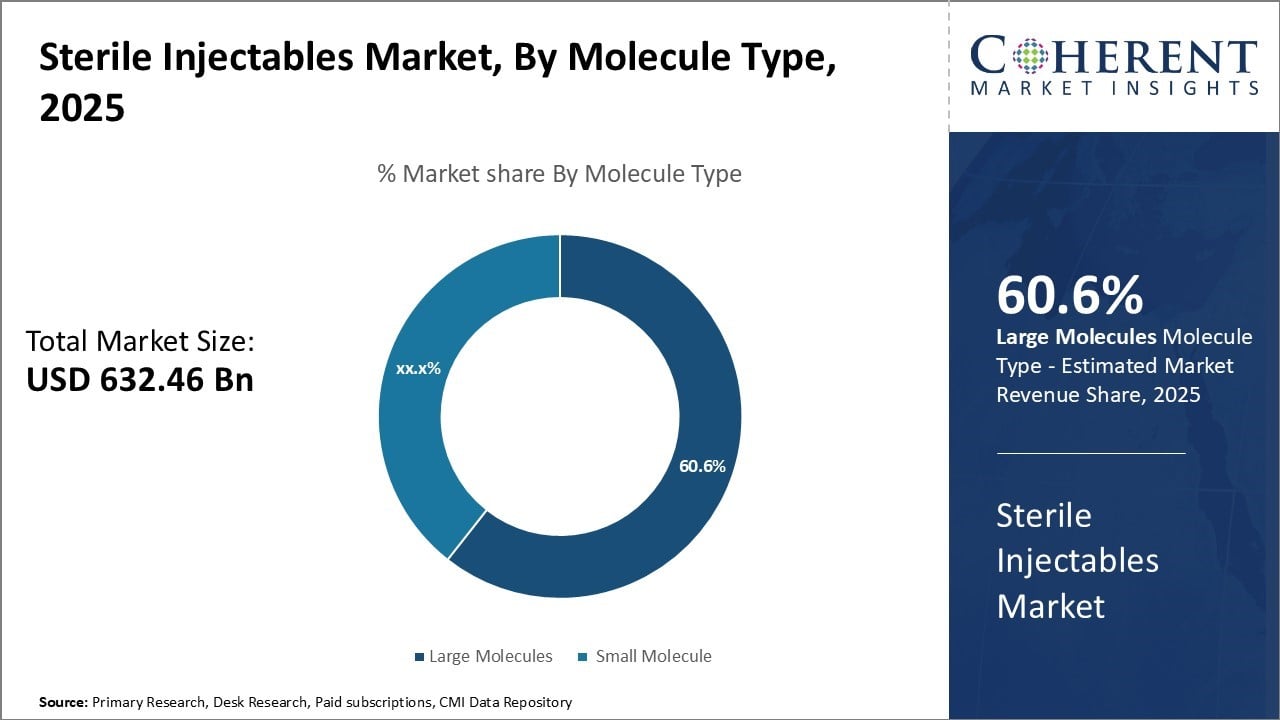
- According to Molecule Type, The Large Molecules Category is anticipated to account for the largest share of 61.6% for the Sterile Injectables market in 2026.
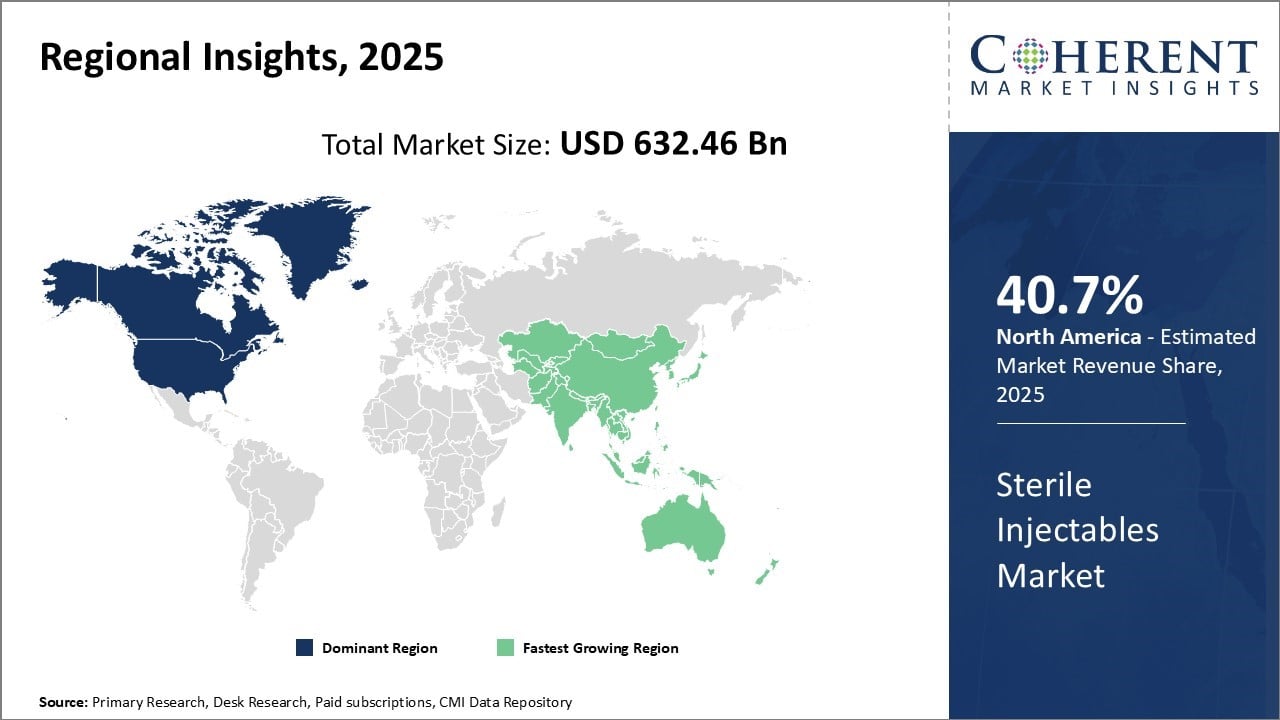
- According to region, North America holds the largest market share of 40.7% for Sterile Injectables market growth by 2026.
Market Overview
The Sterile Injectables Market Size is expanding rapidly, with forecasts hitting and the sectors growth being supported by improvements in drug research, a solid pipeline of new treatments, and rising demand for both novel injectables and generics. Global sterile injectables market growth is driven by rising prevalence of chronic diseases worldwide. Furthermore, rising geriatric population who are more prone to develop chronic disease conditions can also boost demand for sterile injectables.
For instance, in January 2026, Akums Drugs and Pharmaceuticals has launched a new sterile facility designed to produce lyophilised products, injectables, vials, ampoules, eye and ear drops, and form-fill-seal (FFS) products.
Current Events and Its Impact on the Sterile Injectables Market
Event | Description and Impact |
Surge in Biologics and Biosimilars Adoption |
|
Expansion of Manufacturing Facilities in Europe |
|
Pipeline Analysis
The sterile injectables pipeline is robust, with pharmaceutical companies prioritizing pilot-scale fill-finish facilities to support clinical development and commercialization. The rise of biologics and biosimilars is fueling the pipeline, particularly in oncology, vaccines, and chronic disease therapies. Notably, over 200 antibody-drug conjugates (ADCs) are in clinical trials, and contract development and manufacturing organizations (CDMOs) are expanding capacity to meet this demand. Investments in new aseptic filling lines and modernized manufacturing facilities are aimed at alleviating drug shortages and supporting both novel and generic injectables.
- Current Industry Events of 2026
- Market Size Estimation
- Regional Breakdown
- Competitive Landscape
- Customer Intelligence
- Segmental Analysis
- Pricing Analysis
- Key Market Drivers, Challenges & Future Trends
- Customized Insights Section
Patent Landscape
The patent landscape for sterile injectables is dynamic, with innovation concentrated in biologics, delivery systems (such as prefilled syringes and cartridges), and aseptic processing technologies. Patent expiries for key biologics are driving the entry of biosimilars, intensifying competition and encouraging further R&D investment. Companies are also patenting advances in AI-enabled quality control and automated fill-finish technologies to secure competitive advantages in manufacturing efficiency and compliance.
Reimbursement Scenario
- Reimbursement for sterile injectables varies by region and product type. In major markets like the U.S., injectable biologics and specialty drugs often command premium reimbursement rates due to their clinical importance in oncology, immunology, and rare diseases.
- However, high development and manufacturing costs, coupled with regulatory hurdles, can impact pricing and reimbursement negotiations. Payers are increasingly scrutinizing cost-effectiveness, leading to a focus on value-based pricing models, especially for innovative therapies.
- In emerging markets, improving healthcare access and government-led programs are expanding reimbursement coverage for essential injectables, particularly vaccines and chronic disease treatments.
Prescribers’ Preference
- Prescribers increasingly prefer sterile injectables for their rapid onset of action, precise dosing, and high bioavailability, particularly in acute care, oncology, and chronic disease management.
- The rise of biologics, especially monoclonal antibodies, is shaping prescriber preferences due to their efficacy and specificity, with the large molecule segment expected to account for 66.7% of the U.S. market in 2025.
- Ready-to-use formats such as prefilled syringes and cartridges are favored for their convenience, reduced risk of contamination, and improved patient safety. Prescribers also value innovations in drug delivery and formulation that enhance treatment adherence and outcomes.
Segmental Insights
Sterile Injectables Market Insights, By Molecule Type
In terms of molecule type, large molecules segment is expected to contribute the highest market share due to rising adoption of biologics for treatment. Biologics, such as monoclonal antibodies, have revolutionized the treatment of various chronic and life-threatening diseases. Conditions like rheumatoid arthritis, psoriasis, and cancers that were previously difficult to treat can now be managed more effectively with biologics.
Furthermore, development of sophisticated recombinant DNA technology has enabled the production of complex biologic molecules on a commercial scale. This has significantly boosted research and development of novel biologic drugs for a wide range of indications. Due to their high specificity and precision in targeting molecular disease pathways, there has been increased use of biologics.
Unlike traditional small molecule drugs, biologics interact with cellular antigens or receptors with pinpoint accuracy. This translates to superior clinical efficacy along with lesser side effects as compared to non-targeted therapies.
Advancements in protein engineering and manufacturing techniques have enhanced biologics' drug-like properties such as extended half-life and convenient dosing regimens. These developments have broadened biologics' applications and encouraged their adoption for long-term disease management. The patent expiries of blockbuster biologics have also spurred product line extensions through biosimilars, thus, driving the segment growth.
Sterile Injectables Market Insights, By Drug Type
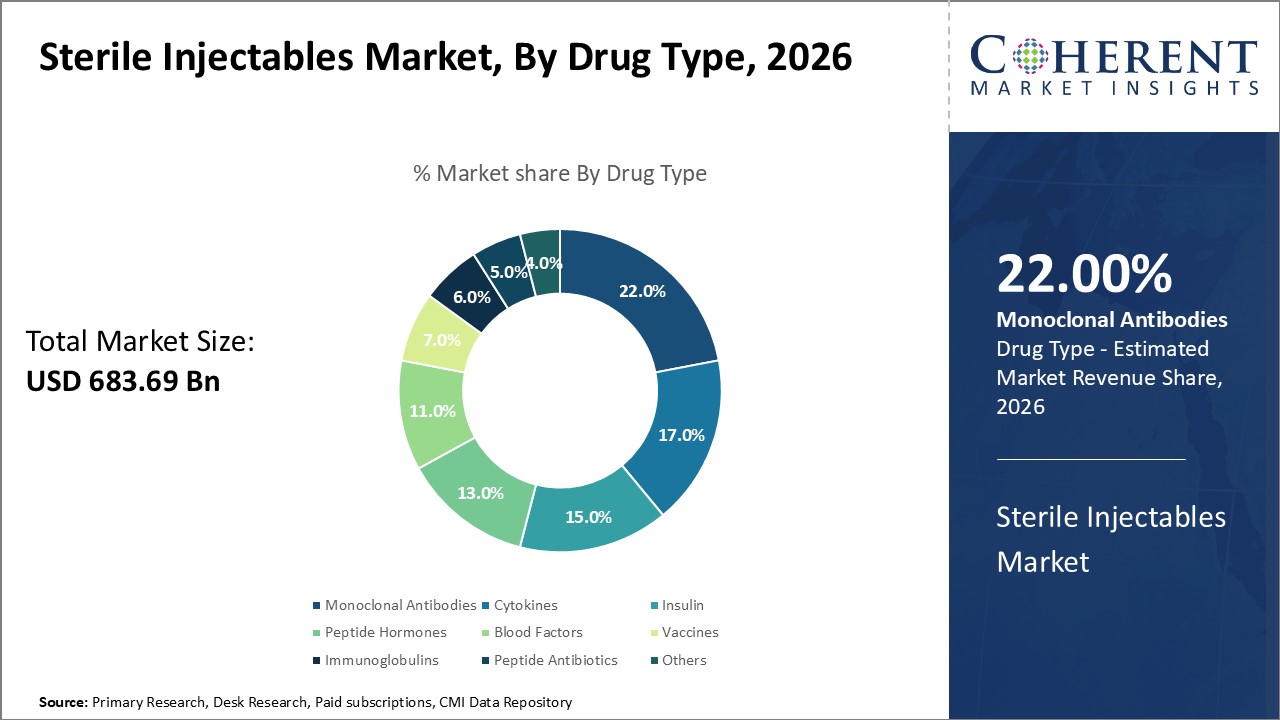
In terms of drug type, monoclonal antibodies segment is expected to contribute the highest market share of, owing to its diverse therapeutic applications. Monoclonal antibodies are biologic drugs derived from living cells in a laboratory to act against specific antigens or receptors involved in disease pathways. Their exquisite molecular specificity and high affinity binding translate to robust clinical responses.
With advancement in genetic engineering and hybridoma technology, scientists are now capable of developing monoclonal antibodies against a wide array of disease targets. This has translated to monoclonal antibodies emerging as a highly effective treatment option for various cancers, inflammatory disorders, cardiovascular diseases and more.
As research continues to illuminate novel pathogenic targets, the therapeutic scope of monoclonal antibodies will keep expanding to new disease areas. Their versatile structure also allows for drug modifications like antibody-drug conjugates and bispecific antibodies with improved pharmacological properties. Continuous innovation and increasing understanding of disease biology can drive the monoclonal antibodies segment growth over the forecast period.
Sterile Injectables Market Insights, By Disease Indication
In terms of disease indication, cancer segment is expected to contribute the highest market share of owing to growing disease prevalence globally. According to WHO, cancer incidence is rising steeply worldwide with over 19 million new cases reported in 2021. As economies develop and life expectancy increases in developing nations, cancer cases are projected to increase, thus, placing a huge disease burden. This upsurge in cancer patients boosts demand for effective oncology therapies.
Sterile injectable drugs are integral to modern cancer treatment in the forms of monoclonal antibody drugs, cytotoxic chemotherapeutics and supportive care agents. Their administration through the parenteral route enables optimal drug bioavailability to exert immediate therapeutic effects.
Furthermore, injectable drugs remain irreplaceable for targeted delivery of anticancer payloads to tumors via technologies like antibody-drug conjugates. With continuous progress in elucidating tumorigenesis pathways, novel injectable drugs are transforming cancer management. Sustained research also aims to enhance the precision and tolerability of oncology injectables.
Sterile Injectables Market Insights, By Route of Administration
In terms of route of administration, Intravenous (IV) segment is expected to contribute the highest market share of owing to growing disease prevalence globally. The intravenous (IV) segment is a key route of administration within the sterile injectables market, playing a significant role in the delivery of a wide range of pharmaceutical products.
Sterile injectable drugs are typically administered intravenously, as this method allows for rapid onset of action, precise dosing, and is particularly effective for treating acute and chronic conditions such as cancer, cardiovascular diseases, and infectious disorders. The IV route is favored in clinical settings due to its ability to deliver medications directly into the bloodstream, ensuring immediate therapeutic effects and high bioavailability.
Regional Insights
North America Sterile Injectables Market
North America dominates the global sterile injectables market with an estimated market share of 40.7% in 2026, due to strong presence of major pharmaceutical companies in the region. Countries like the U.S. have highly developed healthcare systems rapidly adopts new technologies. The region is home to numerous contract manufacturing organizations that cater to the sterile injectables production needs of pharmaceutical firms.
This has ensured strong production capacities are available within the region to cater to domestic demand. Furthermore, presence of several pharmaceutical giants with large R&D capabilities has resulted in many patent-protected drugs being manufactured in North America first before being supplied globally. This first-mover advantage allows companies to capture higher prices and market share for new drug launches in this region.
Asia Pacific Sterile Injectables Market
Asia Pacific region has emerged as the fastest growing market for sterile injectables. Countries like China, India and South Korea have witnessed explosive growth in their pharmaceutical industries. Extensive efforts by their governments to promote domestic manufacturing has boosted production capacities in these nations.
For instance, China offers tax incentives and Special Economic Zones for companies setting up or expanding sterile injectable manufacturing sites. This attracts significant investments from global pharmaceutical companies to cater to the Asian patient pool. India has also liberalized its regulations for imports and exports while protecting intellectual property, making it an attractive alternative manufacturing destination.
The comparatively lower costs of operations ensure companies can supply these emerging Asian markets, as well as export to other regions, in a very cost-effective manner. Availability of a large talent pool of skilled life sciences professionals further supports their rise as global sterile injectables hubs.
Sterile Injectables Market In Europe
Europe benefits from a well-established healthcare infrastructure, high per capita healthcare spending, and the presence of major pharmaceutical and contract development and manufacturing organizations (CDMOs), which are increasingly adopting artificial intelligence and automation to enhance efficiency and compliance.
Sterile Injectables Market Dominating Countries
U.S Sterile Injectables Market
The United States is the dominant force in the global sterile injectables market, driven by a high prevalence of chronic diseases such as cancer and diabetes, as well as significant advancements in biotechnology and biologics.
India Sterile Injectables Market
India is emerging as a key player in the global sterile injectables market, leveraging its large pharmaceutical manufacturing base and cost-effective production capabilities. The country is a major supplier of generic sterile injectables, meeting both domestic and international demand.
Sterile Injectables Market In China
China is rapidly expanding its footprint in the sterile injectables market, supported by strong government initiatives to modernize healthcare, a large patient population, and significant investments in pharmaceutical R&D.
Market Report Scope
Sterile Injectables Market Report Coverage
| Report Coverage | Details | ||
|---|---|---|---|
| Base Year: | 2025 | Market Size in 2026: | USD 683.69 Bn |
| Historical Data for: | 2020 To 2024 | Forecast Period: | 2026 To 2033 |
| Forecast Period 2026 to 2033 CAGR: | 8.1% | 2033 Value Projection: | USD 1,179.34 Bn |
| Geographies covered: |
| ||
| Segments covered: |
| ||
| Companies covered: | Pfizer Inc., Merck & Co., Inc., Johnson & Johnson, Baxter International Inc., Novartis AG , Sanofi S.A., GlaxoSmithKline plc (GSK), AstraZeneca PLC, Gilead Sciences, Inc., Amgen Inc., AbbVie Inc., Teva Pharmaceutical Industries Ltd., Bayer AG, Fresenius SE & Co. KGaA (Fresenius Kabi), Becton, Dickinson and Company (BD), F. Hoffmann-La Roche Ltd and Eli Lilly and Company | ||
| Growth Drivers: |
| ||
| Restraints & Challenges: |
| ||
Sterile Injectables Market: Growth Drivers
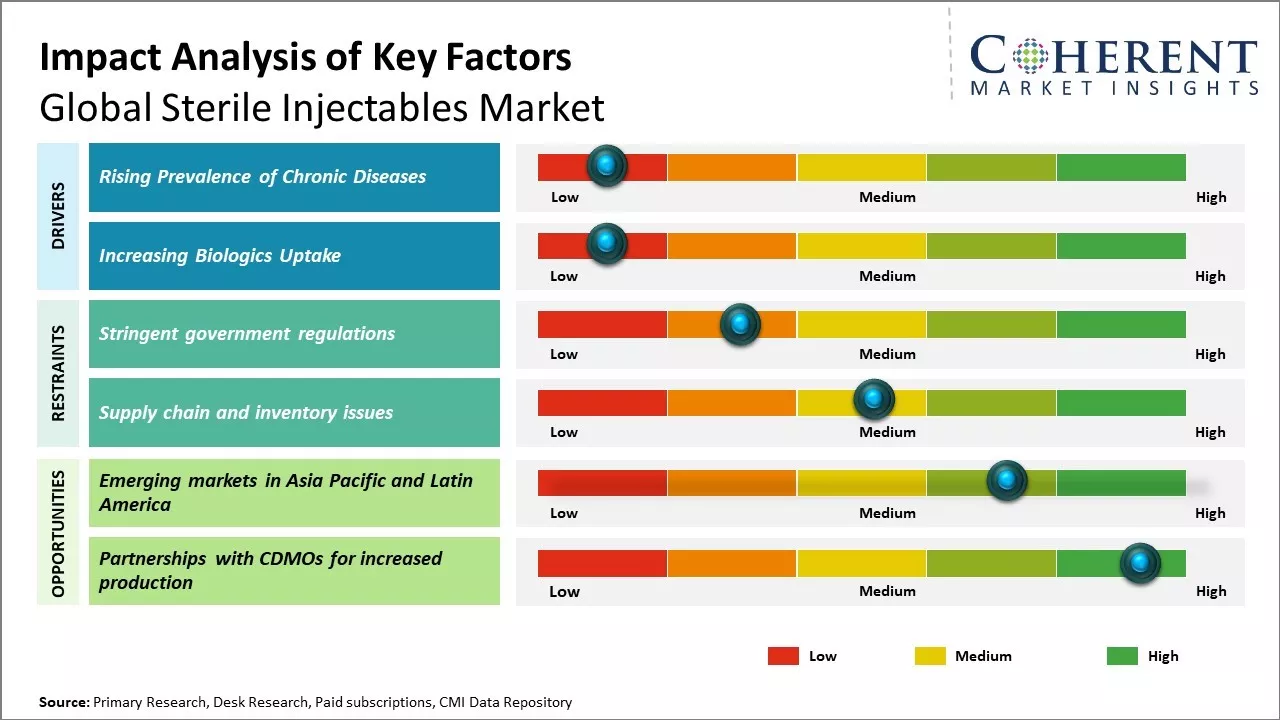
- Rising Prevalence of Chronic Diseases
Rising prevalence of chronic diseases such as cancer, diabetes and cardiovascular diseases can drive the sterile injectables market growth. These chronic diseases usually require long term treatment and sterile injectables play a vital role in providing effective treatment to patients suffering from such conditions. Sterile injectables are widely used in delivering drugs for cancer treatment intravenously or subcutaneously.
Many chemotherapy drugs that are used to destroy cancer cells are available only in injectable form. According to studies, there will be increase in cancer cases in the near future due to aging population and lifestyle changes across both developed and developing nations. This can boost demand for various oncology sterile injectable drugs. Sterile injectables have emerged as an indispensable mode of administration for treatment of diabetes. Insulin is used in the form of sterile injectable for diabetes patients.
Growing prevalence of diabetes can boost demand for insulin sterile injectables. Increasing obesity levels and lack of physical activity can add more patients to the diabetes population pool necessitating glucose management via additional insulin doses.
For instance, in May 2022, according to the article published by BioMed Central Journal, 26.7 million Indians were estimated to be cancer patients, and by 2025, that figure is expected to rise to 29.8 million. IDF reported that approximately 3.9 million French citizens had diabetes in 2022; and by 2030, that figure is expected to rise to 4.1 million, and by 2045, it is predicted to reach 4.2 million. Therefore, it is projected that rising prevalence of chronic illnesses can boost demand for safe and efficient injectable medications.
Increasing Biologics Uptake
Rising adoption of biologics like monoclonal antibodies, hormones and vaccines can drive the global sterile injectables market growth. Biologics have revolutionized the treatment of various severe medical conditions including rheumatoid arthritis, psoriasis, cancer and others due to their high specificity and efficacy. Their administration method relies heavily on sterile injectable delivery routes like intravenous or subcutaneous injections. Sterile injectables allow for sustained release of complex biologic molecules into the body over an extended period to achieve the desired therapeutic effect. Injectable biologics face less gastric acid destruction and enzymatic degradation issues compared to oral administration paths. These advantages have made sterile injectables the preferred formulation for biologics.
Sterile Injectables Market: Trends
The sterile injectable market is experiencing strong growth, shaped by several key trends. Rising prevalence of chronic diseases and an aging global population are major drivers, increasing the demand for injectable therapies, particularly for conditions like cancer, diabetes, and cardiovascular diseases.
There is a notable shift toward biologics and large molecule drugs, with monoclonal antibodies and advanced therapies fueling market expansion and accounting for a significant share of new product launches. The adoption of ready-to-use injectable systems such as prefilled syringes and autoinjectors is accelerating, driven by their safety, convenience, and ability to support self-administration, especially in home care and chronic disease management.
Sterile Injectables Market: Opportunities
- Emerging markets in Asia Pacific and Latin America
Emerging markets in Asia Pacific and Latin America can offer significant potential opportunities for global sterile injectables market growth. These regions have large populations and growing healthcare needs that boosts demand for sterile medical products and treatments.
Key developing countries in these regions like India, China, Brazil and Mexico have been witnessing steady economic expansion, and this has improved access to healthcare for many citizens. This, coupled with rising incomes, has increased the ability of patients to afford important sterile injectable medicines for chronic conditions.
Governments in emerging nations have started prioritizing healthcare and aims to provide universal access to services. For instance, in 2022, according to the report published by World Bank, India's total healthcare spending as a percentage of GDP had increased from 1.2% in 2014 to 3.5% in 2021. This expanded coverage and support from the government allows more patients to avail sterile injectable drugs and therapies.
Asia Pacific region has witnessed rising cases of non-communicable diseases like cancer, diabetes and cardiovascular issues linked to changing lifestyles and aging populations. According to the data from the International Diabetes Federation's Diabetes Atlas, in 2021, over 150 million adults in the region have diabetes with China and India accounting for the most cases globally. Treating such conditions generally involves regular injections and intravenous therapies. Thus, growing disease burden boosts demand for sterile injectable pharmaceutical products.
Sterile Injectables Market: Key Developments
- February 2025, Eli Lilly and Merck & Co. have teamed up with Purdue University to establish the Young Institute Pharmaceutical Manufacturing Consortium, which will conduct research and develop new production technologies in response to the industry's need to expand capacity and improve manufacturing efficiency.
- August 2024, Fresenius Kabi has launched a new generic version of Cetrorelix Acetate for Injection, a medication used in reproductive health treatments, expanding its portfolio of women’s health products. The new option, which is available immediately, offers a cost-effective alternative for women undergoing fertility treatments. The injection kit includes one single-dose vial (0.25 mg cetrorelix), a pre-filled syringe with sterile water for injection, and two needles (20-gauge and 27-gauge), providing a comprehensive solution for healthcare providers and patients.
- November 2024, Adragos Pharma, a Contract Development & Manufacturing Organisation (CDMO), has significantly enhanced its production capabilities with the completion of a new ampoule filling line at its Livron-sur-Drôme site in France. The newly installed line, now the fourth at the facility, offers flexible fill volumes ranging from 1ml to 20ml, accommodating a wide variety of formulations and customer-specific needs.
- July 2024,Amneal Pharmaceuticals, Inc. and Steriscience have jointly launched FOCINVEZ, a new injectable product. This ready-to-use fosaprepitant injectable differs from others on the market by being free of Polysorbate 80. It comes in a single-dose vial format that requires no reconstitution or dilution, facilitating direct administration with the included vial hanger.
- April 2023,Bridgewest Group, a renowned global private investment firm known for nurturing innovative enterprises in life sciences, software, and deep tech sectors, has finalized the acquisition of the Perth sterile injectable manufacturing facility from Pfizer (Perth) Pty Ltd, a subsidiary of Pfizer, Inc. This acquisition follows Bridgewest Group's earlier announcement of a definitive agreement to purchase the facility late last year.
Analyst Opinion
- Global sterile injectables market growth is driven by rising prevalence of chronic diseases and increasing popularity of biologics and biosimilars. There has been rising demand for sterile injectables to treat conditions like cancer, diabetes and autoimmune diseases.
- Biologics, which are administered through injections, have emerged as an important treatment option for many complex diseases, and this can boost demand for sterile injectables for drug delivery. However, stringent regulatory requirements for sterile manufacturing can hamper the market growth.
- North America currently dominates the global sterile injectables market, owing to growing geriatric population, widespread adoption of biologics, and rising healthcare spending in the U.S. and Canada. Asia Pacific is expected to witness the fastest growth due to expanding healthcare infrastructure, rising medical tourism and growing economies in China and India.
Speak to the analyst
Want personalized insights?
Take the findings above to one of our principal consultants, or have the report rebuilt around the segments, geographies and competitors you actually track.
Market Segmentation
- By Molecule Type (Revenue, USD Bn, 2021 - 2033)
- Large Molecules
- Small Molecule
- By Drug Type (Revenue, USD Bn, 2021 - 2033)
- Monoclonal Antibodies
- Cytokines
- Insulin
- Peptide Hormones
- Blood Factors
- Vaccines
- Immunoglobulins
- Peptide Antibiotics
- Others
- By Disease Indication (Revenue, USD Bn, 2021 - 2033)
- Cancer
- Diabetes
- Cardiovascular Disorders
- Musculoskeletal Disorders
- CNS disorders
- Infectious Disorders
- Others
- By Route of Administration
- Intravenous (IV)
- Intramuscular (IM)
- Subcutaneous (SC)
- Others
- By Distribution Channel
- Hospital Pharmacies
- Retail Pharmacies
- Online Pharmacies
- By Region (Revenue, USD Bn, 2021 - 2033)
- North America
- U.S.
- Canada
- Latin America
- Brazil
- Argentina
- Mexico
- Rest of Latin America
- Europe
- Germany
- U.K.
- Spain
- France
- Italy
- Russia
- Rest of Europe
- Asia Pacific
- China
- India
- Japan
- Australia
- South Korea
- ASEAN
- Rest of Asia Pacific
- Middle East
- GCC Countries
- Israel
- Rest of Middle East
- Africa
- South Africa
- North Africa
- Central Africa
- North America
- Company Profiles
- Pfizer Inc.
- Merck & Co., Inc.
- Johnson & Johnson
- Baxter International Inc.
- Novartis AG
- Sanofi S.A.
- GlaxoSmithKline plc (GSK)
- AstraZeneca PLC
- Gilead Sciences, Inc.
- Amgen Inc.
- AbbVie Inc.
- Teva Pharmaceutical Industries Ltd.
- Bayer AG
- Fresenius SE & Co. KGaA (Fresenius Kabi)
- Becton, Dickinson and Company (BD)
- F. Hoffmann-La Roche Ltd
- Eli Lilly and Company
Sources
Primary Research interviews
- Procurement Heads – Hospital Chains
- Heads of Injectable Manufacturing – Pharma Companies
- Regulatory Affairs Officers – Biopharma Companies
- R&D Heads – Sterile Injectable Divisions
- Pharmacovigilance Experts
- Cold Chain Logistics Providers
- Hospital Pharmacists
Databases
- ClinicalTrials.gov
- U.S. FDA Orange Book
- Drugs@FDA
- Indian Pharmacopoeia Commission Database
- WHO Global Health Observatory
Magazines
- Pharmaceutical Technology
- PharmaTimes
- PharmaFocus Asia
- European Pharmaceutical Manufacturer
- FiercePharma
- PharmaVOICE
- Drug Development & Delivery
Journals
- Journal of Pharmaceutical Sciences
- International Journal of Pharmaceutics
- American Journal of Health-System Pharmacy
- Journal of Controlled Release
- Journal of Drug Delivery Science and Technology
- European Journal of Pharmaceutical Sciences
- Journal of Pharmaceutical Innovation
- BioDrugs
Newspapers
- The Economic Times (Health/Pharma section)
- Business Standard (Healthcare/Pharma)
- The Hindu BusinessLine (Healthcare)
- Financial Express (Pharma & Healthcare)
- Mint (Livemint Healthcare)
- The Times of India (Health)
Associations
- Indian Drug Manufacturers’ Association (IDMA)
- Organisation of Pharmaceutical Producers of India (OPPI)
- Indian Pharmaceutical Association (IPA)
- International Society for Pharmaceutical Engineering (ISPE)
- Parenteral Drug Association (PDA)
- Association of Contract Research Organizations (ACRO)
- Biotechnology Industry Organization (BIO)
Proprietary Elements
- CMI Data Analytics Tool, Proprietary CMI Existing Repository of information for last 8 years
*Definition: Global Sterile Injectables Market refers to the market for sterile injectable pharmaceutical formulations that are administered parenterally into a patient's body in a sterile manner. Sterile injectables include vials or ampoules of sterile liquid solutions/suspensions, prefilled syringes, and ready-to-use small volume parenteral. The sterile injectable drugs are free from microorganisms and particulate matter to maintain sterility from the point of manufacturing until administration to patients. Common sterile injectable products include vaccines, monoclonal antibodies, hormones, anti-infectives, and cytostatic agents.
Get access to 250+ pages report
Every segment, forecast, competitor profile and data table behind the analysis above — available for instant download.
- ESOMAR Member
- ISO 9001:2015 Certified
- D-U-N-S Registered
- GDPR & CCPA Compliant
Missing comfort of reading report in your local language? Find your preferred language:
Transform your Strategy with Exclusive Trending Reports
Frequently Asked Questions
The Sterile Injectables Market is estimated to be valued at USD 683.69 Bn in 2026, and is expected to reach USD 1,179.34 Bn by 2033.
The CAGR of the Sterile Injectables Market is projected to be 8.1% from 2026 to 2033.
Rising prevalence of chronic diseases and increasing biologics uptake are the major factors driving the growth of global sterile injectables market.
Stringent government regulations and supply chain and inventory issues are the major factors hampering the growth of global sterile injectables market.
In terms of molecule type, large molecules segment is estimated to dominate the market in 2026.
Pfizer Inc., Merck & Co., Inc., Johnson & Johnson, Baxter International Inc., Novartis AG, Sanofi S.A., GlaxoSmithKline plc (GSK), AstraZeneca PLC, Gilead Sciences, Inc., Amgen Inc., AbbVie Inc., Teva Pharmaceutical Industries Ltd., Bayer AG, Fresenius SE & Co. KGaA (Fresenius Kabi), Becton, Dickinson and Company (BD), F. Hoffmann-La Roche Ltd and Eli Lilly and Company are the major players.
North America is expected to lead the global sterile injectables market.