

Biologics Market Size and Trends Forecast: 2026 - 2033
The biologics market is estimated to be valued at USD 639.9 Mn in 2026 and is expected to reach USD 1,311.8 Mn by 2033, exhibiting a compound annual growth rate (CAGR) of 10.8% from 2026 to 2033.
Key Takeaways of the Biologics Market
- By product, the monoclonal antibodies segment is expected to contribute the highest share of the biologics market with 33.6% in 2026.
- By drug classification, the branded drugs segment is expected to contribute the highest share of the biologics market with 53.6% in 2026.
- By route of administration, the oral segment is expected to contribute the highest share of the biologics market with 39.6% in 2026.
- North America is expected to the dominant region in the biologics market and is projected to hold 36. 7% of the market share in 2026.
Market Overview
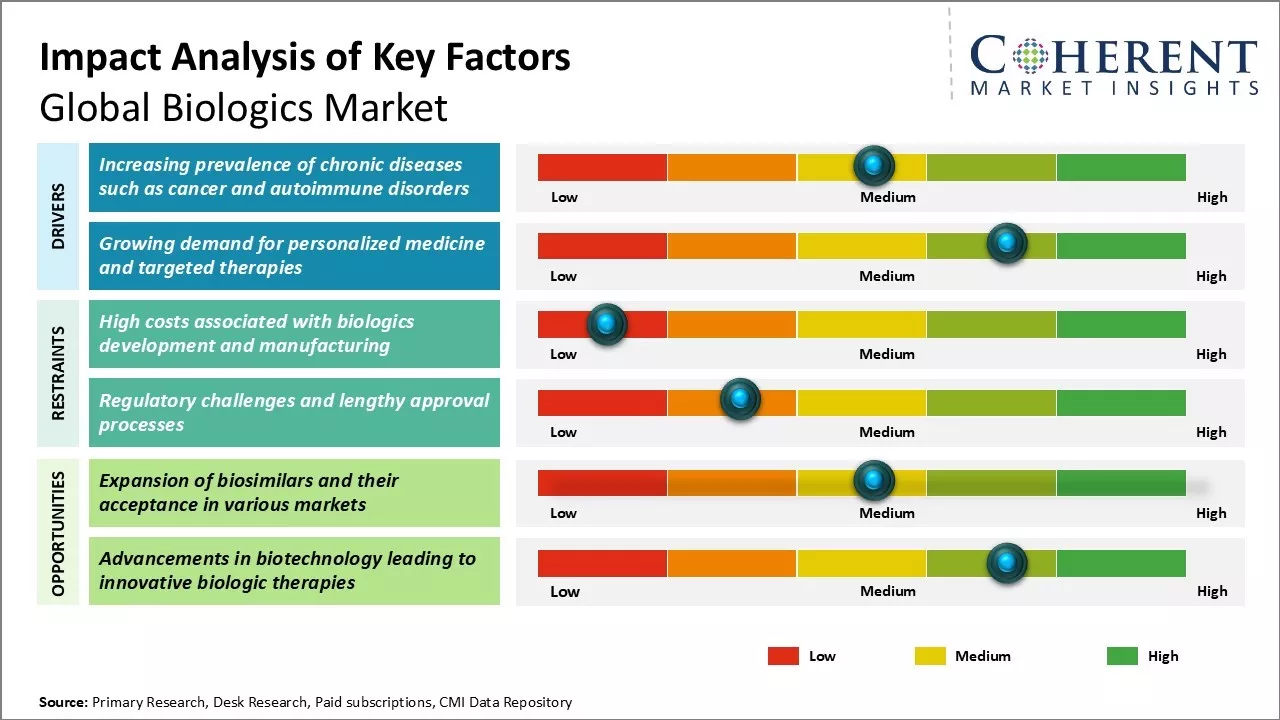
This growth is primarily driven by the increasing demand for monoclonal antibodies and recombinant proteins, which are crucial in the treatment of chronic diseases such as cancer, diabetes, and cardiovascular diseases. As the prevalence of these diseases continues to rise globally, the need for advanced biologic therapies that offer more targeted and effective treatment options becomes even more critical.
However, high costs of developing and manufacturing biologics remains a major challenge for widespread adoption.
Market Concentration and Competitive Landscape
Current Events and their Impact on the Biologics Market
Current Events | Description and its impact |
Regulatory Shifts in Biosimilar Development |
|
Geopolitical Export Controls and Trade Dynamics |
|
- Current Industry Events of 2026
- Market Size Estimation
- Regional Breakdown
- Competitive Landscape
- Customer Intelligence
- Segmental Analysis
- Pricing Analysis
- Key Market Drivers, Challenges & Future Trends
- Customized Insights Section
Market Trends
Increasing Prevalence of Chronic Diseases
The increasing prevalence of chronic diseases globally is a significant factor propelling the growth of the biologics market. Chronic illnesses such as diabetes, rheumatoid arthritis, cancer, and autoimmune disorders have shown a marked rise over the past decade, with complex pathophysiologies that often require advanced therapeutic solutions. Biologics, which include monoclonal antibodies, recombinant proteins, and gene therapies, offer targeted treatment options that can modulate disease-specific pathways more effectively than traditional small-molecule drugs.
For instance, according to a 2025 National Institute for Health Care Management report, chronic diseases affected approximately 60% of Americans, with many individuals suffering from more than one chronic illness.
Segmental Insights
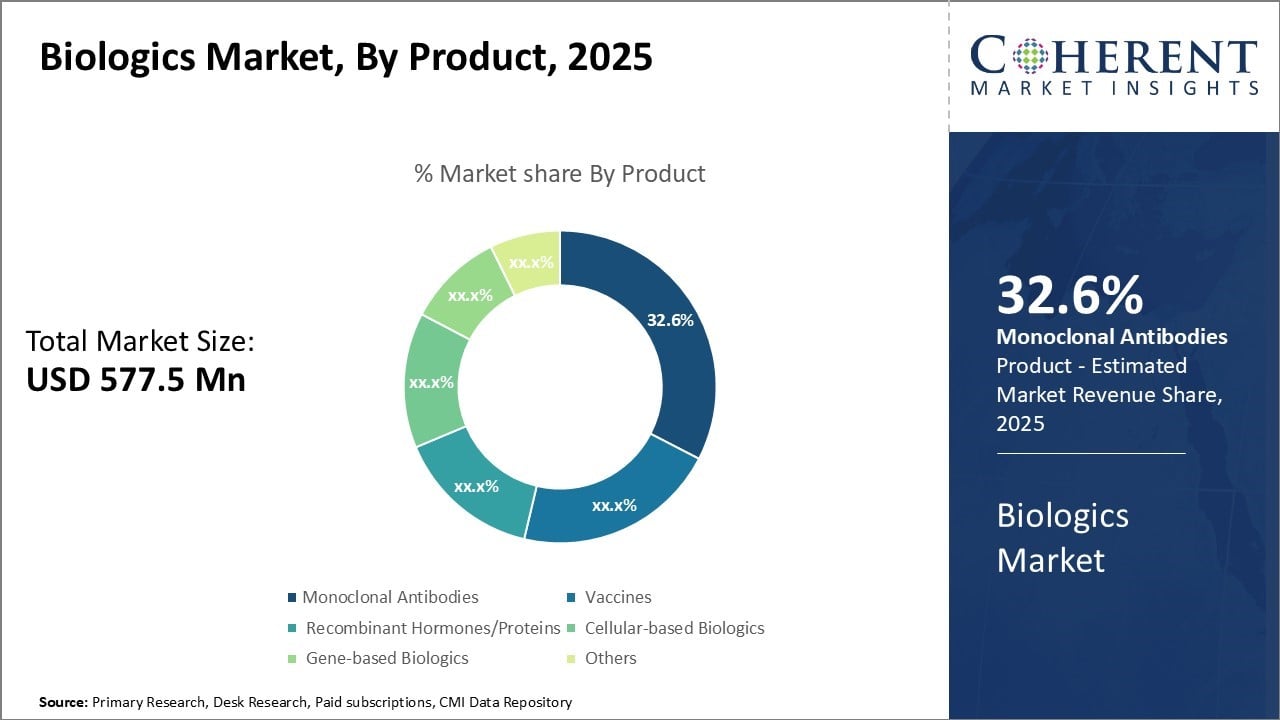
Biologics Market Insights, By Product: Rising Prevalence of Chronic Diseases Boosts Demand for Monoclonal Antibodies
In terms of product, the monoclonal antibodies segment is estimated to contribute the highest market share of 33.6% in 2026, owing to the increasing prevalence of chronic diseases globally.
Monoclonal antibodies have revolutionized the treatment of various conditions such as cancer, autoimmune disorders, infectious diseases, and others. Their high specificity allows them to precisely target molecular abnormalities, driving disease processes. The capability of monoclonal antibodies to modulate immune responses makes them very effective for conditions where traditional small molecule drugs have limitations.
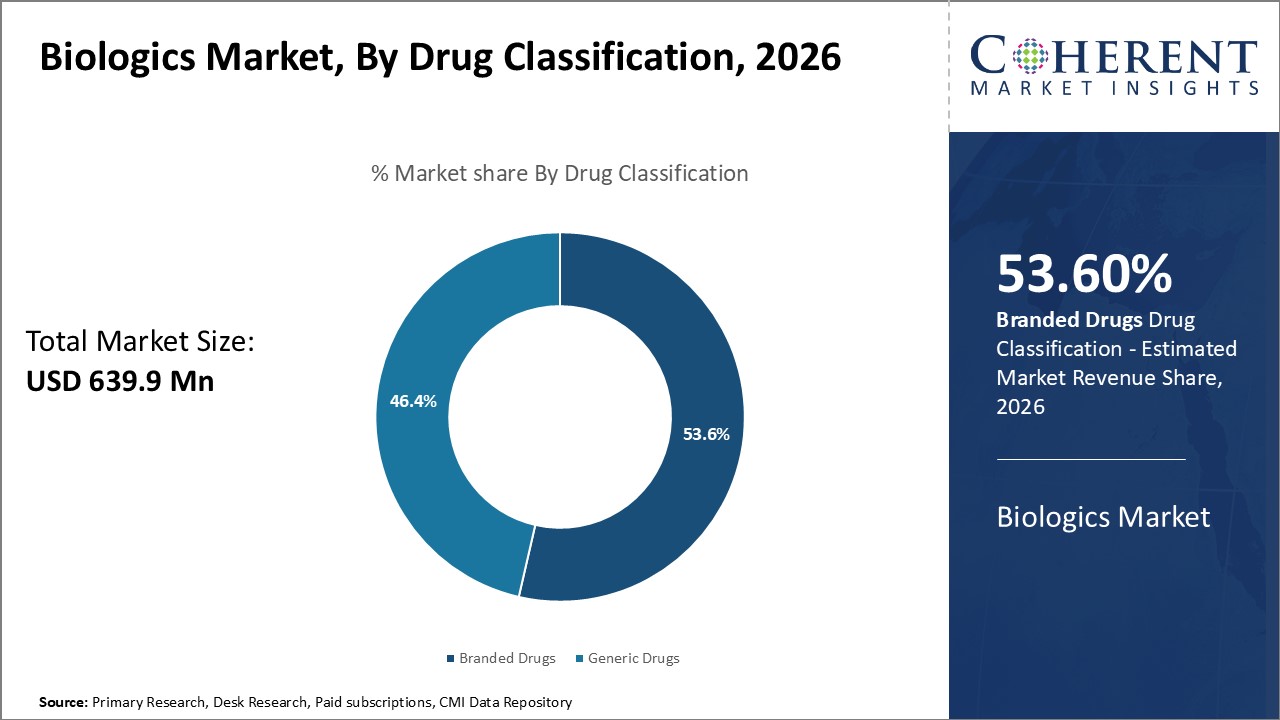
Biologics Market Insights, By Drug Classification: Branded Drugs Dominate Due to Intensive Marketing and Clinical Research
In terms of drug classification, the branded drugs segment is estimated to contribute the highest market share of 53.6% in 2026, owing to strong marketing by pharmaceutical companies and extensive clinical evidence for branded products.
Large pharmaceutical corporations invest heavily in promotional campaigns and branding activities to generate greater awareness about their products among physicians and patients. Clinicians tend to have more confidence in prescribing branded drugs due to availability of data from extensive clinical trials detailing their safety, efficacy and dosing.
Biologics Market Insights, By Route of Administration: Oral Route Gains Traction due to Convenience and Adherence Benefits
In terms of route of administration, the oral segment is estimated to contribute the highest market share of 39.6% in 2026, owing to the major benefits it offers over parenteral drugs especially for chronic conditions.
The oral route provides unmatched convenience as pills can be self-administered at home without any medical supervision or health staff involvement. This improves treatment accessibility. Oral drugs face less stigmatization compared to injections making them socially discreet. Their self-administrable nature increases adherence to medication schedules.
Emerging Innovations in the Biologics Market
- The Integration of Advanced Bioprocessing Techniques
- The integration of advanced bioprocessing techniques streamline production while maintaining high quality. Continuous manufacturing, as opposed to traditional batch processing, is gaining traction. This approach allows for more consistent and scalable production with lower operational costs and reduced time to market. Technologies such as single-use bioreactors have become prominent, offering flexibility, minimizing contamination risk, and enabling quicker changes in production scale or product portfolio.
- The Rapid Advancement of Gene Editing Technologies
- The rapid advancement of gene editing technologies, particularly CRISPR-Cas systems, has expanded the potential for genetically engineered biologics. Researchers are using these precise editing tools to develop novel cell and gene therapies that can correct genetic defects or enhance immune responses. This advancement is particularly transformative in oncology, rare genetic disorders, and autoimmune diseases, where traditional small molecules or vaccines were less effective.
Impacts of Artificial Intelligence (AI) on the Biologics Market
Artificial Intelligence (AI) is reshaping the biologics market by accelerating innovation, optimizing drug development, and enhancing patient outcomes. Its integration within the industry is not just a technological upgrade but a paradigm shift influencing every stage of biologic product lifecycles.
- Amgen, a global leader in biologics, has integrated AI-driven data analytics platforms to streamline its research & development (R&D) processes. By leveraging AI algorithms to analyze complex biological data and predict molecular behavior, Amgen has enhanced its capacity to identify promising therapeutic candidates faster and with higher accuracy. This adoption reflects a broader industry trend where AI serves as a critical enabler in reducing time-to-market and cutting down costly trial-and-error phases traditionally associated with biologics development.
- Genentech, a member of the Roche group, utilizes AI to optimize patient recruitment and trial design. Its AI-driven platform analyzes vast datasets incorporating genetic, demographic, and clinical variables to identify the most suitable patient cohorts. This targeted approach improves trial efficiency by reducing dropout rates and accelerating data collection, ultimately leading to faster regulatory approvals and more effective biologic therapies reaching patients sooner.
Regional Insights
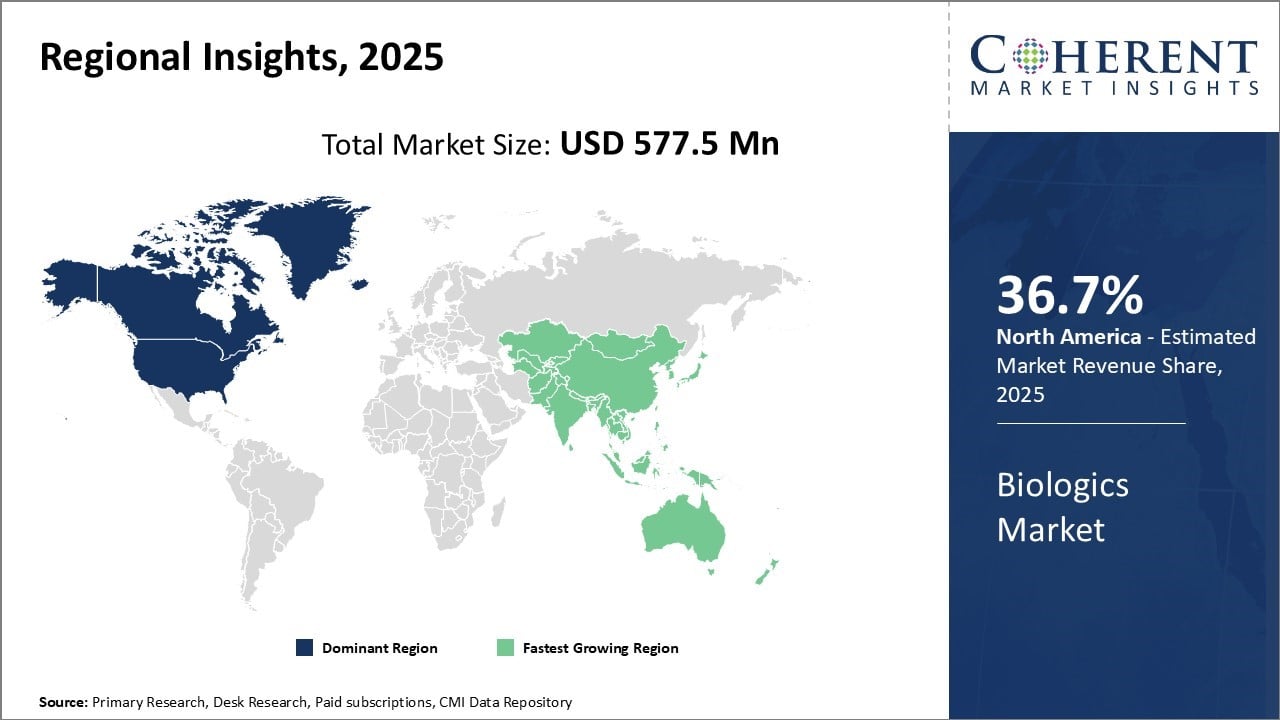
North America Biologics Market Analysis and Trends
North America dominates the biologics industry with an estimated market share of 36.7% in 2026, due to strong presence of global pharmaceutical players like AbbVie Inc. and a well-established healthcare infrastructure. Major markets like the U.S. have fostered innovations in biologics through favourable research policies like the 21st Century Cures Act and financial support for R&D activities.
For instance, in 2021, biosimilar approvals and product launches contributed to approximately USD 7 billion in annual savings—bringing cumulative U.S. savings to over USD 13 billion since 2015. Under current adoption projections, biosimilars could deliver more than USD 38 billion in savings from 2021–2026.
Asia Pacific Biologics Market Analysis and Trends
Asia Pacific region exhibits the fastest growth due to rising healthcare expenditures, growing disease burden, and increasing focus on ensuring access to advanced treatment options. Counties like China and India are emerging as global biopharma hubs leveraging their large generics manufacturing base and a skilled workforce.
For instance, India celebrated approximately 25 years in the biosimilar space in 2026, having approved over 95 biosimilars to date—establishing itself as a major global player in biologics and biosimilars manufacturing.
Biologics Market Outlook for Key Countries
U.S. Biologics Market Analysis and Trends
The U.S. biologics sector is powered by robust research & development (R&D) infrastructure, significant public funding (e.g. the Biologics Price Competition and Innovation Act), and leading pharmaceutical firms investing heavily in novel biologics, cell and gene therapies—reinforced by a supportive regulatory framework that speeds approvals and fosters innovation.
China Biologics Market Analysis and Trends
China is rapidly emerging as a powerhouse in biologics, fueled by proactive government initiatives under ‘Made in China 2026’ and the 14th Five-Year Plan, fast-tracked regulatory approvals (cutting average approval times to approximately 90 days), and increasing biotech R&D spending (over USD 15 billion in 2022)—all catalyzing domestic and global growth.
India Biologics Market Analysis and Trends
India is expanding in biologics via streamlined regulatory pathways, targeted government schemes (e.g. Bio-E3, PLI incentives), rising chronic disease prevalence, and strong biosimilar manufacturing capabilities (driven by Biocon, Dr. Reddy’s, Intas), supported by increasing R&D investment—from US USD 1.3 billion in 2020 to approximately USD 5 billion by 2026.
Germany Biologics Market Analysis and Trends
Germany’s biologics sector is supported by a high chronic disease burden—nearly 493,000 new cancer cases annually—and substantial biotech R&D investment equivalent to approximately USD 10.6–USD 11.3 billion per year. Major firms like Bayer, Boehringer Ingelheim, and Merck KGaA, bolstered by strong public–private innovation ecosystems, continue to drive growth in the biopharmaceutical space.
Pricing Analysis of the Biologics Market
Brand Names of Approved Gene or Cell Therapies | Price Range (USD) |
Kymriah (Tisagenlecleucel)- Leukemia, lymphoma | 375,000 - 475,000, Single infusion gene therapy |
Yescarta (Axicabtagene ciloleucel) - Large B-cell lymphoma | Approximately 400,000, CAR-T cell therapy requiring specialized HCP support |
Zolgensma (Onasemnogene abeparvovec) Spinal muscular atrophy | Approximately 2.1 million (one-time), One-time gene therapy for pediatric patients |
Market Report Scope
Biologics Market Report Coverage
| Report Coverage | Details | ||
|---|---|---|---|
| Base Year: | 2025 | Market Size in 2026: | USD 639.9 Mn |
| Historical Data for: | 2020 To 2024 | Forecast Period: | 2026 To 2033 |
| Forecast Period 2026 to 2033 CAGR: | 10.8% | 2033 Value Projection: | USD 1,311.8 Mn |
| Geographies covered: |
| ||
| Segments covered: |
| ||
| Companies covered: | F. Hoffmann-La Roche Ltd., AbbVie Inc., Amgen Inc., Johnson & Johnson Services, Inc., Merck & Co., Inc., Pfizer Inc., Sanofi S.A., Gilead Sciences, Inc., Novartis AG, Bristol-Myers Squibb Company, Regeneron Pharmaceuticals, Inc., Takeda Pharmaceutical Company Limited, Biogen Inc., Eli Lilly and Company, and Celltrion Healthcare Co., Ltd. | ||
| Growth Drivers: |
| ||
| Restraints & Challenges: |
| ||
Biologics Industry News
- In July 2025, Roche announced that the U.S. Food and Drug Administration (FDA) issued a Complete Response Letter (CRL) for Roche’s supplemental Biologics License Application (sBLA) for Columvi (glofitamab) in combination with gemcitabine and oxaliplatin (GemOx) for the treatment of people suffering with relapsed or refractory (R/R) diffuse large B-cell lymphoma (DLBCL) who are not candidates for autologous stem cell transplant.
- In June 2025, Aragen announced that it will commence GMP manufacturing at its biologics manufacturing facility in Bangalore, India from late July 2025. Aragen successfully completed the facility and equipment qualification and demonstrated the productivity of its intensified fed batch cell culture manufacturing platform to deliver titers >25 g/L.
- In June 2025, Sanofi and Blueprint Medicines Corporation (Blueprint), entered into an agreement under which Sanofi will acquire Blueprint. The acquisition includes a rare immunology disease medicine, Ayvakit/Ayvakyt (avapritinib), approved in the US and the EU, and a promising advanced and early-stage immunology pipeline.
- In April 2025, AbbVie announced submission of a Biologics License Application (BLA) to the U.S. Food and Drug Administration (FDA) for trenibotulinumtoxinE (TrenibotE) for the treatment of moderate to severe glabellar lines.
Analyst View
- The biologics market is witnessing transformative growth fueled by increasing prevalence of chronic and autoimmune diseases, and rising adoption of personalized medicine. Biologics, derived from living organisms, offer targeted therapeutic effects with improved efficacy and safety profiles compared to conventional drugs, making them preferred treatment options.
- A significant driver is technological advancement in bioprocessing and molecular biology, which enhances development efficiency and reduces production costs. Furthermore, supportive regulatory frameworks and increased investment in biopharmaceutical R&D are bolstering market expansion.
- However, high production costs and complex manufacturing processes remain key restraints, limiting accessibility and affordability, especially in emerging economies. Additionally, stringent regulatory requirements and patent expirations pose challenges for stakeholders. Despite these hurdles, opportunities abound with expanding applications in oncology, autoimmune disorders, and rare diseases. The emergence of biosimilars also provides avenues to address cost constraints and broaden patient access.
- Regionally, North America continues to dominate due to its strong biopharmaceutical infrastructure, extensive R&D activities, and favorable reimbursement policies.
- Meanwhile, the Asia Pacific region stands out as the fastest-growing market, driven by increasing healthcare expenditure, improving regulatory landscape, and growing disease burden. Strategic collaborations between global and regional players further accelerate innovation and market penetration. Overall, the biologics market is poised for sustained growth as advancements in biotechnology converge with unmet medical needs and evolving healthcare frameworks worldwide.
Market Segmentation
- By Product Insights (Revenue, USD Mn, 2021 - 2033)
- Monoclonal Antibodies
- Vaccines
- Recombinant Hormones/Proteins
- Cellular-based Biologics
- Gene-based Biologics
- Others
- By Drug Classification Insights (Revenue, USD Mn, 2021 - 2033)
- Branded Drugs
- Generic Drugs
- By Route of Administration Insights (Revenue, USD Mn, 2021 - 2033)
- Oral
- Parenteral
- Other Routes
- By Mode of Purchase Insights (Revenue, USD Mn, 2021 - 2033)
- Prescription-Based Drugs
- Over-The-Counter Drugs
- By Distribution Channel Insights (Revenue, USD Mn, 2021 - 2033)
- Hospital Pharmacies
- Retail Pharmacies
- Online Pharmacies
- Regional Insights (Revenue, USD Mn, 2021 - 2033)
- North America
- U.S.
- Canada
- Latin America
- Brazil
- Argentina
- Mexico
- Rest of Latin America
- Europe
- Germany
- U.K.
- Spain
- France
- Italy
- Russia
- Rest of Europe
- Asia Pacific
- China
- India
- Japan
- Australia
- South Korea
- ASEAN
- Rest of Asia Pacific
- Middle East
- GCC Countries
- Israel
- Rest of Middle East
- Africa
- South Africa
- North Africa
- Central Africa
- Key Players Insights
- F. Hoffmann-La Roche Ltd.
- AbbVie Inc.
- Amgen Inc.
- Johnson & Johnson Services, Inc.
- Merck & Co., Inc.
- Pfizer Inc.
- Sanofi S.A.
- Gilead Sciences, Inc.
- Novartis AG
- Bristol-Myers Squibb Company
- Regeneron Pharmaceuticals, Inc.
- Takeda Pharmaceutical Company Limited
- Biogen Inc.
- Eli Lilly and Company
- Celltrion Healthcare Co., Ltd.
Sources
Primary Research Interviews
- Biologics Manufacturing Experts
- Pharmaceutical R&D Heads
- Biologics Supply Chain Managers
- Biologics Regulatory Affairs Specialists
- Others
Magazines
- BioPharm International
- Genetic Engineering & Biotechnology News (GEN)
- Pharmaceutical Technology
- Others
Journals
- Journal of Biological Chemistry
- Nature Biotechnology
- mAbs
- Others
Newspapers
- The Financial Times (Biotech Section)
- The Wall Street Journal (Health & Pharma)
- Reuters Health News
- Others
Associations
- Biotechnology Innovation Organization (BIO)
- International Society for Pharmaceutical Engineering (ISPE)
- European Federation of Pharmaceutical Industries and Associations (EFPIA)
- Others
Public Domain Sources
- U.S. Food and Drug Administration (FDA) Database
- World Health Organization (WHO) Reports
- gov
- Others
Proprietary Elements
- CMI Data Analytics Tool – Biologics Market
- CMI Existing Repository of Information for the Last 8 Years
*Definition: The biologics market refers to the global industry involved in the development, manufacturing, and commercialization of biologic therapies—medicines derived from living organisms or their cells, including monoclonal antibodies, vaccines, gene and cell therapies, and therapeutic proteins—used to treat a wide range of diseases such as cancer, autoimmune disorders, and infectious diseases.
Get access to 250+ pages report
Every segment, forecast, competitor profile and data table behind the analysis above — available for instant download.
- ESOMAR Member
- ISO 9001:2015 Certified
- D-U-N-S Registered
- GDPR & CCPA Compliant
Missing comfort of reading report in your local language? Find your preferred language:
Transform your Strategy with Exclusive Trending Reports
Frequently Asked Questions
The biologics market is estimated to be valued at USD 639.9 Mn in 2026, and is expected to reach USD 1,311.8 Mn by 2033.
The CAGR of the biologics market is projected to be 10.8% from 2026 to 2033.
Increasing prevalence of chronic diseases such as cancer and autoimmune disorders and growing demand for personalized medicine and targeted therapies are the major factors driving the growth of the global biologics market.
High costs associated with biologics development and manufacturing and regulatory challenges and lengthy approval processes are the major factors hampering the growth of the global biologics market.
In terms of product, monoclonal antibodies segment is estimated to dominate the market in 2026.
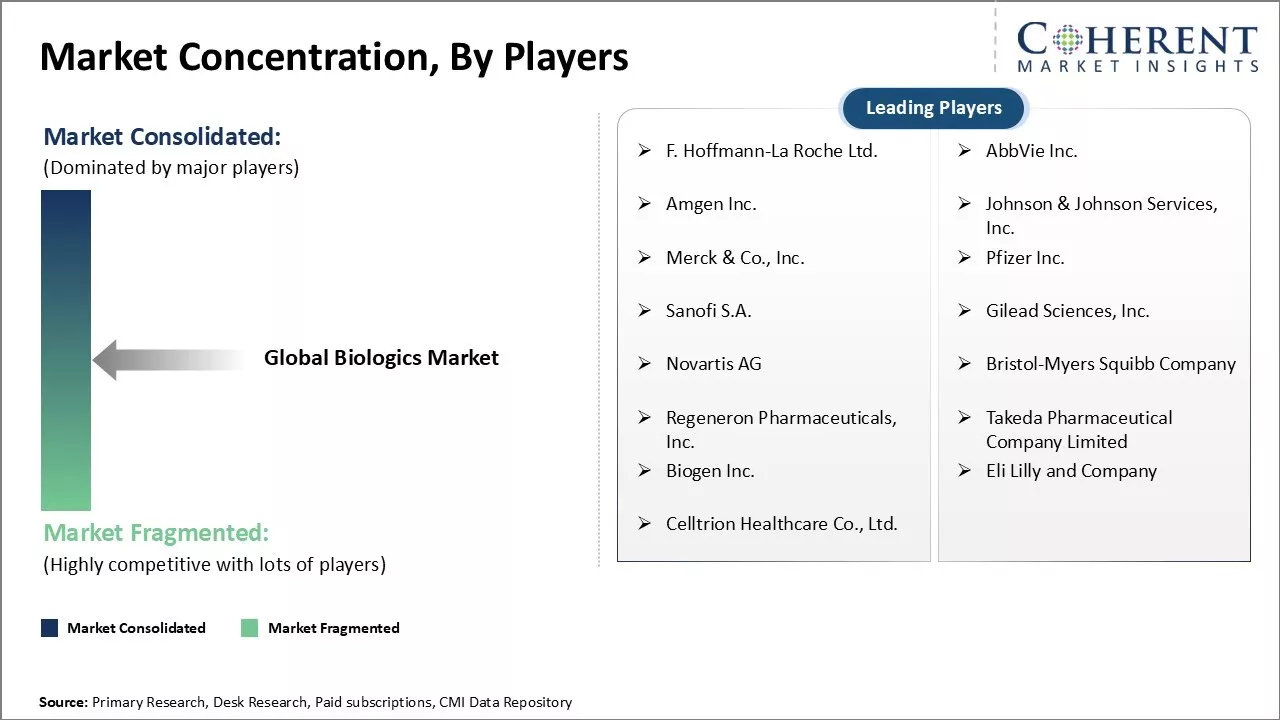
F. Hoffmann-La Roche Ltd., AbbVie Inc., Amgen Inc., Johnson & Johnson Services, Inc., Merck & Co., Inc., Pfizer Inc., Sanofi S.A., Gilead Sciences, Inc., Novartis AG, Bristol-Myers Squibb Company, Regeneron Pharmaceuticals, Inc., Takeda Pharmaceutical Company Limited, Biogen Inc., Eli Lilly and Company, and Celltrion Healthcare Co., Ltd. are the major players operating in the biologics market.
North America is expected to lead the biologics market in 2026.