

Exocrine Pancreatic Insufficiency (EPI) Therapeutics Market Size and Share Analysis- 2026 To 2033
The Exocrine Pancreatic Insufficiency (EPI) Therapeutics Market size is anticipated to grow at a CAGR of 4.1%, with USD 2.55 Bn in 2026 and is expected to reach USD 3.37 Bn by 2033. The primary growth drivers are largely defined by the rising prevalence of chronic pancreatitis and other pancreatic disorders, increasing diagnosis and treatment of EPI, growing use of pancreatic enzyme replacement therapy (PERT), and rising awareness regarding EPI-associated malabsorption and nutritional deficiencies. According to the National Institute of Diabetes and Digestive and Kidney Diseases (NIDDK), EPI commonly occurs in people with chronic or acute pancreatitis, cystic fibrosis, pancreatic cancer, and patients who have undergone pancreatic or upper gastrointestinal surgery.
Key Takeaways
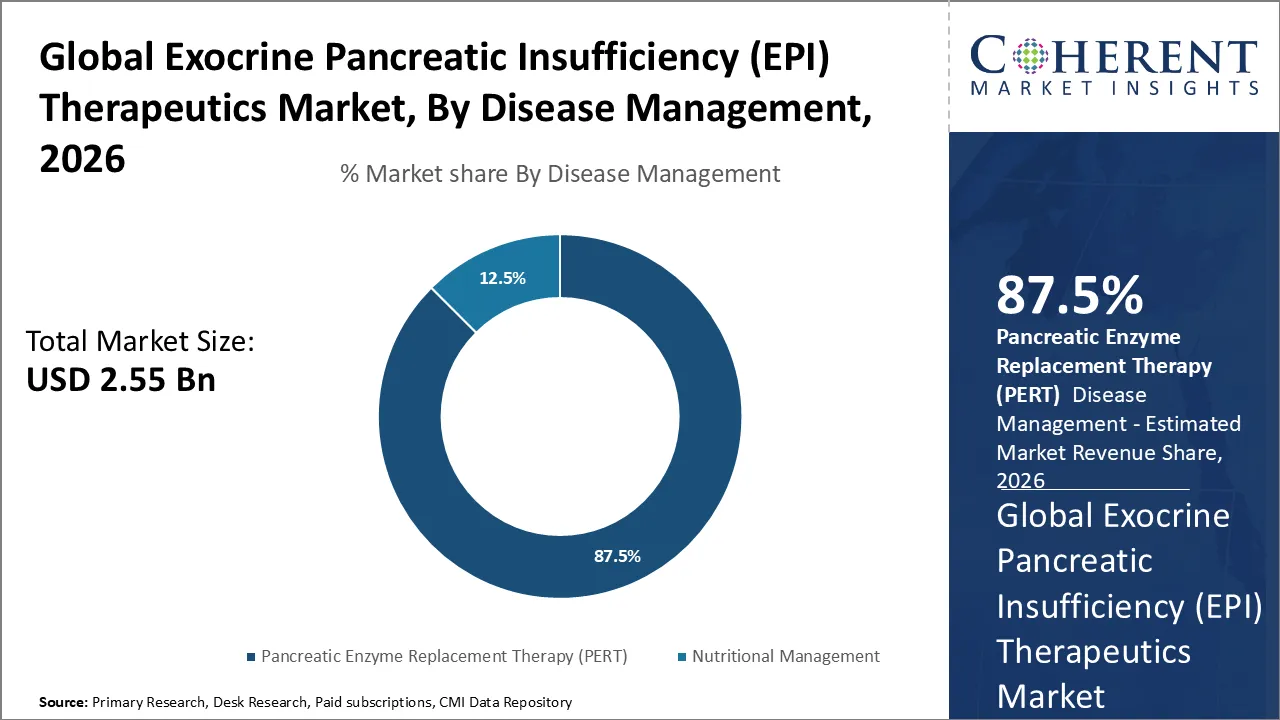
- The pancreatic enzyme replacement therapy (PERT) segment is likely to dominate the market with 87.5% in 2026. The segment’s growth is owing to its position as the standard treatment for pancreatic enzyme deficiency, increasing diagnosis of EPI among patients with chronic pancreatitis and cystic fibrosis, and the need for long-term enzyme supplementation to improve digestion and nutrient absorption. Recent European evidence-based guidelines report that pancreatic exocrine insufficiency occurs in 20%–90% of patients with chronic pancreatitis and in 75%–90% of patients with cystic fibrosis, supporting a substantial addressable population requiring enzyme replacement therapy.
- Creon is set to lead the therapeutic drugs segment with an estimated 67.8% share in 2026. The segment’s dominance is owing to its established use as a pancreatic enzyme replacement therapy, strong prescription penetration, broad use across EPI associated with chronic pancreatitis, cystic fibrosis, and pancreatic surgery, and its entrenched position in the U.S. market. According to AbbVie’s 2025 Annual Report filed in February 2026, U.S. Creon net revenues reached USD 1.512 Bn in 2025, increasing from USD 1.383 Bn in 2024 and USD 1.268 Bn in 2023, demonstrating sustained commercial demand for the therapy.
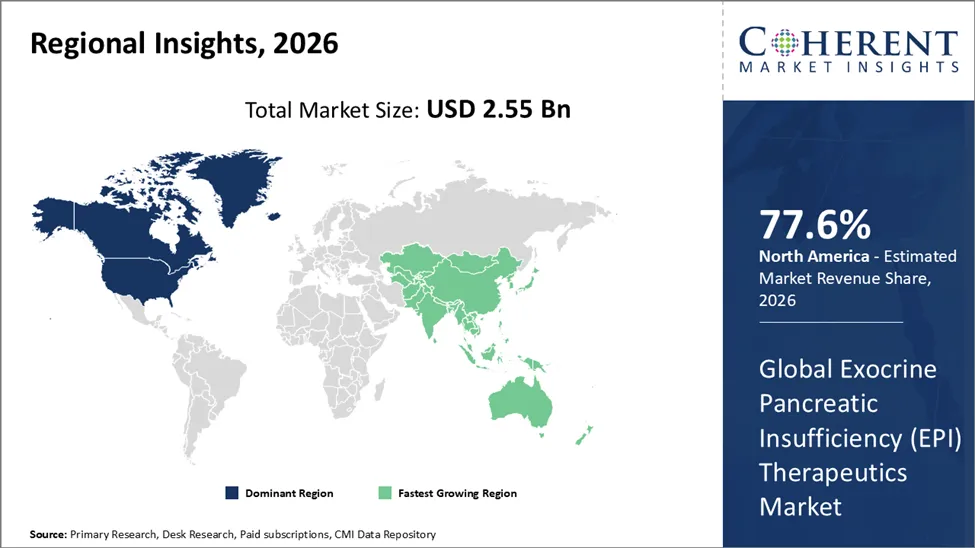
- North America is expected to acquire the prominent share of approximately 77.6% in 2026. The region’s growth is owing to high EPI diagnosis and treatment rates, widespread utilization of pancreatic enzyme replacement therapy, strong healthcare expenditure, favorable access to prescription therapies, and the significant commercial presence of major EPI drug manufacturers. According to the American Cancer Society’s Cancer Facts & Figures 2025, an estimated 67,440 new pancreatic cancer cases were expected to be diagnosed in the U.S. in 2025, and approximately 90% of pancreatic cancers develop in the exocrine tissue of the pancreas.
Market Drivers
Rising Burden of Chronic Pancreatitis and Other High-Risk Pancreatic Disorders is Expanding the EPI Treatment Population
The Exocrine Pancreatic Insufficiency (EPI) Therapeutics Market is propelled by the increasing clinical burden of disorders that impair the secretion of pancreatic enzymes, namely chronic pancreatitis, cystic fibrosis, pancreatic cancer, and patients undergoing pancreatic surgery. These conditions can lead to poor digestion and absorption of nutrients, which increases the need for pancreatic enzyme replacement therapy (PERT) on a long-term basis.
The growing number of pancreatic cancer patients also contributes to the pool of eligible treatments. The American Cancer Society estimates that 67,530 new pancreatic cancer cases will be diagnosed in the U.S. in 2026. The American Gastroenterological Association lists pancreatic ductal adenocarcinoma as one of the high-risk conditions in which EPI should be suspected, reinforcing the continuing need for enzyme replacement and nutritional management in affected patients.
Increasing Adoption and Clinical Recognition of Pancreatic Enzyme Replacement Therapy is Supporting Market Growth
The therapeutics market is growing due to increased awareness of EPI and stronger clinical recommendations for pancreatic enzyme replacement therapy. The primary therapeutic approach remains the substitution of deficient pancreatic enzymes with pancreatic enzyme replacement therapy (PERT), which has been shown to improve digestion and nutrient absorption in patients with pancreatic exocrine insufficiency.
A U.S. population-level study using the TriNetX database covering more than 79 million U.S. residents identified 24,080 adults with EPI but found that only 58% of diagnosed patients received pancreatic enzyme replacement therapy.
Current Events and Their Impact on the Exocrine Pancreatic Insufficiency (EPI) Therapeutics Market
Current Event | Description and its Impact |
CMS Implements 2026 Medicare Part D Redesign and USD 2,100 Annual Out-of-Pocket Cap (2026) |
|
FDA Expands Generic-Drug Development and Therapeutic-Equivalence Policies (2026) |
|
- Current Industry Events of 2026
- Market Size Estimation
- Regional Breakdown
- Competitive Landscape
- Customer Intelligence
- Segmental Analysis
- Pricing Analysis
- Key Market Drivers, Challenges & Future Trends
- Customized Insights Section
Segmental Insights
Why is Pancreatic Enzyme Replacement Therapy (PERT) Acquiring the Largest Share?
On the basis of disease management, the pancreatic enzyme replacement therapy (PERT) segment is projected to account for the largest Exocrine Pancreatic Insufficiency (EPI) Therapeutics Market share of 87.5% in 2026. The segment’s growth is owing to PERT being the principal treatment for pancreatic enzyme deficiency, its use across major EPI-associated conditions such as chronic pancreatitis, pancreatic cancer, cystic fibrosis, acute pancreatitis, and post-pancreatic surgery, and its ability to improve digestion and nutrient absorption.
The 2025 European evidence-based guidelines for pancreatic exocrine insufficiency state that EPI should always be treated, with 98.8% expert agreement, and specifically recommend PERT for patients with EPI secondary to chronic pancreatitis, acute pancreatitis, pancreatic cancer, cystic fibrosis, and pancreatic surgery.
In May 2026, Blackstone Life Sciences announced a USD 250 million investment in Anagram Therapeutics to support the development, regulatory approval, and potential commercial launch of ANG003, a novel orally delivered recombinant enzyme replacement therapy for patients with exocrine pancreatic insufficiency associated with cystic fibrosis, pancreatic cancer, and other pancreatic disorders.
Why is Creon Holding the Largest Therapeutic Drug Share?
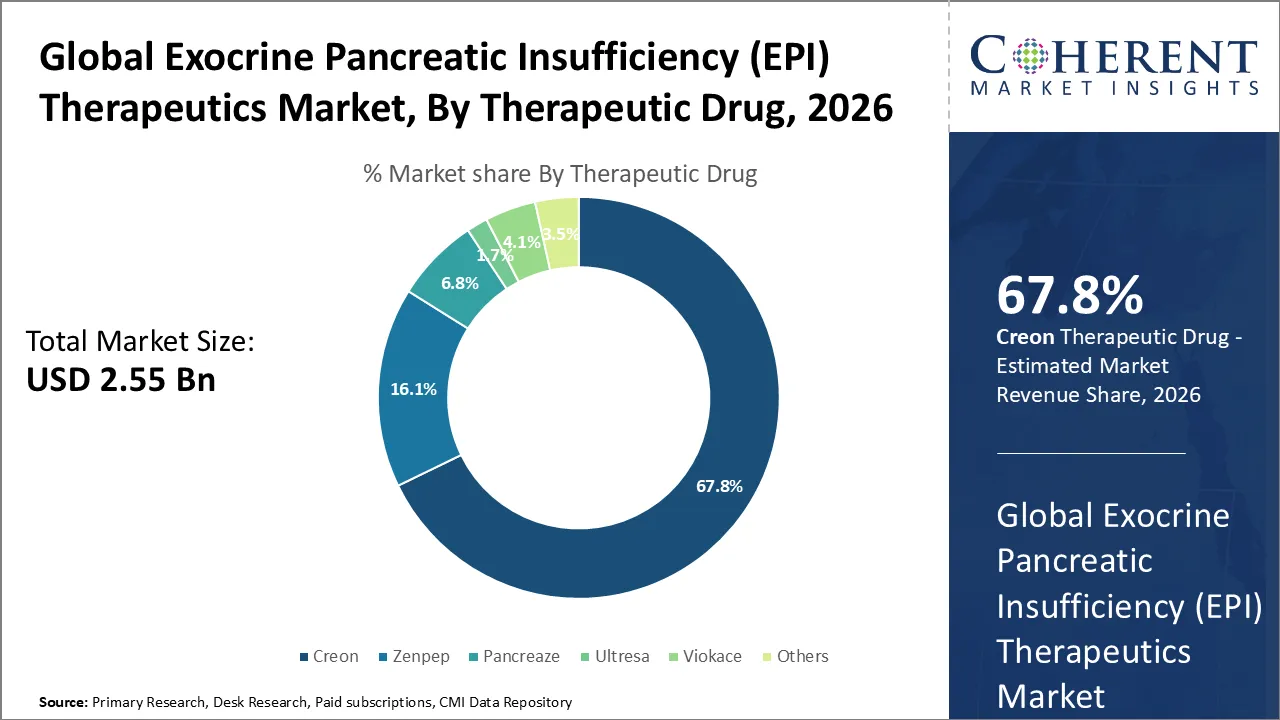
On the basis of therapeutic drug, Creon is projected to lead the Exocrine Pancreatic Insufficiency (EPI) Therapeutics Market with an estimated 67.8% share in 2026. The segment’s leadership is owing to Creon’s established clinical use as a pancrelipase-based pancreatic enzyme replacement therapy, its strong prescription presence, availability across multiple enzyme-strength formulations, and extensive use among patients with chronic pancreatic disorders and other conditions causing EPI.
According to the latest available U.S. FDA prescribing information, Creon is approved for the treatment of EPI in both adult and pediatric patients. The product is available in five lipase strengths, 3,000, 6,000, 12,000, 24,000, and 36,000 USP units, allowing physicians to individualize treatment according to body weight, dietary fat intake, symptoms, and degree of malabsorption.
Exocrine Pancreatic Insufficiency (EPI) Therapeutics Market Trends
- The increasing emphasis on optimized pancreatic enzyme replacement therapy (PERT) dosing is strengthening treatment outcomes in EPI. In a systematic review of PERT in 2025, 40% of studies reviewed reported real-world PERT doses below those recommended in European guidelines, and guideline-compliant dosing was more consistently linked with maintaining or improving nutritional status.
- The market is witnessing increasing interest in personalized PERT management, where dose adjustment is more often based on meal size, fat intake, disease severity, symptoms and nutritional response, rather than using a uniform dosing approach. The 2025 European guidelines identify PERT together with dietary advice and nutritional support as the cornerstone of EPI treatment across pancreatic diseases, pancreatic surgery, and other gastrointestinal or metabolic conditions.
- The market is also moving toward improved diagnosis, adherence, and outcome measurement. AbbVie’s 2026 Creon research priorities include the development of clinical tools, biomarkers, and devices that can expedite EPI diagnosis, improve adequate PERT dosing and adherence, and assess treatment outcomes beyond conventional stool-fat measurements.
Regional Insights
North America Dominates Owing to High Diagnosis Rates, Established PERT Utilization, and Strong Treatment Access
North America is expected to account for approximately 77.6% of the Exocrine Pancreatic Insufficiency (EPI) Therapeutics Market in 2026. The region’s dominance is owing to the high clinical recognition of EPI, established utilization of pancreatic enzyme replacement therapy (PERT), substantial prevalence of underlying pancreatic disorders, strong gastroenterology infrastructure, and broad access to prescription enzyme therapies.
Recent clinical evidence highlights the sizeable underlying patient pool in the region. A 2025 StatPearls review through the U.S. National Library of Medicine states the prevalence of chronic pancreatitis is around 42–73 cases per 100,000 people in the U.S., and 60%–90% of patients with chronic pancreatitis will develop EPI within 10–12 years of diagnosis.
In February 2026, VIVUS LLC launched a new copay assistance program for PANCREAZE® (pancrelipase) delayed-release capsules in the U.S., aimed at improving patient access to pancreatic enzyme replacement therapy for exocrine pancreatic insufficiency.
Asia Pacific Exocrine Pancreatic Insufficiency (EPI) Therapeutics Market Trends
Asia Pacific is expected to be the fastest-growing region in the Exocrine Pancreatic Insufficiency (EPI) Therapeutics Market over the forecast period. The region’s growth is owing to increasing recognition of pancreatic disorders, improving gastroenterology and diagnostic infrastructure, expanding access to pancreatic enzyme replacement therapy, increasing healthcare expenditure, and a large underpenetrated patient population across China, India, Japan, and other Asian countries.
A 2025 clinical review available through the U.S. National Library of Medicine reports chronic pancreatitis prevalence of approximately 36–125 cases per 100,000 population across Japan, China, and India. Since EPI develops in a substantial proportion of chronic pancreatitis patients, this sizeable disease burden provides a large potential treatment population as diagnosis and PERT accessibility improve across Asia Pacific.
In May 2026, Anagram Therapeutics announced the enrollment of the first participants in its global Phase II study of ANG003, a novel orally delivered recombinant enzyme replacement therapy being developed for exocrine pancreatic insufficiency associated with cystic fibrosis and other pancreatic disorders.
High Diagnosed Patient Base and Established PERT Utilization is Supporting the Exocrine Pancreatic Insufficiency (EPI) Therapeutics Market in the United States
The U.S. Exocrine Pancreatic Insufficiency (EPI) Therapeutics Market is bolstered by a large diagnosed patient population, established use of pancreatic enzyme replacement therapy (PERT), strong gastroenterology infrastructure and increasing clinical recognition of EPI across pancreatic and gastrointestinal disorders.
At the American College of Gastroenterology 2025 Annual Scientific Meeting, researchers analyzing the U.S. Epic Cosmos database identified 191,404 patients diagnosed with EPI, of whom 128,458 patients, or 67.1%, were receiving PERT. The analysis was based on a database containing approximately 299.8 million unique patient records, providing substantial real-world evidence of the scale of diagnosed EPI and enzyme replacement utilization in the U.S.
China Exocrine Pancreatic Insufficiency (EPI) Therapeutics Market Trends
China is expected to witness strong growth in the Exocrine Pancreatic Insufficiency (EPI) Therapeutics Market over the forecast period. The growth is owing to increasing recognition of pancreatic exocrine dysfunction, a large population affected by pancreatic diseases, improving specialist diagnosis, and increasing clinical evidence supporting pancreatic enzyme replacement therapy.
A 2025 Chinese study involving 371 patients with acute pancreatitis found that 39.9% developed pancreatic exocrine insufficiency. Among patients with EPI, a particularly high proportion had severe acute pancreatitis, and PERT significantly improved enteral nutrition tolerance and bowel-function outcomes compared with conventional treatment.
In August 2025, researchers from institutions including the First Affiliated Hospital of Nanjing Medical University and Shanghai Institute of Pancreatic Diseases published a cost-effectiveness analysis specifically evaluating pancreatic enzyme replacement therapy for patients with pancreatic exocrine insufficiency in China.
Who are the Major Companies in Exocrine Pancreatic Insufficiency (EPI) Therapeutics Industry
Some of the major key players in Exocrine Pancreatic Insufficiency (EPI) Therapeutics Market are AbbVie, Inc., Digestive Care, Inc., Janssen Pharmaceuticals, Inc., Anthera Pharmaceuticals, Inc., Allergan plc, AzurRx BioPharma, Inc.
Key News
- In September 2026, Digestive Care, Inc. expanded its EPI patient-education efforts around PERTZYE, publishing new resources focused on the link between EPI, malabsorption, and deficiencies of the fat-soluble vitamins A, D, E, and K.
- In July 2026, Digestive Care, Inc. introduced additional educational resources on individualized EPI management, emphasizing pancreatic enzyme replacement therapy, enzyme activity, gastrointestinal pH, and nutritional strategies.
Market Report Scope
Exocrine Pancreatic Insufficiency (EPI) Therapeutics Market Report Coverage
Report Coverage | Details | ||
Base Year: | 2025 | Market Size in 2026: | USD 2.55 Bn |
Historical Data for: | 2020 to 2024 | Forecast Period: | 2026 to 2033 |
CAGR: | 4.1% | 2033 Value Projection: | USD 3.37 Bn |
Geographies covered: |
| ||
Segments covered: |
| ||
Companies covered: | AbbVie, Inc., Digestive Care, Inc., Janssen Pharmaceuticals, Inc., Anthera Pharmaceuticals, Inc., Allergan plc, AzurRx BioPharma, Inc. | ||
Growth Drivers: |
| ||
Restraints & Challenges: |
| ||
Analyst Opinion
- The Exocrine Pancreatic Insufficiency (EPI) Therapeutics Market is expected to remain strongly supported by the central role of pancreatic enzyme replacement therapy in disease management. The 2025 European evidence-based guidelines identify PERT, together with dietary advice and nutritional support, as the cornerstone of EPI treatment across pancreatic diseases, pancreatic surgery, and other gastrointestinal or metabolic conditions.
- Significant underdiagnosis and undertreatment continue to create room for market expansion. A systematic review of 257 publications showed a broad range of PERT dosing recommendations, and concluded that many patients with EPI remain undertreated or underdosed. Thus, increasing physician awareness, standardizing dosing, monitoring of treatment and patient adherence could increase the utilization of effective therapy without a major change in the underlying treatment paradigm.
- The market is also starting to shift toward next-generation oral enzyme replacement therapies that reduce treatment burden and address limitations of traditional porcine-derived PERT. In May 2026, Anagram Therapeutics initiated enrollment in a clinical study of ANG003, its broad-spectrum recombinant oral enzyme replacement therapy for EPI associated with cystic fibrosis. Earlier in the same month, Blackstone Life Sciences committed USD 250 million to Anagram Therapeutics to advance ANG003 and related enzyme replacement programs.
Speak to the analyst
Want personalized insights?
Take the findings above to one of our principal consultants, or have the report rebuilt around the segments, geographies and competitors you actually track.
Market Segmentation
- By Disease Management (Revenue, USD Bn, 2021-2033)
- Nutritional Management
- Pancreatic Enzyme Replacement Therapy (PERT)
- By Therapeutic Drugs (Revenue, USD Bn, 2021-2033)
- Creon
- Zenpep
- Pancreaze
- Ultresa
- Viokace
- Others
- By Region (Revenue, USD Bn, 2021-2033)
- North America
- U.S.
- Canada
- Latin America
- Brazil
- Mexico
- Argentina
- Rest of Latin America
- Europe
- Germany
- U.K.
- France
- Italy
- Spain
- Russia
- Rest of Europe
- Asia Pacific
- China
- India
- Japan
- Australia
- South Korea
- ASEAN
- Rest of Asia Pacific
- Middle East
- GCC
- Israel
- Rest of Middle East
- Africa
- South Africa
- Central Africa
- North Africa
- North America
Sources
Primary Research Interviews
- Gastroenterologists and pancreatologists
- Clinical nutrition specialists and dietitians
- Endocrinologists managing diabetes-associated pancreatic dysfunction
- Physicians treating chronic pancreatitis, cystic fibrosis, and pancreatic cancer
- Hospital pharmacists and specialty pharmacy professionals
- R&D and medical affairs executives from pancreatic enzyme replacement therapy manufacturers
- Key opinion leaders (KOLs) in exocrine pancreatic insufficiency and digestive diseases
Databases
- U.S. Food and Drug Administration (FDA)
- National Institutes of Health (NIH) / PubMed
- Centers for Medicare & Medicaid Services (CMS)
- ClinicalTrials.gov
- European Medicines Agency (EMA)
- World Health Organization (WHO)
- Organisation for Economic Co-operation and Development (OECD)
Magazines
- Gastroenterology & Endoscopy News
- Pharmacy Times
- Pharmaceutical Technology
- BioPharma Dive
- Drug Discovery & Development
Journals
- United European Gastroenterology Journal
- Pancreas
- Clinical Gastroenterology and Hepatology
- American Journal of Gastroenterology
- Gastroenterology
- Journal of Cystic Fibrosis
- Digestive Diseases and Sciences
Newspapers
- The Wall Street Journal
- Financial Times
- Reuters
- The New York Times
- The Economic Times
Associations
- American Gastroenterological Association (AGA)
- American College of Gastroenterology (ACG)
- United European Gastroenterology (UEG)
- Cystic Fibrosis Foundation (CFF)
- National Pancreas Foundation (NPF)
- European Pancreatic Club (EPC)
- International Association of Pancreatology (IAP)
Public Domain Sources
- Company Annual Reports, SEC Filings, and Investor Presentations
- U.S. FDA Drug Labels and Regulatory Approval Documents
- ClinicalTrials.gov and Other Public Clinical Trial Registries
- NIH, PubMed, and Peer-Reviewed Clinical Publications
- CMS Drug Coverage, Reimbursement, and Medicare Part D Publications
- Company Press Releases and Product Websites for Creon, Zenpep, Pancreaze, Pertzye, and Other EPI Therapies
- Government and Professional Society Guidelines on Exocrine Pancreatic Insufficiency and Pancreatic Enzyme Replacement Therapy
Proprietary Elements
- CMI Data Analytics Tool
- Proprietary CMI Existing Repository of Information for the Last 10 Years
Get access to 250+ pages report
Every segment, forecast, competitor profile and data table behind the analysis above — available for instant download.
- ESOMAR Member
- ISO 9001:2015 Certified
- D-U-N-S Registered
- GDPR & CCPA Compliant
Missing comfort of reading report in your local language? Find your preferred language:
Transform your Strategy with Exclusive Trending Reports
Frequently Asked Questions
The Exocrine Pancreatic Insufficiency (EPI) Therapeutics Market is expected to reach USD 3.37 Bn in 2033.
Major players operating in the global Exocrine Pancreatic Insufficiency (EPI) Therapeutics Market include AbbVie, Inc., Digestive Care, Inc., Janssen Pharmaceuticals, Inc., Anthera Pharmaceuticals, Inc., Allergan plc, and AzurRx BioPharma, Inc.
The high cost of long-term pancreatic enzyme replacement therapy (PERT), underdiagnosis, and delayed diagnosis of exocrine pancreatic insufficiency are key factors hampering market growth.
The rising prevalence of chronic pancreatitis, cystic fibrosis, pancreatic cancer, and other pancreatic disorders, along with increasing diagnosis of EPI and growing adoption of pancreatic enzyme replacement therapy, is boosting market growth.
The Exocrine Pancreatic Insufficiency (EPI) Therapeutics Market is anticipated to grow at a CAGR of approximately 4.1% between 2026 and 2033.
Among regions, North America is expected to account for the largest market share, representing approximately 77.6% of the global market in 2026, supported by established PERT utilization, strong gastroenterology infrastructure, and broad access to prescription enzyme therapies.
Exocrine pancreatic insufficiency is a condition in which the pancreas does not produce or deliver sufficient digestive enzymes to properly digest food and absorb nutrients, particularly fats, proteins, and fat-soluble vitamins. It is commonly associated with chronic pancreatitis, cystic fibrosis, pancreatic cancer, pancreatic surgery, and other pancreatic disorders.