

Lidocaine Ointment Market Size and Share Analysis - Growth Trends and Forecasts (2026 - 2033)
The Lidocaine Ointment Market is estimated to be valued at USD 1.95 Bn in 2026 and expected to reach USD 3.12 Bn by 2033, witnessing a CAGR of 6.9% over the forecast period (2026-2033), driven by rising prevalence of chronic pain conditions, dermatological procedures, and increased demand for topical anesthetics in outpatient care.
Key Takeaways
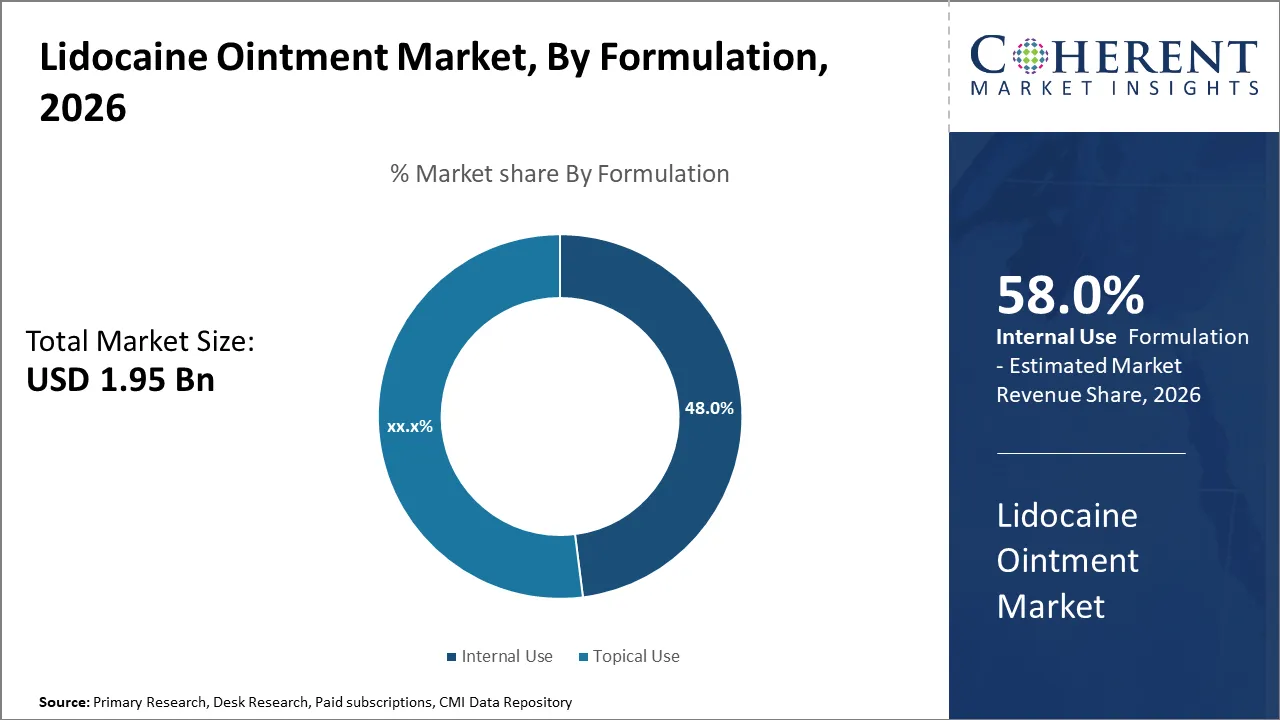
- Based on Formulation, the internal use segment is the dominant segment with 58% share of the market in 2026.
- Based on Age group, the adult segment is expected to lead the market with 65% share in 2026.
- Based on Application, the minor cuts segment is expected to lead the market with 30% share in 2026.
- Based on Distribution Channel, the hospital pharmacies segment is expected to lead the market with 46% share in 2026.
- Based on Region, North America region is expected to hold 38% share of the market in 2026.
Market Overview
The lidocaine ointment market segment is considered one of the most important segments of the topical anesthetics market. Lidocaine Ointments are primarily used for the purpose of local pain control and numbing. Lidocaine is one of the most common amide-type local anesthetics and works by blocking the signals from the nerves traveling through the nervous system to provide temporary relief from pain, itching or discomfort.
The major drivers of growth in lidocaine ointments are an increased prevalence of chronic pain disorders, an increase in skin disorders such as eczema and burns, and an increase in the number of cosmetic surgeries being performed. In addition, the shift to self-medication and OTC product has increased the overall growth of the lidocaine ointment market globally.
Current Events and their Impacts on the Lidocaine Ointment Market
Current Event | Description and its Impact |
FDA Review of Topical Anesthetics Safety |
|
Rise in Cosmetic Dermatology Procedures |
|
Expansion of OTC Drug Approvals in Asia |
|
Segmental Insights
- Current Industry Events of 2026
- Market Size Estimation
- Regional Breakdown
- Competitive Landscape
- Customer Intelligence
- Segmental Analysis
- Pricing Analysis
- Key Market Drivers, Challenges & Future Trends
- Customized Insights Section
Lidocaine Ointment Market Insights, By Formulation: internal use segment is the dominant segment
The use of lidocaine ointment for internal purposes represented approximately 58% of the overall market in 2026. Lidocaine is most commonly used during clinical treatment (i.e. minor surgeries, endoscopies, dental work) and provides controlled anesthesia. The continued increase in outpatient procedures and need for effective localized anesthesia in hospitals contributes to continued growth of the internal use segment of the lidocaine ointment marketplace.
In February 2025, Fresenius Kabi expanded its portfolio of injectable and topical anesthetics, including lidocaine-based formulations, to strengthen its hospital care segment. This expansion supports the growing demand for internal-use anesthetics in surgical environments.
Lidocaine Ointment Market Insights, By Age group: the adult segment is the dominant segment.
With projected growth of 65% in 2026, the adult population is anticipated to be a majority stakeholder in the market due to the increase in chronic pain, more surgeries being performed, and increased access to dermatological or cosmetic procedures among the adult population compared with children or teenagers. These are primarily adults because adults tend to have more health issues associated with lifestyle choices than younger people do, and they have greater access to healthcare professionals.
In April 2025, Teva Pharmaceutical Industries Ltd. Reported increased sales of its generic lidocaine topical products, primarily driven by adult patient demand in North America and Europe. This reflects strong adoption among adult populations for pain management.
Lidocaine Ointment Market Insights, By Application: the minor cuts segment is the dominant segment.
In 2026, the Minor cut segment will hold about 30% of the overall market due to both increased consumer awareness and an ongoing trend of self-medication. Due to their fast-acting medication against minor skin irritations, lidocaine ointments have become a basic part of the first aid kits found in homes.
Lidocaine Ointment Market Insights, By Distribution Channel: the Hospital Pharmacies segment is the dominant segment.
The Hospital pharmacies segment dominates the market in 2026 with around 46% market share, hospitals are major distributors of pharmaceuticals because they have regulations on distribution of pharmaceuticals, receive a large number of patients into their facilities, and can only stock products which have been approved for use by clinicians. Reasons driving growth will be the increasing number of patient care operations performed in hospitals and increased utilization of prescription drugs.
In September 2025, Cardinal Health inc. Announced the expansion of its pharmaceutical distribution network, improving supply chain efficiency for hospital-grade anesthetics, including lidocaine ointments, across North America.
Regional Insights
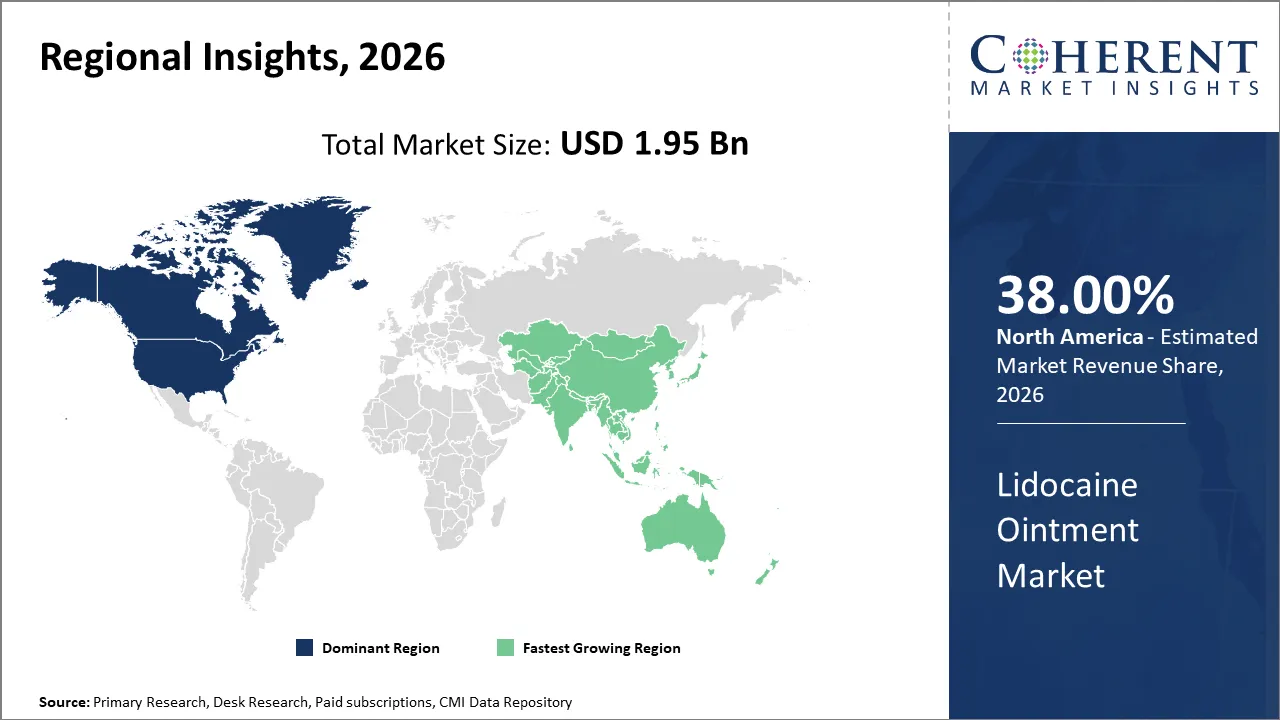
North America Remains at the Epicenter of Market with approximately 38% of the market Share.
North America leads the global lidocaine ointment market, holding around 38% of the global market due to its developed healthcare system, the increased number of outpatient procedures, and a large number of major pharmaceutical companies are headquartered here
- United States: The United States will account for the largest percentage of lidocaine ointment sales due to the increased incidence of chronic pain and the increasing number of cosmetic procedures that utilize minimally invasive techniques.
- Canada: In Canada, there is continuing growth of the lidocaine ointment segment from an increased awareness of healthcare and from consumers choosing more non-invasive methods of managing pain.
Asia Pacific remains the Fastest-Growing Region of Market
The region of Asia-Pacific is Anticipated to be the fastest-growing region for the next seven years (2026-2033) due, in part, to an expanding healthcare system and a rising disposable income and knowledge of topical anesthetics. The market overall also has seen a rapid increase in demand for over-the-counter products and dermatological treatments.
- China: China is a major driver of growth for this region due to the country’s high incidence rate and an increasing number of patients visits seeking help with dermatology and cosmetic procedures.
- India: India is increasingly seen as a high-growth market for anesthetics, primarily due to a significant increase in awareness surrounding the management of pain and an increase in the number of over-the-counter lidocaine products that are available.
Market Report Scope
Lidocaine Ointment Market Report Coverage
| Report Coverage | Details | ||
|---|---|---|---|
| Base Year: | 2025 | Market Size in 2026: | USD 1.95 Bn |
| Historical Data for: | 2020 To 2024 | Forecast Period: | 2026 To 2033 |
| Forecast Period 2026 to 2033 CAGR: | 6.9% | 2033 Value Projection: | USD 3.12 Bn |
| Geographies covered: |
| ||
| Segments covered: |
| ||
| Companies covered: | Glenmark Pharmaceuticals U.S. Inc., Teligent Inc., Taro Pharmaceutical Industries Ltd., CENTURA PHARMACEUTICALS INC., Neon Laboratories Ltd., ASTRAZENECA CANADA INC., Novocol Pharma, Amneal Pharmaceuticals LLC., Alembic Pharmaceuticals Limited, Ascend Laboratories LLC, Liberty Pharmaceuticals, Inc., Hi-Tech Pharmaceuticals, Aspen Pharmacare Australia Pty Ltd., Sandoz AG, Zydus Healthcare Limited., Quagen Pharmaceuticals, Zuche Pharmaceuticals Private Limited., and SEPTODONT, Inc. | ||
| Growth Drivers: |
| ||
Lidocaine Ointment Market Driver
Rising Prevalence of Chronic Pain Disorders
As the incidence of conditions like arthritis, neuropathy and musculoskeletal disorders are skyrocketing, there is need for effective pain management solutions. Localized pain relief with minimal systemic impacts make lidocaine ointments a popular choice for healthcare providers and their patients.
Growth in Cosmetic and Dermatological Procedures
As non-surgical cosmetic treatments continue to rise at unprecedented rates, so does the need for topical anesthetics. Lidocaine ointments help reduce discomfort during many popular cosmetic procedures such as laser treatments and dermal fillers, thus positively impacting the growth of this part of the market.
Analyst Opinion (Expert Opinion)
With the increase in Clinical Use and the growing demand from consumers for non-invasive solutions for pain relief, lidocaine ointments should see continued growth within the industry. According to analysts, the continued development of new formulations and increased market entry into emerging markets will also be factors that contribute to an overall positive future for this market. Regulatory support and the growing availability of lidocaine ointment via OTC channels are also expected to create strong future market dynamics.
Speak to the analyst
Want personalized insights?
Take the findings above to one of our principal consultants, or have the report rebuilt around the segments, geographies and competitors you actually track.
Lidocaine Ointment Market News
On October 3, 2025, the FDA approved Bondlido, a lidocaine topical system, for treating postherpetic neuralgia in adults, marking a significant advancement in topical anesthetics therapies.
Market Segmentation
- Global Lidocaine Ointment Market, By Formulation
- Internal Use
- Topical Use
- Global Lidocaine Ointment Market, By Age Group
- Children
- Adult
- Global Lidocaine Ointment Market By Application
- Insect Bite
- Sun Burn
- Minor Cut
- Mouth Sore
- Others
- Global Lidocaine Ointment Market By Distribution Channel
- Hospital Pharmacies
- Retail Pharmacies
- Online Pharmacies
- Global Lidocaine Ointment Market, By Region
- North America
- U.S.
- Canada
- Latin America
- Brazil
- Mexico
- Argentina
- Rest of Latin America
- Europe
- Germany
- U.K.
- France
- Italy
- Spain
- Russia
- Rest of Europe
- Asia Pacific
- China
- India
- Japan
- ASEAN
- Australia
- South Korea
- Rest of Asia Pacific
- Middle East
- GCC
- Israel
- Rest of Middle East
- Africa
- South Africa
- Central Africa
- North Africa
- North America
- Key Players
- Glenmark Pharmaceuticals U.S. Inc.
- Taro Pharmaceutical Industries Ltd.
- CENTURA PHARMACEUTICALS INC.
- Neon Laboratories Ltd.
- ASTRAZENECA CANADA INC.
- Novocol Pharma
- Amneal Pharmaceuticals LLC.
- Alembic Pharmaceuticals Limited
- Ascend Laboratories LLC
- Liberty Pharmaceuticals, Inc.
- Hi-Tech Pharmaceuticals
- Aspen Pharmacare Australia Pty Ltd.
- Sandoz AG
- Zydus Healthcare Limited.
- Quagen Pharmaceuticals
- Zuche Pharmaceuticals Private Limited.
- SEPTODONT, Inc.
- Teligent Inc.
Sources
Primary Research Interviews
- Dermatologists and pain management specialists
- Pharmacists and hospital procurement managers
- Representatives from pharmaceutical manufacturing companies
- Distributors and wholesalers of topical anesthetics
- Regulatory and compliance experts in pharmaceuticals
Databases
- Drug approval and regulatory databases
- Clinical trial registries
- Pharmaceutical sales and prescription databases
- Healthcare utilization and hospital inventory databases
Magazines
- Pharmaceutical and healthcare industry magazines
- Dermatology-focused publications
- Pain management and therapeutics magazines
Journals
- Peer-reviewed journals in dermatology
- Journals focusing on anesthesiology and pain management
- Pharmaceutical sciences and drug delivery journals
- Clinical research and therapeutics journals
Newspapers
- Leading national and international newspapers covering healthcare and pharma industry developments
- Business and financial newspapers reporting on pharmaceutical markets
Associations
- Dermatology associations
- Pain management and anesthesiology associations
- Pharmaceutical and drug manufacturers’ associations
- Healthcare and hospital associations
Public Domain Sources
- Government health department publications
- Regulatory authority websites and drug approval documents
- Public healthcare statistics and reports
- International health organization publications
- Company annual reports and official press releases
Proprietary Elements
- CMI Data Analytics Tool
- Proprietary CMI Existing Repository of Information for the Last 8 Years
Get access to 250+ pages report
Every segment, forecast, competitor profile and data table behind the analysis above — available for instant download.
- ESOMAR Member
- ISO 9001:2015 Certified
- D-U-N-S Registered
- GDPR & CCPA Compliant
Missing comfort of reading report in your local language? Find your preferred language:
Transform your Strategy with Exclusive Trending Reports
Frequently Asked Questions
The market is driven by rising chronic pain cases, increasing minimally invasive procedures, and growing demand for OTC topical anesthetics.
The internal use formulation segment dominates in 2026 due to its extensive application in surgical and clinical procedures.
The adult segment leads due to higher prevalence of chronic conditions, surgeries, and dermatological treatments.
Hospital pharmacies dominate due to high procedure volumes and prescription-based product usage.
North America dominates due to advanced healthcare infrastructure and high adoption of topical anesthetics.