

Plexiform Neurofibromas Treatment Market Size and Share Analysis - Growth Trends and Forecasts (2026 - 2033)
The global plexiform neurofibromas treatment market size is expected to reach approximately USD 1,888.0 Mn in 2026 and USD 3,265.0 Mn by 2033, growing at a CAGR of 8.4% throughout the forecast period (2026-2033).
Key Takeaways from the Plexiform Neurofibromas Treatment Market Report
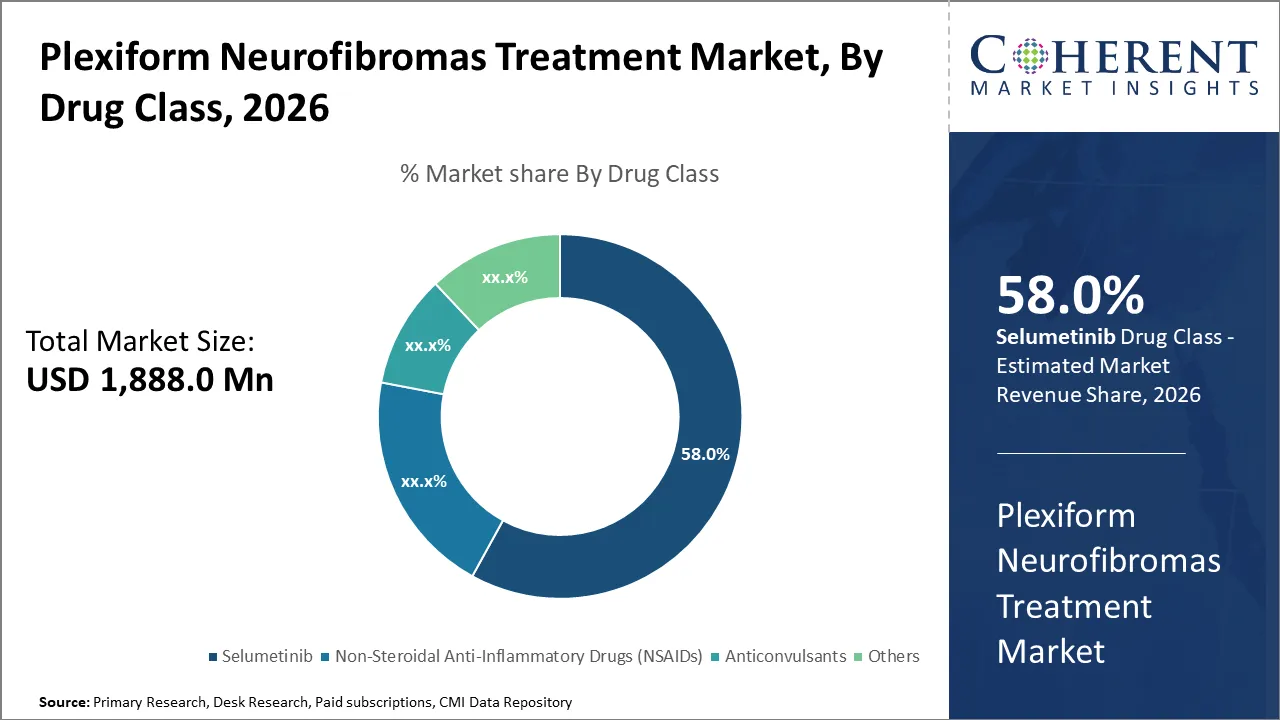
- Selumetinib remain a highly sought-after type, accounting for about 58% of the market share in 2026 as it is the first U.S.FDA approved drug specially for plexiform neurofibromas which targets tumour growth pathways and shows high clinical effectiveness.
- Pediatric is expected to remain leading patient population segment accounting for 61% in the plexiform neurofibromas treatment market revenue in 2026, owing to long-term therapy required for pediatric patients as disease complications begin early and progress over time.
- The hospital pharmacies segment registered its dominance over the global plexiform neurofibromas treatment market with share of 46% in 2026 because need for treatments often require continuous monitoring and complex care.
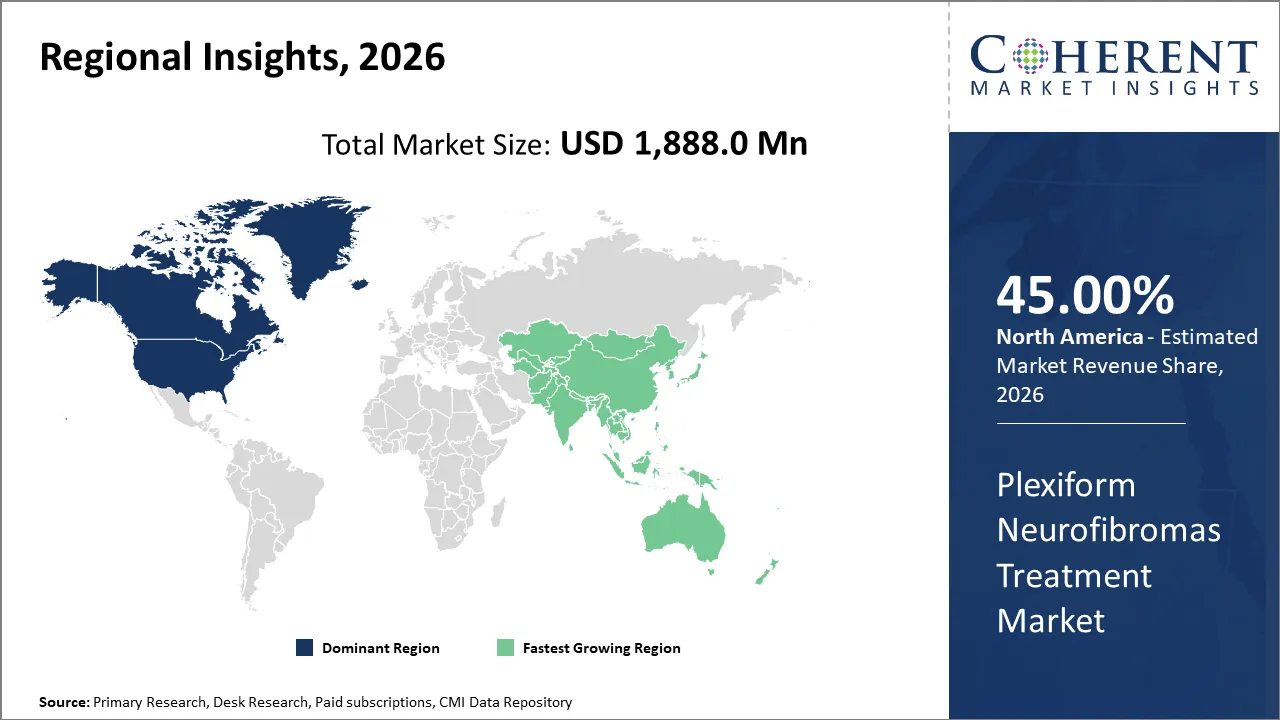
- North America is projected to dominate the global plexiform neurofibromas treatment market in 2026, with a share of over 45% due to advanced healthcare facilities and strong presence of key pharmaceutical companies.
Plexiform Neurofibromas Treatment Market Overview
Plexiform neurofibromas develop from nerve sheath cells and often present at birth or early childhood. It is complex, benign tumors that grow along nerves and their branches. They are most commonly associated with neurofibromatosis type 1 (NF1), a hereditary condition. Rising prevalence of NF1 increasing number of patients with neurofibromatosis type 1 expands the target patient population. The plexiform neurofibromas market is gaining strategic importance due to advancement in targeted therapies such as selumetinib, strong unmet medical need, supportive regulatory policies and improving healthcare access.
Current Events and Their Impact on the Plexiform Neurofibromas Treatment Market
Current Event | Description and its Impact |
Increasing regulatory approval of new drug treatment in the emerging markets |
|
Increasing Clinical Trial Studies for the Plexiform Neurofibromas Treatment |
|
Segmental Insights
- Current Industry Events of 2026
- Market Size Estimation
- Regional Breakdown
- Competitive Landscape
- Customer Intelligence
- Segmental Analysis
- Pricing Analysis
- Key Market Drivers, Challenges & Future Trends
- Customized Insights Section
Plexiform Neurofibromas Treatment Market Insights, By Drug Class: Selumetinib Holds Dominant Technology in the Market
Selumetinib, categorized by its drug class, is projected to command a significant market share, roughly 58%, by the year 2026. Selumetinib is the first drug approved by the U.S. Food and Drug Administration specifically for plexiform neurofibromas and gives a first-mover advantage and strong market penetration. It is easy to administer an oral drug and used for long-term disease management, which improves patient compliance and continuous revenue generation. The selumetinib drug is widely used in children with inoperable tumors and henceforth has high treatment demand in the pediatric segment, which boosts overall market share.
Plexiform Neurofibromas Treatment Market Insights, By Patient Population: Hospital Pharmacies to Remain Leading Patient Population of the Global Market
By patient population, the hospital pharmacies segment is estimated to account for a prominent market share of 61% in 2026. As the plexiform neurofibromas is early onset disease it leads to a larger pediatric patient pool. Most cases are identified at a young age due to visible symptoms and genetic screening which results in early entry into treatment pathway. Key drugs like Selumetinib were initially approved for pediatric use and drives high adoption in children compared to adults. Many clinical studies and trial focus on children leads to faster innovation and better treatment availability in paediatrics. Tumors often grow during childhood and adolescene which requires early and continuous intervention.
Plexiform Neurofibromas Treatment Market Insights, By Distribution Channel
Based on distribution channel, hospital pharmacies segment led the global plexiform neurofibromas treatment market with share of 46% in 2026. Plexiform neurofibromas require multidisciplinary care and specialist supervision and treatments are primarily initiated in hospital environments. Innovative drugs like selumetinib are typically prescribed and dispensed through hospital systems which ensures controlled and safe drug administration. Patients require regular monitoring, side-effect management and dose adjustments which is supported by hospital pharmacies integrated clinical care. Many treatments are covered under hospital-based insurance systems which improves patient access to costly therapies. Hospitals provide oncologists, neurologists and genetic specialists which enhances treatment accuracy and drug utilization.
Regional Insights
North America Remains the Market Leader in 2026
North America is expected to dominate the plexiform neurofibromas treatment market, accounting for a share of 45% in 2026. North America leads the market owing to early innovation adoption, advanced healthcare systems, and high treatment accessibility. Rapid regulatory approvals by the U.S. Food and Drug Administration (FDA) and early availability of advanced drugs like selumetinib ensures first-mover advantage and higher treatment adoption. North America’s patient pool has easy access to accurate diagnosis and advanced treatments due to the presence of specialized hospitals and neuro-oncology and rare disease center. Moreover, the presence of leading pharma and biotech firms are headquartered or highly active in North America which drives commercialization and innovation of new therapies. North America especially the U.S. has one of the highest healthcare spending levels globally supports adoption of premium and innovative therapies. These factors collectively enable greater access to innovative treatments in North America region and support the dominance in the market.
Asia Pacific Plexiform Neurofibromas Treatment Market Trends
Asia Pacific region is estimated to grow at highest CAGR in the market owing to large patient population, rapid improvement in healthcare infrastructure, increasing awareness and diagnosis rates and supportive government initiatives. Increasing number of clinical trials and pharma activities in Asia Pacific region boosts local availability of new treatments. For instance, in December 2025, Shanghai Kechow Pharma, Inc., pharmaceutical company based in China, revealed the primary completion of the Single-arm Phase II Study to evaluate the efficacy and safety of HL-085 (tunlametinib) in the treatment of adult participants with Neurofibromatosis Type 1 (NF1). Oral administration of HL-085 is intended to show its potential for tumor reduction and better patient outcomes. Shanghai Kechow Pharma, Inc. is the sponsor of the trial. Furthermore, governments are increasing healthcare budgets and focus on innovating treatment for rare disease which supports adoption of high-cost innovative therapies.
Plexiform Neurofibromas Treatment Market Outlook – Country-wise
U.S. Plexiform Neurofibromas Treatment Market Forecast
The U.S. country held the dominant revenue share in the North America plexiform neurofibromas treatment market owing to rising prevalence, increasing approval of new drug therapy by the U.S. FDA, high adoption of genetic testing & screening and strong presence of specialized treatment centers. Patient in the U.S. are more likely to receive high-cost innovative therapies and strong willingness-to-pay supported by insurance, which drives higher revenue generation per patient. Rapid new drug approval by the U.S. Food and Drug Administration supports quick adoption of targeted drugs like Selumetinib and emerging therapies such as Mirdametinib. Early adoption of innovative therapies ensures faster availability and widespread clinical use of advanced treatments, driving market growth.
China Plexiform Neurofibromas Treatment Market Trends
China is the dominant country in the Asia Pacific market, driven by large patient base, rapid healthcare expansion, and increasing access to advanced therapies. Expansion of local biotech and pharma companies has boosted the availability and affordability of treatments within China country. Moreover, improving health insurance coverage and rising healthcare expenditure in China supports adoption of high-cost innovative therapies.
Plexiform Neurofibromas Treatment Market News
- In March 2026, Alexion, AstraZeneca Rare Disease, a rare disease business unit of AstraZeneca, revealed the approval of Koselugo (selumetinib) for adult treatment by Health Canada on the basis of positive outcomes from KOMET, the largest and only placebo-controlled global Phase III trial on adult patients with neurofibromatosis type 1. In Canada, adult patients with neurofibromatosis type 1 (NF1) who have symptomatic, incurable plexiform neurofibromas (PN) can be easily treated with Alexion, AstraZeneca Rare Disease's Koselugo (selumetinib), an oral, selective MEK inhibitor.
- In February 2025, SpringWorks Therapeutics, Inc., a biopharmaceutical company, revealed that the U.S. Food and Drug Administration (FDA) has approved GOMEKLI (mirdametinib), SpringWorks' MEK inhibitor, for the treatment of adult and pediatric patients 2 years of age and older with neurofibromatosis type 1 (NF1) who have symptomatic plexiform neurofibromas (PN) that are not amenable to complete resection.
Market Report Scope
Plexiform Neurofibromas Treatment Market Report Coverage
| Report Coverage | Details | ||
|---|---|---|---|
| Base Year: | 2025 | Market Size in 2026: | USD 1,888.0 Mn |
| Historical Data for: | 2020 To 2024 | Forecast Period: | 2026 To 2033 |
| Forecast Period 2026 to 2033 CAGR: | 8.4% | 2033 Value Projection: | USD 3,265.0 Mn |
| Geographies covered: |
| ||
| Segments covered: |
| ||
| Companies covered: | AstraZeneca, Pfizer Inc., Sun Pharmaceuticals Industries Limited, Mallinckrodt Pharmaceuticals, SpringWorks Therapeutics, Alcaliber S.A, Teva Pharmaceutical Industries Ltd., Glenmark, Amneal Pharmaceuticals LLC, Aurobindo Pharma, Apotex Inc., Mylan N.V., GSK plc., Solara Active Pharma Sciences Ltd., Abbott, Shanghai Kechow Pharma, Inc., Endo Pharmaceuticals Inc., Purdue Pharma L.P, Merck & Co., Inc., NFlection Therapeutics, Healx, and Array Biopharma | ||
| Growth Drivers: |
| ||
| Restraints & Challenges: |
| ||
Plexiform Neurofibromas Treatment Market Drivers
Increasing Prevalence of Plexiform Neurofibromas
Rising prevalence of neurofibromatosis type 1 (NF1) has significantly increased the demand for plexiform neurofibromas treatment and driven the growth of the market. For instance, according to the data published by the National Center for Biotechnology Information, approximately 1 in 3,000 to 1 in 4,000 people globally have NF1, one of the most prevalent tumor risk disorders. About 1 in 2,500 to 1 in 3,000 live newborns experience it. By maturity, NF1 is fully penetrant, but as people age, many of its symptoms worsen or become more common. A hereditary condition called neurofibromatosis type 1 (NF1) increases the likelihood of developing tumors. 50% of NF1 patients have plexiform neurofibromas (PNs), which significantly increase morbidity when surgery is not an option. Hence, increasing patient pool directly increases demand for treatment.
Plexiform Neurofibromas Treatment Market Trends
Next-Generation Drug Emergence
Emergence of next-generation drugs has significantly driven the growth of the market. New treatments, like Mirdametinib, which gained approval in 2025, are broadening the possibilities for addressing plexiform neurofibromas. The major pharmaceutical companies are concentrating their efforts on creating new drugs that feature enhanced MEK inhibitors, along with refined dosing regimens and improved tolerability profiles. The emergence of gene therapies, targeted therapies, immunotherapies, and combination approaches suggests that next-generation drug could provide patients with plexiform neurofibromas more effective and tailored treatment options, potentially leading to significantly better outcomes. This is creating a dynamic drug landscape and proves to be significant trend in driving the growth of the market.
Advancements in Diagnostics & Integration of AI
Increasing launch of advanced diagnostic technologies and integration of AI significantly drive the growth of the market. Use of digital tumor monitoring and AI-based imaging helps in early diagnosis and better treatment tracking. For efficient treatment, early detection of these tumors is important, and AI integration helps make it easy. Hence, advancements in diagnostics and integration of AI improve clinical outcomes and treatment efficiency.
Plexiform Neurofibromas Treatment Market Opportunities
Growing Usage of Personalised Medicine
Rise of personalized medicine and growing adoption of it for treatment of plexiform neurofibromas has estimated to create significant opportunity for the growth of the plexiform neurofibromas treatment market. Use of genetic profiling and molecular diagnostics in manufacturing drug treatment for plexiform neurofibromas enables patient specific treatment and better clinical outcomes. Personalized therapies are expected to be a major future growth pillar.
Analyst Opinion (Expert Opinion)
- The plexiform neurofibromas treatment market seems to have a bright future, especially with the incorporation of genetic and genomic methods into clinical practice. Experts predict that the industry will see a spike in acceptance when genetic-based therapies receive FDA approval in the U.S. This is especially true in areas like the U.S. and Europe, where healthcare facilities are increasingly embracing precision medicine.
- The plexiform neurofibromas treatment market is growing due to better diagnostic methods, earlier detection, and a better understanding of neurofibromatosis. Advances in genetic testing and molecular profiling are helping to identify patients at higher risk of developing plexiform neurofibromas. This allows for earlier and more targeted treatments. As a result, the market outlook is more positive, with greater potential for growth.
- The North America region hold the dominant revenue share in the global plexiform neurofibromas treatment market due to strong presence of specialized neuro-oncology centers and rare disease treatment facilities. Moreover, Asia Pacific region is estimate to grow at highest CAGR in the market owing to rising prevalence, increasing hospital admission and rapid development of advanced healthcare infrastructure for diagnosis & treatment.
- Overall, the plexiform neurofibromas treatment market is projected to experience substantial growth, primarily due to the rising utilization of targeted therapies like selumetinib, coupled with an increase in the diagnosis of neurofibromatosis type 1 and broader healthcare accessibility. Despite the challenges posed by high treatment costs and a limited number of available therapies, ongoing research and pipeline new drug innovations are expected to drive market growth during the forecast period.
Speak to the analyst
Want personalized insights?
Take the findings above to one of our principal consultants, or have the report rebuilt around the segments, geographies and competitors you actually track.
Market Segmentation
- By Drug Class ( Revenue, USD Mn, 2020 - 2033)
- Selumetinib
- Non-Steroidal Anti-Inflammatory Drugs (NSAIDs)
- Anticonvulsants
- Others (Tricyclic Antidepressants, etc.)
- By Application Insights (Revenue, USD Mn, 2020 - 2033)
- Pediatric
- Adult
- By End User Insights ( Revenue, USD Mn, 2020 - 2033)
- Hospital Pharmacies
- Retail Pharmacies
- Online Pharmacies
- By Region Insights (Revenue, USD Mn, 2020 - 2033)
- North America
- U.S.
- Canada
- Latin America
- Brazil
- Argentina
- Mexico
- Rest of Latin America
- Europe
- Germany
- U.K.
- Spain
- France
- Italy
- Russia
- Rest of Europe
- Asia Pacific
- China
- India
- Japan
- Australia
- South Korea
- ASEAN
- Rest of Asia Pacific
- Middle East & Africa
- GCC Countries
- Israel
- Rest of Middle East & Africa
- North America
- Key Players
- AstraZeneca
- Pfizer Inc.
- Sun Pharmaceuticals Industries Limited
- Mallinckrodt Pharmaceuticals
- SpringWorks Therapeutics
- Alcaliber S.A
- Teva Pharmaceutical Industries Ltd.
- Glenmark, Amneal Pharmaceuticals LLC
- Aurobindo Pharma
- Apotex Inc.
- Mylan N.V.
- GSK plc.
- Solara Active Pharma Sciences Ltd.
- Abbott
- Shanghai Kechow Pharma, Inc.
- Endo Pharmaceuticals Inc.
- Purdue Pharma L.P.
- Merck & Co., Inc.
- NFlection Therapeutics
- Healx
- Array Biopharma
Sources
Primary Research Interviews
- Interviews with dermatologists, neurofibromatosis and oncologists specialists to understand current treatment protocols, challenges in managing plexiform neurofibromas, and patient management strategies.
- Insights from pharmaceutical company executives, product managers, and R&D professionals on the development of novel treatments, clinical trial trends, and the pipeline for therapies targeting plexiform neurofibromas.
- Discussions with healthcare providers, hospital administrators, and procurement managers to assess the impact of cost, insurance coverage, and reimbursement policies on the adoption of new treatments for plexiform neurofibromas.
- Conversations with patients, caregivers, and patient advocacy groups to understand the real-world challenges in managing plexiform neurofibromas, unmet needs, and the preferences for personalized or alternative therapies.
Databases
- PubMed — Biomedical research studies on plexiform neurofibromas, neurofibromatosis, treatment options, and clinical outcomes.
- Web of Science — Research publications on neurofibromas, treatment modalities, clinical trials, and the molecular biology of plexiform neurofibromas.
- ClinicalTrials.gov — Clinical trial registry for studies on drug development, surgical treatments, and novel therapies targeting plexiform neurofibromas.
- Scopus — Multidisciplinary scientific literature covering treatment strategies for plexiform neurofibromas, genetic therapies, and advances in precision medicine.
Magazines
- The Dark Report / Dark Intelligence Group
- 360Dx
- LabPulse
- Genetic Engineering & Biotechnology News (GEN)
- Pharmaceutical Technology Magazine
- GenomeWeb
Journals
- Clinical Cancer Research
- Neurology
- Journal of Clinical Oncology
- Cancer Research
- The Journal of Neurofibromatosis
Newspapers
- Reuters — Healthcare and Medical Technology
- The Guardian — Health Section
- The Washington Post — Health Section
- The New York Times — Health and Medicine Section
- The Wall Street Journal — Healthcare and Drug Development
Associations
- American Society of Clinical Oncology (ASCO)
- European Society for Medical Oncology (ESMO)
- National Cancer Institute (NCI)
- National Neurofibromatosis Foundation (NNFF)
- Neurofibromatosis Therapeutic Acceleration Program (NTAP)
Public Domain Sources
- National Cancer Institute (NCI) — Information on cancer treatments and research specific to neurofibromas and related cancers.
- gov — Clinical trial information related to treatments for plexiform neurofibromas, including drug trials and gene therapies.
- U.S. Food and Drug Administration (FDA) — Approvals, regulatory guidance, and safety information on treatments for plexiform neurofibromas.
- National Institutes of Health (NIH) / PubMed Central — Research on neurofibromatosis, plexiform neurofibromas, and treatment advances.
Proprietary Elements
- CMI Data Analytics Tool
- Proprietary CMI Existing Repository of Information for the Last 8 Years
Get access to 250+ pages report
Every segment, forecast, competitor profile and data table behind the analysis above — available for instant download.
- ESOMAR Member
- ISO 9001:2015 Certified
- D-U-N-S Registered
- GDPR & CCPA Compliant
Missing comfort of reading report in your local language? Find your preferred language:
Transform your Strategy with Exclusive Trending Reports
Frequently Asked Questions
The global market is estimated to be valued at USD 1,888.0 Mn in 2026.
The global Plexiform Neurofibromas Treatment Market value is expected to reach USD 3,265.0 Mn by 2033.
The global market is poised to exhibit a CAGR of 8.4% from 2026 to 2033.
Major growth factors include increasing prevalence of plexiform neurofibromas.
The factors hampering growth of the market is lack of approved drugs for the treatment of neurofibromatosis Type 1.
Selumetinib segment, with about 58% share in 2026, dominates the market.
Some major companies in the AstraZeneca, Pfizer Inc., Sun Pharmaceuticals Industries Limited, Mallinckrodt Pharmaceuticals, SpringWorks Therapeutics, Alcaliber S.A, Teva Pharmaceutical Industries Ltd., Glenmark, Amneal Pharmaceuticals LLC, Aurobindo Pharma, Apotex Inc., Mylan N.V., GSK plc., Solara Active Pharma Sciences Ltd., Abbott, Shanghai Kechow Pharma, Inc., Endo Pharmaceuticals Inc., Purdue Pharma L.P, Merck & Co., Inc., NFlection Therapeutics, Healx, and Array Biopharma among others.