

Behcet’s Syndrome Market Size and Trends-(2026-2033)
Behcet’s syndrome market is estimated to be valued at USD 338 Mn in 2026 and is expected to reach USD 480 Mn by 2033, exhibiting a compound annual growth rate (CAGR) of 5.7% from 2026 to 2033.
Key Takeaways
- Based on Treatment Type, the Corticosteroids segment is expected to lead the market with 45% share in 2026, due to their widespread use as first-line therapy and acute flare-ups in Behçet’s syndrome patients.
- Based on Distribution Channel, the Hospital Pharmacies segment is projected to account for 50% share of the market in 2026, owing to the need for specialist prescriptions and clinical monitoring of patients.
- Based on Region, North America is set to lead the Bechet’s syndrome market with 41% share in 2026. While, Asia Pacific is anticipated to be the fastest growing region.
Market Overview
The rising knowledge and proper diagnostic rates of Behçet’s Syndrome in the developed and developing world are major contributors to the growth of the market. The rising prevalence of Autoimmune and Inflammatory diseases and the rising requirement for proper long-term management have led to an increase in the use of pharmacologic therapies such as corticosteroids, Immunosuppressives, Immune Modulators, and PDE-4 inhibitors. The rising success rates in clinical trials and the development of Targeted Therapies have added to the success rates.
Current Events and Its Impacts on the Bechet’s Syndrome Market
Current Events | and its impact |
Global Supply Chain Disruptions for Biologics Manufacturing |
|
Advancements in Precision Medicine and Biomarker Research |
|
How are therapeutic advancements and healthcare trends driving growth in the Behçet’s syndrome market?
- Targeted Therapies: Increasing development and adoption of targeted treatments such as PDE4 inhibitors and biologics are improving disease control while reducing long-term side effects associated with conventional therapies.
- Expanded Clinical Research: Ongoing clinical trials and research initiatives focused on autoimmune and rare diseases are accelerating the discovery of novel drug candidates and strengthening treatment pipelines.
- Personalized Treatment Approaches: Growing emphasis on personalized medicine, including tailored immunosuppressive and immunomodulatory regimens, is enhancing patient outcomes and driving therapy adoption.
- Improved Access to Specialist Care: Expansion of hospital-based rheumatology and immunology services, along with better reimbursement frameworks in developed regions, is supporting higher diagnosis and treatment rates.
- Awareness & Early Diagnosis Programs: Increased disease awareness among healthcare professionals and patients is leading to earlier diagnosis and timely treatment initiation, positively impacting overall market growth.
- Current Industry Events of 2026
- Market Size Estimation
- Regional Breakdown
- Competitive Landscape
- Customer Intelligence
- Segmental Analysis
- Pricing Analysis
- Key Market Drivers, Challenges & Future Trends
- Customized Insights Section
Segmental Insights
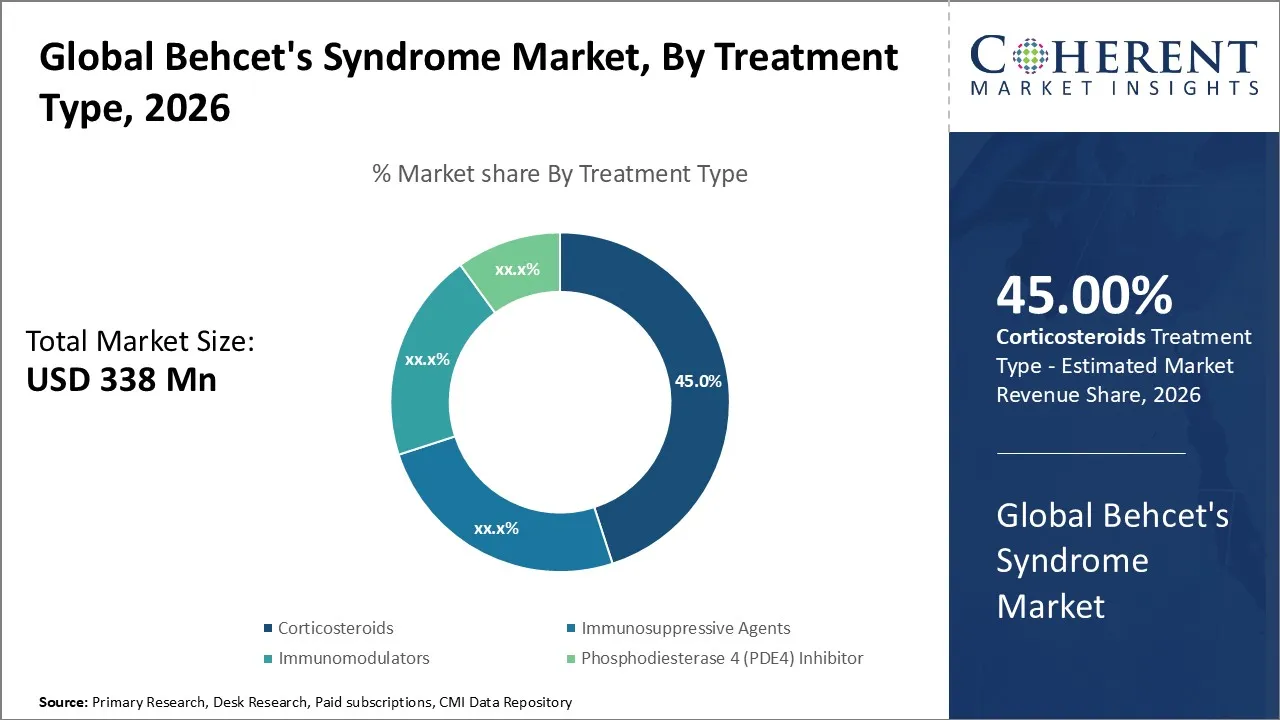
Behçet’s Syndrome Market Insights, By Treatment Type – Corticosteroids dominate due to first-line usage
By treatment type, corticosteroids are anticipated to record around 45% of the highest market share in 2026 due to their routine use as first-line agents in treating inflammation and flare-ups in Behçet’s syndrome. Corticosteroids are now being prescribed to treat symptoms of oral ulcers, genital ulcers, and ocular inflammation because of their fast action against inflammation. Their multiple availability in forms such as oral, topical, and injectable forms further supports broad adoption by physicians for various stages of disease severity.
For instance, in December 2025, Soligenix announced publication of positive Phase 2a proof-of-concept results for SGX945 (dusquetide) in the treatment of oral ulcers associated with Behçet syndrome.
Behçet’s Syndrome Market Insights, By Distribution Channel – Hospital pharmacies lead due to specialist-driven treatment
Based on the distribution channel, the hospital pharmacies segment is expected to present the highest share of about 50% in the market in 2026, owing to the requirement for prescriptions by specialists and the continuous clinical monitoring of patients. Treatment of Behçet’s syndrome often requires rheumatologists, immunologists, or ophthalmologists, leading to initiation and drug dispensing mainly within the hospital setting. Hospital pharmacies ensure access to advanced therapies, including immunosuppressive agents and biologics, while ensuring proper dosage management and follow-up of the patient.
Regional Insights
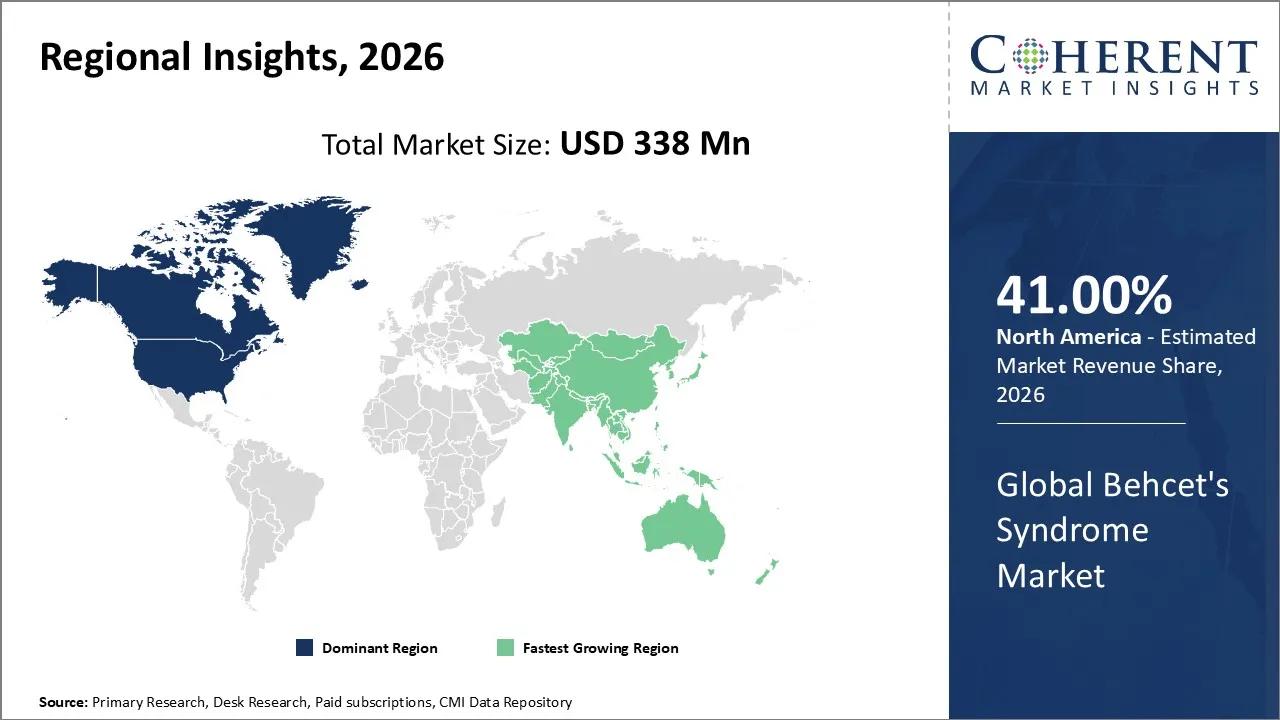
North America Behçet’s Syndrome Market Analysis & Trends
North America is anticipated to lead the market in the year 2026, accounting for an estimated market share of 41%. Various factors contributing to the market growth in the region include the enhanced healthcare infrastructure, high disease awareness, and widespread availability of expert medical care, in addition to the adoption of innovative treatments for autoimmune diseases.
For instance, In November 2025, Soligenix, Inc. announced the formation of its Behçet’s Disease Medical Advisory Board, featuring experts including a director of the NYU Behçet’s Disease Center. These underscores increased organizational and clinical focus on Behçet’s disease expertise in North America.
Asia Pacific Behçet’s Syndrome Market Analysis & Trends
The Asia Pacific shows the highest growth rate within the market for Behçet’s syndrome, which can be accredited to increased awareness about health, rising subspecialty clinic practices, growing demand for advanced treatments, and efforts by the government to upgrade the existing facilities concerning rare disease treatments in the countries of Japan, China, and India.
For instance, in September 2025, a multi-city hospital chain in India introduced a comprehensive Behçet’s care program integrating hospital pharmacy access, immunomodulatory treatments, and patient education workshops.
Behçet’s Syndrome Market Outlook for Key Countries
Is the U.S. Behçet’s syndrome market growing from regulatory support and innovative therapies?
The U.S. Behçet’s Syndrome market is growing because of the regulatory incentives and the acceptance and adoption of newer treatments such as biologics and immunomodulators. Due to the improved infrastructure and the growing number of diagnoses, hospitals and specialist clinics are facilitating the management of the patients.
For instance, in August 2025, the U.S. Food and Drug Administration (FDA) granted Orphan Drug Designation to dusquetide (SGX945), an investigational therapy being developed by Soligenix, Inc. for the treatment of Behçet’s disease.
Is China’s regulatory focus accelerating the Behçet’s syndrome market?
China’s focus on developing treatments for rare diseases is also encouraging the growth of the Behçet’s syndrome market. Owing to enhanced awareness levels, diagnosis capabilities, and approvals from the government, patients are finding it easier to avail themselves of treatments for this disorder.
For instance, in January 2025, the China Food and Drug Administration (CFDA) approved Huilin‑1, developed by Chongqing Hengrui Medicine, as the first China-developed drug for the treatment of Behçet’s disease. This approval enhances accessibility of targeted therapies and reinforces China’s role as a rapidly expanding market in Asia Pacific for rare autoimmune diseases.
Market Report Scope
Behçet’s Syndrome Market Report Coverage
| Report Coverage | Details | ||
|---|---|---|---|
| Base Year: | 2025 | Market Size in 2026: | USD 338 Mn |
| Historical Data for: | 2020 To 2024 | Forecast Period: | 2026 To 2033 |
| Forecast Period 2026 to 2033 CAGR: | 5.7% | 2033 Value Projection: | USD 480 Mn |
| Geographies covered: |
| ||
| Segments covered: |
| ||
| Companies covered: | AbbVie Inc., Novartis AG, Pfizer Inc., F. Hoffmann‑La Roche Ltd., Amgen Inc., Eisai Co., Ltd., Takeda Pharmaceutical Company Limited, Abbott Laboratories, Coherus Biosciences, Inc., and Panacea Biotec Ltd. | ||
| Growth Drivers: |
| ||
| Restraints & Challenges: |
| ||
Market Dynamics
Behçet’s Syndrome Market Driver
Rising prevalence and increasing diagnosis of Behçet’s syndrome
The increasing incidence of Behcet’s syndrome, especially in the Middle East, Asia, and North America, is propelling the growth of the global Behcet’s syndrome therapy market. Increased diagnostic efficiency, awareness among medical practitioners, and early diagnosis initiatives have increased the number of patients being properly diagnosed, thereby augmenting the demand for their appropriate treatments, such as corticosteroids, immunomodulators, and biologic agents.
Behçet’s Syndrome Market Opportunity
Development of novel therapies and biologics
The development and commercialization of innovative therapies offer immense opportunities for market growth, including targeted biologics and immunomodulatory drugs. Improvements in personalized medicine and treatment regimens could focus on the management of acute flares and symptom control in the long term. Moreover, extending local therapies to emerging markets such as China and India will increase access and improve market penetration.
Analyst Opinion (Expert Opinion)
- The market for treatments for Behcet's syndrome is being pushed by the preferential adoption of biological and immunomodulatory treatments, especially in areas with high disease prevalence. The nature of the disease means that patients tend to have recurring attacks with symptoms like oral ulcers and eye involvement, thus focusing on the requirements for effective long-term therapies. Hospitals and specialty centers continue to be at the forefront in providing organized patient care.
- The regulatory decisions of key markets emphasize the emphasis on innovation. The latest designations and approvals of innovative treatments in these markets underscore both unmet medical need and market readiness for innovative offers. The indigenous development of medications in emerging markets is gathering speed, and this enhances accessibility of treatments to patients.
- North America remains in the forefront in terms of complexity in treatment and integration of programs, and Asia/Pacific countries are catching up quickly owing to increasing investments in research and developments in healthcare infrastructure. The hospital pharmacy is playing an important role in providing complex treatments and monitoring them safely.
- Overall, the Behçet’s syndrome market is tending to become a more specialized area of concern among autoimmune and rare disorders. With greater awareness of the condition, government backing, as well as the development of novel treatments, this market is likely to flourish.
Speak to the analyst
Want personalized insights?
Take the findings above to one of our principal consultants, or have the report rebuilt around the segments, geographies and competitors you actually track.
Behçet’s Syndrome Industry News
- In August 2025, the FDA Apremilast (Otezla XR) approval appears in the U.S. FDA Orphan Drug database for Behçet’s disease indication, underscoring formal regulatory progress for a key therapy in the market.
- In August 2025, the U.S. Food and Drug Administration (FDA) granted Orphan Drug Designation to dusquetide, the investigational active ingredient in SGX945, strengthening regulatory support for its development in Behçet’s disease treatment and providing incentives such as market exclusivity and potential tax benefits.
- In November 2024, Soligenix, Inc. initiated patient enrollment for a Phase 2 clinical trial of SGX945 (dusquetide) to evaluate its safety and efficacy in treating Behçet’s disease. The trial received clearance from the U.S. FDA and Turkey’s regulatory agency before enrollment began.
Market Segmentation
- Treatment Type Insights (Revenue, USD Mn, 2026 - 2033)
- Phosphodiesterase 4 (PDE4) Inhibitor
- Corticosteroids
- Immunosuppressive Agents
- Immunomodulators
- Distribution Channel Insights (Revenue, USD Mn, 2026 - 2033)
- Hospital Pharmacies
- Retail Pharmacies
- Online Pharmacies
- Regional Insights (Revenue, USD Mn, 2026 - 2033)
- North America
- U.S.
- Canada
- Latin America
- Brazil
- Argentina
- Mexico
- Rest of Latin America
- Europe
- Germany
- U.K.
- Spain
- France
- Italy
- Russia
- Rest of Europe
- Asia Pacific
- China
- India
- Japan
- Australia
- South Korea
- ASEAN
- Rest of Asia Pacific
- Middle East
- GCC Countries
- Israel
- Rest of Middle East
- Africa
- South Africa
- North Africa
- Central Africa
- North America
- Key Players Insights
- AbbVie Inc.
- Novartis AG
- Pfizer Inc.
- Hoffmann‑La Roche Ltd.
- Amgen Inc.
- Eisai Co., Ltd.
- Takeda Pharmaceutical Company Limited
- Abbott Laboratories
- Coherus Biosciences, Inc.
- Panacea Biotec Ltd.
Sources
Primary Research Interviews
- Healthcare Professionals & Specialists in Rheumatology
- Pharmaceutical & Biotech Product Managers
- Hospital Pharmacists & Clinic Administrators
- Clinical Trial Investigators & Researchers
- Regulatory Affairs Experts
- Patient Advocacy Group Representatives
- Medical Affairs & Market Access Managers
- Others
Databases
- U.S. Food & Drug Administration (FDA) Database
- China Food and Drug Administration (CFDA) Database
- ClinicalTrials.gov
- PubMed
- WHO Global Health Observatory
- U.S. National Library of Medicine
- Others
Magazines
- Pharmaceutical Executive
- PharmaVOICE
- FiercePharma
- PharmaTimes
- Elsevier Pharma News
- Others
Journals
- Rheumatology International
- Journal of Autoimmunity
- Orphanet Journal of Rare Diseases
- Clinical and Experimental Rheumatology
- Journal of Inflammation Research
- Others
Newspapers
- The New York Times (Health Section)
- Reuters Health
- BBC Health News
- The Guardian (Medicine & Health Section)
- Financial Times (Healthcare Section)
- Others
Associations
- International Society for Behçet’s Disease (ISBD)
- American College of Rheumatology (ACR)
- European Alliance of Associations for Rheumatology (EULAR)
- National Organization for Rare Disorders (NORD)
- Others
Public Domain Sources
- U.S. FDA Publications & Approvals
- CFDA Official Approvals & Guidelines
- WHO Health Reports & Disease Profiles
- ClinicalTrials.gov – Registered Behçet’s Disease Trials
- Peer-Reviewed Open Access Research Articles
- Others
Proprietary Elements
- CMI Data Analytics Tool
- Proprietary CMI Existing Repository of Information for the Last 8 Years
Get access to 250+ pages report
Every segment, forecast, competitor profile and data table behind the analysis above — available for instant download.
- ESOMAR Member
- ISO 9001:2015 Certified
- D-U-N-S Registered
- GDPR & CCPA Compliant
Missing comfort of reading report in your local language? Find your preferred language:
Transform your Strategy with Exclusive Trending Reports
Frequently Asked Questions
The Behçet’s Syndrome Market is estimated to be valued at USD 338 Mn in 2026, and is expected to reach USD 480 Mn by 2033.
The CAGR of the Behçet’s Syndrome Market is projected to be 5.7% from 2026 to 2033.
Growing prevalence of Behçet’s syndrome, increasing awareness and early diagnosis, advancements in biologics, corticosteroids, and immunomodulatory therapies, and expansion of hospital pharmacy networks are the key drivers of market growth.
High treatment costs, limited patient awareness in certain regions, and competition from alternative autoimmune disease therapies are major factors restricting market growth.
In terms of treatment type, the corticosteroids segment is estimated to dominate the market in 2026 due to widespread use as first-line therapy and acute flare-up management.
AbbVie Inc., Novartis AG, Pfizer Inc., F. Hoffmann-La Roche Ltd., Amgen Inc., Eisai Co., Ltd., Takeda Pharmaceutical Company Limited, Abbott Laboratories, Coherus Biosciences, Inc., Panacea Biotec Ltd. are some of the key players.
North America is expected to lead the Behçet’s Syndrome Market in 2026 due to strong healthcare infrastructure, early diagnosis, and advanced therapeutic adoption.